[Canada]:ABAA
21 987 résultats
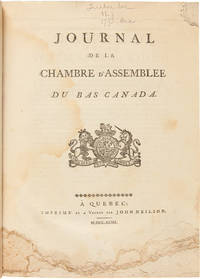
1793réf. 32892Quebec. 1793-1817. Extensive Run of Early Canadian Legislative Journals A large and impressive archive of Canadian laws. In an effort to pacify the disparate French and British populations of Canada the Constitutional Act of 1791 divided Canada in two. Upper Canada was primarily populated by Loyalist emigrants of the American Revolution while the citizenry of Lower Canada which included Quebec was mostly of French descent. These are the laws of Lower Canada printed in English and French. Though the first volume appeared in 1793 it includes material from the first session of the first Parliament held in December 1792. The series continued till 1836. "Public accounts are included in the early numbers of the Journals and from 1809 to 1835-36 Sessional papers are published as appendices to the Journals" - TPL. Present here is a complete run from its inception to 1813 with an additional volume for 1817. The twenty-third twenty-fourth and twenty fifth volumes are lacking. Scarce. OCLC locates only six complete runs. A prime resource for the study of Canadian legal history. Later brown cloth red and black gilt morocco labels. Printed in alternating English and French. Slight wear to and moderate soiling on covers. Occasional foxing. First view leaves of first volume torn along lower blank margin. Occasional old institutional markings. Overall very good. TPL 640. SABIN 10491. OCLC 11820245 48957532. TRÉMAINE 835. hardcover books
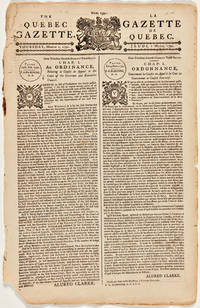
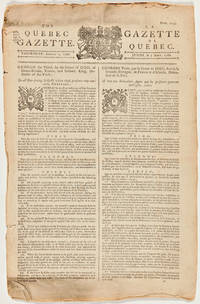
1792réf. 12534Quebec: Samuel Nielson March 1 1792. This issue contains two proclamations by Allured Clark the lieutentant-governor acting in the absence of Lord Dorchester. The first is an ordinance for cases appealed to the Executive council while the second relates to the law courts. The remainder of the issue is taken up with news items and advertisements. Copies are noted by Tremaine in an appendix. 4pp. printed in double-column format in parallel English and French. Folio. Torn at bottom corner affecting a few words else very good. unknown books
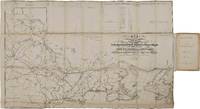
1855réf. 24391Montreal. 1855. A very detailed description of every aspect of Canada accompanied by a "Map of the Province of Canada and the Lower Colonies showing the connection by steam navigation with New York Pennsylvania Ohio Indiana Illinois Michigan Wisconsin & Minnesota." and a map of "Mercators Projection. With the Great Circle Shortest Sailing or Air Lines. Illustrating the directness & capacity of the River St. Lawrence from Lake Erie to the Atlantic." According to a note in TPL the maps were apparently not issued with all copies. This work was published with another essay in Montreal the same year in an English language edition. Original cloth stamped in gilt "ESSAI COURONNÉ SUR LE CANADA" on the front cover. Spine ends frayed. Inner hinges cracked spine shaken but holding. Some scattered foxing. Good. TPL 3557. GAGNON I:1696. SABIN 32422. hardcover books
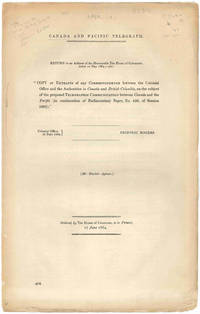
1864réf. 47423London. 1864. Founding the Canadian Pacific Telegraph: The Streeter Copy The Thomas W. Streeter copy with his pencil notes on the titlepage. This House of Commons working paper is a continuation of their return dated July 10 1863 on the subject of constructing a telegraph line to British Columbia and the Pacific. The Hudson's Bay Company unsurprisingly was intimately involved in the machinations for the building of the line. They had made an agreement with the Canadian government to build the telegraph line from the Red River to the Pacific themselves but when they failed to do so a group of English bankers proposed to step in and do the job. The papers included herein provide much information on the qualities of the land between Lake Superior and British Columbia and the need for swift communication throughout and across the vast region. Also included is a memorial from the people of the Red River Settlement discussing their urgent need for the telegraph. The Streeter copy sold to Nebenzahl for $30 in 1969 and was still in his stock when the Reese Company bought the last of it in 2013; here it is. Folio. String-tied as issued. A bit tanned some small chips at the edges. Very good. STREETER SALE 3436 this copy. SOLIDAY I:1207. LOWTHER 228. unknown books
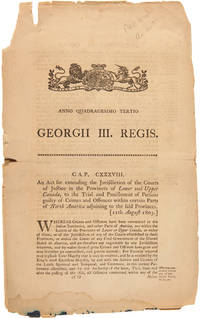
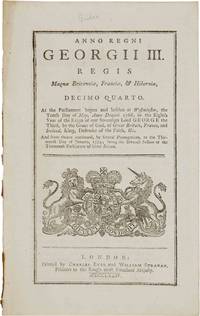
1803réf. 31186London: Printed by George Eyre and Andrew Strahan 1803. Bringing Law and Order to the British Pacific Northwest This act of Parliament addresses the issue of crimes committed in the British-controlled Pacific Northwest and specifically in Indian Territories. It provides that those who commit offenses in Indian Territories should be tried in the same manner as if the crimes occurred in the provinces of Lower or Upper Canada. The act also allows the governor of Lower Canada to empower Justices for the Indian Territories. 3pp. Two folio leaves. Split at fold chipped around edges dampstain on lower edge tape-repair on center fold. Good only. unknown books
1907réf. 57936Ottawa. 1907. The maps depict northern Canada climatic conditions and precipitaion the Dominion of Canada northeastern Canada and locations of mineral deposits. The text includes investigative reports on the territory of Ungava the region west of Hudson Bay the navigability of Hudson Bay and the climate of northern Canada. Book: Publisher's green cloth gilt. Minor wear to spine. Maps: Matching publisher's cloth folding case. Bottom edge partially split. Minor toning to maps. Overall very good. hardcover books
1845réf. 50950Montreal Toronto Quebec & Ottawa. 1845-1906. A Lengthy Run with a Rare Folio Atlas A long run of the geological survey of Canada with some works printed in English and some in French. Comprises the progress reports and maps for the Canadian geological survey for a period of about fifty years. Includes the rare large folio atlas PLAN OF VARIOUS LAKES AND RIVERS BETWEEN LAKE HURON AND THE RIVER OTTAWA. Toronto 1857 listed as numbers 16-38 in Ferrier's ANNOTATED CATALOGUE.OF THE GEOLOGICAL SURVEY CANADA. The atlas is usually encountered in quarto format with the maps folded to conform to the smaller size. A copy of the Ferrier bibliography is also included with the collection. A complete detailed list of the works is available upon request. Extra shipping will likely be required for this item. Seventy-seven works including numerous maps. Some original wrappers some volumes in contemporary leather bindings some in later yellow buckram. Some map volumes supplied at least in part in facsimile. Overall very good. hardcover books
1774réf. 11950London. 1774. These acts proposed to pay for the court system in Quebec and Canada by putting a duty on hard liquor and charging licensing fees. pp.1899-1904. Folio. Dbd. Very good. with: AN ACT FOR AMENDING AND EXPLAINING AN ACT. London. 1775. pp.1227-29. Folio. Dbd. Very good. unknown books
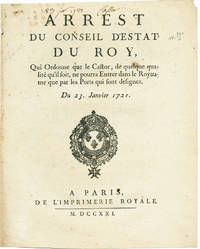
1721réf. 13347Paris: de l'Imprimerie Royale 1721. Regulating the Transatlantic Fur Trade A French royal decree concerning the importation of Canadian beaver pelts into France. This is a variant of the issue listed by Wroth; OCLC locates only one copy at Harvard which appears to be Wroth 890. Not in EUROPEAN AMERICANA. Rare. From the library of Cardinal Étienne Charles de Loménie de Brienne 1727-94 Minister of Louis XVI Archbishop of Toulouse and of Sens. A friend of Voltaire and a member of the Académie Française Brienne wielded significant power as head of the Finance Ministry which earned him many enemies. He died in prison during the French Revolution despite having renounced Catholicism in 1793 presumably as an attempt to save his life. 4pp. Quarto on a folded folio sheet. Light soiling. Contemporary inscription. Very good. WROTH ACTS OF FRENCH ROYAL ADMINISTRATION 890 ref. MAGGS FRENCH COLONIZATION OF AMERICA 224 this copy. OCLC 70682396 ref. unknown books
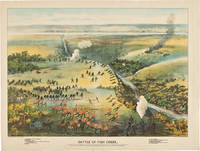
1885réf. 54034Toronto: Toronto Lithographing Co. ca.1885. Large Chromolithographs of the Riel Rebellion A trio of rare battlefield views depicting three of the major skirmishes fought during the North-West Rebellion in Saskatchewan in 1885. This series of battles is also known by several other names including the Saskatchewan Rebellion the Northwest Uprising and the Second Riel Rebellion the first Riel Rebellion occurred near Manitoba in 1869 and is also known as the Red River Rebellion. Both the 1869 and 1885 actions were led by Louis Riel the leader of the Métis people. Chronologically the lithographs are as follows: 1 "Battle of Fish Creek." This battle occurred on April 24 1885 and resulted in a stunning victory when around 200 Métis soldiers overcame a superior force of 900 government soldiers and temporarily halted an advance on Batoche. 2 "Battle of Cut Knife." On May 2 1885 a force of Cree warriors held off a superior group of Canadian army units. 3 "The Capture of Batoche." Effectively the end of the rebellion the Métis were soundly defeated in the second week of May after they ran out of ammunition on the third day of fighting. This action forced Riel to surrender on May 15. The Métis are one of the recognized aboriginal groups in Canada who trace their roots to the first interaction between First Nations people and the earliest European settlers usually French and largely as a result of the fur trade. The Métis are among the earliest mixed-race people in Canada and developed a separate distinct culture based on their ancestral origins usually stemming from the coupling of an indigenous woman and a male European settler. By the 19th century the Métis were well-assimilated into French-Canadian culture and many worked as fur traders for the North-West Company or Hudson's Bay Company or supplied furs as independent trappers. When those companies pulled out of the Red River and Saskatchewan regions in the mid-to-late 1800s the Canadian government took over the land and began to enforce their will on the Métis people. The first armed conflict between the Métis and the Canadian provincial government occurred in 1869 in the Red River region where Louis Riel led an unsuccessful rebellion. Some fifteen years later the Métis formed their own provincial government in western Saskatchewan after hearing that the Canadian government was sending mounted police to enforce Canadian law in the region. This Second Riel Rebellion occurred in a series of skirmishes between the Métis and the Canadian armed forces between March 26 and May 12 1885. Though led by Louis Riel the Métis ultimately lost again to the Canadian government. Still both rebellions helped the Métis gain some measure of recognition and respect from the Canadian government that they would very likely not have earned otherwise. The lithographs were produced by the Toronto Lithographing Company purveyors of patriotic views of famous Canadian wars. In this case the company assigned W.D. Blatchly to paint the scenes for the 1885 conflicts; Blatchly was at the time one of the leading artists in all of Canada. An excellent series of lithographs illustrating three important events in the famous rebellion with outstanding display appeal. Cut Knife and Fish Creek trimmed about ¾ inch along the top margin and about 1¼ inches along left margin. Capture at Batoche trimmed slightly more but evenly in each margin and adhered to backing board. Overall good plus. unknown books
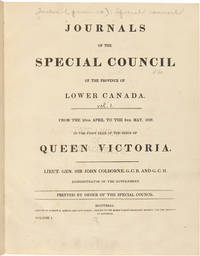
1838réf. 32893Montreal. 1838-1840. Rare Laws from the Patriot Uprising An important collection of Canadian laws as passed by the Special Council of Lower Canada from 1838 to 1840. When the Patriot Uprising of 1838 caused Canadian officials to suspend the 1791 constitution which had divided Canada into the Upper and Lower Provinces each with their own legislature and establish martial law the provincial judiciary assumed administrative control in the form of the Special Council. The Special Council continued in an administrative capacity until the Union Act of 1840 which reunited the provinces with a single legislature. A fundamental cause of the Patriot Uprising was the ambiguous extent of judiciary power; based on the reign of the Special Council recorded in detail here judicial powers were more clearly defined via the Union Act. TPL calls for six volumes bound in three. The present set features each volume bound separately lacking the sixth volume. The large portions of unnumbered pages at the end of each contain sessional papers appendices and indices. Key insight into a tumultuous period of Canadian legal history. The journals were also issued in French. OCLC locates these journals at fewer than ten institutions not all of which appear to hold complete runs. Quarto. Later cloth red and black gilt morocco labels. Moderate soiling on covers library labels at toe of spines. Uniform light toning. Perforated library stamps on titlepages occasional additional library markings. First twenty pages of last volume in typescript facsimile. Overall very good. Lacks the sixth volume. TPL 2173. GAGNON I:1830. OCLC 12010933 63013527. hardcover books
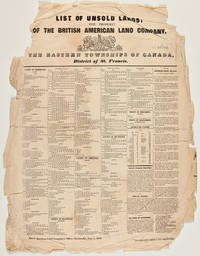
1842réf. 39134Montreal: Printed by John C. Becket 1842. Canadian Land for Sale A Canadian broadside advertising lands available in the Eastern Townships printed at the beginning of the region's transformation into a French-speaking area. In the early 1800s the Eastern Townships were an almost exclusively Anglophone region of Quebec. The American Revolution precipitated the flight of over 40000 Loyalists to Canada in the 1780s including a small handful to the largely unsettled region of Quebec between the St. Lawrence River and the U.S. border known as the Eastern Townships. The Loyalists cleared much of the rich land for farming which attracted a large number of immigrants from New England in the first decades of the 19th century. In the 1840s a rapid shift occurred in the region as French-speaking Quebecois from poorer areas began pouring in and the English speakers began emigrating to the U.S. and other parts of Canada. Francophones became a majority in the 1870s and today constitute over 85% of the population. The present broadside printed in English lists hundreds of lots for sale by the British American Land Company and includes over a column's worth of detailed descriptions of lands open for purchase. The following towns and areas are represented: Ascot Auckland Brompton Compton Clifton Clinton Ditton Dudswell Eaton Hereford Melbourne Newport Orford Shipton Stoke Weedon Westbury and Windsor in the County of Sherbrooke; Barford Barnston Bolton Hatley Potton and Stanstead in the County of Stanstead; Brome Ely Farnham Granby Milton Roxton Shefford and Stukeley in the County of Shefford; Acton Aston Chester Durhan Grantham Ham Kingsley Simpson Tingwock Warwick Wendover and Wickham in the County of Drummond; Sutton in the County of Missisquoi; Hemmingford in the County of Beauharnois; and improved farms in the district of St. Francis Territory Port St. Francis and the town of Sherbrooke. OCLC locates copies at the following institutions: McGill University Library and Archives Canada and the University of Vermont. Very rare. Small tears and creasing at all margins affecting a few words of text; significant loss at upper corners not affecting text. Fair. OCLC 61623796 30991751. unknown books
1788réf. 12524Quebec: William Brown August 7 1788. Regulations for the Civil Courts Contains a proclamation by Lord Dorchester for the regulation of the civil courts of Canada as well as general news of the town ship arrivals etc. 4pp. printed in double-column format in parallel English and French. Folio. Dbd. some dust soiling at top and bottom else very good. unknown books
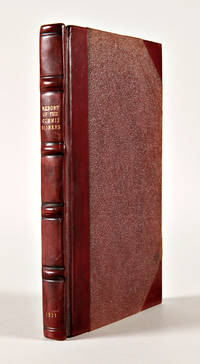
1831réf. 50737Quebec: Ordered by the Assembly to the printed 1831. Early Bilingual Government Reports Two government reports each printed sequentially in English and then French regarding the exploration of Lower Canada. Scarce; not cited in TPL Lande or Gangon though TPL has since acquired a copy. A rare and relatively early Canadian imprint. 20th-century red three-quarter calf and cloth spine gilt. Bookplates on front pastedown. Some minor foxing and soiling. Very good. hardcover books
1795réf. E0029Samuel Hearne was the first European to make an overland excursion across northern Canada to the Arctic Ocean xliv458 pages with two of four engraved plates after drawings by the author both folding and four of five folding engraved maps. Quarto 11 3/4" x 9 3/4" bound in full leather with raised spine bands and gilt lettering to spine. HillI page 141. Sabin 31181 First edition. Manuscript journal was found by La Pérouse when he captured Fort Albany; later one of his conditions of surrender was that it be published. Samuel Hearne 1745 – November 1792 was an explorer fur-trader author and naturalist. He was the first European to make an overland excursion across northern Canada to the Arctic Ocean In 1774 Hearne built Cumberland House for the Hudson's Bay Company its first interior trading post and the first permanent settlement in present Saskatchewan. From 1769 to 1772 Hearne was employed in north-western discovery searching especially for certain copper mines described by Indians as "Far-Away-Metal River". These copper mines were found in the Barren Lands where the ground is permanently frozen to within a few inches of the surface creating in many areas vast stretches of mosquito- and fly-infested swamp during the summer thaw. For this reason it was decided that travel in winter was preferable. His first attempt began on 6 November 1769. The large size of the expedition and too much European equipment being carried led to the desertion of his Indian guides and the failure of the expedition. His second commencing 23 February 1770 failed because his quadrant was broken and much of his equipment was stolen. Learning from the mistakes of the first two expeditions Hearne contrived to travel as the only European with a group of Indians led by the great chief Matonabbee. The group also included eight of Matonabbee's wives to act as beasts of burden in the sledge traces camp servants and cooks. This third expedition set out in December 1770 in order to reach the Coppermine River in summer by which he could descend to the Arctic in canoes. Matonabbee kept a fast pace so fast they reached the great caribou traverse before provisions dwindled and in time for the spring hunt. Here all the Indian hunters of the north gathered to hunt the vast herds of caribou migrating north for summer. A store of meat was laid up for Hearne's voyage and a band of warriors joined the expedition. Matonabbee ordered the women to wait for his return in the Athabasca country to the west. The Chipewyans were generally a mild and peaceful people however they were in a state of conflict with the Inuit. A great number of Indians joined Hearne's party to accompany them to the Coppermine River with intent to murder Inuit who were understood to frequent that river in considerable numbers.2 On July 14 1771 they reached the Coppermine River a small stream flowing over a rocky bed in the "Barren Lands of the Little Sticks". A few miles down the river just above a cataract were the domed wigwams of an Eskimo camp. At 1am on July 17 1771 Matonabbee and the other Indians fell upon the sleeping Eskimo in a ruthless massacre. Approximately twenty men women and children were killed; this would be known as the Massacre at Bloody Falls. A few days later Hearne was the first European to reach the shore of the Arctic Ocean by an overland route. By tracing the Coppermine River to the Arctic Ocean he had established there was no northwest passage through the continent at lower latitudes. This expedition also proved successful in its primary goal by discovering copper in the Coppermine River basin. However an intensive search of the area yielded only one four-pound lump of copper and commercial mining was not considered viable. Matonabbee led Hearne back to Churchill by a wide westward circle past Bear Lake in Athabasca Country. In midwinter he became the first European to see and cross Great Slave Lake. Hearne returned to Fort Prince of Wales on 30 June 1772 having walked some 5000 miles and explored more than 250000 square miles. Condition: Rebound in attractive leather with raised spine bands. Lacks frontispiece map and two plates. Plate I A North West View of Prince of Wales's Fort and Plate IV A Winter view of the Athapuscow Lake. Some internal spotting. Small repair to title page and verso and front free end paper edge else a better than very good copy. Printed for A Strahan and T Cadell hardcover books
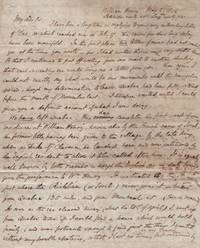
1847réf. List2609Quebec City and Brockton Canada 1847. Four letters approximately sixteen total pages: four 8 x 12.5 inches twelve 8 x 10 inches and smaller. Two letters dated 1846 one 1847 missing final pages and one without date missing initial and final pages. Very good. Edmund John Senkler 1802-1872 was born in Norfolk England educated at Cambridge and in 1827 ordained as an Anglican minister. Senkler his wife Eleanor and their children immigrated to Canada in 1843 to live in Quebec City Canada East now the province of Quebec. They then moved to Sorel also known as William Henry and finally to Brockville near Kingston Canada West now Ontario. Offered here is a set of four letters from Senkler to his friend G. W. Chad back in Norfolk describing the activities of Senkler and his family as they settle into life in Canada. The Senklers had first moved to Quebec City but did not enjoy their time "in that pestiferous cloaca . over which the destroying angel seems evermore to hover with his drawn sword in his hand" May 8 1846. On planning to leave the Bishop of Montreal offers Senkler an unpaid position in "Coteau du Lac a lonely place 40 or 50 miles above Montreal" whose previous missionary had "been enjoying for many years a handsome salary" and was now "on his return to England." Senkler turns down this meager offer and takes his family to Sorel. The move is providential as "Not fewer than 27 persons with whom we had some acquaintance have died there Quebec City since we left" September 10 1846. The family's acquaintances apparently died in a theater fire in Quebec City-probably the St. Louise Theater-which seemed to have turned into a crowd crush: "I knew some of the sufferers: some were very pious people . What shocked the feelings of all who witnessed the scene with some of whom I have conversed was that the misery was so easily approachable and yet so utterly beyond relief. . In the case of poor Mr. Scott mentioned in all the papers particularly the Illustrated London News of July 18 where there is a view of the place his brother could not only see him but talk with him - caress him petting his face weeping over him while the poor suffering man commended his wife family to his care; and yet no force could drag out his limbs from the entangled mass of human beings. They did pull at him until they pulled the ball of his shoulder out of the socket and he begged to be allowed to die." By 1847 the family had sold their property in Sorel and moved west to Brockville in what is now Ontario. The family are noticing the effects of England's Panic of 1847: "The great scarcity of money now felt in England will very shortly be felt here. The produce sent from hence home has not been paid for. Consequently our merchants must pay for the manufactures c. sent out by bills of exchange which must be in so much greater demand therefore fetch a higher premium." December 8 1847 And around the same time an epidemic of typhus breaks out in Canada from Irish immigrants fleeing the famine: "Probably you have learned from the papers what misery the unfortunate Irish emigrants have brought and are likely yet to bring to this country. They have spread a pestilence through the city of Montreal. Grosse Isle the quarantine station below Quebec has been crowded with fever patients to an alarming extent. . The emigrants as they recover are forwarded by the steam-boats from Grosse Isle to Montreal without touching at Quebec where they are received in miserable wooden sheds. Many suffer a relapse; others first shew symptoms of fever when there; and spread the infection though the town by begging. You can imagine what hotbeds of infection those steam-boats must be. Last week 3 passed Sorel without touching at the port one had 1000 emigrants on board the other two about 800 500 respectively. . These unhappy people are forwarded to their destination in the Western Country. For many of them doubtless that destination will be an untimely grave in a strange place." No Date. Nonetheless the Senkler family happily settles in the town of Brockville with "an orchard garden with plenty of pasture for a couple of cows and horses with ground for growing all the vegetables required for the family" December 8 1847. The land is rapidly developing with land prices increasing and a telegraph line from Toronto to Quebec running through it - which to Senkler is "surprising in a country in which 60 years ago there was only an Indian's hunting track for hundreds of miles." Overall the letters provide an intimate look at life for settlers in Canada in the middle period of its rule by the British. unknown books
1910réf. 2090New York: Canada Atlantic and Plant Steamship LIne 1910. EPHEMERA TRAVEL TOURIST ADVERTISING BROCHURE. The Matthews-Northrup Co. Complete-Art Printing Works Buffalo N.Y. Map: Routes of Canada Atlantic & Plant Steamship Line Between New England and Maritime Provinces Buffalo N.Y.: The Matthews-Northrup Co. No date ' Map: Map of the Plant System of Railway Steamer and Steamship Lines and Connections Buffalo N.Y.: The Matthews-Northrup Co. No date Map: Routes of Canada Atlantic & Plant Steamship Line in the Maritime Provinces Buffalo N.Y.: The Matthews-Northrup Co. No date 8vo 8 ½" x 6"; 30pp; printed glazed paper wrapper photographic illustration vignette on front map on rear showing routes; 2 staple binding; map on verso front wrapper 6 full page illustrations and one center fold; light soiling to wrapper 1 ½" separation of fold at foot of spine wrapper partially detached at the staples; very good. Not recorded. An interesting turn of the 20th century brochure advertising excursions and "vacation outings in the maritime provinces" by the Canada Atlantic and Plant Steamship Line. Full-page photographic illustrations of the steamer "S.S. Halifax" and "S.S. Olivette" include descriptions of their services. Illustrations of scenery at the port destinations include a bird's eye view of Halifax N.S. In addition there are descriptions of the winter resorts in Tampa Port Tampa and Winter Park Florida with a map on the inside of the rear wrapper detailing the "Plant System" of railway and steamship routes. Estimation of publishing date based on clothing represented in the photographic illustrations in the brochure. Canada Atlantic and Plant Steamship LIne unknown books
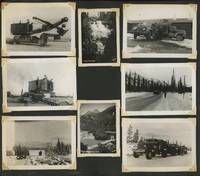
1943réf. Cat317Canada and the United States 1943. Photo album measuring 11 x 14 inches containing approximately 400 original photos with an additional 24 commercially produced photos. Photos attached with corner mounts. Original photos mainly measure 3 ½ x 4 ½ inches and smaller. Album pages delicate with wear especially to edges; photos generally excellent with some wear to corners. Overall very good to excellent. Between March and October of 1942 the Alaska-Canadian or ALCAN Highway was built by the US Army Corps of Engineers running from Dawson Creek British Columbia through Whitehorse Yukon to Delta Junction Alaska. The US had long seen a need for such a highway for defense purposes and Canada finally agreed to its construction in February of 1942 shortly after the Pearl Harbor attack on the conditions that the US would both pay for it and turn the Canadian portion over to Canada after the conflict. Over 10000 men worked to construct it including about 3000 African Americans in segregated regiments. Though officially completed in October 1942 work on the highway continued and it did not open to the public until 1948 due to issues with grading surfacing and other safety measures. Offered here is an album of photographs by an unknown photographer involved in the highway's construction. Signage in the photos places them around Whitehorse Yukon a bit more than halfway from Dawson Creek to Delta Junction. Besides the imposing Yukon landscape shots show men and their vehicles: military trucks earthmovers tractors trains ships seaplanes and tanks. Vehicles like tractors and construction plows are often fitted with tank treads; they pull wagons down steep hills and over creeks and are often pictured driving via rivers-perhaps this was easier than going overland on the soft delicate tundra. A man who is pictured in one of the photographs appears to be African American possibly part of one of the segregated regiments; the insignia on his jacket matches that on others' so he is likely part of the construction efforts. In many shots the materials and vehicles look more abandoned than in use and some appear to show junkyards. During its construction the ALCAN came to be known as the "oil can highway" for the quantity of discarded oil cans that the construction left behind; oil cans are omnipresent in these photos but they also suggest that more than just oil cans were left as debris. Two shots show an unidentified structure fire and what appears to be a head-on collision of two trucks one carrying numerous oil cans. Several show massive areas of erosion including one that has taken out a large portion of a paved road. One shows a bear standing by the rubble and trash left on the side of the road captioned on the verso "This Bear Weighs about 1400 lb. he is a dandy". These photos record the environmental impact of the highway's construction. Some shots document the men's recreation: fishing lunching in a field posing with what looks to be a wolf that was killed feeding a squirrel and even playing with bear cubs. Several are of puppies and dogsled teams. Others show wildlife in more natural habitats: bears from afar bighorn sheep in a rocky field and a moose splashing in a river. Small towns tent cities and quonset huts-including the TITA This Is The Army movie theater-dot the formidable landscape of pines and snowy peaks. Of interest to historians of highway infrastructure especially in harsh circumpolar climates and its environmental impacts. books
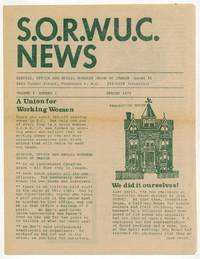
1975réf. 622175Vancouver British Columbia: S.O.R.W.U.C. / Service Office and Retail Workers Union of Canada Local #1 1975. Unbound. Near Fine. Volume I Number 1. Folio sheet folded to make four pages. Measuring 8½" x 11" closed. Old horizontal crease as issued light wear and some tanning at the fold an about near fine copy of an ephemeral periodical printed in green on thin paper. The Service Office and Retail Workers Union of Canada was a union founded by working women in 1972. According to an article by Labor Studies scholar Julia Smith in a 2014 issue of Labor / Le Travail it was founded as an "independent grass-roots socialist-feminist labour union dedicated to organizing workers the Canadian Labour union had neglected or failed to organize" including including workers at banks daycare centers offices pubs and restaurants Issue 73 Spring 2014. She opens the article with a quote from a Canada Labour Relations Board officer who calls it an "entirely different" kind of union. Uncommon. S.O.R.W.U.C. / Service, Office and Retail Workers Union of Canada Local #1 unknown books
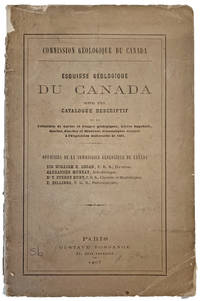
1867réf. ZZ1146Paris:: Gustave Bossange 1867. 1867. 8vo. 72 pp. Printed wrappers; partially disbound wrappers soiled and worn. Good. Gustave Bossange, 1867. unknown books
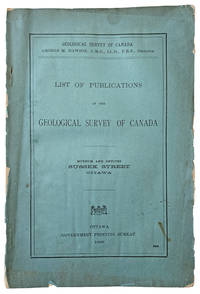
1895réf. ZZ1275Ottawa:: Government Printing Bureau 1895. 1895. 8vo. 52 pp. Printed wrappers; spine and rear cover missing front cover soiled and chipped top margins water-stained. Poor. This work includes "Supplementary List of Publications Issued by the Geological Survey of Canada Since the List of 1895 Was Printed" which is placed in loosely iii pp. Government Printing Bureau, 1895. unknown books
1980réf. 163681Culver City CA: Columbia Pictures 1980. Five vintage photographs from the 1980 film two film still photograph and three promotional portrait photographs one of Diane Lane one of Lane and Deborah Raffin and one of Cristina Raines. Based on Lena Canada's 1978 book "To Elvis With Love" about her experience working at a home for disabled children where she encouraged an eight year old girl with cerebral palsy to begin correspondence with her hero Elvis Presley. Originally released under the book title and subsequently changed to "Touched by Love." Starring Diane Lane in her second feature film role as the disabled young girl. Shot on location in Alberta Canada. 8 x 10 inches. One photograph with faint even toning else Near Fine. Columbia Pictures unknown books
1975réf. 212104Vancouver BC: the Union 1975. 4p. 8.5x11 inches horizontal fold evenly toned else very good condition. First issue of the newsletter including an introduction to the union. the Union unknown books
1941réf. 6339Transcona Mb: Wm. H. Gander 1941. Very good. Three issues. 16mo. Lightly toned minor wear. The first three issues of this amateur periodical. This charming work has a very meta vibe with at least these first three issues being a newspaper about other newspapers and journals. The first issue focuses on The Boys' Friend while the other two concern "The Magnet Library" "The Empire Library" the "Thri'penny Libraries" and some former boys' writers. The topic must have been of significant interest to William Gander as the periodical which was "printed and issued occasionally" ran until 1965. Wm. H. Gander unknown books
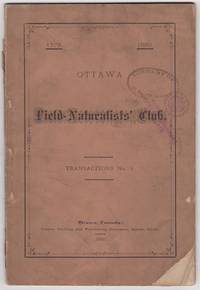
1880réf. 46109Ottawa: Citizen Printing and Publishing Company 1880. First edition. Paper wrappers. Wrappers soiled with library withdrawal stamps spine chipped bottom forecorners of first 1/2 dozen leaves chipped or folded starting to separate at spine contents lightly browned but very good. 62 pp. 2 leaves plates. Illus. with 2 b/w plates. 8vo. The first issue of this publication. Includes James Fletcher: Flora Ottawensis minutes and notes o seven soirees rules and annual report. Scarce in the trade. Citizen Printing and Publishing Company unknown books