ALASKA ARCHIVEABAA

1 167 résultats
réf. 5124ALAKSA ARCHIVE. Archive. 10 pieces. 1921-1922. Fort Liscum Alaska Territory. An archive of four letters signed “Alice” and written by Alice Donaldson in Alaska to her mother and aunt in Massachusetts. Donaldson her husband and their children lived on the Fort Liscum Army base from 1921 until the base’s closure in 1922. Written during the year that the Donaldsons lived on the base Alice talks about adjusting to life in Alaska and then having to move again within a year. Along with her letters are six small photographs of Alaska. a ALS. June 10 1921. Fort Liscum Alaska. “Dear Mother:- It is almost time for the brat to come back after mail for the south so I will tell you all we have been doing this week. Sunday was a wonderful day we took our lunch and walked out on the…Coming back we gathered seven kinds of wild flowers daisies buttercups violets wild sweet pea a light purple flower similar to our columbine only smaller a dark purple flower almost like our snap dragon and salmon berry blossoms. There are quantities of ferns everywhere. I have a centerpiece for my dining table made of a tin can cut down to two inches…With much love for father and yourself Alice”. b ALS. June 30 1921. Fort Liscum Alaska. “Dear Mother :- If you could look in and see us I think you would say we have a very pretty and comfortable home. Out things arrived early Tuesday morning and they were all uncrated and mostly in place Tuesday night. The things which I ordered from Sears-Roebuck came at the same time…”. c ALS. March 13 1922. Fort Liscum Alaska. “Dear Mother:- Can you image what it would be like to have a March wind blowing a gale with about three feet of loose snow on top of a crust That is what we have had for twenty-four hours sometimes we couldn’t see the nearest houses there are drifts every where the most bothersome one is in front of our dining room windows…We were all very much excited yesterday the order came confirming the rumor that Liscum is to be abandoned and asking how long it will take to get everything ready to be moved to Ft. Seward with about nine ft of snow on the ground we replied at least two months. George has asked for a Transport June tenth. As the order reads we go to Ft. Seward but George is still hoping to be brought back to the States and go to Benning. I rather dislike the idea of packing everything again in just one year!” d ALS. May 21 1922. Fort Liscum Alaska. “Dear Aunt Laura:- This is George’s birthday and we have been celebrating by having our first picnic of the season in a rocky cove down at the end of Swansport. We took frying pans and built a fire so as to cook beefsteak fry potatoes and make coffee. It certainly does taste good out of doors. In order to get to the camping place we had to walk quite a distance over…a short play in which Donald made his first appearance on the stage he did better than I expected and looked quite grown up in a long trouser suit. All the children were promoted with an average of about 90. We have all had bad colds but are feeling fine today. We were very sorry to hear that Uncle Perl has been so miserable and hope he will improve a lot and enjoy the summer he usually feels better when he can get out doors more. When I wrote you after Christmas I thought I spoke about Helen’s Sash it is perfectly stunning with her blue corduroy dress and she was so pleased with it. Much love to you both Alice”. unknown books
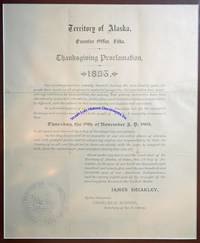
réf. 5048ALASKA. Broadside. 1pg. 10” x 12”. 1895. Alaska. A Territory of Alaska broadside issued by Governor James Sheakley for the 1895 Thanksgiving. The Governor noted that “Our territory has been notably favored during the now-closing year the people have made rapid progress in material prosperity the population has received large additions by immigration the mining and fishing industries have been abundantly rewarded education civilization and Christian influences more widely diffused and the settlers in this new country are hopeful and contented…”. The proclamation has an embossed seal in the lower left corner and four mailing folds; it is matted in brown. Not in OCLC. unknown books
réf. 4499KODIAK ALASKA HUNTING PHOTOGRAPH ARCHIVE. An archive of nearly 100 black and white photographs emanating from a men’s hunting trip to Kodiak Alaska about 1950. There are images of men with fishing rods and rifles and dead bears crabs fish moose and seals. Some photographs show the men inside the cabin relaxing reading sleeping and cooking. There are also photographs of the early planes that brought tourists Alaskan scenery and small Alaskan towns. The images are in three sizes 5” x 7” 5” x 3” and 2 ½” x 4 and all are in fine condition with minor faults such as chipped corners. A fine frontier photography archive. unknown books
1936réf. 30923New York: Madison & Marshall 1936. Second Printing. Octavo. Blue cloth boards; blue pictorial dust jacket by Harry Douglas; 236pp. Jacket rather cockled and slightly discolored from damp spine crown worn with kraft tape repair to verso. Good or better. Widespread attack on liberalism in American politics with special attention to FDR's New Deal Policies. Jacket illustration by Harry Douglas. Madison & Marshall unknown books
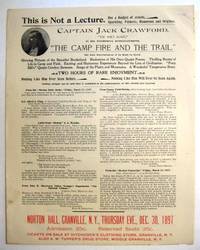
1897réf. 29536New York 1897. Broadsheet 9 1/2" x 12". With a small oval half-tone portrait. On recto at the bottom printed in red: 'Norton Hall Granville N.Y. Thursday Eve. Dec. 30 1897". Near Fine. A rare announcement of a public entertainment-- "Not a Lecture. But a Budget of Jewels Sparkling Pathetic Humorous and Original"-- by this popular Western hero who on his first outing as a reporter in 1875 did much to promote the Black Hills Gold Rush. John W. Crawford 1847-1917 was a "poet-scout" who memorialized Custer and Wild Bill Hickok in verse. He "was one of the original discoverers of gold on French Creek in the Black Hills in 1876." After a stint with Buffalo Bill's Wild West Show which he left when he accidentally shot himself in the groin blaming it on Buffalo Bill's drinking he moved to New Mexico to scout for the Army against the Apache. He "did more than any other man in the Territory in bringing before the public the immense mineral wealth of New Mexico." This broadsheet serves not only to publicize Captain Jack's Entertainment but also to promote "The Capt. Jack Crawford Alaska Prospecting and Mining Co." Testimonials to Crawford are printed here along with an invitation for the recipient to receive a Company prospectus. OCLC 778631567 2- Yale SMU as of March 2018. unknown books
1898réf. 1143655th Cong. 2d. Sess. Washington 1898. 5 1 pp.with EIGHT OTHER BILLS ON 5975 DURING THIS SESSION through its House Passage in March 1898. Quarto bound together in new plain wrappers. Institutional stamps some blank edge chipping Good. Extending the homestead laws to Alaska and creating easements for railroads and the mode of obtaining them. unknown books
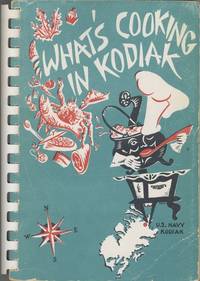
1959réf. 5842Kodiak Alaska: The Club 1959. Octavo-size 21 x 14 cm. vi 249 vi pages with unnumbered chapter heads interleaved. Photo-reproduction of manuscript. Illustrations within text throughout and on chapter heads. Index. Date of publication from external evidence. ~ Evident first edition. A community cookbook undertaken in support of the nursery operated on behalf of families stationed at the Seventeenth Naval District on Kodiak Island in the Gulf of Alaska. With one hundred sixty attributed recipes including: Alaska Razor Clam Chowder Split Pea Soup with Herbs Custard Corn Bread Onion Shortcake Meat Loaf Spiral Apple Sauce Meat Balls Kodiak Hare Deep Dish Salmon Pie Shrimp-Stuffed Peppers Kodiak Devil Crabs Wild Rice Casserole Sweet Potato Puffs Sourdough Hotcakes Rhubarb Betty Afognak Berry Pie Sherry Pie Kris Kringle Cake Sand Tarts Salmonberry Wine. ~ Reconnaissance for an advance operations command in the Aleutians had begun in 1938 in anticipation of possible military engagement in the North Pacific and construction was underway by 1939. The Kodiak Naval Operating Base later the Seventeenth Naval District was formally established in April 1941 as were Army coastal defense forces nearby at Fort Greely both placed on alert after the attack on Pearl Harbor. After the Japanese landings at Kiska and Attu in June 1942 Kodiak's carriers and submarines played critical roles in the joint campaigns with Canada to secure them. Captain William Rhodes the author of the "Acknowledgement" that serves as preface to What's Cooking in Kodiak had been part of the original study team in 1938 thereafter had served on numerous carriers and as an air fleet commander during the War and returned to command the naval station in August 1952. His wife is the contributor of a recipe for Filipino Style Fish on page 177. The earliest date however that one of the illustrators Martha Bolling can be placed there - as the wife of a navy airman and instructor at a summer arts school - is 1955. The contributor of a recipe for Lemon Souffle on page 69 Alice Watson Estabrook would have departed Kodiak in 1959 with her husband William Sears Estabrook who served for three years as inspector general at the Kodiak base before his retirement. ~ The Seventeenth Naval District was disestablished on 30 June 1971 during an overhaul of the entire administrative system and in 1972 the site was turned over to the United States Coast Guard. Today the Naval Operating Base and Fort Greely form part of a National Historic Landmark on the National Register in recognition of the roles played by men and women stationed there during World War II. ~ White plastic comb holding blue and white covers the front panel illustrated with a fanciful kettle wearing a chef's hat; with some edge-wear and a crease to the lower front fore-corner. OCLC locates one copy; in neither Brown nor Cagle. The Club unknown books
1944réf. 5859Fairbanks Alaska: The Church; Printed by Tanana Publishing 1944. Ring-bound octavo-size book 23 x 15.25 cm. ii 160 ii pages. Advertisements. Table of contents. List of advertisers. Printer suggested from advertisement on page 128. ~ Evident first edition. A church cookbook with more than two hundred recipes many of them attributed. Among entries warranting notice: Black-Eyed Pea Soup Dried Pear Bread Bohemian Kolaches Norwegian Horns Okanagan Salad Raw Turnip Salad Green Rice Ring Codfish Baked with Cheese Alaskan Cranberry Pork Chops Corned Moose Meat Carrot Beef Loaf Barbecued Lima Beans Hominy Pie Raisin Tarts Pumpkin Cake Potato Cake with walnuts Swedish Pepper Cookies Apricot Mousse Cranberry Ice Salmonberry Preserve. ~ Favorite Recipes honors the fortieth anniversary of its congregation's founding for Saint Matthew's Episcopal was one of three churches organized in 1904 alongside First Presbyterian and the Catholic Church of the Immaculate Conception in the wake of the great Fairbanks Gold Rush of 1902. Episcopalians claim a sort of precedence owing to reports of a service held by visitors from Circle a mining town northeast of Fairbanks in 1903 in the Fairbanks Saloon. Another assertion of priority concerns St. Matthew's Hospital - built of logs like the Church on land adjacent - which administered perhaps also as early as 1904 to prospectors and trappers old-timers and chechacos of every nationality encountered on the trails among them Canadians Finns Russians Italians Norwegians Australians and others as recorded by a witness one Deaconess Clara Carter in The Alaska Churchman no. 1 June 1906. A source of pride was a small church belfry holding a bell cast in Troy New York in 1905 and inscribed with words of the first local bishop: "O ye Frost and Cold bless ye the Lord; praise Him and magnify Him forever." Members of Saint Matthew's also started the first lending library in a room at the rear of the church initiated the first kindergarten and organized the first troop of Boy Scouts in Fairbanks. ~ Shortly after publication of Favorite Recipes in 1947 the log church burned but the altar communion rail lectern - carved from Alaskan birch - as well as the 1905 bell were saved eventually to be installed in a new woodframe structure dedicated on Christmas Eve 1948. The congregation celebrated its centenary in 2004 and flourishes still. ~ Three-hole punched and plastic-ring bound with original beige cover illustrated in a style reminiscent of Jugendstil woodcuts; lightly soiled front loosened from rings as are several leaves. Still good or a bit better. Scarce. OCLC locates two copies; in neither Brown nor Cagle. [The Church; Printed by Tanana Publishing(?)] unknown books
1930réf. 6970Vancouver B.C.: Alaska Cruise Lines Ltd 1930. Group of nine menus each 21.5 x 14 cm. single leaf printed both sides. Illustrated with half-tones depicting scenes of Alaska. All are breakfast or lunch menus from the S.S. Aleutian. A statement at the foot of the menus states "Envelopes for mailing may be obtained at the print shop" reminding us that the menus served a purpose beyond delivering the meal's choices. It also acts as an advertising mailer for passengers to send to friends and family. And we're reminded that the menus were printed on board the steamship. Fine. Alaska Cruise Lines, Ltd unknown books
1952réf. 5333Anchorage: Alaska Crippled Children's Association 1952. Duodecimo-size stapled booklet 13.25 x 10.5 cm. ii 1-36 ii pages. Illustrated. Table of contents. Title from cover. Publisher from page i and date of publication from page ii. ~ Second printing. Now with changes in pagination; the "Consent to Print" is on the verso of the title page and the rear contains an order form and advertisements for additional items for sale. The artwork also drawn by "R. Seetomona" depicts the same image of a young woman sitting near a stove but the stylized lettering with title letters formed from images of fish or seal drying on a line is clearer and a bit more complex the young woman's haircut is longer and parted in the middle and the pot on the stove has five heat lines instead of six. All other issues of this work we have examined have had this artwork and have been printed in black on colored wrappers. And all other issues contain an order form in various configurations as well as lists of other items for sale. ~ Eighty attributed recipes gathered from Inupiaq students participating in a school project and electing "to share the profits with the Alaska Crippled Children's Association" page ii. In some cases latitude is required to explain the lack of detail in recipes contributed by children for example: "Owl. Take feathers off from owl. Clean owl and put in cooking pot. Have lots of water in pot. Add salt to taste." But in other cases details are generously given as in the caution provided for Willow Meats with seal oil: "Never eat green stuff on willows" and in another when preparing mouseleaves Pick'Nick: "Maybe the white men don't like them." Other delicacies: Mazue Root Eskimo potato Eskimo Ice cream with reindeer tallow Baked Seal Liver Walrus Stew Oogruk i.e. bearded seal Intestine Soup and Seal Flippers. A cooperative venture between the public Day School in Shishmaref in the far north-on Sarichef Island north of the Bering Strait-and the Alaska Crippled Children's Association founded by a women's organization in Anchorage to fund orthopedic care for some twelve hundred children in Alaska then in dire need. Isabelle B. Bingham b. 1900 and her husband Herbert C. Bingham 1893-1965 were Alaska Native Service schoolteachers who taught in Shishmaref between 1948 and 1956. In 2002 fearing that life would no longer be possible on Sarichef owing to the effects of global climate change the inhabitants of Shishmaref voted in referendum to relocate. But moving a village of five hundred has proved daunting and most residents as well as the school remain on the island as of this writing. In stapled black-decorated terra cotta wrappers; upper stained at back corners chip to lower right corner; rear panel with closed tear. Good. OCLC locates numerous copies some miscredited to the teacher who penned the introductory note; a presumed second edition 1960 and third 1972 are documented; Brown 11 undated; not in Cagle. Alaska Crippled Children's Association unknown books
1960réf. 20114Pomona California: Frashers Photo 1960. A glossy real photo postcard of the crowned happy beauty contest winner seated on her throne of ice; approx. 3 1/2"" x 5 1/2" size; with photographic studio name of Frashers Photo of Pomona California and identifiers on front no. F. 9099; postally unused; with some later pencil notes on back; light wear and in very good condition; an interesting beauty contest photograph from the Alaska entry at the middle part of the 20th century. Very Good. Frashers Photo unknown books
1930réf. WRCAM56103Various locations in Oregon and Alaska 1930. Approximately 325 photographs twenty postcards and real photo postcards a linen- backed map of Alaska and a few assorted ephemeral items all housed in a contemporary leather satchel. Generally minor wear some chipping to about twenty photographs. Overall very good. A treasure house of silent cinema photography from the Pacific Northwest and Alaska featuring over 300 images from THE CHECHAHCOS and other films produced in the orbit of the film's director Lewis H. Moomaw all retained by one of his crewmen Guerney William Hays. THE CHECHAHCOS released in 1924 was the first feature film shot in Alaska. "Cheechako" is a native word referring to a "greenhorn" or someone newly arrived in the mining districts of Alaska or northwestern Canada. A melodramatic tale of the Klondike Gold Rush the was directed by Lewis H. Moomaw of the Alaska Moving Pictures Corporation. The story was based in part on the experiences of the film's producer Austin E. Lathrop known as "Alaska's first home-grown millionaire." The film has been preserved in the National Film Registry and can easily be viewed on the internet. Offered here is a large collection of photographs and other ephemera once belonging to a CHECHAHCOS crew member named Guerney William Hays 1880-1952 including film stills snapshots from the set and other images of Alaska scenery. Many of the images match up with scenes from the completed film. The subject matter includes all that might be expected from a film produced in and about Alaska: glaciers dogsleds saloons archvillains and damsels in distress along with shots of the crew and technology that made the film possible. The largest and most professionally-produced photographs in the collection are eighty 8-x- 10-inch prints almost all of them clearly from the CHECHAHCOS shoot with twenty-one stamped on the verso by the Alaska Moving Pictures Corporation and with either a printed or manuscript title written along with the stamp reading "The Chechakos" the spelling of which was later tweaked to its release title. One of the stills shows the entire company of the Alaska Moving Pictures Corporation about 150 people in the snow beside their Pullman cars; two banners for the film company hang outside the rail cars. A separate shot of the film company shows their train at the entrance to McKinley Park with a banner hanging on the train reading "Private Car Alaska Moving Pictures Corporation Entrance to McKinley Park on the Alaska Railroad." Other stills show scenes from the film shots of the cast and crew preparing to start scenes posed scenes clearly intended for use as publicity stills cast group pictures behind-the-scenes shots of the cameramen and other crew with various equipment photographs of empty interiors perhaps to be used for continuity a few featuring the dog sled teams and more. In addition to documenting the production these images also present a rare view of Alaska in the early-20th century. The remaining 240 images most of which measure approximately 3 x 5 inches were likely not formally produced by the film company for use as publicity but are in fact production photographs and still stand as valuable visual documentation of the early filmmaking process. While some of these photos are more of the vernacular sort the great majority of the images show a mixture of preproduction production and set-related photographs from the film company's time in Alaska shooting THE CHECHAHCOS and from other production's attached to the career of Lewis H. Moomaw the film's director. A great number of these images were likely produced as working production photographs - executed for the use of the company during the shooting process scouting for locations documenting costumes set continuity set construction what might today be called craft services suggesting or documenting potential camera set-ups or as studies for potential publicity stills and more. While not created as traditional publicity products these images capture the early filmmaking process both in front of and behind the camera presenting a quite uncommon slice of film production history. The fact that they were produced during the production of a film in Alaska make them an even more valuable source of information on the filmmaking process in the 1920s in a most unusual place. Production stills are produced in very small quantities compared to publicity stills are often unique or close to unique records of a production have a much lower survival rate and are keenly sought after as historical records of the filmmaking process. One of the few captioned photographs shows four wives of the CHECHAHCOS cast and crew on a fishing expedition including Moomaw's wife and Mrs. Guerney Hays. A few other photographs show an actress posing with crude dummies that were apparently about to be sent to their doom in a canoe scene in the Alaskan wilderness. Other production photographs from Alaska feature scenes on glaciers one of which shows the exact spot from a moment in the opening minute of the film a young girl with a giant Alaskan crab who is also pictured in the larger professional images and is in the film film crews poised on icy ground dog sled teams identified locations in Skagway and more. One of the other films pictured here is likely CALL OF THE ROCKIES 1929. This western was filmed in Oregon the usual home of the filmmakers involved in the Alaska Moving Pictures Corporation with Moomaw as supervising producer. CALL OF THE ROCKIES was directed by Raymond K. Johnson one of the cinematographers on THE CHECHAHCOS and features two actors identified in pencil captions on the verso of photographs present here: Russell Simpson and Jim Mason. There are numerous photographs featuring a western wagon train and other images of the traditional western which either appeared in CALL OF THE ROCKIES or perhaps one of Moomaw's other films produced in Oregon in the 1920s - UNDER THE ROUGE 1925 or FLAMES 1926 the latter of which climaxed in a raging forest fire and featured an early screen appearance by Boris Karloff. All of the postcards feature Alaskan scenes or subjects and were most likely acquired while the film company was shooting in Alaska or produced for them while they were there. This is the case for at least one of the postcards - a Christmas greeting with the banner at bottom reading "Compliments of the Alaska Moving Pictures Corporation." The final item of note here is a folding linen- backed map of Alaska issued by the Alaska Steamship Company. The map measures about 21 x 30 inches and was issued in 1917. It was almost certainly taken along to Alaska by Hays for the filming of THE CHECHAHCOS linen- backed either before-hand or while in Alaska to prevent damage from over-use. The entire collection of photographs and ephemera is housed in a period leather satchel. These photographs were collected and retained by Guerney or Gernie William Hays 1880-1952 who spent a career in the early film industry mostly in Oregon. Some pieces of ephemera bear his name and some of the larger stills are annotated "Hays" on the verso. His 1918 draft registration lists him as a motion picture operator in Portland and his obituary lists him as a member of the International Alliance of Stage Employees. His only film credit in the Internet Movie Database is for THE CHECHAHCOS for which he is credited with "sets and lighting" and also an uncredited supporting role on screen. One of the larger-format photographs features a crew member in a cramped equipment room with dozens of lights and mounds of cables; this is almost certainly Hays himself or perhaps one of his assistants. One of the photo developer's envelopes bears the name of Hobart H. Brownell the cinematographer of THE CHECHAHCOS. Two of the photographs here are inscribed to Hays - one from the actor Bert Sprotte in 1919 and the other from banjo player Eddie Peabody who has inscribed his portrait to Hays writing that "No finer stage manager I ever worked with." Another photograph shows Peabody's elaborate stage show. THE CHECHAHCOS remains an important early film for its authentic depiction of Alaskan life. Movies about the great white north were popular with early film audiences but were usually filmed in California. When Lewis H. Moomaw proposed to shoot a film entirely in Alaska about the days of the Klondike Gold Rush in the territory locals in Alaska jumped at the chance to find him funding. Upon arrival in Anchorage fully half of the town showed up to greet the film company. The cast and crew would spend three months filming in and around Anchorage the small mining town of Girdwood on Childs Glacier Abercrombie Rapids and Eyak Lake. The film premiered in the Empress Theatre in Anchorage on December 11 1923 and played to packed houses across Alaska the next year. Sadly the film never found a large audience in the continental United States playing occasionally over the next two years before falling into obscurity. The film was essentially lost until the year 2000 when a print was restored by archivists at the University of Alaska Fairbanks. Three years later the film was selected for preservation by the National Film Registry. The Library of Congress's press release when they selected THE CHECHAHCOS to the National Film Registry describes the film as such: "This independent regional film was the first feature film produced in Alaska and is renowned for its spectacular location footage of the lonely and unfathomable Alaskan wilderness frenzied dogsled pursuits and life-and-death struggles on the glaciers." A wonderful collection of great historical interest for early film scholars and of the history of Alaskan cinema. hardcover books
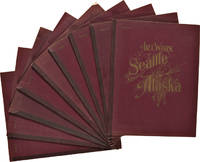
1907réf. WRCAM54859Racine Wi.: W.D. Harney Photogravure Co. 1907. Nine parts each bound separately and uniformly complete with titlepage in first volume. 26pp. of text printed rectos only and eighty photogravure plates. Folio. Publisher's rosewood cloth backstrip and burgundy wrappers front covers gilt. Mild fraying to spine cloth some wear mild chipping and light soiling to covers. Top corner of first few leaves of first volume creased. Internally clean. Overall very good. A substantial production providing a rich photographic tapestry of the Pacific Northwest and Alaska in the early twentieth century. Each volume contains nine photogravure plates with only eight in the eighth volume most full-page but some with more than one image per plate. Each part contains two or three text leaves printed rectos only. Altogether the work is comprised of eighty photogravure plates with tissue guards containing over 100 distinct photographic images. Numerous photogravures depict indigenous Eskimos and other people along with stunning views of rivers mountains mining agriculture landscapes dogsled teams totem poles ships and various aspects of life in the Pacific Northwest. Highlights include the "Largest Fir in Washington" "Bird's-Eye of Nome Alaska" "An Arctic Musher" and the "Eskimo Salmon Dance." The photogravures were taken by a number of prominent western photographers including Frank H. Nowell W.P. Romans Thomas W. Tolman Wylie T. Dennison and Asahel Curtis estranged brother of Edward S. Curtis. The gravures are printed in sepia blue or green tints and retain their clarity and power more than a century after their printing. "A magnificent work relating mostly to Alaska with many fine full-page tinted plates" - Decker. "Contains fine plates of scenery in Seattle and Alaska" - Soliday. DECKER 26:6. SOLIDAY I:1032. WICKERSHAM 412. W.D. Harney Photogravure Co. hardcover books
1901réf. WRCAM54818Rampart Ak 1901. 4pp. on a single folded sheet. Each page printed in four columns. Folio. Misfolded and neatly split along the center vertical fold with resulting large margin in first leaf. Tiny closed edge tear old tideline in upper margin of first leaf evenly toned. About very good. The extremely rare extra issue of the ALASKA FORUM printed entirely as a promotional publication to attract miners to Rampart Alaska during the gold rush. The four pages of the EXTRA include various reports of the fabulous finds in the area of Rampart "on the Yukon River in American territory about mid way between St. Michaels and Dawson City or approximately one thousand miles from each." Headlines include news such as "A New Eldorado" "Richer than Ever" "Bench Diggings" and "Paystreak is Located." Additional articles concern areas overlooked in the past opportunities for quartz prospectors the need for machinery capital and summer mining "Rampart No Longer A Winter Camp Exclusively - More Summer Work Than Ever Before." Clearly published to promote mining and by extension economic development in Rampart and the surrounding region the column-long editorial on page 2 states: "It is the intention of the publishers of the ALASKA FORUM by means of this special issue to bring to the attention of people in the Eastern states the claim of Rampart City Alaska as the gold mining center of this Territory. To that end thousands of copies of the FORUM are being distributed over New England and the Eastern states. We believe and we are backing that belief with good money that the growth of this town cannot fail to be rapid once capitalists and others are led to appreciate the unrivalled advantages Rampart offers to investor and wage earner alike. With the growth of the town will come the no less certain growth of this FORUM and therein we find justification for this issue." While the exact number of copies printed of this EXTRA is not known we have been able to locate only two other copies of this Sept. 1 1901 special issue at the Beinecke Library and the DeGolyer Library. Printed between Sept. 27 1900 and Aug. 4 1906 few copies of any issue of ALASKA FORUM have survived. Of the ten locations listed in OCLC four libraries including all three Alaska institutions hold only microfilm sets. The University of Washington holds twenty individual issues from 1904 and 1905 NYPL has issues from 1905 Denver Public Library has a single issue from 1905 the American Antiquarian Society holds just the Sept. 25 1900 issue and the Beinecke holds an additional single issue from 1901. A remarkable surviving promotional publication from the Alaskan gold rush. OCLC 22038311 Alaska Forum 1900-1906 ref. unknown books
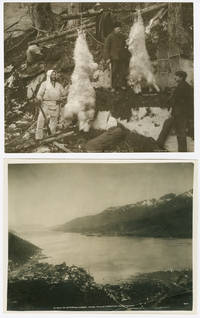
1907réf. WRCAM54628Juneau; White Pass 1907. Two photographs each approximately 7 1/2 x 9 1/2 inches. Slight wear at edges. Captioned in negative. Very good. Two attractive original photographs by noted Skagway photography firm Case & Draper. William Case and Horace Draper followed the excitement of the Klondike Gold Rush and went North in 1898. They stayed and worked in partnership from a studio in Skagway until 1907-1908. The first of these photos depicts three armed men on a hillside at White Pass Alaska with two large mountain goats strung up after a hunt. The second is a captivating landscape of Juneau and the Gastineau Channel with the town of Douglas in the distance. Impressive examples from these significant Alaskan photographers. unknown books
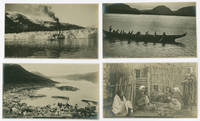
1900réf. WRCAM54627Seattle; Skagway 1900. Twelve photographs each approximately 4 1/4 x 7 1/2 inches. Overall very good. A collection of photographs taken by Seattle photographer Frank La Roche. La Roche 1853- 1934 a Philadelphia native transplanted to the Northwest established a photography studio in Seattle in 1889. He undertook many trips to Alaska documenting the Klondike Gold Rush at length from 1897 to 1899. This group contains images of Juneau Sitka Fort Wrangell here spelled Wrangle and Taku Glacier. Two images are of Chilkat Tlingit Indians and one photo of the Seymour Rapids in British Columbia is also included. Each is numbered and captioned in manuscript or in print within the negative. Exemplary images from this noted landscape photographer of Alaska and the West. unknown books
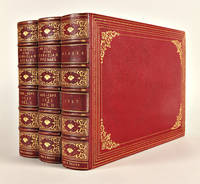
1937réf. WRCAM54535Alaska & Canada 1937. Three albums with 601 photographs each approximately 3 3/4 x 5 3/4 inches with additional ephemera such as news clippings and a hunting license. Oblong folio. Contemporary full red morocco gilt tooled by the Harcourt Bindery. Photos mounted directly on stiff grey album leaves. Very light wear to hinges and spine ends. Contents generally fine. Very good overall. Two volumes in red cloth slipcases. A magnificent and massive collection of over 600 photographs compiled by William N. Beach famed big game hunter and author of IN THE SHADOW OF MOUNT McKINLEY. The first two albums here document a journey made by Beach through the Canadian Rockies in August and September 1933. The third album focuses on his excursion through Alaska in 1937. All three postdate the publication of MOUNT McKINLEY which established Beach as an important figure in the world of big game hunting. According to one of the contemporary newspaper clippings tipped into the album Beach's hunting party on his second trip documented here "was after specimens of Alaskan wild life to be placed in the Smithsonian" with W.L. Brown curator of the Institute accompanying the party. Shortly after the trip an article by Beach entitled "With Moose and Caribou in Alaska" was published in EXPLORATION AND FIELD-WORK OF THE SMITHSONIAN INSTITUTION IN 1937 and featured photography from the "Alaska" album present here. These expertly captured images of the Denali wilderness and the Rockies offer a rare and extraordinary glimpse not only into big game hunting but also into remote and pristine landscapes of these areas in the 1930s. An outstanding and impressive group of photographs. hardcover books
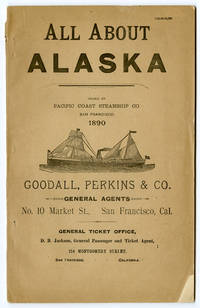
1890réf. WRCAM52358San Francisco 1890. 63pp. Illus. Tables. Original pictorial wrappers. Minor chipping and a couple of tiny repaired tears to wrappers. Very good. Scarce early promotional from the Pacific Coast Steamship Company after the first of 1887 discussing topography industry agriculture with diagrams of steamships available for passage namely deck plans of the "Queen" "City of Topeka" and "George W. Elder." An attractive engraving of the Hotel Ramona San Luis Obispo adorns the back cover. TOURVILLE 3449. unknown books
1898réf. WRCAM41306San Francisco: San Francisco Examiner 1898. 4pp. on a single folded sheet. Front page with a chromolithographed illustration of a miner dressed in a heavy coat. Lightly tanned. Near fine. Scarce sheet music published at the height of the Klondike Gold Rush in Alaska illustrated with a striking chromolithographic front sheet. This song was "written and composed for the SAN FRANCISCO EXAMINER" and the copyright is in the name of William Randolph Hearst whose family knew a bit about mining. The words are by R.S. Phelps and the music is by Leo Bruck and it appeared as a supplement to the EXAMINER for Sunday February 13 1898. The lyrics begin: "Sing of gold gold gold sing of lumpy chunky gold; we are hustlin' we are pryin' we are achin' we are dyin' to get in and send a flyin' the gravel from the gold." OCLC locates copies at Yale the University of California at Berkeley UCLA and the University of Washington. OCLC 83545084 14526096 77899488. San Francisco Examiner unknown books
1875réf. WRCAM18480San Francisco 1875. 43pp. Original front wrapper bound into later half morocco. Very good. A propagandistic appeal by the unsuccessful bidders for a fur seal contract for the repeal of the so-called monopoly of the Alaska Commercial Company. Claims to present only the "facts" and calls on the people and press of America to petition Congress for the repeal the government granted to the Company for a monopoly in the fur seal trade. Includes a brief historical sketch of Alaska focusing on how her natural riches came into the hands of a few money-hungry robber barons and paints a dismal picture of the "serfdom" of the civilized natives on the fur seal islands of St. George and St. Paul. TOURVILLE 269. RICKS p.26. WICKERSHAM 1793. unknown books
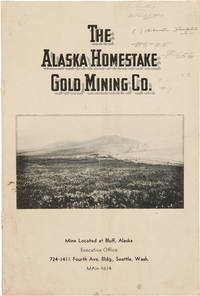
1936réf. WRCAM30008Seattle: Alaska Homestake Gold Mining Co 1936. 8pp. plus folding map. Original printed pictorial wrappers. Both wrappers detached. Internally clean. Very good. Prospectus of this well-financed Alaskan mining company with numerous statistics regarding cost of operation and potential yield. The map perfectly traced from the original illustrates the Bluff Quartz claims region in which the company sought to operate. An interesting overview of this large-scale operation. Not in Tourville nor on OCLC. Alaska Homestake Gold Mining Co unknown books
1885réf. WRCAM18270Madison Wi 1885. 16pp. 16mo. Original printed wrappers. Very fine. Advice for the emigrant and traveller to Alaska: how to get there and what to expect; plus the Organic Act of the Territory approved in 1884. Cowles was the commissioner for Alaska at the World's Cotton Exposition in New Orleans in 1885. Not in Ricks. TOURVILLE 1101. WICKERSHAM 3911. SMITH 2025. unknown books
1891réf. WRCAM25688San Francisco 1891. 63pp. Illus. Original green printed wrappers detached and split at spine. Edges chipped. Internally clean and nice. Discreet cancelled library booklabel tipped inside back wrapper. Overall good. Extensive promotional work for Alaska tourism issued before the Gold Rush. Describes the resources agriculture potential and natural beauty of Alaska including salmon fisheries stock raising lands government lands etc. Descriptions of the steamships excursion routes and rates. unknown books
1903réf. WRCAM43317Juneau 1903. 4pp. Folio. Chipped and browned at edges. Two leaves separated at fold. Good. Daily Alaskan newspaper containing news of William Sulzer's speech in support of the territory an idyllic word-portrait of prospecting and numerous advertisements. Sulzer a Democratic Congressman from New York argues that Alaska deserves to be a full-fledged territory rather than just a district owing to its beauty and vast natural resources. Sulzer would later serve as New York's governor and hold the record as the only governor of that state to be impeached; his brother Charles was an Alaskan politician. Alaska would not become a territory until 1912. unknown books
1898réf. WRCAM32668Washington: United States Geological Survey 1898. 244pp. plus folding colored map. Original printed wrappers detached. Map with four neat closed tears. Text bright and clean. Very good. Report issued by the United States Geological Survey for the use of prospectors and miners including descriptions of routes to the Klondike and notes on the probable extent of gold-bearing deposits. The large folding map of Alaska is particularly fine and has some of the gold region shaded in bright yellow. WICKERSHAM 8223. United States Geological Survey unknown books