1439 resultados
18083 vols. (328, 292, 310 p.) Hardcover Very good condition, in later maroon cloth Howes A - 352
1801ref. 35410Washington. 1801. Early Laws of Mississippi Territory A very early work on Mississippi territorial law printed in Washington in 1801 and containing ten laws that were eventually published "by order of the House of Representatives" after some local controversy over their content. The laws from the second half of 1799 range in subject matter from distempered cattle to divorce. These were added to the twenty-five laws already passed by the territorial legislature. The House of Representatives published this volume to assist in the "enquiry into the official conduct of Winthrop Sargent governor of the Mississippi territory" p.1. Thomas Jefferson removed Sargent from office later that year. Modern half calf and marbled boards spine gilt. Very light foxing. Near fine. SABIN 49519. SHAW & SHOEMAKER 1515. LC MISSISSIPPI. A SESQUICENTENNIAL OF STATEHOOD 1967 60. GOODSPEED 141:351 161:683. hardcover
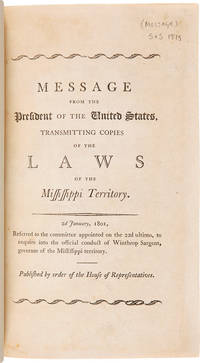
1801ref. 35410Washington. 1801. Early Laws of Mississippi Territory A very early work on Mississippi territorial law printed in Washington in 1801 and containing ten laws that were eventually published "by order of the House of Representatives" after some local controversy over their content. The laws from the second half of 1799 range in subject matter from distempered cattle to divorce. These were added to the twenty-five laws already passed by the territorial legislature. The House of Representatives published this volume to assist in the "enquiry into the official conduct of Winthrop Sargent governor of the Mississippi territory" p.1. Thomas Jefferson removed Sargent from office later that year. Modern half calf and marbled boards spine gilt. Very light foxing. Near fine. SABIN 49519. SHAW & SHOEMAKER 1515. LC MISSISSIPPI. A SESQUICENTENNIAL OF STATEHOOD 1967 60. GOODSPEED 141:351 161:683. hardcover books
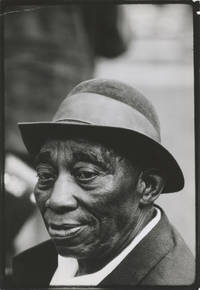
1965ref. 162963Forest Hills NY: Photo-Graphics 1965. Vintage satin finish portrait photograph of influential country blues musician Mississippi John Hurt 1965. Stamp of photographer Bernard Gotfryd on the verso along with annotations in manuscript pencil relating to same. Although Hurt's initial recordings with Okeh Records in the 1920s were commercial failures driving Hurt back into sharecropping he experienced a brief period of renewed interest in the early 1960s after his rediscovery by musicologist Dick Spottswood. He would travel and perform extensively recording for the Library of Congress in 1964 and recording four albums in as many years but would pass away in 1966 of a heart attack. Material recorded by Hurt has been covered by numerous artists including Bob Dylan Gillian Welch Beck Dave Van Ronk Taj Mahal Jerry Garcia and many others. Polish-American photographer Bernard Gotfryd worked as a staff photojournalist for "Newsweek" operating out of New York for over three decades. His photographs serve as a document of American popular culture politics and art in the 1960s and 1970s and his work is today held in the Library of Congress Brooklyn Public Library and the New York Historical Society. From the archive of the PIX Agency an American photo house that acted as an intermediary between emigre photographers as well as those still living in Europe and the American magazine and newspaper market between 1935-1969. 6.5 x 9.5 inches archivally matted in a 11 x 14 inch 8-ply white mat. About Near Fine with a small crease at the top left corner. Photo-Graphics unknown
1965ref. 162963Forest Hills NY: Photo-Graphics 1965. Vintage satin finish portrait photograph of influential country blues musician Mississippi John Hurt 1965. Stamp of photographer Bernard Gotfryd on the verso along with annotations in manuscript pencil relating to same. Although Hurt's initial recordings with Okeh Records in the 1920s were commercial failures driving Hurt back into sharecropping he experienced a brief period of renewed interest in the early 1960s after his rediscovery by musicologist Dick Spottswood. He would travel and perform extensively recording for the Library of Congress in 1964 and recording four albums in as many years but would pass away in 1966 of a heart attack. Material recorded by Hurt has been covered by numerous artists including Bob Dylan Gillian Welch Beck Dave Van Ronk Taj Mahal Jerry Garcia and many others. Polish-American photographer Bernard Gotfryd worked as a staff photojournalist for "Newsweek" operating out of New York for over three decades. His photographs serve as a document of American popular culture politics and art in the 1960s and 1970s and his work is today held in the Library of Congress Brooklyn Public Library and the New York Historical Society. From the archive of the PIX Agency an American photo house that acted as an intermediary between emigre photographers as well as those still living in Europe and the American magazine and newspaper market between 1935-1969. 6.5 x 9.5 inches archivally matted in a 11 x 14 inch 8-ply white mat. About Near Fine with a small crease at the top left corner. Photo-Graphics unknown books
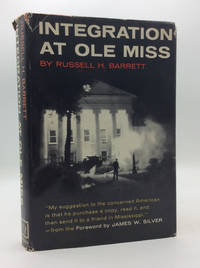
ref. 1282914A small group of material relating to the October 1962 riots at the University of Mississippi following the enrollment of the school's first Black student James H. Meredith. The highlight of this collection is a copy of the book INTEGRATION AT OLE MISS by Russell Barrett which is annotated by Ole Miss professor William B. Keith. Included is a xerox copy of an unpublished two-page typed letter by Keith detailing his experiences during the riot. The letter is addressed to his close friend Don Davis a high school history teacher and principal in Ohio. In the letter Keith recalls the trepidation of not knowing how Gov. Barnett would respond the the Federal government forcing the issue of desegregation at Ole Miss; his recollection of the Sept. 30 Ole Miss football game; and the subsequent beginning of the riots the following day. Keith and a friend then graduate students at Ole Miss went over the Lyceum where students were gathering. He notes there are actually pictures of him in the crowd included in the Barrett book and that he has marked them. He was still in the crowd when the first volley of tear gas was fired into the crowd. A State Patrol officer next to him was struck in the head and Keith and a Miss. patrolman carried the officer to safety. It then occurred to Keith to go over to the biology building to lock up the dangerous acids kept there a smart move as rioters did break into the building to search for flammable acids. His account then ends as he watched the rest of the action on television. The letter is included in a copy of Russell Barrett's Integration at Ole Miss Chicago: 1965 1st ed which is inscribed from the author to Don Davis the recipient of Keith's letter. Also included is a two-page ALS from Keith to Davis discussing hopes they can visit soon. Keith became a long-time Professor of Biology at Ole Miss until his death in 2007. The whereabouts of the original of the letter if it still exists are unknown. Also included: James W. Silver. Mississippi: The Closed Society NY: Harcourt Brace 1964. Inscribed to Davis by Bill Keith along with an original one-page typed letter signed from Keith to Davis. James W. Silver. Running Scared: Silver in Mississippi. Inscribed from Keith to Davis. A four-page typed document which was distributed on the Ole Miss campus in late Sept. 1962 by the school's Board of Trustees. The first page is a statement from the Trustees that they are complying with the Federal Court order to enroll James Meredith. The remaining three pages are a copy of the official court order. The document is is signed by Wm. B. Keith on the first page. unknown
1908ref. 40737Washington D.C.: Published by the United States Coast and Geodetic Survey 1908. Large folding nautical chart printed on heavy paper stock. Colored. A rare original coastal survey of the Gulf coasts of Florida Alabama Mississippi and Louisiana including the Keys Fort Myers Sarasota Tampa Panama City Destin Pensacola Gulf Shores Mobile Biloxi Gulfport New Orleans and the Mississippi Delta. Established by President Thomas Jefferson in 1807 as the Survey of the Coast the U.S. Coast and Geodetic Survey was the United States' first civilian scientific agency. This agency has followed its mission to survey the U.S. coastline create nautical charts of the coast and help increase maritime safety since its founding and has often played fascinating roles in significant chapters of U.S. history. It served in all theaters of the Civil War in the service of the Union Army and Navy pioneered acoustic exploration in the wake of the sinking of the Titanic and during WWI it worked to detect enemy submarines. In addition this agency worked to survey and produce detailed maps and renderings of the U.S. coast. These nautical survey maps commonly referred to as "T-sheets" provide fascinating insights into the history of the United States coastline which has and will continue to shift. These maps are the most important data source for understanding the physical and ecological characteristics of the U.S. shoreline. The present map is a highly detailed and accurate sea chart of the coasts Florida Alabama Mississippi and Louisiana along the Gulf of Mexico and an important historical view of the developing states. Published by the United States Coast and Geodetic Survey unknown
1908ref. 40737Washington D.C.: Published by the United States Coast and Geodetic Survey 1908. Large folding nautical chart printed on heavy paper stock. Colored. A rare original coastal survey of the Gulf coasts of Florida Alabama Mississippi and Louisiana including the Keys Fort Myers Sarasota Tampa Panama City Destin Pensacola Gulf Shores Mobile Biloxi Gulfport New Orleans and the Mississippi Delta. Established by President Thomas Jefferson in 1807 as the Survey of the Coast the U.S. Coast and Geodetic Survey was the United States' first civilian scientific agency. This agency has followed its mission to survey the U.S. coastline create nautical charts of the coast and help increase maritime safety since its founding and has often played fascinating roles in significant chapters of U.S. history. It served in all theaters of the Civil War in the service of the Union Army and Navy pioneered acoustic exploration in the wake of the sinking of the Titanic and during WWI it worked to detect enemy submarines. In addition this agency worked to survey and produce detailed maps and renderings of the U.S. coast. These nautical survey maps commonly referred to as "T-sheets" provide fascinating insights into the history of the United States coastline which has and will continue to shift. These maps are the most important data source for understanding the physical and ecological characteristics of the U.S. shoreline. The present map is a highly detailed and accurate sea chart of the coasts Florida Alabama Mississippi and Louisiana along the Gulf of Mexico and an important historical view of the developing states. Published by the United States Coast and Geodetic Survey unknown books
ref. SONG0878050922Used: Good unknown
1804ref. 1502190017City of Washington : A. & G. Way 1804-01-01. Hardcover. Very Good. Ocatvo. 7 109 p. ; 22 cm. Bound in publisher's paper wraps. In custom made box. Small stain to front wrap. Wear to extremities. Library stamp to second page from NYPL dated 1902. Contemporary owners name to head of title page of Thomas Dwight Massachusetts representative during the 8th Congress. Dwight's notations to some pages. Shaw & Shoemaker 7540. Sabin 52708 OCLC 1484388 An extremely important Yazoo document. The Yazoo land scandal was a massive fraud perpetrated from in the mid-1790s by Georgia governor George Mathews and the state legislature. They sold large tracts of land in the Yazoo lands in what are now portions of Alabama and Mississippi to political insiders at very low prices in 1794. With the end of the American Revolutionary War most of the states of the new Union attempted to extend their territorial claims from the Proclamation line of 1763 to the lands towards the Mississippi River. The Yazoo scandal began after the Bourbon County Act was dissolved in 1788 under pressure by the federal government a secret society was formed called the Combined Society formed with purpose money by land speculation. The group gained power in the state legislature and in the following year three companies The South Carolina Yazoo Company The Virginia Yazoo Company which was headed by Patrick Henry and the Tennessee Company built by the society's interests formed to buy land from Georgia. These venture were exposed and the deal for the land fell through in 1792 though the members of the Society still wished to develop Georgia lands. In 1794 four companies were formed with several principal being from the original members of 1789 purchases and high ranking Georgian politicians to purchase 40 million acres of land for $500000. On January 7 1795 Governor Mathews signed into law a bill authorizing the sale of the 40000000 acres known as the Yazoo Act. When the details of the sale were revealed public outrage was widespread and people protested to federal officials and Congressmen. Jared Irwin and U.S. Senator James Jackson led the reform efforts: Irwin was elected Governor of Georgia and less than two months after taking office signed The Rescinding Act on February 13 1796 nullifying the Yazoo Act. On the same day of The Rescinding Act 11 million acres of the Yazoo land was sold to the New England Mississippi Land Company who felt the repel was illegal for $1138000 a 650% profit in 13 months' time. The lands west of Georgia would be ceded to the United States government in the Compact of 1802 for 1.25 million. This last act threw land holders into a limbo and claims by third-party owners who had innocently purchased land from the original companies would not be resolved till 1816. With the last private sale prior to the Compact of 1802 coupled with the 11th amendment the landmark case of Fletcher v. Peck would occur. John Peck of Massachusetts bought land from someone who could trace his title to the state of Georgia from 1795 when the Act was legal. He then sold 15000 acres to Robert Fletcher of New Hampshire based on a warranty deed warranting good title. The two were obviously citizens of different New England states and in June 1803 Fletcher sued Peck in federal circuit court in Massachusetts on diversity grounds alleging that the title was bad and requesting the return of his money. This landmark Yazoo document attempts to serve the land holders affected by the 1802 Compact the fledgling court case as well as an attempt to repel the sale by the State of Georgia. City of Washington : A. & G. Way hardcover
1683ref. PHO-1237Paris, Amable Auroy, 1688. In-12 (165x100mm), relié avec papier, étiquette avec titre manuscrit au dos , 10ff.-312pp. à la suite Les mœurs des Sauvages 107pp. SANS la carte .
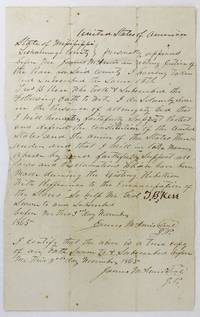
1865ref. 5112Tishomingo County Ms: November 3 1865. Very good. 1p. of manuscript on a folio sheet. Old folds minor wear and soiling. A manuscript true copy of a loyalty oath taken by Thomas B. Kerr of Tishomingo County Mississippi following the end of the Civil War. The oath itself reads: "I do solemnly swear in the presence of almighty God that I will hereafter faithfully support protect and defend the Constitution of the United States and the Union of the states thereunder and that I will in like manner abide by and faithfully support all laws and proclamations which have been made during the Existing Rebellion with reference to the Emancipation of the Slaves. So help me God." The document is signed by Kerr as well as the Justice of the Peace James M. Amis and docketed on the verso "Thos. B. Kerr amnesty oath." Amnesty oaths from Mississippi are increasingly more rare in the market especially those directly referencing the Emancipation Proclamation and the end of slavery. November 3 unknown
1865ref. 5112Tishomingo County Ms: November 3 1865. Very good. 1p. of manuscript on a folio sheet. Old folds minor wear and soiling. A manuscript true copy of a loyalty oath taken by Thomas B. Kerr of Tishomingo County Mississippi following the end of the Civil War. The oath itself reads: "I do solemnly swear in the presence of almighty God that I will hereafter faithfully support protect and defend the Constitution of the United States and the Union of the states thereunder and that I will in like manner abide by and faithfully support all laws and proclamations which have been made during the Existing Rebellion with reference to the Emancipation of the Slaves. So help me God." The document is signed by Kerr as well as the Justice of the Peace James M. Amis and docketed on the verso "Thos. B. Kerr amnesty oath." Amnesty oaths from Mississippi are increasingly more rare in the market especially those directly referencing the Emancipation Proclamation and the end of slavery. November 3 unknown books
ref. 40447Paris.Le Jay.1768. Seconde édition.2 vols.in-12 en demi-reliure à coins d'époque.2 frontispices et 2 planches gravées par St.Aubin.244 et 264 p.avec Table. BE.
1921ref. 40729Washington D.C.: Published by the United States Coast and Geodetic Survey 1921. Large folding nautical chart printed on heavy paper stock. Colored. A rare original coastal survey of the Northern Gulf coast from Florida to Louisiana encompassing Panama City Rosemary Beach Seaside Grayton Destin Pensacola Gulf Shores Mobile Gulfport and the Mississippi Delta. Established by President Thomas Jefferson in 1807 as the Survey of the Coast the U.S. Coast and Geodetic Survey was the United States' first civilian scientific agency. This agency has followed its mission to survey the U.S. coastline create nautical charts of the coast and help increase maritime safety since its founding and has often played fascinating roles in significant chapters of U.S. history. It served in all theaters of the Civil War in the service of the Union Army and Navy pioneered acoustic exploration in the wake of the sinking of the Titanic and during WWI it worked to detect enemy submarines. In addition this agency worked to survey and produce detailed maps and renderings of the U.S. coast. These nautical survey maps commonly referred to as "T-sheets" provide fascinating insights into the history of the United States coastline which has and will continue to shift. These maps are the most important data source for understanding the physical and ecological characteristics of the U.S. shoreline. The present map is a highly detailed and accurate sea chart of the Gulf coasts of Florida Alabama Mississippi and Louisiana and an important historical view of the developing states. Published by the United States Coast and Geodetic Survey unknown
1921ref. 40729Washington D.C.: Published by the United States Coast and Geodetic Survey 1921. Large folding nautical chart printed on heavy paper stock. Colored. A rare original coastal survey of the Northern Gulf coast from Florida to Louisiana encompassing Panama City Rosemary Beach Seaside Grayton Destin Pensacola Gulf Shores Mobile Gulfport and the Mississippi Delta. Established by President Thomas Jefferson in 1807 as the Survey of the Coast the U.S. Coast and Geodetic Survey was the United States' first civilian scientific agency. This agency has followed its mission to survey the U.S. coastline create nautical charts of the coast and help increase maritime safety since its founding and has often played fascinating roles in significant chapters of U.S. history. It served in all theaters of the Civil War in the service of the Union Army and Navy pioneered acoustic exploration in the wake of the sinking of the Titanic and during WWI it worked to detect enemy submarines. In addition this agency worked to survey and produce detailed maps and renderings of the U.S. coast. These nautical survey maps commonly referred to as "T-sheets" provide fascinating insights into the history of the United States coastline which has and will continue to shift. These maps are the most important data source for understanding the physical and ecological characteristics of the U.S. shoreline. The present map is a highly detailed and accurate sea chart of the Gulf coasts of Florida Alabama Mississippi and Louisiana and an important historical view of the developing states. Published by the United States Coast and Geodetic Survey unknown books
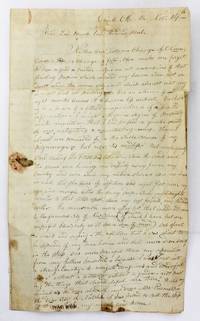
1824ref. 6554Copiah Court House Ms: November 16 1824. Good. 3pp. plus docketing. Small folio sheets. Folded. Some short separations along fold lines small loss where previously sealed at left margin of first sheet. Moderate tanning a couple of small dampstains. Accomplished in a highly legible script. A lengthy and descriptive letter by a young northern woman who had traveled by sea to New Orleans and continued through Natchez into the interior of Mississippi during the mid-1820s. Although addressed to an E. Goodrich of Richmond Massachusetts the letter appears to have been intended chiefly for Goodrich's wife whom the writer addresses as her aunt. The writer discusses local gossip about prominent members of society there bemoans the "uncouth" and "superstitious" settlers and ultimately warns her family against the idea of emigrating to the area. She opens by recalling her arrival in New Orleans on May 1: "The memorable morn May 1st that introduced me to the famous City of New Orleans-the appearance of which I have but an imperfect idea only as it was a sea of mud-was spent in sorrow and weeping. The reflection that I was about to be deprived of my dear home and still more dear society in the Ship was more painful than my separation from my Father's household-because I was to go out into a strange Country-to navigate without a guide-not knowing the things that should befall me there. Until my arrival at the dear abode of my dear Mrs. Purnell in the dear City of Natchez I was proud to call the Ship Wm. my much loved home. I aroused from this agreeable reverie and found myself alone. The name of Wybra is sacred to me as that of father mother sister or brother. You will embrace the same principle and whenever the name of Harriette occurs to your memory not a blessing to be invoked in which Capt. James Wybra does not share a part-his tenderness his politeness his affection for me shall not be forgotten while life or thought or being lasts or even while 'immortality endures.' He shall be blest his posterity blest and in a Heaven of bliss meet his sure reward." She continues by describing an encounter with Judge Allen likely Barnabas Allen who would later become a substantial Copiah County enslaver: "You have heard of Judge Allen. At the celebration of Independence I heard he was present. I was very anxious to have a peep at the old Gentleman. Accordingly a man about the size and possessing the same degree of dignity & diffidence of Rev. Wm. Allen and about 26 or 8 years of age was introduced to me as the Judge! Never since my recollection was I ever thrown into more confusion nor was I soon relieved from this perturbed state. He was made known to me as the particular friend of F. E. and after he expressed his happiness upon my safe arrival to this region of Country and his best wishes that it might prove congenial to my constitution he very modestly bowed and retired. I was immediately informed that previous to the introduction he had been told I expressed an ardent desire to have an interview with him!!" The remainder of the letter gives a detailed account of the gossip of Copiah County especially about the wife of Mississippi Secretary of State John Grimball and with a warning about living conditions in Mississippi and an admonition not to consider emigration: "The manners customs and mode of living in this country differ as widely from yours as do the climate. I think none of my relatives at the north would be happy in this climate or country. There are many privations the inhabitants illiterate irreligious and covetous. If there is on the Earth a place of heathenism it is this. I think I could never throw away my own feelings and opinions & be content to locate myself in this region of superstitions not only in matters of religion but unless a person conforms to the uncouth manners and uses the vulgar phrases of the country they are proud and subject themselves to the censure of fools who are the 'cronies' of the place. Be contented in your present situation. You will not amend it by emigration. May you be happy in life & death." Overall the letter offers a detailed outsider's view of early settler society in Mississippi through the eyes of a Massachusetts emigrant as well as a substantial account of a woman's journey and experience in the Deep South of the 1820s. November 16 unknown
1824ref. 6554Copiah Court House Ms: November 16 1824. Good. 3pp. plus docketing. Small folio sheets. Folded. Some short separations along fold lines small loss where previously sealed at left margin of first sheet. Moderate tanning a couple of small dampstains. Accomplished in a highly legible script. A lengthy and descriptive letter by a young northern woman who had traveled by sea to New Orleans and continued through Natchez into the interior of Mississippi during the mid-1820s. Although addressed to an E. Goodrich of Richmond Massachusetts the letter appears to have been intended chiefly for Goodrich's wife whom the writer addresses as her aunt. The writer discusses local gossip about prominent members of society there bemoans the "uncouth" and "superstitious" settlers and ultimately warns her family against the idea of emigrating to the area. She opens by recalling her arrival in New Orleans on May 1: "The memorable morn May 1st that introduced me to the famous City of New Orleans-the appearance of which I have but an imperfect idea only as it was a sea of mud-was spent in sorrow and weeping. The reflection that I was about to be deprived of my dear home and still more dear society in the Ship was more painful than my separation from my Father's household-because I was to go out into a strange Country-to navigate without a guide-not knowing the things that should befall me there. Until my arrival at the dear abode of my dear Mrs. Purnell in the dear City of Natchez I was proud to call the Ship Wm. my much loved home. I aroused from this agreeable reverie and found myself alone. The name of Wybra is sacred to me as that of father mother sister or brother. You will embrace the same principle and whenever the name of Harriette occurs to your memory not a blessing to be invoked in which Capt. James Wybra does not share a part-his tenderness his politeness his affection for me shall not be forgotten while life or thought or being lasts or even while 'immortality endures.' He shall be blest his posterity blest and in a Heaven of bliss meet his sure reward." She continues by describing an encounter with Judge Allen likely Barnabas Allen who would later become a substantial Copiah County enslaver: "You have heard of Judge Allen. At the celebration of Independence I heard he was present. I was very anxious to have a peep at the old Gentleman. Accordingly a man about the size and possessing the same degree of dignity & diffidence of Rev. Wm. Allen and about 26 or 8 years of age was introduced to me as the Judge! Never since my recollection was I ever thrown into more confusion nor was I soon relieved from this perturbed state. He was made known to me as the particular friend of F. E. and after he expressed his happiness upon my safe arrival to this region of Country and his best wishes that it might prove congenial to my constitution he very modestly bowed and retired. I was immediately informed that previous to the introduction he had been told I expressed an ardent desire to have an interview with him!!" The remainder of the letter gives a detailed account of the gossip of Copiah County especially about the wife of Mississippi Secretary of State John Grimball and with a warning about living conditions in Mississippi and an admonition not to consider emigration: "The manners customs and mode of living in this country differ as widely from yours as do the climate. I think none of my relatives at the north would be happy in this climate or country. There are many privations the inhabitants illiterate irreligious and covetous. If there is on the Earth a place of heathenism it is this. I think I could never throw away my own feelings and opinions & be content to locate myself in this region of superstitions not only in matters of religion but unless a person conforms to the uncouth manners and uses the vulgar phrases of the country they are proud and subject themselves to the censure of fools who are the 'cronies' of the place. Be contented in your present situation. You will not amend it by emigration. May you be happy in life & death." Overall the letter offers a detailed outsider's view of early settler society in Mississippi through the eyes of a Massachusetts emigrant as well as a substantial account of a woman's journey and experience in the Deep South of the 1820s. November 16 unknown books
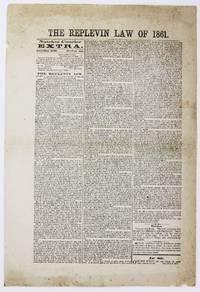
1865ref. 4629Natchez Ms: July 22 1865. Very good. Broadside 13.75 x 9.5 inches. Printed in three columns. Moderate toning and foxing old folds couple of small tears expertly repaired on verso two tape remnants at top edge likely from previous matting. A very rare newspaper extra printing the first civilian law in Occupied Mississippi following the conclusion of the Civil War. After the war only military justice was in force in Mississippi. According to an 1866 Mississippi court case: "civil government of the State having been subverted and all power having passed into the hands of the authorities of the United States the question whether any and what civil government should be permitted was a matter in the discretion of those authorities. During this military occupation the laws of the State could only operate so far as they chose to allow and could only be administered by such agents as they pleased to appoint." On June 13 1865 President Andrew Johnson appointed William Lewis Sharkey 1789-1873 -- a Mississippi judge and staunch Unionist who opposed secession -- as the state's provisional governor. His first public act was to appoint judges and clerks to probate courts as well as appoint police justices of the peace and other country officers and authorized them to immediately begin to discharge their duties but excluded any orders regarding circuit and chancery courts. Two days later on July 3 Sharkey ordered the first civilian law to be operative which is published in the present broadside newspaper extra by the Natchez Courier. Sharkey's transmittal at the top begins: "Ordered. That the act in regard to the action of replevin and the amendments thereto passed by the legislature of Mississippi since the 9th day of January 1861 be and the same is hereby declared to be in full force from this date." The text of the act in twenty-six sections is then printed beginning: "The Replevin Act. An Act to provide for the speedy recovery of personal property wrongfully taken or detained." Somewhat oddly at the time this was the only civilian law in effect in Mississippi in the summer of 1865. According to the same 1866 court case excerpted above which explains the issues inherent in the issuance of the Replevin Law and Sharkey's organization of county probate courts "in all cases of the wrongful taking or detention of personal property a summary remedy by action of replevin before two justices of the peace was given to the party injured to recover the property and damages for the wrongful taking or detention. This was the only court created by the governor for the adjudication of legal rights; and these are the only cases committed to its jurisdiction; leaving all the rest of the immense mass of legal rights wholly without any redress." OCLC and other newspaper sources reveal just a single mutilated copy of the present broadside at the American Antiquarian Society. A fantastic broadside dealing with Mississippi law at the outset of Reconstruction. Scott v. Bilgerry April Term 1866 in Reports of Cases Argued and Determined in the High Court of Errors and Appeals for the State of Mississippi. Vol. XL. New York: Bank Brothers 1867 pp. 119-157. July 22 unknown
1865ref. 4629Natchez Ms: July 22 1865. Very good. Broadside 13.75 x 9.5 inches. Printed in three columns. Moderate toning and foxing old folds couple of small tears expertly repaired on verso two tape remnants at top edge likely from previous matting. A very rare newspaper extra printing the first civilian law in Occupied Mississippi following the conclusion of the Civil War. After the war only military justice was in force in Mississippi. According to an 1866 Mississippi court case: "civil government of the State having been subverted and all power having passed into the hands of the authorities of the United States the question whether any and what civil government should be permitted was a matter in the discretion of those authorities. During this military occupation the laws of the State could only operate so far as they chose to allow and could only be administered by such agents as they pleased to appoint." On June 13 1865 President Andrew Johnson appointed William Lewis Sharkey 1789-1873 -- a Mississippi judge and staunch Unionist who opposed secession -- as the state's provisional governor. His first public act was to appoint judges and clerks to probate courts as well as appoint police justices of the peace and other country officers and authorized them to immediately begin to discharge their duties but excluded any orders regarding circuit and chancery courts. Two days later on July 3 Sharkey ordered the first civilian law to be operative which is published in the present broadside newspaper extra by the Natchez Courier. Sharkey's transmittal at the top begins: "Ordered. That the act in regard to the action of replevin and the amendments thereto passed by the legislature of Mississippi since the 9th day of January 1861 be and the same is hereby declared to be in full force from this date." The text of the act in twenty-six sections is then printed beginning: "The Replevin Act. An Act to provide for the speedy recovery of personal property wrongfully taken or detained." Somewhat oddly at the time this was the only civilian law in effect in Mississippi in the summer of 1865. According to the same 1866 court case excerpted above which explains the issues inherent in the issuance of the Replevin Law and Sharkey's organization of county probate courts "in all cases of the wrongful taking or detention of personal property a summary remedy by action of replevin before two justices of the peace was given to the party injured to recover the property and damages for the wrongful taking or detention. This was the only court created by the governor for the adjudication of legal rights; and these are the only cases committed to its jurisdiction; leaving all the rest of the immense mass of legal rights wholly without any redress." OCLC and other newspaper sources reveal just a single mutilated copy of the present broadside at the American Antiquarian Society. A fantastic broadside dealing with Mississippi law at the outset of Reconstruction. Scott v. Bilgerry April Term 1866 in Reports of Cases Argued and Determined in the High Court of Errors and Appeals for the State of Mississippi. Vol. XL. New York: Bank Brothers 1867 pp. 119-157. July 22 unknown books
1996ref. 17314JLos Angeles: Castle Rock / Columbia 1996. Signed by the film’s producer and director Rob Reiner and by the screenwriter Lewis Colick. 150 page screenplay for the dramatic film Ghosts of Mississippi starring Alec Baldwin Whoopi Goldberg and James Woods. The true story of Mississippi assistant district attorney Bobby DeLaughter Alec Baldwin who reopens the murder case of civil rights leader Medgar Evers. Bradbound in printed studio wrappers. Castle Rock / Columbia unknown
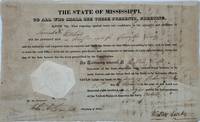
1822ref. 63107Columbia MS 1822. Oblong folio 7 5/8 x 12 3/8 inches. Partly printed broadside document headlined "The State of Mississippi / To all who shall see these presents greeting / followed by 14 printed lines with spaces left for appropriate material to be entered by manuscript in this case appointees name and position place of execution date and officials' signatures. Leake a native of Virginia served in the Revolutionary War and in the state legislature moving to the Mississippi Territory in 1807 when appointed judge by Thomas Jefferson; following Mississippi's admission to statehood he was appointed one of its first two senators taking a seat of the state's supreme court following his resignation from the senate in 1820 and was elected governor in 1821 assuming office in January 1822. During his two terms Leake oversaw the beginning of a major road system arranged for the transfer of land to support a state university and signed a law abolishing imprisonment for debt among other achievements. Grimball was the second Secretary of State for Mississippi serving 1821-1833. Columbia served as capital of Mississippi for a about 18 months 1821-1822 before Jackson became its permanent site. Somewhat browned but very good. Previously folded. A scarce early Mississippi state document. 9863. unknown
1822ref. 63107Columbia MS 1822. Oblong folio 7 5/8 x 12 3/8 inches. Partly printed broadside document headlined "The State of Mississippi / To all who shall see these presents greeting / followed by 14 printed lines with spaces left for appropriate material to be entered by manuscript in this case appointees name and position place of execution date and officials' signatures. Leake a native of Virginia served in the Revolutionary War and in the state legislature moving to the Mississippi Territory in 1807 when appointed judge by Thomas Jefferson; following Mississippi's admission to statehood he was appointed one of its first two senators taking a seat of the state's supreme court following his resignation from the senate in 1820 and was elected governor in 1821 assuming office in January 1822. During his two terms Leake oversaw the beginning of a major road system arranged for the transfer of land to support a state university and signed a law abolishing imprisonment for debt among other achievements. Grimball was the second Secretary of State for Mississippi serving 1821-1833. Columbia served as capital of Mississippi for a about 18 months 1821-1822 before Jackson became its permanent site. Somewhat browned but very good. Previously folded. A scarce early Mississippi state document. 9863. unknown books
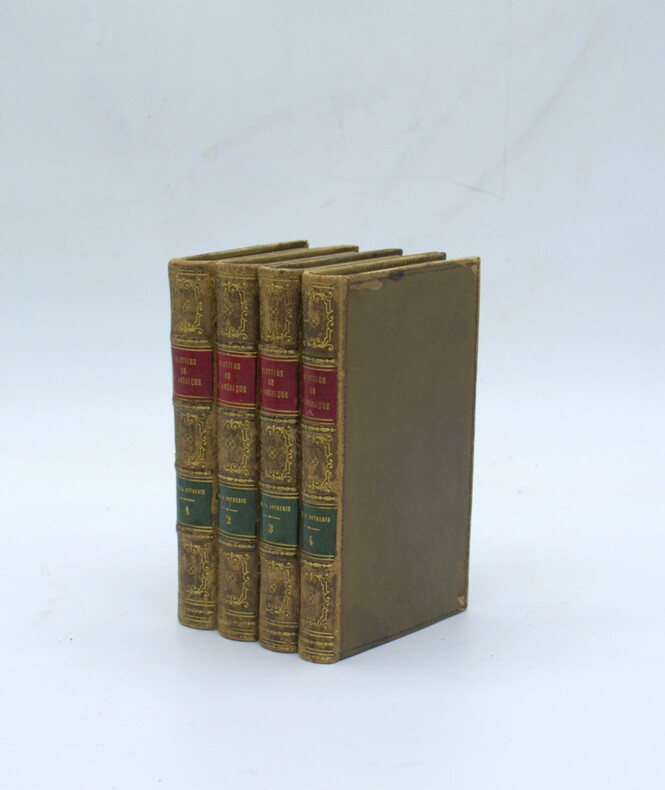
1753ref. PHO-2353Paris, Broca, 1753, 4 volumes in-12 (16x9,5cm), 7pp.-370pp.-2ff./ titre-356pp.-4ff./6ff.-310pp.-3ff./titre-271pp.-2ff., basane postérieure (19ème ), dos à nerfs orné avec pièce de titre rouge et tomaison verte, ex-libris manuscrit répété, étiquette de libraire (Beauchemin & Valois, Montréal). Frottements et épidermures, 1 planche détachée (t1), 1 feuillet de table monté à l’envers (t4), défaut au titre (t1) Illustré de 25 (28) cartes et gravures, dont dépliantes, manque les 2 planches de musique et la carte de l’Hudson.
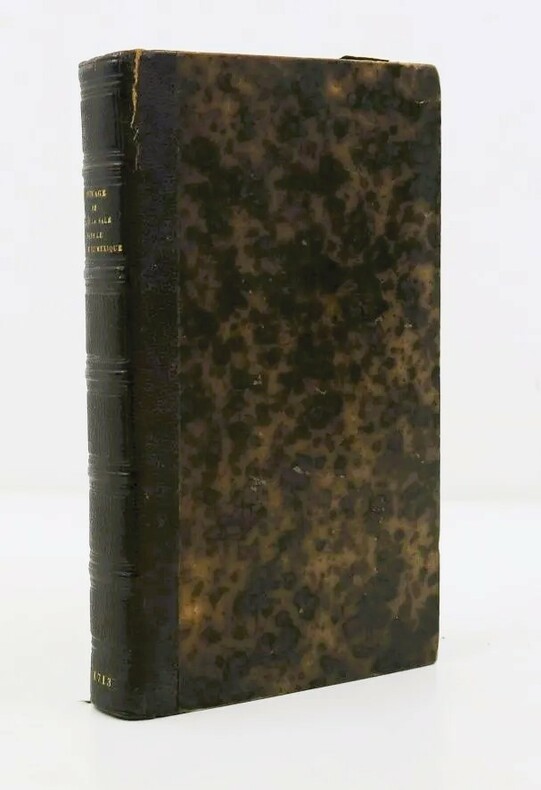
1713ref. PHO-1659Paris, Robinot, 1713. In-12 de xxxiv-386 pp. Demi-chagrin brun foncé, dos à nerfs, titre doré, date en queue (reliure XIXe s.). Début de fente à un mors. La rare grande carte dépliante représentant la Louisiane, le cours du Mississipi et le golfe du Mexique est ici en fac-similé.