1478 resultados
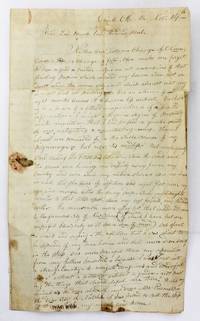
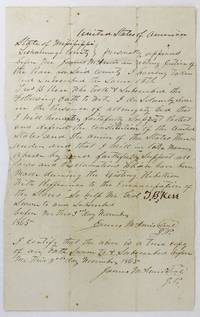
1865ref. 5112Tishomingo County Ms: November 3 1865. Very good. 1p. of manuscript on a folio sheet. Old folds minor wear and soiling. A manuscript true copy of a loyalty oath taken by Thomas B. Kerr of Tishomingo County Mississippi following the end of the Civil War. The oath itself reads: "I do solemnly swear in the presence of almighty God that I will hereafter faithfully support protect and defend the Constitution of the United States and the Union of the states thereunder and that I will in like manner abide by and faithfully support all laws and proclamations which have been made during the Existing Rebellion with reference to the Emancipation of the Slaves. So help me God." The document is signed by Kerr as well as the Justice of the Peace James M. Amis and docketed on the verso "Thos. B. Kerr amnesty oath." Amnesty oaths from Mississippi are increasingly more rare in the market especially those directly referencing the Emancipation Proclamation and the end of slavery. November 3 unknown books
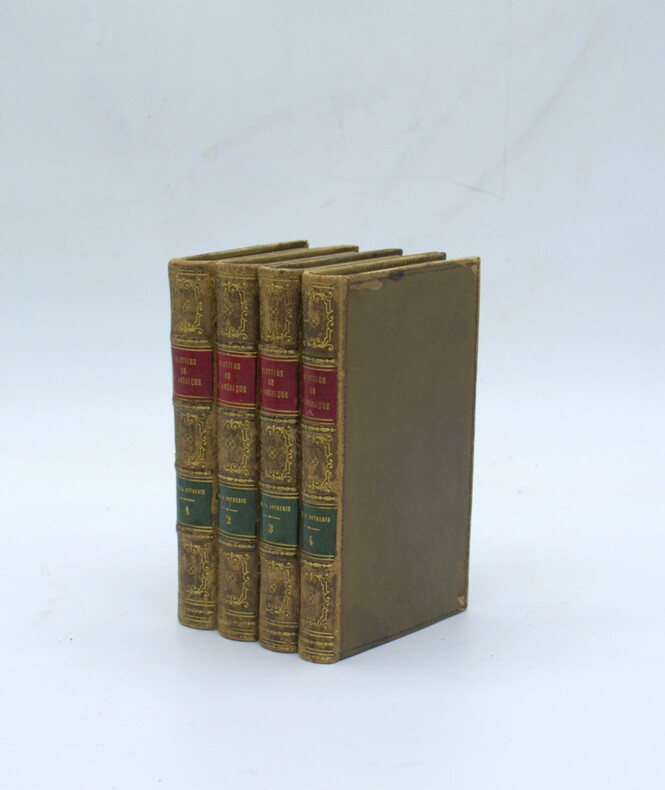
ref. 40447Paris.Le Jay.1768. Seconde édition.2 vols.in-12 en demi-reliure à coins d'époque.2 frontispices et 2 planches gravées par St.Aubin.244 et 264 p.avec Table. BE.
ref. SONG0813025443Used: Good unknown
1921ref. 40729Washington D.C.: Published by the United States Coast and Geodetic Survey 1921. Large folding nautical chart printed on heavy paper stock. Colored. A rare original coastal survey of the Northern Gulf coast from Florida to Louisiana encompassing Panama City Rosemary Beach Seaside Grayton Destin Pensacola Gulf Shores Mobile Gulfport and the Mississippi Delta. Established by President Thomas Jefferson in 1807 as the Survey of the Coast the U.S. Coast and Geodetic Survey was the United States' first civilian scientific agency. This agency has followed its mission to survey the U.S. coastline create nautical charts of the coast and help increase maritime safety since its founding and has often played fascinating roles in significant chapters of U.S. history. It served in all theaters of the Civil War in the service of the Union Army and Navy pioneered acoustic exploration in the wake of the sinking of the Titanic and during WWI it worked to detect enemy submarines. In addition this agency worked to survey and produce detailed maps and renderings of the U.S. coast. These nautical survey maps commonly referred to as "T-sheets" provide fascinating insights into the history of the United States coastline which has and will continue to shift. These maps are the most important data source for understanding the physical and ecological characteristics of the U.S. shoreline. The present map is a highly detailed and accurate sea chart of the Gulf coasts of Florida Alabama Mississippi and Louisiana and an important historical view of the developing states. Published by the United States Coast and Geodetic Survey unknown
1921ref. 40729Washington D.C.: Published by the United States Coast and Geodetic Survey 1921. Large folding nautical chart printed on heavy paper stock. Colored. A rare original coastal survey of the Northern Gulf coast from Florida to Louisiana encompassing Panama City Rosemary Beach Seaside Grayton Destin Pensacola Gulf Shores Mobile Gulfport and the Mississippi Delta. Established by President Thomas Jefferson in 1807 as the Survey of the Coast the U.S. Coast and Geodetic Survey was the United States' first civilian scientific agency. This agency has followed its mission to survey the U.S. coastline create nautical charts of the coast and help increase maritime safety since its founding and has often played fascinating roles in significant chapters of U.S. history. It served in all theaters of the Civil War in the service of the Union Army and Navy pioneered acoustic exploration in the wake of the sinking of the Titanic and during WWI it worked to detect enemy submarines. In addition this agency worked to survey and produce detailed maps and renderings of the U.S. coast. These nautical survey maps commonly referred to as "T-sheets" provide fascinating insights into the history of the United States coastline which has and will continue to shift. These maps are the most important data source for understanding the physical and ecological characteristics of the U.S. shoreline. The present map is a highly detailed and accurate sea chart of the Gulf coasts of Florida Alabama Mississippi and Louisiana and an important historical view of the developing states. Published by the United States Coast and Geodetic Survey unknown books
1824ref. 6554Copiah Court House Ms: November 16 1824. Good. 3pp. plus docketing. Small folio sheets. Folded. Some short separations along fold lines small loss where previously sealed at left margin of first sheet. Moderate tanning a couple of small dampstains. Accomplished in a highly legible script. A lengthy and descriptive letter by a young northern woman who had traveled by sea to New Orleans and continued through Natchez into the interior of Mississippi during the mid-1820s. Although addressed to an E. Goodrich of Richmond Massachusetts the letter appears to have been intended chiefly for Goodrich's wife whom the writer addresses as her aunt. The writer discusses local gossip about prominent members of society there bemoans the "uncouth" and "superstitious" settlers and ultimately warns her family against the idea of emigrating to the area. She opens by recalling her arrival in New Orleans on May 1: "The memorable morn May 1st that introduced me to the famous City of New Orleans-the appearance of which I have but an imperfect idea only as it was a sea of mud-was spent in sorrow and weeping. The reflection that I was about to be deprived of my dear home and still more dear society in the Ship was more painful than my separation from my Father's household-because I was to go out into a strange Country-to navigate without a guide-not knowing the things that should befall me there. Until my arrival at the dear abode of my dear Mrs. Purnell in the dear City of Natchez I was proud to call the Ship Wm. my much loved home. I aroused from this agreeable reverie and found myself alone. The name of Wybra is sacred to me as that of father mother sister or brother. You will embrace the same principle and whenever the name of Harriette occurs to your memory not a blessing to be invoked in which Capt. James Wybra does not share a part-his tenderness his politeness his affection for me shall not be forgotten while life or thought or being lasts or even while 'immortality endures.' He shall be blest his posterity blest and in a Heaven of bliss meet his sure reward." She continues by describing an encounter with Judge Allen likely Barnabas Allen who would later become a substantial Copiah County enslaver: "You have heard of Judge Allen. At the celebration of Independence I heard he was present. I was very anxious to have a peep at the old Gentleman. Accordingly a man about the size and possessing the same degree of dignity & diffidence of Rev. Wm. Allen and about 26 or 8 years of age was introduced to me as the Judge! Never since my recollection was I ever thrown into more confusion nor was I soon relieved from this perturbed state. He was made known to me as the particular friend of F. E. and after he expressed his happiness upon my safe arrival to this region of Country and his best wishes that it might prove congenial to my constitution he very modestly bowed and retired. I was immediately informed that previous to the introduction he had been told I expressed an ardent desire to have an interview with him!!" The remainder of the letter gives a detailed account of the gossip of Copiah County especially about the wife of Mississippi Secretary of State John Grimball and with a warning about living conditions in Mississippi and an admonition not to consider emigration: "The manners customs and mode of living in this country differ as widely from yours as do the climate. I think none of my relatives at the north would be happy in this climate or country. There are many privations the inhabitants illiterate irreligious and covetous. If there is on the Earth a place of heathenism it is this. I think I could never throw away my own feelings and opinions & be content to locate myself in this region of superstitions not only in matters of religion but unless a person conforms to the uncouth manners and uses the vulgar phrases of the country they are proud and subject themselves to the censure of fools who are the 'cronies' of the place. Be contented in your present situation. You will not amend it by emigration. May you be happy in life & death." Overall the letter offers a detailed outsider's view of early settler society in Mississippi through the eyes of a Massachusetts emigrant as well as a substantial account of a woman's journey and experience in the Deep South of the 1820s. November 16 unknown
1824ref. 6554Copiah Court House Ms: November 16 1824. Good. 3pp. plus docketing. Small folio sheets. Folded. Some short separations along fold lines small loss where previously sealed at left margin of first sheet. Moderate tanning a couple of small dampstains. Accomplished in a highly legible script. A lengthy and descriptive letter by a young northern woman who had traveled by sea to New Orleans and continued through Natchez into the interior of Mississippi during the mid-1820s. Although addressed to an E. Goodrich of Richmond Massachusetts the letter appears to have been intended chiefly for Goodrich's wife whom the writer addresses as her aunt. The writer discusses local gossip about prominent members of society there bemoans the "uncouth" and "superstitious" settlers and ultimately warns her family against the idea of emigrating to the area. She opens by recalling her arrival in New Orleans on May 1: "The memorable morn May 1st that introduced me to the famous City of New Orleans-the appearance of which I have but an imperfect idea only as it was a sea of mud-was spent in sorrow and weeping. The reflection that I was about to be deprived of my dear home and still more dear society in the Ship was more painful than my separation from my Father's household-because I was to go out into a strange Country-to navigate without a guide-not knowing the things that should befall me there. Until my arrival at the dear abode of my dear Mrs. Purnell in the dear City of Natchez I was proud to call the Ship Wm. my much loved home. I aroused from this agreeable reverie and found myself alone. The name of Wybra is sacred to me as that of father mother sister or brother. You will embrace the same principle and whenever the name of Harriette occurs to your memory not a blessing to be invoked in which Capt. James Wybra does not share a part-his tenderness his politeness his affection for me shall not be forgotten while life or thought or being lasts or even while 'immortality endures.' He shall be blest his posterity blest and in a Heaven of bliss meet his sure reward." She continues by describing an encounter with Judge Allen likely Barnabas Allen who would later become a substantial Copiah County enslaver: "You have heard of Judge Allen. At the celebration of Independence I heard he was present. I was very anxious to have a peep at the old Gentleman. Accordingly a man about the size and possessing the same degree of dignity & diffidence of Rev. Wm. Allen and about 26 or 8 years of age was introduced to me as the Judge! Never since my recollection was I ever thrown into more confusion nor was I soon relieved from this perturbed state. He was made known to me as the particular friend of F. E. and after he expressed his happiness upon my safe arrival to this region of Country and his best wishes that it might prove congenial to my constitution he very modestly bowed and retired. I was immediately informed that previous to the introduction he had been told I expressed an ardent desire to have an interview with him!!" The remainder of the letter gives a detailed account of the gossip of Copiah County especially about the wife of Mississippi Secretary of State John Grimball and with a warning about living conditions in Mississippi and an admonition not to consider emigration: "The manners customs and mode of living in this country differ as widely from yours as do the climate. I think none of my relatives at the north would be happy in this climate or country. There are many privations the inhabitants illiterate irreligious and covetous. If there is on the Earth a place of heathenism it is this. I think I could never throw away my own feelings and opinions & be content to locate myself in this region of superstitions not only in matters of religion but unless a person conforms to the uncouth manners and uses the vulgar phrases of the country they are proud and subject themselves to the censure of fools who are the 'cronies' of the place. Be contented in your present situation. You will not amend it by emigration. May you be happy in life & death." Overall the letter offers a detailed outsider's view of early settler society in Mississippi through the eyes of a Massachusetts emigrant as well as a substantial account of a woman's journey and experience in the Deep South of the 1820s. November 16 unknown books
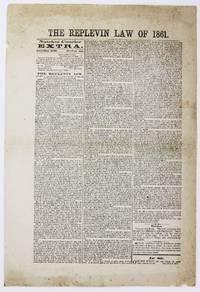
1865ref. 4629Natchez Ms: July 22 1865. Very good. Broadside 13.75 x 9.5 inches. Printed in three columns. Moderate toning and foxing old folds couple of small tears expertly repaired on verso two tape remnants at top edge likely from previous matting. A very rare newspaper extra printing the first civilian law in Occupied Mississippi following the conclusion of the Civil War. After the war only military justice was in force in Mississippi. According to an 1866 Mississippi court case: "civil government of the State having been subverted and all power having passed into the hands of the authorities of the United States the question whether any and what civil government should be permitted was a matter in the discretion of those authorities. During this military occupation the laws of the State could only operate so far as they chose to allow and could only be administered by such agents as they pleased to appoint." On June 13 1865 President Andrew Johnson appointed William Lewis Sharkey 1789-1873 -- a Mississippi judge and staunch Unionist who opposed secession -- as the state's provisional governor. His first public act was to appoint judges and clerks to probate courts as well as appoint police justices of the peace and other country officers and authorized them to immediately begin to discharge their duties but excluded any orders regarding circuit and chancery courts. Two days later on July 3 Sharkey ordered the first civilian law to be operative which is published in the present broadside newspaper extra by the Natchez Courier. Sharkey's transmittal at the top begins: "Ordered. That the act in regard to the action of replevin and the amendments thereto passed by the legislature of Mississippi since the 9th day of January 1861 be and the same is hereby declared to be in full force from this date." The text of the act in twenty-six sections is then printed beginning: "The Replevin Act. An Act to provide for the speedy recovery of personal property wrongfully taken or detained." Somewhat oddly at the time this was the only civilian law in effect in Mississippi in the summer of 1865. According to the same 1866 court case excerpted above which explains the issues inherent in the issuance of the Replevin Law and Sharkey's organization of county probate courts "in all cases of the wrongful taking or detention of personal property a summary remedy by action of replevin before two justices of the peace was given to the party injured to recover the property and damages for the wrongful taking or detention. This was the only court created by the governor for the adjudication of legal rights; and these are the only cases committed to its jurisdiction; leaving all the rest of the immense mass of legal rights wholly without any redress." OCLC and other newspaper sources reveal just a single mutilated copy of the present broadside at the American Antiquarian Society. A fantastic broadside dealing with Mississippi law at the outset of Reconstruction. Scott v. Bilgerry April Term 1866 in Reports of Cases Argued and Determined in the High Court of Errors and Appeals for the State of Mississippi. Vol. XL. New York: Bank Brothers 1867 pp. 119-157. July 22 unknown
1865ref. 4629Natchez Ms: July 22 1865. Very good. Broadside 13.75 x 9.5 inches. Printed in three columns. Moderate toning and foxing old folds couple of small tears expertly repaired on verso two tape remnants at top edge likely from previous matting. A very rare newspaper extra printing the first civilian law in Occupied Mississippi following the conclusion of the Civil War. After the war only military justice was in force in Mississippi. According to an 1866 Mississippi court case: "civil government of the State having been subverted and all power having passed into the hands of the authorities of the United States the question whether any and what civil government should be permitted was a matter in the discretion of those authorities. During this military occupation the laws of the State could only operate so far as they chose to allow and could only be administered by such agents as they pleased to appoint." On June 13 1865 President Andrew Johnson appointed William Lewis Sharkey 1789-1873 -- a Mississippi judge and staunch Unionist who opposed secession -- as the state's provisional governor. His first public act was to appoint judges and clerks to probate courts as well as appoint police justices of the peace and other country officers and authorized them to immediately begin to discharge their duties but excluded any orders regarding circuit and chancery courts. Two days later on July 3 Sharkey ordered the first civilian law to be operative which is published in the present broadside newspaper extra by the Natchez Courier. Sharkey's transmittal at the top begins: "Ordered. That the act in regard to the action of replevin and the amendments thereto passed by the legislature of Mississippi since the 9th day of January 1861 be and the same is hereby declared to be in full force from this date." The text of the act in twenty-six sections is then printed beginning: "The Replevin Act. An Act to provide for the speedy recovery of personal property wrongfully taken or detained." Somewhat oddly at the time this was the only civilian law in effect in Mississippi in the summer of 1865. According to the same 1866 court case excerpted above which explains the issues inherent in the issuance of the Replevin Law and Sharkey's organization of county probate courts "in all cases of the wrongful taking or detention of personal property a summary remedy by action of replevin before two justices of the peace was given to the party injured to recover the property and damages for the wrongful taking or detention. This was the only court created by the governor for the adjudication of legal rights; and these are the only cases committed to its jurisdiction; leaving all the rest of the immense mass of legal rights wholly without any redress." OCLC and other newspaper sources reveal just a single mutilated copy of the present broadside at the American Antiquarian Society. A fantastic broadside dealing with Mississippi law at the outset of Reconstruction. Scott v. Bilgerry April Term 1866 in Reports of Cases Argued and Determined in the High Court of Errors and Appeals for the State of Mississippi. Vol. XL. New York: Bank Brothers 1867 pp. 119-157. July 22 unknown books
1996ref. 17314JLos Angeles: Castle Rock / Columbia 1996. Signed by the film’s producer and director Rob Reiner and by the screenwriter Lewis Colick. 150 page screenplay for the dramatic film Ghosts of Mississippi starring Alec Baldwin Whoopi Goldberg and James Woods. The true story of Mississippi assistant district attorney Bobby DeLaughter Alec Baldwin who reopens the murder case of civil rights leader Medgar Evers. Bradbound in printed studio wrappers. Castle Rock / Columbia unknown
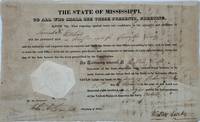
1822ref. 63107Columbia MS 1822. Oblong folio 7 5/8 x 12 3/8 inches. Partly printed broadside document headlined "The State of Mississippi / To all who shall see these presents greeting / followed by 14 printed lines with spaces left for appropriate material to be entered by manuscript in this case appointees name and position place of execution date and officials' signatures. Leake a native of Virginia served in the Revolutionary War and in the state legislature moving to the Mississippi Territory in 1807 when appointed judge by Thomas Jefferson; following Mississippi's admission to statehood he was appointed one of its first two senators taking a seat of the state's supreme court following his resignation from the senate in 1820 and was elected governor in 1821 assuming office in January 1822. During his two terms Leake oversaw the beginning of a major road system arranged for the transfer of land to support a state university and signed a law abolishing imprisonment for debt among other achievements. Grimball was the second Secretary of State for Mississippi serving 1821-1833. Columbia served as capital of Mississippi for a about 18 months 1821-1822 before Jackson became its permanent site. Somewhat browned but very good. Previously folded. A scarce early Mississippi state document. 9863. unknown
1822ref. 63107Columbia MS 1822. Oblong folio 7 5/8 x 12 3/8 inches. Partly printed broadside document headlined "The State of Mississippi / To all who shall see these presents greeting / followed by 14 printed lines with spaces left for appropriate material to be entered by manuscript in this case appointees name and position place of execution date and officials' signatures. Leake a native of Virginia served in the Revolutionary War and in the state legislature moving to the Mississippi Territory in 1807 when appointed judge by Thomas Jefferson; following Mississippi's admission to statehood he was appointed one of its first two senators taking a seat of the state's supreme court following his resignation from the senate in 1820 and was elected governor in 1821 assuming office in January 1822. During his two terms Leake oversaw the beginning of a major road system arranged for the transfer of land to support a state university and signed a law abolishing imprisonment for debt among other achievements. Grimball was the second Secretary of State for Mississippi serving 1821-1833. Columbia served as capital of Mississippi for a about 18 months 1821-1822 before Jackson became its permanent site. Somewhat browned but very good. Previously folded. A scarce early Mississippi state document. 9863. unknown books
1753ref. PHO-2353Paris, Broca, 1753, 4 volumes in-12 (16x9,5cm), 7pp.-370pp.-2ff./ titre-356pp.-4ff./6ff.-310pp.-3ff./titre-271pp.-2ff., basane postérieure (19ème ), dos à nerfs orné avec pièce de titre rouge et tomaison verte, ex-libris manuscrit répété, étiquette de libraire (Beauchemin & Valois, Montréal). Frottements et épidermures, 1 planche détachée (t1), 1 feuillet de table monté à l’envers (t4), défaut au titre (t1) Illustré de 25 (28) cartes et gravures, dont dépliantes, manque les 2 planches de musique et la carte de l’Hudson.
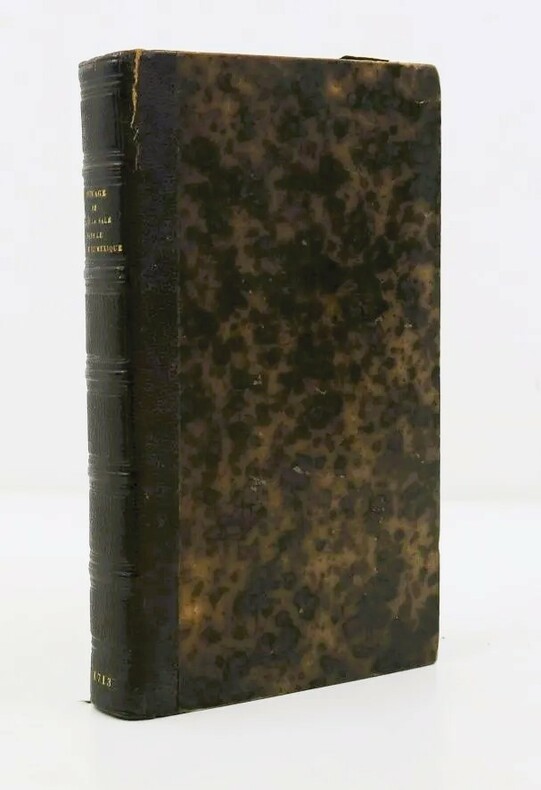
1713ref. PHO-1659Paris, Robinot, 1713. In-12 de xxxiv-386 pp. Demi-chagrin brun foncé, dos à nerfs, titre doré, date en queue (reliure XIXe s.). Début de fente à un mors. La rare grande carte dépliante représentant la Louisiane, le cours du Mississipi et le golfe du Mexique est ici en fac-similé.
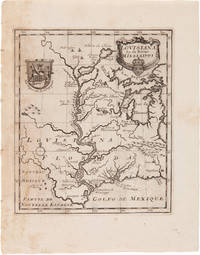
1720ref. 48868Amsterdam. 1720. Mapping Early Louisiana A scarce early map of the Mississippi River Valley depicting the American region between the Gulf of Mexico and the Great Lakes taken from Het Groot Tafereel der Dwaasheid. The Great Mirror of Folly a scathing account of the speculative crashes that led to European financial disaster in 1720. The work was a chronicle of the failed attempts by John Law controller general of finances for the French government to open Louisiana to trade in order to help alleviate France's financial problems. This led to the creation of the Mississippi Company which created the "Mississippi Bubble" incident that destroyed the Banque Générale Privée the General Private Bank which Law founded. The map depicts the Mississippi River parts of Louisiana and Florida Lake Michigan referred to here as "Lac de Illionis" and Lake Superior the extent of French colonial explorations in the region and names of Indian tribes. It is decorated with a title cartouche incorporating the arms of John Law and depicting two Native Americans holding a cornucopia through which flows the mighty Mississippi River. Minor foxing. Near fine. unknown
1720ref. 48868Amsterdam. 1720. Mapping Early Louisiana A scarce early map of the Mississippi River Valley depicting the American region between the Gulf of Mexico and the Great Lakes taken from Het Groot Tafereel der Dwaasheid. The Great Mirror of Folly a scathing account of the speculative crashes that led to European financial disaster in 1720. The work was a chronicle of the failed attempts by John Law controller general of finances for the French government to open Louisiana to trade in order to help alleviate France's financial problems. This led to the creation of the Mississippi Company which created the "Mississippi Bubble" incident that destroyed the Banque Générale Privée the General Private Bank which Law founded. The map depicts the Mississippi River parts of Louisiana and Florida Lake Michigan referred to here as "Lac de Illionis" and Lake Superior the extent of French colonial explorations in the region and names of Indian tribes. It is decorated with a title cartouche incorporating the arms of John Law and depicting two Native Americans holding a cornucopia through which flows the mighty Mississippi River. Minor foxing. Near fine. unknown books
1745ref. 0030241745 Fontenoy [recueil A], Paris [recueils C à Y], Bruxelles [recueil Z], sans nom d'éditeur, 1745-1762. Vingt-quatre parties reliées en douze volumes in-12 (106 X 174 mm) basane fauve, dos cinq nerfs ornés, caissons dorés, dentelles dorées en queue et tête, pièce de titre maroquin ocre, coupes filetées, tranches rouges (reliure de l'époque). Tome I : titre imprimé en rouge, IV (avertissement), un feuillet de table, 224 pages - titre imprimé en rouge, un feuillet (avertissement et table), 222 pages ; Tome II : IV (dont titre imprimé en rouge & avertissement), 2 feuillets de table, 208 pages - titre imprimé en rouge, 247 pages, 2 feuillets de table ; Tome III : titre imprimé en rouge, 265 pages, 3 feuillets de table - titre imprimé en rouge, II (avertissement), un feuillet de table, 195 pages ; Tome IV : titre imprimé en rouge, 248 pages, 1 feuillet de table, (1) - titre imprimé en rouge, 236 pages, 1 feuillet de table ; Tome V : titre imprimé en rouge, 209 pages, 1 feuillet de table - titre imprimé en rouge, 210 pages, 3 feuillets de table ; Tome VI : titre imprimé en rouge, 235 pages, 2 feuillets de table & avertissement - titre imprimé en rouge, 235 pages, 2 feuillets de table ; Tome VII : titre imprimé en rouge, 227 pages, 5 pages non chiffrées (table) ; titre imprimé en rouge, 226 pages, 1 feuillet de table ; Tome VIII : titre imprimé en rouge, 219 pages, 2 feuillets de table - titre imprimé en rouge, 216 pages, 1 feuillet de table ; Tome IX : titre imprimé en rouge, 226 pages, 1 feuillet de table - titre imprimé en rouge, 214 pages, 1 feuillet de table ; Tome X : titre imprimé en rouge, 235 pages, 1 feuillet de table - titre imprimé en rouge, 256 pages, 2 feuillets de table ; Tome XI : titre imprimé en rouge, 239 pages, (1) page de table - titre imprimé en rouge, 219 pages, 4 pages de table non chiffrées ; Tome XII : titre imprimé en rouge, 210 pages, 3 feuillets de table - titre imprimé en rouge, 197 pages, (3) pages de table.
In 4°, piena tela edit., tit. in oro e decori impressi ai piatti, pp. XIV-(2nn)-494-(2nn). Bellissima, rara pubblicazione corredata da 13 splendide tavv. in cromolito f.t. + 1 cartina geografica del viaggio, più volte pieg. posta in fine, alcune incisioni xilografiche a piena pag. Diario di una spedizione americana nel 1853 attraverso le Montagne Rocciose in California, descritto da Möllhausen che nel 1851 aveva intrapreso il viaggio con il Duca Paul di W?rttemberg da St. Lozius a Fort Laramie e le Montagne Rocciose dove trascorse diversi mesi tra gli indiani Omaha. Tracce d'uso alle cerniere, qualche piccolo rinforzo.
1704ref. PHO-2363Amsterdam, Chez Adriaan Braackman, 1704. In-12 (16x10cm) de 19ff.-604pp.-16ff.,Titre gravé en frontispice, 2 grandes cartes dépliantes et 6 planches dépliantes h.-t., Basane postérieure, dos à nerfs orné, pièce de titre rouge et auteur verte, tête dorée, rajout sur l’adresse de l’imprimeur à la seconde partie. Frottements et épidermures, traces de renforcements aux cartes.
1831ref. 52816Jackson Ms. 1831-1871. Mississippi Laws of the Mid-19th Century An interesting collection of mid-19th-century Mississippi state laws from the period between 1831 and 1870. These session laws deal with issues relevant to a growing state in the American south including slavery Mississippi River development and later legal matters related to Reconstruction among a multitude of other concerns. A complete list of the imprints is as follows: 1 LAWS OF THE STATE OF MISSISSIPPI PASSED AT THE FIFTEENTH SESSION OF THE GENERAL ASSEMBLY. Jackson: Peter Isler 1831. 172xviii pp. 2 LAWS OF THE STATE OF MISSISSIPPI PASSED AT THE SIXTEENTH SESSION OF THE GENERAL ASSEMBLY. Jackson: Peter Isler 1833. 252xxv pp. First two leaves chipped with minor loss of text. 3 LAWS OF THE STATE OF MISSISSIPPI PASSED AT THE SEVENTEENTH SESSION OF THE GENERAL ASSEMBLY. Jackson: George R. Fall 1834. 200pp. 4 LAWS OF THE STATE OF MISSISSIPPI; PASSED AT A REGULAR BIENNIAL SESSION OF THE LEGISLATURE. Jackson: G.R. & J.S. Fall 1836. 440pp. 5 LAWS OF THE STATE OF MISSISSIPPI PASSED AT AN ADJOURNED SESSION OF THE LEGISLATURE. Jackson: G.R. & J.S. Fall 1837. 67pp. A photographic facsmile of the original work. 6 LAWS OF THE STATE OF MISSISSIPPI; PASSED AT A REGULAR BIENNIAL SESSION OF THE LEGISLATURE. Jackson: B.D. Howard 1838. 4ii-viii9-368pp. 7 LAWS OF THE STATE OF MISSISSIPPI PASSED AT AN ADJOURNED SESSION OF THE LEGISLATURE. Jackson: B.D. Howard 1839. 491pp. Includes the text of the CONSTITUTION OF THE STATE OF MISSISSIPPI. 8 THE STATUTES OF THE STATE OF MISSISSIPPI OF A PUBLIC AND GENERAL NATURE WITH THE CONSTITUTIONS OF THE UNITED STATES AND OF THIS STATE. New Orleans: E. Johns & Co. 1840. xii885pp. 9 LAWS OF THE STATE OF MISSISSIPPI PASSED AT A REGULAR SESSION OF THE LEGISLATURE. Jackson: C.M. Price 1840. 2xii213-366pp. 10 LAWS OF THE STATE OF MISSISSIPPI PASSED AT AN ADJOURNED SESSION OF THE LEGISLATURE. Jackson: C.M. Price 1841. 1417-302pp. 11 LAWS OF THE STATE OF MISSISSIPPI PASSED AT A REGULAR BIENNIAL SESSION OF THE LEGISLATURE. Jackson: C.M. Price & G.R. Fall 1842. iii-xvi17-271275-285pp. as printed. 12 LAWS OF THE STATE OF MISSISSIPPI PASSED AT A CALLED SESSION OF THE LEGISLATURE. Jackson: C.M. Price & G.R. Fall 1843. vii9-135pp. 13 LAWS OF THE STATE OF MISSISSIPPI PASSED AT A REGULAR BIENNIAL SESSION OF THE LEGISLATURE. Jackson: C.M. Price & S. Rohrer 1844. xxi25-395pp. 14 LAWS OF THE STATE OF MISSISSIPPI PASSED AT A REGULAR BIENNIAL SESSION OF THE LEGISLATURE. Jackson: C.M. Price & G.R. Fall 1846. 3-2833-6131pp. 15 LAWS OF THE STATE OF MISSISSIPPI PASSED AT A REGULAR SESSION OF THE MISSISSIPPI LEGISLATURE. Jackson: Price & Fall 1848. 584pp. 16 LAWS OF THE STATE OF MISSISSIPPI PASSED AT A REGULAR SESSION OF THE MISSISSIPPI LEGISLATURE. Jackson: Fall & Marshall 1850. 544pp. bound with: LAWS OF THE STATE OF MISSISSIPPI PASSED AT A CALLED SESSION OF THE MISSISSIPPI LEGISLATURE. Jackson: Fall & Marshall 1850. 425-48pp. Lacks the CONSTITUTION pp.5-24. 17 LAWS OF THE STATE OF MISSISSIPPI PASSED AT A CALLED SESSION OF THE MISSISSIPPI LEGISLATURE. Jackson: Fall & Marshall 1850. 48pp. A complete copy of the latter work from the previous listing above. 18 LAWS OF THE STATE OF MISSISSIPPI PASSED AT A CALLED SESSION OF THE MISSISSIPPI LEGISLATURE. Jackson: Palmer & Pickett 1852. iii-xvi21-219pp. 19 LAWS OF THE STATE OF MISSISSIPPI PASSED AT A REGULAR SESSION OF THE MISSISSIPPI LEGISLATURE. Jackson: Palmer & Pickett 1852. xxviii537pp. 20 LAWS OF THE STATE OF MISSISSIPPI PASSED AT A REGULAR SESSION OF THE MISSISSIPPI LEGISLATURE. Jackson: Barksdale & Jones 1854. iii-xxvi229-613pp. Bottom portion of titlepage chipped costing most of the imprint. 21 LAWS OF THE STATE OF MISSISSIPPI PASSED AT A REGULAR SESSION OF THE MISSISSIPPI LEGISLATURE. Jackson: E. Barksdale 1856. xvi455pp. 22 LAWS OF THE STATE OF MISSISSIPPI PASSED AT AN ADJOURNED SESSION OF THE MISSISSIPPI LEGISLATURE. Jackson: E. Barksdale 1857. 125pp. 23 LAWS OF THE STATE OF MISSISSIPPI PASSED AT A REGULAR SESSION OF THE MISSISSIPPI LEGISLATURE. Jackson: E. Barksdale 1858. 197pp. 24 LAWS OF THE STATE OF MISSISSIPPI PASSED AT A REGULAR SESSION OF THE MISSISSIPPI LEGISLATURE. Jackson: J.J. Shannon 1867. xliv800pp. 25 LAWS OF THE STATE OF MISSISSIPPI PASSED AT A REGULAR SESSION OF THE MISSISSIPPI LEGISLATURE. Jackson: Kimball Raymond & Co. 1870. lxiii704689-720i.e. 736pp. 26 JOURNAL OF THE PROCEEDINGS OF THE CONSTITUTIONAL CONVENTION OF THE STATE OF MISSISSIPPI. 1868. Jackson: E. Stafford 1871. 776pp. Twenty-six volumes publication details and pagination provided in the listing below. Mostly uniform 20th-century buckram gilt leather labels. A few labels chipped minor shelf wear. Small ink library stamp to titlepages some with embossed blindstamp some with contemporary ink ownership inscription. Minor foxing some tanning. Good. OWEN MISSISSIPPI pp.742-745. hardcover
1831ref. 52816Jackson Ms. 1831-1871. Mississippi Laws of the Mid-19th Century An interesting collection of mid-19th-century Mississippi state laws from the period between 1831 and 1870. These session laws deal with issues relevant to a growing state in the American south including slavery Mississippi River development and later legal matters related to Reconstruction among a multitude of other concerns. A complete list of the imprints is as follows: 1 LAWS OF THE STATE OF MISSISSIPPI PASSED AT THE FIFTEENTH SESSION OF THE GENERAL ASSEMBLY. Jackson: Peter Isler 1831. 172xviii pp. 2 LAWS OF THE STATE OF MISSISSIPPI PASSED AT THE SIXTEENTH SESSION OF THE GENERAL ASSEMBLY. Jackson: Peter Isler 1833. 252xxv pp. First two leaves chipped with minor loss of text. 3 LAWS OF THE STATE OF MISSISSIPPI PASSED AT THE SEVENTEENTH SESSION OF THE GENERAL ASSEMBLY. Jackson: George R. Fall 1834. 200pp. 4 LAWS OF THE STATE OF MISSISSIPPI; PASSED AT A REGULAR BIENNIAL SESSION OF THE LEGISLATURE. Jackson: G.R. & J.S. Fall 1836. 440pp. 5 LAWS OF THE STATE OF MISSISSIPPI PASSED AT AN ADJOURNED SESSION OF THE LEGISLATURE. Jackson: G.R. & J.S. Fall 1837. 67pp. A photographic facsmile of the original work. 6 LAWS OF THE STATE OF MISSISSIPPI; PASSED AT A REGULAR BIENNIAL SESSION OF THE LEGISLATURE. Jackson: B.D. Howard 1838. 4ii-viii9-368pp. 7 LAWS OF THE STATE OF MISSISSIPPI PASSED AT AN ADJOURNED SESSION OF THE LEGISLATURE. Jackson: B.D. Howard 1839. 491pp. Includes the text of the CONSTITUTION OF THE STATE OF MISSISSIPPI. 8 THE STATUTES OF THE STATE OF MISSISSIPPI OF A PUBLIC AND GENERAL NATURE WITH THE CONSTITUTIONS OF THE UNITED STATES AND OF THIS STATE. New Orleans: E. Johns & Co. 1840. xii885pp. 9 LAWS OF THE STATE OF MISSISSIPPI PASSED AT A REGULAR SESSION OF THE LEGISLATURE. Jackson: C.M. Price 1840. 2xii213-366pp. 10 LAWS OF THE STATE OF MISSISSIPPI PASSED AT AN ADJOURNED SESSION OF THE LEGISLATURE. Jackson: C.M. Price 1841. 1417-302pp. 11 LAWS OF THE STATE OF MISSISSIPPI PASSED AT A REGULAR BIENNIAL SESSION OF THE LEGISLATURE. Jackson: C.M. Price & G.R. Fall 1842. iii-xvi17-271275-285pp. as printed. 12 LAWS OF THE STATE OF MISSISSIPPI PASSED AT A CALLED SESSION OF THE LEGISLATURE. Jackson: C.M. Price & G.R. Fall 1843. vii9-135pp. 13 LAWS OF THE STATE OF MISSISSIPPI PASSED AT A REGULAR BIENNIAL SESSION OF THE LEGISLATURE. Jackson: C.M. Price & S. Rohrer 1844. xxi25-395pp. 14 LAWS OF THE STATE OF MISSISSIPPI PASSED AT A REGULAR BIENNIAL SESSION OF THE LEGISLATURE. Jackson: C.M. Price & G.R. Fall 1846. 3-2833-6131pp. 15 LAWS OF THE STATE OF MISSISSIPPI PASSED AT A REGULAR SESSION OF THE MISSISSIPPI LEGISLATURE. Jackson: Price & Fall 1848. 584pp. 16 LAWS OF THE STATE OF MISSISSIPPI PASSED AT A REGULAR SESSION OF THE MISSISSIPPI LEGISLATURE. Jackson: Fall & Marshall 1850. 544pp. bound with: LAWS OF THE STATE OF MISSISSIPPI PASSED AT A CALLED SESSION OF THE MISSISSIPPI LEGISLATURE. Jackson: Fall & Marshall 1850. 425-48pp. Lacks the CONSTITUTION pp.5-24. 17 LAWS OF THE STATE OF MISSISSIPPI PASSED AT A CALLED SESSION OF THE MISSISSIPPI LEGISLATURE. Jackson: Fall & Marshall 1850. 48pp. A complete copy of the latter work from the previous listing above. 18 LAWS OF THE STATE OF MISSISSIPPI PASSED AT A CALLED SESSION OF THE MISSISSIPPI LEGISLATURE. Jackson: Palmer & Pickett 1852. iii-xvi21-219pp. 19 LAWS OF THE STATE OF MISSISSIPPI PASSED AT A REGULAR SESSION OF THE MISSISSIPPI LEGISLATURE. Jackson: Palmer & Pickett 1852. xxviii537pp. 20 LAWS OF THE STATE OF MISSISSIPPI PASSED AT A REGULAR SESSION OF THE MISSISSIPPI LEGISLATURE. Jackson: Barksdale & Jones 1854. iii-xxvi229-613pp. Bottom portion of titlepage chipped costing most of the imprint. 21 LAWS OF THE STATE OF MISSISSIPPI PASSED AT A REGULAR SESSION OF THE MISSISSIPPI LEGISLATURE. Jackson: E. Barksdale 1856. xvi455pp. 22 LAWS OF THE STATE OF MISSISSIPPI PASSED AT AN ADJOURNED SESSION OF THE MISSISSIPPI LEGISLATURE. Jackson: E. Barksdale 1857. 125pp. 23 LAWS OF THE STATE OF MISSISSIPPI PASSED AT A REGULAR SESSION OF THE MISSISSIPPI LEGISLATURE. Jackson: E. Barksdale 1858. 197pp. 24 LAWS OF THE STATE OF MISSISSIPPI PASSED AT A REGULAR SESSION OF THE MISSISSIPPI LEGISLATURE. Jackson: J.J. Shannon 1867. xliv800pp. 25 LAWS OF THE STATE OF MISSISSIPPI PASSED AT A REGULAR SESSION OF THE MISSISSIPPI LEGISLATURE. Jackson: Kimball Raymond & Co. 1870. lxiii704689-720i.e. 736pp. 26 JOURNAL OF THE PROCEEDINGS OF THE CONSTITUTIONAL CONVENTION OF THE STATE OF MISSISSIPPI. 1868. Jackson: E. Stafford 1871. 776pp. Twenty-six volumes publication details and pagination provided in the listing below. Mostly uniform 20th-century buckram gilt leather labels. A few labels chipped minor shelf wear. Small ink library stamp to titlepages some with embossed blindstamp some with contemporary ink ownership inscription. Minor foxing some tanning. Good. OWEN MISSISSIPPI pp.742-745. hardcover books
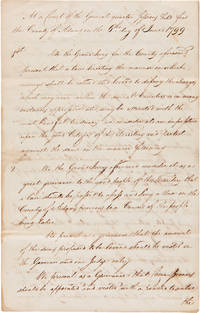
1799ref. 57838Natchez MS. June 6 1799. Early Grievances in Mississippi Territory A contemporary manuscript copy of a strongly worded petition from citizens of the just-organized Adams County in the newly created Territory of Mississippi. Dated the 6th of June 1799 the petitioners present both internal and external grievances invoking the language and spirit of the still-recent American Revolution in decrying the sudden new laws imposed upon the Territory. They protest new tax policies the power of sheriffs to arrest delinquents without due process the seizure of the property of non-residents the location of the new jail a lack of regulated weights and measures and more. Many of their arguments are focused on trade and taxation. For example they "present as a grievance the taxing of batteaux and boats carrying above twenty barrels as it will thereby prevent the freighting our produce and necessities to and from New Orleans in our own bottoms to the manifest injury of our own people employed in that line." They also complain of the Territory's crumbling infrastructure presenting "as a very great Grievance the present ruinous state of the Roads and Bridges throughout the whole of this Territory to the great shame and neglect of an industrious and civilized people." Further they state that they object to the levying of taxes for infrastructure preferring statute labor "of the male inhabitants and negroes as was the custom heretofore practiced." Other noteworthy grievances include the lack of "a proper white person" in the role of Indian Inspector "which has hitherto been effected by a Negro slave to the great shame of a free and independent people" and the need for "qualified persons…appointed to visit and examine the several public and private Cotton Gins throughout this Territory as the success and prosperity of this Country chiefly depends up on our particular care and attention to that valuable branch of Agriculture." Other concerns are of a more local color such as "the great number of idle and disorderly people who assemble and meet at the different public houses in the town of Natchez on the Sabbath day and particularly during divine service to the great interruption of well disposed Christians and to the great encouragement of vice prophaneness and immorality" "the great number of Hogs which are suffered to run at large through the Streets of Natchez to the great injury and annoyance of the Inhabitants" and "suffering Negro slaves &c to play about the fences of the out lots at cards dice and chuck penny upon the above day." The latter part of the petition parallels the settlers of Mississippi Territory to the American colonists – and the American government to the British crown. They remind the reader that they remain "a people descended from the same stock possessing the same principles and animated with the same desire of freedom" as those vaunted individuals. "We present as a great and enormous grievance that the code of laws said now to exist in this Territory have been framed by people not well acquainted with or who did not pay that attention to the local circumstances and interest of the good people of this Territory that they required particularly the Section wherein no time was allowed for removing their negroes out of the Spanish territory." They close with a severe reprimand to the young United States before appending their names: "We totally disapprove of the unexampled oppressive and enormous fees demanded by the law for licenses particularly which surpasses anything ever yet heard of. We know from woeful experience that Imperfections and Impositions with their attendant concomitants apathy cruelty and oppression will in time prevail on the wisest and best of governments and we are sorry to find that ours even in its present infant state is fetching large strides to attain that disgraceful and fatal period which it is our duty as guardians of the good people of this Territory to prevent with that dignity energy and spirit becoming a free people." This document bears the manuscript names of seventeen citizens of Natchez and the surrounding region who despite lodging these numerous complaints "acknowledge our loyalty and attachment to Government with zeal and firmness and a determined resolution to support and defend it with our lives and fortunes." These great and terrible forces oppressing the nascent Adams County clearly did not stunt its growth too much however – the first county in Mississippi had become the wealthiest in the United States by 1860. This text of this petition was published in The Territorial Papers of the United States Volume 5 pages 63-66 from another manuscript copy in the Timothy Pickering Papers at Massachusetts Historical Society though we do not locate any further copies. Any manuscript material from early Mississippi Territory is quite rare and this petition in particular provides a fascinating window into local sentiments after one of the United States' earliest territorial acquisitions. Folio. Old folds scattered light stains faint dampstain to gutter throughout. Very good. unknown
1799ref. 57838Natchez MS. June 6 1799. Early Grievances in Mississippi Territory A contemporary manuscript copy of a strongly worded petition from citizens of the just-organized Adams County in the newly created Territory of Mississippi. Dated the 6th of June 1799 the petitioners present both internal and external grievances invoking the language and spirit of the still-recent American Revolution in decrying the sudden new laws imposed upon the Territory. They protest new tax policies the power of sheriffs to arrest delinquents without due process the seizure of the property of non-residents the location of the new jail a lack of regulated weights and measures and more. Many of their arguments are focused on trade and taxation. For example they "present as a grievance the taxing of batteaux and boats carrying above twenty barrels as it will thereby prevent the freighting our produce and necessities to and from New Orleans in our own bottoms to the manifest injury of our own people employed in that line." They also complain of the Territory's crumbling infrastructure presenting "as a very great Grievance the present ruinous state of the Roads and Bridges throughout the whole of this Territory to the great shame and neglect of an industrious and civilized people." Further they state that they object to the levying of taxes for infrastructure preferring statute labor "of the male inhabitants and negroes as was the custom heretofore practiced." Other noteworthy grievances include the lack of "a proper white person" in the role of Indian Inspector "which has hitherto been effected by a Negro slave to the great shame of a free and independent people" and the need for "qualified persons…appointed to visit and examine the several public and private Cotton Gins throughout this Territory as the success and prosperity of this Country chiefly depends up on our particular care and attention to that valuable branch of Agriculture." Other concerns are of a more local color such as "the great number of idle and disorderly people who assemble and meet at the different public houses in the town of Natchez on the Sabbath day and particularly during divine service to the great interruption of well disposed Christians and to the great encouragement of vice prophaneness and immorality" "the great number of Hogs which are suffered to run at large through the Streets of Natchez to the great injury and annoyance of the Inhabitants" and "suffering Negro slaves &c to play about the fences of the out lots at cards dice and chuck penny upon the above day." The latter part of the petition parallels the settlers of Mississippi Territory to the American colonists – and the American government to the British crown. They remind the reader that they remain "a people descended from the same stock possessing the same principles and animated with the same desire of freedom" as those vaunted individuals. "We present as a great and enormous grievance that the code of laws said now to exist in this Territory have been framed by people not well acquainted with or who did not pay that attention to the local circumstances and interest of the good people of this Territory that they required particularly the Section wherein no time was allowed for removing their negroes out of the Spanish territory." They close with a severe reprimand to the young United States before appending their names: "We totally disapprove of the unexampled oppressive and enormous fees demanded by the law for licenses particularly which surpasses anything ever yet heard of. We know from woeful experience that Imperfections and Impositions with their attendant concomitants apathy cruelty and oppression will in time prevail on the wisest and best of governments and we are sorry to find that ours even in its present infant state is fetching large strides to attain that disgraceful and fatal period which it is our duty as guardians of the good people of this Territory to prevent with that dignity energy and spirit becoming a free people." This document bears the manuscript names of seventeen citizens of Natchez and the surrounding region who despite lodging these numerous complaints "acknowledge our loyalty and attachment to Government with zeal and firmness and a determined resolution to support and defend it with our lives and fortunes." These great and terrible forces oppressing the nascent Adams County clearly did not stunt its growth too much however – the first county in Mississippi had become the wealthiest in the United States by 1860. This text of this petition was published in The Territorial Papers of the United States Volume 5 pages 63-66 from another manuscript copy in the Timothy Pickering Papers at Massachusetts Historical Society though we do not locate any further copies. Any manuscript material from early Mississippi Territory is quite rare and this petition in particular provides a fascinating window into local sentiments after one of the United States' earliest territorial acquisitions. Folio. Old folds scattered light stains faint dampstain to gutter throughout. Very good. unknown books
1835ref. 799871835. Jackson MS 1835-1837. Jackson MS 1835-1837. The Bench Book of Chief Justice William L. Sharkey: A Unique Antebellum Mississippi Supreme Court Manuscript 1835-1837 Sharkey William L. 1798-1873. Notes on Cases Argued before the High Court of Errors and Appeals. Jackson MS 1835-1837. Quarto 7-1/2" x 6-1/4"; 17.8 x 15.9 cm. 130 pp. Content in a neat highly legible cursive hand to rectos and versos. Bound in contemporary quarter sheep over marbled boards gilt-ruled spine. A commercial blank book manufactured in the North featuring a copperplate pictorial title vignette on the first leaf captioned "Album New York 1832" and text block sections in various pastel paper stocks. Moderate rubbing to boards heavier wear to extremities spine ends and corners; rear joint starting but text block remains secure. Moderate interior toning with faint dampstaining to early leaves; large fragments missing from the final two leaves and several leaves neatly excised from the center and rear with stubs remaining. Autograph signature of William L. Sharkey alongside his handwritten crossed-out title trial "Notes on Cases Argued" and subsequent finalized header "Arguments Argued in the High Court of" to the front free endpaper. Later ownership inscriptions and address of Miss Hattie Holling of Yazoo City Mississippi to the front endpapers and pastedown. Accompanied by three loose leaves of contemporary legal notes and an original receipt for a law journal subscription laid in. $7500. This remarkable personal judicial notebook was kept by William L. Sharkey during his foundational early years as Chief Justice of the Mississippi High Court of Errors and Appeals-the state's supreme court. Sharkey a Tennessee-born lawyer who later emerged as an unyielding Southern Unionist provisional governor during Reconstruction and U.S. Senator-elect held the state's highest judicial post from 1832 to 1851. His tenure began immediately following the ratification of Mississippi's landmark 1832 Constitution a radical Jacksonian document that made Mississippi the first state in the nation to transition to an entirely democratically elected judiciary. Spanning the July Term of 1835 the December Term of 1836 and the January Term of 1837 the manuscript comprises roughly 50 highly detailed entries that serve as personal case reports. Because early Mississippi frontier jurispr. unknown
1835ref. 799871835. Jackson MS 1835-1837. Jackson MS 1835-1837. The Bench Book of Chief Justice William L. Sharkey: A Unique Antebellum Mississippi Supreme Court Manuscript 1835-1837 Sharkey William L. 1798-1873. Notes on Cases Argued before the High Court of Errors and Appeals. Jackson MS 1835-1837. Quarto 7-1/2" x 6-1/4"; 17.8 x 15.9 cm. 130 pp. Content in a neat highly legible cursive hand to rectos and versos. Bound in contemporary quarter sheep over marbled boards gilt-ruled spine. A commercial blank book manufactured in the North featuring a copperplate pictorial title vignette on the first leaf captioned "Album New York 1832" and text block sections in various pastel paper stocks. Moderate rubbing to boards heavier wear to extremities spine ends and corners; rear joint starting but text block remains secure. Moderate interior toning with faint dampstaining to early leaves; large fragments missing from the final two leaves and several leaves neatly excised from the center and rear with stubs remaining. Autograph signature of William L. Sharkey alongside his handwritten crossed-out title trial "Notes on Cases Argued" and subsequent finalized header "Arguments Argued in the High Court of" to the front free endpaper. Later ownership inscriptions and address of Miss Hattie Holling of Yazoo City Mississippi to the front endpapers and pastedown. Accompanied by three loose leaves of contemporary legal notes and an original receipt for a law journal subscription laid in. $7500. This remarkable personal judicial notebook was kept by William L. Sharkey during his foundational early years as Chief Justice of the Mississippi High Court of Errors and Appeals-the state's supreme court. Sharkey a Tennessee-born lawyer who later emerged as an unyielding Southern Unionist provisional governor during Reconstruction and U.S. Senator-elect held the state's highest judicial post from 1832 to 1851. His tenure began immediately following the ratification of Mississippi's landmark 1832 Constitution a radical Jacksonian document that made Mississippi the first state in the nation to transition to an entirely democratically elected judiciary. Spanning the July Term of 1835 the December Term of 1836 and the January Term of 1837 the manuscript comprises roughly 50 highly detailed entries that serve as personal case reports. Because early Mississippi frontier jurispr. unknown books