11 301 résultats
1981réf. 2090502113701189Not Available 1981. Soft Cover. Fine. The book is in fine condition. Not Available paperback
réf. 0266312551.Ghardcover. Good. Access codes and supplements are not guaranteed with used items. May be an ex-library book. hardcover
1865réf. 47The printers of the Bordentown Register produced this winter timetable for RR agent W.H. Gatzmer in a format that could be either folded and mailed or posted. Gatzmer had previously been agent in Philadelphia of the Camden & Amboy Railway. Train schedules linked Bordentown to Philadelphia New York City South Amboy or Trenton. An express ran from Bordentown via Jersey City to New York City. Suydam & Flynn
1867réf. 100112Pamphlet original printed wrappers 8vo 35 pp. with lithographic map as frontispiece. Old ink ownership signature on front cover along with small rubber stamp of library on front cover too. Library stamp on back of title page some soiling to wrappers corners nicked and a slight vertical crease. Otherwise very good. Scarce pamphlet offering a view of the building of the transcontinental railroad and some of the challenges it faced including those related to the crossing the Sierra Nevada. The map shows most of the U.S. excluding the southern fringe with the Central Pacific and Union Pacific Railroads connecting just north of Salt Lake City. The map also shows the proposed Southern Pacific Railroad from St. Louis to Southern California. The pamphlet talks about the need for the railroad because of the gold discoveries and the unlimited agricultural potential of the region. The author speculates that California could handle a population of ten million people. Also includes facts and figures about the cost of the railroad. George Brown, Printer,
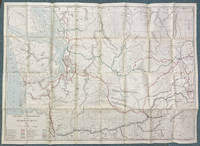
1907réf. 51929Chicago: Rand McNally & Co. Engravers 1907. 1907. 34" x 47 1/2" sheet folded to 6" x 8 3/4" featuring a partially colored map of Washington with a legend identifying with various colored lines the routes of twenty-five railroads operating and/or under construction in the state. The Pacific Ocean Puget Sound and rivers are colored blue. Printed on back side is a "Counties and Towns Index to Railroad Commissioners' Map of Washington." The map shows the state of Washington from the Pacific east to just across the Idaho border and from the northern border with British Columbia south to just beyond the Columbia River and the Oregon state border. It includes town names county borders and outlines Indian reservation lands. Railroads shown include Northern Pacific Railway; Washington & Columbia River Railway; Columbia River & Northern Railway; Port Townsend Southern Railroad; Washington Idaho & Montana Railway; Portland & Seattle Railway under construction; Great Northern Railway; Spokane Falls & Northern Railway; Columbia & Red Mountain Railway; Washington & Great Northern R’y under construction; Oregon Railroad & Navigation Co; Ilwaco Railway & Navigation Co; Oregon & Washington Railway under construction; Columbia & Puget Sound Railroad; Spokane & Inland Railway electric; Coeur d’Alene & Spokane Railway electric; Puget Sound Electric Railway; Spokane & British Columbia Railway; North Coast Railway under construction; Chicago Milwaukee & St. Paul Railway under construction; Bellingham Bay & British Columbia Railroad; Tacoma Eastern Railroad; Spokane International Railroad; and North Yakima Valley Railway. The Commissioners of the Washington Railroad Commission in 1907 were H. A. Fairchild Jesse S. Jones and John C. Lawrence. O. O. Calderhead was the Secretary of the Commission. Several small closed breaks at intersecting corners else very good plus. Rand, McNally & Co., Engravers, 1907. unknown
réf. 0332250660.Gpaperback. Good. Access codes and supplements are not guaranteed with used items. May be an ex-library book. paperback
réf. 0332259420.Ghardcover. Good. Access codes and supplements are not guaranteed with used items. May be an ex-library book. hardcover
1867réf. 100112Pamphlet original printed wrappers 8vo 35 pp. with lithographic map as frontispiece. Old ink ownership signature on front cover along with small rubber stamp of library on front cover too. Library stamp on back of title page some soiling to wrappers corners nicked and a slight vertical crease. Otherwise very good. Scarce pamphlet offering a view of the building of the transcontinental railroad and some of the challenges it faced including those related to the crossing the Sierra Nevada. The map shows most of the U.S. excluding the southern fringe with the Central Pacific and Union Pacific Railroads connecting just north of Salt Lake City. The map also shows the proposed Southern Pacific Railroad from St. Louis to Southern California. The pamphlet talks about the need for the railroad because of the gold discoveries and the unlimited agricultural potential of the region. The author speculates that California could handle a population of ten million people. Also includes facts and figures about the cost of the railroad. George Brown, Printer, books
1995réf. H40005Boston and Westford: The Railway & Locomotive Historical Society Harvard Business School 1995. Wraps. Very good. 41 issues from no. 132 to 175 lacking only no. 134. Each issue is 9 x 6 inches softcover 125-200 pp. each illustrated good to very good condition issues are mainly slight toning soil and occasional mild stains to covers and some are gently curved or wavy from spines-up storage in a box but all have very good clean and unmarked contents. For sale only as a group; we are not selling individual issues at this time. The Railway & Locomotive Historical Society, Harvard Business School unknown
réf. 133053400X.Gpaperback. Good. Access codes and supplements are not guaranteed with used items. May be an ex-library book. paperback
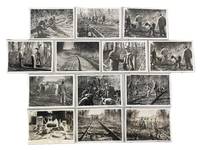
1960réf. 233391960. Railroad labor photo archive documenting manual track rehabilitation work on a rural rail line likely Minnesota circa 1960s during the period when thousands of miles of lightly used American branch line track were being abandoned salvaged or transferred into preservation and excursion use. The scenes illustrate the broader contraction of regional rail service that accelerated after World War II as trucking highway construction and changing freight patterns undermined small-line profitability. Crews work directly on deteriorated rails and ties using pry bars hammers jacks buckets and lining tools recording the physical labor required to maintain secondary rail infrastructure before mechanized maintenance became dominant on many smaller lines. Several scenes suggest volunteer or preservation-oriented work rather than standard commercial railroad maintenance including the mixed-age crew casual work clothing and informal group arrangements. Notations identify John L. Blamey on two images possibly referring to a Minnesota photographer of the same name. Photo archive of 12 black and white Kodak prints each 5 x 7 inches likely silver gelatin photographs Minnesota circa 1960s. Workers stand along heavily worn track in wooded rural terrain while replacing ties aligning rails clearing ballast and fastening hardware by hand. A rail maintenance vehicle and small rail equipment appear in the distance in several scenes while other views isolate long stretches of neglected track curving through leaf-covered corridors. Younger participants in denim overalls work alongside older men in railroad caps and heavy work jackets suggesting a collaborative rehabilitation effort rather than a fully standardized railroad gang. Buckets oil cans pry bars spikes and timber ties are positioned directly along the right-of-way emphasizing the improvised and labor-intensive character of the work. One scene captures two men driving spikes while kneeling beside exposed ties; another shows a larger crew spread across the rails with tools arranged in parallel lines along the track bed. Several prints bear manuscript identification to "John L. Blamey." One still life of dining utensils and tableware appears within the group perhaps a meal shared by the group or an image retained from the same processing batch. By the 1960s many Midwestern branch lines faced abandonment as railroads consolidated operations and shifted investment toward higher-volume freight corridors. Across states such as Minnesota Wisconsin and Iowa local historical societies preservation groups and volunteer railroad organizations increasingly intervened to salvage depots rolling stock and short rail segments before removal. These scenes preserve the transition period when maintaining even a short stretch of track still depended upon coordinated hand labor and inherited railroad knowledge. No loss or wear noted; prints clean and sharply detailed. Overall in very good to near fine condition. unknown
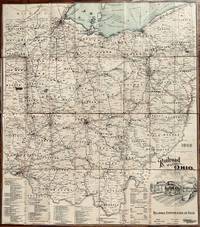
1909réf. 567Columbus OH: Columbus Lithograph Company 1909. 32 1/2 x 28 1/2 inches. Very good condition. This is a beautifully composed map of Ohio showing the railroadscape of the state. Bounded by the Ohio River and Lake Erie the layout across the state is vividly presented. The prominent cities of the state are well connected. Toledo and Cleveland in the north are central railroad towns as is Columbus in the center of the state. In the south is Cincinnati and Northeast is centered on Youngstown. There were 45 steam railroads operating in Ohio in 1909. Additionally there were 58 electric railways in operation. Needless to say it was not difficult to get from here to there in the State of Ohio in1909. It is of significant note that the state of Ohio was connected to both the Great Lakes trading system and the Mississippi River trading system. Farmers had the option of moving produce north into the Great Lakes system or south into the Mississippi River system via the Ohio River. In 1850 when there were significant shortages of grains and produce in the South the Ohio State trading mechanism shipped to the south before the new crops were harvested. Flexibility followed price. Columbus Lithograph Company unknown
1952146 pages. Features: Montreal - Railroad Metropolis; Kentucky Hospitality; Mite-Sized McCoy; Diesel Lubrication; New Orleans Streetcar Blues; Kid Switchman; Riley goes over the top; and much more. Average wear. Unmarked. Binding intact. Sound copy. Book
1974Features: Steam at Rheine Engine Terminal; Meals at all Hours; Author of Ghost Railroad Books; Illinois Central Gulf Railroad Locomotive Roster; Passenger Train Survey; Hoggers are Stubborn; Why Train was Late; In the Glory Days of Interurbans; and more. Two date stamps upon front cover. Somewhat above-average wear. Still a sound working copy. Magazine
1972No marks or inscriptions and no creasing to covers. A very clean very tight copy with bright unmarked boards and no bumping to corners. 66pp. American railroad magazine from the 1970s with features on US railways, steam in Brazil and young ladies who watch trains. Very scarce in the UK.
1966Features: Pennsy High-Speed Electrics; Interesting Railfans No. 48; Calcutta's Streetcar System; Chesapeake & Ohio Stream Roster (1926); and more. Average wear. Sound copy. Magazine
197464 pages. Features: Chihuahua & Pacific Roster; Anniversary of California Zephyr; Interesting Railfans No. 134 - William c. Kessel; Passenger Train Survey; San Francisco's Railroad; and more. Two small date stamps upon front cover. Average wear. Sound copy. Magazine
196366 pages. Features: Hetty Green's Railroad; Gerald M. Best; You Couldn't Beat a Climax; Whistle on the Levee (fiction); Along the Iron Pike (pictorial); Northern Pacific Locomotive Roster; Water Towers that are Still Standing; Setouts and Pickups; Steam-Powered Reader Railroad; Not Listed in the Official Guide; and more. Covers in rough shape. Coverfold almost entirely open. A worthy reference copy. Magazine
195882 pages. Features: The Sunset Limited; F&CC Line; The Atlantic Story; Southern Pacific Locomotive Roster; Transit Topics (including photo of Japanese Monorail); and more. Average wear. Small date stamp upon front cover else unmarked. Book
1978Features: Ninety-Nine Dead in Nashville Wreck; Romance of Steam Locomotive Whistles; Night Run - Poem; B. Thomas Walsh, Interesting Railfan 187; Night Yardmaster; Short Line Rosters; and more. Small date stamp atop front cover else unmarked with moderate wear. Sound copy. Magazine
1960réf. 233391960. Railroad labor photo archive documenting manual track rehabilitation work on a rural rail line likely Minnesota circa 1960s during the period when thousands of miles of lightly used American branch line track were being abandoned salvaged or transferred into preservation and excursion use. The scenes illustrate the broader contraction of regional rail service that accelerated after World War II as trucking highway construction and changing freight patterns undermined small-line profitability. Crews work directly on deteriorated rails and ties using pry bars hammers jacks buckets and lining tools recording the physical labor required to maintain secondary rail infrastructure before mechanized maintenance became dominant on many smaller lines. Several scenes suggest volunteer or preservation-oriented work rather than standard commercial railroad maintenance including the mixed-age crew casual work clothing and informal group arrangements. Notations identify John L. Blamey on two images possibly referring to a Minnesota photographer of the same name. Photo archive of 12 black and white Kodak prints each 5 x 7 inches likely silver gelatin photographs Minnesota circa 1960s. Workers stand along heavily worn track in wooded rural terrain while replacing ties aligning rails clearing ballast and fastening hardware by hand. A rail maintenance vehicle and small rail equipment appear in the distance in several scenes while other views isolate long stretches of neglected track curving through leaf-covered corridors. Younger participants in denim overalls work alongside older men in railroad caps and heavy work jackets suggesting a collaborative rehabilitation effort rather than a fully standardized railroad gang. Buckets oil cans pry bars spikes and timber ties are positioned directly along the right-of-way emphasizing the improvised and labor-intensive character of the work. One scene captures two men driving spikes while kneeling beside exposed ties; another shows a larger crew spread across the rails with tools arranged in parallel lines along the track bed. Several prints bear manuscript identification to "John L. Blamey." One still life of dining utensils and tableware appears within the group perhaps a meal shared by the group or an image retained from the same processing batch. By the 1960s many Midwestern branch lines faced abandonment as railroads consolidated operations and shifted investment toward higher-volume freight corridors. Across states such as Minnesota Wisconsin and Iowa local historical societies preservation groups and volunteer railroad organizations increasingly intervened to salvage depots rolling stock and short rail segments before removal. These scenes preserve the transition period when maintaining even a short stretch of track still depended upon coordinated hand labor and inherited railroad knowledge. No loss or wear noted; prints clean and sharply detailed. Overall in very good to near fine condition. unknown books
1938réf. 3955New York: Labor Research Association 1938 - 1962. First edition. Original Wraps. Very Good mild ex-library. Octavo some years have index some issues missing call us for more details 978-664-6455. Labor Research Association paperback
1947réf. 010121Washingtion D.C.: Association of American Railroads 1947. Paper Back. Near Fine/No Jacket. 4to - over 9¾" - 12" tall. 44pp.; SC staple-bound blk.&white; slight rub w/cleantight pgs. "This report. focuses attention on those branches of the railroad organization which have to do with maintenance of the fixed facilities and rolling stock and the actual operation of the service. Association of American Railroads unknown
19488vo., Third Edition, with map; original place blue cloth, a very good, clean copy. First published in 1946. First-hand account of imprisonment in Changi and forced labour on the Burma-Siam railway. SCARCE. Corfield 252; Enser, p.423 (both recording the first edition).
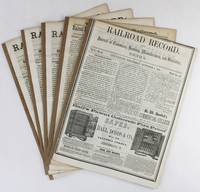
1856réf. 3168Cincinnati 1856. Very good. Five issues and supplements totaling 72pp. Spines reinforced. Light tanning and dust soiling; scattered faint foxing. A lengthy extra issue of the Railroad Record with four additional eight-page supplements that together comprise a ringing endorsement from this industry periodical and its editors of the southern route through Texas and the Southwest for the American transcontinental railroad. The first two items of this extra published on October 4 1855 are by Texas Western Railroad owner and promoter Edgar Conkling who exhorts readers to examine the evidence supporting construction along the southern route and to invest in his railroad which was already sanctioned by the Texas state legislature as the text of two laws printed following his address demonstrate. Much of the issue is taken up by extracts from Secretary of War Jefferson Davis' positive report on the route through Texas and by a précis by Colonel A.B. Davis of his exhaustive survey of the proposed path through the recently completed Gadsden Purchase with a double-page map of the intended line. After several other attestations a subscription form is included at the rear for those who wish to purchase stock at $100 per share in the Texas Western Railroad Company. The additional four supplements dating from late 1855 and the first half of 1856 print more arguments in favor of the southern route including a lengthy letter from Thomas Butler King and lead articles with titles such as "What Shall Be Done for a Highway to the Pacific" and "Objections to the Construction of the Pacific Railroad reviewed." The Texas Western never built more than fifty miles of track connection Shreveport Louisiana and Marshall Texas and it was another twenty-five years before the Southern Pacific and Texas & Pacific Railroads connected near El Paso in 1881 to complete the "southern route" as it was originally conceived. unknown