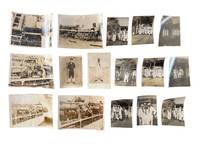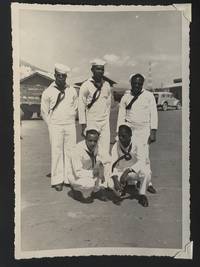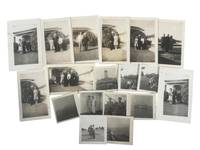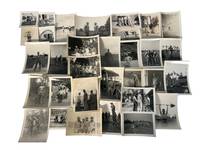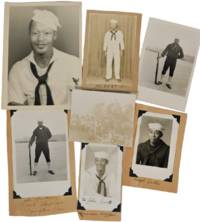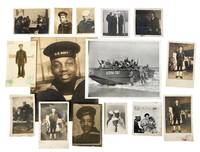
1920rif. 231621920. African American Military Service African American U.S. Navy photograph archive documenting naval service segregation training and enlisted social life from the interwar period through World War II with direct evidence of how Black sailors and Seabees moved through the Navy's expanding but racially divided wartime structure. The group centers on studio and snapshot portraits of Black servicemen in dress and work uniforms including several real photo postcards from the 1920s and a larger body of 1940s material tied to wartime service. A press photograph dated November 23 1942 anchors the archive within the Navy's 1942 expansion of Black enlistment into general service and the wartime organization of segregated Black Seabee battalions on the East Coast. Black men entered the Navy under long standing racial restrictions before broader wartime openings began in 1942 and Black Seabees remained largely segregated even as their labor and training became essential to amphibious and construction operations during the war. Photo archive of 14 silver gelatin photographs including 4 real photo postcards and one press photo various sizes ranging from 10 x 8 inches two 2 x 3 inches United States circa 1925 to 1940s. The most historically explicit image is a large Acme Newspictures press photograph showing Black Seabees disembarking from landing craft marked "USN 702" rifles raised as they train in surf; the typed caption on the verso reads in part "NEGRO SEABEES TRAIN IN LANDING OPERATIONS" identifies them as members of an "all Negro battalion" and bears the date November 23 1942. Other photographs shift from formal military portraiture to daily life: a large studio portrait of a smiling young Black sailor in a flat cap lettered "U.S. NAVY"; three interwar real photo postcards showing Black sailors in neckerchief jumper uniforms and in peacoat with flat cap one inscribed at front "Kansas City Mo" and "Adolphe J. Bell"; a headshot portrait with a cursive signature on the verso read as "Joe Louis"; three young sailors in white enlisted uniforms and white caps; three sailors posed indoors in dark dress uniforms; a mixed social table scene with ten people sharing food and drink including three Asian women and seven Black sailors in uniform; a domestic interior with a woman holding a child beside a sailor holding bottles; a casual image of a sailor in a recreation room with ping pong table; an outdoor snapshot near barracks or temporary buildings with servicemen and a dog; and a small vernacular image of three men one shirtless in tropical or warm weather surroundings. One real photo postcard is inscribed "Just to remember a pal - Stanely" and addressed to Lloyd S. Miller 219 Lexington St. Covington Virginia. Navy uniform history supports the archive's span across prewar and wartime decades from the flat hat and peacoat combinations in the earlier portraits to the white "dixie cup" caps and wartime enlisted uniforms in the later snapshots. The archive places Black naval service in view across two linked periods: the constrained interwar Navy when Black sailors were sharply limited by race and the wartime Navy after April 1942 when the service broadened Black enlistment while preserving segregation across much of its structure. Formal self presentation in studio portraiture named personal exchange through inscription and mailing address interracial or cross cultural off duty sociability at table domestic visitation barracks life recreation and a news service image of East Coast landing operations training. The 1942 Seabee press photo connects the personal photographs to a larger wartime system in which Black sailors were admitted into expanded service categories yet still sorted into segregated units and labor formations a tension now central to institutional collecting on African American military history and the history of segregation within federal service. Light to moderate wear throughout including edge wear creasing toning small losses corner softening surface abrasions and scattered staining; several images with fading or silvering and the press photo with caption label and agency stamp on verso. Overall in good condition. A compact concrete record of Black naval life before and during World War II with one dated press image and multiple inscribed vernacular portraits grounding the archive in both military policy and personal experience. unknown books
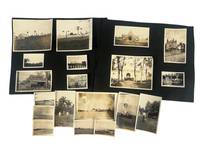
1915rif. 224781915. Polk George Washington Jr. Havana and rural Cuba photo archive 1915 documents Cuba through the viewpoint of an American military traveler during the Platt Amendment era when U.S. power shaped Cuban sovereignty port security naval access and commercial movement. The photographs record ships in Havana Harbor coastal fortifications rural dwellings Cuban farmers agricultural landscapes and colonial plazas providing insight into how U.S. military personnel visually encountered Cuba just before American entry into World War I. The Platt Amendment gave the United States broad authority to intervene in Cuban affairs and required Cuba to lease land for naval stations remaining central to U.S.-Cuba relations until its repeal in 1934; this archive therefore places vernacular travel photography within a larger framework of military oversight and commercial access. Polk George Washington Jr. Havana Cuba vernacular photo collection. Havana Cuba: unpublished December 1915. Twenty-eight silver gelatin photographs pasted to album pages with some loose or partially detached ranging from approximately 2 x 2½ inches to 4½ x 3½ inches many with handwritten ink annotations dated December 22 to 29 1915. The images include vessels anchored in Havana Harbor harbor views from on board ship Morro Castle and other coastal fortification views colonial civic plazas local laborers and civilians thatched rural huts or bohíos sugarcane fields and agricultural scenes captioned "Orange Trees & Coconut Palms Near Havana." One photograph is captioned "Cuban Farmer & Son Near Havana Dec 22 1915" giving the archive direct documentary value for rural family life and American observation of Cuban agricultural communities. Other captions identify boats as "U.S.C. 5th Protectors off Havana" and refer to the United Fruit Company steamer Abangarez on the Havana-Colon route; the Abangarez was a United Fruit Company passenger and cargo vessel completed in 1909 and later brought under United States registry during World War I. The photographs combine military commercial and rural subjects in a compact record of U.S.-Cuban contact. Polk's annotations and the repeated Potchernick-Birdsong Co. Kodak Place San Antonio Texas stamps on versos indicate that the images were developed in the United States after the trip or sent home for processing preserving the path by which overseas military travel became a personal photographic record. Polk's later military service is supported by burial and veterans' records identifying George Washington Polk Jr. as born May 13 1889 died July 27 1976 and buried at Fort Rosecrans National Cemetery; the supplied description identifies him as later a Colonel in the U.S. Army Air Corps and instructor in the early U.S. Air Force. Most photographs lightly pasted along one edge to scrapbook leaves with some detached or partially affixed; a few corner creases otherwise sharp images with strong contrast good to very good overall. Focused 1915 Cuba archive linking Havana Harbor rural Cuban labor vernacular architecture United Fruit maritime movement and American military observation during the U.S. protectorate period. unknown books
1943rif. 70459Washington DC: U.S. Hydrographic Office 1943. Fourth edition later printing broadside color map 30 x 42 in.; two maps printed side-by-side one of Nagoya port at a 1:29118 scale and another a closer look at the inner port at 1:10000 scale. Includes soundings buoys nearby roadways and labeled harbor buildings; stamp on bottom corner reads "Corrected through notice to mariners July 22 '44"; some creasing along edges old fold near fine. Map No. 5542. U.S. Hydrographic Office unknown books
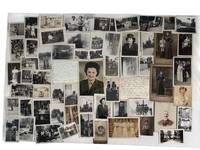
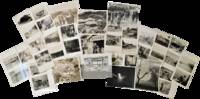
1944rif. 213131944. United States Marine Corps Women's Reserve service of an officer named "Lucille" documented in photographs created primarily during the Second World War. The images provide direct visual evidence of women's integration into the United States Marine Corps through the Women's Reserve program established in 1943 which expanded military labor by assigning women to administrative communications and logistical roles that freed male Marines for overseas combat service. Lucille appears repeatedly in uniform as a non-commissioned officer her sleeve chevrons indicating rank within a branch that became one of the most visible examples of women's wartime military participation. The photographs situate her service within a broader life history that includes family life in Chicago and Polish immigrant heritage placing the wartime mobilization of American women within the social networks of ethnic urban communities that supplied many of the nation's wartime workers and service personnel. Archive of 168 black and white photographs primarily silver gelatin prints dating from the mid-1930s through the immediate post-war years accompanied by several earlier family portraits including cabinet cards and cartes de visite. The collection centers on Lucille's Marine Corps service and includes a hand colored portrait inscribed "Lucille 1944" depicting her in USMC Women's Reserve dress uniform with jacket tie and rank chevrons visible on the left sleeve. Additional images show her standing at attention on the steps of a large institutional building and posing in formation with fellow servicewomen wearing winter coats and garrison caps scenes consistent with stateside training or official gatherings. Other photographs document civilian life in Chicago including family gatherings wedding celebrations and leisure outings along the Lake Michigan shoreline north of the city. The archive also preserves earlier generational photographs of relatives in traditional Polish dress and an inscribed carte de visite of "Miss Sobaleski" from Włocławek Poland linking the wartime Marine to a late nineteenth century immigrant family network. Creation of the United States Marine Corps Women's Reserve marked a significant expansion of women's participation in the armed forces during World War II when more than 20000 women served in the Marine Corps between 1943 and 1945. Photographic documentation of individual service members provides an important record of how women navigated military authority uniformed identity and wartime labor during a period of rapid institutional change within the armed forces. The inclusion of prewar family portraits and Polish immigrant imagery situates Lucille's military service within the longer trajectory of ethnic community life in Chicago one of the largest centers of Polish American settlement in the United States. Together the photographs document the intersection of immigrant family history urban American life and women's wartime military service. Photographs range in size from approximately 2 x 3 inches to cabinet card formats; the archive preserved loose. Minor edge wear and light toning consistent with age; overall very good condition. The breadth of images linking immigrant heritage civilian life and Marine Corps service gives the archive strong documentary value for the study of women in the U.S. military and Polish American community history during the Second World War era. unknown books
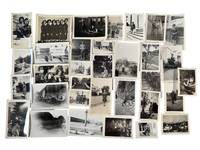
1943rif. 213151943. United States Marine Corps Women's Reserve service documented in photographs produced during World War II in the San Francisco Bay Area. The images record the participation of women in the Marine Corps Women's Reserve program established in 1943 a wartime expansion of the U.S. armed forces that assigned women to administrative communications and logistical roles in order to release male Marines for combat duty. The photographs depict women serving in uniform performing clerical tasks assembling for formation and socializing together preserving visual evidence of the daily lives and institutional roles of women who entered the Marine Corps during the wartime mobilization of the 1940s. Several photographs also trace the personal backgrounds of these service members including family portraits and earlier images connected to Polish American communities in Chicago situating military service within immigrant family histories and urban social networks. Archive of 129 black and white photographs primarily silver gelatin prints dating from the late 1930s through the World War II years. The photographs show women wearing United States Marine Corps Women's Reserve winter service uniforms consisting of forest green jackets six gore skirts khaki shirts and ties with several individuals wearing bell crowned service hats with red cords distinctive to the branch. Chevron insignia visible on some sleeves indicate non commissioned officer ranks. A number of images show groups of women standing in formation suggesting training exercises or ceremonial assembly. Another photograph shows a uniformed servicewoman beside a sign for a United States Naval Hospital indicating work in medical or administrative support functions. Other photographs depict everyday activities including typing at desks walking across military grounds and gathering in outdoor spaces with fellow service members. Leisure scenes show women seated together on lawns posing near buildings and socializing during off duty hours. Civilian photographs include picnics park outings beach and poolside scenes where women appear in swimsuits and images of wedding celebrations and formal portraits in evening dress. The archive also includes staged theatrical photographs in which women appear in costume suggesting participation in recreational performances or amateur productions. Many photographs include recognizable San Francisco landmarks including City Hall Market Street Fisherman's Wharf and views toward Alcatraz Island placing the military service documented in the archive within the wartime urban environment of the Bay Area. Earlier photographs predating the war include family portraits taken in professional studios some bearing embossed photographer stamps and inscriptions associated with Polish surnames and Chicago studios. One cabinet card identifies Stephanie Hanslik of 1669 Milwaukee Avenue in Chicago linking the servicewomen documented here to immigrant communities in the American Midwest. Together the images trace a visual narrative connecting immigrant family life wartime mobilization and the institutional integration of women into the Marine Corps during the Second World War. Photographs range in size from approximately 1 x 2 inch snapshots to larger cabinet card formats measuring up to approximately 6 x 7.75 inches with most prints around 3 x 4.5 inches. Minor surface wear and light handling marks consistent with age; overall very good condition. The archive offers substantial documentation of women's military service and social life within the USMC Women's Reserve during the wartime expansion of the U.S. armed forces. unknown books
1951rif. 214131951. U.S. Navy boxing photographs May 1951 document organized athletic competition within the Navy during the early implementation of military desegregation and provide direct visual evidence of African American participation in structured sports programs shortly after federal policy changes mandated integration. Created three years after President Executive Order 9981 these images record both interracial competition and institutional oversight within a branch historically resistant to integration. The archive situates athletic competition within broader efforts to build morale discipline and cohesion during the Korean War era supporting research into African American military history civil rights and the role of sport within newly integrated armed forces. Nineteen black and white silver gelatin photographs each approximately 8 x 10 inches official U.S. Navy images with May 1951 date stamps on versos depicting a naval boxing tournament held in a military arena. The photographs capture multiple fight sequences including mid swing punches defensive movements and clinches along the ropes as well as referees supervising bouts and trainers assisting fighters between rounds. Several images emphasize moments of impact with gloves connecting and fighters reacting in real time while others depict pre fight preparation including a boxer in a satin robe receiving instruction before entering the ring. Group portraits show teams of sailors including both African American and white participants posed in uniforms and boxing attire alongside officials and referees underscoring the organized and institutional nature of the event. Produced during a period of active military engagement in the Korean War these photographs document the practical realities of integration within everyday military life where athletic competition functioned as both training and public demonstration of unit cohesion. The presence of interracial matches and group portraits reflects evolving racial dynamics within the Navy while the structured environment of the tournament reveals how sport operated as a controlled space for recognition and advancement amid ongoing inequality. As visual records these images preserve the intersection of race military policy and physical culture at a moment when federal mandates and lived experience were still in negotiation. Light surface wear and minor handling marks with clear images and strong contrast; overall condition very good. unknown books
1943rif. 215061943. African American MilitaryWWII African American U.S. Navy sailors photographic archive 1943-1946 documenting Black naval service during World War II and the immediate postwar demobilization period capturing lived experience within a still-segregated military structure. Produced during a pivotal era when the Navy began to expand African American participation beyond steward and mess attendant roles the photographs reflect the evolving challenges and opportunities faced by Black servicemen in wartime. A dated postcard image from March 21 1943 anchors the collection to the height of the war when the Navy was under mounting pressure from civil rights advocates to expand enlistment for Black servicemen. Archive consists of 19 original silver gelatin photographs including 16 black and white prints measuring approximately 3 x 4 inches to 5 x 7 inches along with a postcard photograph dated March 21 1943. The images depict Black sailors in U.S. Navy service uniforms identifiable by white "Dixie cup" hats dark jumper tops and neckerchiefs. Several photographs show sailors gathered outside a Ship's Service facility a recreational and supply center on naval installations suggesting moments of rest or liberty. Group portraits emphasize camaraderie including one image of four sailors standing closely with arms around one another. Additional photographs document crowded military transport ships with servicemen lining railings and lifeboat stations. One image captures a transport vessel entering San Francisco Bay with the Bay Bridge visible in the background strongly suggesting return to a principal West Coast demobilization port. Such scenes are consistent with large-scale troop returns at the close of the Pacific War when thousands of servicemen were processed through West Coast ports following overseas deployment. During World War II the Navy maintained formal segregation policies initially restricting Black sailors to service roles before gradually permitting broader enlistment classifications beginning in 1942. The photographs capture this transitional moment: some images depict exclusively Black groups while others suggest more integrated spaces reflecting incremental institutional change that would culminate in President Harry S. Truman's Executive Order 9981 in 1948 mandating desegregation of the armed forces. The archive preserves evidence of African American participation in naval mobilization transoceanic transport and postwar demobilization at a time when service abroad coexisted with racial inequality at home. Light surface wear and minor corner curling visible on several prints; images retain strong tonal contrast; overall very good. A cohesive photographic record of Black naval service at the intersection of global war and the early movement toward military desegregation. unknown books
1950rif. 215431950. African American sailors aboard the USS Leyte CV-32 photo album compiled circa 1950-1951 documents daily life labor and camaraderie among Black enlisted men serving during the opening phase of the Korean War and in the early implementation of military desegregation under Harry S. Truman's Executive Order 9981. Created while the carrier was deployed in Atlantic and Caribbean waters and later in support of Korean War operations the album offers sustained visual evidence of African American naval presence during a transitional period when the U.S. Navy was moving unevenly from segregation toward formal integration. Of particular historical significance is the inclusion of the 15 December 1950 Christmas edition of 32's News containing an obituary and photograph of Ensign Jesse L. Brown who was killed in action on 4 December 1950 near the Chosin Reservoir in North Korea when his F4U-4 Corsair was struck by enemy fire making the album an immediate shipboard witness to the death of the Navy's first Black aviator. The archive supports research in African American military history Korean War studies naval integration and the social worlds of Black servicemen abroad. Photo Album with approximately 100 black-and-white silver gelatin photographs ranging from 2.75 x 1.75 inches to 10 x 8 inches most mounted recto and verso on 22 black paper album leaves with several images unmounted accompanied by loose and mounted ephemeral materials including mimeographed wartime reports clippings and shipboard newspapers. Notable among these are the 14 October 1950 issue of Daily Press News and the 15 December 1950 issue of 32's News Vol. 1 No. 5. Identified sailors include Harvey Thomas James Kincaid Leo Bowser "Lippy Connor" "Stockson" "Boby Mitchell" and James G. Watson the latter represented by photographs captioned "Watson" and accompanied by 1949-1951 W-2 forms documenting his service at Naval Air Station Quonset Point and aboard USS Leyte. A large-format photograph captioned "The GTMO Four" depicts four African American sailors in dress whites at Guantánamo Bay while other images captioned "Mindoro" situate the crew in the Philippines during operational deployment. The album interweaves formal portraits group military images and informal scenes of athletic recreation swimming nightlife and cross-cultural encounters with Filipino civilians as well as studio portraits labeled "School Days" and images of family members and sweethearts grounding naval service within networks of kinship and memory. Interior views of barracks communal meals and experimental aircraft armament work-contextualized by a mimeographed article describing the so-called "mercy bomb" perfected aboard Leyte-further illuminate the technical and social dimensions of shipboard life. Produced at a moment when Black servicemen were asserting dignity and professional competence within historically exclusionary institutions the archive offers unusually cohesive visual testimony to African American presence in a modernizing desegregating Navy at the outset of a global Cold War conflict. Photographs exhibit minor fading light corner wear and typical album mounting abrasions; mimeographed documents show toning creasing and several edge tears. Overall very good condition. A substantial and visually integrated record of African American naval service during the Korean War's opening year anchored by contemporaneous memorialization of Jesse L. Brown and richly documenting everyday Black military life at sea and abroad. unknown books
1944rif. 218031944. Asian American United States Navy sailor and fellow white serviceman appear throughout this World War II photograph archive documenting naval personnel and their families in domestic settings during the 1940s. Thousands of Chinese Americans enlisted in the U.S. Navy during the war forming one of the largest concentrations of Asian American personnel in a single military branch. Many Chinese American sailors initially served in steward or service ratings before gradually gaining access to other assignments as wartime manpower demands increased. The photographs therefore record Asian American participation in the U.S. military during a period marked by heightened racial scrutiny following the Attack on Pearl Harbor and the subsequent wartime environment that produced both expanded military service and intensified discrimination against Asian communities in the United States. Archive of twelve black and white vernacular photographs depicting two U.S. Navy sailors one Asian American and one white American serviceman posed with women identified as Asian American family members or companions along with several older relatives. The photographs present informal outdoor scenes taken in residential settings such as front yards and open lawns. Both sailors appear in standard U.S. Navy enlisted uniforms with white sailor caps in several images while another photograph shows the Asian American sailor wearing a darker Navy service uniform with a peaked cap typically used for more formal duties. The women pictured wear modest wartime clothing including dresses cardigans and heeled shoes. The photographs show the two sailors together repeatedly across the images often standing with family members or seated on lawns suggesting a close personal friendship extending into shared social gatherings with relatives. The archive documents domestic and social dimensions of wartime military service within Asian American communities at a moment when racial identity shaped the opportunities and restrictions placed upon service members. While thousands of Chinese Americans served in the Navy during the war Japanese Americans encountered far greater barriers to enlistment following the wartime incarceration policies authorized under Executive Order 9066. The photographs therefore capture a social environment in which Asian American servicemen navigated military duty family life and interracial friendships amid wartime tensions surrounding race and national loyalty. Photographs measure typical small snapshot sizes consistent with mid twentieth century vernacular photography. Minor handling wear and light edge wear visible across several prints. Overall condition very good. unknown books
1930rif. 218931930. Women's History Gender and Sexuality Photography Unidentified photographer women in military uniform photographs circa 1930 document female crossdressing and gender nonconforming expression in the United States during the interwar period and provide direct visual evidence of women adopting naval and military dress prior to formal inclusion in the armed forces. The images place women in uniforms associated with enlisted men of the U.S. Navy and Marine Corps including posed and candid settings that suggest both performative and social uses of military identity. Produced before the establishment of formal women's branches such as the Women's Army Corps the archive supports research into gender expression cultural attitudes toward uniform and authority and the informal appropriation of military symbols by women in early twentieth century America. United States circa 1930. Archive of 10 silver gelatin vernacular photographs ranging in size from approximately 3 x 2.5 inches to 3.5 x 5 inches with three photographs bearing a "Bear Photo Service" stamp and processing date of November 10 1930. The photographs depict women dressed in U.S. Navy enlisted uniforms including jumpers with flap collars neckerchiefs and sailor caps as well as dress uniforms with double breasted coats and peaked caps. One image shows a woman wearing a Marine Corps style uniform with a white service cap and belted tunic posed in a formal salute. Several photographs show oversized uniforms likely borrowed from male servicemen with visible insignia including petty officer chevrons. Subjects appear in both informal group settings such as porch scenes with companions and more formal posed portraits with one individual appearing repeatedly across multiple images in varied poses. The archive situates these photographs within a period when women's participation in military institutions was limited and highly regulated making the adoption of uniformed identity outside official structures notable. The use of naval and military dress in social and photographic contexts suggests engagement with themes of authority discipline and gender presentation while also reflecting broader interwar cultural experimentation with identity and appearance. These images document an underrepresented aspect of women's history capturing moments of self representation that diverge from dominant gender norms of the period. Light creasing to two prints with minor foxing and edge silvering to one image; overall toning consistent with age. Overall very good condition. A focused photographic record of gender nonconforming expression in early twentieth century American social life. unknown books
1944rif. 210751944. Guam photographic archive 1940s documenting Chamorro daily life indigenous practices and community activity during the period of Japanese occupation and subsequent United States military presence in World War II. These images record civilian life within rural village settings alongside evidence of wartime oversight providing visual documentation of how indigenous communities maintained social economic and cultural practices under shifting colonial control. The archive captures both everyday labor and organized public events situating Chamorro life within a landscape shaped by military occupation and transition. Archive comprises 24 silver gelatin photographs ranging in size from approximately 3.5" x 4.5" to 8" x 10". Images depict men women and children in village environments characterized by grass- and reed-roofed structures and open landscapes. Several photographs show children engaged in daily and recreational activities including washing clothes in a river playing volleyball and participating in group dances while holding hands in circular formations. Other scenes document subsistence and craft practices including a man casting a fishing net near the shoreline a pair engaged in shoemaking and women extracting meat from coconuts while seated on the ground. Two photographs depict a group of Chamorro Boy Scouts assembled near a monument saluting under the direction of a uniformed leader. Additional images record a public parade featuring participants in traditional dress including women wearing decorative garments and headpieces alongside floats and figures suggestive of ceremonial or religious roles. One photograph includes U.S. naval personnel marching in formation indicating the presence of American military forces. Each photograph bears a "Passed By Naval Censor" stamp on the verso indicating review and approval under wartime censorship protocols. Created during and immediately following the 1941-1944 Japanese occupation of Guam and its recapture by United States forces these photographs provide direct visual evidence of Chamorro life under wartime conditions and colonial transition. The inclusion of both indigenous practices and military presence reflects the layered political and cultural environment of the island during World War II. Minor edge wear visible on some photographs; overall very good condition. This archive offers a concentrated documentary record of Guam's civilian and cultural landscape during a period of military conflict and administrative change. unknown books
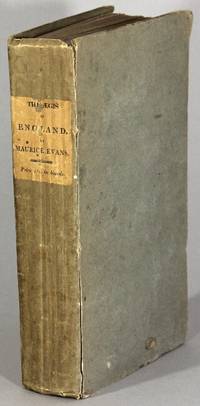
1817rif. 66691London: printed for the author. Sold by Longman and Co. Baldwin and Co.; Law and Whittaker; Black Parbury and Allen; Egerton; Westley and Parrish; and all other booksellers 1817. First edition 8vo pp. xxx 2 608; uncut and largely unopened; original drab paper-covered boards printed paper label on spine; label slightly chipped affecting 2 letters corners bumped front joint starting; all else very good and sound. Includes sections on Waterloo The Reduction of Algiers The Battle of Albuera Operations in the Eastern Seas Java The Capture of Martinique Corunna Capture Off Santo Domingo Egypt Mahratta War etc. Includes a lengthy list of subscribers including the Dukes of Kent Cumberland and Cambridge the Duke of Wellington Sir Stamford Raffles and many other naval and military figures. printed for the author. Sold by Longman and Co. Baldwin and Co.; Law and Whittaker; Black, Parbury, and Allen; Egerton; Westley unknown books
rif. 94017Very Good. File folder perhaps 1.5 inches thick. Lots of photocopies and a modest exchange of correspondence. unknown books
1942rif. 203201942. Archive of 21 silver gelatin photographs during WWII depicting a Marine Corps unit the 51st Defense Battalion. Photographs in this archive range in size from 2.5" x 3.5" to 3.5" 6.75". Black and white photographs. The soldiers are pictured on base and in the field at Montford Point their training camp at Camp Lejeune. The 51st was originally formed in August 1942 and included the first African American unit in the Marine Corps. Its original mission was to provide air and coastal defense for advanced naval bases. During the war the battalion served in the Ellice and Marshall Islands in the Pacific Theater. Most the of the photos of the soldiers are taken on base near the barracks. We see them playing football lifting weights playing golf or sometimes hanging out shirtless. Other photos show them in uniform. In one photo we see one black soldier as part of group around a tree. This black soldier is in uniform with his cap and was part of the first African American Marines. The other photographs only show white soldiers. The 51st was deployed to the South Pacific Ellice Islands in February 1944 and later moved to Eniwetok where it was posted for the remainder of the war. After the war they returned to Marine Corps Base Camp Lejeune and decommissioned on January 31 1946. This photo archive gives a rare glimpse into a groundbreaking unit and the experiences of the men who comprised it. In very good condition overall. unknown books
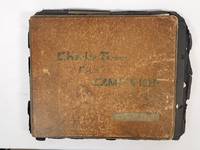
1943rif. 189541943. African American MilitaryWWII Black soldier's World War II photograph album ca. 1940s documenting the service of Charles Turner who trained at Camp S-101 Pennsylvania and deployed with an all-Black Navy unit in the Pacific Theater. Created during the era of segregated armed forces the album captures the lived experience of Black military personnel serving in Melanesia Papua New Guinea the Philippines and at least one image from Bougainville during the Allied Pacific campaigns from 1943 through 1945. The photographs document Turner and his fellow servicemen within the broader history of African American participation in World War II when over one million Black men and women served in segregated units while confronting racial discrimination at home and abroad. Images of troop landings encampments and base infrastructure including a sign dedicating "Marine Drive" to the "Fighting Marines" built by the 53rd Navy Combat Battalion 1st Marine Amphibious Corps place the album within the operational geography of the South Pacific campaigns. The inclusion of photographs depicting Japanese soldiers Allied convoys and the aftermath of combat underscores the immediacy of frontline and occupation experiences while the presence of tightly composed group portraits many captioned with the names of fellow servicemen reveals networks of camaraderie within segregated Black units. Disbound photo album with stiff leatherette boards separated. 113 black-and-white silver gelatin photographs mounted across 28 album pages accompanied by approximately 30 loose photographs. Images vary in size and include formal and informal group portraits scenes of military landings and equipment base life interactions with Melanesian and Polynesian civilians and photographs of Japanese soldiers and civilians in occupied settings. Approximately one-third of the images document life in the United States including photographs of African American friends fellow servicemen and family members providing visual evidence of Black community life during the 1940s. A later letter from an individual identified as Delores expressing familial concern and referencing the inclusion of "Kennedy halves" to assist with food purchases accompanies the album extending its temporal scope into the postwar period and reflecting the economic and emotional networks sustaining veterans and their families. Album pages chipped and worn with boards detached; mounting surfaces fragile. Photographs generally sharp with strong contrast; minor edge wear and light handling evident on some prints. Loose photographs well preserved. Overall condition good with photographic contents very good. As a cohesive visual record of African American military labor in the Pacific Theater alongside documentation of Black civilian life during and after the war the album offers substantial research value for the study of segregated service wartime racial dynamics and mid-twentieth-century African American community history. unknown books
1945rif. 191881945. African American U.S. Navy sailors photographed during World War II document the service of Black enlisted men in the segregated naval forces of the United States during the global conflict of 1939-1945. Eleven photographs depict African American sailors in uniformsome of them have signed their names below their images including multiple images of recruit George Bailey Brooks stationed at Great Lakes Naval Training Station near Chicago one of the principal training centers for Black naval recruits during the war. The photographs record both formal studio portraits and candid scenes of naval life providing visual evidence of Black participation in the wartime Navy at a moment when most leadership and combat roles remained racially restricted despite the rapidly expanding wartime demand for manpower. Eleven silver gelatin photographs showing African American sailors in U.S. Navy uniforms during the World War II era. Photographs measure approximately 4 x 3.25 inches to 8 x 10 inches and include a mixture of studio portraits and informal service photographs. Four photographs depict sailor George Bailey Brooks at Great Lakes Naval Training Station including three portrait images and one image of Brooks standing upright in uniform holding a training rifle. One portrait bears the date Aug 4 1945. Five photographs remain mounted to fragments of tan album paper on the verso suggesting removal from an earlier family or personal album. Additional images show young sailors posed at attention with training rifles and one photograph depicts a mixed gathering of white and Black sailors aboard a ship watching a band performance featuring three Black musicians playing double bass piano and guitar. World War II transformed the scale of African American participation in the U.S. Navy although the service remained largely segregated in both training and assignment. Training installations such as Great Lakes Naval Training Station became major entry points for Black recruits and also hosted the first class of Black naval officers known as the "Golden Thirteen" commissioned in 1944 after training at the base. Most Black sailors during the war were initially assigned to steward or service roles though the demands of the Pacific War led to expanded participation in construction battalions logistics units and specialized technical assignments such as the Seabees. The photographs of Brooks and other sailors in uniform capture this transitional moment in naval history when African Americans were entering naval service in unprecedented numbers while still confronting institutional segregation that would remain in place until President Harry S. Truman ordered desegregation of the armed forces in 1948 through Executive Order 9981. Eleven photographs ranging in size from approximately 4 x 3.25 inches to 8 x 10 inches. Light handling wear and minor age toning typical of mid twentieth century photographs. Overall condition very good. unknown books
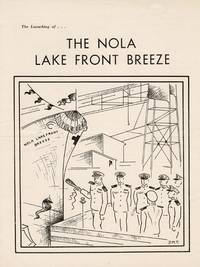
1943rif. 64186New Orleans: U.S. Naval Hospital Welfare and Recreational Department 1943. Small folio consisting volume I nos. 1-5 and nos. 7-8 the serial ran till 1949; the first issue is 4 pages the rest are 6 pages; illustrated throughout including cartoons by J. M. Trice and others; previous folds but generally these issues are all in very good to fine condition. The inaugural issue announces this as a biweekly under the editorship of Chaplain Gerard A. Clark later E. A. Wilbur with Ralph Likins as assistant editor. Regular columns include "Scuttlebutt" "Sports Talk" "Shootin' the Breeze" plus letters to the editor and feature articles. OCLC locates only the NLM copy. U.S. Naval Hospital, Welfare and Recreational Department unknown books
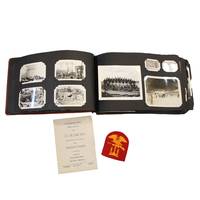
1943rif. 185431943. United States Marine Corps World War II photograph album documenting global American military operations across the Pacific and Atlantic theaters during the 1940s including combat scenes naval deployments and high level wartime leadership meetings. The album records the experience of U.S. Marine personnel during the global campaigns against Axis powers with photographs spanning the South Pacific Japan North Africa the Mediterranean Greenland and Alaska. Numerous images show Marines in active combat environments amphibious landings and wartime garrison life providing visual documentation of the operational geography of the war. The album also preserves photographic evidence of a significant wartime meeting in Hawaii on July 26 1944 when President Franklin Roosevelt met with General Douglas MacArthur and Admiral Chester Nimitz to determine the strategic direction of the Pacific campaign. Roosevelt ultimately endorsed MacArthur's plan to return to the Philippines a decision that shaped the final phase of the Pacific war. Photograph album compiled by a U.S. Marine during World War II containing 364 black and white silver gelatin photographs and 21 real photo postcards depicting American military operations across multiple theaters including Namur Island Peleliu New Guinea the Solomon Islands Tarawa Cape Gloucester Saipan North Africa and Alaska. Several photographs appear to be official Marine Corps press images with printed captions such as "Marines take cover in invasion of Tarawa" "Actual landing operations on South Sea Island" and "Two rear gunners in Guadalcanal bomb shelter." Other images show Marines moving through tropical marshes occupying foxholes standing watch in lookout towers assembling on invasion beaches and operating aboard naval vessels. The album also contains candid images of President Franklin Roosevelt General Douglas MacArthur and Admiral Chester Nimitz taken during the Pacific Strategy Conference in Hawaii with approximately twenty nine photographs documenting the leaders meeting and greeting during wartime consultations. Additional photographs depict local populations encountered by American forces in the South Pacific and North Africa scenes of war damaged buildings and the daily lives of servicemen both on duty and during periods of rest. Album containing 385 photographs in total including 364 silver gelatin prints and 21 real photo postcards with image sizes ranging approximately from 1.75 x 2.75 inches to 3.5 x 4.5 inches. Photographs mounted in an original tobacco leather album. The archive also includes several loose photographs handwritten greeting cards an invitation for officers and crew of the seaplane tender USS Pine Island dated April 26 1945 with program details and a shoulder sleeve insignia for an Engineer Special Brigade. Minor age wear present; photographs remain clear with strong contrast and legible captions. The album provides a wide ranging visual record of American Marine operations during the Second World War linking frontline combat imagery with documentation of the strategic leadership decisions that shaped the Pacific campaign. unknown books
1944rif. 186041944. Bilobran J. United States Navy sailor photograph album documenting naval service in the Southwest Pacific theater during World War II and preserving visual evidence of American naval personnel operating in the Pacific war zone. The album records daily life among U.S. Navy sailors as well as scenes from active military environments during the Pacific campaigns that followed the Japanese attack on Pearl Harbor in December 1941. The photographs include images of sailors aboard naval vessels wartime training and weapons operation and interactions with local populations encountered in Pacific combat zones. Several photographs depict American personnel arriving on the shores of Leyte in the Philippines a location central to the 1944 campaign in which Allied forces began the liberation of the Philippine Islands under the broader command structure of General Douglas MacArthur. Photograph album compiled by U.S. Navy sailor J. Bilobran during service aboard USS Douglas A. Munro in the Southwest Pacific theater during World War II. The album contains 203 black and white silver gelatin photographs mounted on black paper pages along with a pasted pamphlet from a Navy Day program and a hand drawn illustration. The photographs show sailors in uniform aboard naval vessels operating deck guns and handling firearms alongside informal scenes of recreation including dancing drinking and gatherings among crew members. Additional images depict sailors ashore in Pacific locations including Leyte in the Philippines where American forces conducted amphibious operations during the campaign to reclaim the islands from Japanese control. The album also includes photographs of Filipino civilians and guerrilla fighters along with images of Filipino women in traditional clothing illustrating encounters between American military personnel and local communities during wartime operations. Album containing 203 silver gelatin photographs measuring approximately 2.5 x 3.5 inches to 4.5 x 5.5 inches mounted in a brown faux leather photograph album bound with cord and measuring approximately 11.5 x 15.5 inches. Photographs accompanied by a Navy Day program pamphlet and a hand drawn illustration pasted onto the album pages. Minor wear consistent with age; photographs remain clear and well preserved overall. The album offers a substantial visual record of American naval presence in the Southwest Pacific during the Second World War and documents both combat environments and the daily experiences of sailors stationed in the Pacific theater. unknown books
1945rif. 189141945. U.S. Army and Navy photographs of Okinawa 1945 document the immediate aftermath of the Battle of Okinawa and the establishment of American control over a strategically critical island at the close of the Pacific War. The images place American troops within the Okinawan interior and along coastal installations following the April 1945 landings including the secured Yontan airfield a primary objective of the invasion. The archive records the physical destruction resulting from one of the war's most intensive campaigns alongside scenes of civilian movement and return situating the photographs within the transition from active combat to military occupation. Archive of 37 black and white silver gelatin photographs. Okinawa Japan circa 1945. Photographs measure approximately 3.75 x 4.5 inches to 7 x 10.5 inches with brief handwritten captions on verso. Images depict American troops in villages farmland and near shrines as well as at Yontan airfield. Several photographs show destroyed aircraft including a crashed Japanese plane and associated debris along with damaged infrastructure and equipment. Naval activity is represented through images of American ships in harbor and offshore including a landing ship dock LSD transport vessel. An aerial photograph shows a harbor with multiple wrecked ships and flattened industrial areas. One image documents a column of civilians carrying belongings captioned "civilians returning to homes." The Battle of Okinawa fought from April to June 1945 resulted in extensive military and civilian casualties and widespread destruction of the island's infrastructure. The subsequent American occupation transformed Okinawa into a major U.S. military base in the western Pacific a status it retained even after reversion to Japanese administration in 1972. These photographs document both the operational objectives of the invasion and the conditions encountered in its aftermath including the displacement and return of local populations. The archive provides material for examining military strategy occupation practices and the impact of large-scale warfare on civilian landscapes in the Pacific theater. Light wear consistent with handling; overall very good condition. unknown books
1917rif. 184961917. United States Navy sailor photograph album documenting naval mobilization during World War I circa 1917 to 1919 Each photo has a handwritten inscription below describing the content Preserving visual evidence of American naval personnel preparing for overseas deployment and recording daily life during wartime service. The photographs appear to originate from a sailor stationed in New York City during the period when the United States expanded naval operations following its April 1917 declaration of war against the German Empire. The United States Navy assumed responsibility for escorting troop and supply convoys across the Atlantic and combating German submarine warfare a central strategic threat during the conflict. The album contains numerous portraits of sailors in uniform as well as scenes of training inspection and barracks life offering a firsthand visual record of the personnel who participated in the rapid wartime expansion of the American naval forces. Photograph album compiled by a U.S. Navy sailor New York City and related naval contexts circa 1917 to 1919. The album is inscribed on the front cover "US Navy '17-19." Many photographs depict sailors posed individually or in groups sometimes wearing naval uniforms and at other times hospital gowns suggesting the presence of a naval medical facility or recovery ward. Several images document the urban environment surrounding the sailors' service including shipyards and city streets in New York. Each photograph carries a handwritten caption identifying individuals or describing the scene. Captions include "A letter from home" showing a sailor seated on stairs reading correspondence and "Sat A.M. Inspection" depicting a line of uniformed men with their boots and equipment arranged before them for review. Another group photograph shows sailors celebrating while holding a newspaper bearing the headline "Germany Surrenders" linking the album directly to the conclusion of the war in November 1918. The largest image presents a sepia toned view of a medical unit working with cadavers while masked personnel face the camera providing a rare visual glimpse into wartime medical training or anatomical study associated with naval service. Album containing 95 silver gelatin photographs ranging from approximately 2 x 2.75 inches to 2.75 x 4.25 inches with one larger photograph measuring approximately 5 x 7 inches. Photographs mounted in an olive green paper album secured with cloth cord and measuring approximately 7 x 9.5 inches overall. Each photograph bears a handwritten caption beneath the image identifying subjects or describing events. Minor age toning present; album and photographs remain well preserved overall. The album offers a concentrated visual record of American naval service during the First World War combining portraiture training scenes and contemporary wartime references such as the announcement of Germany's surrender. unknown books
1945rif. 181921945. Sea Cat News. December 1945. Volume III No 7. Newspaper believed to be composed by sailors aboard the USS Sea Cat a Baleo-class submarine that earned 3 stars for operations during World War II. Measures 8 x 13 inches. 6 typewritten pages stapled. Drawing of cat wearing Navy ship with the words "Land ahead!" beneath. Typed stories relating to news from Washington football scores between the Army and Navy commentary on the war trials beginning in Nuremberg and stories from visits to shore. "Yesterday we listened to the Army-Navy game. Let us remember that one of the chief ingredients going into the building of either national or individual greatness is the ability to take either Victory or defeat in the proper spirit. The Nation that plays well also fights well" reads one editorial. Includes several comics one called the "Dreamboat Barnacle" in which a sailor tells his doctor that dreams of a beautiful woman are making him ill. The tone of the paper is light and humorous marked by a kind of cavalier cheer befitting men kept in tight quarters under stress recently relieved by war's end and the promise of homecoming. Creased down the middle where folded. Wrinkled at edges does not affect text. A charming look at life aboard a Navy ship at the end of World War II. Overall very good condition. unknown books
1819rif. 57363Newport R.I.: printed by Wm. & J.H. Barber for the Society 1819. 8vo pp. 24; engraved frontispiece by Fairman of Providence marred by ink stains; full contemporary calf worn; small blank piece lacking from title leaf; stain on early blank leaves. Contains a list of the members from 1752 to 1819. Sectional title page for Laws of the Marine Society at p. 9; with several contemporary ink annotations in the margins including five names added to the membership list at the back. Fairman is not found in Hamilton's Early American Book Illustrators and Wood Engravers. A 1906 Goodspeed catalogue notes of David Fairman 1782-1815 that "this is the only example of the engravers work I have seen. Stauffer says that "none of his work has been found." American Imprints 48586; Hammett p. 90; not found in Bartlett. printed by Wm. & J.H. Barber, for the Society unknown books
1883rif. 56284Washington: Government Printing Office 1883. First edition 8vo pp. 62; 1 large folding table 1 large folding plate of the boiler several other illustrations in the text; original printed gray wrappers; a couple of inoffensive library marks on title page recto and verso otherwise fine. Includes data on dimensions weight and performance. Government Printing Office unknown books
1882rif. 56285Washington: Government Printing Office 1882. First edition 8vo pp. 48; 1 large folding plate of the boiler for the vedette boats; original printed blue wrappers; pressure stamp in the front wrapper back wrapper slightly chipped; all else near fine. Government Printing Office unknown books