10 340 résultats
2010réf. 86124Washington DC: National Aeronautics and Space Administration 2010. Xerox-style reproduction. Assume relatively few copies made for media representatives. Stapled at upper left corner. Very good. ii 104 pages plus front cover. No rear cover. Illustrations. Three-hole punched. Logo of the United Space Alliance on the front cover. Includes STS-132/ULF4 Mission Overview; STS-132 Timeline Overview; Mission Profile; Mission Objectives; Mission Personnel; STS-132 Crew; Payload Overview; Rendezvous & Docking; Spacewalks; Experiments; History of Space Shuttle Atlantis; Shuttle Reference Data; Launch and Landing; Acronmyns and Abbreviations; Media Assistance; Public Affairs Contacts. STS-132 ISS assembly flight ULF4 was a NASA Space Shuttle mission during which Space Shuttle Atlantis docked with the International Space Station on May 16 2010. STS-132 was launched from the Kennedy Space Center on May 14 2010. The primary payload was the Russian Rassvet Mini-Research Module along with an Integrated Cargo Carrier-Vertical Light Deployable ICC-VLD. Atlantis landed at the Kennedy Space Center on May 26 2010. STS-132 was initially scheduled to be the final flight of Atlantis provided that the STS-335/STS-135 Launch On Need rescue mission would not be needed. However in February 2011 NASA declared that the final mission of Atlantis and of the Space Shuttle program STS-135 would be flown regardless of the funding situation. Also on board Atlantis was a 4-inch long wood sample of Sir Isaac Newton's apple tree. The piece from the original tree that supposedly inspired Newton's theory of gravity along with a picture of Newton were taken into orbit by astronaut Piers Sellers. The wood is part of the collection of the Royal Society archives in London and was returned there following the flight. Additionally a flag from Clarkson University Potsdam New York flew on board shuttle Atlantis. It was there in honor of STS-132 lead shuttle flight director Michael L. Sarafin who is an alumnus of the Clarkson University. The STS-132 mission patch was designed by NASA artist Sean Collins working with astronaut Garrett Reisman. The patch shows Atlantis flying towards a sunset landing with the names of the STS-132 astronauts around the border. During the standard post-flight inspection of Atlantis a United Space Alliance inspector found a STS-132 mission decal accompanied by an inscription "The first last flight of Atlantis left Earth on 14 May 2010 from Pad 39A" together with the crew's signatures. The worker had found it tucked away on the upper side of Locker A-16 while scanning the area with a mirror. Moreover he said the note must have been written in orbit since otherwise the author would have had to stand on their head to write it. At the time the note was written STS-132 was the last planned mission of Atlantis. However one further mission was ultimately approved for the shuttle: STS-135 which was to be the last flight of both Atlantis and the Space Shuttle program. National Aeronautics and Space Administration unknown
2009réf. 86136Washington DC: National Aeronautics and Space Administration 2009. Xerox-style reproduction. Assumed only a few copies were made for media representatives. Stapled at upper left corner. Very good. ii 110 pages plus covers. Illustrations. Three-hole punched. The contents include STS-129/ULF-3 Mission Overview; STS-129 Timeline Overview; Mission Profile; Mission Objectives; Mission Personnel; STS-129 Crew; Payload Overview; Rendezvous & Docking; Spacewalks; Experiments; Shuttle Reference Data; Launch and Landing; Acronym and Abbreviations; Media Assistance and Public Affairs Contacts. STS-129 ISS assembly flight ULF3 was a NASA Space Shuttle mission to the International Space Station ISS. Atlantis was launched on November 16 2009 at 14:28 EST and landed at 09:44 EST on November 27 2009 on runway 33 at the Kennedy Space Center's Shuttle Landing Facility. It was also the last Shuttle mission of the 2000s. STS-129 focused on staging spare components outside the station. The 11-day flight included three spacewalks. The payload bay carried two large ExPRESS Logistics Carriers holding two spare gyroscopes two nitrogen tank assemblies two pump modules an ammonia tank assembly a spare latching end effector for the station's robotic arm a spare trailing umbilical system for the Mobile Transporter and a high-pressure gas tank. STS-129 was the first flight of an ExPRESS Logistics Carrier. The STS-129 mission patch was designed by Tim Gagnon and Dr. Jorge Cartes. The unusual shape of the patch resulted from the crew's desire for the patch to signify the mission's payload two ExPRESS Logistics Carriers providing equipment ensuring the longevity of the ISS. The insignia incorporates a number of design elements not typically incorporated into a single patch: the Sun Moon Mars NASA's astronaut symbol the ISS the Shuttle orbiter and the continental United States. The 13 stars on the patch represent the crewmembers' children and the Moon and Mars represent the future of space exploration. The names of the crew members are denoted on the outer band of the patch. The primary payloads were the Express Logistics Carriers designated ELC-1 and ELC-2 for the International Space Station ISS. The units carried a variety of tools and equipment designed to augment and enhance experimentation aboard ISS. Docking between Atlantis and ISS occurred on November 18 2009. Undocking occurred on November 25 2009. There were three spacewalks during the mission. The first spacewalk was conducted on November 19 2009 and lasted 6 hours 37 minutes. Astronauts Foreman and Satcher installed a spare antenna and a bracket for ammonia lines outside ISS. They also performed maintenance activities on the ISS Japanese robotic arm. The second spacewalk was conducted on November 21 2009 and lasted 6 hours 8 minutes. Astronauts Foreman and Bresnik installed the Grappling Adaptor to On-Orbit Railing GATOR to the ISS Columbus Laboratory plus an additional ham radio antenna. They also installed an antenna for wireless helmet camera video and relocated the Floating Potential Measurement Unit which takes electrical measurements outside ISS. The third spacewalk was conducted on November 23 2009 and lasted 5 hours 42 minutes. Astronauts Satcher and Bresnik installed an oxygen filled High Pressure Gas Tank on the ISS Quest Airlock. They also installed experiments to ELC-2 as well as a number of other maintenance activities. National Aeronautics and Space Administration unknown
2008réf. 86137Washington DC: National Aeronautics and Space Administration 2008. Xerox-style reproduction. Assumed to be one of only a limited number made for media representatives. Stapled at upper left corner. Very good. ii 114 pages plus front cover. Illustrations. Three-hole punched. Front cover also includes the logo of the United Space Alliance. Contents include STS-126 Mission Overview; Timeline Overview; Mission Profile; Mission Priorities; Mission Personnel; STS-126 Endeavour Crew; Payload Overview; Rendezvous and Docking; Environmental Contol and Life Support System ECLSS; Solar Alpha Rotary Join SARJ; Spacewalks; Experiments; Advanced Resistive Exercise Device; Shuttle Reference Data; Launch and Landing; Acronyms and Abbreviations; Media Assistance; Public Affairs Contacts. STS-126 was the one hundred and twenty-fourth NASA Space Shuttle mission and twenty-second orbital flight of the Space Shuttle Endeavour OV-105 to the International Space Station ISS. The purpose of the mission referred to as ULF2 by the ISS program was to deliver equipment and supplies to the station to service the Solar Alpha Rotary Joints SARJ and repair the problem in the starboard SARJ that had limited its use since STS-120. STS-126 launched on 15 November 2008 at 00:55:39 UTC from Launch Pad 39A LC-39A at NASA's Kennedy Space Center KSC with no delays or issues. Endeavour successfully docked with the station on 16 November 2008. After spending 15 days 20 hours 30 minutes and 30 seconds docked to the station during which the crew performed four spacewalks and transferred cargo the orbiter undocked on 28 November 2008. Due to poor weather at Kennedy Space Center Endeavour landed at Edwards Air Force Base on 30 November 2008 at 21:25:09 UTC. STS-126 included the Leonardo Multi-Purpose Logistics Module MPLM on its fifth spaceflight. Leonardo held over 14100 lbs of supplies and equipment. Among the items packed into the MPLM were two new crew quarters racks a second galley kitchen for the Destiny laboratory a second Waste and Hygiene Compartment WHC rack lavatory the advanced Resistive Exercise Device aRED two water reclamation racks spare hardware and new experiments. Also included in Leonardo was the General Laboratory Active Cryogenic ISS Experiment Refrigerator or GLACIER a double locker cryogenic freezer for transporting and preserving science experiments. The shuttle also carried irradiated turkey candied yams stuffing and dessert for a special Thanksgiving meal at the station as well as an Official Flight Kit with mementos for those who supported the astronauts and helped them complete their mission successfully. Also carried was a Lightweight MPESS Carrier LMC carrying a Flex Hose Rotary Coupler FHRC and returning a Nitrogen Assembly Tank from Quest for refurbishment. STS-126 was the only mission to land on the temporary runway 04 at Edwards Air Force Base as the main runway was completing refurbishment. The use of the temporary runway required new braking and rollout techniques that have never been used before as the runway is 2990 ft shorter than the normal runway. This was the last landing at Edwards for Endeavour. National Aeronautics and Space Administration unknown
réf. DADAX0081001940Butterworth-Heinemann 2016-09-27. 7. paperback. New. 7.50x1.55x9.25. Buy with confidence. Excellent Customer Service & Return policy. Butterworth-Heinemann paperback
Modellismo aereo Modellino di aereo tedesco Stuka Junkers Ju 87 in pressofusione - Costruito artigianalmente negli anni '40. Dimensioni: 21 x 21 cm ca. Buone condizioni.
réf. AERO500Roma, Milano, A.I.A. Associazione Imprese Aeronautiche, Aprile 1949. Album in-4 (22x30 cm.), 116 pages, photos et plans.
1976réf. 181816Köln, 1969-1976. 4°. M. zahlr. Abb. u. graph. Darst. Verschied. geb. Bibliotheksex. m. Rsign. u. Tekt. a. Innendeckel. St. verso Tit. 1969-71 OU eingeb.
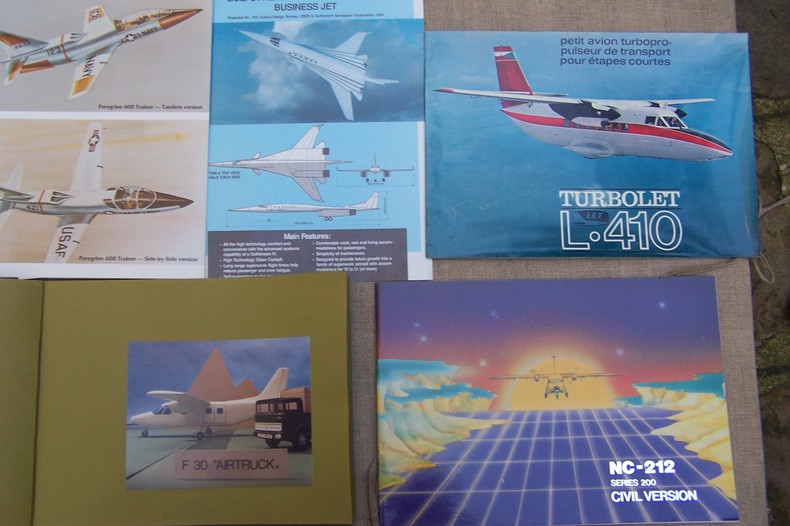
réf. AERO493Ensemble de 6 manuels et documents.
1938réf. 171282London, 1938-42. M. zahlr. Abb. Hlwd. M. Rsign. Rücken etwas angeschmutzt. Einbd. leicht berieben. St. u. Sign. a. Tit. u. auf einigen S.
Roma, Tipografia della Camera dei Deputati, 1894-1895, fasc. 23 (il 1° doppio) raccolti in 4 voll., in-4, copp. fittizie (ma conservate le br. edit.), pp. 536, 576, (4), 576, (4), 576. Copp. figurate originali ed ill. in b.n. Testi di: E. De Amicis, G. Deledda, A. Fogazzaro, R. Bonghi, A. Ferrero, A. G. Barrili, G. Marradi, Contessa Lara, R. Barbiera, G. Lippert, V. Accab, A. Cervesato, V. Bersezio, Yolanda, S. Bisi Albini, V. Aganoor, C. Tartufari, A. De Gubernatis, Jack la Bolina, C. Pozzolini Siciliani, V. Bersezio, F. Momigliano, F. Verdinois, G. Lipparini, ecc. Poesia, racconti, profili letterari ed artistici, bozzetti di vita regionale (siciliana, fiorentina, napoletana, milanese, ecc.).
réf. 10770Hanoï, Imprimerie d'Extrême-Orient, 1930. 1 volume in-8 constituant la première partie de l'Etude sur l'Histoire de l'Aéronautique d'Indochine, 89 pp., reliure plein cuir moderne, très bon état. Ouvrage enrichi de dizaines de photos hors texte, de cartes et de gravures.
LEGATURA EDITORIALE IN TUTTA TELA GREZZA CON MEDAGLIONE IN BRONZO SBALZATO AL PIATTO. BELLISSIMI DISEGNI ED ILLUSTRAZIONI A PIENA PAGINA A COLORI ED IN BIANCO E NERO. numero pagine: CIRCA 200 formato: 35X25.3 stato conservazione: BUONO, DEDICA ALLA SECONDA PAGINA
In 4°, bellissima leg. in piena percalina rossa, tit. e ricchi disegni impressi in oro al piatto, tagli dorati, pp. (4nn)-IV-248-(4nn). Ottimo es. corredato da 40 tavv. f.t. + 81 figg. intercalate n.t.
1932(Codice AV/6275) In 16° 66 pp., 43 illustrazioni di cui 5 tavole ripiegate. Prima e unica edizione, introvabile (un solo esemplare censito nelle biblioteche italiane). Tela editoriale, titolo argento. Ottimo stato. ~~~ SPEDIZIONE IN ITALIA SEMPRE TRACCIATA
1931(Codice AV/6256) In 8° VIII-350 pp., 400 figure, alcune tavole ripiegate. Prima edizione, opera completa in 1 volume. Firma. Solida legatura originale in tela. Ottimo stato. ~~~ SPEDIZIONE IN ITALIA SEMPRE TRACCIATA
1909Paris, Flammarion, 1909 8vo (cm. 18.5 x 17) legatura originale in tela rossa con bella copertina illustrata a colori, titolo in oro al dorso, pp. (8)-512 con 17 tavole e numerose figure nel testo, una cartina a doppia pagina. Autore di alcuni racconti popolari ispirati dai recenti progressi dell'aeronautica, i romanzi di Driant contengono tuttavia informazioni molto accurate sulla meccanica del volo. (Piccolo strappetto al dorso).
1933réf. 167088München, Oldenbourg, 1930-1933. 4°. M. Abb. OHefte. Umschl. leicht beschäd. u. angeschmutzt.
1890réf. 1152626Wien, Spielhagen & Schurich, 1890. 3 Bl., 66 S. m. 9 Abb. Bibl.-Hlwd (berieben, St. a. T.).
1943In-8 p., brossura edit. (lievem. sbiadita), pp. 224, con oltre 54 figure (foto e disegni) nel t. e in tavv. f.t., più volte ripieg. Pagine leggermente ingiallite per la qualità della carta, altrimenti ben conservato.
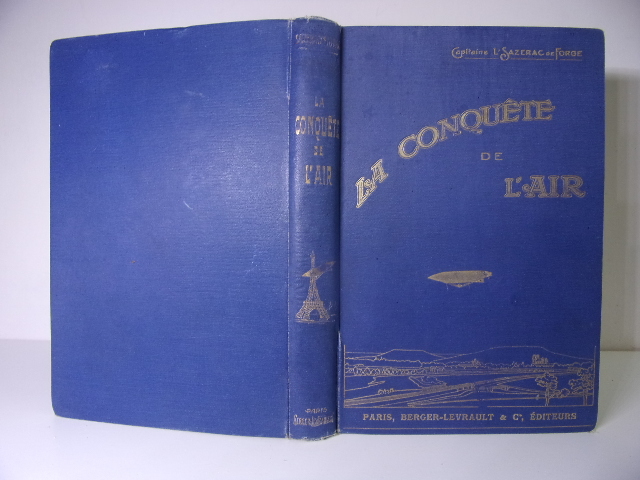
réf. CZC-8573avec 260 gravures, figures et portraits. Table: Les débuts - Santos-Dumont - Quelques notions - Les premiers vrais dirigeables - Le modèle " Julliot-Lebaudy " - Le modèle " Renard-Astra" - Les dirigeables étrangers - Le dirigeable mixte - Les applications du ballon dirigeable - Le dirigeable engin de guerre - Le dirigeable de demain. volume relié, couverture éditeur, grand in8, 25x16, usures, bon état, 805pp. rare exemplaire. Paris, Berger-Levrault & Cie, 1910
réf. CZC-8574Table: Les débuts - Quelques notions - Les premiers vrais dirigeables - Le modèle " Lebaudy, son histoire, patrie, description - Les efforts de l' étranger - Quelques prévisions - Le plus lourd que l'air - La solution mixte - Role du dirigeable, instrument de trafic, sport & science - Le ballon dirigeable dans l'armée et la marine - Vulnérabilité du dirigeable. volume relié, couverture éditeur, grand in8, 25x16, usures, papier glacé, très bel état intérieur, couverture d'origine conservée, 378pp. rare exemplaire. Paris, Berger-Levrault & Cie, 1907