887 results
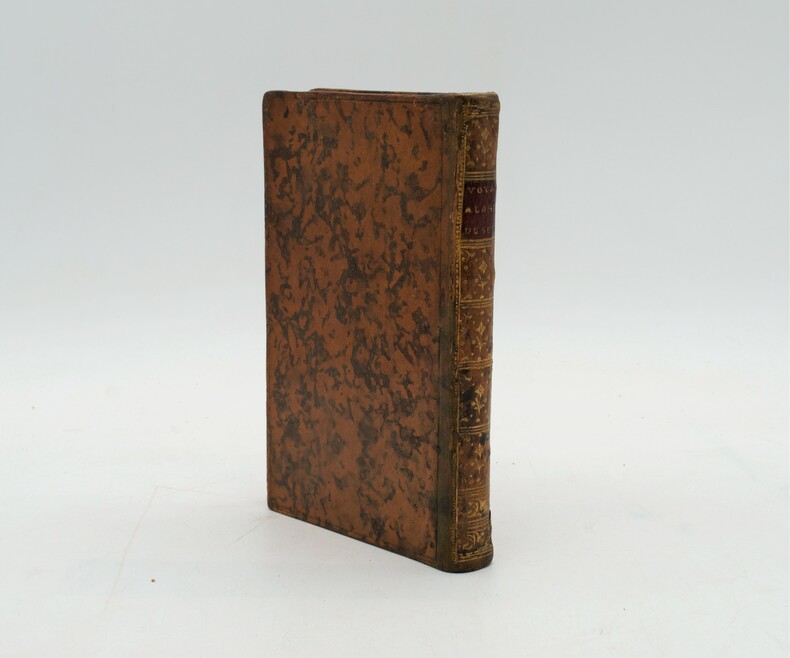
ref. 240267Lisbonne, monastère de S. Vincent hors les murs, 1749 2 vol. in-folio, [3] ff. n. ch. (titre avec belles armes des Bragance, avertissement, autorisations), 326 pp., un f. vierge, 80 pp. d'index, texte sur deux colonnes ; [4] ff. n. ch. (titre, avertissement, approbations), 498 pp., un f. n. ch. d'errata, avec une belle vignette en-tête gravée par O. Cor d'après Debrie, demi-basane fauve à coins, dos à nerfs ornés de fleurons et guirlandes dorés, pièces de titre cerise, tranches rouges (reliure de l'époque). Une coiffe rognée, coins abîmés.
1822ref. PHO-1375Paris, Leblanc, 1822 ,2 volumes in-8 de texte et un Atlas , petit in-folio (27,5x37,5cm) Texte ; 2 volumes in-8 , 2ff.-xxx-452pp. , 2ff.-506pp. , relié toile , dos lisse avec titre et tomaison. Atlas ; un volume in-folio ,2ffnch (Titre et liste des planches) et 26 planches dessinées par l’auteur dont une carte et 12 planches en couleurs d’époque, relié demi maroquin vert , dos orné avec titre et les armes royales et chiffre de Louis-Philippe, timbre de sa bibliothèque sur le titre (Neuilly) , ex-libris , exemplaire sur grand papier, frottements aux plats avec petit manque de papier , coins et coupes usés , quelques rousseurs.
1764ref. 1400London: J. Dodsley 1764. Scare first edition of this document relating to the British occupation of Manila during the Anglo-Spanish War of 1762-3 and an interesting case of international law. In September of 1762 under the command of Draper and Cornish a British fleet of 13 ships containing over 6000 men attacked Manila and following a difficult landing quickly dispatched the Spanish garrison which they outnumbered 10 to 1.They entered the city on October 5 and part of the terms of capitulation was that Spain would pay the British an indemnity of 4 million pesos roughly a million pounds for not pillaging the city. The British evacuated in 1764 when hostilities ceased and Draper enjoyed the highly unusual privilege of presenting the standards of Spain taken in Manila to his alma mater Kings College Cambridge. But the Spanish did not honor this gentlemans agreement claiming that Draper dealt with an unauthorized agent that he himself broke the terms of the agreement etc. In order to press his claim which amounted to £25000 he published the present tract to pressure his government to collect. The tract contains a brief letter to the British Secretary of State outlining his grievance; a bilingual summary in English and French of the Spanish ambassadors grounds for not complying with the terms of the agreement; extracts from the treaty; a refutation by Draper of the claim that he dealt with an unauthorized agent; and an English language treaty signed by the original parties in Manila. But with hostilities over and their attention occupied by other foreign adventures chief among them America the British were in no position to insist and the suit was eventually abandoned.Griffin Bibliography of the Philippines p. 125; Dictionary of National Biography compact ed. I.573. 8vo. 43 pp. Bound in blue wrappers and housed in protective buckram case with title gilt on spine. Minor foxing in margins of final leaves but otherwise absolutely mint. J. Dodsley hardcover
1764ref. 1400London: J. Dodsley 1764. Scare first edition of this document relating to the British occupation of Manila during the Anglo-Spanish War of 1762-3 and an interesting case of international law. In September of 1762 under the command of Draper and Cornish a British fleet of 13 ships containing over 6000 men attacked Manila and following a difficult landing quickly dispatched the Spanish garrison which they outnumbered 10 to 1.They entered the city on October 5 and part of the terms of capitulation was that Spain would pay the British an indemnity of 4 million pesos roughly a million pounds for not pillaging the city. The British evacuated in 1764 when hostilities ceased and Draper enjoyed the highly unusual privilege of presenting the standards of Spain taken in Manila to his alma mater Kings College Cambridge. But the Spanish did not honor this gentlemans agreement claiming that Draper dealt with an unauthorized agent that he himself broke the terms of the agreement etc. In order to press his claim which amounted to £25000 he published the present tract to pressure his government to collect. The tract contains a brief letter to the British Secretary of State outlining his grievance; a bilingual summary in English and French of the Spanish ambassadors grounds for not complying with the terms of the agreement; extracts from the treaty; a refutation by Draper of the claim that he dealt with an unauthorized agent; and an English language treaty signed by the original parties in Manila. But with hostilities over and their attention occupied by other foreign adventures chief among them America the British were in no position to insist and the suit was eventually abandoned.Griffin Bibliography of the Philippines p. 125; Dictionary of National Biography compact ed. I.573. 8vo. 43 pp. Bound in blue wrappers and housed in protective buckram case with title gilt on spine. Minor foxing in margins of final leaves but otherwise absolutely mint. J. Dodsley hardcover books
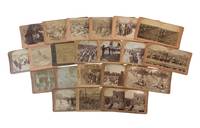
1898ref. 231301898. Spanish-American War stereoview archive circa 1898-1899 documenting how the war was pictured through mass-produced photographic views that followed U.S. mobilization battlefield action occupation and military life across both Cuba and the Philippines. These stereoviews preserves the visual system by which the war was circulated to American audiences showcasing camp organization troop movement burial hospital care naval power and overseas deployment. Particularly notable is the archive's coverage of the Rough Riders the Santiago campaign in Cuba and U.S. presence in Manila and Malate showing how stereoview photography helped normalize the war's expansion from anti-Spanish conflict into a broader American imperial presence. Archive of 21 stereoviews Various publishers. Spanish-American War stereoview archive. Cuba the Philippines and the United States circa 1898-1899. each measuring 3" x 7". The views are drawn from multiple phases and theaters of the war including camp and drill scenes in the United States embarkation and troop arrivals at Tampa battlefield and occupation imagery from Cuba and extensive and some grisly scenes from Manila and surrounding areas in the Philippines. Captions and images show soldiers in formation cavalry drill military reviews naval artillery hospital interiors encampments burial grounds and troops in active position. Cuban views include Morro Castle after bombardment dead and wounded on the battlefield of Santiago U.S. soldiers preparing to invade Cuba and troops dining near Cabañas Fortress. Philippine views include a departure for Manila American pickets routing a Filipino reconnoitering party the 18th Infantry engaged by Filipino outposts volunteers awaiting orders under the tropical sun Army Hospital Manila and "Our Boys in Camp at Malate P.I." One stereoview identifies Roosevelt's Rough Riders in the mobilization phase linking the archive to one of the war's most publicly mythologized units. As a group the stereoviews demonstrate the process by which the Spanish-American War was framed not simply as a short military victory over Spain but as a sustained structure of U.S. troop deployment and occupation extending from Cuba into the Philippines. The Manila and Malate scenes are especially important in this regard since they place American soldiers within the opening phase of the Philippine conflict where U.S. military presence quickly moved beyond liberation rhetoric into imperial control. The archive's mixture of battlefield casualties camp routine naval spectacle and celebratory review scenes shows how stereoscopic publishing converted war into a domestic viewing experience while reinforcing the legitimacy of American expansion abroad. Wear to mounts some toning; overall very good condition. A strong cross-theater visual archive of the Spanish-American War and the emergence of U.S. imperial power in Cuba and the Philippines. unknown
1898ref. 231301898. Spanish-American War stereoview archive circa 1898-1899 documenting how the war was pictured through mass-produced photographic views that followed U.S. mobilization battlefield action occupation and military life across both Cuba and the Philippines. These stereoviews preserves the visual system by which the war was circulated to American audiences showcasing camp organization troop movement burial hospital care naval power and overseas deployment. Particularly notable is the archive's coverage of the Rough Riders the Santiago campaign in Cuba and U.S. presence in Manila and Malate showing how stereoview photography helped normalize the war's expansion from anti-Spanish conflict into a broader American imperial presence. Archive of 21 stereoviews Various publishers. Spanish-American War stereoview archive. Cuba the Philippines and the United States circa 1898-1899. each measuring 3" x 7". The views are drawn from multiple phases and theaters of the war including camp and drill scenes in the United States embarkation and troop arrivals at Tampa battlefield and occupation imagery from Cuba and extensive and some grisly scenes from Manila and surrounding areas in the Philippines. Captions and images show soldiers in formation cavalry drill military reviews naval artillery hospital interiors encampments burial grounds and troops in active position. Cuban views include Morro Castle after bombardment dead and wounded on the battlefield of Santiago U.S. soldiers preparing to invade Cuba and troops dining near Cabañas Fortress. Philippine views include a departure for Manila American pickets routing a Filipino reconnoitering party the 18th Infantry engaged by Filipino outposts volunteers awaiting orders under the tropical sun Army Hospital Manila and "Our Boys in Camp at Malate P.I." One stereoview identifies Roosevelt's Rough Riders in the mobilization phase linking the archive to one of the war's most publicly mythologized units. As a group the stereoviews demonstrate the process by which the Spanish-American War was framed not simply as a short military victory over Spain but as a sustained structure of U.S. troop deployment and occupation extending from Cuba into the Philippines. The Manila and Malate scenes are especially important in this regard since they place American soldiers within the opening phase of the Philippine conflict where U.S. military presence quickly moved beyond liberation rhetoric into imperial control. The archive's mixture of battlefield casualties camp routine naval spectacle and celebratory review scenes shows how stereoscopic publishing converted war into a domestic viewing experience while reinforcing the legitimacy of American expansion abroad. Wear to mounts some toning; overall very good condition. A strong cross-theater visual archive of the Spanish-American War and the emergence of U.S. imperial power in Cuba and the Philippines. unknown books
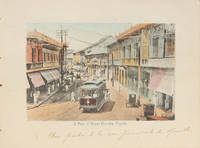
ref. 111950N.p. n.d. but early 20th century. . Lacquered album; landscape 8vo 19.5 x 15 cm; 22 coloured photograph illustrations printed captions in English below image French manuscript annotations in ink in an early hand below caption single horizontal splits to lacquer on both boards a very good copy. An evocative series of colour photographs of the Philippines ranging from views of Manilla harbour to domestic scenes such as a butcher's shop washer-women market scenes rice cleaning and a cock fight. N.p., n.d. [but early 20th century]. hardcover
1750ref. 4284Genève, Barillot et Fils, 1750. In-4 de XXIV-363p., pleine basane brune. Dos à nerfs orné de filets et fleurons dorés.
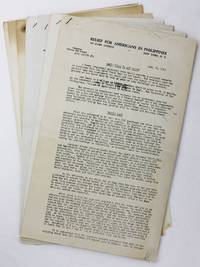
1945ref. 4668New York 1945. Very good. Sixteen issues totaling 75pp. Legal-size sheets stapled. Previously folded. Light wear and toning. An extensive run of newsletters by a New York-based aid group Relief for Americans in the Philippines. Included here are issues 9 12 14 through 18 and 20 through 28 which were published between 1942 and 1945. The organization was devoted to the support of Americans who were imprisoned at San Tomas Gabuio and other camps after Japan occupied the Philippines during World War II. At the outset of the war the Philippines were a commonwealth of the United States but within three weeks of the attack on Pearl Harbor the Japanese seized control. The 20000 American and 80000 Filipino troops on the ground departed and any remaining American or British citizens were rounded up in Manila and transferred to the University of Santo Tomas where they were left to fend for themselves. The only exceptions were a 7:30 pm roll call each night and the use of room monitors. The background of the captives varied wildly from business executives and retired soldiers to prostitutes. At the end of the war the total number of prisoners liberated was 3785 2870 of which were American. Issue 14 remarks on the first anniversary of the non-profit organization: “On May 8th 1942 just a year ago and two days after the fall of Corregidor our organization came into being for furthering plans for the shipment of food medical supplies and other necessities for the internees and also to serve as a clearing house and point of dissemination for information concerning the welfare of these internees.” The monthly newsletter prints news and developments from the camps in the Pacific and documents the efforts of the organization to provide aid to the prisoners there. The issues also print a running list of all those believed to be in the Philippines “solely for the purpose of obtaining names and addresses of the nearest relatives of who we have no record.” A scarce record of this little-known relief effort during World War II. unknown
1945ref. 4668New York 1945. Very good. Sixteen issues totaling 75pp. Legal-size sheets stapled. Previously folded. Light wear and toning. An extensive run of newsletters by a New York-based aid group Relief for Americans in the Philippines. Included here are issues 9 12 14 through 18 and 20 through 28 which were published between 1942 and 1945. The organization was devoted to the support of Americans who were imprisoned at San Tomas Gabuio and other camps after Japan occupied the Philippines during World War II. At the outset of the war the Philippines were a commonwealth of the United States but within three weeks of the attack on Pearl Harbor the Japanese seized control. The 20000 American and 80000 Filipino troops on the ground departed and any remaining American or British citizens were rounded up in Manila and transferred to the University of Santo Tomas where they were left to fend for themselves. The only exceptions were a 7:30 pm roll call each night and the use of room monitors. The background of the captives varied wildly from business executives and retired soldiers to prostitutes. At the end of the war the total number of prisoners liberated was 3785 2870 of which were American. Issue 14 remarks on the first anniversary of the non-profit organization: “On May 8th 1942 just a year ago and two days after the fall of Corregidor our organization came into being for furthering plans for the shipment of food medical supplies and other necessities for the internees and also to serve as a clearing house and point of dissemination for information concerning the welfare of these internees.” The monthly newsletter prints news and developments from the camps in the Pacific and documents the efforts of the organization to provide aid to the prisoners there. The issues also print a running list of all those believed to be in the Philippines “solely for the purpose of obtaining names and addresses of the nearest relatives of who we have no record.” A scarce record of this little-known relief effort during World War II. unknown books
ref. MC80Folio logbook ca. 38x245 cm or 15 x 9 ¾ in. 1 – printed title page 67 1 - blank leaves of watermarked laid paper. A copy of “The Seaman's Journal Being an Easy and Correct Method of Keeping the Daily Reckoning of a Ship During the Course of Her Voyage” New York: Burtus & Crane with the entries carefully completed in brown ink on recto and verso of the leaves with a gap of recto of leaf 41 i.e. comprising 133 pp. of text. Title page with a woodcut vignette depicting a sail ship under the American flag hand coloured and with a period ink title “Bashee Islands 1809” underneath. Period red ink stamp “C. Teubner” on the title page watercolour drawing of a maritime signal flag on the front pastedown endpaper. Period brown quarter sheep with marbled papered boards neatly repaired on hinges and extremities. Paper slightly age-toned text with occasional stains leaf 23 and others but overall a very good logbook written in a legible hand. Historically significant original content-rich logbook with a detailed record of the first trade voyage of a New York East Indiaman “America” from New York to Canton Guangzhou and back in June 1809 – June 1810. A namesake of the famous Salem merchant ship and privateer during the War of 1812 ship “America” built in 1803-1804 made five privateer cruises in 1812-1815 broken up in 1831 this “America” was built on the New York shipyard of Adam and Noah Brown for the noted local merchant company “Minturn & Champlin” and launched in May 1809 shortly before her first voyage The United States Gazette May 15 1809 p. 3. The ship’s tonnage was 493 tons Morrison J.H. History of New York Ship Yards. N.Y. 1909 p. 47. On June 21 1809 New York authorities cleared “America” for a voyage to Canton under the command of Captain Mather Evening Post Marine List// The Evening Post. New York June 21 1809 p. 3. The logbook opens with “America’s” 158-day outbound voyage starting on June 24 1809 when the ship discharged the pilot after the passing of the Sandy Hook spit at the south entrance to New York Bay. She passed the Cape of Good Hope on September 12-13 1809 without calling at port and crossed the Indian Ocean choosing the route to China via the Alas Strait between Lombok and Sumbawa Islands Lesser Sunda Islands of Indonesia. On October 21-22 “America” anchored near the “Bally Town” also marked “Laboagee” on some old maps; it is a settlement south of the modern-day town of Selong on the east coast of Lombok to get fresh water and trade for fresh supplies. A part of the crew went on shore where they were received by a local “king” who also visited the ship. “America” then crossed the “Java” Bali Sea proceeded north through the Makassar Strait between Borneo and Sulawesi crossed on October 26 – November 4 and went across the “Celebean” Celebes Sea towards the Pacific Ocean passing “Sarangaran” Sarangani and “Meangis” Miangas Islands. On November 11 1809 while in the “Celebean Sea” east of “Meangis” Island the compiler saw an island which “I did not find laid down in any chart Capt. Mather “America’s” Captain during the voyage in ship Aeolus from the Cape of Good Hope bound to China first discovered it on Sunday the 30th of November 1806…” The ship then sailed north in the Western Pacific Ocean along the east coast of the Philippines November 13-24 crossed the South China Sea passing “Bashee” Babyan “Lemma” Lamma and “Ladrones” Wanshan Islands arriving to Macao Macau on November 29. The goal of the voyage was to trade in Canton and quickly return to New York but “America” stayed there longer than expected. Captain Mather later reported that “all the English & American ships were embargoed at Canton from Jan. 27 to Feb. 22 in consequence of a new difficuly between the English and Chinese occasioned by a Chinese having been killed by a British seaman; and the English refused to deliver up any one unless the criminal could be pointed out which could not be done. It was expected the difficulty would be amicably settled” National Intelligencer. Washington City D.C. 18 June 1810 p. 3. The logbook omits the ship’s almost three-month stay in China and resumes with her departure from Macao on February 24 1810. On her 104-days return voyage “America” crossed the South China Sea sailed through the Gaspar Strait between Bangka and Belitung Islands east of Sumatra Java Sea and Sunda Strait went across the Indian Ocean and passed Cape of Good Hope April 25 and St. Helena Island May 6. The logbook ends at sea south-east of New York Bay close to the point recorded on the first day of the outbound voyage. New York “Evening Post” newspaper reported that “Arrived at this port on Saturday last the following vessels with valuable cargoes: Ship America Mather 105 days from Canton and 44 from the Cape of Good Hope with teas nankeens china silk and cassia to Minturn and Champlin owners” Evening Post Marine List// The Evening Post. New York June 11 1810 p. 3. The logbook follows the “America’s” voyage day by day thoroughly recording the ship’s geographical position and course weather winds currents operations with sails sundry works on board and ship’s repairs geographical objects passed vessels encountered termometer readings in the Strait of Alas and Western Pacific Ocean/ Philippine Sea the number of the day of the voyage and various events comets caught sharks fights on board an incident with a crew member falling overboard &c. Very interesting is a lengthy description of interactions with the inhabitants of the “Bally town” on Lombok Island where an “American ensign” was flying on shore notes about the sighting of an unknown island in the Western Pacific Ocean “two large comets” in the Indian Ocean endured storms various events on board names of encountered ships &c. Overall an important content-rich source on the history of early American trade voyages to China at the beginning of the 19th century. One of the latest mentions of the ship “America’s voyage to Canton still commanded by “Captain Mather” and owned by “Messrs. Minturn & Champlin” dates back to 1815 Alexandria Gazette. Alexandria Virginia 11 October 1915 p. 1. Excerpts from the logbook: June 24 1809. Transactions North Atlantic. These 24 hours begins with light winds and pleasant weather at 4 a.m. got under way with a light breeze from the south west at 11 a.m. … of Sandy Hook discharged the pilot. The wind hauled to the west. Set all the tending sails below and aloft. Several outward bound vessels in company. The America outsailed them all. July 15 1809. Transactions North Atlantic. <…> @ 8 a.m. saw a brig to the south and west stearing sic! to the north & east I took her to be a king’s brig. August 17 1809. Transactions North Atlantic. <…> @ 10 a.m. saw an Hermaphrodite Brig to the west steering to the N.W… September 25 1809. Transactions Indian Ocean. <…> All hands employed trimming ship got some bales of cotton out the fore hold … them in the cabin filled 8 casks with salt water between decks sailmakers mending sales carpenters repairing jolly boat. October 16 1809. Transactions Indian Ocean. <…> Ship under full sail all hands employed getting the guns out the main hold & mounting them carpenters at the boats. October 21 1809. Transactions Straits of Alas. <…> @ 5 a.m. made the land Lombock & Sambawa western extremity of Sambawa bearing north <…> @ 7 a.m. saw the Peak of Lombock bearing N. by W. dist. 3 or 4 leagues <…> got to the mouth of the Strait of Alas. At 1 p.m. came too with the small bower in 14 fathoms water sticky bottom Bally town bearing N.W. by west dist. 2 miles. Furled all sail & out all boats ready for watering. Saw an American ensign flying on shore at Bally town. At 3 p.m. out all boats mannd sic! & arm’d went on shore to the town of Bally. First & second officers. Treated well by the natives… The Land at the entrance of the Straits of Alas both on the Lombock & Sambawa sides is very remarkable - there projects from the Island of Lombock about 100 yards a Rock resembling much in form a cannon with the mouth planted downwards as you pass the mouth of the Straits this Rock sheets in & the little Town of Bally opens to the view it consists merely of a few huts belonging to the natives who received us in a friendly manner & immediately commenced trafficking sic! their productions wh. consists chiefly of ducks fowls cocoa nuts plantains & other fruit generally found in these Latitudes for money jack knives looking glasses & particularly rasors sic! - they take care however to get the full value of what they dispose of & are no novices in making a bargain. They demanded 10 dollars or 4 muskets for permission to fill our water which proved to be very brackish - they however let us have some fine turtle. The inhabitants of this Island are of a copper colour middling stature & well made they chew great quantities of Beetle sic! nut wh. renders their teeth black & their gums very red. They are all armed with axes & spears & wear nothing but a piece of calico <…> tied around the middle. The King to whom we were introduced was sitting on his throne which was composed of a block of wood surrounded by his guards who were armed in the manner already described he received us very graciously and promised to supply us with whatever we stood in need of. October 22 1809. Transactions in Bally Roads. First part fresh gales & clear weather at 4 a.m. got the long boat & pinnace out & commenced watering the ship. At 8 a.m. got all the water & stock on board. Monday October 23 1809. First part calm with pleasant weather. At 5 a.m. got the boats in. At 8 a.m. King & a great many of the natives came on board to see the Captain & the ship. Bro’t some fruit off as a present to the Captain at 10 a.m. got under way with a light breeze from the south… November 11 1809. Transactions Celebean Sea. <.> @ 4 a.m. an island in sight N.W. by W. dist. 6 or 7 leagues <…> This island I did not find laid down in any chart Capt. Mather in ship Aeolus from the Cape of Good Hope bound to China first discovered it on Sunday the 30th of November 1806 about 3 p.m. in the bearing N.O. by E ½ E. dist. 5 or 6 leagues. <…> November 25 1809. Transactions China Sea. <…> @ 4 p.m. made the Bashee Islands bearing west dist. 8 or 9 leagues… November 26 1809. Transactions China Sea. <…> @ 10 a.m. passed several fishing boats. November 27 1809. Transactions China Sea. <…> @ 4 p.m. made the Great Lemma Islands bearing W.N.W. dist. 5 or 6 leagues same tie sounded in 28 fathoms water fine grey mud… November 28 1809. Transactions China Sea. <…> @ 6 p.m. the peak of the Great Ladrone bore east ½ south distance 2 leagues… November 29 1809. Transactions China Sea. <…> @ 3 p.m. took a pilot for Macao the peak of the Great Ladrone bearing S.E. by E. 3 miles. <…> @ midnight came too with the small bower anchor in 5 fathoms water. Furled all sail. The compadore went on shore for a pilot @ 9 a.m. the compadore came off with some fresh provisions & hopes of getting a pilot the next day. <…> We were informed of several Ladrone corsairs being out. February 24 1810. Transactions China Sea. <…> @ 6 p.m. discharged the pilots Macao bearing W. ½ S. dist. 3 or 4 leagues <…> @ 4 a.m. the Middle Island bore east 2 leagues <…> @ 7 a.m. lost sight of the Frances Henrietta… March 9 1810. Transactions Straits of Gasper. <…> @ 6 p.m. saw the ship Ocean at anchor to the South of us @ 9 got under sail to the best advantage of the wind the ship Ocean in company <…> Latter part ditto. wind & weather & Meridian the Brothers bore N.E. 2 leagues the farthermost point of Sumatra in sight S.W. by W. 7 or 8 leagues. Spoke the ship Ocean & parted with her. March 11 1810. Transactions Java Sea. At anchor. @ 10 a.m. was boarded by the Gov. of Batavia boats. Latter part light airs & calm with cloudy wr. @ Meridian South pt. of Cracatau S.W. by W. ½ W. Center of Middle Islands NE. by E. ½ E. Center of Tamarin Island N.W. ½ W… March 13 1810. Transactions Straits of Sunda. <…> @ 6 p.m. Java head bore S.E. dist. 12 leagues from which I take my departure <…> lost sight of the ship Ocean Capt. McPherson… April 23 1810. Transactions Indian Ocean. <…> Caught 2 sharks & two albatrosses. Put the ship’s & Captain’s name with the Lat. & Long. of ship around the neck of one A. & let him go. April 24 1810. Transactions Indian Ocean. <…> Saw two large comets the blare of which lasted nearly 5 minutes. May 11 1810. Transactions South Atlantic. <…> @ 3 p.m. James Tylee fell overboard rounded the ship too & lowered the gig found she was sinking & lowered the jolly boat after her. June 1 1810. Transactions Western Ocean. <…> @ 3 p.m. heard a noise on the main deck went forward & found Henry Lockwood had Mr. Clark the second officer under him on deck the Captain & myself parted them. June 2 1810. Transactions Western Ocean. <…> @ 5 a.m. saw a sail to the N. & E. standing to the S. & W. @ 6 bore off N.W> by N @ 10 a.m. spoke & boarded the brig Sally & Eliza Captn. Bell 21 days from Alexandria bound to Antigua all well. hardcover
1783ref. PHO-2039A Paris, Chez Barrois l’aîné, 1783. In-8° (195x120) Relié plein veau époque, pièce de titre rouge, dos lisse orné, tranches rouges. VIII, 290 pp, illustré de 2 cartes dont 1 repliée h.-t. et 5 pl. h.-t., Complet du dernier feuillet, extrait du privilège à la date du 11 mai 1782, établi par Condorcet secrétaire de l’Académie des sciences. Quelques frottements aux charnières.