3 239 résultats
réf. 37042601Saigon ca. 1950-60's. Group of 22 hand-made papers hand hand-printed in Cholon various colors gold & silver foils various kinds & sizes all in excellent condition fine Joss examples of "after life" offerings by surviving relatives. . . . A COLLECTION OF 22 AUTHENTIC CHINESE-VIETNAMESE . . . JOSS PAPERS INCLUDING GOLD BARS COINS & CLOTHING . . . WITH HUNDREDS OF SHEETS OF PAPER EXAMPLES . WHAT IS JOSS: Venerating the ancestors is based on the belief that the spirits of the dead continue to dwell in the natural world and have the power to influence the fortune and fate of the living. The goal of ancestor worship is to ensure the ancestor's continued well-being and positive disposition towards the living and sometimes to ask for special favors or assistance. . Rituals of ancestor worship most commonly consist of offerings to the deceased to provide for their welfare in the afterlife which is envisioned to be similar to the earthly life. The burning of spirit money enables the ancestor to purchase luxuries and necessities needed for a comfortable afterlife. . WHAT IS JOSS PAPER: Jin Zhi or Xiang Zhi is Pinyin for Chinese Joss Paper meaning "Gold Paper" or "Fragrant Paper." They have also been called "Yinsizhi" Netherworld paper "Zhiqian" paper money "Ming bi" "Shade/Dark money" and several other similar names has been used over the centuries. . These papers have been burnt as offerings common in Chinese ancestral worship to venerate deceased family members and relatives on holidays and special occasions. They were also used as offerings in the worship of gods using similar Joss papers. . These papers were in two categories: 1. Paper representations of Chinese coins or currency some called: "Hell Notes" being large tied stacks of money. . b. Three-dimensional paper-crafts & papier-mâché made into items of daily use sent to the deceased ancestors or Gods for use in the "after life." These objects were made into objects of daily use such as food clothing daily use objects burned "to ensure that the spirit of the deceased has lots of good things in the afterlife." These are often called "Jingyi" "threads and clothes" which is a type of Joss paper with printed images of items needed by the dead in "daily life" such as clothes shoes cups and scissors &c. . THREE TYPES OF SPIRIT MONEY: Different types of spirit money are given to distinct categories of spirits. The three main types of spirit money are copper cash silver and gold. Cash monies are given to newly deceased spirits and spirits of the unknown. . Gold Jin spirit money is given to both the deceased and higher gods such as the Jade Emperor. . Silver spirit money Yin is given exclusively to ancestral spirits as well as spirits of local deities. These distinctions between the three categories of spirit money must be followed precisely to avoid confusing or insulting the spirits. . HAND-MADE PAPERS: Joss paper is traditionally made from coarse bamboo-fiber paper which has a handmade quality in variable coarseness with many natural imperfections. It is often mistakenly called "rice paper." . Traditional joss is cut into individual squares or rectangles. Depending on the region Joss paper may be decorated with seals stamps pieces of contrasting paper engraved designs or other motifs including gold & silver colors representation gold & silver. Red stamped decorations are also used red being festive or color of good luck and fortune. . The above liberally extricated from the Wikipedia article. . THE COLLECTION: The collection consists of the following examples the count of each individual packet is an approximate count. The lucky colors in Chinese culture are red and yellow gold. . Photographs of each item is posted to our website. . Each example is made of rough Chinese hand-made paper smooth on the verso rough on the recto. All examples are in excellent unused condition. . There are rare some examples of tin foil papers appearing either 'silver' or 'gold' in color. These are some of the most expensive obscure and important offerings. . a. "SHOU" or the Chinese Hanzi character for "Live a Long Life." Red printed over buff paper with a central square of silver tinfoil paper over which is yellow lacquered to make it appear as gold over printed by a red ink "SHOU." The size is 13 x 13 cm. about 100 sheet packet. With good luck texts. See images posted to our website: spine.jpg & illus04.jpg lower half left side. . b. A large yellow sheet gently two-folded not sharp folds 31 x 24.3 cm. showing 4 columns of Chinese 'cash' bronze or copper coins with central text. There are about 75 sheets see our illus01.jpg. . c. Yellow printed with red text and illustrations over buff paper. Contains 7 packs tied with a yellow paper plus 3 packs tied with a pink paper. Shows lucky days with two donkey carts. About 7-8 sheets per pack 10 packs in all. Size is 9.5 x 12.9 cm. See illus02.jpg. . d. Yellow printed with red Chinese cash coins printed over buff paper. It illustrates 9 lines of 7 coins for a total of 63 coins per sheet. There are 10 packets in all 3 in pink wrapper 7 in yellow wrapper about 8 sheets per pack. Size is 9.5 x 13.1 cm. See illus03.jpg . e. Yellow printed with red over printed text and illustrations. With 10 packets 7 in yellow wrapper 3 in pink wrapper. Auspicious text with illustrated circular chart of lucky symbols Size is 9.7 x 13 cm. about 8 pages per pack. See illus04.jpg upper half. . f. Black printed Chinese cash coins over white paper. 9 x 7 columns of coins = 63 in all. With 10 packets of about 10 sheets per packet yellow wrapper. Size is12 x 12.8 cm. see illus04.jpg lower right. . g. Two packs of Vietnamese Dong paper currency 50000 Dong gray printed on buff paper showing a Chinese Emperor: "Tien Dia Phu" "Heavenly Bank" about 50 sheets. With red printed currency: 5000 Dong "Dia Phu" "Heavenly Bank" with Chinese emperor illustration signed by Yin Low about 100 sheets in plain paper wrapper. Size is about 14.4 x 6.5 cm. See illus05.jpg left size. . h. A pair of red printed paper with black images over buff paper. Each is an image of a man & a woman with Hanzi Nu woman & Nan man. Inside each is a second sheet of the same image printed on white paper with black ink. Inside of each again is darker buff sheet with black printed illustrations of a tiger and several images of men and women a house and various household domesticated animals: chicken goat dog water buffalo pig cat donkey along with a dragon flat hammock junk ship vessel scissors combs tea sets medicine bottle fan pen & related household items. Essentially a list of commonly used and needed items to be sent to the ancestors for use in the 'after life.' With 11 woman & 9 men packets. Size is opens to 9 x 19 cm the outer cover & first identical page is a bit smaller with the 3rd sheet being 15 x 16 cm. folded. See illus05.jpg top right & just below that for page 3. Also illus08.jpg. . i. Two Kinds of Gold Bars: 1. KIM-THANH SAIGON HONG KONG HANOI PHOM PENN OR PUR with translation into Hanzi of the above. Orange gold tinfoil bar 4.1 x 9 cm. Ten each 9 in plastic protector stapled. . 2. KIM-THANH SAIGON HONG KONG HANOI PHOM PENN OR PUR with translation into Hanzi of the above. Gold yellow color tinfoil bar 3.2 x 8.3 cm. Seventeen 16 in plastic protector stapled. Please see bottom of illus05.jpg for 2 images. . j. Four Kinds of Gold & Silver Foil Papers: 1. Silver foil paper overlaid on buff paper 9.8 x 11.3 cm. about 50 sheets. . 2. Gold foil paper. Please see illus05.jpg . k. Red ink over buff/green rough paper clothing for adults the larger and children/women the smaller. Each contains 10 packets of about 10 sheets three dimensional cut out head and sides of clothing 'v' cutouts. See illus07.jpg . l. Red tissue paper good luck & long life charm three dimensional with cut outs 21 x 25.5 cm. each sheet illustrates 100 identical images 10 columns across by 10 vertical. center folded opens to be double the image posted illus08.jpg. . m. Two paper fans over babmoo: . 1. This is a lovely fan with colored decorations the dragon at left phoenix at right with the Chinese Hanzi character "FU" meaning good fortune. Opens to about 40.5 closes to 24.5 cm. long. . . 2. The same kind of fan pure white the color of mourning a death. Opens to about 44.5 closes to 25 cm. long. . Both are nicely hand-made using hand-made Vietnamese papers with a metal fastner at the heel. See illus09.jpg & illus10.jpg posted to our website. . Please visit our webiste we may have copies of the below references. . REFERENCE: . GOODRICH Anne S.: PEKING PAPER GODS: A Look at Home Worship. Nettetal 1991 Steyler Verlag. WANG Shucun.: PAPER JOSS: Deity Worship Through Folk Prints. ALEXEIEV Basil M.: THE CHINESE GODS OF WEALTH. DAY Clarence B.: CHINESE PEASANT CULTS: Being A Study of Chinese Paper Gods. Shanghai 194019691975. He gives a particularly good list of various gods by Chinese romanized name and function organized by subjects. RUDOVA Maria.: CHINESE POPULAR PRINTS see p.2 #2 Zao Wang our #1; pp.3-47-9 figures 3-610-16 et al. for identical or similar examples. DORE Henry.: RESEARCHES INTO CHINESE SUPERSTITIONS. DU BOSE Hampden C.: THE DRAGON IMAGE AND DEMON OR THE THREE RELIGIONS OF CHINA: Confucianism Buddhism and Taoism. Giving an Account Of the Mythology Idolatry And Demonolatry of the Chinese. HUNTER Dard.: PAPERMAKING IN INDO-CHINA. VALE J.: CHINESE SUPERSTITIONS. WERNER E.T.C.: DICTIONARY OF CHINESE MYTHOLOGY. HEJZLAR Josef.: EARLY CHINESE GRAPHICS. pedia-org/wiki/Joss_Chinese_Statue . . unknown
1909réf. 109009Paris, Louis Michaud, impr. Bussières, Saint-Amand (Cher) 1909 In-12 19 x 11,5 cm. Reliure demi-percaline vert foncé, filets dorés, dos lisse, pièces auteur et titre maroquin rouge, tête dorée, couverture illustrée par Robida conservée, 348 pp., table des matières.
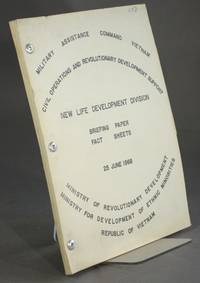
1968réf. 41373Saigon: Military Assistance Command 25 June 1968. 4to 55 leaves in all printed on rectos only from typescript; tables and graphs throughout; post-bound in original printed wrappers; "LVD" in manuscript at top right-hand corner of upper cover; very good. The purpose here was to identify and define the various provincial programs sponsored in Vietnam and summarize their status to date and to function as a coordinator between USAID and field personnel. Not found in OCLC. Military Assistance Command, 25 June unknown
1968réf. 41373Saigon: Military Assistance Command 25 June 1968. 4to 55 leaves in all printed on rectos only from typescript; tables and graphs throughout; post-bound in original printed wrappers; "LVD" in manuscript at top right-hand corner of upper cover; very good. The purpose here was to identify and define the various provincial programs sponsored in Vietnam and summarize their status to date and to function as a coordinator between USAID and field personnel. Not found in OCLC. Military Assistance Command, 25 June unknown books
réf. 13680Lauris, Maison des Missionnaires, 1974 2 volumes in-4, reliure toile verte, 846 pp., texte dactylographié, très bon état.
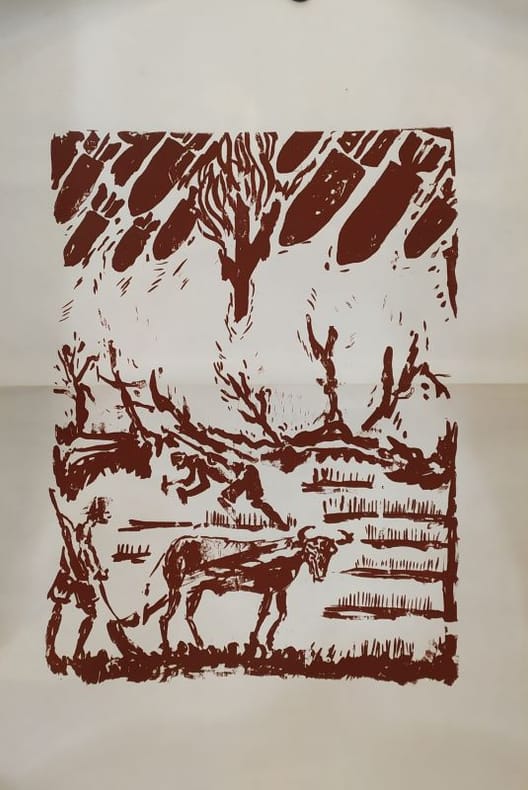
réf. 3128Impression en sérigraphie marron. Ca. 1973. Dim : 990 x 650 mm. Pliure dorigine.
réf. 3128Impression en sérigraphie marron. Ca. 1973. Dim : 990 x 650 mm. Pliure dorigine.
1774Legatura coeva in piena pelle (difetti), sguardie marmorizzate e tagli spruzzati azzurri, 8vo cm 11x17, pp (4) 422 234 52 32. Tracce d’uso sulla legatura che presenta piccole mancanze di pelle sui bordi dei piatti, fessure lungo le cerniere e scuffiature, uno strappo sulla carta di guardia posteriore, antiche firme di possesso su frontespizio e prima carta bianca. Discreto esemplare nel complesso. La prima parte dell’opera è dedicata alla Cina, sua storia, religione e istituzioni, con capitoli dedicati alla produzione della seta e alle tecniche di manifattura della porcellana; il secondo trattato è diviso in capitoli dedicati ad anni significativi per la storia del Giappone e dei suoi rapporti con l’Occidente; concludono l’opera brevi trattati dedicati alla Tailandia (Anecdotes Siamoises) e al Vietnam (- Tonquinoises et Cochinchinoises), e un’ultima parte intitolata A. de la presqu’isle au-dela du Gange con notizie su Laos, Cambogia, Tibet e altri paesi dell’Asia. Brunet VI, 28295.
réf. DADAX0891937005New unknown
réf. DADAX0668053461New unknown
réf. DADAX0415418011New unknown
1899Edizione: Prima edizione . Pagine: 320 . Illustrazioni: 40 foto e due carte più volte ripiegate, in copertina, dorata, la più grande pepita ritrovata nell'Eldorado di kg 1,309 . Formato: 16° . Rilegatura: Brossura originale . Stato: Buono . Caratteristiche: Bruniture. Copertina con piccoli strappi. Raro.Foto disponibili . Note epoca: B
1973réf. 41784N.p.: Vietnam Veterans Against the War 1973. First Edition. Original offset lithographed poster in colors 56cm x 43cm 22" x 17". Fine fresh apparently unused example. Poster sold as a fundraiser for the defense of the Gainesville Eight a group of Florida Vietnam veterans who were accused on dubious evidence of conspiracy to disrupt the 1972 Republican National Convention in Miami Beach. All eight defendants including the reputed ringleader Scott Camil were eventually acquitted. A rare poster and this is a lovely fresh example. Not catalogued in OCLC; we note only one institutionally-held copy Library of Congress. Vietnam Veterans Against the War unknown
1973réf. 41784N.p.: Vietnam Veterans Against the War 1973. First Edition. Original offset lithographed poster in colors 56cm x 43cm 22" x 17". Fine fresh apparently unused example. Poster sold as a fundraiser for the defense of the Gainesville Eight a group of Florida Vietnam veterans who were accused on dubious evidence of conspiracy to disrupt the 1972 Republican National Convention in Miami Beach. All eight defendants including the reputed ringleader Scott Camil were eventually acquitted. A rare poster and this is a lovely fresh example. Not catalogued in OCLC; we note only one institutionally-held copy Library of Congress. Vietnam Veterans Against the War unknown books
1994réf. 91408Washington DC: National Academy Press 1994. Presumed First Edition First Printing. Hardcover. Very good. xviii 2 812 pages. Maps. Illustrations. Tabular data. Appendixes. Glossary. Acronyms and Abbreviations. Index. No dust jacket present. Signed inscriptionassociation unclear that reads: "To Scholar Brendan Jermer Garwin with much affection and respect from granddad who served for years as an Air Force Force "Launch Hound" Committee and The Veterans Administration Committee to study the legacy of exposure to herbicides in Vietnam signature unreadable Sept. 30 1997". In response to decades of concern surrounding the possible long-term health consequences of exposures to herbicides and the contaminant dioxin Congress directed the Secretary of Veterans Affairs to request the National Academy of Sciences NAS to conduct a comprehensive review and evaluation of the available scientific and medical information regarding the health effects of exposure to Agent Orange and other herbicides used during the Vietnam conflict. This report from the Institute of Medicine IOM Committee to Review the Health Effects in Vietnam Veterans of Exposure to Herbicides was submitted in compliance with P. L.102-4. This work reviews and evaluates the available scientific evidence regarding the association between exposure to specific chemical compounds in herbicides used in Vietnam and a range of health effects and provides the committee's assessment for the Department of Veterans Affairs to consider as it exercises its responsibilities to veterans. The report provides the committee's recommendations for areas in which future research is likely to be productive. Have U.S. military personnel experienced health problems from being exposed to Agent Orange its dioxin contaminants and other herbicides used in Vietnam This definitive volume summarizes the strength of the evidence associating exposure during Vietnam service with cancer and other health effects and presents conclusions from an expert panel. Veterans and Agent Orange provides a historical review of the issue examines studies of populations in addition to Vietnam veterans environmentally and occupationally exposed to herbicides and dioxin and discusses problems in study methodology. The core of the book presents: What is known about the toxicology of the herbicides used in greatest quantities in Vietnam; What is known about assessing exposure to herbicides and dioxin'; What can be determined from the wide range of epidemiological studies conducted by different authorities; What is known about the relationship between exposure to herbicides and dioxin and cancer reproductive effects neurobehavioral disorders and other health effects. The book describes research areas of continuing concern and offers recommendations for further research on the health effects of Agent Orange exposure among Vietnam veterans. This volume will be critically important to both policy makers and physicians in the federal government Vietnam veterans and their families veterans organizations researchers and health professionals. National Academy Press hardcover
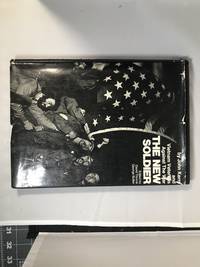
1971réf. 08-29-2022-10This hardcover has black boards with a fine detailed silver gilt image with the US flag and Vietnam Veterans from a photo by George Butler. All lettering and image in silver is in fine condition. All pages and the numerous photos are clean and unmarked. INSCRIBED on the title page as seen in photo. we believe that the David Putnam to whom the inscription is dedicated is or was a Massachusetts friend of Mr. Kerry but we are unable to verify this. DJ condition is Good-. Chipping along top and bottom margins Two tiny closed tears repaired with tape several others untaped. She creases in DJ flaps. Not price clipped. This work is a photographic essay of the Anti-War movement and the Vietnam Veterans that culminated in a march of the Capital Building in 1971. An important text for anyone interested in American History and the climate of the Country during the Vietnam War. The Macmillan Company hardcover
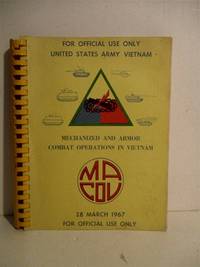
1967réf. 78-2172San Francisco: March 1967 1967. 1st ed. 207p. Photos. Maps. Covers the period January to March 1967. Comb biinding. Yellow card wraps. Near Fine Copy. 1st. Paperback. Near Fine. Book. March 1967 paperback
réf. SONG1558683577Used: Good unknown
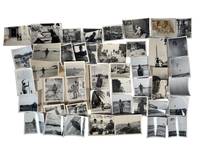
1965réf. 212871965. Archive of original photographs documenting African American soldiers serving in the Vietnam War during the early phase of large-scale United States military escalation in Southeast Asia. The material captures the daily experiences military operations and interpersonal relationships of Black servicemen stationed at Bien Hoa Air Base circa 1965 including members of the 173rd Airborne Brigade Combat Team. The photographs provide primary-source visual evidence of integrated military life during a period when African American troops served disproportionately in frontline combat roles while racial inequality and civil rights struggles intensified in the United States. Particularly significant is the candid nature of the images which were apparently taken by an African American serviceman identified by the surname Thomas offering an unusually personal perspective on Black military experience during the Vietnam conflict. Collection consists of 56 original black-and-white silver gelatin photographs measuring approximately 3.5 x 3.5 to 3.5 x 5.5 inches primarily loose with two mounted to an album page. The photographs depict African American soldiers at Bien Hoa Air Base near Saigon identifiable through a photographed base sign and visible 173rd Airborne Brigade insignia on soldiers' uniforms. Numerous images portray Black servicemen posing casually outside tents reading letters socializing in small groups smoking resting and interacting with fellow soldiers emphasizing camaraderie and the routines of military life between operations. Several photographs document airborne training exercises with parachutists descending beneath open canopies over the surrounding landscape. Other images depict military infrastructure and equipment including jeeps sandbag fortifications stacked munitions barracks areas and transport zones associated with the logistical operations of the base. The archive also includes photographs taken during off-duty excursions into Vietnamese civilian areas including a riverside marketplace crowded with vendors boats and local residents. Additional images show soldiers posed before local monuments and religious sites including one photograph of Thomas with a white serviceman in front of a Buddhist temple and another featuring a tall obelisk monument surrounded by military statuary. The archive documents the lived experience of African American servicemen within integrated combat units during one of the most consequential military conflicts of the twentieth century. Bien Hoa Air Base served as a major operational center for airborne and aerial missions during the early years of sustained U.S. intervention and the presence of Black paratroopers within these photographs provides important visual evidence of African American military participation during the Civil Rights era. Unlike official military photography the informal and personal nature of the images preserves moments of friendship boredom training and interaction with Vietnamese civilians that are often absent from institutional wartime records. Minor edge wear and light handling wear throughout; photographs remain sharp and well-preserved overall in very good condition. A substantial and historically valuable photographic record of African American military life in Vietnam during the mid-1960s. unknown
1965réf. 212871965. Archive of original photographs documenting African American soldiers serving in the Vietnam War during the early phase of large-scale United States military escalation in Southeast Asia. The material captures the daily experiences military operations and interpersonal relationships of Black servicemen stationed at Bien Hoa Air Base circa 1965 including members of the 173rd Airborne Brigade Combat Team. The photographs provide primary-source visual evidence of integrated military life during a period when African American troops served disproportionately in frontline combat roles while racial inequality and civil rights struggles intensified in the United States. Particularly significant is the candid nature of the images which were apparently taken by an African American serviceman identified by the surname Thomas offering an unusually personal perspective on Black military experience during the Vietnam conflict. Collection consists of 56 original black-and-white silver gelatin photographs measuring approximately 3.5 x 3.5 to 3.5 x 5.5 inches primarily loose with two mounted to an album page. The photographs depict African American soldiers at Bien Hoa Air Base near Saigon identifiable through a photographed base sign and visible 173rd Airborne Brigade insignia on soldiers' uniforms. Numerous images portray Black servicemen posing casually outside tents reading letters socializing in small groups smoking resting and interacting with fellow soldiers emphasizing camaraderie and the routines of military life between operations. Several photographs document airborne training exercises with parachutists descending beneath open canopies over the surrounding landscape. Other images depict military infrastructure and equipment including jeeps sandbag fortifications stacked munitions barracks areas and transport zones associated with the logistical operations of the base. The archive also includes photographs taken during off-duty excursions into Vietnamese civilian areas including a riverside marketplace crowded with vendors boats and local residents. Additional images show soldiers posed before local monuments and religious sites including one photograph of Thomas with a white serviceman in front of a Buddhist temple and another featuring a tall obelisk monument surrounded by military statuary. The archive documents the lived experience of African American servicemen within integrated combat units during one of the most consequential military conflicts of the twentieth century. Bien Hoa Air Base served as a major operational center for airborne and aerial missions during the early years of sustained U.S. intervention and the presence of Black paratroopers within these photographs provides important visual evidence of African American military participation during the Civil Rights era. Unlike official military photography the informal and personal nature of the images preserves moments of friendship boredom training and interaction with Vietnamese civilians that are often absent from institutional wartime records. Minor edge wear and light handling wear throughout; photographs remain sharp and well-preserved overall in very good condition. A substantial and historically valuable photographic record of African American military life in Vietnam during the mid-1960s. unknown books
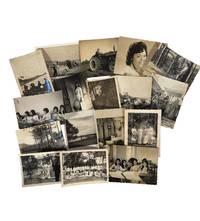
1960réf. 210781960. Vietnam War Photography Personal photograph album containing 17 silver gelatin photographs documenting civilian life education family and military service in South Vietnam during the 1960s. Original brown vinyl album measuring approximately 3.5" x 4.5"; photographs approximately 2.5" x 3.25". The album offers an intimate glimpse into the everyday experiences of South Vietnamese men and women during a period more often documented through the lens of war. Rather than combat scenes the photographs focus primarily on family friendship education courtship and community life creating a personal record of a society navigating rapid social change amid the conflict. Several photographs depict young Vietnamese women wearing traditional áo dài dresses both in formal portraits and informal outdoor settings. One particularly attractive image shows three smiling women walking along a path in patterned áo dài framed by a mixture of traditional and modern architecture. Another studio portrait captures a young woman posed alone and smiling toward the camera suggesting a family member friend or perhaps the album owner's sweetheart. Education and youth culture are prominently represented. Multiple photographs show school-aged girls gathered in classrooms and assembled outdoors in large group portraits. The students wear white áo dài and traditional conical hats illustrating the continued importance of educational institutions and cultural traditions during the war years. Several candid classroom scenes preserve moments of ordinary student life rarely encountered in wartime photographic archives. The album also documents changing fashions and modernization in South Vietnam. Young men and women appear in contemporary 1960s clothing posing in parks forests and rural landscapes. One photograph shows a young Vietnamese man seated proudly atop a large tractor reflecting the agricultural modernization efforts underway throughout much of South Vietnam during the period. Military service appears in several images. One photograph depicts a South Vietnamese serviceman standing beside an automobile with military vehicles visible in the background suggesting that the album may have belonged to a soldier or military family. Unlike official military photographs however the image emphasizes personal identity rather than military operations reinforcing the album's character as a private keepsake rather than a wartime record. Additional photographs show fishing boats riverside scenes rural landscapes and groups of family members and friends creating a portrait of everyday life that existed alongside the broader conflict. Together the photographs reveal the coexistence of tradition and modernity documenting a generation of South Vietnamese men and women whose lives were shaped by both enduring cultural customs and the upheavals of the Vietnam War era. Photographs appear to have been removed from a larger album at some point with remnants of mounting paper and adhesive visible on versos. Minor wear and handling marks; overall very good condition. A compelling personal archive documenting civilian life education culture and military service in South Vietnam during the 1960s. unknown
1960réf. 210781960. Vietnam War Photography Personal photograph album containing 17 silver gelatin photographs documenting civilian life education family and military service in South Vietnam during the 1960s. Original brown vinyl album measuring approximately 3.5" x 4.5"; photographs approximately 2.5" x 3.25". The album offers an intimate glimpse into the everyday experiences of South Vietnamese men and women during a period more often documented through the lens of war. Rather than combat scenes the photographs focus primarily on family friendship education courtship and community life creating a personal record of a society navigating rapid social change amid the conflict. Several photographs depict young Vietnamese women wearing traditional áo dài dresses both in formal portraits and informal outdoor settings. One particularly attractive image shows three smiling women walking along a path in patterned áo dài framed by a mixture of traditional and modern architecture. Another studio portrait captures a young woman posed alone and smiling toward the camera suggesting a family member friend or perhaps the album owner's sweetheart. Education and youth culture are prominently represented. Multiple photographs show school-aged girls gathered in classrooms and assembled outdoors in large group portraits. The students wear white áo dài and traditional conical hats illustrating the continued importance of educational institutions and cultural traditions during the war years. Several candid classroom scenes preserve moments of ordinary student life rarely encountered in wartime photographic archives. The album also documents changing fashions and modernization in South Vietnam. Young men and women appear in contemporary 1960s clothing posing in parks forests and rural landscapes. One photograph shows a young Vietnamese man seated proudly atop a large tractor reflecting the agricultural modernization efforts underway throughout much of South Vietnam during the period. Military service appears in several images. One photograph depicts a South Vietnamese serviceman standing beside an automobile with military vehicles visible in the background suggesting that the album may have belonged to a soldier or military family. Unlike official military photographs however the image emphasizes personal identity rather than military operations reinforcing the album's character as a private keepsake rather than a wartime record. Additional photographs show fishing boats riverside scenes rural landscapes and groups of family members and friends creating a portrait of everyday life that existed alongside the broader conflict. Together the photographs reveal the coexistence of tradition and modernity documenting a generation of South Vietnamese men and women whose lives were shaped by both enduring cultural customs and the upheavals of the Vietnam War era. Photographs appear to have been removed from a larger album at some point with remnants of mounting paper and adhesive visible on versos. Minor wear and handling marks; overall very good condition. A compelling personal archive documenting civilian life education culture and military service in South Vietnam during the 1960s. unknown books
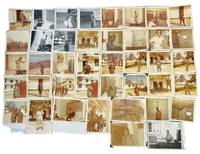
1968réf. 197531968. Photographic archive 1968-1969 documenting African American enlisted personnel in the United States Army Transportation Corps during the Vietnam War era with emphasis on training environments unit structure and daily life on base prior to overseas deployment. The material captures soldiers in both formal and informal settings providing visual evidence of military preparation racial composition within units and interpersonal dynamics among predominantly Black troops during a period of significant racial tension within the U.S. armed forces. The archive supports research into African American military service segregation and integration practices and the lived experience of soldiers during the late 1960s. Archive of 41 original vintage photographs primarily color with several black-and-white images ranging in size from approximately 3.5 x 3.5 inches to 3.5 x 5 inches. The photographs depict soldiers in a range of uniform styles including standard fatigues seasonal dress variations and Transportation Corps-specific elements such as white belts shoulder cords red scarves and helmets with distinctive markings. Several images show troops in formation with rifles raised while others capture training environments featuring sandbag trenches artillery placements and fortified structures resembling pillboxes. Interior scenes document barracks life including soldiers playing cards maintaining uniforms and interacting in relaxed settings. A black-and-white image shows an African American soldier posed near signage for a "Leadership School and Honor Guard" at a U.S. Transportation Center while another identifies a seated "battery clerk" labeled informally as "Johnny my Running Mate." Additional photographs include racially integrated groupings with Black and white soldiers appearing together in casual and structured contexts. Produced during the height of the Vietnam War this archive provides insight into the transitional phase between training and deployment emphasizing both institutional structure and personal experience within military life. The presence of both formal drills and informal social scenes allows for examination of hierarchy camaraderie and daily routine among enlisted men. Light handling wear and minor surface marks; overall very good condition. A substantial visual record of African American military experience within the U.S. Army during a pivotal period of twentieth-century conflict. unknown
1968réf. 197531968. Photographic archive 1968-1969 documenting African American enlisted personnel in the United States Army Transportation Corps during the Vietnam War era with emphasis on training environments unit structure and daily life on base prior to overseas deployment. The material captures soldiers in both formal and informal settings providing visual evidence of military preparation racial composition within units and interpersonal dynamics among predominantly Black troops during a period of significant racial tension within the U.S. armed forces. The archive supports research into African American military service segregation and integration practices and the lived experience of soldiers during the late 1960s. Archive of 41 original vintage photographs primarily color with several black-and-white images ranging in size from approximately 3.5 x 3.5 inches to 3.5 x 5 inches. The photographs depict soldiers in a range of uniform styles including standard fatigues seasonal dress variations and Transportation Corps-specific elements such as white belts shoulder cords red scarves and helmets with distinctive markings. Several images show troops in formation with rifles raised while others capture training environments featuring sandbag trenches artillery placements and fortified structures resembling pillboxes. Interior scenes document barracks life including soldiers playing cards maintaining uniforms and interacting in relaxed settings. A black-and-white image shows an African American soldier posed near signage for a "Leadership School and Honor Guard" at a U.S. Transportation Center while another identifies a seated "battery clerk" labeled informally as "Johnny my Running Mate." Additional photographs include racially integrated groupings with Black and white soldiers appearing together in casual and structured contexts. Produced during the height of the Vietnam War this archive provides insight into the transitional phase between training and deployment emphasizing both institutional structure and personal experience within military life. The presence of both formal drills and informal social scenes allows for examination of hierarchy camaraderie and daily routine among enlisted men. Light handling wear and minor surface marks; overall very good condition. A substantial visual record of African American military experience within the U.S. Army during a pivotal period of twentieth-century conflict. unknown books
réf. DADAX1860640761New unknown