3 240 résultats
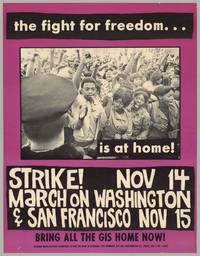
réf. 9608Washington D.C. ca. 1969. Illustrated single sheet poster black on purple background 22" x 17". CONDITION: Very good old folds moderate wear a few minor chips and tears. A scarce and vivid poster announcing marches on Washington D.C. and San Francisco produced by the Student Mobilization Committee To End The War In Vietnam. The rousing phrase "the fight for freedom.is at home!" accompanies a photo-illustration showing a large group of African American men and women participating in a protest. The head of a single police officer seen from behind appears in the lower left corner and effectively represents the oppression against which the students protest. Many of the protesters raise their clenched fists in the style of the Black Panther salute and appear to be chanting. The poster effectively appeals to African Americans to engage in protesting the War as a means of simultaneously combating racial inequality in America. The U.S. saw extensive protests surrounding its involvement in the Vietnam War many of which were organized by the Student Mobilization Committee SMC est. 1966 a nationwide organization of students who sought to end the war. For their events SMC created brochures posters buttons and stickers. SMC worked with other anti-war mobilization committees in the late '60s such as the Washington D.C.-based Vietnam Moratorium Committee VMC which sponsored anti-war moratoriums around the world in the fall of 1969. The VMC's first organized moratorium took place on October 15th 1969 and the second on November 15th in which over half a million activists marched on D.C. and demonstrated throughout the U.S. and the world. The November 15th event followed on the heels of the "March Against Death" demonstration held on November 14th when people marched down Pennsylvania Ave in Washington D.C. hoisting signs with the names of dead U.S. soldiers and destroyed Vietnamese towns. The protest on the 15th featured a rally at the White House in which chanting demonstrators called for a peaceful end to the war. One of the most influential student-led nonviolent protest groups in U.S. history the SMC began to disband in the early '70s as American combat troops stationed in Vietnam started to withdraw and return home. OCLC records only one copy held at Harvard. Google searches reveal a copy held by the National Museum of African American History & Culture. A striking poster reflecting the opposition of Black students to the Vietnam War and dovetailing with the ascendance of Black Power. REFERENCES: Aufderheide Ingrid. "Student Mobilization Committee to End the War in Vietnam: A Pivotal Moment in Student Protest" 2023 at The Nonviolence Project online; "Nov. 15 1969: Second Anti-War Moratorium" at Zinn Education Project online. Washington, D.C., [ca. 1969] unknown
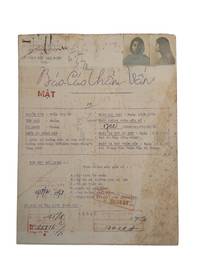
1970réf. 235521970. South Vietnamese Special Police interrogation report from Saigon 1970 documenting the arrest and questioning of Trần Thị Tư a seventeen year old ice cream seller accused of guiding and sheltering her husband after his infiltration into the Capital District for Communist activity. Created by the Cảnh Sát Äặc Biệt or Special Police of the Republic of Vietnam's National Police in Äô Thành Sài Gòn the file places one young woman's domestic movements kinship obligations and street vending work within the Phượng Hoàng security apparatus that targeted Viet Cong infrastructure in and around Saigon. The report anchors the charge in specific movements through Gò Vấp Gia Äịnh Tây Ninh and Saigon naming Trần Văn Bốn alias Trung Bà Tám Nhiá»u Tám Chợ Thị Hai and Phiếm as figures in the alleged route of contact shelter and attempted legal cover. Phúc Trình Thẩm Vấn Số 1702 / CSÄB / S3 / P33 / B3 / M. Saigon: Cảnh Sát Äặc Biệt 1970. Four page typed interrogation report with distribution sheet 8 x 10 inches in Vietnamese with two mounted silver gelatin mugshot portraits of Trần Thị Tư. The first page is headed "Báo Cáo Thẩm Vấn" roughly translating to "Interrogation Report" with Trần Thị Tư identified as the informant no alias no nom de guerre and her communist position having "contacted guided and sheltered her husband as he infiltrated the Capital District to carry out Communist activity." The report gives her address as 44C B Ä‘Æ°á»ng Phan Thanh Giản Gò Vấp lists her birth in 1953 at Xuyên Thanh Duy Xuyên Quảng Nam identifies her husband as Trần Văn Bốn alias Trung a professional weaver and records her occupation as an ice cream seller. The narrative states that after the family house burned in 1966 she moved to Gò Vấp married Bốn in 1967 visited him at a Communist base area after being guided through Tây Ninh received instructions from cadres named Nhiá»u and Tám Chợ and in April 1970 helped bring Bốn back to Saigon to live under legal cover. The final page states that she was arrested on 15 May 1970 while selling ice cream in Gò Vấp and then led security personnel to arrest her husband at Phiếm's workshop where he was apprenticing; the report is dated Saigon 19 August 1970 and signed for Major Lâm Văn Nghĩa Chief of the Special Police Office. The distribution sheet routes copies to the National Police Directorate Saigon City Hall's Internal Affairs Office the Capital Phượng Hoàng Committee the Saigon Gia Äịnh Mixed Security Committee the O.S.A. adviser's office District 11 National Police Quảng Nam National Police Gia Äịnh National Police S3/P31/B2 S3/P31/B3 and retained files. The report belongs to the period after the Tet Offensive when South Vietnamese and American security programs intensified the identification of urban Viet Cong infrastructure rather than battlefield combatants alone. Its language treats Tư as a source and detainee whose value lies in routes addresses family links employment and names. The file records a mother in law's address a rented kitchen near a workshop an apprenticeship motorcycle movements ferry and market truck transfers and the use of ordinary residence as a condition of clandestine work. The evaluation section concludes that Tư had no clear Communist ideological training but that she was used through "marital loyalty" to guide and shelter her husband so he could operate legally in the Capital District. Moderate foxing and toning throughout with minor edge wear corner wear ink stamps and manuscript docketing; text remains legible and paper has maintained integrity. Overall very good condition. A Saigon Special Police interrogation record tracing Viet Cong urban security through one woman's marriage movements and coerced knowledge of clandestine routes. unknown
1968Volume numero 22 appartenente alla collana Mezzo secolo. Prefazione di Sergio Pignedoli. Sovraccoperta stanca agli angoli, usurata al dorso, sia alle estremità che sulla lunghezza; piatti lievemente macchiati e bruniti, così come il dorso. Copertina nelle stesse condizioni della sovraccoperta. Presente dedica a penna all'occhiello con firma dell'autore. Pagine salde alla cerniera, con ampio margine, brunite, così come i tagli. Presente nota a matita alla controguardia posteriore. Numero pagine 397. USATO
1862réf. 39191S.l. s.d. [ca. 1862] in-8 (20,8 x 13 cm) en feuilles
réf. DADAX0891416749New unknown
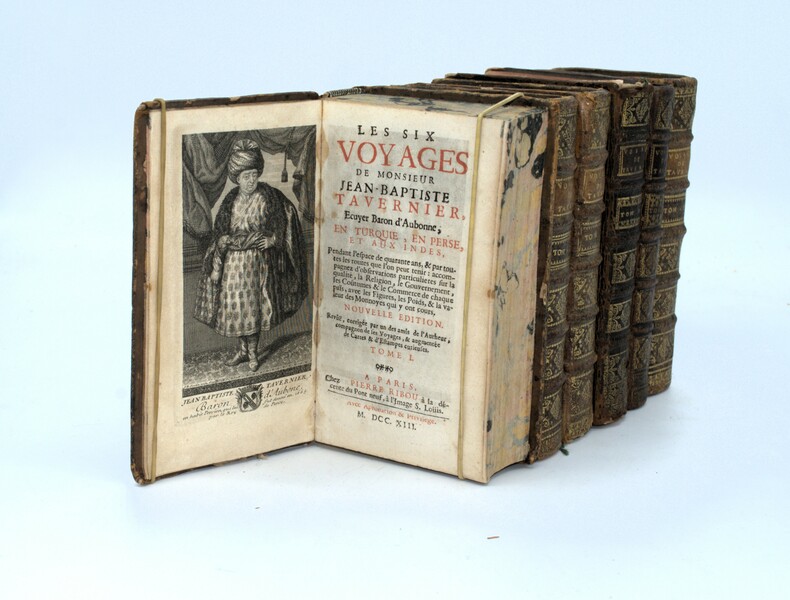
1713réf. PHO-1341A Paris, Chez Pierre Ribou et Rouen chez Jean Baptiste Machuel (tome 5), 1713. 6 volumes in-12, relié plein veau époque, dos à nerfs orné avec pièce de titre et tomaison, tranches marbrées, Tome 5, reliure légèrement différent avec tranches rouges, coins et coiffes usés .T1,27p-501p-1f(table); T2, 1f-465-1f (table);T3 ,1f-402-3f(table);T4,1f-367-2f(table);T5 ,3f(titre, épître)-467-2f(table),T6 3f(titre, épitre)244 -2f (table) .Illustré de 63 planches la plupart repliées, dont un portrait et 3 grandes cartes (manque la carte du Japon) ; quelques vignettes dans le texte , quelques planches au tome 5 volantes, 1 planche doublée.
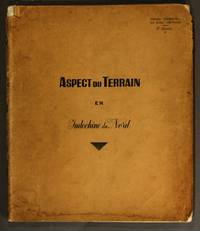
1954réf. 35722Saigon: Édition du Service cartographique des F.T.E.O. 1954. First edition large square 4to pp. 117; photographic illustrations throughout; some wear a few short splits in the wrapper extremities else very good in original brown wrappers printed in black on the upper cover. At head of title: Forces terrestres du Nord Vietnam. 2. Bureau. Issued during the final battle for France in Vietnam at Dien Bien Phu. Cornell and Arizona only in OCLC. Édition du Service cartographique des F.T.E.O. unknown books
1954réf. 35722Saigon: Édition du Service cartographique des F.T.E.O. 1954. First edition large square 4to pp. 117; photographic illustrations throughout; some wear a few short splits in the wrapper extremities else very good in original brown wrappers printed in black on the upper cover. At head of title: Forces terrestres du Nord Vietnam. 2. Bureau. Issued during the final battle for France in Vietnam at Dien Bien Phu. Cornell and Arizona only in OCLC. Édition du Service cartographique des F.T.E.O. unknown
1890réf. 6246SLND [Vietman, circa 1890] 1890 18 Photographie originales tirées sur papier albuminé, 225 x 155 mm. Contrecollées sur carton ( 295 x 230 mm.)
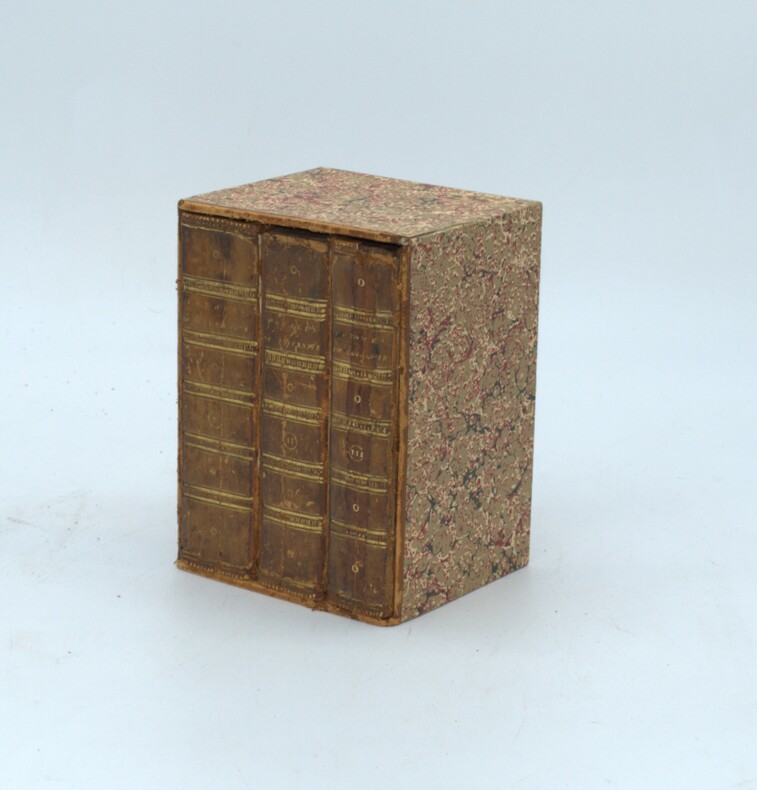
1679réf. PHO-1446Paris , 1679 , 3 vol. in-12, plein veau sous emboîtage, dos orné , filet sur les plats , 19ffn.-780pp.-4ff. , 6ff.-616pp. , 5ff.-564pp.4ff. , charnières faibles , 1 plat détaché , coupes , coins usés, coiffes sup. tome 2 et 3 abimées, réparation au titre tome 2 , manque de papier à l’épître tome 3 , une carte avec manque , déchirure au pli à la carte du Tunquin , trace de réparation avec adhésif sur une planche coupée court .
1912réf. 46593Hanoi-Haiphong Vietnam: Imprimerie d’Extreme-Orient 1912. Four vols. Folio. xiii 1 370 pp. 20 plates some maps photos each with facing explanatory leaf numerous tables several large folding; Atlas unpaginated w/ 178 diagrams maps geological sections relief maps 2 very large folding colour maps some geological formation plates in colour; 4 146 2 pp. plus 25 plates each with facing explanatory leaf numerous text illustrations diagrams; 8 76 4 pp. plus 9 plates each with facing explanatory leaf numerous text illustrations diagrams. Uniformly bound in original printed wrappers some scuffing soiling edgewear occasional light foxing still a VG- uncut & unopened presentation set inscribed and presented by Honore Lantenois & Henri Mansuy to Prof. Marcellin Boule 1861-1942 French geologist palaeontologist and physical anthropologist who reconstructed the first complete Neanderthal skeleton in France. First edition presentation set of this massive first installment in the Geological Survey of Southeast Asia begun in 1908 documenting the biostratigraphy of the Yunnan Region which was awarded the Tchihatchef Prize of the French Academy of Sciences. Much of this survey work was done during the building of the Hanoi to Yunnan-fou Kunming railroad which was built by the French to exploit the tremendous mineral wealth of Yunnan. The Director of the Department of Natural Resources for France in Vietnam was Honore Lantenois 1863-1940 who worked for years with Henri Mansuy 1857-1937 and sent him back to France several times to study palaeontology at the School of Natural Resources Ecole des Mines. Lantenois recruited Jacques Deprat 1880-1935 in 1908 -- at the time a brilliant palaeontologist -- to conduct an ambitious program mapping the geology of Indochina and neighboring areas. All three men became involved in the notorious Deprat Affair which resulted in Mansuy accusing Deprat to Lantenois in 1917 that Deprat had used a few European-sources trilobites among his fossil specimens from Indochina and Yunnan. This accusation rested on the distinction that the suspect trilobites were not just similar in nature to others found in Europe but the matrix they were embedded may have originated from Europe. Although nearly 90 years later it would be determined that the trilobite fauna discovered by Deprat indicated that the Yunnan had occupied a location adjacent to Bohemia originally in the early Palaeozoic period; the French scientific community condemned Deprat at the time stripped him of his degrees and posts and forced him to leave the field. A complete set including the Atlas is quite scarce. See: Genovese Madeleine Colani and the Deprat Scandal at the Geological Survey of Indochina Journal of the Siam Society Vol. 99 pp. 269-290 2011; Osborne The Deprat Affair: Ambition revenge and deceit in French Indo-China 1999; Stokes Deprat’s trilobites and the position of the Indochina Terrane in the Early Palaeozoic Proceedings of the International Symposia on Geoscience Resources and Environments of Asian Terranes 2008 pp. 201-207. Imprimerie d’Extreme-Orient, unknown
réf. PE29Oblong Quarto album ca. 268x364 cm. 30 card stock leaves. With ca. 215 mounted original gelatin silver photographs from ca. 87x144 cm 3 ½ x 5 ¾ in to ca. 69x67 cm 2 ¾ x 2 ½ in five real photo postcards ca. 108x139 cm 4 ¼ x 5 ½ in and six printed postcards ca. 137x87 cm 5 ½ x 3 ½ in. Most photos with period white pencil captions in French on the mounts at least seven photos including one real photo postcard with captions in negatives. Full ornamented cloth album fastened with a string. Several photos with mild silvering but otherwise a very good album with strong interesting photographs. Historically interesting album of lively vernacular photographs apparently taken by a French resident of Canada during his trans-Pacific voyage from Vancouver to the Orient in the late 1934 and early 1935. The compiler and his travel companions left Vancouver aboard the “RMS Empress of Canada” and sailed to Hong Kong with a stopover in Saigon Vietnam. From there they traveled overland to Beijing and Seoul and then continued to Japan visiting Kyoto and Nikko. On the return journey they stopped in Honolulu and New York. The album contains 215 well executed photographs from the voyage and opens with over sixty images of Saigon showing rare views of the first tea factory in the East-South Asia the Bank of Vietnam and candid street scenes of native huts boutiques and restaurants. Especially interesting is a striking image of half-naked ethnic locals sitting on the ground beside a bicycle and posing for the camera. The other photos from the region capture topographical views riverside fishing gear on the Huong River and snapshots of the compiler and his companions throughout their journey by cars in canoes along the Mekong River etc. Among twenty-five photographs of Hong Kong a standout image illustrates a bustling street scene filled with residents in traditional attire shopfronts with Chinese signs and flags of the Wang Jingwei regime flying alongside the British Union Jack. The rest of the images show the city’s port waterfront glowing night views and moments of the travel group golfing. In Beijing the focus shifts to historical landmarks documenting the Summer Palace Nine Dragon Screen Ming Tombs Temple and Altar of Heaven and the iconic Chinese guardian lions. A dozen photographs of the Great Wall offer a rare glimpse of life along its slopes with locals carrying goods in baskets and leading donkeys through the rugged terrain. The Japanese portion of the journey includes evocative views of Kyoto’s Chion-in Temple the historic Yaami Hotel and a Buddhist temple with a monk standing solemnly at the gate. The group also visited Nikko capturing sites such as the Toshogu Shrine the ornate Yomeimon Gate a stone basin and tranquil views of Lake Chuzenji. The album closes with about forty photos of Seoul Temple of Heaven Honolulu views of the waterfront photos on deck and Arizona Grand Canyon. Overall historically interesting album of lively vernacular photographs apparently taken by a French resident of Canada during his trans-Pacific voyage from Vancouver to the Orient in the late 1934 and early 1935. hardcover
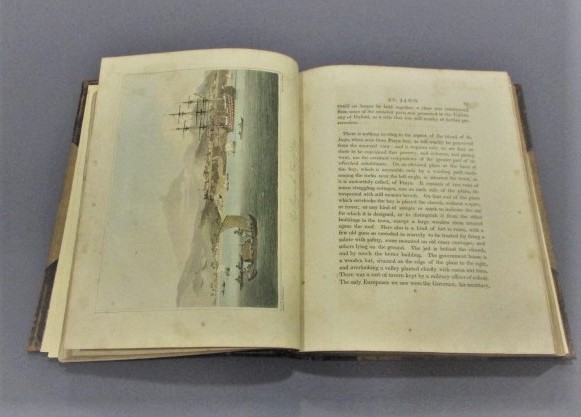
1806réf. 21219London, Cadell and Davies in the Strand, 1806. XVII(I S., 1 Bl., 447 S. 2 gefalt. kolorierte Kupferstichkarten und 19 (1 mehrfach gefalt.) kolorierten Aquatinta-Tafeln. Kl.-4°. HLdr. des 19. Jahrhunderts mit Rückenschildern und Rückenvergoldung (etw. berieben und bestoßen). [5 Warenabbildungen]
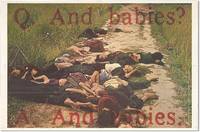
1970réf. 83515New York: Art Workers Coalition 1970. Offset lithograph in colors; 64cm x 97cm 25" x 38". Mild creasing to extremities else a fine clean copy; unbacked. This one of a presumably small number of copies bearing a rubber-stamped message which reads: "This poster was originally co-sponsored by the Museum of Modern Art. On Dec. 19 trustee William S. Paley forbid the Museum to associate its name with this poster. Do the Trustees approve of the massacre" stamped twice in the image lower right. One of the true icons of Twentieth Century American protest art this poster created by the Art Workers Coalition under the guidance of Fraze Dougherty Jon Hendricks and Irving Petlin was issued to bring attention to the horrendous My Lai massacre of March 1968. The photograph by Ron Haeberle originally appeared in Life Magazine. The Museum of Modern Art had originally promised to underwrite the poster's creation and to donate paper and printing costs - but later abandoned the project under the objections of board President William S. Paley. The AWC still managed to print fifty thousand copies which they distributed for free. As a response to MoMA's backing out of the project an unknown number of the posters were rubber-stamped with the message quoted above and a demonstration was held inside the museum in front of Picasso's Guernica where copies of the poster were unfurled and given away. These events are recorded in a 2015 interview with co-creator John Hendricks: ".We had a big meeting of Art Workers' Coalition about how we should address their MoMA's reneging of the agreement with us. It was decided to make a rubber stamp.saying "This is the poster that the Museum of Modern Art agreed to do jointly with Art Workers' Coalition and Bill Paley and Arthur Drexler refused to do" or something like that. So we stamped as many posters as we could with that stamp. Then we had a number of demonstrations in front of the museum and inside in front of Guernica." interview with William Twersky WT_History Blog April 2015. We have traced no copies in commerce or institutional collections that make note of the rubber-stamped notice. In 1972 the design was repurposed to protest President Richard Nixon's campaign for a second term; for that version the motto was changed to "Four More Years Four More Years" 83515. Art Workers Coalition unknown books
1970réf. 83515New York: Art Workers Coalition 1970. Offset lithograph in colors; 64cm x 97cm 25" x 38". Mild creasing to extremities else a fine clean copy; unbacked. This one of a presumably small number of copies bearing a rubber-stamped message which reads: "This poster was originally co-sponsored by the Museum of Modern Art. On Dec. 19 trustee William S. Paley forbid the Museum to associate its name with this poster. Do the Trustees approve of the massacre" stamped twice in the image lower right. One of the true icons of Twentieth Century American protest art this poster created by the Art Workers Coalition under the guidance of Fraze Dougherty Jon Hendricks and Irving Petlin was issued to bring attention to the horrendous My Lai massacre of March 1968. The photograph by Ron Haeberle originally appeared in Life Magazine. The Museum of Modern Art had originally promised to underwrite the poster's creation and to donate paper and printing costs - but later abandoned the project under the objections of board President William S. Paley. The AWC still managed to print fifty thousand copies which they distributed for free. As a response to MoMA's backing out of the project an unknown number of the posters were rubber-stamped with the message quoted above and a demonstration was held inside the museum in front of Picasso's Guernica where copies of the poster were unfurled and given away. These events are recorded in a 2015 interview with co-creator John Hendricks: ".We had a big meeting of Art Workers' Coalition about how we should address their MoMA's reneging of the agreement with us. It was decided to make a rubber stamp.saying "This is the poster that the Museum of Modern Art agreed to do jointly with Art Workers' Coalition and Bill Paley and Arthur Drexler refused to do" or something like that. So we stamped as many posters as we could with that stamp. Then we had a number of demonstrations in front of the museum and inside in front of Guernica." interview with William Twersky WT_History Blog April 2015. We have traced no copies in commerce or institutional collections that make note of the rubber-stamped notice. In 1972 the design was repurposed to protest President Richard Nixon's campaign for a second term; for that version the motto was changed to "Four More Years Four More Years" 83515. Art Workers Coalition unknown
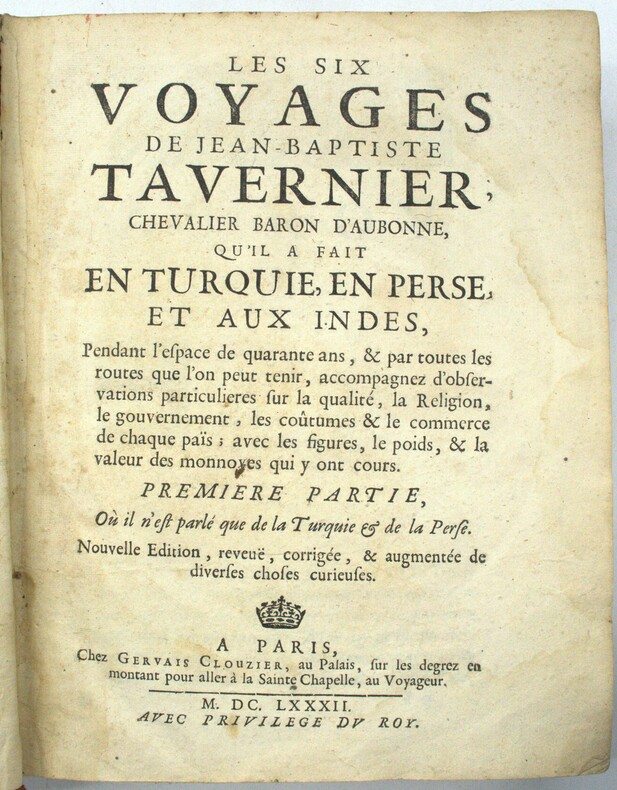
1680réf. PHO-1964Paris, chez Gervais Clouzier, 1682-1680, 3 volumes in-4 (246x195mm), 14ff.-636pp., 4ff.-481pp., 8ff.-72pp.-1f.-156pp.-1f.-96pp.-4ff.-1f.-178pp., Illustration : Tome 1 ; 7 planches (6 dépliantes) sur 8, Tome 2 ; 26 planches dont 15 de monnaies, 5 de pierres et 4 gravures dans le texte, Tome 3 ; 2 grandes cartes (Japon, 79x56cm et Tunquin, 56x41cm) et 8 planches dépliantes. Basane époque, dos à nerfs avec titre et tomaison, frottements, griffures et épidermures, Tome 1 ; accroc au plat, coiffe sup. absente, 2 coins usés, rousseurs, mouillure en coin puis en marge, planches avec déchirures sans manque, page 431 déchirée avec manque. Tome 2 ; fente au dos et charnière, coins usés, rousseurs et brunissures, 1 planche déchirée sans manque. Tome 3 ; coins usés, coiffes arasées, carte du Japon volante, déchirure carte du Tunquin, carte du Japon légèrement oxydée, petites rousseurs.
1680réf. 82460Londres Printed by A. Godbid and J. Playford, for Moses Pitt at the Angel in S. Paul's Churchyard 1680 1 vol. relié in-4, demi-veau jaspé à coins, dos à nerfs encadrés de filets dorés, pièce de titre maroquin rouge, plats de papier peigné, non rogné, 1 f. + titre + 10 ff. (avertissement, dédicace, préface, table)+14-[4]-15-46-[4]-47-87+66 pp. Édition originale anglaise (l'originale française parut chez Clouzier l'année précédente) qui contient une description du Tonkin, dérivée des observations du frère de l'auteur, une description du Japon, recueillie auprès de négociants, et une violente attaque contre les agents de la Compagnie néerlandaise des Indes orientales. La première partie, consacrée au royaume du Tunquin (Tonkin), est illustrée de 8 planches gravées dépliantes oblongues. Mais il manque la planche réunissant les cartes du Japon et du Tonkin. Initiales gravées sur bois et ornements en tête de chapitres. Notes manuscrites sur la première page muette (deux citations poétiques en anglais dont une d'Alexander Pope : "If to her share some female errors fall, Look on her face and you'll forget them all") et ex-libris manuscrit au bas de la page d'avertissement "Franceis Stephens book 1721". Cet ouvrage très rare est conservé dans une bonne reliure du début du XXe siècle, mais présente deux restaurations grossières (au premier feuillet de la préface et à la dernière gravure collée qui ne se déplie plus), quelques déchirures sans manque (notamment sur trois des gravures), quelques rousseurs et tâches.
1680réf. 82460Londres Printed by A. Godbid and J. Playford, for Moses Pitt at the Angel in S. Paul's Churchyard 1680 1 vol. relié in-4, demi-veau jaspé à coins, dos à nerfs encadrés de filets dorés, pièce de titre maroquin rouge, plats de papier peigné, non rogné, 1 f. + titre + 10 ff. (avertissement, dédicace, préface, table)+14-[4]-15-46-[4]-47-87+66 pp. Édition originale anglaise (l'originale française parut chez Clouzier l'année précédente) qui contient une description du Tonkin, dérivée des observations du frère de l'auteur, une description du Japon, recueillie auprès de négociants, et une violente attaque contre les agents de la Compagnie néerlandaise des Indes orientales. La première partie, consacrée au royaume du Tunquin (Tonkin), est illustrée de 8 planches gravées dépliantes oblongues. Mais il manque la planche réunissant les cartes du Japon et du Tonkin. Initiales gravées sur bois et ornements en tête de chapitres. Notes manuscrites sur la première page muette (deux citations poétiques en anglais dont une d'Alexander Pope : "If to her share some female errors fall, Look on her face and you'll forget them all") et ex-libris manuscrit au bas de la page d'avertissement "Franceis Stephens book 1721". Cet ouvrage très rare est conservé dans une bonne reliure du début du XXe siècle, mais présente deux restaurations grossières (au premier feuillet de la préface et à la dernière gravure collée qui ne se déplie plus), quelques déchirures sans manque (notamment sur trois des gravures), quelques rousseurs et tâches.
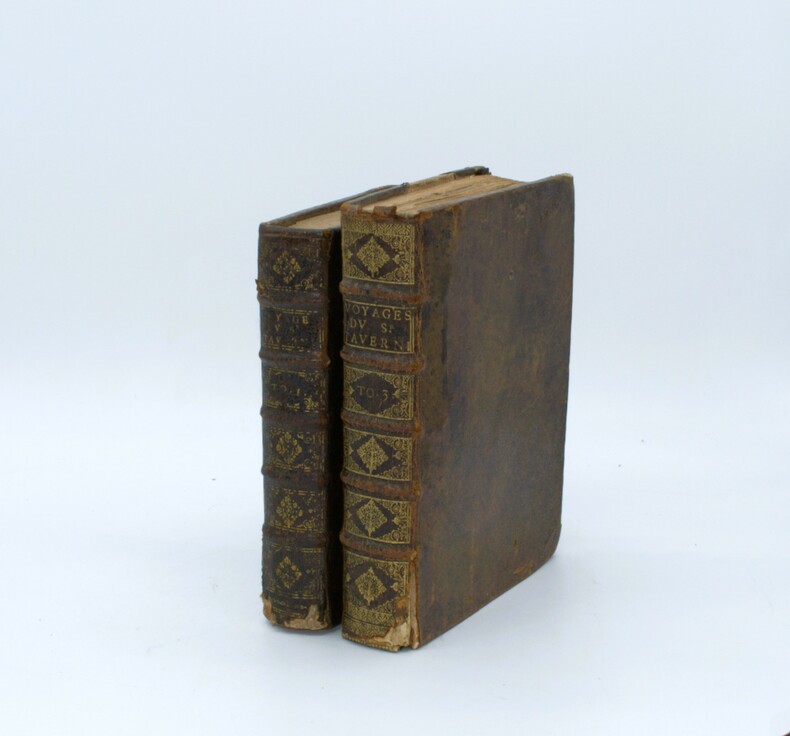
1676réf. PHO-1352A Paris, Chez Gervais Clouzier, 1676-79, 2 volume in-4 (sur 3),30pp.- 698pp.-8pp.-2ff.,8 ff., 72 pp., 1 f., 156 pp.,2 ff., 96 pp. , 1 f., 178 pp., tome 1 ,illustré de 6 planches (7) et tome 3 ; 12 cartes et planches (complet), relié plein veau époque , dos à nerfs ornés avec titre et tomaison , tranches mouchetées , coins , coiffes et coupes usés , début de fente, manque de matière , tome 1 plus petit avec quelques rousseurs , plan d’Erevan coupé court , déchirures aux plis ,réparation carte du Tunquin , manque le tome 2.
1969réf. 55101Biên Hòa Nha Trang Long Binh and other locations in Vietnam plus Luzon Philippines and Osan South Korea. October 1969 to August 1970. A Soldier's Life in the Vietnam War An exceptional vernacular photograph album by a talented but unknown amateur photographer recording a wide variety of experiences on American Air Force bases in South Vietnam and Asia during peak years of the Vietnam War. The photographer was likely a member of the motor pool or a mechanic as the shots seem to center around truck airplane and helicopter maintenance. Most of the photographs capture scenes on or around the various bases with shots both inside and outside of barracks airplanes including several shots of a U2 spy plane bombed-out equipment and numerous photos of the people and structures in the "Vietnamese Area." A few images capture distant shots of the aftermath of a "rocket attack" on December 12 1969; shortly thereafter the photographer and his friends celebrate Christmas. Some of the more interesting photographs during the photographer's time in Vietnam include "VC Prisoners" "Group of Zips" "Papa-San Working His Rice Paddie" "Vietnamese Guard Tower" "Church on the West Side of Biên Hòa" "Refueling at Phan Rang Run" "Bring the Wounded Out" and several pictures labeled "Buddha Hill" likely the Long Son Pagoda in Nha Trang. Notably and for no obvious reason in two separate images the photographer snaps a picture in a magazine of the famous photograph of Thích Quang Duc the monk who burned himself alive at a busy intersection in Saigon in 1963. Several times the photographer takes a picture of another picture an interesting practice in the context of so many original photographs. A handful of images of the photographer himself can be seen in the album. In a couple of shots he is posed with his pet lizard. Later he and his fellow soldiers adopt a pet monkey who features in several photographs. There are also a healthy amount of aerial images featuring the South Vietnamese landscape notably rice fields villages rivers "bomb craters" and cities among other locations. Also the photographer identifies dozens of fellow soldiers by name throughout the album in both single portraits and in group photos. The album contains numerous shots both black-and-white and in color taken from the crowd and later on the runway during a December 28 1969 U.S.O. show at Long Binh with several images each of Bob Hope Neil Armstrong Connie Stevens Suzanne Charny Teresa Graves Les Brown the Golddiggers and others. One photograph of Neil Armstrong is captioned "Biggest Hit of the Show." This is understandable given the fact that Armstrong landed on the moon just five months before this U.S.O. show. There is also an 8 x 10 photograph of Connie Stevens inscribed to "Ron" either the photographer's first name or an autographed picture he received from a friend. After the U.S.O. show the photographer snaps several closer shots of Bob Hope Connie Stevens and others climbing into cars to leave. In April or May 1970 the photographer was shipped out to Osan Air Base in South Korea. Along the way he spends a couple of days at Clark Air Base in Luzon in the Philippines where he snaps a few shots of the base. By early May he has arrived at the Osan Air Base near Songtan Station in the city of Pyeongtaek South Korea just south of Seoul. He seems to be happy with his appointment at Osan; he captions one photograph "Home Sweet Home" and a few shots of the countryside as "Paradise." Here he also photographs Korean farmers their families villages a marketplace a church a school and other landmarks. The final two images dated in August 1970 show the photographer on an airboat on an unidentified Korean river. Personal photographic records by soldiers in Vietnam are growing ever more scarce in the market. This collection is one of the best we've encountered and most certainly informs the overall record of the war during perhaps its lowest point of public support. 469 black-and-white or color photographs 3½ x 3½ inches to 8 x 10 inches either mounted or laid-in to acetate sleeves almost all annotated in ink on the bottom margin or on the verso. Contemporary three-ring thick quarto-size binder black cloth over boards. Joints partially split some abrading and dust-soiling to covers. Slight fading to some of the color photos. Overall very good. hardcover books
1969réf. 55101Biên Hòa Nha Trang Long Binh and other locations in Vietnam plus Luzon Philippines and Osan South Korea. October 1969 to August 1970. A Soldier's Life in the Vietnam War An exceptional vernacular photograph album by a talented but unknown amateur photographer recording a wide variety of experiences on American Air Force bases in South Vietnam and Asia during peak years of the Vietnam War. The photographer was likely a member of the motor pool or a mechanic as the shots seem to center around truck airplane and helicopter maintenance. Most of the photographs capture scenes on or around the various bases with shots both inside and outside of barracks airplanes including several shots of a U2 spy plane bombed-out equipment and numerous photos of the people and structures in the "Vietnamese Area." A few images capture distant shots of the aftermath of a "rocket attack" on December 12 1969; shortly thereafter the photographer and his friends celebrate Christmas. Some of the more interesting photographs during the photographer's time in Vietnam include "VC Prisoners" "Group of Zips" "Papa-San Working His Rice Paddie" "Vietnamese Guard Tower" "Church on the West Side of Biên Hòa" "Refueling at Phan Rang Run" "Bring the Wounded Out" and several pictures labeled "Buddha Hill" likely the Long Son Pagoda in Nha Trang. Notably and for no obvious reason in two separate images the photographer snaps a picture in a magazine of the famous photograph of Thích Quang Duc the monk who burned himself alive at a busy intersection in Saigon in 1963. Several times the photographer takes a picture of another picture an interesting practice in the context of so many original photographs. A handful of images of the photographer himself can be seen in the album. In a couple of shots he is posed with his pet lizard. Later he and his fellow soldiers adopt a pet monkey who features in several photographs. There are also a healthy amount of aerial images featuring the South Vietnamese landscape notably rice fields villages rivers "bomb craters" and cities among other locations. Also the photographer identifies dozens of fellow soldiers by name throughout the album in both single portraits and in group photos. The album contains numerous shots both black-and-white and in color taken from the crowd and later on the runway during a December 28 1969 U.S.O. show at Long Binh with several images each of Bob Hope Neil Armstrong Connie Stevens Suzanne Charny Teresa Graves Les Brown the Golddiggers and others. One photograph of Neil Armstrong is captioned "Biggest Hit of the Show." This is understandable given the fact that Armstrong landed on the moon just five months before this U.S.O. show. There is also an 8 x 10 photograph of Connie Stevens inscribed to "Ron" either the photographer's first name or an autographed picture he received from a friend. After the U.S.O. show the photographer snaps several closer shots of Bob Hope Connie Stevens and others climbing into cars to leave. In April or May 1970 the photographer was shipped out to Osan Air Base in South Korea. Along the way he spends a couple of days at Clark Air Base in Luzon in the Philippines where he snaps a few shots of the base. By early May he has arrived at the Osan Air Base near Songtan Station in the city of Pyeongtaek South Korea just south of Seoul. He seems to be happy with his appointment at Osan; he captions one photograph "Home Sweet Home" and a few shots of the countryside as "Paradise." Here he also photographs Korean farmers their families villages a marketplace a church a school and other landmarks. The final two images dated in August 1970 show the photographer on an airboat on an unidentified Korean river. Personal photographic records by soldiers in Vietnam are growing ever more scarce in the market. This collection is one of the best we've encountered and most certainly informs the overall record of the war during perhaps its lowest point of public support. 469 black-and-white or color photographs 3½ x 3½ inches to 8 x 10 inches either mounted or laid-in to acetate sleeves almost all annotated in ink on the bottom margin or on the verso. Contemporary three-ring thick quarto-size binder black cloth over boards. Joints partially split some abrading and dust-soiling to covers. Slight fading to some of the color photos. Overall very good. hardcover
1956Ensemble de 100 volumes broch?s ou cartonn?s.
1950réf. 367089Paris: Édition de la Belle Page 1950. First editions from the limited issues each inscribed by the author. 4 vols. 8vo. Printed wrappers some light toning. First editions from the limited issues each inscribed by the author. 4 vols. 8vo. Collection of four works interpreting Vietnam for a contemporary French public written during the First Indochinese War by Tran Van Tùng 1915-post-1964 a France-based Vietnamese author and nationalist who became secretary general of the Democratic Party of Vietnam which presented itself as a political alternative to both the Diệm and communist governments. Each is inscribed by the author to Philip Dodson Sprouse then first secretary to the American ambassador to France in the early 1950s and later the U.S. ambassador to Cambodia from 1962-64. From the limited issues: Le Viet-Nam et sa civilisation is one of 500 hors commerce; Le Viet-Nam au combat is one of 200 on vélin blanc spécial Aussedat; Le Viet-Nam face a son destin one of 400 numbered copies on Marais Crèvecoeur. With Tran Van Tùng's card and associated ephemera. Édition de la Belle Page unknown books
1950réf. 367089Paris: Édition de la Belle Page 1950. First editions from the limited issues each inscribed by the author. 4 vols. 8vo. Printed wrappers some light toning. First editions from the limited issues each inscribed by the author. 4 vols. 8vo. Collection of four works interpreting Vietnam for a contemporary French public written during the First Indochinese War by Tran Van Tùng 1915-post-1964 a France-based Vietnamese author and nationalist who became secretary general of the Democratic Party of Vietnam which presented itself as a political alternative to both the Diệm and communist governments. Each is inscribed by the author to Philip Dodson Sprouse then first secretary to the American ambassador to France in the early 1950s and later the U.S. ambassador to Cambodia from 1962-64. From the limited issues: Le Viet-Nam et sa civilisation is one of 500 hors commerce; Le Viet-Nam au combat is one of 200 on vélin blanc spécial Aussedat; Le Viet-Nam face a son destin one of 400 numbered copies on Marais Crèvecoeur. With Tran Van Tùng's card and associated ephemera. Édition de la Belle Page unknown
1827réf. 127501Milan, Imprimerie de l'éditeur 1827 In-folio 35,5 x 25 cm. Brochés, couvertures d’attente, [51-67-36-54] pp., 9-4-5-6 planches sous serpentes. Exemplaires d’une très grande fraîcheur.