MareMagnum

1492 risultati
1946In-8 p., tela edit., pp. XIX,659, illustrato f.t. - come da Indice - da una importante documentazione iconografica in b.n. e da numer. mappe (ripieg.), oltre a una grande carta geografica a colori relativa all’Iraq, Arabia e Persia, posta in una tasca al risg. posteriore. Vi si tratta “Geology and physical geography - Climate and vegetation - History - Administration (Saudi Arabia. Yemen, Colony of Aden, Aden Protectorate) - The people - Public health and disease - Agriculture - Economic geography - Ports and towns (Red Sea ports of Arabia, of the South coast; inland towns of Yemen and of the Aden protectorate). Con una mportante bibliografia al fine. Alla prefazione “This volume was produced and printed for official purposes during the war 1939-45”. Ben conservato.
1658Piccola carta geografica dell'Impero Turco con Arabia, Persia, Grecia e parte dell'Africa nord orientale disegnata dal Bucelino. Questa fa parte di una serie di trenta piccole carte che il King, nel suo volume "Miniature Antique Maps", definisce "...scarce maps." e con ogni probabilità incise da Melchior Kusell. Testo al verso
1938In worn slipcase which is missing part of the top. Bookplate; Limited to 500 copies printed for Arrow editions November 1938 ; Narrow 4to--10" tall; 95 pages
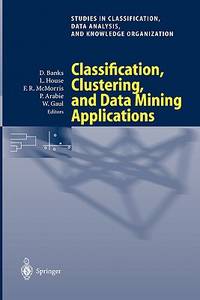
2004rif. BN285030Springer Berlin Heidelberg Springer Berlin 2004. 2004. Softcover. Classification Clustering and Data Mining Applications Classification Clustering and Data Mining Applications Phipps Arabie Wolfgang A. Gaul David Banks Frederick R. Mcmorris Leanna House Springer Berlin Heidelberg, Springer Berlin paperback
1857rif. 767741857 Paris, Hachette, 1857, in 12 relié demi-basane ancienne, dos lisse orné, VII-311 pages.
1904Carte entoilée en couleur au format 94 x 68 cm, échelle 1 : 3500000, Maison Andriveau-Goujon, Henry Barrère, Paris, 1904 (mention rev. 1904), carte n° 15, atlas usuel n° 21 ; atlas universel n° 34, gravé : le trait par Smith, la topographie par Gérin, les Ecritures par Rousset, les Eaux par Mme Fontaine Belle grande carte entoilée de l'Empire ottoman (petites usures aux pliures, une petite annotation marginale). Français
1980rif. 225521980. Arabian American Oil Company. Aramco and Its World: Arabia and the Middle East published in 1980 documents the corporate information system through which Aramco explained Saudi history Islamic culture regional geography petroleum engineering and industrial development to employees and a wider English-language audience. Replacing the longstanding Aramco Handbook title the volume grew from instructional booklets created during the company's postwar expansion to orient incoming American personnel unfamiliar with Arabic and Saudi social practices. Its coordinated use of historical narrative landscape photography technical diagrams and cultural guidance reveals how Aramco presented itself as both a petroleum enterprise and an intermediary between Saudi Arabia and the industrialized West providing primary-source evidence for research into corporate communications expatriate training petroleum infrastructure and United States-Saudi relations. Publication coincided with the Saudi government's acquisition of a 100 percent participation interest in Aramco's concession rights production and facilities although the Saudi Arabian Oil Company was not formally created to assume Aramco's responsibilities until 1988. Arabian American Oil Company. Aramco and Its World: Arabia and the Middle East. Washington D.C.: Arabian American Oil Company 1980. First edition in this revised and retitled form. xi 275 pages. Profusely illustrated with color photographs maps and diagrams including double-page and folding material. Publisher's blue cloth lettered in turquoise; no dust jacket. Large 4to. A large folding color map titled "The Arabian Peninsula" drawn by Don Thompson and measuring approximately 24 × 36 inches is inserted at the rear. The book traces the growth of the modern Saudi state the geography of the peninsula and the development of Aramco's petroleum system. Illustrated cultural sections show desert dwellings coffee preparation camel travel goat herding Islamic calligraphy and landscapes including Jabal al-Fil while technical chapters record seismic surveying in the Rubʿ al Khali drilling equipment instrument-filled control rooms offshore platforms tanker-loading facilities and the geometrically arranged storage and refining installations at Ras Tanura. Maps locate Middle Eastern oil fields and Aramco concession areas and charts using 1978 data compare global petroleum production reserves and consumption. The folding map extends the volume's educational purpose beyond the bound text presenting topography cities transportation routes and political boundaries on a scale suited to reference or display. A manuscript inscription on the front free endpaper reads "Dear Dick and Susie.I'm on page 117" preserving evidence of the book's circulation as a personal or professional presentation copy. The volume's detailed visual record is governed by Aramco's institutional viewpoint. Its photographs and diagrams demonstrate the process by which geological surveying extraction refining transportation and export operated as an integrated industrial network while its treatment of Bedouin life and Saudi culture translates complex communities into introductory material for predominantly foreign readers. The timing gives this edition particular interpretive value: its language continues the company's established narrative of technological leadership and cultural mediation even as ownership of the petroleum enterprise passed fully to the Saudi government. Official Aramco histories confirm that Saudi participation reached 100 percent in 1980 making the book evidence of both the mature American corporate communication apparatus and the transition toward Saudi control. Light sunning and small marks affect the blue cloth; the folding map is clean and well preserved and the contents remain sound. Very good. A substantial illustrated record of the technical and cultural knowledge Aramco used to explain its operations during a pivotal year in the transfer of Saudi petroleum ownership. unknown
1980rif. 225521980. Arabian American Oil Company. Aramco and Its World: Arabia and the Middle East published in 1980 documents the corporate information system through which Aramco explained Saudi history Islamic culture regional geography petroleum engineering and industrial development to employees and a wider English-language audience. Replacing the longstanding Aramco Handbook title the volume grew from instructional booklets created during the company's postwar expansion to orient incoming American personnel unfamiliar with Arabic and Saudi social practices. Its coordinated use of historical narrative landscape photography technical diagrams and cultural guidance reveals how Aramco presented itself as both a petroleum enterprise and an intermediary between Saudi Arabia and the industrialized West providing primary-source evidence for research into corporate communications expatriate training petroleum infrastructure and United States-Saudi relations. Publication coincided with the Saudi government's acquisition of a 100 percent participation interest in Aramco's concession rights production and facilities although the Saudi Arabian Oil Company was not formally created to assume Aramco's responsibilities until 1988. Arabian American Oil Company. Aramco and Its World: Arabia and the Middle East. Washington D.C.: Arabian American Oil Company 1980. First edition in this revised and retitled form. xi 275 pages. Profusely illustrated with color photographs maps and diagrams including double-page and folding material. Publisher's blue cloth lettered in turquoise; no dust jacket. Large 4to. A large folding color map titled "The Arabian Peninsula" drawn by Don Thompson and measuring approximately 24 × 36 inches is inserted at the rear. The book traces the growth of the modern Saudi state the geography of the peninsula and the development of Aramco's petroleum system. Illustrated cultural sections show desert dwellings coffee preparation camel travel goat herding Islamic calligraphy and landscapes including Jabal al-Fil while technical chapters record seismic surveying in the Rubʿ al Khali drilling equipment instrument-filled control rooms offshore platforms tanker-loading facilities and the geometrically arranged storage and refining installations at Ras Tanura. Maps locate Middle Eastern oil fields and Aramco concession areas and charts using 1978 data compare global petroleum production reserves and consumption. The folding map extends the volume's educational purpose beyond the bound text presenting topography cities transportation routes and political boundaries on a scale suited to reference or display. A manuscript inscription on the front free endpaper reads "Dear Dick and Susie.I'm on page 117" preserving evidence of the book's circulation as a personal or professional presentation copy. The volume's detailed visual record is governed by Aramco's institutional viewpoint. Its photographs and diagrams demonstrate the process by which geological surveying extraction refining transportation and export operated as an integrated industrial network while its treatment of Bedouin life and Saudi culture translates complex communities into introductory material for predominantly foreign readers. The timing gives this edition particular interpretive value: its language continues the company's established narrative of technological leadership and cultural mediation even as ownership of the petroleum enterprise passed fully to the Saudi government. Official Aramco histories confirm that Saudi participation reached 100 percent in 1980 making the book evidence of both the mature American corporate communication apparatus and the transition toward Saudi control. Light sunning and small marks affect the blue cloth; the folding map is clean and well preserved and the contents remain sound. Very good. A substantial illustrated record of the technical and cultural knowledge Aramco used to explain its operations during a pivotal year in the transfer of Saudi petroleum ownership. unknown books
1926Pages 170-252, plus 20 pages of wonderful vintage ads. Many black and white photos and illustrations. Contents include: The Warden of the Marches; Seeds of Fortune; An Elephant-Poacher's Odyssey; Through the Inner Deserts of Arabia - part 2; "Denied Admittance" - an Ellis Island Story; The Shrine or Ordam Padshah; The Two Portraits; A "New Chum" in New Zealand - part 2; The Isles of the Arafura; Cave-Hunting in New Mexico; A Rolling Stone. Bits of clear tape at each end of spine. Unmarked with average wear. Binding intact. A sound copy of this vintage issue. Magazine
193395 pages. Black and white photographic plates. Features: The Oxford University Expedition to Sarawak, 1932; The Japanese South Polar Expedition of 1911-1912; The Administration of the Mandated Territory of New Guinea; A Roman Bridge in the Fens; Geodesy and Geophysics at Lisbon; The Empty Quarter of Arabia; Air Survey by Multiple Lens Cameras. University library bar code upon first page of advertisements, otherwise unmarked with average wear. One-inch chip hanging from backstrip. Binding intact. A sound copy. Book
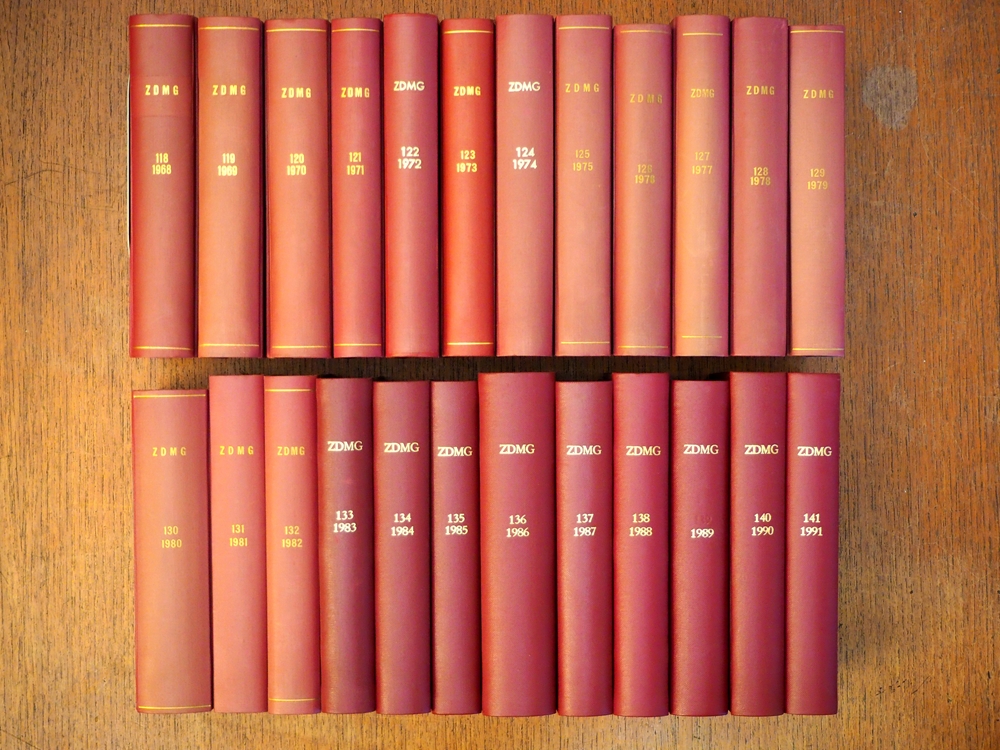
1991rif. 43870Wiesbaden, Franz Steiner, 1968-1991. HLn.
2012rif. 100143335Taylor & Francis Ltd 2012 480 pages in8. 2012. Cartonné. 480 pages.
1882rif. WOC-81Pelerinage au Nedjed, Berceau de la Race Arabe.Ouvrage traduit de l'anglais avec l'autorisation de l'auteur par L. Derome. Contenant 1 carte et 60 gravures sur bois, dessinées par G. Vuillier d'après les aquarelles de Lady Anne Blunt, de 2 tableaux généalogiques.1:Généalogie des IBN Saoud- Émirs du Nedjed.2:Généalogie des IBN Rashid-Émirs du Djebel, Shammar.Paris, Librairie Hachette et Cie,1882. In-8-16x24cm,relié demi chagrin vert,dos à faux-nerfs et orné de caissons dorés, tranches dorées, plat vert avec mention:Prix du 14 juillet 1883,offert par la Ville de Saint Claude.LXVIII,447pp.
1882In-8 p. (mm. 235x142), mz. pelle coeva, dorso a cordoni con fregi e tit. oro, pp. (2),LXVIII,447, con 54 incisioni su legno nel testo, di cui molte a piena pagina, e 1 cartina geografica ripiegata f.t. (completo come da indice). "Edizione originale". Qualche lieve fioritura, altrimenti ben conservato.
1792rif. GF319831792 Paris, Briand, 1792. Complet en deux volumes in-8 de 1ff blanc - une page de faux-titre (avec catalogue du libraire au revers de la page de faux-titre du tome 2) +440 et 483 pp pour chacun des volumes + deux cartes dépliantes (un dans chaque volume) - Reliures de l'époque, demi-percaline rouge brique, dos lisses ornés à l'or de faux-nerfs, titre et tomaison. Plats recouverts de papier à la cuve.
18203 volumi, cm. 18, brossura editoriale, pag. XII, 292 (2) più 3 tavole a colori f.t.; 317 più 3 tavole ed 1 carta geografica ripiegata f.t.. Da pag. 109 inizia l'opera "Viaggio al Lago Manasarovar situato nell'Undes provincia del Piccolo Tibet fatto nel 1812 dai Signori Moorcroft e Hearsay dal tomo XII delle Asiatic Researches". Interessante descrizione del viaggio iniziato in India e ricordato per la descrizione del assaggio attraverso le montagne del Kurdistan. Molto interessante anche la relazione del viaggio al lago Manasarovar in Tibet. Manca metà dell'ultima carta con elenco delle tavole al primo volume. Collana "Raccolta de' viaggi più interessanti eseguiti nelle varie parti del mondo, tanto per terra quanto per mare, dopo quelli del celebre Cook...".
rif. 13978286Paris: Librairie de Mme Vve Bouchard-Huzard, 1846 in-8, [4]-iv-458 pages. Broché, couverture défraîchie, manques au dos, mouillure dans le coin gauche supérieur du premier plat et des premiers ff ainsi que dans le coin gauche inférieur des derniers ff., qq. rousseurs, non coupé. Ce volume était accompagné de 2 autres volumes traitant de l'Empire assyrien (première partie) et de l'Hindostan et les vallées du Gange (deuxième partie).
Gallimard, Du Monde Entier, 1948, 832 pp., traduites d'après l'édition anglaise par Etiemble et Yassu Gauclère et enrichies de quatre lettres inédites, broché, dos décoloré avec plis et une petite tache, couverture partiellement brunie, un des 156 exemplaires numérotés sur vélin pur fil Lafuma Navarre (n° 25), état correct.
18292 voll. 8°, pp.X-283 (5); 231, br.ed., dorsi rinf. In barbe. Queste Lettere, che videro la luce anonime nel 1802 e col falso luogo di stampa di Filadelfia (Melzi II 121 e Parenti, Diz.dei luoghi di stampa falsi, p.84, Olschki 14342), è dedicata dall'editore Giuseppe Giusti a Domenico Navasques, segretario del duca di Lucca. Brunet VI 28121 cita la 2°ediz. con data Lucca, 1819, forse errata, perchè la nostra dovrebbe essere la 2°ediz., in quanto nella dedica al Navasques, datata 31 ago.1829, Giuseppe Giusti parla di quest' "opera che ora con aggiunte e correzioni favoritemi dalla gentilezza dell'Autore, per mia cura rivede la luce..". Si tratta di 27 lettere (+ la lettera del Lucchesini) di cui 22 sull'India: caste, libri sacri (veda), luoghi di venerazione, culto di animali e alberi sacri, bramini, metempsicosi, culto di Linga o phallo e feste, costumi e teologia della costa del Malabar, Baniani e loro costumi, spedale per animali infermi a Suratte, astrologia giudiziaria, costumi indiani (matrimonio, poligamia,"abbruciarsi delle vedove", ballerine..), astronomia, arti, medicina, architettura e scultura, Parsi o Guebri, musulmani, Compagnia inglese. Le ultime 5 lettere sono dedicate al viaggio in Arabia, Mar Rosso, Giza, Egitto, isola di Stanchio etc.
1932In-8, tela editoriale (con fioriture), pp. XXIX,(3),396,(2), completo di tutte le tavole, i diagrammi, le carte, come da indice, compresa 1 grande carta geografica a colori più volte ripiegata del “South Arabian Desert”. “In the Qara Mountains: ‘Ain ar Rizat - Dhufar - Nejd - Along the southern fringe of the sands - A geographical note on Rub’ Al Khali, etc.”. Solo qualche rara e lieve fioritura, altrimenti ben conservato.
1968rif. 225491968. Arabian American Oil Company. Aramco Handbook: Oil and the Middle East revised in 1968 documents the information system through which Aramco explained Saudi Arabia Middle Eastern petroleum and its own industrial operations to an English-language readership. Published while the company remained owned by four American oil corporations the handbook combines petroleum geology corporate history political geography and cultural instruction into a unified account of Saudi modernization under oil development. Its organization reveals how Aramco presented itself as both an industrial enterprise and an interpreter of Saudi society using maps photographs diagrams historical narratives and rules of social conduct to prepare foreign personnel for work in the Kingdom. The volume provides primary-source evidence for research into United States-Saudi relations corporate communication petroleum infrastructure expatriate labor and the production of cultural knowledge within a multinational oil concession. Saudi acquisition of Aramco began during the following decade and reached full government ownership in 1980 placing this edition before the company's transition to Saudi control. Arabian American Oil Company. Aramco Handbook: Oil and the Middle East. Dhahran Saudi Arabia: Arabian American Oil Company July 1 1968. Revised edition. Printed in Haarlem Netherlands by Joh. Enschedé en Zonen. 276 pages. Profusely illustrated with color maps black-and-white photographs and diagrams. Original red cloth stamped in gilt and black; no dust jacket noted. 4to. The handbook is divided into five principal sections addressing the historical background of Saudi Arabia and the Middle East the development of the regional petroleum industry the Aramco venture Saudi government and society and Arab culture and customs. A tribal map identifies numerous communities across the Arabian Peninsula including al-Mutair and al-Murrah while a diagrammatic map of the "Conquest of Najd" traces Ibn Saud's military expansion through arrows and battle annotations. Petroleum sections explain drilling refining transportation and export infrastructure including the Trans-Arabian Pipeline illustrated by parallel lengths of pipe extending across open terrain and accompanied by discussion of the decision to construct substantial portions above ground. Photographic essays show communal dining urban and industrial environments and other aspects of public life. The "Social Etiquette" section introduces such greetings as as-salÄmu ʿalaykum and kayf ḥÄlak presenting cultural instruction as part of the company's management of encounters between expatriate employees and Saudi residents. Bibliographic records confirm the 1968 Dhahran edition as an extensively illustrated corporate reference work on petroleum and the Middle East. The handbook's research value lies partly in the tension between the breadth of its documentation and the institutional perspective governing its interpretation. Its maps and photographs preserve substantial information about infrastructure geography labor social practice and the physical expansion of the Saudi petroleum industry while its text consistently casts Aramco as the principal agent joining Saudi Arabia to global markets. Cultural sections reduce complex regional and social differences to practical guidance for foreign employees and historical narratives place political consolidation and oil development within a corporate account of orderly progress. The volume should therefore be read both as a reference source and as evidence of how an American-owned concession represented its authority during a consequential phase of Saudi economic transformation. Light rubbing affects the boards with slight fraying at the spine ends and minor handling wear to the text-block edges; interior clean and binding sound. Very good. A detailed corporate record of the maps infrastructure historical narratives and cultural instruction through which Aramco explained-and justified-its place in Saudi Arabia's petroleum economy. unknown
1968rif. 225491968. Arabian American Oil Company. Aramco Handbook: Oil and the Middle East revised in 1968 documents the information system through which Aramco explained Saudi Arabia Middle Eastern petroleum and its own industrial operations to an English-language readership. Published while the company remained owned by four American oil corporations the handbook combines petroleum geology corporate history political geography and cultural instruction into a unified account of Saudi modernization under oil development. Its organization reveals how Aramco presented itself as both an industrial enterprise and an interpreter of Saudi society using maps photographs diagrams historical narratives and rules of social conduct to prepare foreign personnel for work in the Kingdom. The volume provides primary-source evidence for research into United States-Saudi relations corporate communication petroleum infrastructure expatriate labor and the production of cultural knowledge within a multinational oil concession. Saudi acquisition of Aramco began during the following decade and reached full government ownership in 1980 placing this edition before the company's transition to Saudi control. Arabian American Oil Company. Aramco Handbook: Oil and the Middle East. Dhahran Saudi Arabia: Arabian American Oil Company July 1 1968. Revised edition. Printed in Haarlem Netherlands by Joh. Enschedé en Zonen. 276 pages. Profusely illustrated with color maps black-and-white photographs and diagrams. Original red cloth stamped in gilt and black; no dust jacket noted. 4to. The handbook is divided into five principal sections addressing the historical background of Saudi Arabia and the Middle East the development of the regional petroleum industry the Aramco venture Saudi government and society and Arab culture and customs. A tribal map identifies numerous communities across the Arabian Peninsula including al-Mutair and al-Murrah while a diagrammatic map of the "Conquest of Najd" traces Ibn Saud's military expansion through arrows and battle annotations. Petroleum sections explain drilling refining transportation and export infrastructure including the Trans-Arabian Pipeline illustrated by parallel lengths of pipe extending across open terrain and accompanied by discussion of the decision to construct substantial portions above ground. Photographic essays show communal dining urban and industrial environments and other aspects of public life. The "Social Etiquette" section introduces such greetings as as-salÄmu ʿalaykum and kayf ḥÄlak presenting cultural instruction as part of the company's management of encounters between expatriate employees and Saudi residents. Bibliographic records confirm the 1968 Dhahran edition as an extensively illustrated corporate reference work on petroleum and the Middle East. The handbook's research value lies partly in the tension between the breadth of its documentation and the institutional perspective governing its interpretation. Its maps and photographs preserve substantial information about infrastructure geography labor social practice and the physical expansion of the Saudi petroleum industry while its text consistently casts Aramco as the principal agent joining Saudi Arabia to global markets. Cultural sections reduce complex regional and social differences to practical guidance for foreign employees and historical narratives place political consolidation and oil development within a corporate account of orderly progress. The volume should therefore be read both as a reference source and as evidence of how an American-owned concession represented its authority during a consequential phase of Saudi economic transformation. Light rubbing affects the boards with slight fraying at the spine ends and minor handling wear to the text-block edges; interior clean and binding sound. Very good. A detailed corporate record of the maps infrastructure historical narratives and cultural instruction through which Aramco explained-and justified-its place in Saudi Arabia's petroleum economy. unknown books
1885rif. 145461885. Vintage original albumen photograph of a Colonial French Algeria Bedouin Warrior with his camel published circa 1875. Image size: 8.25" x 11." In this image we can see a Bedouin traditionally dressed in a thoab and kufiyya. The warrior is standing in the desert holding the reins of his camel. The camel is saddled with the Bedouin's sword visible on his side flank. In the background is a single fort tower in the bare desert. Overall in very good condition. unknown
1885rif. 145461885. Vintage original albumen photograph of a Colonial French Algeria Bedouin Warrior with his camel published circa 1875. Image size: 8.25" x 11." In this image we can see a Bedouin traditionally dressed in a thoab and kufiyya. The warrior is standing in the desert holding the reins of his camel. The camel is saddled with the Bedouin's sword visible on his side flank. In the background is a single fort tower in the bare desert. Overall in very good condition. unknown books