ABDULLAH HANNA, (1932-).MareMagnum
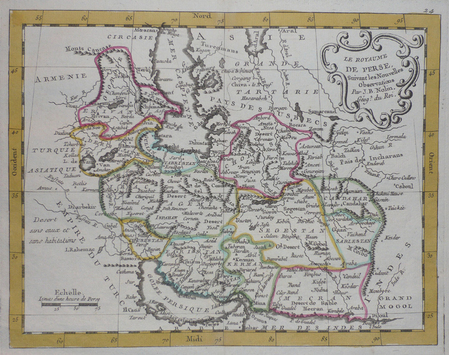
NOLIN (Jean-Baptiste);Livre Rare Book
[PERSE] Le royaume de Perse.
rif. LBW0251acirca 1780 202 x 261 mm.
Librairie Le Bail · Paris, Francia100,00 €
1458 risultati
1989Very Good Arabic Paperback. Small 4to. (26 x 18 cm). Text is entirely in Arabic with bilingual title in English and Arabic on cover. 16 p. [Off-print] Research report on urbanism in Islam (Monograph Series No. 3):1) The social forces in the Arab-Syrian cities in the 19th century: The latest period of the Ottoman rule. 2) Stages in formation and development of the social forces in the Syrian cities in the present period. [COMPLETELY ARABIC]. Abdullah Hanna was born in the Syrian village of Deir Attiyah in 1932, and earned a PhD in history from the University of Leipzig in 1965. Blocked from Syrian academia due to his political leanings, Hanna instead became an instructor in Syrian secondary schools. He became a specialist on agrarian history and labour movements in Syria. His works, published in Arabic, include books on intellectual trends in Syria and Lebanon; the Syrian and Lebanese labour movements; anti-fascism in Syria and Lebanon; the agrarian question in Syria and Lebanon; and obstacles to the transition to capitalism. (Arab Center for Research & Policy Studies). Delivered at the Seminar Research Group D: Cities andstructures of power, October 15, 1988. Institute of Oriental and Occidental Studies, Kansai University.
1652rif. LBW0418a1652 192 x 242 mm.
rif. LBW0251acirca 1780 202 x 261 mm.
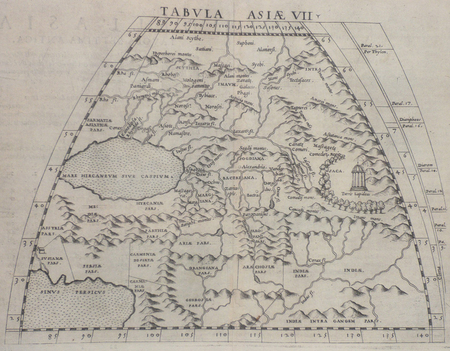
1561rif. LBW0251d[Venise, 1561]. 183 x 246 mm.
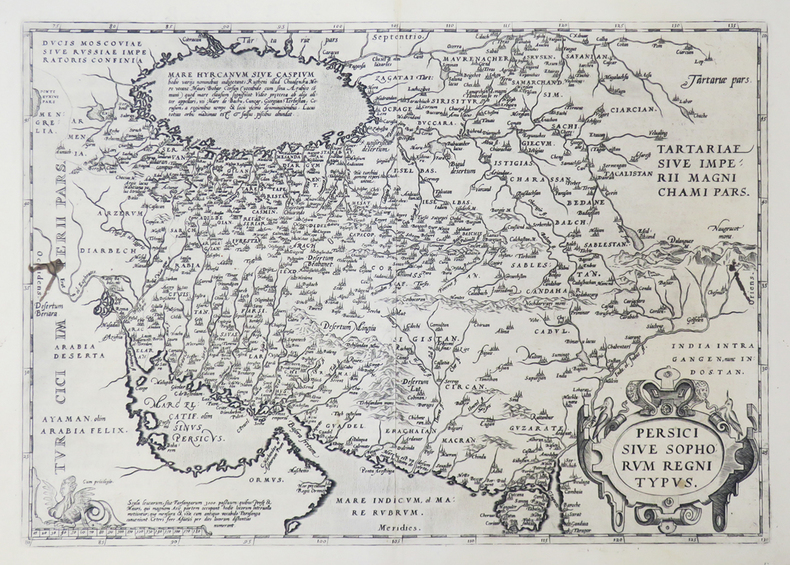
1592rif. LBW0251e[Anvers, 1592]. 349 x 496 mm.
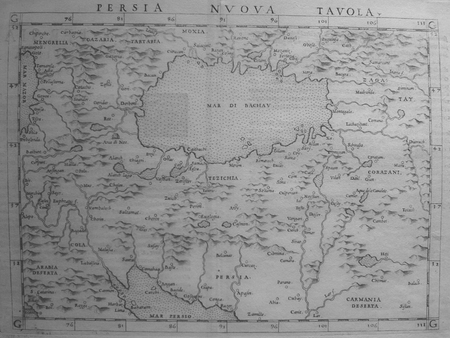
1561rif. LBW02516[Venise, 1561]. 185 x 247 mm.
rif. 13978503Paris: Musée de l'Homme, Museum National d'Histoire Naturelle, 1971 in-4, nombreuses illustrations. Broché, très bon état. Sommaire: Robert GESSAIN, Un jeu des Ammassalimiut et d'ailleurs. Jeu eskimo? Diffusion? Convergence? - Françoise GIRARD, Statuette du Dieu Requin de Santa-Cruz. - Jacques DOURNES, Aspects de l'habitat et techniques de construction des Sre aux Jörai. - Claudine FAYEIN, La vie pastorale au Dhofar.
rif. 13978978Paris: Musée de l'Homme, Museum National d'Histoire Naturelle, 1973 in-4, nombreuses illustrations. Broché, bon état. Sommaire: Robert GESSAIN, Le tambour chez les Ammassalimiut (côte est du Groenland). - Claudie FAYEIN, Al Zorah, village de la Tihâma. - Marie-Claire BATAILLE, A propos d'une sculpture du Département d'Océanie. - Lucienne A. ROUBIN et Monique ROUSSEL de FONTANES, La nouvelle galerie publique de l'Europe. Remarques méthodologiques. - Ethnomusicologie.
rif. 13978494Paris: Musée de l'Homme, Museum National d'Histoire Naturelle, 1966 in-4, nombreuses illustrations. Broché. Bon état. Sommaire: Monni ADAMS, Tissus décorés de l'île de Sumba. - Jacques MILLOT, Inde et bétel (notes complémentaires). - Joseph CHELHOD, L'Orient arabe, un secteur délaissé de l'ethnographie française. - Monique ROUSSEL de FONTANES, L'affiquet, un accessoire de tricotage. - Robert GESSAIN, Sénégal Oriental 1965. - Guy de BEAUCHENE, Niger 1963, recherches archéologiques.
rif. 13978501Paris: Musée de l'Homme, Museum National d'Histoire Naturelle, 1969 in-4, nombreuses illustrations. Broché. Très bon état. Sommaire: Robert GESSAIN et Pau-Emile VICTOR, Le kayak des Ammassalimiut. Evolution technique. - Narimitsu MATSU-DAIRA, Le diable au Japon. - R.Z. UZAYZO et Joseph CHELHOD, L'amour et le mariage dans le désert. - Laurence DELABY, A propos des cannes chevalines du Musée de l'Homme. - Robert GESSAIN, Les missions du Musée: Sénégal oriental 1968.- Marie-Paule FERRY, Xylophones-sur-jambes chez les Bédik et les Bassari de Kédougou.
1872rif. LBW-2421Paris, 1872. 611 x 892 mm.
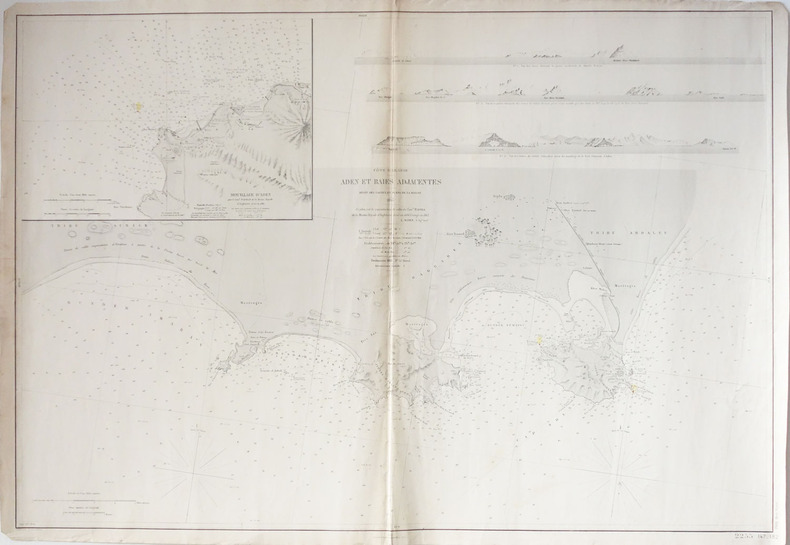
1843rif. LBW-2412Paris, 1843. 427 x 577 mm.
2005Limited to 100 copies, [x], [28] pages, one of 9 signed copies, bound in hunter green cloth with gold blocking on front board, with a colour frontispiece of Richard F. Burton shortly after returning from India in the 1850's. This Bibliography examines and cites Burton's writings to various newspapers in India while he was stationed there in the 1840's. The author painstakingly examined Indian Newspapers from that time period and located over 100 articles written by Burton. Very little is known about Burton's formative years and his time in India, which makes this Bibliography very useful for the Burton Collector and scholar. A tremendous effort and welcome addition to the Burton genre.
193134 pages. Plus photographic plates and a large fold-out colour map, measuring approximately 16 x 21 inches (40 x 53cm). Original condition with blue wrappers, titles to front, and containing all the ads. This is a complete issue, seldom found in such good and original condition. This is a fascinating expedition report on the author's explorations in Arabia, which Predate his All-Important Book - Arabia Felix; Across the Empty Quarter of Arabia, published in 1931. Accompanied by a vivid and descriptive map, this narrative is an outstanding early report into the harsh savage regions of Arabia. Thomas undertook the exploration of the magnificent Rub' Al Khali in three journeys. The first camel journey of 600 miles through the south-eastern borderlands was made in the winter of 1927-1928, the second, travelling nortwards 200 miles from the central south to the edge of the sands, were undertaken under his own initiative, a part of his plan to explore the unkown south and also as a preliminary reconnaissance for a final desert crossing. The realization of that journey is the subject of this report. In order to make the journeys, Thomas grew a beard, donned Arab clothing, and lived as one of the Badus themselves. On completion of his second journey he entered into a secret arrangement, sealed with only 20 Pounds Sterling, with a member of his party, an influential member of the Rashid tribe, to bring him in the following winter, by caravan to a point in the desert where occasionally Murra tribesmen would come from the north, and that from there he would make his way by being passed from tribe to tribe! The author's captivating story of his third and successful pioneering exploration, includes notes on the tribes, geography, and extensive appendices on the natural history collections. The writer of this book was one of the most talented of the younger political officers in Mesopotamia during and after the War, and served in a similar capacity in Trans-Jordan, before being selected to fill the responsible post of Financial Advisor and Wazir to His Highness the Sultan of Muscat and Oman. He showed courage and resource in circumstances of much difficulty and great danger during and after the war in Mesopotamia. He performed two remarkable journeys over territory hitherto completely unknown. The first was along the Southeastern Borderlands of the Rub 'al Khali from near Ras al Had to Dhufar, the second from Dhufar for a distance of some two hundred miles inland. The two journeys, taken together, constitute the most important and most extensive piece of geographical exploration undertaken in any part of the world since the War.
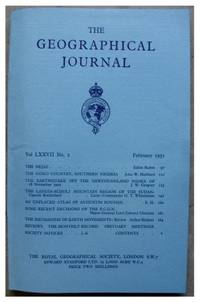
1931rif. 145811931. Arabia RUTTER Eldon. The Hejaz. The Geographical Journal. Vol. LXXVII. No. 2. London: Royal Geographical Society 1931. 13 pages including 2 sketch-maps plus photographic plates. In original blue wrappers as issued. This is a captivating account of the Rutter's expedition in Arabia namely the Hejaz at the time a forbidden country to unbelievers concerning all aspects of the Hejaz including its geographical features the territorial disputes and tribal factions as well as the population that inhabits this spectacular region. Mr. Rutter outlines his pilgrimage disguised as a Muhammadan pilgrim through the Hejaz frontier at Halli. An engaging travel account illustrated with a full-page sketch map of the Hejaz showing Mr. Rutter's route to Mecca and Medina an in-text sketch diagram depicting his route from Mecca to At Taif and several amazing photographic plates showing the Kaaba the House of Allah the Great Mosque of Mecca the Prophet's tomb at Medina and Bab es Salaam in the Mosque of Medina. This is a complete issue containing all the ads seldom found in such good and original condition. In very good condition. unknown
1931rif. 145811931. Arabia RUTTER Eldon. The Hejaz. The Geographical Journal. Vol. LXXVII. No. 2. London: Royal Geographical Society 1931. 13 pages including 2 sketch-maps plus photographic plates. In original blue wrappers as issued. This is a captivating account of the Rutter's expedition in Arabia namely the Hejaz at the time a forbidden country to unbelievers concerning all aspects of the Hejaz including its geographical features the territorial disputes and tribal factions as well as the population that inhabits this spectacular region. Mr. Rutter outlines his pilgrimage disguised as a Muhammadan pilgrim through the Hejaz frontier at Halli. An engaging travel account illustrated with a full-page sketch map of the Hejaz showing Mr. Rutter's route to Mecca and Medina an in-text sketch diagram depicting his route from Mecca to At Taif and several amazing photographic plates showing the Kaaba the House of Allah the Great Mosque of Mecca the Prophet's tomb at Medina and Bab es Salaam in the Mosque of Medina. This is a complete issue containing all the ads seldom found in such good and original condition. In very good condition. unknown books
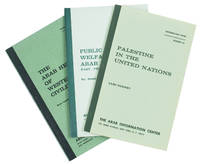
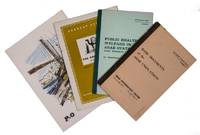
1951rif. ABC_45233New York & London: The Arab Information Center 1951. 2 booklets a magazine and a menu all in original publishers wrappers. 8vo. Comprising:1 EL-KHATIB M. Fatallah foreword. Basic Documents of the Arab Unifications. New York Arab Information Center June 1958.2 OMRAN Abdel-Rahim. Public Health & Welfare in the Arab States: Past Present and Future. New York Arab Information Center November 1959. The booklet opens with a history of the Arab contributions to medicine followed by modern statistics.3 WRIGHT Esmond. The Arab World. Current Affairs no. 125. London Bureau of Current Affairs 3 February 1951.4 MENU. P&O menu. On board the S.S. Arcadia Sunday 25 March 1962. Set of four publications two of which by the Arab Information Center in New York. Together with other Arab information centers in various cities in the Americas Europe and Asia the New York office belonged to the Press and information department of the League of Arab states. As well as the monthly newspaper Arab World the office published numerous research reports on various aspects of the individual member states and the Arab world at large. Ad 1: The most important documents concerning the unification of Arab states. These documents include: the Proclamation of the United Arab Republic the Proclamation of the Arab Union the Provisional Constitution of the United Arab Republic the Charter of the United Arab States and the Constitution of the Arab Union.Ad 2: An overview of both the history of Arab medicine and the current state in 1958 of the demographics and healthcare in various states of the League.Ad 3: A short overview of the Arab world.Ad 4: Menu offered during a cruise in the Gulf on board the S.S. Arcadia.The staples in ad 1 somewhat rusted and ad 2 with an owners stamp. All in very good condition.l MacDonald The league of Arab states pp. 135-138. The Arab Information Center, unknown
1951rif. L95CCFTRZTEWNew York & London 1951. 3 booklets and a menu. 1 EL-KHATIB M. Fatallah foreword. Basic documents of the Arab unifications.New York Arab Information Center June 1958. 8vo. 43 pp. includes: the Proclamation of the United Arab republic the Proclamation of the Arab Union the Provisional constitution of the United Arab republic the Charter of the United Arab States and the Constitution of the Arab Union.2 OMRAN Abdel-Rahim. Public health & welfare in the Arab states past- present and future.New York Arab Information Center November 1959. 8vo. 32 pp. The booklet opens with a history of the Arab contributions to medicine followed by modern statistics.3 WRIGHT Esmond. The Arab World. Current affairs number 125.London Bureau of current affairs 3 February 1951. 8vo. 19 1 pp. Short overview of the Arab World.4 MENU. P&O menu.On board the S.S. Arcadia Sunday 25 March 1962. 8vo. Menu with on front a coloured illustration of a Dhow in the Arabian Sea. Probably offered during a cruise in the Gulf. unknown
2021br. L'idea della "forma-dizionario" me l'ha suggerita involontariamente mio figlio. Capitava di guardare insieme il telegiornale, e se dicevano: "bombardamenti su Sana'a oppure "combattimenti a Sirte", lui immancabilmente chiedeva: "Papà, dov'è Sana'a?" oppure "dove si trova Sirte?". Mi sono accorto che le conoscevo tutte, quelle città. In alcune ci avevo vissuto, di altre conservavo un ricordo impresso in un frangente di solo poche ore. Assai umilmente, ho cercato sempre di seguire due stelle comete: Jack Kerouac e Ibn Battuta, due caratteri e due approcci diametralmente opposti. Per Jack Kerouac la meta del viaggio era la strada stessa. Ho visto coi miei occhi il manoscritto del suo capolavoro srotolato in una enorme sala. È il tracciato di un cammino di cui non ha senso cercare di individuare la meta. Ardentemente, Ibn Battuta desiderava invece raggiungere "quella" città o "quel" mausoleo, fino a quando non ci aveva messo piede. Per me il viaggio è entrambe le cose: l'atto stesso di spostarsi e l'anelito di toccare con le proprie mani proprio quella cosa e non altro. Lo stridore fra l'intimo ricordo e gli scenari tragici che avvolgono oggi molti di questi luoghi è in animo mio ciò che dolorosamente mette insieme tutto ciò.
Authentic Facsimile Limited Edition of 750 copies produced by Pierway Publishing. This production mirrors the original in exacting detail. The book is almost completely hand made. It is printed on acid-free, vellum paper with maroon dutch comb endpapers, smyth-sewn in the traditional way and bound in morocco textured red gilt cloth. Book is in FINE Condition. This book is Richard F. Burton's rarest book and there are only 6 copies in Libraries worldwide. One copy showed up on Portobello Road in London a few years ago and another one in New England and both disappeared quickly in private collections. Elusive and rare, Burton supposedly was paid very little by the war office to acknowledge his authorship. The book never caught on in England but the Prussian Army bought most of the copies to train their troops as it was considered the best work on the use of the Bayonet at the time. It is rumored that a fire in the Prussian barracks destroyed most copies which would account for the book's rarity today.
1752Detailed analysis of Banian and Parsi creationist beliefs, including the first humans, the first and second age of the world, God's communication to the world through Bremaw's book (Banian), ceremonial law, order of government, the derivation and meaning of 'Banian,' and 'Persee,' and more. This is the first printed summary of Hindu doctrines and practices to appear in Europe. Topics examined include idolatry, fire worship, immortality, rapture, vegetarianism, the Indian caste system and Hindu theory of world cycles - specifically Satya Yuga and Treta Yuga, as well as Persian migration to the East Indies, the prophet Zerdusht (Zarthusthra, Zarthost), so forth. A fascinating early treatise. Henry Lord's book was the first in English to be entirely devoted to discussion of Indian religions, and represents the first serious attempt to go beyond reports by travellers of the strange religious beliefs and practices that they had observed in India. Initially publishing his account in 1630, Lord was a chaplain, rather than a missionary, and made a serious attempt to understand the religions rather than condemn them. The display was used as a source by later European writers on Indian religions, most notably François Bernier. "Lord was sometime resident in India at Surat and Preacher to the Honourable Company of Merchants trading to East India (Cox I p.270)." Folio, measuring approximately 13.5 inches x 9 inches. 42 pages, numbered from 315 to 356, plus title page. In itself complete, this account is from Churchill's eight-volume work which contained numerous travel narratives, and was titled "A Collection of Voyages and Travels, Some Now First Printed from Original Manuscripts. Others Now First Published in English." These are the original pages printed in 1752. Mild foxing, otherwise in very good condition, clean and bright with wide margins, a lovely example of early printing. Attractively bound in recent green cardstock covers with label.
1949Two accounts in one issue, altogether 35 pages (27 on Thesiger's account). Plus photographic plates and a fold-out colour maps, measuring approximately 11 x 11 inches (28 x 28cm) and a fold-out sketch map, measuring approximately 13 x 7.5 inches (33 xx 19cm). Original condition with blue wrappers, titles to front, and containing all the ads. This is a complete issue, seldom found in such good and original condition. Thesiger has an immense ability to describe very vividly the life and ways of the people of the desert, and his writings shine with his clear attachment to them. Accompanied by a spectacular detailed fold-out color map, illustrating Thesiger's journey through western and northern Rub al Khali. This is Thesiger's first-hand account and pre-dates his book, "Arabian Sands", published in 1959 by Longmans. His account of the Arabian Sands and its people, its tribal warfare and ancient history, its daily life and landscape, is of such range and value, so supremely well written, that the book can confidently claim to be a classic of Arabian travel literature. Also included in this issue is an 8 page account by Philby, entitled "Two Notes from Central Arabia", accompanied by a fold-out sketch map of the Jabal Tuwaiq region of Arabia. Phibly provides an illuminating description of the pools of Aflaj and the Qariya ruin field, from his excursion in 1948 and his journey in 1918. Also included is a brief description of Phibly's map.
1933Narrative is 53 pages, plus black and white photographic plates, and a large fold-out colour map measuring approximately 11 x 9 inches (28 x 23cm). In original condition, published in two separate consecutive monthly issues of the Geographical Journal. Seldom found in such very good condition, two complete issues with blue wrappers, titles to front, and containing all the ads. Major Bagnold's third journey into the Libyan Desert concentrated on three relatively broad fields of inquiry that included the area's series of geological events; the compilation of a fairly complete account of the series of strata present and the examination of sand sheets. Also features Sandford's geology and geomorphology of the southern Libyan desert; a section dedicated a history of the area's rainfall; sand and sand dunes: the Malha crater; the barchan dune; whalebacks, undulations or billows; sand drifts, as well as fascinating appendices relating to ornithology, entomoloy, botany, cartography, barometric altitudes, transport arrangements, food and costs of the expedition.
1931rif. 145651931. Thomas Bertram. A Journey Into Rub' Al Khali. London: Royal Geographical Society 1931. 37 pages. plus photographic plates and a large fold-out colour map. Original condition with blue wrappers titles to front and containing all the ads. This is Thomas' riveting preliminary report on his explorations in Arabia pre-dating his all-important book titled 'Arabia Felix; Across the Empty Quarter of Arabia' published later in 1931. The author's narrative of a historic camel journey across the Great Southern Desert Rub al Khali is a detailed and pioneering exploration with considerable detail on the tribes their customs life geography and with appendices on anthropology zoology list of flora list of camel brands list of Arab chants. Thomas was the Financial Advisor and Wazir to His Highness the Sultan of Muscat and Oman. He performed two remarkable journeys over territory hitherto completely unknown. The first was along the Southeastern Borderlands of the Rub 'al Khali from near Ras al Had to Dhufar the second from Dhufar for a distance of some two hundred miles inland. A complete issue in very good condition. unknown
19578 pages, plus photographic plates and a fold-out colour map, measuring approximately 11.5 x 8.5 inches (29 x 22cm). Original condition with blue wrappers, titles to front, and containing all the ads. This is a complete issue, seldom found in such good and original condition. This is a fascinating expedition report on Nuristan - the little known part of the Hindu Kush which lies inside Afghanistan to the north of Jalalabad along the Chitral border. Excerpt from the introduction: "Sir George Scott Robertson was the first European to visit this country, in 1889. Nuristan was then independent, and known as Kafiristan and its inhabitants as Kafirs. Kipling wrote his famous story "The Man Who Would Be King" about this country. Two important German Expeditions travelled extensively in Nuristan, and owing to that the Nuristans refer to all Europeans as Germans..." End Excerpt Wilfred Thesiger is perhaps the last, and certainly one of the greatest of the British travellers. Thesiger had the immense ability to describe very vividly the life and ways of the peoples and places he explored and visited. His work shines with his clear attachment to them. After leaving Arabia he travelled extensively in the Karakoram and the Hindu Kush (the setting of his meeting with Eric Newby immortalised in Newby's A Short Walk in the Hindu Kush), the mountains of Kurdistan and the marshlands of Iraq.