INDIABiblio.com
4.257 Ergebnisse
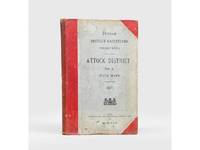
1909Best.-Nr. 179531Lahore: Punjab Government printed at the "Civil and Military Gazette" Press 1909. With the scarce maps First edition compiled only three years after the district's formation and including a plan of the civil station of Campbellpore. We have traced only ten copies on WorldCat four of which are in the UK: University of Birmingham Edinburgh University Manchester University and Oxford University. Attock has been inhabited since the classical period and was the location where Alexander the Great crossed the Indus. In the early 19th century it was occupied by the Sikh Kingdom under Ranjit Singh but was taken by the British East India Company in the Second Sikh War in 1849. It was then renamed as Campbellpore District after Sir Colin Campbell Commander-in-Chief of India. The district was annexed by the British government in 1858 and constituted as a distinct administrative body on 1 April 1904. This work contains comprehensive information on the district from its physical geography and history to its agriculture rent prices wages administrative divisions policing and education. It pays particular attention to the local tribes and their history while providing precise data on population patterns land ownership statistics and trade. The maps show the borders of the district's local communities. Octavo. With 4 heliozincographed folding maps printed in black and orange tables in text. Original red half cloth spine lettered in gilt grey paper boards lettered in black edges untrimmed. Binding worn spine sunned maps re-tipped to stubs and with light foxing and a few worm holes: a very good copy. hardcover
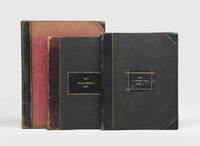
1881Best.-Nr. 137674Lahore: Civil and Military Gazette Press 1881-84. News from the sandy plains of Nowshera First editions a broken but substantial run of this rare regimental newspaper with no copies of any volume recorded in commerce or institutionally. Two volumes are signed on the pastedowns by Captain Cecil Morris Lester who is listed in O'Donnell's history of the regiment as the newspaper's first editor. His completed January 1888 subscription slip is loosely inserted. The 2nd Battalion 14th Regiment was raised in 1858. In 1880 it was sent to India as part of the Second Anglo-Afghan War stationed at Nowshera and Sialkot. In July 1881 Our Journal was first released a monthly newspaper of approximately 10 pages each compiling regimental news results from sports competitions submissions of poetry and prose and puzzles. The editors wrote often in the first volume about the difficulty of finding contributors and funding but by Volume 6 that support was forthcoming. Lester 1859-1898 "had twenty years' service in the Prince of Wales's Own West Yorkshire Regiment which he entered as a second lieutenant in 1878 becoming lieutenant in the following year and captain in 1885. He served in the Afghan war on 1879-80 which Roberts's march made famous and received a medal for the Kama expedition" Evening Observer p. 5. Alongside being one of the unnamed editors he also appeared in cast lists for performances put on by the regiment playing Coco in The Midnight Watch vol. 1 no. 1 p. 7. In September 1881 he was congratulated in the paper for passing his required exams vol. 1 no. 3 p. 3. In November he joined the garrison class at Rawalpindi vol. 1 no. 5 p. 3. He was promoted to captain in 1885. From 1892 he instructed at Sandhurst and was the president of the Royal Military College Dramatic Society. 32 issues bound in 3 vols quarto 277 x 220 mm and 315 x 245 mm. Tables in text. Contemporary red half skiver or black half sheep spines lettered ruled and decorated in gilt cloth boards of various colours with borders tooled in gilt two vols with black skiver front labels lettered and ruled in gilt edges of 1884 vol. speckled red binder's ticket of "Civil & Military Gazette Press" to front pastedowns of two vols. Contemporary blue pencil crosses and sidelinings. Bindings worn but sturdy some toning and foxing especially to 1884 vol. a few small paper repairs at edges: a very good set. "Faith-healing Charlatanry: Major Lester's Treatment" Evening Observer 25 November 1898. hardcover
1908Best.-Nr. 86-235Murray 1908. 1908. 734p. Folding Maps. Red cloth. Top edge gilt. Gilt lettering on spine. Heavy. Near Fine Copy. Hardcover. Near Fine. Book. Murray, 1908. Hardcover
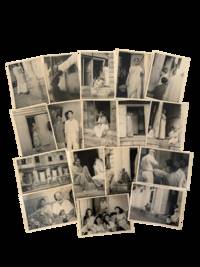
1958Best.-Nr. 231781958. Bombay red light district photographs of women seated in brothel doorways gathered in interior rooms and receiving male visitors circa 1958 recording the sex trade as it operated in post independence India under the combined pressures of urban poverty migration and state regulation. Drawn from a merchant marine album and anchored by a source page marked 1958 the group preserves an outsider's view of brothel based sex work at the moment when independent India's Suppression of Immoral Traffic in Women and Girls Act had just come into force. British rule had already concentrated prostitution into regulated urban zones in Bombay with districts such as Kamathipura shaped by segregation policing and the management of commercial sex. The 1956 law effective 1 May 1958 targeted brothel keeping procuring and related activities without removing the economic structures that kept poor women in the trade. Photo archive of 17 silver gelatin photographs each 2.75" x 4" Bombay India circa 1958. Several images show women in saris seated on stone thresholds and steps outside narrow ground floor rooms watching the street conversing with one another or facing the camera from darkened doorways. Other photographs move inside the premises where a group of young women pose on a sofa beneath patterned wallpaper one beside a Western man holding a camera while another interior view shows several women crowded before a wall mirror with the same man visible in reflection behind them. Street level exterior views record a worn multistory building with open upper windows shuttered lower bays pedestrians passing and an automobile and hand pulled or cycle traffic in front fixing the brothel within a dense commercial streetscape rather than an isolated interior world. One of the most arresting images shows a white clothed man carrying a tray as he faces several figures in a narrow passage potentially showcasing the work surrounding and upkeeping the trade. The archive belongs to a longer history in which Bombay's sex districts were formed under colonial urban governance and continued after 1947 as sites where caste class migration policing and women's labor met in highly unequal ways. These photographs show the raw historical context of such professions with women waiting at entrances living in cramped quarters and occupying semi public thresholds where domestic space commercial exchange and street visibility collapse into one another. Light surface wear small edge chips and album glue residue en verso. Overall very good condition. The album context fixed 1958 dating and repeated views of the same doorway spaces make this a concise photographic record of brothel based sex work in postcolonial Bombay. unknown
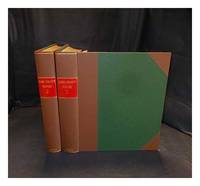
1777Best.-Nr. 390092London : East India Company 1777. 1st edition. Hardcover. Finely bound copies in modern half tan buckram over contrasting fine-ribbed cloth boards. Title page repaired. Particularly well-preserved; tight bright clean and strong. Further scans images and additional bibliographical material available on request. Physical description; 2 volumes. Contents; Vol. 1. Containing orders of the Court of Directors and minutes of Council entered on consultations -- Vol. 2. Containing letters from different persons respecting the above transactions. Subjects; Pigot George Baron 1719-1777. Chennai India History ; Sources. Madras India. Thanjavur India : District History Early works to 1800. London : East India Company hardcover
1930Best.-Nr. 21210841930. India. c. 1930-31 Oblong folio. Cord-bound and cloth-covered album with over 200 mostly original photographs including 27 photographic postcards mounted recto-verso on 25 dark brown album cards neat manuscript captions in white; album a little worn and with replaced cords. An interesting album documenting the life and travels of a soldier during the twilight years of the 'British Raj'. Collection opens and closes with the panoramic views of the Himalayas followed by detailed images of Ghurkas and other Tribal Hill people travelling vendors snake charmer camel transport bed of nails absent a fakir Jubbulpore views Meerut street scenes Temples Mosques 'A Vultures Tea Party' 'Elephant Bridge' 'Christmas Decorations. Royal Signal men's mess' and 'The Barrack 3rd Indian Division Signals'; 'Hindu Gods' at a religious festival captured in Ranickhet ; Studies of Naini Tal Lake and Temple on the bank ; Delhi illuminated by night studies of Lutyen's 'Imperial Delhi' the Jumna Bridge and other engineered structures 'Kutab Minar' views of the Old City from the Jumna Masjid Chandi Chowk Clocktower; Jhansi tombs and ruins. Other images of interest to the compiler show 'Types of wells used in Indian irrigation systems' and several shots recording the famed cricketers Jack Hobbs and Herbert Sutcliffe on their tour of India at the Roshana Cricket Club in Delhi organised by the Maharajkumar of Vizianagram. Professional photos also depict the Taj Mahal and a memorial at Cawnpore. Military subjects in addition to Meerut soldiers mess include 'The Kings Birthday Parade Ranikhet 1931'; 'Mounted Sports Royal Deccan Horse Meerut 1930'; military personalities such as RSM Biggs Major General Ironside and General Sir P. Chetwode; a Ghurka soldier; a sequence documenting 'The Viceroy's visit to Meerut February 1930' arrival in a biplane; Attock camps bridge construction 'Armoured Car' and 'Machnine Gun Outpost'. 'With the Sappers and Miners Khajuri Plain North West Frontier during the Afridi trouble 1930-31'. hardcover
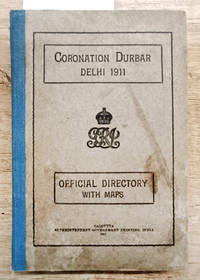
1911Best.-Nr. Biblio17Official Directory with Maps 1911 2 folding maps in pocket at end maps measure 365 x 340mm and 490 x 270mm 3 Indian postage stamps with ink-stamps dated 15th December to title previous owner's ink signature original cloth-backed printed boards a little rubbed slight bumping to corners and extremities Superintendent Government Printing, India hardcover
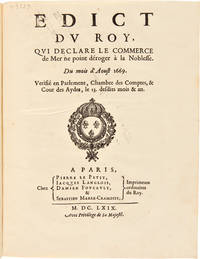
1669Best.-Nr. 15822Paris. 1669. The French Aristocracy Freely Admitted to Maritime Trade A variant issue with a slightly different title of this important edict which allows members of the nobility to trade by sea without foregoing any of their privileges. Previously their activities had been circumscribed by ordinances preventing their entering commerce. Apparently a catalyst for this edict was the formation of the Compagnie des Indes in 1664 which is specifically mentioned in the text. A note on the last page states that this copy was collated against the King's Ministry copy. OCLC locates only one copy at the University of Oxford. Rare. 7pp. Small quarto. Modern boards leather label. Light soiling around the edges. Very good. WROTH ACTS OF FRENCH ROYAL ADMINISTRATION 95 ref. MAGGS FRENCH COLONIZATION OF AMERICA 10 ref. hardcover
Best.-Nr. MC8Seventeen original manuscripts from ca. 20x335 cm 13 ¼ x 8 in to ca. 11x18 cm 7 ¼ x 4 ¼ in. Brown ink on watermarked laid and wove paper single leaves or bifoliums; one document on vellum; four printed forms are completed in manuscript. In all ca. 24 pp. of text. The vellum document with the official seal of the East India Company on the left margin. With two original envelopes ca. 95x21 cm 3 ¾ x 8 ¼ in and 7x165 cm 2 ¾ x 6 ½ in. Foldmarks and creases paper slightly age-toned one letter with tears on the margins but readable; one document with the upper right corner detached but present; overall a very good archive. Historically significant archive of early original manuscripts documenting the military service of Robert Butler a British officer of the East India Company’s Madras Native Infantry in the first third of the 19th century. Butler entered the service of the East India’s Company Army in the 1810s being appointed a Lieutenant of the 11th Regiment Madras Native Infantry in 1812 and achieved the rank of Lieutenant Colonel in the East Indies in 1855 The London Gazette. Tuesday February 6 1855 p. 435. Possibly he was the author of “Narrative of the Life and Travels of Serjeant B… Written by Himself” Edinburgh: David Brown 1823 describing the adventures of a young British soldier in India in the 1810s. The collection includes the original commission appointing Butler a lieutenant in the 11th Madras Native Infantry signed by the Governor of Madras Hugh Elliot originals and certified copies of the documents regarding his sick leave penalties for not reporting his return a subsequent pardon money loans payments and allowances from the Madras Native Infantry house renting near “Camp at Kulladghee” Kaladgi and a shipment of his order of “1 Linen surcingle 1 set of white tape headstall & reins 1 pale … saddlecloth with gold lace…” Overall a fascinating collection of early original manuscripts providing insight into the military service during the East India Company’s rule in India. A list of documents: 1 Elliot Hugh Governor of Madras in 1814-1820 Signed by. The Right Honourable Hugh Elliot Governor and Commander in Chief of the Fort and Garrison of Fort St. George and Town of Madraspatnam and of all the forces which are or shall be employed for the Service of the United Company of Merchants of England Trading to the East Indies <…> to R. Butler. Greeting. We reposing especial trust and confidence in your loyalty courage and good conduct do by these presents constitute and appoint you to be Lieutenant in the Eleventh Regiment of Native Infantry in the said United Company’s service and do give and grant you full power and authority to take your rank as Lieutenant in the Eleventh Regiment of Native Infantry in the said service from the twenty-third day of April One Thousand Eight Hundred and Twelve. <…>. Given under our hand and the seal of the said Compan in Fort St. George this Eighteenth Day of February <…> in the year of Our Lord One Thousand Eight Hundred and Fifteen. 2 Affidavit to be sworn to by a Subscriber Subaltern applying for Assistance from the Fund while resident in England on Sick Certificate. I Robert Butler Lieutenant <…> 11th Regt. M.N.I. do hereby make oath and declare that the income arising from my property my pay and all other sources does not exceed £ one hundred two <…> per annum; and that the sum of £48 forty-eight <…> per annum which I solicit from the Madras Military Fund is requisite to make my whole income equal to £ 140 per annum. And I do further make oath and declare that my Indian allowances have been paid up to the 1st of October 1820… <…> Sworn before me <…> this 5th day of August 1821… 3 Extract from General Orders by Government Dated Fort St. George 22d November 1825. Captain Robert Butler of the 21st Regiment of Native Infantry on this Establishment who proceeded to Europe on Furlough on the 1stof October 1820 not having reported his return to this Presidency until the 5thInstant or more than 5 years from the date of his Furlough the Honorable the Governor in Council notifies that Captain Butler <…> is hereby become incapacitated for returning his place in the regular Army until permission to that effect shall be received from the Honourable the Court of Directors <…> /A true extract/. Deputy Adj. Genl. of the Army. 4 Fort St. George 29 May 1826. Commander in Chief’s Office. To Captain Butler 21st Regt. Nat. Infry. A copy of the official letter to the Military Auditor General from the Military Department dated 23 May 1826. Leaf 2. Sir I am directed by the Honble the Governor in Council to transmit to you the annexed copy of a letter from the officiating Military Secretary to the Commander in Chief <…> and to convey to you authority for passing arrears of pay and allowances to Captain Butler <…> on his declaration on honor as to the date up to which he had received them… 5 Adjutant Genl. Office Fort Saint George 15 January 1827. To Captain Butler 21st Regiment Native Infantry. Sir with reference to the annexed extract from General Order by Government dated 12th Instant I have the honor by Order of His Excellency Commander in Chief to direct that you will join your Regiment forthwith… Extract <…> Letter dated 19th July 1826. “Being satisfied from the circumstances which have been brought to our notice that the Absence from India of Captain Robert Butler beyond the prescribed period of five years was occasioned by inevitable accident within the meaning of the 78thSection of the Act of the 33d Georg 3d Chap. 52 we have resolved to restore him to his rank in your Establishment which Resolution has received the approbation of His Majesty’s Commissioners for the affairs of India.” 6 Camp at Kulladghee 1 October 1829. I acknowledge to have received from Captain Robert Butler of the 21stRegiment N.I. the sum of /2000/ tow thousand rupees as a loan to enable me to complete the building of a new house which sum I promise to repay to Captain Robert Butler on his order. I also promise and engage to rent the house above alluded to to Captain Robert Butler on the following terms: 1st. That the monthly rent shall be fifty rupees and to commence from this date. 2nd. That the house shall be at my disposal at the end of each month provided I get a purchaser. 3rd. That I will not rent the house to any other Gentleman as long as Captn. Butler wishes to keep it <…> Matthw. Hobart Barrack Sergeant. A note by Butler underneath: My dear Gray Will you have the goodness to take charge if this document & act upon it as circumstances may require. Yours sincerely R. Butler. Camp at Kullafgee Oct. 31st 1820. A note by Gray on the next leaf: Camp Bagurattah 23 Feby. 1830. My dear Ley Having left Kullaghee I can no longer look after Butler’s interest in this document and shall feel much obliged if you will do so and act as circumstances may require until you hear farther from him or me. Sincerely yours Geo. Gray. To Captain J. M. Ley. 7 Camp at Kulladghee 5 October 1829. I hereby certify that Captain Robert Butler 21st Regt. N.I. is in a bad state of health. I recommend that for recovery thereof he be allowed to proceed to the Western coast for three months. S. A. Boyes Asst. Surgeon 21st Regt. N.I. 8 Camp at Kulladghee 21 October 1829. To Captain R. Butler 21st Regiment N.I. Sir As you are about to proceed on Sick Certificate to the Western Coast I have been directed by the Officer Commanding to furnish you Extract from G.O.C.C. of the 2nd of March 1827 and 23rd June 1829 for your information and guidance the receipt of which you will be pleased to acknowledge… 9 Kulladghee 1 November 1829. Received from Capt. Butler the sum of Rupees seven Annas eight and Pice six <…> on account of the 4th …. Also 12 books. 10 Pay Office Malabar & Kanara. Cannanore 29 December 1829. Statement. Paid to Captain R. Butler of the 21st Regiment N.I. in arrears for November and Dec. and advance for December 1829 January 1830 Rupees 753. Deducted Military Fund and Donation 42-2-8. Deposited this day in my Treasury 410-13-4… 11 Pay Office Malabar & Kanara. Cannanore 11 January 1830. To Captain R. Butler of the 21st Regiment N.I. Sir Herewith I have the honor to transmit you the Pay Certificate required for you &c… 12 Cannanore P.O. 11 January 1830. Memorandum. Paid to Captain R. Butler of the 11th Regiment N.I. the Amount of his deposit in this office. Rupees 410-13-4. Coins paid. 410 Surat Rs. ---- 410-8-; 16 Copper pice ----- 5-4; Rupees 410-13-4. 13 Adjutant General Office Fort St. George 13 January 1830. To Captain R. Butler 21st Regiment N.I. Sir The Commander in Chief has granted you Leave of Absence from your Corps and Station until the 1st July 1830… 14 Camp Bagreecoteeh 23 February 1830. “If Sergeant Hobart sells his house Capt. Ley to claim the amount due on Captain Butler’s mortgage which is now after deducting five month rent from October to February inclusive seventeen hundred and fifty Rupees 1750 Rs. and should the Sergeant only get 2200 for the house Capt. Gray authorizes Capt. L. to take 1200 in full of all demands against Segt. Hobart by Capt. Butler…” 15 Fort St. George 2 April 1830. Military Fund Office. To Captain R. Butler 21st Regiment N.I. Sir As requested in your letter of the 24th Ultimo I have the honor by desire of the Directors to transmit herewith a Statement of your account with the Military Fund exhibiting a balance due by you on account of Donation and Subscription amounting to Madras Rupees 64= 3= 4 which you will be pleased to put in a train of liquidation. <…> 16 Cannanore 11 June 1830. My dear Butler I had the pleasure of receiving your of the 9th & 10th last evening and this morning & I have now the pleasure of sending <…> the balance of your pay and a pay certificate. I have taken this course in consequence of having seen Mr. Maclean here this Mg. as you would not be able to obtain any money for an order on him during his absence. You seem to have forgot that yesterday was Sunday and that an office is opened before 10 on any day. <…> 17 Madras 1837. To Captain R. Butler. Sir We have the pleasure to advise you of our having shipped on your account on the Cutter Arrow the articles mentioned in the annexed statement <…> 1 box: 1 Linen surcingle; 1 set of white tape headstall & reins; 1 pale … saddlecloth with gold lace …. hardcover
1947Best.-Nr. 2117Harvard University Press. Good with no dust jacket. Hardcover. Ex-library set with usual stamps call numbers and pockets. Text is clean of marks. Volume I is in good condition with half inch tear to cloth at top of spine and moderate edgewear to back board top edge. Bumping to corners. Volume II is in VG- or G condition with stamps on textblock deleted with black marker. Minor 1cm cut to cloth along edge of spine. Minor edgewear. Scuffing to boards. Text is clean of marks. Volume III: is in VG condition with stamps on textblock deleted with black marker. Scratches and scuffing to boards.; Volume 1: The District of Chiu-Chên during the Han Dynasty: General Considerations and Plates 1947. Vol. 2: The District of Chiu-Chên during the Han Dynasty: Description and Comparative Study of the Finds 1951. Vol. 3: The Ancient Dwelling Site of Dông-So'n Thanh-Hoá Annam : General Description and Plates 1957 vol. 3 Published at St-Catherine Press at Bruges.; 3 Volume Set; The expedition was conducted between the years 1934 and 1939 under the Auspices of the École Française D'Extrême-Orient the Museums of Paris & the Harvard Yenching Institute. The main historical significance of Dr. Janse's archaeological documents is to be found in the fact that they not only introduce to us the Chinese conquerors of what was to become Vietnam at the very moment when they were laying its foundations as a civilized nation buy they also reflect on Chinese culture and conditions even at home and may help to give us a clearer idea of what the Chinese were about the beginning of our era and what their quest was so far south of the Honanese cradle of their civilization. . 1947. Harvard University Press hardcover
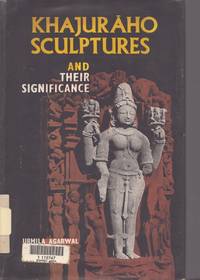
Best.-Nr. 27279New Delhi: S. Chand & Co. Good in Good dust jacket. No pub date. Hardbound. Ex-Lib with markins; 235 pages . S. Chand & Co. hardcover
Best.-Nr. PE92Oblong Folio album ca. 28x38 cm or 11 x 14 ¾ in. 38 card stock leaves. With 189 mounted original gelatin silver photos including five large images ca. 21x30 cm 8 ¼ x 11 ¾ in; the rest of the photos are from ca. 155x215 cm 6 x 8 ½ in to ca. 4x7 cm 1 ½ x2 ¾ in. With seven mounted albumen photos from ca. 21x27 cm 8 ¼ x 10 ¾ in to ca. 15x20 cm 5 ¾ x 7 ¾ in. Ca. 130 photos with period ink captions on the mounts over a dozen images are captioned in negative. With one mounted watercolour drawing ca. 55x175 cm 2 ¼ x 6 ¾ in several mounted photo reproductions and loosely inserted newspaper clippings. Period maroon half morocco album with cloth boards; spine with raised bands and gilt-tooled decorative borders; marbled endpapers; all edges gilt; binder’s gilt stamp on the left lower corner of the rear pastedown endpaper. Binding rubbed on extremities corners slightly bumped ca. seven photos with minor scratches creases or losses a few photos mildly faded but overall a very good album of strong interesting photos. Interesting album with original gelatin silver and albumen photos of India taken and collected by a British female resident in the 1900s possibly involved in local missionary work. Several photos illustrate the life of the Christian community in the Panchgani hill station in the Western Ghats southeast of Mumbai. The photos show the “Panchgani church after enlargement” the interior of St. Peter’s church now a part of the Church of North India the exterior and interior of “Chaplain’s Bungalow Panchgani” and a “front view” and “back view” of a British residence possibly the compiler’s. There is also a large group portrait of students and teachers from “Panchgani Girls’ High School 1905.” Two other photos portray boys and their teacher from “Narkanda school” and “Clara Robinson & her Bengali school.” Ca. eighty photos of various cities and sites across India show Mahableshwar/Mahabaleshwar Muttra/Mathura the compiler and her friend in a native cart on “New Year’s Eve” “bathing ghat” Vishram Ghat the Bazaar “Harding Gate” Kalimpong compiler mounted on a horse “the Sett’s temple Brindaband” Rangji temple Vrindavan Mathura District Uttar Pradesh Fatehpur Sikri Salim Chisti mausoleum Akbar’s Pillar in the Diwan-i-Khas Agra Agra Fort exterior and interior of Taj Mahal “bedroom of the Lady of the Taj” Pearl Mosque Akbar’s Tomb Delhi “Hindu Raj House” “Old Magzine Gate” St. James’ Church Red Fort Jama Masjid the monument to John Nicholson Narkanda “the shrine on Narkanda Ridge” “the Dak bungalow” Shimla street views the Christ Church during “coranation sic! of King George” several views and scenes taken in Ceylon Sri Lanka and Nepal &c. Five excellent large studio photos of Benares Varanasi include general views of the Ganges River and ghats two close-up views of the ghats the interior of the “Cow Temple” and a scene of “the morning sacrifice.” There are also portraits of Indian women “cutting grass at Matharia” a fakir a Bhisti man a cart driver a British sports team and others. Over seventy photos depict the compiler’s life and travels in the United Kingdom showing churches private residences and gardens family and friends “Dorset” “Kilkeel Co. Down” “Newcastle Co. Down” “Wannerton” “Bishop Wearmouth Church” “Berkswell Grande” “Beech Grove Easter 1900” a gathering with nurses and children in “Mildway Medical Mission Old Ford E.” Elmbridge “Sempringham Church”. There are also several views of Switzerland Athens Venice and Milan. Overall an interesting collection of original snapshots and studio photos of India in the 1920s. The compiler was apparently related to a British priest Rev. T.E. Pritchett who served as a rector of Stratford St. Andrew Saxmundham Suffolk 1910s a vicar of Sempringham-cum-Pointon Lincolnshire 1919-1924 and Elmbridge Worcestershire after 1924. Several photos show the churches and rectors’ houses in Sempringham and Elmbridge and four newspaper clippings mounted on the rear pastedown endpaper talk about the same parishes and Rev. T.E. Pritchett. hardcover
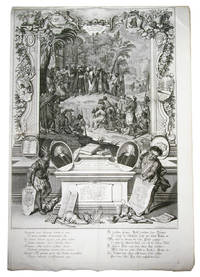
1730Best.-Nr. ABC_47423Augsburg 1730. 86 x 59 cm. Copperplate engraving. A grand engraving commemorating the achievements of the August Protestant Church in India features various scenes and elements. In the background there are mountains palm trees houses and people including a Chinese person. The foreground shows deciduous and palm trees with a lit grotto holding an idol inscribed with "Brama". In front of the grotto an evangelical missionary preaches to a large congregation of natives while holding a book of music in his left hand and pointing to Brama with his right hand. The missionary wears a turban a priest's cloak and has flappers. The audience under the hill is depicted in interesting groups with some closer to us appearing larger and clearer. At the bottom of the engraving there is an art altar with several books including the "Biblia Malabarica" "Catechism Malabaricus" and the hymnal "Liber Cantion. Malabar." The engraving was made by the German engraver painter draughtsman and art publisher Johann Elias Ridinger 1698-1767. He trained in Ulm and Augsburg under Christoph Resch and Johann Falch and learned engraving from Georg Philipp Rugendas. Ridinger later spent three years in Regensburg where he developed his style through coursing and visits to the riding school. His ornamental works show Rococo stylistic tendencies and he founded his own publishing house in Augsburg. His precise and tasteful drawings were highly regarded and transferred to decoration porcelain and ceramics.With two minor tears one partly repaired the other one not affecting the engraving. Overall in very good condition.l Thienemann Leben und Wirken des unvergleichlichen Thiermalers und Kupferstechers Johann Elias Ridinger 913; Thienemann "Nachträge Zusätze und Berichtigungen C. L. zu : Leben und Wirken des unvergleichlichen Thiermalers und Kupfer stechers Johann Elias Ridinger etc." in Archiv für die zeichnenden Künste 5 1859 pp. 148-149. unknown
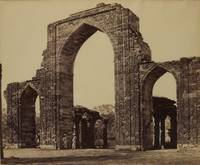
1866Best.-Nr. 32820551This is a splendid pair of Samuel Bourne views of the Qutb complex in Delhi. The first photograph shows the Delhi minaret and "victory tower" at the Qutb complex the tallest minaret in the world built of bricks. "The Qutb Minar is one of the most famous monuments in India and one of the most significant examples of early Indo-Islamic architecture. It is a tower of victory which also served as a minaret for the adjacent Quwwat al-Islam Might of Islam mosque. It was begun by Qutb-ud-Din Aybak ruled 1206-1210 the first Sultan of Delhi and founder of the Mamluk or Slave Dynasty and continued by Shams-ud-Din Iltutmish ruled 1211-1236. It is 72.5 m 238 ft high and rises in five tapering fluted" British Library. The second photograph shows the screen of the Quwwat-ul-Islam mosque. "The screen which is often referred to as the 'Great Arch' is 6.7 metres wide and 16 metres high. An inscription on the central arch states that it was built in 1199 by Qutbuddin Aibak. It was one of the first Islamic monuments to be built by Hindu craftsmen in India. The craftsmen used the traditional method of laying blocks of stone horizontally and rounding the sides of individual stones to create the curve of the arch. The screen was ornately decorated with carved calligraphy and repeating scroll-like designs" Victoria and Albert Museum. The iron pillar at the left is cropped as issued. The dark tones and strong contrast wonderfully highlight the intricate carvings. British photographer Samuel Bourne traveled throughout India from 1863-1870 photographing monuments people and landscapes. "By the time Bourne left India in 1870 to return to England he had produced over 2500 views mostly of architecture and landscapes which distributed by his partner Charles Shepherd constitute the most exhaustive record made in India by a single photographer. Bourne's carefully thought-out meticulously crafted images were collected by tourists archaeologists and botanists alike" Metropolitan Museum of Art.
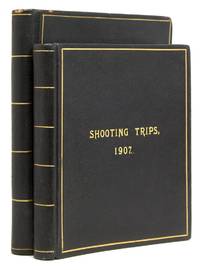
1909Best.-Nr. 312711N.p. India 1909. 126 tipped in gelatin photographs 63 in each volume; with four manuscript sketch maps 2 in each volume. 153 pp.; 7 numbered a-g 124 ff. including blanks. 2 vols. 8vo and 4to. Contemporary full brown morocco covers ruled and lettered in gilt black coated endpapers by Thacker & Co. Bombay with their red ticket at the back. Corners bumped faintest traces of rubbing. 126 tipped in gelatin photographs 63 in each volume; with four manuscript sketch maps 2 in each volume. 153 pp.; 7 numbered a-g 124 ff. including blanks. 2 vols. 8vo and 4to. Substantial detailed and extensively illustrated chronicle of travel and sport in the area north and east of Simla Sutlej River Adampur Jhansi and elsewhere in India including a trip in the Himalayas. The author was Lawrence Christian Gordon a major in the artillery; at this time he was staioned in Jhansi. The first volume is divided in three parts: Part I. Trip near Adampur after black buck and gazelle pp. 1-26 dated 23 December 1906 to 3 January 1907 Part II. Near Jhansi after black buck pp. 27-37 Part III. Himalayas after burhel and ibex pp. 39-153 dated April to July 1907 up the Sutlej river from Simla with mention of Asirang Lipi Jangi The second volume is a continuous narrative describing short shooting and fishing trips in 1908 and one longer account of three months' shooting leave March to June 1909 in the terrain upriver from Simla close to the border with Tibet and indeed many of the villages and monasteries passed were of TIbetan culture. The photographs are well composed and printed; burhel was the chief game hunted. Gordon writes candidly with many observations on local conditions and weather. Provenance: Norman James Anderson Galleries 9 November 1928 lot 784; Harvard Travellers Club in May 1934 bookplates unknown
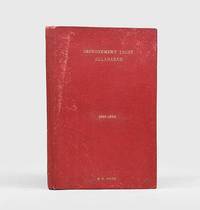
1925Best.-Nr. 180767Allahabad: Improvement Trust 1925-30. From the personal collection of the chairman First editions of these rare reports charting the overhaul of the infrastructure in the "City of Prime Ministers" a center of Indian nationalism. They were collected by Baldev Ram Dave Chairman of the Improvement Trust and cover the first five years of his tenure. This set documents the projects of the Allahabad trust over half a decade with multiple maps tables and illustrations of the progress. Such projects include the extension of Allahabad University the construction of Sir Harcourt Butler Market and the establishment of multiple housing schemes for those evicted from their homes. The number of volumes in the complete run is unclear but we have traced only one other set on WorldCat: 11 volumes held in Harvard University Library. In addition to the reports are three pamphlets. A Brief Note on the Improvement Trust of Allahabad gives an overview of its early history with blueprints to illustrate major projects. The addresses to Sirs William Malcom Hailey and Alexander Muddiman both governors of the United Provinces of Agra and Oudh in 1928 lay out the trust's goals and request further central funding. Rai Bahadur Pandit Baldev Ram Dave 1863-1942 was the trust's second chairman from 1925. The loosely inserted documents all relate to his projects including a hand-drawn sketch of the expansion of Zero Road up to Sheocharanlal Road a typescript letter from the notable engineer Raja Jwala Prasad discussing various initiatives and a government report on the efficiency of the trust in 1930. Dave is mentioned in an article in the Times of India from 11 November 2014 which notes that his department was responsible for the demolition of Nehru's family home in 1931. He reportedly took the last photograph of the building which was later gifted to Prime Minister Indira Gandhi. 8 works bound in 1 vol. quarto 327 x 210 mm. With 15 halftone photographic plates 1 folding 19 hand-coloured maps 14 folding heliozincographed folding map 5 folding blueprints; tables in text. Contemporary red cloth front board lettered in gilt. With 5 loosely inserted letters reports and sketches. Light wear and silverfishing three maps repaired with archival tape two plates tipped in Brief Note front wrapper chipped with loss foxing internally: a very good collection. hardcover
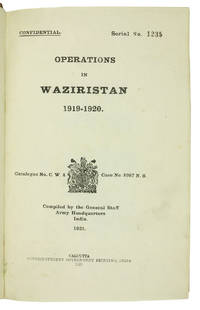
1921Best.-Nr. ABC_45215Calcutta: Superintendent of Government Printing 1921. Contemporary half calf green cloth sides gold-stamped red spine labels. 8vo. With frontispiece 31 plates 7 maps 3 in pocket on inside of back board and 8 panoramas mostly folding. First edition of the British-Indian armys official account of the 1919-20 Waziristan campaign marked "Confidential" on the title-page. The operations followed unrest that arose in the aftermath of the Third Anglo-Afghan War; they were conducted in the mountainous region of Waziristan now in Pakistan by British and Indian forces against the fiercely independent Waziri and Mahsud tribesmen that inhabited it. Since the 1870s the British government agencies were assiduous in compiling internally published histories of their military frontier operations with the intention of providing a "valuable guide" to such British commanders and policymakers as "might have future dealings with these turbulent neighbours" as the Punjab Government phrased it in 1866.The title-page reports the catalogue number and location of what may be the original report: Catalogue no. C.W. 4 - Case no. 8987 N.S..Serial No. 1235 stamped on the title-page. Occasional light marginal staining. A few edge flaws consistent with army use repaired by a contemporary owner. Otherwise in very good condition.l WorldCat 11497145. Superintendent of Government Printing, hardcover
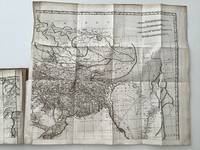
1800Best.-Nr. 19106AB1800. Paris Poignee An VIII 1800 Four large folding engraved maps six engraved foloding maps and one plan. The four large folding engraved maps are forming the 'Carte de L'Indostan ou de L'Empire Mogol' the oulines contemporary hand-coloured. First French edition with maps revised by Jean Nicholas Buache incorporating the four maps that compose Rennell's "second great work. the construction of the first approximately correct map of India" DNB. "The Father of Indian Surveying" Gole "Early Maps of India" Rennell charted the currents through the India Ocean and around Africa and later surveyed the Indian interior. He recognized Europe's growing fascination with India: "As almost every particular relating to Hindoostan is become an object of popular curiosity it can hardly be deemed superfluous to lay before the public an improved system of its geography" Rennell Preface. With Rennell's first map of Hindoostan the result of 500 separate surveys and stretching from the Himalayas in the north to Ceylon in the south and the "Great Sandy Deserts" in the west. Born in Chudleigh in Devon England James Rennell who was to become one of the mosst celebrated cartographers of his time joined the British Navy as a midshipman at the age of 14. Amidst the Seven Years' War 1756-1763 he travelled the world and learned marine surveying and hydrography. This led to his appointment at age 24 as surveyor of the British East India Company's dominions in Bengal. In 1765 Rennell began surveying India. By this time the British East India Company had maintained its foothold on the region for over one hundred years but it was still another century before Queen Victoria would set her eyes eastward and Rennell's explorations and accounts helped to fill that gap in time. Rennell combined data from British Army columns with Ain-e-Akbari 1598 a translation of Islamic geography of the empire which helped him acquire information about old divisions he therefore subdivided the country according to the Mughal provinces of 'subas'. unknown
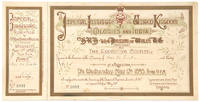
Best.-Nr. 110625London Waterlow and Sons Ltd. 10 May 1893 & 17 May 1893. . Two over-sized colour-printed illuminated card invitations numbered addressed in pen & ink 22.7 x 31.2 cm; 16.5 x 32.6 cm; a printed manila envelope for replying to 'The Secretary / Imperial Institute / London SW'; a letter printed in red on Imperial Institute 4to headed paper requesting a reply to the invitation to the opening ceremony in order to reserve seats; single folio sheet 'General Outline of the Ceremonial' for the opening; 2 copies of printed folio sheet verso blank 'General Arrangements for the Reception of HRH the Prince of Wales. Wednesday May 17th 1893'. The first of these two over-sized invitations received by Louisa Da Costa was to the opening of the Imperial Institute on 10th May 1893 with Queen Victoria and the Prince of Wales in attendance. Since the Great Hall of the Institute wasn't completed in time a temporary hall was constructed for the opening. The second evening invitation from HRH the Prince of Wales invites Miss Da Costa and a friend to an evening reception from 9pm with 'Instrumental and Vocal Music. and Refreshments' in the illuminated gardens of the Imperial Institute in South Kensington - now the site of Imperial College London. The accompanying 'General Arrangements.' sheet give details of the evening's entertainments as well as travel arrangements special trains on the Inner Circle Line at 1am and 1:30am and the arrangements for 'Cold Suppers'. Louisa Da Costa was the sister of Mr Benjamin Mendes Da Costa both being descendants of the well-known wealthy Portuguese-Jewish trading dynasty. After his great success with real estate in Adelaide Australia Mr Da Costa sold his business there and sailed to England together with his sister. He died in Brighton in 1868 and his sister was the sole beneficiary of his will. Miss Da Costa died in 1898 bequeathing all her real estate in Adelaide to the Governor of South Australia to establish a Samaritan fund for convalescents from the Adelaide Hospital - the Louisa DaCosta Trust still operating today. London, Waterlow and Sons Ltd., 10 May 1893 & 17 May 1893. unknown
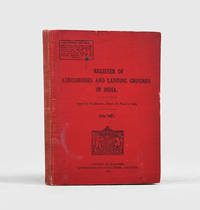
1928Best.-Nr. 192613Calcutta: Printed by Manager Government of India Press 1928. Untraced institutionally First edition marked "For Official Use Only" and covering 106 locations. In the year of publication the RAF's strength in India finally reached eight squadrons the level recommended by Air Vice Marshal Sir John Salmond's influential 1922 report. Commissioned on the instructions of Air Vice Marshal Hugh Trenchard Salmond's review found that the RAF in India "was to all intents and purposes nonexistent as a fighting force." Increased funding and the operational opportunities offered by the 1925 Waziristan Campaign enabled a significant expansion in aviation infrastructure and increased recruitment of pilots. The progress seen in the 1920s laid a foundation for the formation of the Indian Air Force in 1932. The largest section provides in tabular form information on each location giving its type dimensions position surface slope prevailing wind altitude air approaches local military authority and repair station as well as a rough sketch and the relevant grid reference on the folding map in the end pocket. The text also notes the presence or absence of a petrol shed a "chowkidar" attendant medical and onward transportation facilities and accommodation and food. Other chapters list aerial and military routes in India discuss the selection marking inspection and maintenance of landing grounds detail prohibited flying areas and describe the correct use of the landing T. Small octavo. Folding sheet folding map paper watermarked "Government of India" in end pocket tables in text. Some tabular leaves trimmed at fore edge as issued to enable cross-referencing. Original red cloth front cover lettered in black. Front free endpaper initialled "Air Officer Commanding" in contemporary hand. Binding lightly worn and marked joints repaired: very good. hardcover
1777Best.-Nr. 390089London : East India Company 1777. 1st edition. Hardcover. Finely bound in modern half tan buckram over contrasting fine ribbed-cloth boards. Particularly well-preserved; tight bright clean and strong. Further scans images and additional bibliographical material available on request. Physical description 3 v. Subjects; Appendix. East India Company. Tanjore. London : East India Company hardcover
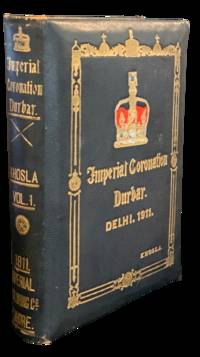
1911Best.-Nr. 4764Lahore Punjab: The Imperial Publishing Co. Khosla Bros. 1911. First edition. Folio 34 x 26cm 4 i iv 3 481 1pp. Presentation binding full black morocco over padded beveled edged boards stamped in gilt on covers and spine with lettering elaborate border and Imperial Crown g. e. Crown is hand painted in red blue and white. Gilt dentelles blue silk endpapers platinum photographs throughout printed red borders of different shades and black lettering on thick glossy paper. Letter of presentation from the publisher to The Hon'ble Sir Harvey Adamson K.C.S.I. M.A. L.L.D. Lieutenant-Governor of Burma printed in gilt on red silk and mounted to front free endpaper. Some rubbing to corners and spine ends some paint loss to the crown front endpaper lightly chipped along the lower edge with a few silk threads of the letter of presentation becoming unwound else clean internally. A large heavy volume in nearly fine condition. Printed as a memento of the historic Imperial Coronation Durbar at Delhi 1911 honoring King George V and Queen Mary as Emperor and Empress of India. In the presentation letter to Harvey Adamson the publishers lay out the intent of the volume which is "graced by Your Honor's portrait" as giving a "bird's-eye view of the present political condition of India" through "historical and biographical sketches of the various Ruling Chiefs and Princes of India.suitable memoirs of distinguished personages.and of men famous in Literature Science Art and other spheres of useful activity accompanied with their portraits as far as possible." The book is indeed lavishly produced and illustrated with roughly 600 biographical sketches most with photographs many of which are credited including several from Bourne and Shepherd of Calcutta the official photographers of the Durbar. The last of three Durbars the others in 1877 and 1903 the 1911 assembly was notable as only one attended by the King and Queen the first time a British monarch had visited India the crown jewel of empire. The event was held at Coronation Park in Delhi from December 7th-16th and was attended by the vast majority of ruling princes and noblemen making it the largest of its kind. Underneath the pomp and regalia however were the roots of resentment and stirrings of independence. The scandal of the Durbar came when the Gaekwar of Baroda Maharajah Sayajirao III briefly bowed only once instead of the required three times when approaching the emperor and then turned his back to walk to his seat instead of walking backwards. This and other happenings of the Durbar were captured on film most famously and in color by Charles Urban the British-American producer and film maker. "With Our King and Queen through India" became the first color cinematography to be viewed by the majority Western audiences. Sir Harvey Adamson served as Lieutenant Governor in Burma from 1910 when he was appointed Knight Commander of the Order of the Star of India until 1915. Of interesting note a steamship built for the British India Steam Navigation Company in 1914 and named after the General went missing at sea along with its 269 passengers in 1947. An immense trove of photographic evidence of a time and place being the crest of British Imperialism in India the book is institutionally scarce. Our research finds only a few copies of either volume held worldwide the book on offer with a tangible and important provenance. The Imperial Publishing Co. (Khosla Bros.) unknown
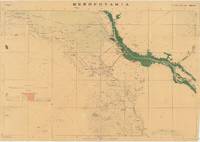
Best.-Nr. 66212Dehradun: Published under the direction of Colonel Sir S.G. Burrard K.C.S.I. R.E. F.R.S. Surveyor General of India 1917. Original heliozincographed map 73 x 105 cm printed at the Survey of India Offices in partial colour folding between publisher's original buff paper covers printed in black and with key map to back cover. The map compiled from ground and air reconnaissance is centred on Basrah and the Shatt al-Arab River with its date groves printed in green. The map shows roads suitable for wheeled traffic camel roads mule paths foot paths telegraph lines wells oil wells Mosques imamzadehs a shrine-tomb of a holy person in Shi'a Islam forts watch-towers deserted villages and springs pipelines graves trigonometrical stations post offices and telegraph offices and camping grounds. Map overprinted with numeric reference grid. Old ownership inscription to front cover. Some light toning some splits along folds some dampstaining and a few spots some light wear to covers scribbling to one panel of verso generally very good. A very scarce map with just one copy traced by OCLC at the Staatsbibliothek zu Berlin focusing on the key strategic regions of Basra-Zubair in south-eastern Iraq and the adjacent Khorramshahr area of Persia and it is one of the first maps to show Abadan the first oil boomtown of the Middle East. While there are oil wells marked throughout the map there is a particular accumulation of wells and refineries in and around Abadan on the far right which was the Middle East's first oil 'boomtown.' It appears here along with the Anglo-Persian Oil Company A.P.O.C. Refinery. Rich oil fields were discovered here in the early 20th century and in 1909 secret negotiations with the British led to the formation of the Anglo-Persian Oil Company which completed its refinery here in 1912. This company would play a central role in Iran's political and economic life throughout the 20th century. As military cartography it is marked 'For Official use only' in red to upper margin. Reg. No.888 D.D.D. 1917 2.D.O. S.I. 2000. Mesopotamia. Sheet No. 1. OCLC: 1235951984 Dehradun: Published under the direction of Colonel Sir S.G. Burrard, K.C.S.I., R.E., F.R.S., Surveyor General of India, 1917. unknown
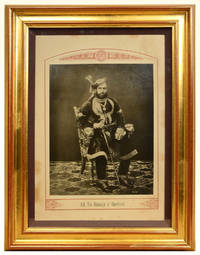
Best.-Nr. 87916Waterlow 1903. . A collection of 6 portraits of princely rulers of India woodburytypes on original mounts with identifying captions within printed borders image size: 24.5 x 19.5cm. This group comprises the majority of the portraits published with text by Jehangir Sorabji under the title Princes and Chiefs of India. It includes the reigning rulers and sometimes the predecessor of the following states: Radhanpur; Charkhari; Wankaner; Gondal; Datia; Darbhanga; Sitamau and Virpur. Waterlow, [1903]. unknown
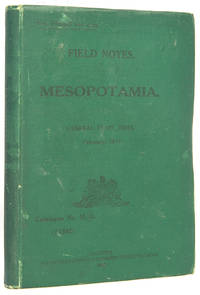
Best.-Nr. 116512Calcutta Superintendent Government Printer India February 1917. . Second enlarged edition; 8vo 18 x 13 cm; folding lithographic map of Lower Mesopotamia in pocket 3 folding tables; early issue without the later published index pamphlet original green cloth wallet binding spine and upper panel lettered in black little wear to extremities a very good copy; 4 326 1pp. The second enlarged edition of this scarce intelligence guide produced for the British Indian Army operating in Mesopotamia Iraq and the Arabian peninsular during the First World War with the improved colour-printed lithograph map extending from Samarra in the North to Hafar al-Batin in the South and from the Wadi al-Khair in the West to Kuwait in the East as well as additional information on the Saudi family Nedj and Al Hasa. Designed for official use only the map and guide put particular emphasis on routes and rivers but also provides an interesting overview of the region's history and an assessment of its current political climate. Qatar and Kuwait which 'now flies a flag of its own' in the region both receive early mentions p.4. A glossary located to the rear provides helpful definitions of local words like 'Ghazi. A champion of Islam' and 'Qalib. A well with a wide mouth and very broad near the water. Men often descend into it to fill their water-skins'. Interestingly Arab is translated as 'A man of one of the Arab tribes but not necessarily a Bedouin. The plural Aarab denotes the people the nation. When applied to a Shaikh as "Zaid's Aarab" it means followers'. Calcutta, Superintendent Government Printer India, February, 1917. hardcover