1 039 résultats
réf. DADAX1423110382New unknown
réf. DADAX1423107101New unknown
réf. DADAX140396887XNew unknown
réf. DADAX1559920777New unknown
réf. SONG1427605351Used: Good unknown
réf. DADAX0226645088New unknown
réf. DADAX0582786193New unknown
réf. DADAX0801425751New unknown
réf. DADAX0802077420New unknown
réf. DADAX0801877466New unknown
réf. DADAX0801474418New unknown
réf. DADAX0811866998New unknown
réf. DADAX081391244XNew unknown
réf. DADAX0812239482New unknown
réf. DADAX0814762271New unknown
réf. DADAX0813544297New unknown
réf. DADAX0820315680New unknown
réf. DADAX0817354662New unknown
réf. DADAX0132208601New unknown
réf. SONG0891813608Used: Good unknown
réf. SONG0199577692Used: Good unknown
réf. SONG0066236320Used: Good unknown
réf. SONG019976624XUsed: Good unknown
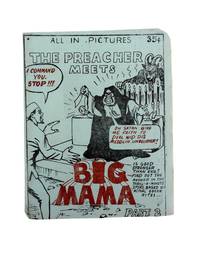
1967réf. 237191967. Black HistoryComics 1960s Guyanese comic book by an early influential Black cartoonist. Seymour Rudy. The Preacher Meets Big Mama: Part 2. Georgetown British Guyana: All in Pictures ca. 1967. First edition. Scarce. Illustrated throughout with black-and-white cartoon panels. Original pictorial wrappers printed in black and red on pale blue stock. A rare early work by Samuel Rudolph "Rudy" Seymour widely regarded as the father of Guyanese comics. This installment blends Christian moralism with Afro-Caribbean folklore in a visually arresting local comic format. Rudy Seymour was one of the earliest creators of locally produced comic books in Guyana whose illustrated narratives reflected and shaped mid-20th century Guyanese visual culture. In The Preacher Meets Big Mama Seymour depicts a confrontation between a Christian preacher and "Big Mama" a feared spiritualist figure with ties to Obeah a syncretic Afro-Caribbean spiritual system. The plot follows the preacher's attempt to rescue a boy from Big Mama's cult culminating in scenes of ritualistic sacrifice demonic invocation and divine intervention. The narrative unfolds in vernacular Guyanese Creole grounding the story in a distinctly local idiom. Seymour's stark expressive linework animates themes of good versus evil colonial Christianity versus ancestral spiritual knowledge and gendered power structures. While the portrayal of Big Mama leans into negative colonial stereotypes casting her as a devil-worshipper the comic simultaneously elevates Afro-Caribbean spiritual conflict to the central stage of popular print culture. Seymour's broader contributions to Caribbean arts extended beyond this title; his pioneering comics inspired future generations and played a foundational role in developing the graphic arts in Guyana. He continued illustrating through the 1970s and remained a cultural fixture until his passing in 2020. Minor wear to spine and covers; interior pages lightly toned but well-preserved and tightly bound. Overall very good condition. A mid-century Caribbean comic documenting a formative moment in Black diasporic graphic storytelling and the postcolonial negotiation of identity faith and resistance in Guyanese print media. unknown
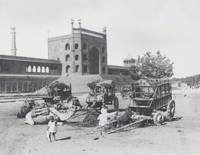
réf. PF38Quarto album ca. 282x175 cm 11 x 7 in. 24 card stock leaves. With 94 mounted original gelatin silver photographs ca. 9x115 cm 3 ¾ x 4 ½ in. Ca. 77 photos with period English ink captions on the mounts. Period hunter green full-cloth album with the gilt-tooled sunburst motif and the generic title “Photographs” on the front cover. Paper inventory label and pencil trances on the front cover worn edges two photos missing but otherwise a very good album with strong interesting photographs. Historically interesting album with excellent original photographs apparently taken by a British tourist during a voyage from England to present-day India the Mediterranean and the Caribbean at the turn of the twentieth century. The album follows a wide-ranging journey that begins in Calcutta then the capital of British India and continues through Varanasi Lucknow Agra and Delhi capturing the movement of the travelers across northern India. From there the route turns south to Madras and Colombo in Sri Lanka where the party embarked on a long sea passage. Traveling by steamer through the Suez Canal with recorded stops at Port Said and Malta the voyage gradually leads to the Caribbean. The final portion of the album centers on their time in Havana and is especially notable for its firsthand visual record of the aftermath of the 1902 eruption of Mount Pelée which devastated the city of Saint-Pierre on Martinique. The album contains ninety-four well-executed photographs with most images of colonial India. About thirty early vibrant views portray iconic landmarks of Calcutta Tagore Castle Varanasi Monkey Temple Manikarnia Ghat Jaipur temples Agra exterior and entrance of Taj Mahal Delhi Sixty-four pillars interior the Great Mosque Jama Masjid jumping wells city gates Lucknow Gate of Kaiser Bagh the Residency Madurai Meenakshi Amman Temple and Madras the Great Pagoda Parthasarathy Temple. Especially interesting are over twenty candid urban scenes showing a snake charmer playing pungi an elephant transporting passengers boys gathering coal near railway tracks steamer passengers crossing the Ganges at embarkation point and dozens of Indians strolling through native markets guiding ox carts or gathered for communal prayer. The rest of the Indian photos comprise excellent nature and street views as well as a portrait of the apparent well-dressed compiler posing by his/her companion at a Bombay Harbor. About fifteen lively vernacular photos from Sri Lanka include views of the Galle Road Maligakane Temple the Galle Face Hotel and vibrant street scenes with locals in traditional attire strolling through the bustling thoroughfares. The Caribbean series contains over twenty-five excellent photos with the most interesting images documenting the infamous 1902 eruption of Mount Pelée and the ruins of Saint-Pierre Martinique. Other important identified photographs feature the sunken USS Maine in Havana Harbor an event that helped prompt the Spanish–American War as well as views of Castillo de los Tres Reyes del Morro Havana Wharf and Havana street scenes. The series also includes views of Kingston Harbor in Jamaica together with other lively candid scenes. The collection further contains several photographs of Port Said and Valetta mostly showing harbor and sea views. Overall a historically interesting album with excellent original gelatin silver photographs taken during a voyage from British India to the Mediterranean Sea and the Caribbean at the turn of the twentieth century. hardcover