1 206 résultats
réf. DADAX0367314843New unknown
réf. DADAX0367227592New unknown
réf. DADAX0333637690New unknown
réf. DADAX0333714342New unknown
réf. DADAX0415883393New unknown
réf. DADAX0415536588New unknown
réf. DADAX0415646391New unknown
réf. DADAX1846318661New unknown
réf. DADAX146694403XNew unknown
réf. DADAX1978814496New unknown
réf. DADAX0333409116New unknown
réf. DADAX1845335252New unknown
réf. DADAX1845231074New unknown
réf. DADAX0521188717New unknown
réf. DADAX0521876265New unknown
réf. DADAX0295967021New unknown
réf. DADAX0770107842New unknown
réf. DADAX080144814XNew unknown
réf. DADAX0132208601New unknown
réf. 1408508982.Gpaperback. Good. Access codes and supplements are not guaranteed with used items. May be an ex-library book. paperback

réf. 1408509059.Gpaperback. Good. Access codes and supplements are not guaranteed with used items. May be an ex-library book. paperback
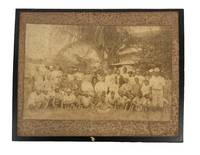
1890réf. 208021890. Unidentified photographers two albumen photographs of Black laborers circa 1890s to early 1900s document agricultural and skilled work performed by African Americans in the decades following emancipation when systems of sharecropping and tenant farming structured rural economies across the American South and parts of the Caribbean. These images provide visual evidence of labor organization racial hierarchy and economic dependency that persisted after the formal end of slavery with large groups of Black workers shown in relation to white overseers or employers. One photograph presents approximately forty five Black men gathered around three centrally seated white men emphasizing supervisory roles and social stratification within plantation labor systems. The clothing of the workers including cotton shirts loose trousers and wide brimmed hats reflects adaptation to agricultural work in hot climates while a smaller number of individuals in jackets and pocket watches suggests internal distinctions within Black labor communities. The second image depicts six Black carpenters engaged in coordinated manual work at an outdoor shop indicating the presence of skilled trades alongside agricultural labor. Group of two albumen photographs mounted on original cardstock measuring approximately 8 x 9.5 inches and 10 x 12 inches. The larger photograph shows an outdoor woodworking scene with six men using tools including a hammer and saw working under a thatched structure suggestive of southern or Caribbean environments. The second photograph shows a large assembled group of plantation workers with three white men seated at center. Faint pencil annotations appear in the margins of one mount. Both photographs retain strong compositional clarity with figures arranged to emphasize both collective labor and hierarchical relationships. These photographs contribute to the study of post emancipation Black life by documenting how agricultural dependency and limited access to capital shaped labor conditions into the late nineteenth and early twentieth centuries. The plantation scene illustrates the persistence of racially stratified labor organization while the carpentry image provides evidence of skilled Black tradesmen operating within local economies often without institutional support or pathways to independent enterprise. The visual contrast between collective field labor and artisanal work expands the interpretive scope of the archive situating these images within broader histories of labor race and economic transition following the end of slavery. Edge wear and minor chipping to mounts with noticeable foxing to one image primarily at the margins; images remain legible and structurally intact. Overall good condition. unknown
réf. 5120783-nnew. unknown
réf. 5120783like new. unknown
réf. 38547920like new. unknown