Caribbean Examinations CouncilBiblio.com

1 328 résultats
réf. 1408509083.Gpaperback. Good. Access codes and supplements are not guaranteed with used items. May be an ex-library book. paperback
réf. 1408516438.Gbundle. Good. Access codes and supplements are not guaranteed with used items. May be an ex-library book. unknown
réf. 1408522519.Gbundle. Good. Access codes and supplements are not guaranteed with used items. May be an ex-library book. unknown
réf. 1408523485.Gbundle. Good. Access codes and supplements are not guaranteed with used items. May be an ex-library book. unknown
2000réf. __0850925770Commonwealth Secretariat 2000. Paperback. New. 289 pages. 9.50x6.00x0.75 inches. Commonwealth Secretariat paperback
réf. 1408518171.Gpaperback. Good. Access codes and supplements are not guaranteed with used items. May be an ex-library book. paperback
réf. 1408520834.Gbundle. Good. Access codes and supplements are not guaranteed with used items. May be an ex-library book. unknown
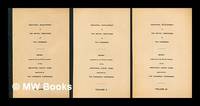
1948réf. 394954London : Caribbean Commission 1948. 1st edition. Softcover. Very good paperback copies; edges slightly dulled and edge-nicked. Bright and clean internally. The set remains particularly well-preserved overall. Date is suggested. Physical description: 3 v. : tables part fold. ; 33 cm. Subjects: Industries West Indies British; Industries Belize; Industries Guyana; Official reports; British Colonies Reports. London : Caribbean Commission paperback
réf. PE22Oblong Folio album ca. 285x37 cm 11 ¼ x 14 ¾ in. 50 black paper leaves 22 blank. With 218 mounted gelatin silver photos from ca. 8x135 cm 3 x 5 ¼ in to ca. 6x8 cm 2 ¼ x 3 ¼ in. No captions. With 15 loosely inserted photos including 5 duplicates: three large images ca. 22x34 cm 8 ½ x 13 ¼ in ten photos ca. 1520 cm 6x8 in and two smaller images. Period maroon full sheep album with a gilt-lettered title on the front cover. Binding rubbed on extremities the first leaf detached from the stub and loosely inserted several images slightly faded two large loosely inserted photos with creases and tears on extremities but overall a very good album. Interesting collection of original snapshot gelatin silver photos taken by an American or British family in the early 19th century which includes about 112 lively images of Bermuda and its people. The photos of Bermuda include a series of views of the Town of St. George showing the harbour with the Ordnance Island a graveyard with a pink Salvation Army church in the background St. Peter’s church and clock tower the oldest surviving Anglican church in continuous use outside of British Isles Stewart Hall city streets and historical houses &c. The identified views of Hamilton the territorial capital show the Princess Hotel taken from the harbour and city wharf. The other pictures of Bermuda show streets roads harbours with sailboats and naval ships coastal views private city houses and countryside residences portraits of local cart drivers local children the album’s compiler and his companions scenes on board a passenger steamer &c. The second half of the album with over a hundred photos depicts the compiler’s family life and their travels around Europe and the United States. The identified images show the “Peacock Hotel” Rowsley Derbyshire the Cliff Palace 11th-12th-century cliff dwelling in Montezuma County Colorado and the Garden of the Gods park in Colorado Springs. A portrait of an elderly lady features a sign that says “Cave of the Winds Pleases Everybody” most likely referring to the Cave of the Winds in the Pikes Peak region of Colorado. The other photos include scenes from an auto trip coastal views family portraits views of European cities likely in France &c. The loosely inserted photos are mostly views of the exterior and interior of a manor most likely in England. Overall an interesting collection of original snapshot photos of Bermuda in the early 20th century. unknown
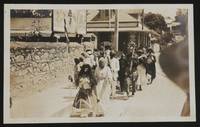
réf. PD19Oblong Folio album ca. 285x36 cm. 49 black paper album leaves. With ca. 260 mounted gelatin silver photographs of various size including ca. 20 large photos from ca. 245x32 cm 9 ½ x 12 ½ in to ca. 155x225 cm 6 x 8 ¾ in and 21 panoramas ca. 85x29 cm 3 ¼ x 11 1 /2 in or slightly smaller. The rest of the photos are from ca. 12x17 cm 4 ¾ x 6 ¾ in to ca. 4x6 cm 1 ½ x 2 ¼ in; most photos are ca. 8x14 cm 3 ¼ x 5 ½ in. No captions. About twenty photos with period ink notes “D.K.M. 10” in the corners. Period style black half morocco with cloth boards; decorative gilt-tooled borders on both boards and spine. Album leaves brittle several with tears and losses on extremities two large photos with tears and losses on extremities two small photos with losses of one corner each one photo has been apparently previously removed a few photos smildly faded or with mild silvering but overall a very good album of interesting photos. Historically significant album with lively amateur snapshots and original studio photos taken and collected by a family of American tourists during a Caribbean cruise in the early 1910s onboard the steamship “Moltke” of the Hamburg America Line Hamburg-Amerikanische Packetfahrt-Aktien-Gesellschaft or HAPAG. Launched in 1901 S.S. “Moltke” went on regular cruises around the Caribbean and the Mediterranean until it was seized by Italy in 1915 in the course of WW1. Her Caribbean or West Indies cruises departed from New York and included stops in Cuba Puerto Rico Jamaica Panama Canal Venezuela Trinidad Barbados Martinique St. Thomas Dutch West Indies Bermuda & Bahamas. The album opens with several large views and panoramas of Havana harbour and waterfront featuring Castillo del Morro the iconic building of Lonja del Comercio commodities and stock exchange and S.S. “Moltke.” The other photos show Havana streets and passers-by the interior of a Catholic church &c. Over twenty photos are the views of the city and harbour of Charlotte Amalie on St. Thomas Island – then the capital of the Danish West Indies since 1917 the U.S. Virgin Islands. The images show the city harbour from the distance and close-up a sign of “St. Thomas Bay & Rum Co.” is seen on one of the photos the statue of King Christian IX erected in the Emancipation Garden in 1909 removed in 2021 streets residential neighbourhoods on sloping hills a local market an official residence with the waving Danish flag garden of a Catholic convent with one of the monks posing alone and with a young tourist &c. Over thirty identified views of Puerto Rico a U.S. colony since 1898 a Commonwealth controlled by the U.S. since 1952 show San Juan: Plaza de Armas with the City Hall completed in 1842 Palacio de la Real Independencia now housing the Department of State of Puerto Rico Castillo San Felipe del Morro in the San Juan Bay Plaza Colon with Christopher Columbus monument San Juan harbour city streets and shops building of the “Hotel y Banos” a passenger train with the travellers walking at the front native cart drivers passers-by &c. A large group of photos ca. sixty depict the French Island of Martinique with a series of views of Fort-de-France: statues of Empress Josephine erected in 1859 destroyed in 2020 and Victor Schloelcher erected in 1904 removed in 2020 St. Louis Cathedral with the spire still under construction city streets and harbour “Hotel de l’Europe” distinctive cliffs on the coast near Fort-de-France &c. The views of Martinique include over twenty images of the ill-fated town of St. Pierre which perished during Mount Pelee’s eruption in May 1902. The photos include one view of St. Pierre before the destruction as well as general views of the ruins and desolation with posing tourists. Several images show the ruins of the Co-Cathedral of Our Lady of Assumption the downtown core with a grid of destroyed buildings and charred trees wrecked ships in the harbour a surviving bridge and the remains of the victims. A couple of images feature the top of Mount Pelee with a distinctive lava spine or the “Needle of Pelee” which was formed in October 1902 and collapsed in March 1903. Among the identified photos of Nassau Bahamas are the views of the famous silk cotton tree St. Matthews Anglican church completed in 1802 and the interior of Fort Charlotte. The other images show sugar cane plantations and native workers Caribbean residences streets and markets ports the American coastal steamer “Colonia” a series of scenes from a street carnival procession portraits of local market goers families diving children &c. Several images portray the tourists on board the S.S. Moltke including a group portrait with a lifebuoy of “Moltke Hamburg”. Overall a historically significant visual source on the history of American tourism to the Caribbean in the early 20th century with interesting views of the aftermath of the destruction of St. Pierre by the volcanic eruption. hardcover
réf. 14215504like new. unknown
réf. 14215504-nnew. unknown
réf. 1408517027.Gpaperback. Good. Access codes and supplements are not guaranteed with used items. May be an ex-library book. paperback
réf. DADAX1408517027OXFORD UNIVERSITY PRESS 2014-11-01. Revised ed. paperback. New. 7.69x0.36x10.50. Buy with confidence. Excellent Customer Service & Return policy. OXFORD UNIVERSITY PRESS paperback
réf. 1408520982.Gbundle. Good. Access codes and supplements are not guaranteed with used items. May be an ex-library book. unknown
réf. 1408520958.Gbundle. Good. Access codes and supplements are not guaranteed with used items. May be an ex-library book. unknown
réf. 1408517647.Gpaperback. Good. Access codes and supplements are not guaranteed with used items. May be an ex-library book. paperback
réf. 1408517612.Gpaperback. Good. Access codes and supplements are not guaranteed with used items. May be an ex-library book. paperback
1910réf. 238911910. Pineapple plantation photo archive circa 1910s documenting cultivation harvest and transport on an unidentified tropical plantation during the expansion of commercial pineapple production for export markets and black sharecropping labor. The photographs concentrate on the agricultural cycle rather than plantation buildings or domestic life moving from densely planted acreage and individual ripening fruit to large accumulations of harvested pineapples and a mule drawn wagon loaded for transport. Pineapple cultivation expanded substantially in the Caribbean and Hawaii during the early twentieth century making the crop increasingly visible within American commercial agriculture and food consumption. Photo archive of 10 silver gelatin photographs each approximately 3 x 4 inches Caribbean location circa 1910s. Several photographs survey extensive fields planted almost entirely in pineapple including broad views in which rows of spiked plants extend toward distant hills and close studies showing mature fruit rising from individual plants. Other images record the harvest after removal from the field: pineapples are arranged in substantial piles beside cultivated acreage while two white men pose before one accumulation holding individual fruit. Another photograph shows a mule drawn wooden wagon filled above its sideboards with harvested pineapples with one white man standing beside the wagon another seated atop the load and a black man positioned with the mule team further highlights post emancipation plantation labor. The men's differing positions within the harvest scenes preserve visible evidence of diverse groups participating in the plantation's agricultural economy alongside the animal powered transportation used to move a bulky commercial crop from the field. Commercial pineapple production was developing rapidly across several regions connected to the United States Hawaii and the Carbons during this period. The photographs belong to that broader transformation of pineapple from a geographically restricted tropical fruit into an increasingly standardized export commodity but neither crop morphology nor the visible terrain distinguishes securely among these producing regions. More specifically the images record the material stages behind that trade: dense monocrop planting maturation in the field manual harvesting accumulation of fruit and transportation by mule drawn wagon. Light handling wear occasional edge and corner losses minor curling and scattered toning; image surfaces remain generally clear with strong detail. Overall in good condition. A concentrated photographic record of early twentieth century pineapple agriculture showing the field harvest labor and transport required to move a tropical crop toward commercial distribution. unknown
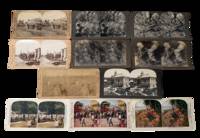
1890réf. 231711890. Stereoview archive of the post-emancipation Caribbean showing how the islands were marketed to western viewers through plantation labor export agriculture civic spectacle and catastrophe. As a group these photos function not only as an ethnographic travel archive but as evidence of the visual economy that followed slavery. The British West Indies moved through emancipation in 1834 to 1838 the French Caribbean in 1848 Puerto Rico in 1873 and Cuba in 1886 yet plantation production remained central to regional life well into the early twentieth century. These stereoviews preserve a colonial way of seeing in which Black and Afro-Caribbean labor rural discipline and extractive agriculture remained the background condition of "tropical" beauty and commercial modernity. Cuba's sugar economy in particular expanded through the nineteenth century and slavery was not abolished there until 1886 while Weyler's later reconcentration policy during the Cuban War of Independence violently reorganized rural life. Martinique after 1848 likewise shifted into new labor regimes including imported workers from India and China. Archive of 11 stereoview cards late 1890s to early 1900s depicting Cuba Jamaica Martinique Puerto Rico and the Dominican Republic. Most black and white with a few colorized. Each measure 3.5" x 7". All with captions on the margins. "Reconcentrado Farming Scene Province of Havana Cuba" links agricultural production to the brutal displacements of Spain's reconcentration campaign; "Cutting sugar cane Montego Bay Jamaica W.I." records cane labor in a colony where emancipation had not ended plantation dependency; and "Harvesting Coconuts Porto Rico" likewise frames Caribbean land through export work rather than local life. Other views extend that economic framing through cacao and coffee scenes while the paired Havana cards shift into urban leisure and public display including "Beautiful Central Park Havana Cuba" and "Holiday in Havana Cuba" the latter with both Cuban and American flags visible a telling image of the new imperial order after 1898. The disaster views from Martinique and the Lesser Antilles show how stereoview publishers also turned Caribbean destruction into consumable spectacle. the Morne Rouge card is accompanied on the reverse by the grim printed text "Dead bodies which were to be seen in Morne Rouge." while the wider context is the 1902 eruptions of Mount Pelée in Martinique and La Soufrière on Saint Vincent two catastrophes that killed roughly 30000 and 1600 people respectively and devastated local communities and agriculture. Some corner wear light toning scattered surface and edge wear. Overall very good condition. This collection gives direct visual representation of Caribbean history Atlantic slavery and emancipation plantation labor and U.S. imperial expansion in the circum-Caribbean preserving the transition from slavery to post-abolition labor. unknown
réf. 1408516349.Gbundle. Good. Access codes and supplements are not guaranteed with used items. May be an ex-library book. unknown
réf. 33966London: John Murray Albemarle Street 1826. First edition 2 78 2pp. slight foxing of first few leaves folding table disbound. In reply to "An Address to the Members of the New Parliament on the proceedings of the Colonial Department." which held that if slaves were freed they would not work and as a consequence the colonialist's properties would fall into decay through lack of labourers. This pamphlet denies that the proceedings of the Colonial Department on the matter of Caribbean slavery had been injudicious and unauthorised. Ragatz p.451; Sabin 69410. London: John Murray, Albemarle Street, 1826 unknown
réf. 1408519933.Gbundle. Good. Access codes and supplements are not guaranteed with used items. May be an ex-library book. unknown
réf. 0265890950.Ghardcover. Good. Access codes and supplements are not guaranteed with used items. May be an ex-library book. hardcover
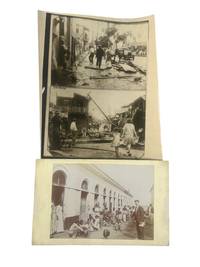
1928réf. 219181928. Puerto Rico photo archive circa 1910s and 1928 documents colonial-era social conditions and hurricane destruction in the decades after the United States took control of the island. The archive centers on two related subjects: a large group portrait of Puerto Rican adults and children gathered outside a long arched building and press images of San Juan after the September 13 1928 San Felipe Segundo hurricane. The photographs provide visual evidence of everyday poverty built environment disaster damage and public movement through wreckage during a period shaped by U.S. civil government under the Foraker Act of 1900 and U.S. citizenship without voting representation in Congress under the Jones-Shafroth Act of 1917. Puerto Rico photo archive. Puerto Rico circa late 1910s and 1928. Three silver gelatin photographs with two images printed on one press sheet. Sizes range from 5 x 9 inches to 8.5 x 11 inches. The 1928 press photograph contains two stacked photojournalistic views of San Juan after the hurricane showing torn corrugated roofing broken utility poles damaged structures debris-filled streets and residents including children and laborers moving through the wreckage. The larger earlier image shows a white man standing before a long arched tenement-style or institutional building surrounded by Puerto Rican women men and numerous children many barefoot and wearing worn or minimal clothing; the image appears posed or observational but the man's role is not identified. The San Felipe Segundo hurricane struck Puerto Rico on September 13 1928 as a Category 5 storm and caused 312 reported deaths widespread housing destruction and several hundred thousand people left homeless giving the press images strong value as disaster documentation within a colonial setting. The earlier group photograph broadens the archive beyond catastrophe recording visible poverty dress housing and racialized colonial social relations without requiring unsupported identification of the white figure. Some edge wear tape on margins of smaller image and original editor's markings en verso to press photograph; very good. A compact Puerto Rico photo archive linking colonial-era social conditions with one of the island's most destructive twentieth-century hurricanes. unknown