Tamayo, RufinoBiblio.com

955 résultats
1993réf. 003683New York: Mary-Anne Martin/Fine Art 1993. Paperback. Very Good. 4to. 16 pp. Bound in illustrated stapled wrappers. Illustrations chiefly color. Catalog from an exhibition held from November 11 - December 18 1993 at Mary-Anne Martin/Fine Art in New York City. Includes checklist. Very Good creasing to rear cover and minor age-toning. Mary-Anne Martin/Fine Art paperback
1876réf. 030068New York And London: G. W. Carleton & Co 1876. 1st Edition 1st Printing. Hardcover. Near Fine. Frontispiece Engravings. 209 Pp. Brown Cloth Gilt Embossed In Black On Front Cover And Spine Blind-Stamped On Rear Cover Brown Endpapers Page Edges Colored Red And Polished. First Printing 1876 Date On Title Page. Covers Clean And Unfaded Gilt Still Brilliant Page Edges Still Shiny Hinges Tight And Endpapers Immaculate Page Edges Still Polished Shiny And Red G. W. Carleton & Co hardcover
réf. DADAX0230612180New unknown
Paris, Pagnerre, 1857, in-16, brossura editoriale, pp. 232. Lievi fioriture e macchie alla copertina.
1936Boards with light rubbing to extremities. Spine with a bit of darkening. Former owner's writing on half title page. ; 75 b&w photographs by Walter Rutherford - amazing photogravures; 8vo 8" - 9" tall; 374 pages
1998réf. 1182751998 Editions Ibis rouge - 1998 - In-8, broché, couverture à rabats - 400 pages - Quelques reproductions photographiques en N&B in-texte
2024réf. 500188026Stock 2024 264 pages 13 8x21 4x2 4cm. 2024. Broché. 264 pages.
1980réf. 10901ABLondon, Collins, ©1980. 20 cm. 160 S. Durchgehend farbig illustriert. Illustrierter Pappband (Hardcover). Tadelloses gepflegtes Exemplar aus der Bibliothek von Prof.em. Wilhelm Barthlott, Bonn (Stempel).
197072 pages. Features: Caribbean hostiility to Canada's $600 million of investment in the region - with illustration of Trinidadian riot cop after assaults on Canada's banks; Feature article on "The Middle Canadians" - the people who don't make the news; Rusty Staub - the making of a Muscular Miillionaire - major article with large colour photos; The Great Canadian Peace Festival at Parkhill, Ontario - that never was; Peter Stollery's 2,200 mile bike ride through Central America; Nice colour photo two-page ad for CP Air; The entertainment wall of tomorrow; Film in the high schools; From Men to Fiends at My Lai 4; Why the CBC is phasing out the tv show Bonanza; Nice colour photo Coke ad of beach scene on back cover; and more. Two smallish red marks atop front cover otherwise unmarked with average wear. A sound copy. Book
19821st edition. Original illustrated stiff paper wrappers. 8vo. 36 pages, 21 cm. In English. Poetry by the Jamaican poet and political leader Errol Stephenson. The work is dedicated to the victims of gun violence from the 70s and 80s. The 70s and 80s were a time of political and economic turmoil in Jamaica. The violence and squalor that came with this is the subject of many of Stephensons poems (Wikipedia, 2018) . SUBJECTS: Jamaica - Poetry. OCLC lists 14 copies worldwide (OCLC: 9821202) . Very good condition. (AMR-54-45)
196784 pages. Features: John Gerald Benson - Banana Doctor; China's handmade "Red Flag" luxury auto - only 400 exist; Mistaseni Rock is blown to bits behind the future site of the Gardiner Dam; The Caribbean - our sunny new frontier; Canadians in the Caribbean - they've found their own personal paradise; The pleasures of paradise in the Caribbean; Dalton Camp - the man who finally belled the cat; Big-Money Cattle - Holsteins have been taken over by the jet set; Comeback for the one-room school?; Could India Feed Us?; The Lonely death of Charlie Wenjack; Edna - where are you?; The Eccentric oracle of Barrett's Landing, Nova Scotia; Full-page Volvo car ad; Canadiana - Gerald Stevens' column; Great full-page colour photo ad for the '67 Buick Skylark; Wonderful colour ad for Smirnoff Vodka featuring Zsa-Zsa Gabor wearing lots of diamonds. Unmarked with somewhat above-average external wear. A worthy vintage copy. Magazine
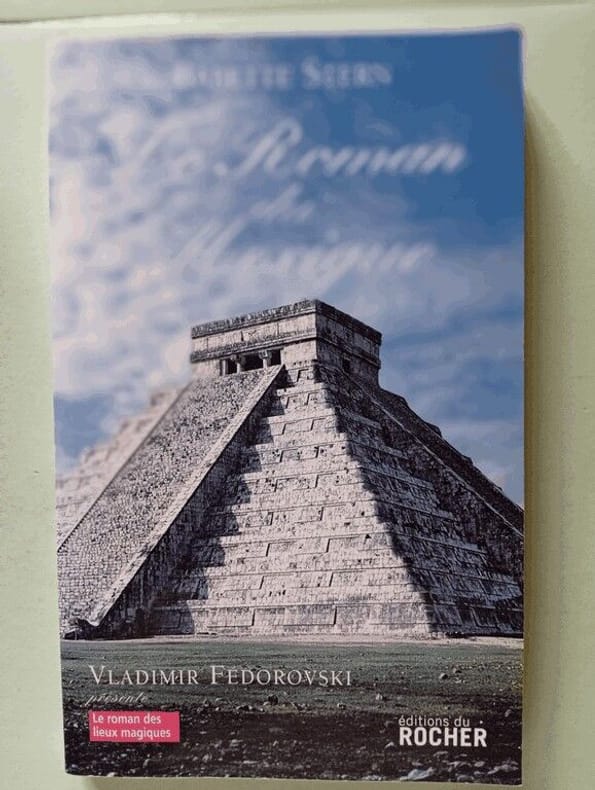
2009réf. 500187334Editions du Rocher 2009 137 pages 15x1 4x23 8cm. 2009. Broché. 137 pages.
1799réf. PHO-1466Buisson Paris An VII (1799) , 1 volume in-8 (sur 4) , 2 ff.n.ch.-440 pp. , pleine basane de l'époque, dos lisse ornés, pièces de titre et de tomaison, , frottements , manque de matière au premier plat, épidermures.
1798réf. PHO-1492Paris, chez Buisson, an VII (1798),4 volumes ; Texte 3 volumes in-8 demi percale et un Atlas in-4, demi cuir époque, dos lisse avec auteur et titre ,44 planches, certaines en double page ou dépliantes, gravées par Antoine-François Tardieu d'après John Gabriel Stedman, la planche 25 détachée, mouillure claire en marge sur 4 planches, frottements coins et coupes usés, exlibris Aldo Maffey, journaliste et écrivain italien.
1897Boards with light rubbing to extremities. Former owner's name on front free endpaper. Light soiling to back boards. ; A detailed, self published guide of Trinidad, one of the few ones written about this island at this time. Numerous b&w photographs - including a tissue guarded frontispiece. Large fold out map. Numerous ads in rear unpaginated section ; 12mo 7" - 7½" tall; 172 + ads pages
1889Boards with light rubbing to extremities. Minute tears to top spine. Ex-lib with minimal markings. ; Fold-out map in front. ; 8vo; 389 pages
1969réf. 98859New York, Kraus Reprint Co., 1969. 738 S. Gr.-8°, Halbleinen
New York, Trade and Travel Publications, 1944. 4to. menor; VII-797 pp., con numerosos anuncios publicitarios entre el texto y un mapa plegado. Encuadernación original en tela estampada. La mejor visión "on the ground" del subcontinente en el momento de finalizar la WW2. El South American Handbook, una guía inigualable, inició su publicación en 1924, a mitad de los "happy twenties".
1655réf. 5394Paris: Chez S. Cramoisy & G. Cramoisy 1655. SOLE EDITION. Hardcover. Fine. A fine copy in its original binding of 17th c. mottled French calf spine gilt and with red morocco label minor wear to the spine. Fine and fresh with just the occasional small rust spot. Engraved arms of the dedicatee Nicolas Fouquet on the second leaf. First edition of this rare relation describing the Jesuit missions in the Caribbean and on the South American mainland providing one of the earliest systematic accounts of the Lesser Antilles and Guiana. Much of the book is based on the author's firsthand experiences. He describes the foundation of churches the conversion of enslaved Africans and Indigenous nations Indigenous culture the moral and physical trials of evangelization and the natural history of the islands and mainland. Of special importance is the third part of the work: the author's grammar and vocabulary of the Galibi language one of the earliest printed studies of a South American Indigenous language. Pelleprat explains the purpose of understanding Galibi: "I have composed a small grammar and vocabulary of the Galibi language so that our Fathers who shall come after me may speak to these peoples in their own words and more easily win their souls to God." In 1651 Pierre Pelleprat was sent from France to the Antilles joining Fathers Denys Mesland François Gueymeu and Guillaume Aubergeon. The Jesuits served the indigenous Amerindians enslaved Africans and Irish and French settlers. Two years later Pelleprat and Mesland sailed for the mainland where they established a mission on the Guarapiche River near the Gulf of Paria. After Mesland's departure was Pelleprat remained alone continuing his missionary work and studying the local language. Illness forced him to return to the islands in 1654. He petitioned to return to Europe but was denied and instead lived out the remainder of his life in Mexico dying at Puebla de los Angeles in 1667. The preface outlines the establishment of the Jesuit mission in the French Caribbean following the founding of Martinique and Guadeloupe in 1635. Pelleprat recounts the arrival of the Jesuits and their efforts to learn the native languages in order to communicate doctrine record confessions and translate prayers. His descriptions of the climate geography and local governance of the islands are accompanied by remarks on Indigenous customs domestic life and religious beliefs. Pelleprat portrays the Indigenous inhabitants with clarity and sympathy. They are "without guile or malice. and capable of every good doctrine. They are neither cruel nor treacherous as some have claimed; rather they are generous and easily moved to affection when treated with kindness." He notes the Galibis skill in painting and weaving: "They take great care in painting their bodies and in making their cotton cloths which they dye with beautiful colors." The author records local fishing and hunting practices the use of pirogues canoes along the coasts and the construction of dwellings raised above ground: "They live by fish and roots in houses built upon poles to guard against the waters and the reptiles." He marvels at the beauty and richness of South America: its landscape flora and fauna: "the trees of these islands bear fruit twice a year and the soil is so rich that it needs only to be turned over to yield harvests beyond expectation". The Galibi Language Pelleprat's introduction to the Galibi language is one of the earliest printed attempts to describe and translate a South American Indigenous language. He explains the purpose of understanding Galibi: "I have composed a small grammar and vocabulary of the Galibi language so that our Fathers who shall come after me may speak to these peoples in their own words and more easily win their souls to God." Pelleprat opens by justifying his study as a means to conversion writing that "the barbarous nations. are so docile and so well disposed to receive the Gospel that they await only its preaching." His goal is not philological in the modern sense but practical: to prepare future missionaries to communicate Christian doctrine. Even so his careful observations show an emerging recognition of linguistic structure. He notes that "this language has its own rules its order and its way of composing words" an acknowledgment that Amerindian languages were coherent systems rather than the "corrupted" or "primitive" speech often imagined by Europeans. The Introduction proceeds systematically identifying letters pronunciation and basic grammar before offering a brief bilingual vocabulary. Pelleprat outlines nouns pronouns and verb forms and includes everyday expressions drawn from conversation. The vocabulary reveals the priorities of the missionary encounter pairing religious and material terms: "God" and "Devil" "soul" "heaven" and "earth" alongside "river" "house" and "friend." Through such juxtapositions the work translates the Christian world into the idiom of local experience. Pelleprat also recognizes the limits of his own learning admitting that he "has gathered what he could learn from the natives themselves" and that the book is only a "first attempt." The Islands of America Pelleprat opens with the Jesuits' first arrival at Martinique and he describes the founding of chapels the teaching of catechism and the first baptisms. When the mission expanded to Guadeloupe and Saint Christopher St Kitts he wrote: "we carried with us neither gold nor silver but the Cross of Christ and a heart desirous only to win souls. With this we founded our first church on the edge of the sea the waves serving us for organ and bells." p. 17 Pelleprat relates the successful conversion of enslaved Africans: "for although they have been reared in brutishness many become so chaste and honest when they are Christians that they would rather die than commit the least indecency." p. 33 Irish Catholics who had been exiled by the English sought out the Jesuits for Mass and confession and Pelleprat recounts the secret ministry carried out among them and the extraordinary virtue of an Irish girl raised in disguise to preserve her chastity. "I cannot omit the victory that a young Irish girl won over the weakness of her sex. This girl had come very young to America and her father to protect her had disguised her and raised her in the dress of a boy." pp. 49-50 Pelleprat explains how conversion altered conduct during epidemics and famine and the devoutness of the newly converted: "In the time of pestilence when even the air seemed to breathe death our new Christians came in great numbers to confession and communion choosing rather to die reconciled to God than to live without His grace." p. 47 The Mainland of South America The second section records numerous observations on the geography and natural history of Guiana: "I saw serpents with wings like bats and fish that fly above the water; trees whose leaves close at night as if they slept and others that exude milk when cut." p. 88 "The rivers here are broader than many seas their waters dark as ink under the forest's shadow. The land breathes a perpetual spring; trees bear fruit without ceasing and the air is so temperate that one would think Nature had chosen this region for her rest." p. 60 Pelleprat records the manners dwellings and ceremonies of the Guianese nations: "They are of good stature well-formed their countenance open and agreeable. Their huts are made of palm leaves their hammocks of woven cotton their vessels of baked clay painted with strange figures . . . When we entered their villages they offered us cassava bread and the drink of their country pressing us to sit in their hammocks which they esteem as the greatest courtesy." p. 67-69 Chapter VI outlines the political and moral order of Indigenous societies. Government Pelleprat notes is communal and tempered by reason: "Their government is gentle; they obey the oldest or the bravest and all decisions are taken in council with much shouting but little injustice." p. 92 "When one dies they burn his hammock and his weapons believing that he will find them again beyond the river of souls." p. 93. Chez S. Cramoisy & G. Cramoisy hardcover books
1655réf. 5394Paris: Chez S. Cramoisy & G. Cramoisy 1655. SOLE EDITION. Hardcover. Fine. A fine copy in its original binding of 17th c. mottled French calf spine gilt and with red morocco label minor wear to the spine. Fine and fresh with just the occasional small rust spot. Engraved arms of the dedicatee Nicolas Fouquet on the second leaf. First edition of this rare relation describing the Jesuit missions in the Caribbean and on the South American mainland providing one of the earliest systematic accounts of the Lesser Antilles and Guiana. Much of the book is based on the author's firsthand experiences. He describes the foundation of churches the conversion of enslaved Africans and Indigenous nations Indigenous culture the moral and physical trials of evangelization and the natural history of the islands and mainland. Of special importance is the third part of the work: the author's grammar and vocabulary of the Galibi language one of the earliest printed studies of a South American Indigenous language. Pelleprat explains the purpose of understanding Galibi: "I have composed a small grammar and vocabulary of the Galibi language so that our Fathers who shall come after me may speak to these peoples in their own words and more easily win their souls to God." In 1651 Pierre Pelleprat was sent from France to the Antilles joining Fathers Denys Mesland François Gueymeu and Guillaume Aubergeon. The Jesuits served the indigenous Amerindians enslaved Africans and Irish and French settlers. Two years later Pelleprat and Mesland sailed for the mainland where they established a mission on the Guarapiche River near the Gulf of Paria. After Mesland's departure was Pelleprat remained alone continuing his missionary work and studying the local language. Illness forced him to return to the islands in 1654. He petitioned to return to Europe but was denied and instead lived out the remainder of his life in Mexico dying at Puebla de los Angeles in 1667. The preface outlines the establishment of the Jesuit mission in the French Caribbean following the founding of Martinique and Guadeloupe in 1635. Pelleprat recounts the arrival of the Jesuits and their efforts to learn the native languages in order to communicate doctrine record confessions and translate prayers. His descriptions of the climate geography and local governance of the islands are accompanied by remarks on Indigenous customs domestic life and religious beliefs. Pelleprat portrays the Indigenous inhabitants with clarity and sympathy. They are "without guile or malice. and capable of every good doctrine. They are neither cruel nor treacherous as some have claimed; rather they are generous and easily moved to affection when treated with kindness." He notes the Galibis skill in painting and weaving: "They take great care in painting their bodies and in making their cotton cloths which they dye with beautiful colors." The author records local fishing and hunting practices the use of pirogues canoes along the coasts and the construction of dwellings raised above ground: "They live by fish and roots in houses built upon poles to guard against the waters and the reptiles." He marvels at the beauty and richness of South America: its landscape flora and fauna: "the trees of these islands bear fruit twice a year and the soil is so rich that it needs only to be turned over to yield harvests beyond expectation". The Galibi Language Pelleprat's introduction to the Galibi language is one of the earliest printed attempts to describe and translate a South American Indigenous language. He explains the purpose of understanding Galibi: "I have composed a small grammar and vocabulary of the Galibi language so that our Fathers who shall come after me may speak to these peoples in their own words and more easily win their souls to God." Pelleprat opens by justifying his study as a means to conversion writing that "the barbarous nations. are so docile and so well disposed to receive the Gospel that they await only its preaching." His goal is not philological in the modern sense but practical: to prepare future missionaries to communicate Christian doctrine. Even so his careful observations show an emerging recognition of linguistic structure. He notes that "this language has its own rules its order and its way of composing words" an acknowledgment that Amerindian languages were coherent systems rather than the "corrupted" or "primitive" speech often imagined by Europeans. The Introduction proceeds systematically identifying letters pronunciation and basic grammar before offering a brief bilingual vocabulary. Pelleprat outlines nouns pronouns and verb forms and includes everyday expressions drawn from conversation. The vocabulary reveals the priorities of the missionary encounter pairing religious and material terms: "God" and "Devil" "soul" "heaven" and "earth" alongside "river" "house" and "friend." Through such juxtapositions the work translates the Christian world into the idiom of local experience. Pelleprat also recognizes the limits of his own learning admitting that he "has gathered what he could learn from the natives themselves" and that the book is only a "first attempt." The Islands of America Pelleprat opens with the Jesuits' first arrival at Martinique and he describes the founding of chapels the teaching of catechism and the first baptisms. When the mission expanded to Guadeloupe and Saint Christopher St Kitts he wrote: "we carried with us neither gold nor silver but the Cross of Christ and a heart desirous only to win souls. With this we founded our first church on the edge of the sea the waves serving us for organ and bells." p. 17 Pelleprat relates the successful conversion of enslaved Africans: "for although they have been reared in brutishness many become so chaste and honest when they are Christians that they would rather die than commit the least indecency." p. 33 Irish Catholics who had been exiled by the English sought out the Jesuits for Mass and confession and Pelleprat recounts the secret ministry carried out among them and the extraordinary virtue of an Irish girl raised in disguise to preserve her chastity. "I cannot omit the victory that a young Irish girl won over the weakness of her sex. This girl had come very young to America and her father to protect her had disguised her and raised her in the dress of a boy." pp. 49-50 Pelleprat explains how conversion altered conduct during epidemics and famine and the devoutness of the newly converted: "In the time of pestilence when even the air seemed to breathe death our new Christians came in great numbers to confession and communion choosing rather to die reconciled to God than to live without His grace." p. 47 The Mainland of South America The second section records numerous observations on the geography and natural history of Guiana: "I saw serpents with wings like bats and fish that fly above the water; trees whose leaves close at night as if they slept and others that exude milk when cut." p. 88 "The rivers here are broader than many seas their waters dark as ink under the forest's shadow. The land breathes a perpetual spring; trees bear fruit without ceasing and the air is so temperate that one would think Nature had chosen this region for her rest." p. 60 Pelleprat records the manners dwellings and ceremonies of the Guianese nations: "They are of good stature well-formed their countenance open and agreeable. Their huts are made of palm leaves their hammocks of woven cotton their vessels of baked clay painted with strange figures . . . When we entered their villages they offered us cassava bread and the drink of their country pressing us to sit in their hammocks which they esteem as the greatest courtesy." p. 67-69 Chapter VI outlines the political and moral order of Indigenous societies. Government Pelleprat notes is communal and tempered by reason: "Their government is gentle; they obey the oldest or the bravest and all decisions are taken in council with much shouting but little injustice." p. 92 "When one dies they burn his hammock and his weapons believing that he will find them again beyond the river of souls." p. 93. Chez S. Cramoisy & G. Cramoisy hardcover
Lisboa, Typographia da Viuva Rodrigues, 1844. Dos tomos en un volúmen en 8vo.; XXIII-280 pp. y 267 pp., 1 h. Encuadernación en media piel con puntas de época, fatigada y con cabecera de la lomera despegada. El traductor portugués hace, en la extensa introducción de esta rara edición de la célebre novela, un feroz repaso a las sevicias provocadas según él por el colonialismo inglés, incidiendo especialmente en la cuestión irlandesa y en el comercio esclavista. No existe edición española completa de la obra, ya que en 1842 se publicó sólamente el primer tomo bajo el equívoco título de "La cita en el platanal". -
in-8°, 254 pages, broche, couverture illustree plast. à rabats. Tres bel exemplaire. [CA28-3]
1865réf. 7812paris Michel Lévy 1865 in12, broché, 264 pp édition originale
1982réf. R130000122CARRERE. 1982. In-12. Broché. Bon état, Couv. convenable, Dos satisfaisant, Intérieur frais. Gravure de Jean - Pierre BOUQUET et photo verso de JACAND.. . . . Classification : 410-33 Tours
1956réf. ZB705138Caracas: Instituto Caribe de Antropologia y Sociologia . 1956-1999. Price HAS BEEN REDUCED by 10% until Monday Nov 2 SALE item Whole Numbers 1 through 64 66 through 71 73 through 92 only; library markings but sound and good or better copies in original paper wrappers. - If you are reading this this item is actually physically in our stock and ready for shipment once ordered. We are not bookjackers. Buyer is responsible for any additional duties taxes or fees required by recipient's country. Photos available upon request. Caracas: Instituto Caribe de Antropologia y Sociologia ... unknown