617 risultati
rif. MA11M-00014Colonel Thomas Dorsey Chapter Maryland Daughters of the American Revolution. Used - Acceptable. S.l.: Colonel Thomas Dorsey Chapter Maryland Daughters of the American Revolution 1975. 4to. iii210 leaves. Maps. Fair book. Ex-library else Good. Presentation bookplate on pastedown. genealogy New York Inquire if you need further information. NOT AVAILABLE FOR SHIPMENT OUTSIDE OF THE UNITED STATES. Colonel Thomas Dorsey Chapter, Maryland, Daughters of the American Revolution unknown
rif. SONG3540429573Used: Good unknown
rif. DADAX0226465675New unknown
rif. DADAX0199301441New unknown
1901rif. 2221928First edition. Small octavo. Illustrated with b/w photos by V.K. Van De Venter Robin H. Ford John H. Rising L.E. Mayo and W.G. Spiker. Original grey pictorial cloth stamped in gilt black and green. No dust jacket. Very good small crack at rear joint. 220 pages 3 pages of ads. No signatures or bookplates. Scarce. The Rumford Press hardcover
rif. DADAX0415804507New unknown
1485rif. 707781485. Mainz Peter Schöffer 28 März 1485 1 einspaltiges original Inkunabelblatt 239 x 164 mm 1 alt color. Holzschnitt; etwas fleckig. Erstdruck! Cap. 28: Auricula muris siueAnagallus - mußore. Anagallis arvensis L. Darstellung: naturgetreu. "Im Gegensatz zu den meisten Kräuterbuch-Inkunabeln lässt sich das Druckdatum des "Gart der Gesundheit genau auf den 28. März 1485 festlegen wie es am Ende des Werks vermerkt ist: "Disser Herbarius ist rzu mentz gedruckt und geendet uff dem XXVIII dage des mertz -Anno-M-CCCC-LXXXV". An gleicher Stelle wird Peter Schöffer als Drucker durch das Fust-Schöffersche Signet bestätigt. Der "Gart der Gesundheit gilt wie Muther 1884: 88: "als wichtigstes naturhistorisches Werk des Mittelalters" und Klebs/Becher 1925: 11: "The most important mediaeval work on natural history with illustrations Choulant the publication of which forms an important landmark in the history of botanical Illustration and marks perhaps the grea-test single Step ever made in that art" meinten als wichtigste bebilderte Arzneipflanzen-Inkunabel. Auch Keil 1982: 604 bestätigte später diese Aussage: "Zweifellos ist der "Gart das wichtigste naturhistorische Werk des Mittelalters". Auf 359 Seiten die in 435 Kapitel gegliedert sind wird der gesamte zur damaligen Zeit bekannte Arzneischatz abgehandelt und mit 382 Holzschnitten illustriert. Die wichtigsten 366 Heilpflanzen zwei Wiederholungen werden jeweils einzeln in den verschiedenen Kapiteln beschrieben und abgebildet. Der Text ist 42zeilig geordnet." B. Baumann & H. Baumann Die Mainzer Kräuterbuch-Inkunabeln 2010 p.111 Johann Wonnecke von Kaub um 1430 in Kaub am Rhein; gestorben 1503/04 in Frankfurt am Main auch Johannfes Dronnecke bzw. Johannes de Cuba er selbst nannte sich "Johan von Cube" war ein deutscher Arzt und Botaniker. Am Mainzer Hof wirkte er als Leibarzt. unknown
rif. SONG1633534545Used: Good unknown
rif. DADAX0521817161New unknown
rif. DADAX1412856701New unknown
1485rif. 707351485. Mainz Peter Schöffer 28 März 1485 1 einspaltiges original Inkunabelblatt 238 x 171 mm 1 alt color. Holzschnitt. Erstdruck! Cap. 316: Pirola - wintergrun; Pyrola chorantha Schwartz; Darstellung: klar erkennbar. Cap. 317: Peucedanum vel feniculus porcinus - harstrang: Peucedanum officinale L. "Im Gegensatz zu den meisten Kräuterbuch-Inkunabeln lässt sich das Druckdatum des "Gart der Gesundheit genau auf den 28. März 1485 festlegen wie es am Ende des Werks vermerkt ist: "Disser Herbarius ist rzu mentz gedruckt und geendet uff dem XXVIII dage des mertz -Anno-M-CCCC-LXXXV". An gleicher Stelle wird Peter Schöffer als Drucker durch das Fust-Schöffersche Signet bestätigt. Der "Gart der Gesundheit gilt wie Muther 1884: 88: "als wichtigstes naturhistorisches Werk des Mittelalters" und Klebs/Becher 1925: 11: "The most important mediaeval work on natural history with illustrations Choulant the publication of which forms an important landmark in the history of botanical Illustration and marks perhaps the grea-test single Step ever made in that art" meinten als wichtigste bebilderte Arzneipflanzen-Inkunabel. Auch Keil 1982: 604 bestätigte später diese Aussage: "Zweifellos ist der "Gart das wichtigste naturhistorische Werk des Mittelalters". Auf 359 Seiten die in 435 Kapitel gegliedert sind wird der gesamte zur damaligen Zeit bekannte Arzneischatz abgehandelt und mit 382 Holzschnitten illustriert. Die wichtigsten 366 Heilpflanzen zwei Wiederholungen werden jeweils einzeln in den verschiedenen Kapiteln beschrieben und abgebildet. Der Text ist 42zeilig geordnet." B. Baumann & H. Baumann Die Mainzer Kräuterbuch-Inkunabeln 2010 p.111 Johann Wonnecke von Kaub um 1430 in Kaub am Rhein; gestorben 1503/04 in Frankfurt am Main auch Johannfes Dronnecke bzw. Johannes de Cuba er selbst nannte sich "Johan von Cube" war ein deutscher Arzt und Botaniker. Am Mainzer Hof wirkte er als Leibarzt. unknown
1485rif. 707791485. Mainz Peter Schöffer 28 März 1485 1 einspaltiges original Inkunabelblatt 239 x 164 mm 1 alt color. Holzschnitt; etwas fleckig. Erstdruck! Cap. 14: Anetum - dille. Anethum graveolens L. Darstellung: klar erkennbar. "Im Gegensatz zu den meisten Kräuterbuch-Inkunabeln lässt sich das Druckdatum des "Gart der Gesundheit genau auf den 28. März 1485 festlegen wie es am Ende des Werks vermerkt ist: "Disser Herbarius ist rzu mentz gedruckt und geendet uff dem XXVIII dage des mertz -Anno-M-CCCC-LXXXV". An gleicher Stelle wird Peter Schöffer als Drucker durch das Fust-Schöffersche Signet bestätigt. Der "Gart der Gesundheit gilt wie Muther 1884: 88: "als wichtigstes naturhistorisches Werk des Mittelalters" und Klebs/Becher 1925: 11: "The most important mediaeval work on natural history with illustrations Choulant the publication of which forms an important landmark in the history of botanical Illustration and marks perhaps the grea-test single Step ever made in that art" meinten als wichtigste bebilderte Arzneipflanzen-Inkunabel. Auch Keil 1982: 604 bestätigte später diese Aussage: "Zweifellos ist der "Gart das wichtigste naturhistorische Werk des Mittelalters". Auf 359 Seiten die in 435 Kapitel gegliedert sind wird der gesamte zur damaligen Zeit bekannte Arzneischatz abgehandelt und mit 382 Holzschnitten illustriert. Die wichtigsten 366 Heilpflanzen zwei Wiederholungen werden jeweils einzeln in den verschiedenen Kapiteln beschrieben und abgebildet. Der Text ist 42zeilig geordnet." B. Baumann & H. Baumann Die Mainzer Kräuterbuch-Inkunabeln 2010 p.111 Johann Wonnecke von Kaub um 1430 in Kaub am Rhein; gestorben 1503/04 in Frankfurt am Main auch Johannfes Dronnecke bzw. Johannes de Cuba er selbst nannte sich "Johan von Cube" war ein deutscher Arzt und Botaniker. Am Mainzer Hof wirkte er als Leibarzt. unknown
rif. DADAX0981576974New unknown
rif. DADAX1478003642New unknown
1908rif. 228161908. Ober Frederick A. A Guide to the West Indies and Bermudas. New York: Dodd Mead & Company 1908. First edition. First printing. 525 pages with five fold-out color maps and numerous black-and-white photographic illustrations. Original red cloth stamped in gilt as issued with no dust jacket. 8vo. An early 20th-century travel guide reflecting U.S. and European imperial tourism in the Caribbean at the height of American expansion following the Spanish-American War. Ober a prolific writer on the Caribbean and Latin America interweaves geography natural history and colonial ethnography offering a period perspective into the ways tourists imperial authorities and travel publishers framed the predominantly Black Afro-Caribbean and Creole cultures of the region during the Jim Crow era. This guide includes detailed chapters on Cuba Puerto Rico Jamaica Trinidad Barbados Guadeloupe Martinique and dozens of other island territories along with sections on "The Bermudas" "The Lesser Antilles" "The South Coast of Cuba" and "A Glimpse of South America." The contents pages visible here show Ober's systematic movement through the archipelago giving each island a discrete treatment with notes on climate agriculture transportation and colonial governance. As Ober writes in his introduction the West Indies form "a region of infinite variety" a phrase that reflects both genuine admiration and the period's exoticizing tone common to pre-WWI travel literature. The fold-out maps chart shipping routes railways ports and political boundaries at a moment when the United States had recently taken possession of Puerto Rico 1898 and solidified its influence in Cuba and the broader Caribbean basin. Light rubbing to cloth with slight sunning to spine; corners mildly worn. Five fold-out maps complete crisp and clean one with a minor tear near margins. Interior exceptionally bright with no writing or markings; binding tight. Overall very good condition. A well-preserved first printing of an important Caribbean travel guide valuable for scholars of U.S. imperial history Caribbean studies tourism studies and the racial-cultural representation of the West Indies during the early American century. unknown
rif. DADAX1478001704New unknown
rif. DADAX0415780675New unknown
rif. DADAX0333521250New unknown
1938rif. 029977Julia Ellsworth Ford 1938. 1st Edition . Soft cover. Near Fine. 74 illustrations and maps. 9 Pp. Yellow Card Wrappers Printed In Black. With Paste-On Printed Sheets With Additional Text On Inner Side Of Wrappers. Nerar Fine. Scarce; Only Two Examples In Worldcat. Her Archives Are At Yale And Presented There As "Julia Ellsworth Ford Was A New York Socialite Art Collector And Patron And Author Of Children's Books. She Was Married To Simeon Ford A Financier And Co-Owner Of The Grand Union Hotel In New York. Ford Presided Over A Salon That Included The Lebanese Mystic Kahlil Gibran Irish Poet W. B. Yeats And American Dancer Isadora Duncan. Her Published Works Include: Simeon Solomon: An Appreciation 1908 Imagina 1914 And Snickerty Nick 1919 Among Others." The Archive Apparently Does Not Include This Booklet. [Julia Ellsworth Ford] paperback
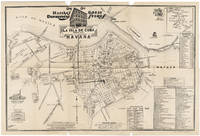
1930rif. 560Havana Cuba: American Express Co et al. 1930. Small archive of six items from a trip in the early years of the 1930s all good or better. Items include: One forty page brochure in decorated and printed card stock wrappers "CUBA The Pearl of the Antilles" with 16 itineraries and copious pictorial advertisements; two contemporary color picture postcards unused; small brochure folded to make four pages offering visits to "Algibe" Farm the "most typical Cuban Farm in the vicinity of Havana" where you are invited to see how crops are grown attend "Thrilling Cock-Fights at all hours" and "Royal Palm Climbing Exhibitions." Finally a fan-folded invitation to "Buy where Cubans buy" at La Isla de Cuba with an accompanying map 21 x 14 in. dated 1928 of the entire downtown Havana shopping district folded into twelve 7 x 3.75 in. panels with breaks at folds see photo. All good or better with nicks small closed tears and a few smudges. American Express Co, et al. unknown
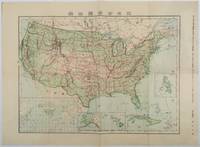
1911rif. 179415Tokyo.: 楠山正雄. Kusuyama Masao. Meiji 44 1911. Colour folding map 40 x 55cm inset maps showing the Philippines Alaska and Hawaii very good copy. This map was a supplement of October 1911 issue of a monthly magazine Shin Nippon 新日本 which was published between 1911 and 1918. The main map covers the contiguous United States with inset maps of the world showing the American territories of Alaska Hawaii and the Philippines. Curiously Cuba has been marked as an American territory having been directly occupied from 1906 to 1909 though at the time still beholden to the 1903 Cuban-American Treaty of Relations. . 楠山正雄. [Kusuyama Masao]. unknown
1485rif. 707261485. Mainz Peter Schöffer 28 März 1485 1 einspaltiges original Inkunabelblatt 238 x 166 mm 1 alt color. Holzschnitt. Erstdruck! Cap. 421: Vibek - byrck; Betula pubescens Ehr. Cap. 422: Usnea - maiß; Usnea jubata Hoofm.; Darstellung: schematisiert. Cap. 423: Vidriolum - vidril; Vitriol. "Im Gegensatz zu den meisten Kräuterbuch-Inkunabeln lässt sich das Druckdatum des "Gart der Gesundheit genau auf den 28. März 1485 festlegen wie es am Ende des Werks vermerkt ist: "Disser Herbarius ist rzu mentz gedruckt und geendet uff dem XXVIII dage des mertz -Anno-M-CCCC-LXXXV". An gleicher Stelle wird Peter Schöffer als Drucker durch das Fust-Schöffersche Signet bestätigt. Der "Gart der Gesundheit gilt wie Muther 1884: 88: "als wichtigstes naturhistorisches Werk des Mittelalters" und Klebs/Becher 1925: 11: "The most important mediaeval work on natural history with illustrations Choulant the publication of which forms an important landmark in the history of botanical Illustration and marks perhaps the grea-test single Step ever made in that art" meinten als wichtigste bebilderte Arzneipflanzen-Inkunabel. Auch Keil 1982: 604 bestätigte später diese Aussage: "Zweifellos ist der "Gart das wichtigste naturhistorische Werk des Mittelalters". Auf 359 Seiten die in 435 Kapitel gegliedert sind wird der gesamte zur damaligen Zeit bekannte Arzneischatz abgehandelt und mit 382 Holzschnitten illustriert. Die wichtigsten 366 Heilpflanzen zwei Wiederholungen werden jeweils einzeln in den verschiedenen Kapiteln beschrieben und abgebildet. Der Text ist 42zeilig geordnet." B. Baumann & H. Baumann Die Mainzer Kräuterbuch-Inkunabeln 2010 p.111 Johann Wonnecke von Kaub um 1430 in Kaub am Rhein; gestorben 1503/04 in Frankfurt am Main auch Johannfes Dronnecke bzw. Johannes de Cuba er selbst nannte sich "Johan von Cube" war ein deutscher Arzt und Botaniker. Am Mainzer Hof wirkte er als Leibarzt. unknown
rif. SONG384845663XUsed: Good unknown
2000rif. 54535Havana: Editorial Echevarria ca. 2000. Oblong 4to. 32 pp unpaginated. w/ 271 colour numbered Revolutionary trading cards all tipped-in including 3 for Revolutionist flags on verso front cover. Colour-illustrated coated softcovers cover art showing heroic Fidel Castro leading the revolutionaries rubbing creasing rippling to textblock still VG- copy. Facsimile souvenir of this famed piece of Cuban Revolutionary propaganda distributed free to the Cuban people originally by Felices Frutas the local canned fruit industry trying to stay afloat and appease Castro as all the countries industries and businesses were nationalized after the Revolution. Featuring the cartoon art of Capdevila this piece traces the return of the Castros from exile in Mexico as they fought capitalist exploitation the fall of Batista the bloody running battles and more all celebrating the success. Editorial Echevarria, paperback
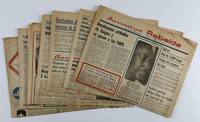
1969rif. 12628Havana: Union de Jovenas Comunistas 1969. Seven newspapers each between 6 and 8pp. on newsprint. Illustrated. Modest toning some edge wear and closed tears some bumped or dog-eared corners. Overall very good. A small but instant collection of an informative newspaper from Communist Cuba published daily by the youth wing of the Party. The issues are all dated in January 1969 specifically from January 11 15 22 28 29 30 and 31. The issues contain domestic and international reporting along with topics relevant to revolutionary young people. Interestingly one issue contains a translated interview with Hollywood legend Marlon Brando. The paper also prints a legion of photographs cultural event listings classifieds baseball statistics and updates cartoons and more. Union de Jovenas Comunistas unknown