[Cuba]. [Photography]Biblio.com
2682 risultati
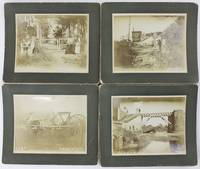
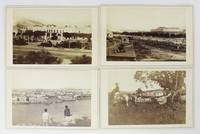
1872rif. 6289Havana 1872. Very good. Eight albumen photographs 3.75 x 5.5 inches; mounted on cardstock 4.25 x 6.5 inches. Manuscript captions on verso. Minor wear and soiling most images clean and crisp. Group of eight photographs of Havana and environs dated March of 1872. Each is captioned on the verso in manuscript with the date of March 27 1872; "Havana" and a caption identifying the place are also present. Images here include a view of the bay; a view of the city from across the water with two young men standing in the foreground admiring the view; the Castle de Morro; a scene in the botanical garden; Casino Español; and two women seated in a carriage. Particularly nice with the contemporary captions and most of the images are well-composed. unknown
1872rif. 6289Havana 1872. Very good. Eight albumen photographs 3.75 x 5.5 inches; mounted on cardstock 4.25 x 6.5 inches. Manuscript captions on verso. Minor wear and soiling most images clean and crisp. Group of eight photographs of Havana and environs dated March of 1872. Each is captioned on the verso in manuscript with the date of March 27 1872; "Havana" and a caption identifying the place are also present. Images here include a view of the bay; a view of the city from across the water with two young men standing in the foreground admiring the view; the Castle de Morro; a scene in the botanical garden; Casino Español; and two women seated in a carriage. Particularly nice with the contemporary captions and most of the images are well-composed. unknown books
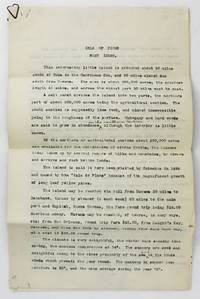
1910rif. 5377N.p. 1910. Very good. 11pp. of folio typescript totaling around 3000 words with a handful of manuscript corrections. Old folds minor marginal stains from old paper clips. An anonymously-written typescript promotional and business prospectus touting the Isle of Pines Isla de la Juventud off the southern coast of Cuba in the West Indies. The author writes of the many advantages of the Isle of Pines noting "This interesting little island is situated about 50 miles south of Cuba in the Caribbean Sea" with a population of "well-to-do Americans who own about 95% of the island and are after the other 5%." The author also states that "the laborers are mostly 'Pineros' or Isle of Pines people and are very efficient. They are kind and courteous and seem well pleased with the present situation. They are paid from $1.00 to $1.50 per day according to the grade of work." More of the usual language encouraging emigration to the island follows describing the agriculture climate soil government business environment the "old Spanish cities on the island" and more along with several pages of cost estimates for creating a working ten-acre fruit grove. The anonymous author mentions that he and his partner in Nueva Gerona J.A. Miller bought forty acres in Cuchilla Alta or Santa Ana Estates at $40 per acre from H.R. Leland "the sole representative in the United States." The author states he has given up his profession as an engineer in order to devote his time and energy to building a grapefruit grove and pineapple farm and to get others interested in investing with him "We will organize a Development Company with a Citrus Fruit Expert at its head.". He concludes by reiterating that "the country itself is a delightful place to live.raises a superior quality of fruit" and he is glad he "learned about it in time to enable us to enjoy all the benefits of the 'Great Ground Floor.' unknown books
1898rif. 4079Puerto Principe 1898. Good plus. Thirteen photographs each approximately 4 x 5 inches on original card mounts. A few images rather faded. Light edge wear to mounts. Some photo credits in negatives; each with manuscript caption on mount verso. An interesting group of thirteen photographs taken by an amateur military photographer while deployed to Cuba during the Spanish-American War. The photos are centered around Puerto Principe now Camaguey in Central Cuba an unusual location for photos of this genre and focus on natives local architecture and natural views. Crude credits in the negatives of several images attribute the photographs to "Woodward" or "W.D.W" of the "15th U.S.I.B" i.e. 15th U.S. Infantry Battalion . Each image is also captioned in manuscript on the rear of its mount as follows: 1 Rail Road Bridge Near Puerto Principe Cuba 2 Same Bridge Different View 3 Natives in Cuba 4 Military Headquarters 5 Soldier Camp in Cuba 6 Cuban Prison 7 Cemetery in Puerto Principe Cuba 8 Water Wagon in Cuba 9 Plaza in Puerto Principe Cuba 10 Residence in Cuba 11 Cuban Carriage 12 Summer Resort in Cuba 13 Military Headquarters Inside. unknown
1898rif. 4079Puerto Principe 1898. Good plus. Thirteen photographs each approximately 4 x 5 inches on original card mounts. A few images rather faded. Light edge wear to mounts. Some photo credits in negatives; each with manuscript caption on mount verso. An interesting group of thirteen photographs taken by an amateur military photographer while deployed to Cuba during the Spanish-American War. The photos are centered around Puerto Principe now Camaguey in Central Cuba an unusual location for photos of this genre and focus on natives local architecture and natural views. Crude credits in the negatives of several images attribute the photographs to "Woodward" or "W.D.W" of the "15th U.S.I.B" i.e. 15th U.S. Infantry Battalion . Each image is also captioned in manuscript on the rear of its mount as follows: 1 Rail Road Bridge Near Puerto Principe Cuba 2 Same Bridge Different View 3 Natives in Cuba 4 Military Headquarters 5 Soldier Camp in Cuba 6 Cuban Prison 7 Cemetery in Puerto Principe Cuba 8 Water Wagon in Cuba 9 Plaza in Puerto Principe Cuba 10 Residence in Cuba 11 Cuban Carriage 12 Summer Resort in Cuba 13 Military Headquarters Inside. unknown books
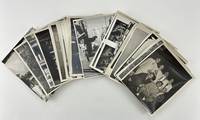
1961rif. 2137Various places in Florida Mexico Cuba & Spain 1961. About very good. 138 original prints each 8 x 10 inches; mostly large format images with twelve contact sheet containing multiple smaller images and including several duplicates. Light wear at edges; slight curling. Occasional patches of scuffing or soiling. Scattered manuscript annotations and ink stamps on blank versos of photographs. An interesting aggregation of approximately 150 unique professional images that depict the travels and activities of the Latin American Fiesta Association of Tampa Florida. The cultural heritage group was founded in 1940 and flourished from the late 1940s to the 1980s and organized or participated in local social events had an annual ball and traveled widely across Latin America. The photographs here date from 1949 to the early 1960s and document the travels of association members to Spain Mexico and Cuba. They attended numerous events entertainments dinners and other social gatherings as well as made visits to attractions and local cultural clubs. In Spain and Cuba their trips seem to have been limited to Madrid and Havana respectively and there are some interesting series of travel images in Cuba from just prior to the Revolution. The group seems to have made multiple trips to Mexico and traveled somewhat more widely. Scattered images show the activities of the association in Florida as well and many of the prints have contemporary manuscript captions and ink stamps of local photographers and photography studios on the versos. In all a wide-ranging and quite engaging group of large photographs that document this midcentury Latin American social club in Florida. unknown
1961rif. 2137Various places in Florida Mexico Cuba & Spain 1961. About very good. 138 original prints each 8 x 10 inches; mostly large format images with twelve contact sheet containing multiple smaller images and including several duplicates. Light wear at edges; slight curling. Occasional patches of scuffing or soiling. Scattered manuscript annotations and ink stamps on blank versos of photographs. An interesting aggregation of approximately 150 unique professional images that depict the travels and activities of the Latin American Fiesta Association of Tampa Florida. The cultural heritage group was founded in 1940 and flourished from the late 1940s to the 1980s and organized or participated in local social events had an annual ball and traveled widely across Latin America. The photographs here date from 1949 to the early 1960s and document the travels of association members to Spain Mexico and Cuba. They attended numerous events entertainments dinners and other social gatherings as well as made visits to attractions and local cultural clubs. In Spain and Cuba their trips seem to have been limited to Madrid and Havana respectively and there are some interesting series of travel images in Cuba from just prior to the Revolution. The group seems to have made multiple trips to Mexico and traveled somewhat more widely. Scattered images show the activities of the association in Florida as well and many of the prints have contemporary manuscript captions and ink stamps of local photographers and photography studios on the versos. In all a wide-ranging and quite engaging group of large photographs that document this midcentury Latin American social club in Florida. unknown books
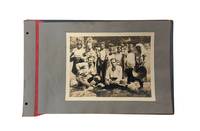
1910rif. 235641910. Cuba photograph album depicting encounters between Western visitors and Cuban communities during the early republican period circa 1910s to 1920s when the island occupied an unusual position between formal independence and continuing American political and economic influence. The photographs move between Havana's monumental architecture hotels and waterfront districts and the rural landscapes villages rivers and agricultural communities that remained largely outside the tourist image promoted to foreign visitors. Repeated appearances of the same Western man often accompanied by a woman who appears to be his wife suggest an extended journey through both urban and remote regions of the island during a period when American travelers businessmen and government personnel moved through Cuba in growing numbers following the Spanish American War and the establishment of the Cuban Republic. Photo album of 26 silver gelatin photographs mounted on unbound album boards with blue covers boards measuring approximately 9 x 15 inches Cuba circa 1910s to 1920s. The photographs range from 6 x 6.5 to 8 x 9.5 inches. Images show waterfront houses built directly along riverbanks; tropical waterfalls and dense forest landscapes; interior courtyards and hotel spaces with colonnades and tiled floors; Morro Castle and lighthouse overlooking Havana Harbor; panoramic views of Cuban towns set among surrounding mountains; market scenes crowded with vendors women and children; cattle standing in shallow waterways; village gatherings outside rural buildings; and groups of local residents posed alongside visiting Westerners. Several photographs depict women standing in rivers holding broad metal pans possibly associated with washing river labor or mineral collection activities. Other images show children families agricultural workers and river communities while a series of portraits records the principal traveler and his companion at various points throughout the journey. One image depicts a group of local residents and Western visitors posed together in a forested region; another shows villagers gathered near a rural homestead while several photographs focus on transportation livestock and daily work in the countryside. The album belongs to the decades following Cuba's transition from Spanish colony to nominally independent republic a period shaped by the Platt Amendment American investment expanding tourism and intensive foreign interest in the island's economic resources and landscapes. Rather than concentrating exclusively on Havana's civic monuments and colonial architecture the photographer devoted substantial attention to rural communities Afro Cuban and mixed-race populations river labor village life and frontier environments seldom emphasized in commercial tourist imagery of the period. The contrast between hotels government-era landmarks village settlements cattle crossings market scenes and encounters with local residents documents the unequal worlds that coexisted within early twentieth century Cuba as foreign visitors moved between urban centers and agricultural regions. Light surface wear occasional toning minor album mounting wear and scattered edge wear to several boards; overall very good condition. A concentrated visual record of how Westerners experienced and represented Cuba's rural communities laboring populations landscapes and colonial-era urban centers during the first decades of the Cuban Republic. unknown
1910rif. 235641910. Cuba photograph album depicting encounters between Western visitors and Cuban communities during the early republican period circa 1910s to 1920s when the island occupied an unusual position between formal independence and continuing American political and economic influence. The photographs move between Havana's monumental architecture hotels and waterfront districts and the rural landscapes villages rivers and agricultural communities that remained largely outside the tourist image promoted to foreign visitors. Repeated appearances of the same Western man often accompanied by a woman who appears to be his wife suggest an extended journey through both urban and remote regions of the island during a period when American travelers businessmen and government personnel moved through Cuba in growing numbers following the Spanish American War and the establishment of the Cuban Republic. Photo album of 26 silver gelatin photographs mounted on unbound album boards with blue covers boards measuring approximately 9 x 15 inches Cuba circa 1910s to 1920s. The photographs range from 6 x 6.5 to 8 x 9.5 inches. Images show waterfront houses built directly along riverbanks; tropical waterfalls and dense forest landscapes; interior courtyards and hotel spaces with colonnades and tiled floors; Morro Castle and lighthouse overlooking Havana Harbor; panoramic views of Cuban towns set among surrounding mountains; market scenes crowded with vendors women and children; cattle standing in shallow waterways; village gatherings outside rural buildings; and groups of local residents posed alongside visiting Westerners. Several photographs depict women standing in rivers holding broad metal pans possibly associated with washing river labor or mineral collection activities. Other images show children families agricultural workers and river communities while a series of portraits records the principal traveler and his companion at various points throughout the journey. One image depicts a group of local residents and Western visitors posed together in a forested region; another shows villagers gathered near a rural homestead while several photographs focus on transportation livestock and daily work in the countryside. The album belongs to the decades following Cuba's transition from Spanish colony to nominally independent republic a period shaped by the Platt Amendment American investment expanding tourism and intensive foreign interest in the island's economic resources and landscapes. Rather than concentrating exclusively on Havana's civic monuments and colonial architecture the photographer devoted substantial attention to rural communities Afro Cuban and mixed-race populations river labor village life and frontier environments seldom emphasized in commercial tourist imagery of the period. The contrast between hotels government-era landmarks village settlements cattle crossings market scenes and encounters with local residents documents the unequal worlds that coexisted within early twentieth century Cuba as foreign visitors moved between urban centers and agricultural regions. Light surface wear occasional toning minor album mounting wear and scattered edge wear to several boards; overall very good condition. A concentrated visual record of how Westerners experienced and represented Cuba's rural communities laboring populations landscapes and colonial-era urban centers during the first decades of the Cuban Republic. unknown books
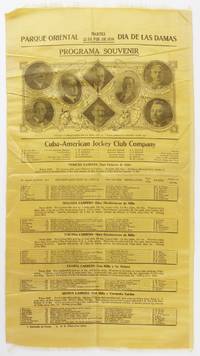
1916rif. 4158Havana 1916. Very good. Broadside printed on light orange silk approximately 16.25 x 9 inches. Minor edge wear one small tear near bottom right. A seemingly unrecorded silk broadside issued by the Cuba-American Jockey Club Company advertising the lineup of horses and the schedule for a series of five races during Dia de las Damas "Ladies Day" at the Oriental Park racetrack in Marianao Havana in 1916. In addition the top of the broadside is printed with small oval- and diamond-shaped portraits picturing the nine officers of the club who are identified by name and their position within the club. Below these portraits is a listing of fourteen officers of the club. The Oriental Park Racetrack "Parque Oriental" opened in 1915 for winter racing which began in November and lasted into March each year. The racetrack was the only thoroughbred track in Cuba until Fidel Castro practically shut it down after the Cuban Revolution in 1959. The present broadside is a visual reminder of the influx of American business interests in Cuba in the early 20th century. No copies reported in OCLC. unknown
1916rif. 4158Havana 1916. Very good. Broadside printed on light orange silk approximately 16.25 x 9 inches. Minor edge wear one small tear near bottom right. A seemingly unrecorded silk broadside issued by the Cuba-American Jockey Club Company advertising the lineup of horses and the schedule for a series of five races during Dia de las Damas "Ladies Day" at the Oriental Park racetrack in Marianao Havana in 1916. In addition the top of the broadside is printed with small oval- and diamond-shaped portraits picturing the nine officers of the club who are identified by name and their position within the club. Below these portraits is a listing of fourteen officers of the club. The Oriental Park Racetrack "Parque Oriental" opened in 1915 for winter racing which began in November and lasted into March each year. The racetrack was the only thoroughbred track in Cuba until Fidel Castro practically shut it down after the Cuban Revolution in 1959. The present broadside is a visual reminder of the influx of American business interests in Cuba in the early 20th century. No copies reported in OCLC. unknown books
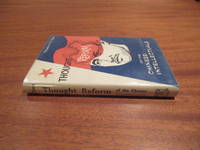
1960rif. 025662Hong Kong: Hong Kong University Press / Oxford University Press / Institute of Pacific relations 1960. First Edition First Printing . Hardcover. Near Fine/Near Fine Dustjacket. Xiii 247. Orange Cloth. One Of 2000 Copies Of The First Printing But This Copy With Printed $5 Us Price At Bottom Of Front Flap So Perhaps An American Issue. Slight Signs Of Usage To Book And Dj. Inscribed To Mr. And Mrs. Z. T. Nyi Zau Tsung Nyi Of Los Angeles "With High Esteem And Respect". Information From His Archives At Usc: Theodore H.E. Chen Ph.D. 1939 Was Chairman Of Usc's Department Of Asian Studies From 1940 To 1968 And From 1960 To 1971 He Directed The East Asian Studies Center In Support Of Which He Had Obtained The First Federal Grants. Chen Also Secured Outside Funding For A Project To Help Train And Advise High School Teachers Of Chinese And Japanese. A Native Of Fuzhou China Chen Was President Of Fukien Christian University In 1946 And 1947 While On Leave To Participate In Postwar Rehabilitation. He Also Helped Organize Tunghai University In Taiwan As A Representative Of The United Board Of Christian Colleges. He Was The Author Of Nine Books Including Thought Reform Of Chinese Intellectuals And Maoist Educational Revolution And Chinese Education. Dr Chen Hits An Easy Target; The Worst Governments Are Those Who Try To Control What And How People Think And How And Where They Communicate Because Their Leaders Have An Excess Of The Oldest Disease Of Officials Crap-In-The-Brain Which Prevents Them From Engaging In Exchanges Of Facts And Ideas. Hong Kong University Press / Oxford University Press / Institute of Pacific relations hardcover
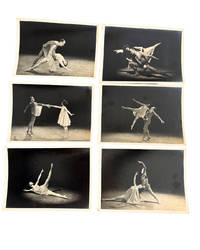
1964rif. 0012155Havana Cuba. Good with no dust jacket. 1964. Non-Book. On offer is a cohesive series of six original 1964 Cuban television dance photographs showing Emilia Villamil and Raymond Ramon Iglesias in a staged dance sequence for a television showbroadcast on Canal 6 the Havana television channel associated with Cubavisión. Thephotographs appear to be publicity stills and all belong to the same production series and bearsthe professional studio/lab stamp OLIVIA FOTOS 9.1833 on the verso. On the verso of someof the photos are handwritten notes that provide information about the dancers TV channel andyear. Villamil and Iglesias were Tropicana-era Cuban performers here seen performing in a post-Revolution broadcast studio bridging Havanas pre-Revolution cabaret and theatrical culture with the new television environment of the 1960s. Cubavisións institutional history traces itsorigins to CMQ-TV Channel 6. Villamil was often referred to as La China and is sometimes known as China Villamil. AnEl Nuevo Herald profile of her son television journalist Camilo Egaña identifies her as labailarina Emilia Villamil fundadora de la televisión cubana the dancer Emilia Villamil founder/pioneer of Cuban television. A 1979 San Antonio Express-News profile identifies Raymond Iglesias as a Cuban refugee andformer Havana dancer-choreographer-singer who later became a fashion designer. The articleexplains that his given name was Ramon but that he used and preferred Raymond a usefulclarification for the present group because one verso notation gives his first name as Ramon. The same profile records that as a youth in Havana he studied dance with Alicia Alonso Ballet performed internationally with partner Elena del Cueto under the billing Clarissa andRaymond and toured as a dancer for ten years. This is a valuable archive from a comparatively under-documented area of Cuban culturalhistory: the movement of established theatrical cabaret and dance performers into early post-Revolution television. Original production stills from this period are not commonly encounteredin coherent identified groups. Notes on Canal 6 CMQ-TV Cubavisión Following the nationalization of Cuban broadcasting in 1960 theformer commercial station Canal 6 CMQ-TV was incorporatedinto the state system and became the principal outlet of what wasincreasingly identified as Cubavisión the national televisionservice centered in Havana. Contemporary scholarship andbroadcast histories note that early 1960s programming on Canal6/Cubavisión retained a strong continuity with pre-Revolutionformatsparticularly live studio variety music and dancewhile being reorganized under state cultural policy Rivero 2015; Chanan 2004. Surviving program references from theperiod include musical and variety broadcasts such as Ritmos deCuba a recurring dance-music revue format dramatizedliterary and theatrical adaptations newsreel-style current affairssegments and childrens programming blocks all of whichformed the backbone of early revolutionary televisionscheduling Rivero 2015; Chanan 2004; Pérez Jr. 1995. Condition: Expected light handling wear minor edge and corner wear and typical surface signsfrom age and use. The images remain strong with good contrast and clear detail. Verso stampsand notations are present as described. Overall Very Good. ; Photograph; 8vo 8" - 9" tall; 6 pages . unknown
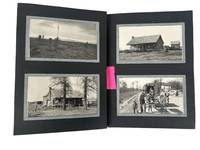
1924rif. 184851924. Photograph album 1920s-1930s documenting travel across the American Southwest and Cuba with images capturing landscapes infrastructure and communities during a period of regional development and increased mobility. Early photographs depict desert environments with saguaro cacti and yucca followed by rural farms mission-style buildings and roadside scenes including a family traveling by wagon in Texarkana. One image records the recently constructed Coolidge Dam in Arizona completed between 1924 and 1928 situating the album within contemporary efforts at water management and agricultural expansion in the Southwest. Additional photographs show individuals in domestic and rural settings including an African American man seated outside his home before transitioning to scenes of coastal and subtropical environments. The final portion of the album documents Cuba including street life harbor views with ships and fishing vessels and architectural landmarks such as Morro Castle reflecting the circulation of American travelers in the Caribbean during the interwar period. Photograph album containing 69 black and white silver gelatin photographs most measuring approximately 5.75 x 3 inches with one larger earlier portrait at the beginning measuring approximately 9.5 x 6 inches. The images are mounted in a cloth-covered board album with gilt lettering reading "Photographs" secured by a cord binding and measuring approximately 10 x 8.25 inches. The photographs are uncaptioned and arranged sequentially suggesting a travel-based compilation spanning multiple regions including Arizona Texas the Gulf South and Havana Cuba. 69 photographs mounted in original album; images clear and well-preserved. Light wear to album consistent with age; overall very good condition. A cohesive visual record of travel and regional life across the American Southwest and Cuba during the early twentieth century. unknown
1924rif. 184851924. Photograph album 1920s-1930s documenting travel across the American Southwest and Cuba with images capturing landscapes infrastructure and communities during a period of regional development and increased mobility. Early photographs depict desert environments with saguaro cacti and yucca followed by rural farms mission-style buildings and roadside scenes including a family traveling by wagon in Texarkana. One image records the recently constructed Coolidge Dam in Arizona completed between 1924 and 1928 situating the album within contemporary efforts at water management and agricultural expansion in the Southwest. Additional photographs show individuals in domestic and rural settings including an African American man seated outside his home before transitioning to scenes of coastal and subtropical environments. The final portion of the album documents Cuba including street life harbor views with ships and fishing vessels and architectural landmarks such as Morro Castle reflecting the circulation of American travelers in the Caribbean during the interwar period. Photograph album containing 69 black and white silver gelatin photographs most measuring approximately 5.75 x 3 inches with one larger earlier portrait at the beginning measuring approximately 9.5 x 6 inches. The images are mounted in a cloth-covered board album with gilt lettering reading "Photographs" secured by a cord binding and measuring approximately 10 x 8.25 inches. The photographs are uncaptioned and arranged sequentially suggesting a travel-based compilation spanning multiple regions including Arizona Texas the Gulf South and Havana Cuba. 69 photographs mounted in original album; images clear and well-preserved. Light wear to album consistent with age; overall very good condition. A cohesive visual record of travel and regional life across the American Southwest and Cuba during the early twentieth century. unknown books
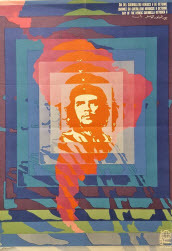
rif. 3343OSPAAAL. 1970. Impression en offset, sur papier glacé. Dim: 534 x 330 mm. Deux trous de punaise, sinon parfait état .
rif. 3343OSPAAAL. 1970. Impression en offset, sur papier glacé. Dim: 534 x 330 mm. Deux trous de punaise, sinon parfait état .
rif. 3366OSPAAAL. 1968. Impression en offset sur papier de couleur. Dim: 550 x 330 mm
rif. 3366OSPAAAL. 1968. Impression en offset sur papier de couleur. Dim: 550 x 330 mm
rif. 1827Impression offset. OSPAAAL. 1968. Dim: 49,5 x 34,5 cm. Rare.
rif. 1827Impression offset. OSPAAAL. 1968. Dim: 49,5 x 34,5 cm. Rare.
Habana, Imprenta de Don Pedro Nolasco Palmer e Hijo, 1823. 4to.; 16 hojas, 352 pp., algunas de ellas plegadas, y siete láminas plegadas. Taladros de polilla en el margen blanco, afectando a algunas letras en treinta páginas y alguna lámina. Encuadernación de época en piel. Ruedas doradas en los planos, lomera ornada y tejuelo.
1935318 pages. Seven black and white cartoon illustrations. One-page chronology of Cuban history. "The Cuban Revolution can hardly be classed as terminated. In fact, it appears that "revolution" is likely to become a permanent institution of the Island. However, I shall confine myself to the events which occurred during 1933 and the first part of 1934. Most of what I write here is from a diary, with insertions from memory of days when we hardly ate or slept, much less noted daily happenings." - from Introduction. Prior owner's details atop yellowed front free endpaper. Somewhat above-average external wear. Diagonal gash across backstrip. Binding intact. Book
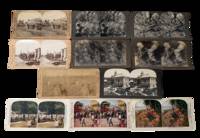
1890rif. 231711890. Stereoview archive of the post-emancipation Caribbean showing how the islands were marketed to western viewers through plantation labor export agriculture civic spectacle and catastrophe. As a group these photos function not only as an ethnographic travel archive but as evidence of the visual economy that followed slavery. The British West Indies moved through emancipation in 1834 to 1838 the French Caribbean in 1848 Puerto Rico in 1873 and Cuba in 1886 yet plantation production remained central to regional life well into the early twentieth century. These stereoviews preserve a colonial way of seeing in which Black and Afro-Caribbean labor rural discipline and extractive agriculture remained the background condition of "tropical" beauty and commercial modernity. Cuba's sugar economy in particular expanded through the nineteenth century and slavery was not abolished there until 1886 while Weyler's later reconcentration policy during the Cuban War of Independence violently reorganized rural life. Martinique after 1848 likewise shifted into new labor regimes including imported workers from India and China. Archive of 11 stereoview cards late 1890s to early 1900s depicting Cuba Jamaica Martinique Puerto Rico and the Dominican Republic. Most black and white with a few colorized. Each measure 3.5" x 7". All with captions on the margins. "Reconcentrado Farming Scene Province of Havana Cuba" links agricultural production to the brutal displacements of Spain's reconcentration campaign; "Cutting sugar cane Montego Bay Jamaica W.I." records cane labor in a colony where emancipation had not ended plantation dependency; and "Harvesting Coconuts Porto Rico" likewise frames Caribbean land through export work rather than local life. Other views extend that economic framing through cacao and coffee scenes while the paired Havana cards shift into urban leisure and public display including "Beautiful Central Park Havana Cuba" and "Holiday in Havana Cuba" the latter with both Cuban and American flags visible a telling image of the new imperial order after 1898. The disaster views from Martinique and the Lesser Antilles show how stereoview publishers also turned Caribbean destruction into consumable spectacle. the Morne Rouge card is accompanied on the reverse by the grim printed text "Dead bodies which were to be seen in Morne Rouge." while the wider context is the 1902 eruptions of Mount Pelée in Martinique and La Soufrière on Saint Vincent two catastrophes that killed roughly 30000 and 1600 people respectively and devastated local communities and agriculture. Some corner wear light toning scattered surface and edge wear. Overall very good condition. This collection gives direct visual representation of Caribbean history Atlantic slavery and emancipation plantation labor and U.S. imperial expansion in the circum-Caribbean preserving the transition from slavery to post-abolition labor. unknown
1890rif. 231711890. Stereoview archive of the post-emancipation Caribbean showing how the islands were marketed to western viewers through plantation labor export agriculture civic spectacle and catastrophe. As a group these photos function not only as an ethnographic travel archive but as evidence of the visual economy that followed slavery. The British West Indies moved through emancipation in 1834 to 1838 the French Caribbean in 1848 Puerto Rico in 1873 and Cuba in 1886 yet plantation production remained central to regional life well into the early twentieth century. These stereoviews preserve a colonial way of seeing in which Black and Afro-Caribbean labor rural discipline and extractive agriculture remained the background condition of "tropical" beauty and commercial modernity. Cuba's sugar economy in particular expanded through the nineteenth century and slavery was not abolished there until 1886 while Weyler's later reconcentration policy during the Cuban War of Independence violently reorganized rural life. Martinique after 1848 likewise shifted into new labor regimes including imported workers from India and China. Archive of 11 stereoview cards late 1890s to early 1900s depicting Cuba Jamaica Martinique Puerto Rico and the Dominican Republic. Most black and white with a few colorized. Each measure 3.5" x 7". All with captions on the margins. "Reconcentrado Farming Scene Province of Havana Cuba" links agricultural production to the brutal displacements of Spain's reconcentration campaign; "Cutting sugar cane Montego Bay Jamaica W.I." records cane labor in a colony where emancipation had not ended plantation dependency; and "Harvesting Coconuts Porto Rico" likewise frames Caribbean land through export work rather than local life. Other views extend that economic framing through cacao and coffee scenes while the paired Havana cards shift into urban leisure and public display including "Beautiful Central Park Havana Cuba" and "Holiday in Havana Cuba" the latter with both Cuban and American flags visible a telling image of the new imperial order after 1898. The disaster views from Martinique and the Lesser Antilles show how stereoview publishers also turned Caribbean destruction into consumable spectacle. the Morne Rouge card is accompanied on the reverse by the grim printed text "Dead bodies which were to be seen in Morne Rouge." while the wider context is the 1902 eruptions of Mount Pelée in Martinique and La Soufrière on Saint Vincent two catastrophes that killed roughly 30000 and 1600 people respectively and devastated local communities and agriculture. Some corner wear light toning scattered surface and edge wear. Overall very good condition. This collection gives direct visual representation of Caribbean history Atlantic slavery and emancipation plantation labor and U.S. imperial expansion in the circum-Caribbean preserving the transition from slavery to post-abolition labor. unknown books