2 650 résultats
réf. 19071Autrement, collection "Memoires", mai 1994. Format 17x25 cm, broche. Tres bon etat.
2003réf. 4812003 - classeur - Habanos S.A., Hecho en Cuba - 2003 - Classeur (22 x 21,5 cm) - Pagination non continue - Avec quatre intercalaires différents, contenant de nombreuses planches dépliantes avec l'histoire et des photographies de cigares - Contient : un livret en allemand, intitulé "Die Tradition der Vollendung", de 56 pages contenant de nombreuses photographies + Deux dépliants (un en français et un en allemand) "Le guide des Habanos / Die Habanos-Formate" + Deux plaquettes (une dans chaque langue) "Le guide des diamètres des Habanos /Ringlehre für Habanos" - Habanos. Denominacion de origen protegida

1967Maspéro, 1967. In-8 broché, couverture à rabats de 269 pages. Collection Cahiers libres 106-107. Rares passages discrètement soulignés au crayon de papier sinon bon état
réf. 6840Broché couverture à rabats, 22X13 cm, 271 pages, 1967, cahiers libres François Maspero. Très bon état.
Ecole des Hautes Etudes en Sciences Sociales, Cahiers d'études africaines n° 160, 2000, 645-835 pp., broché, très bon état.
Revue L'Arc, Duponchelle, n° 23, Automne 1963, 101 p., broché, bon état général.
réf. 1074Revue L'Arc, Duponchelle, n° 23, Automne 1963, 101 p., broché, bon état général.
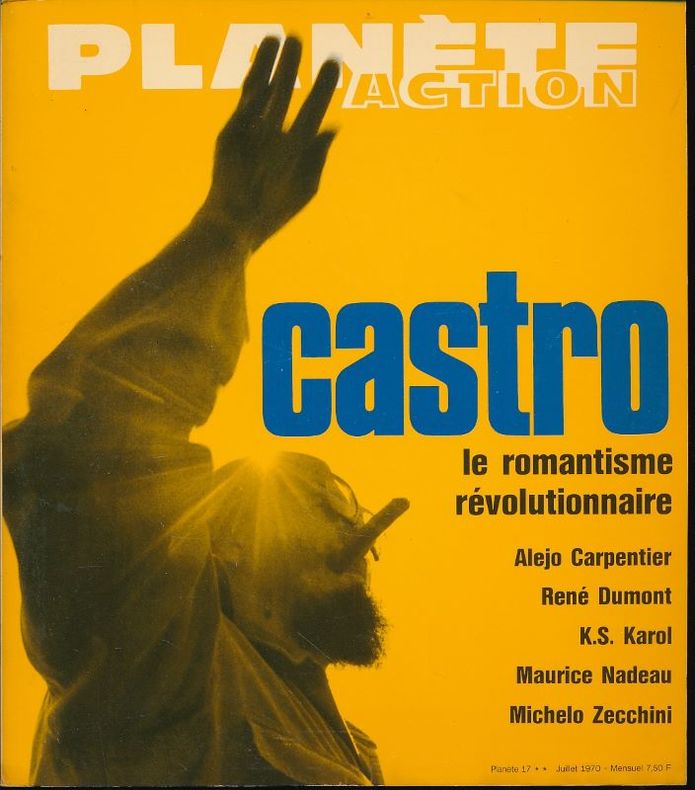
1970Paris, Planète, 1970. In-8 carré broché de 147 pages illustrées. Bon état
1970réf. 143245Paris, Planète, 1970. In Paris, Planète, 1970. In-8 carré broché de 147 pages illustrées. Bon état
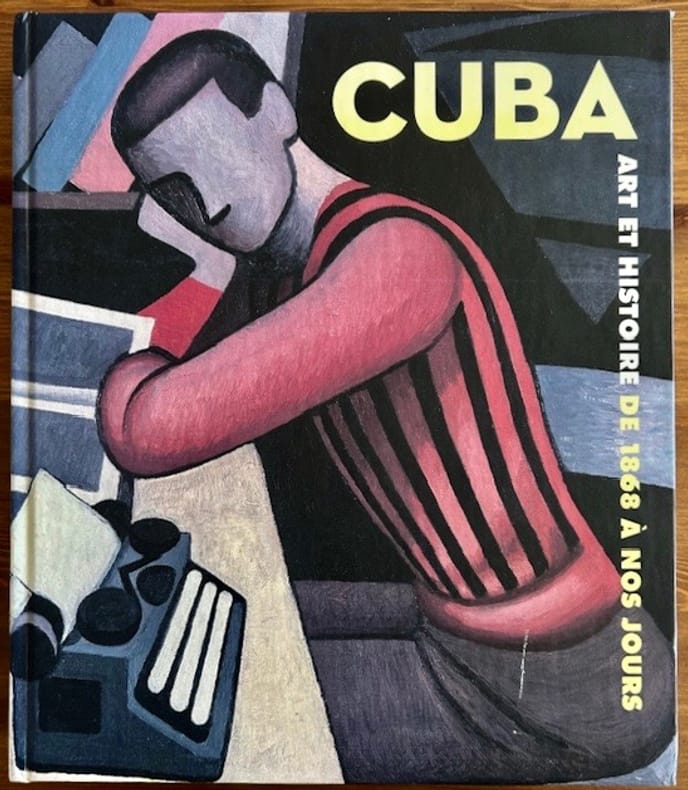
2008réf. 18Montréal 2008, 1 24,5 x 28,5 cm Cartonnage éditeur. 424.
1986Mm 130x195 Collana "Narra". Brossura editoriale con bandelle, 579 pagine. Esemplare in ottime condizioni. SPEDIZIONE IN 24 ORE DALLA CONFERMA DELL'ORDINE.
1992pp. xviii, 252. Numerous illustrations. Text printed in red and black. Oblong 12mo. Original pictorial printed wraps. Fascinating account including a transcription of Christopher Columbus' log. Very good copy. VOYAGES BOX 1
réf. 0428831729.Ghardcover. Good. Access codes and supplements are not guaranteed with used items. May be an ex-library book. hardcover
1967cm. 18, brossura editoriale; pp. 23
1967n. 4 in 16°, bross. edit., fascicolo di 24 pp., firma di appartenenza
1967n. 4 in 16°, bross. edit., opuscolo di 24 pp.
1967(Codice SO/0726) In 16° (18 cm) 21 pp. Risoluzione del Comitato Centrale di Cuba del 18/5/67. Brossura editoriale rossa. Ottimo stato. ~~~ SPEDIZIONE IN ITALIA SEMPRE TRACCIATA
réf. A9781164615675New. unknown
réf. B9781164615675New. unknown
réf. 1437008380.Ghardcover. Good. Access codes and supplements are not guaranteed with used items. May be an ex-library book. hardcover
réf. 1436816793.Gpaperback. Good. Access codes and supplements are not guaranteed with used items. May be an ex-library book. paperback
réf. 116461567X.Gpaperback. Good. Access codes and supplements are not guaranteed with used items. May be an ex-library book. paperback
2008réf. 1561041967Kessinger Publishing USA 2008. Reprint. Softcover. Very Good Condition. Reprint. Book is in very good condition. Text appears to be clean. Cover has some wear scuffsdings and corner bumps. Spine is in very good condition. May have book store sticker. Quantity Available: 1. Shipped Weight: Under 1 kilo. ISBN: 1436816793. ISBN/EAN: 9781436816793. Pictures of this item not already displayed here available upon request. Inventory No: 1561041967. . 9781436816793 Kessinger Publishing paperback
réf. DADAX0415042054New unknown
1981réf. 86364Havana Cuba: Political Publishers 1981. Presumed First Edition First printing. Hardcover. Good/Good. 116 4 pages. Index. Among the topics addressed in the Index are Socioeconomic Developments Revolutionary Armed Forces Social Organizations Ministry of the Interior Union of Young Communists Communist Party Ideological Struggle Foreign Policy and Economics. Fidel Alejandro Castro Ruz 13 August 1926 - 25 November 2016 was a Cuban revolutionary and politician who was the leader of Cuba from 1959 to 2008 serving as the prime minister of Cuba from 1959 to 1976 and president from 1976 to 2008. Ideologically a Marxist-Leninist and Cuban nationalist he also served as the first secretary of the Communist Party of Cuba from 1965 until 2011. Under his administration Cuba became a one-party communist state; industry and business were nationalized and socialist reforms were implemented throughout society. On January 20 1981 Fidel Castro gave the closing speech at the Communist Party of Cuba's second Congress held from January 17-20. He addressed almost 150 foreign delegations representing pro-Soviet communist parties liberation movements and even some social democratic parties of the Socialist international as well as more than a million Cubans. This fact alone is a measure of the prestige which the CPC has among many political trends and working people around the world. But the economic situation in Cuba brought to light during the congress and the path which Castro is proposing to the peoples struggling against imperialism give food for thought and should lead us to question the supposedly revolutionary path which Castro claims to be defending. One of the main concerns of the congress was the economic situation in Cuba. Despite an overall situation envied by many of the peoples dominated by U.S. imperialism the main report presented by Castro revealed that the objectives of the 5-year plan adopted at the First Congress in 1975 were not attained. Economic growth reached only 4% despite an objective of 6% and the industrialization plan met with difficulties. These results are of some importance since the objectives set at the last congress were consciously modest. Given this situation the Second Congress underlined the need for increased mobilization in production and stepped up plans to implement the new system to manage the economy which was first adopted at the First Congress. At the time this system was presented as an answer to the idealist errors of the 1965-70 period when it was claimed that all forms of market economy had abruptly been eliminated. The system clearly draws inspiration from the experience of the economic reforms introduced in the U.S.S.R. by Khrushchev in the early sixties which are judged as positive. These reforms underlined the importance of "the law of value the necessity that in all enterprises including State enterprises there are buy and sell relations and that within these relations the market categories function as indispensable instruments for measuring the use we make of our productive resources. in order to decide which investments are the most advisable and to know which enterprises.work the best.". Political Publishers hardcover