2 484 résultats
réf. 201112380La Habana, Cuba, Ediotial SI_MAr sa, 1996 ; in-8, 278 pp., br. Broché en très bon état.
1970réf. 757501970 Paris, Cercle du Nouveau Livre d'HIstoire, 1970, fort volume in 8° relié pleine toile rouge décorée de l'éditeur, 600 pages et 29 pages de documents photographiques.
réf. 201906341Paris, L'histoire immediate Seuil, 1993 ; in-8, 601 pp., br.
1994réf. 771771994 Paris, Autrement, 1994, in 8° broché, 245 pages ; couvetrure illustrée.
1965réf. 6257Habana 1965. Very good. 16pp. Oblong pamphlet in original pictorial wrappers stapled. Light wear and toning at wrapper edges with a few faint creases. Internally clean. A visually rich pro-Casto and pro-Communist pamphlet that highlights the history and core activities of Cuba's Committee for the Defense of the Revolution CDR neighborhood-based civil defense organizations created by Castro in 1960 to defend the revolution and maintain social and political control at the local level. This often included activities like surveillance distribution of propaganda and vigilante justice. The pamphlet is illustrated with photos throughout and also contains a two-page spread with maps of the island and charts data and statistics about the Cuban people. It contains a year-by-year account of the Committee's achievements and activities and ends with a section concerning its relations with other countries and their visits to Cuba. The rear wrapper states that editions were published in English French and Spanish as evidenced by the trilingual title on the front cover but we find no evidence of any edition in OCLC. Scarce and with much interesting and propagandized information about Castro's local enforcers during the early years of the Communist regime. unknown
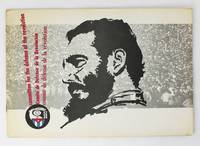
1965réf. 6257Habana 1965. Very good. 16pp. Oblong pamphlet in original pictorial wrappers stapled. Light wear and toning at wrapper edges with a few faint creases. Internally clean. A visually rich pro-Casto and pro-Communist pamphlet that highlights the history and core activities of Cuba's Committee for the Defense of the Revolution CDR neighborhood-based civil defense organizations created by Castro in 1960 to defend the revolution and maintain social and political control at the local level. This often included activities like surveillance distribution of propaganda and vigilante justice. The pamphlet is illustrated with photos throughout and also contains a two-page spread with maps of the island and charts data and statistics about the Cuban people. It contains a year-by-year account of the Committee's achievements and activities and ends with a section concerning its relations with other countries and their visits to Cuba. The rear wrapper states that editions were published in English French and Spanish as evidenced by the trilingual title on the front cover but we find no evidence of any edition in OCLC. Scarce and with much interesting and propagandized information about Castro's local enforcers during the early years of the Communist regime. unknown books
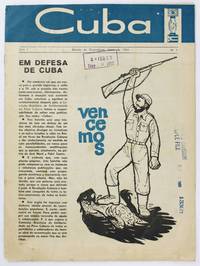
1961réf. 5832Guanabara 1961. About very good. 111pp. Small folio. Original pictorial self-wrappers stapled. Contemporary and slightly later ink stamps to front wrap. Light edge wear. Some tanning and dust soiling. First issue of this evidently unrecorded periodical published by the "Comissão Brasileira de Solidariedade ao Pavo Cubano" in May 1961. The publication contains numerous positive stories on the progress of the Cuban Revolution and support of the cause from the Brazilian people. Illustrated throughout with photographs and drawings including the beginning of a serial comic on the history of the revolution at the rear. The front wrap depicts Fidel Castro with his foot on the chest of a supine eagle and a rifle raised triumphantly over his head. Interesting support for the Communist cause in Cuba from South America. Not in OCLC. unknown
1961réf. 5832Guanabara 1961. About very good. 111pp. Small folio. Original pictorial self-wrappers stapled. Contemporary and slightly later ink stamps to front wrap. Light edge wear. Some tanning and dust soiling. First issue of this evidently unrecorded periodical published by the "Comissão Brasileira de Solidariedade ao Pavo Cubano" in May 1961. The publication contains numerous positive stories on the progress of the Cuban Revolution and support of the cause from the Brazilian people. Illustrated throughout with photographs and drawings including the beginning of a serial comic on the history of the revolution at the rear. The front wrap depicts Fidel Castro with his foot on the chest of a supine eagle and a rifle raised triumphantly over his head. Interesting support for the Communist cause in Cuba from South America. Not in OCLC. unknown books
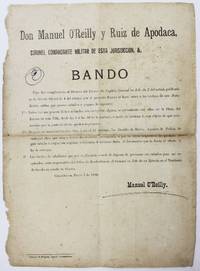
1896réf. 3188Guanabacoa: Imprenta el Progreso 1896. About very good. Broadside approximately 17 x 12.5 inches. Previously folded. Some biopredation at left edge not affecting text. Otherwise faint foxing light tanning and dust soiling. Two contemporary manuscript rubrics. Unrecorded broadside that orders the presentation of privately-owned horses and pack animals in the town square of Guanabacoa for requisition by the Spanish army in January 1896 at the outset of the Cuban uprising that would eventually lead to the end of Spanish colonial rule. This bando states first that "Todos los que posean dichos animales sin excepción alguna se presentarán con ellos en la Plaza del Recreo de esta Villa desde las 8 á las 10 de la mañana á partir de mañana 8 con objeto de que reconocidos por la junta al efecto queden requisados." Following these initial voluntary presentations inspections would be made of homes and farms and those found not to have handed over usable animals would be guilty disobeying army orders during a time of war. At this point Spain had 100000 troops on the island and another two years of fighting the insurrection incited by José Marti would pass before the intervention of the United States. Not in OCLC. Imprenta el Progreso unknown books
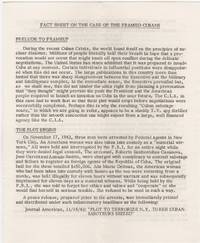
1963réf. 206861New York: Defense Committee for Garcia and Sueiro 1963. Folded for mailing otherwise fine. Bifolium approx. 7 x 8-1/5 in. making a four-page offset printed document; with 8-1/2 x 14 in. mimeo letter and original mailing envelope. Documentation from the effort to defend two Cuban-Americans arrested as suspected saboteurs with plans to blow up Manhattan businesses and New Jersey oil refineries. The FBI generated prominent headlines with the arrests at the height of cold-war tensions between the Bay of Pigs and the assassination of President Kennedy. Defense Committee for Garcia and Sueiro unknown
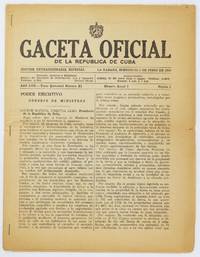
1959réf. 5470Habana: June 3 1959. Good plus. 11pp. Small folio. Previously folded; stapled along gutter margin. Some edge and corner wear; closed tear to initial leaf from fore-edge along old fold. Toned cheap newsprint. A special edition of the Gaceta Oficial of Communist Cuba devoted to the printing of the First Agrarian Reform Law passed and signed on May 17 1959. The law effected the first major land redistribution under Fidel Castro and the Communist Party. Under its authority all properties were over 420 hectares were confiscated and redistributed to the people and native businesses. Prior to the law over 80% of Cuban land was owned by foreign mostly American companies. The preamble and sixty-seven articles lay out the motivations for the law the parameters for confiscation by the Department of Agriculture the mechanisms for seizure and redistribution and the creation of a new government organization to facilitate the land transfers the Instituto Nacional de Reforma Agraria. Signed in print by Fidel as Prime Minister Manuel Urrutia Lleo as President and a slew of other officials. June 3 unknown
1959réf. 5470Habana: June 3 1959. Good plus. 11pp. Small folio. Previously folded; stapled along gutter margin. Some edge and corner wear; closed tear to initial leaf from fore-edge along old fold. Toned cheap newsprint. A special edition of the Gaceta Oficial of Communist Cuba devoted to the printing of the First Agrarian Reform Law passed and signed on May 17 1959. The law effected the first major land redistribution under Fidel Castro and the Communist Party. Under its authority all properties were over 420 hectares were confiscated and redistributed to the people and native businesses. Prior to the law over 80% of Cuban land was owned by foreign mostly American companies. The preamble and sixty-seven articles lay out the motivations for the law the parameters for confiscation by the Department of Agriculture the mechanisms for seizure and redistribution and the creation of a new government organization to facilitate the land transfers the Instituto Nacional de Reforma Agraria. Signed in print by Fidel as Prime Minister Manuel Urrutia Lleo as President and a slew of other officials. June 3 unknown books
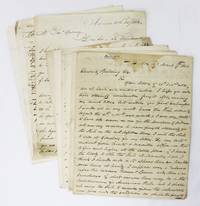
1824réf. 6529Bristol R.I.; Matanzas Cuba 1824. Good plus. Nine letters totaling 17pp. plus docketing. Some loss where previously sealed not affecting text. Otherwise old folds light wear at edges and some toning and dampstaining. Nine manuscript letters addressed to Edward Spalding a shipping agent in Havana and Matanzas with connections to trade out of Bristol and New England during the 1820s. The letters highlight the significant commercial networks between Cuba New England Europe and South America. The correspondence concerns shipments of sugar coffee molasses tobacco cotton and indigo and also reflects on the effects of European political tensions on Atlantic commerce. Several letters are from members of the notable DeWolf family who were major players in trade from Rhode Island to the Caribbean and also quite involved in the transatlantic slave trade that was a large part of the 19th-century Cuban economy. Spalding himself was active in the Cuban slave trade and in its many other facets until at least the end of the 1820s. A good group of correspondence with much firsthand information on trade between Cuba and the United States in the early 19th century. unknown
1824réf. 6529Bristol R.I.; Matanzas Cuba 1824. Good plus. Nine letters totaling 17pp. plus docketing. Some loss where previously sealed not affecting text. Otherwise old folds light wear at edges and some toning and dampstaining. Nine manuscript letters addressed to Edward Spalding a shipping agent in Havana and Matanzas with connections to trade out of Bristol and New England during the 1820s. The letters highlight the significant commercial networks between Cuba New England Europe and South America. The correspondence concerns shipments of sugar coffee molasses tobacco cotton and indigo and also reflects on the effects of European political tensions on Atlantic commerce. Several letters are from members of the notable DeWolf family who were major players in trade from Rhode Island to the Caribbean and also quite involved in the transatlantic slave trade that was a large part of the 19th-century Cuban economy. Spalding himself was active in the Cuban slave trade and in its many other facets until at least the end of the 1820s. A good group of correspondence with much firsthand information on trade between Cuba and the United States in the early 19th century. unknown books
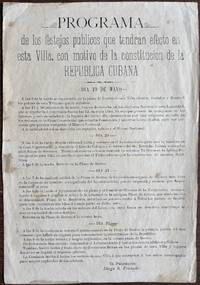
1901réf. 3191Havana 1901. About very good. Broadside 12.5 x 9 inches. Light wear and soiling. Backed with tissue. Broadside outlining the celebrations planned for the adoption of the Cuban Constitution of 1901 following the eviction of both Spain and the United States from the country. Four days of celebrations were planned for May 19 20 21 and 22. Events including the singing of the National Anthem orchestral concerts fireworks dancing and other diversions. We find no record of this broadside in OCLC. An ephemeral piece commemorating Cuban independence. unknown
1901réf. 3191Havana 1901. About very good. Broadside 12.5 x 9 inches. Light wear and soiling. Backed with tissue. Broadside outlining the celebrations planned for the adoption of the Cuban Constitution of 1901 following the eviction of both Spain and the United States from the country. Four days of celebrations were planned for May 19 20 21 and 22. Events including the singing of the National Anthem orchestral concerts fireworks dancing and other diversions. We find no record of this broadside in OCLC. An ephemeral piece commemorating Cuban independence. unknown books
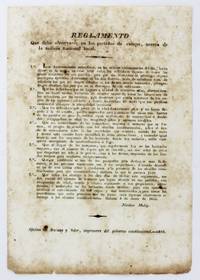
1822réf. 3190Havana: January 5 1822. Good. Broadside 11.5 x 8 inches. Foxed faint signs of folding a few small wormholes not affecting text. An apparently unrecorded broadside order from the captain general of Cuba Nicolas Mahy directing all able-bodied men under the age of fifty to join up with their local militias in order to keep the peace. The local militias are directed to go out on nightly forays "en nùmero capaz de evitar las incursiones de los salteadores por los caminos y la desercion que pueda acontecer de los negros de los ingenios cafetales y demas haciendas." Additionally all men between the ages of fifty and seventy are told to report to “las casas mas fuertes de los pueblos" to form a garrison that can protect women children and the elderly in case of insurrection. By the formation of these militias and the establishment of "el uso de los pasaportes" it was hoped to identify and arrest "los vagos y mal entretenidos." All mayors within ten days of receipt of this regulation were to report the number of men they had enlisted along with their particulars. In the early 1820s much of Spanish colonial America was gripped by revolution and with these orders the Cuban government likely hoped to avoid similar unrest on the island. Several independence groups had been formed in Cuba as of the promulgation of this decree the largest of which was the Soles y Rayos de Bolívar established in 1821. Signed in print by Mahy; not in OCLC. January 5 unknown
1822réf. 3190Havana: January 5 1822. Good. Broadside 11.5 x 8 inches. Foxed faint signs of folding a few small wormholes not affecting text. An apparently unrecorded broadside order from the captain general of Cuba Nicolas Mahy directing all able-bodied men under the age of fifty to join up with their local militias in order to keep the peace. The local militias are directed to go out on nightly forays "en nùmero capaz de evitar las incursiones de los salteadores por los caminos y la desercion que pueda acontecer de los negros de los ingenios cafetales y demas haciendas." Additionally all men between the ages of fifty and seventy are told to report to “las casas mas fuertes de los pueblos" to form a garrison that can protect women children and the elderly in case of insurrection. By the formation of these militias and the establishment of "el uso de los pasaportes" it was hoped to identify and arrest "los vagos y mal entretenidos." All mayors within ten days of receipt of this regulation were to report the number of men they had enlisted along with their particulars. In the early 1820s much of Spanish colonial America was gripped by revolution and with these orders the Cuban government likely hoped to avoid similar unrest on the island. Several independence groups had been formed in Cuba as of the promulgation of this decree the largest of which was the Soles y Rayos de Bolívar established in 1821. Signed in print by Mahy; not in OCLC. January 5 unknown books
1931réf. D1703La Habana 1931. Hardcover. Very Good. Five issues all but the last with their original wraps bound in one volume leather-backed marbled paper over boards -- a bit scuffed and bumped along the edges. Includes: Ano I. No. 1; Febrero 15 1931 / Ano I. No. 2; Febrero 22 1931 / Ano I. No. 3; Marzo 1 1931 / Ano I. No. 4; Marzo 8 1931 / Ano I. No. 5; Marzo 15 1931. The last issue No. 5. does not have the original front cover otherwise all original illustrated wraps are present. All a bit browned as expected and brittle with the occasional small marginal tear but perfectly good reading copies complete and nicely preserving the text illustrations sheet music and ads. Santa Clara bookseller's ticket on front paste-down. A wonderful and uncommon look at Cuba. hardcover
1931réf. D1703La Habana 1931. Hardcover. Very Good. Five issues all but the last with their original wraps bound in one volume leather-backed marbled paper over boards -- a bit scuffed and bumped along the edges. Includes: Ano I. No. 1; Febrero 15 1931 / Ano I. No. 2; Febrero 22 1931 / Ano I. No. 3; Marzo 1 1931 / Ano I. No. 4; Marzo 8 1931 / Ano I. No. 5; Marzo 15 1931. The last issue No. 5. does not have the original front cover otherwise all original illustrated wraps are present. All a bit browned as expected and brittle with the occasional small marginal tear but perfectly good reading copies complete and nicely preserving the text illustrations sheet music and ads. Santa Clara bookseller's ticket on front paste-down. A wonderful and uncommon look at Cuba. hardcover books
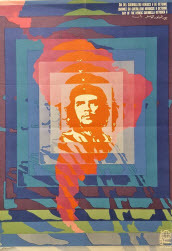
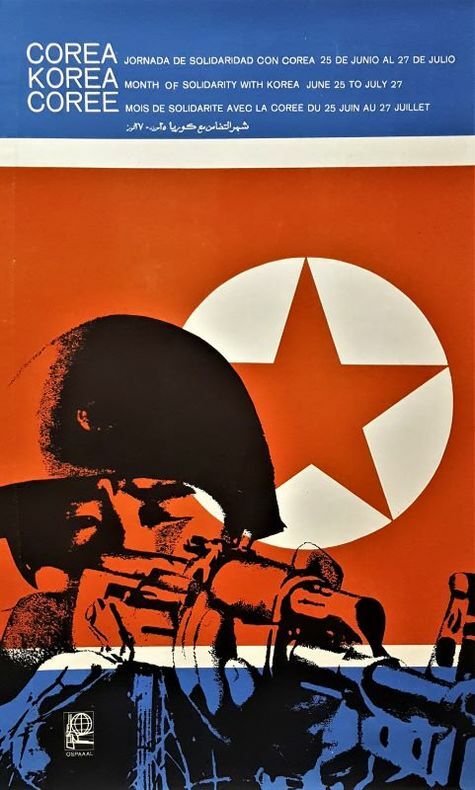
réf. 1827Impression offset. OSPAAAL. 1968. Dim: 49,5 x 34,5 cm. Rare.
réf. 2090Edit. OSPAAAL. 1968. Impression offset. Dim : 53 x 33 cm.
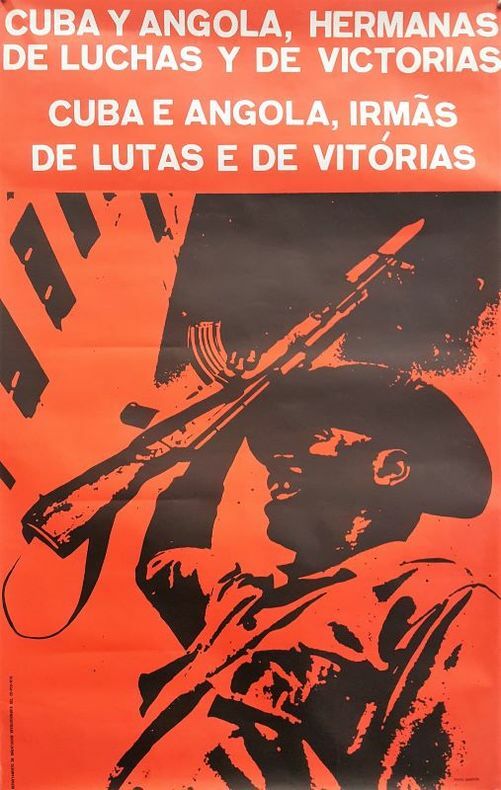
réf. 1105Impression offset. ca.1975. Dim: 72,7 x 46,5 cm. Departamento de Orientación Revolucionaria del Comité Central del Partido Comunista de Cuba. Bon état.