[Cuba/Angola] GASTONLivre Rare Book
2 484 résultats
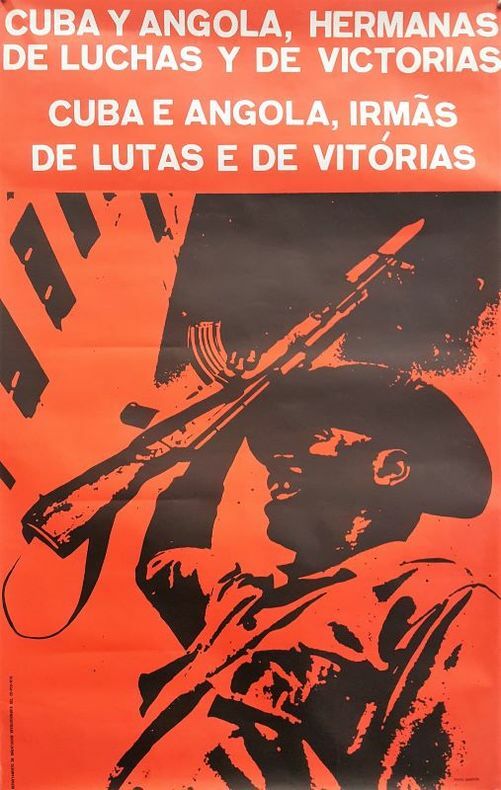
réf. 1105Impression offset. ca.1975. Dim: 72,7 x 46,5 cm. Departamento de Orientación Revolucionaria del Comité Central del Partido Comunista de Cuba. Bon état.
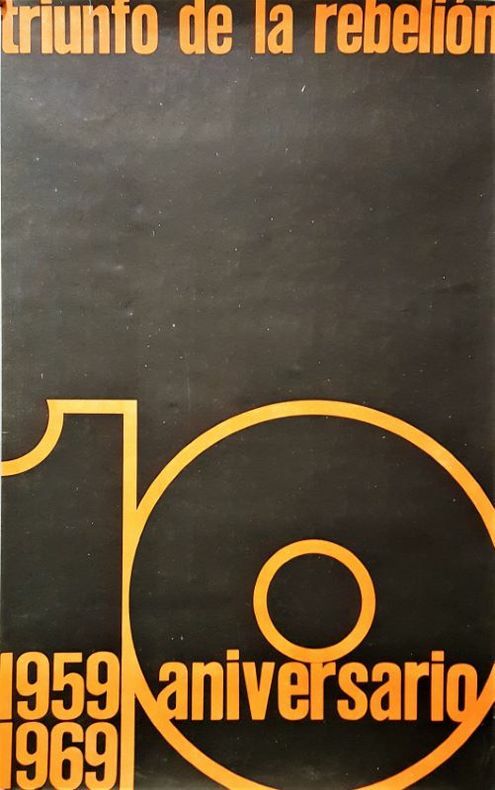
réf. 2096Dans lesprit OLAS.1969. Impression offset.Dim : 52 x 33 cm
réf. 2096Dans lesprit OLAS.1969. Impression offset.Dim : 52 x 33 cm
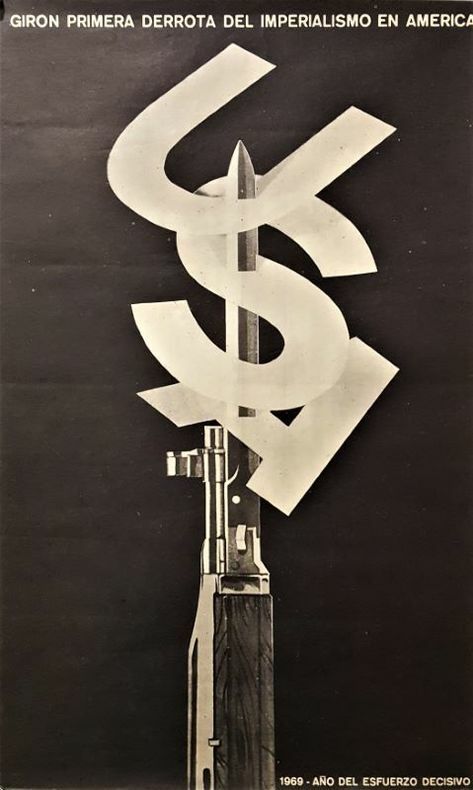
réf. 2092Sans mention d'éditeur. 1969. Impression offset.Dim : 52,5 x 32,5 cm
réf. 2092Sans mention d'éditeur. 1969. Impression offset.Dim : 52,5 x 32,5 cm
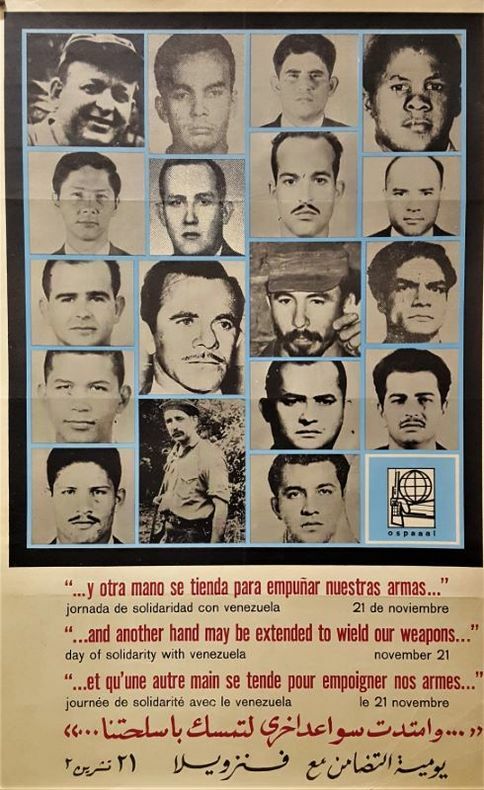
réf. 2094Edit. OSPAAAL . 1970. Impression offset. Dim : 56 x 33 cm
réf. 2094Edit. OSPAAAL . 1970. Impression offset. Dim : 56 x 33 cm
1999réf. 200122Havana: Palcogra/Artes Graficas 1999. Pamphlet. 17p. softbound pamphlet in 7.5x5.5 inch stapled wraps; clean and sound a very good copy. Palcogra/Artes Graficas unknown books
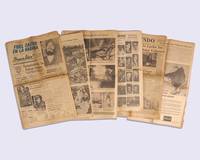
réf. 900066CASTRO'S ARRIVAL IN HAVANA AND THE EARLY DAYS OF THE REVOLUTION CUBA MEXICO AND MIAMI A collection of newspapers spanning the years 1959-1960 Mexico City/Miami Beach: El Mundo Prensa Libre Ultimas Noticias Excelsior 1950-60 A collection of five newspapers each measuring up to 62 x 40cm when fully unfolded; between 8 and 26 pages in length including 'El Mundo' 'Presna Libre' and 'Ultimas Noticias Excelsior' printed mostly in black but with occasional titles in blue; containing numerous black and white photographs of Fidel and Ramon Castro Che Guevara Celia Sanchez Adolfo Lopez Mateos and other members of the Revolution including the execution of Garcia Olayon as well as Richard Nixon J. F. K and other political figures; all newspapers fragile and toned in accordance with age with some splits and chips along folds some loss of text in places; chips to edges and occasional brown spots; one small annotation in blue ink of 'Imogen Browning National Coffee Shop' in Miami; remarkable survivals nonetheless and very good overall. A scarce collection of newspapers which together portray a vivid picture of the turbulent political and social scene towards the end of the 1950s. Articles include 'The Destruction of Santa Clara' and 'With the Rebel Leaders in the Villages' with copious photographs and there are numerous celebratory passages welcoming in Fidel Castro the 'Supreme Leader' and 'Los Gloriosos Heroes de la Revolucion'. There is also a map of the invasion of Cuba and advertisements for children's toys which include automatic pistols army trucks and plastic rockets. All text in Spanish. Please note that these items contain some graphic images unknown
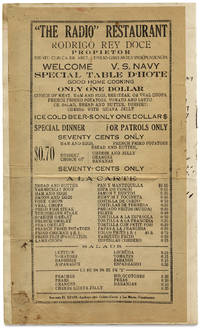
réf. 3726630Guantanamo Cuba: Imprenta El Suaso Aguilerae ntre Calixto Carćia y Los Maceo. ca. 1930s. 13½ x 7½ inches. Broadside simple ornamental border. Single sheet mounted to a larger ledger sheet. Two short tears upon fold lines in margins; tanning; good. A rare unrecorded Cuban restaurant menu directed at American naval servicemen. This bilingual broadside functions as both menu and advertisement for Rodrigo Rey Doce’s restaurant aptly named “The Radio” promising “Good Home Cooking” to the U.S. Navy through a fixed-price offering. For one dollar patrons could order familiar comforts—ham and eggs “beesteak” “french fried potatoes” veal chops or cheese with guava jelly—while ice-cold beer was offered at the same price a detail that hints at the economics of leisure near a U.S. base. An à la carte menu supplemented the set meal listing dishes in both English and Spanish including bacon and eggs fried fish steak fried fish parguitos vermicelli soup and simple fruit desserts. The menu suggests a steady clientele of American sailors likely stationed at Guantánamo and captures a small but telling moment of cultural exchange between Cuban proprietors and the U.S. Navy. A rare survival likely kept as a souvenir by a sailor and brought home to the United States. unknown
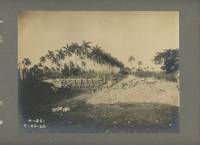
1906réf. List3021La Habana Province Republic of Cuba 1906. Twenty-two photographs measuring 7 ¼ x 9 ½ inches mounted on heavy cardstock measuring 10 x 12 inches. Photos numbered and dated on negative. In album embossed with “Havana Central Railroad Co./ Progress Photographs/ GUANAJAY”. Photos with fine contrast and some wear; mounts with minor damage slightly warped with some detached from binding. Overall excellent. Havana Central Railroad Company was an American company formed in April 1905. It opened two electric tram lines—Havana to Guanajay in 1906 and Havana to Güines in 1907—before it was bought by the English company United Railways following the Panic of 1907. Offered here is a photo album showing the construction of the Guanajay line. The photographs show laborers assisted by horse-drawn carts digging culverts laying tracks and erecting bridges and buildings. This project came on the heels of the successful efforts of the Cuba Company another railroad company to make the emerging Cuban Republic amenable to American business.They did so first by using ‘revocable permits’ which could ostensibly be revoked by the new government when it was formed to circumvent the Foraker Amendment prohibiting concessions to American companies by the US’s military government; and second by using their close relationships to several members of the Cuban Constitutional Convention to include a law allowing irrevocable permits.1 These along with the Platt Amendment and Governor Leonard Wood’s General Railway Law led to what would amount to domination by US interests in Cuba particularly but not exclusively in the railroad industry.2 Of interest to scholars of the early Republic of Cuba especially the history of US businesses in the country. 1 Juan C. Santamarina “The Cuba Company and the Expansion of American Business in Cuba 1898–1915” The Business History Review 74 no. 1 Spring 2000: 41–83. 2 Louis A. Pérez Jr. “Insurrection Intervention and the Transformation of Land Tenure Systems in Cuba 1895–1902” Hispanic American Historical Review 65 no. 2 1985: 229–254. unknown books
1906réf. List3021La Habana Province Republic of Cuba 1906. Twenty-two photographs measuring 7 ¼ x 9 ½ inches mounted on heavy cardstock measuring 10 x 12 inches. Photos numbered and dated on negative. In album embossed with “Havana Central Railroad Co./ Progress Photographs/ GUANAJAY”. Photos with fine contrast and some wear; mounts with minor damage slightly warped with some detached from binding. Overall excellent. Havana Central Railroad Company was an American company formed in April 1905. It opened two electric tram lines—Havana to Guanajay in 1906 and Havana to Güines in 1907—before it was bought by the English company United Railways following the Panic of 1907. Offered here is a photo album showing the construction of the Guanajay line. The photographs show laborers assisted by horse-drawn carts digging culverts laying tracks and erecting bridges and buildings. This project came on the heels of the successful efforts of the Cuba Company another railroad company to make the emerging Cuban Republic amenable to American business.They did so first by using ‘revocable permits’ which could ostensibly be revoked by the new government when it was formed to circumvent the Foraker Amendment prohibiting concessions to American companies by the US’s military government; and second by using their close relationships to several members of the Cuban Constitutional Convention to include a law allowing irrevocable permits.1 These along with the Platt Amendment and Governor Leonard Wood’s General Railway Law led to what would amount to domination by US interests in Cuba particularly but not exclusively in the railroad industry.2 Of interest to scholars of the early Republic of Cuba especially the history of US businesses in the country. 1 Juan C. Santamarina “The Cuba Company and the Expansion of American Business in Cuba 1898–1915” The Business History Review 74 no. 1 Spring 2000: 41–83. 2 Louis A. Pérez Jr. “Insurrection Intervention and the Transformation of Land Tenure Systems in Cuba 1895–1902” Hispanic American Historical Review 65 no. 2 1985: 229–254. unknown
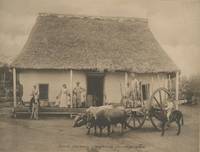
1913réf. List3218Brooklyn New York: The Albertype Co 1913. Photo album of twenty-five 12 ½ x 10 inch pages containing fifty 8 x 6 inch photographs with cardstock cover. Cover and pages worn with marginal damage; pages mostly detached from string binding; photos with captions on negative; Near Fine with Fine contrast. Overall excellent to Near Fine. After the Spanish American War the Isle of Pines now Isla de Juventud in Cuba was contested territory because the 1901 Platt Amendment had specifically left ownership of the island up to a future treaty; the 1904 Hay-Quesada Treaty recognizing Cuban sovereignty over the island failed to be ratified by the US until 1925. American citizens controlled ninety-five per cent or more of the island’s land and were strongly in favor of American annexation. Offered here is a 1913 photo album exhibiting the island’s lush scenery productive farmland and luxurious American residences and resorts. The American property owners are identified by name and include American Residents and Property Owners’ Association President T.J. Keenan who in 1902 described the island under default administration by the Cuban government as “on the verge of anarchy . American interests are absolutely unprotected”1; H.A. Christy Vice President of the Cincinnati Richmond & Muncie Railroad; coal and coke businessman John F. Atcheson and other elites. There are also shots of a number of hotels; grapefruit banana and pineapple farms belonging to the settlers; and recreation by both automobile and boat. Two photographs are not of American ventures: one of the home of José Sarda which housed José Martí before his exile to Spain labeled merely “Nueva Gerona Sarda Homstead”; and one of a house labeled “San Juan Native Homestead” showing a family standing on the porch of their thatched-roof home with an oxcart before them. We find four copies of this photo book on OCLC. Of interest to historians of US imperialism in Cuba following the military withdrawal. 1 “The Isle of Pines President Orders Investigation of Affairs There” The Press-Herald November 15 1902 2. The Albertype Co unknown books
1913réf. List3218Brooklyn New York: The Albertype Co 1913. Photo album of twenty-five 12 ½ x 10 inch pages containing fifty 8 x 6 inch photographs with cardstock cover. Cover and pages worn with marginal damage; pages mostly detached from string binding; photos with captions on negative; Near Fine with Fine contrast. Overall excellent to Near Fine. After the Spanish American War the Isle of Pines now Isla de Juventud in Cuba was contested territory because the 1901 Platt Amendment had specifically left ownership of the island up to a future treaty; the 1904 Hay-Quesada Treaty recognizing Cuban sovereignty over the island failed to be ratified by the US until 1925. American citizens controlled ninety-five per cent or more of the island’s land and were strongly in favor of American annexation. Offered here is a 1913 photo album exhibiting the island’s lush scenery productive farmland and luxurious American residences and resorts. The American property owners are identified by name and include American Residents and Property Owners’ Association President T.J. Keenan who in 1902 described the island under default administration by the Cuban government as “on the verge of anarchy . American interests are absolutely unprotected”1; H.A. Christy Vice President of the Cincinnati Richmond & Muncie Railroad; coal and coke businessman John F. Atcheson and other elites. There are also shots of a number of hotels; grapefruit banana and pineapple farms belonging to the settlers; and recreation by both automobile and boat. Two photographs are not of American ventures: one of the home of José Sarda which housed José Martí before his exile to Spain labeled merely “Nueva Gerona Sarda Homstead”; and one of a house labeled “San Juan Native Homestead” showing a family standing on the porch of their thatched-roof home with an oxcart before them. We find four copies of this photo book on OCLC. Of interest to historians of US imperialism in Cuba following the military withdrawal. 1 “The Isle of Pines President Orders Investigation of Affairs There” The Press-Herald November 15 1902 2. The Albertype Co unknown
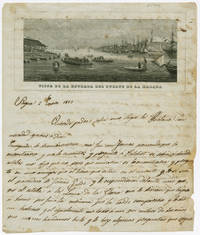
1853réf. 54601Havana. 1853. Writing Home from Havana An attractive Cuban pictorial lettersheet with a neatly executed third-page lithograph illustration of the port of Havana. The image depicts several small boats rowing barrels to and from a loading dock. In another small boat a plantation owner or some form of dignitary is being rowed to shore by a crew of men. On the right side of the image several larger ships lie at anchor and in the background on the shore is the fort guarding the mouth of the harbor the Morro Castle. The sheet is filled out by a man named Juan Fabre writing to his parents on Jan. 2 1853 advising them of his safe arrival in Havana. He talks about meeting up with a relative that he had not seen in two years and working at a shoe shop with another relative who adds a brief post script on the verso of the second leaf. Pictorial lettersheets of Cuba are quite rare on the market. Previously folded. Some chipping at fore-edge slightly affecting text. Light dampstaining and tanning. About very good. unknown books
1853réf. 54601Havana. 1853. Writing Home from Havana An attractive Cuban pictorial lettersheet with a neatly executed third-page lithograph illustration of the port of Havana. The image depicts several small boats rowing barrels to and from a loading dock. In another small boat a plantation owner or some form of dignitary is being rowed to shore by a crew of men. On the right side of the image several larger ships lie at anchor and in the background on the shore is the fort guarding the mouth of the harbor the Morro Castle. The sheet is filled out by a man named Juan Fabre writing to his parents on Jan. 2 1853 advising them of his safe arrival in Havana. He talks about meeting up with a relative that he had not seen in two years and working at a shoe shop with another relative who adds a brief post script on the verso of the second leaf. Pictorial lettersheets of Cuba are quite rare on the market. Previously folded. Some chipping at fore-edge slightly affecting text. Light dampstaining and tanning. About very good. unknown
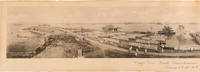
1910réf. 55308Havana: American Photo Co. 1910. The Early American Presence at Guantanamo Bay An impressive view of sailors and marines from the United States' Atlantic Fleet assembled on the parade grounds of Deer Point Camp Guantanamo Bay. Well over five hundred officers seamen and marines are in formation with encampments on both sides of the grounds. In the background looking out into the harbor nineteen ships are visible in the water including the four listed on the photo: Minnesota New Hampshire Mississippi and Idaho. One camp building with a wide veranda is behind and to the left of the sailors. U.S. forces with their Cuban allies first occupied Guantanamo Bay in 1898 during the Spanish American War creating a forward-operating base in their effort to wrest Spanish control of the island. In 1903 the U.S. leased forty-five square miles of land and water at Guantanamo Bay from the newly-independent Cuban government and built the Deer Point Camp to support naval operations in the Caribbean. The American facilities at Guantanamo Bay are in use to this day. The American Photo Company advertised itself as "the best equipped commercial photographers in Cuba." It established a commercial network in Havana that distributed images of Cuba on a worldwide scale. This photo is rare. We found no records of it at auction and no copies in OCLC; however the Naval History and Heritage Command lists a copy in their collections. Panoramic photograph image 7¼ x 47¼ inches on sheet 10 x 49 inches. Printed caption title below image. Publisher and date written in negative at lower right corner; in the lower left corner is written: "#5 2d Regiment U.S. Atlantic Fleet Deer Point Camp Guantanamo Bay Feb. 13 1910. 'Minnesota' 'New Hampshire' 'Mississippi' 'Idaho.'" "Printed in Germany" printed below image at lower left. Some light soiling minor fading to right side of photo some rumpling from previous rolling. Very good. "US Naval Station Guantanamo Bay Cuba" UA 571.45 copy of this image Washington Navy Yard D.C.: Naval History and Heritage Command Naval Heritage Foundation online. unknown books
1910réf. 55308Havana: American Photo Co. 1910. The Early American Presence at Guantanamo Bay An impressive view of sailors and marines from the United States' Atlantic Fleet assembled on the parade grounds of Deer Point Camp Guantanamo Bay. Well over five hundred officers seamen and marines are in formation with encampments on both sides of the grounds. In the background looking out into the harbor nineteen ships are visible in the water including the four listed on the photo: Minnesota New Hampshire Mississippi and Idaho. One camp building with a wide veranda is behind and to the left of the sailors. U.S. forces with their Cuban allies first occupied Guantanamo Bay in 1898 during the Spanish American War creating a forward-operating base in their effort to wrest Spanish control of the island. In 1903 the U.S. leased forty-five square miles of land and water at Guantanamo Bay from the newly-independent Cuban government and built the Deer Point Camp to support naval operations in the Caribbean. The American facilities at Guantanamo Bay are in use to this day. The American Photo Company advertised itself as "the best equipped commercial photographers in Cuba." It established a commercial network in Havana that distributed images of Cuba on a worldwide scale. This photo is rare. We found no records of it at auction and no copies in OCLC; however the Naval History and Heritage Command lists a copy in their collections. Panoramic photograph image 7¼ x 47¼ inches on sheet 10 x 49 inches. Printed caption title below image. Publisher and date written in negative at lower right corner; in the lower left corner is written: "#5 2d Regiment U.S. Atlantic Fleet Deer Point Camp Guantanamo Bay Feb. 13 1910. 'Minnesota' 'New Hampshire' 'Mississippi' 'Idaho.'" "Printed in Germany" printed below image at lower left. Some light soiling minor fading to right side of photo some rumpling from previous rolling. Very good. "US Naval Station Guantanamo Bay Cuba" UA 571.45 copy of this image Washington Navy Yard D.C.: Naval History and Heritage Command Naval Heritage Foundation online. unknown
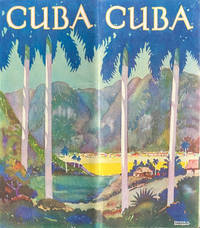
1932réf. 61114Havana Cuba: Cuban Tourist Commission Printed by “Ucar Garcia & Co.” ca. 1932. 4to. 36 pp unpaginated. Printed & illustrated throughout in green black & white photo illustrations throughout graphic text illustrations in green & white. Self-printed colour-illustrated softcovers wraparound cover art by Conrado W. Massaguer minor bumping head of spine shelfwear still VG copy. First edition of this informative travel brochure touting the joys of visiting Cuba touting the historic cathedral square the lush countryside the offerings of sugar coffee and tobacco as well as the beaches hunting sport fishing night life and The Rumba. Massaguer 1889-1965 was an influential Cuban artist whose modernist look dominated magazines catalogues and ads across Latin America and also was a founding member of the Grupo Minorista. Cuban Tourist Commission, Printed by “Ucar Garcia & Co.,” paperback
1931réf. 62232Havana Cuba: Walton & Spencer Co. P. Fernandez & Co. Printers Pl. y Margall 17 1931. 4to. 32 pp unpaginated. Printed & illustrated throughout in green black & white photo illustrations throughout decorative green borders 1 double page folding map at center. Colour-illustrated softcovers cover art front & back by Edward Sandback of Cuban beach old Havana and fruits of Cuba on verso of front cover Art Deco frontisp. in colour by Herminio Portell Vila 1901-1992 Cuban cartoonist & illustrator on verso of back cover center crease fold as issued slight shelfwear NF copy. First edition of this beautifully printed brochure exclaiming over the fun and leisure activities of visiting Cuba featuring photos of historic Havana golf courses polo gambling automobile trips the influences of Africa and Spain and of particular interest the many different residence hotels and leisure places for rent for tourists. Sandback was a Florida artist well-remembered for his travel brochure illustrations such as “Florida: Empire of the Sun” as well as paintings. Walton & Spencer Co., P. Fernandez & Co., Printers, Pl. y Margall 17, paperback
2000réf. 54535Havana: Editorial Echevarria ca. 2000. Oblong 4to. 32 pp unpaginated. w/ 271 colour numbered Revolutionary trading cards all tipped-in including 3 for Revolutionist flags on verso front cover. Colour-illustrated coated softcovers cover art showing heroic Fidel Castro leading the revolutionaries rubbing creasing rippling to textblock still VG- copy. Facsimile souvenir of this famed piece of Cuban Revolutionary propaganda distributed free to the Cuban people originally by Felices Frutas the local canned fruit industry trying to stay afloat and appease Castro as all the countries industries and businesses were nationalized after the Revolution. Featuring the cartoon art of Capdevila this piece traces the return of the Castros from exile in Mexico as they fought capitalist exploitation the fall of Batista the bloody running battles and more all celebrating the success. Editorial Echevarria, paperback
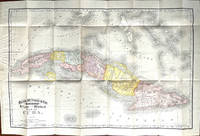
1892réf. 62697Chicago IL: Rand McNally & Co. 1892. One pocket map. 12mo. sized 3.75 x 6 in. which folds out into 21.5 x 15 in. colour-lithograph map printed index on verso. Brown embossed publisher’s cloth gilt lettering on front cover slight shelfwear very slight rubbing light toning & edgewear to map still a VG bright copy. First edition thus of this “Business” pocket map of Cuba issued by the Rand McNally Co. the same year that Jose Marti established the Cuban Revolutionary Party to organize independence of Cuba and Puerto Rico from Spain. The printed index on verso references islands lakes mountains provinces rivers and towns in Cuba. Although several different versions of this particular map were produced by Rand McNally along with the San Francisco Chronicle and versions including an inset map of Havana Harbor none located in Worldcat are the same maps as this pocket map. Rand McNally & Co., hardcover
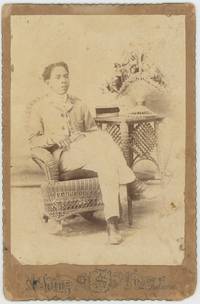
1905réf. BK0086Havana Cuba: A. Sainz 1905. Cabinet photograph measuring 4 x 5 ½ inches on photographer's mount measuring 4 ½ x 6 ½ inches with imprint "A. Sainz / Reina 67 / Habana. Some fading and spotting to image with wear and small losses to edges of mount; good overall. A formal studio portrait of a young Black man seated in a wicker chair beside an elaborate wicker table and floral arrangement. He wears a light-colored suit and holds his hat in his lap posed directly toward the camera. The mount identifies the photographer as A. Sainz of 67 Reina Street Havana. Contemporary Havana advertisements from July and August 1905 place Sainz's photographic studio at this address providing a useful basis for dating the portrait. An appealing example of Black portraiture in early twentieth-century Havana. A. Sainz unknown books
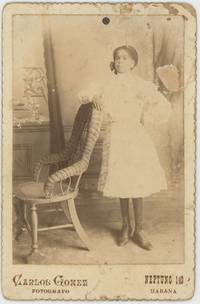
1905réf. BK0085Havana Cuba: Carlos Gómez 1905. Cabinet photograph measuring 4 x 5 ½ inches on photographer's mount measuring 4 ½ x 6 ½ inches with imprint "Carlos Gómez / Fotógrafo / Neptuno 149 / Habana. Image somewhat faded with scattered surface wear and an area of loss at upper right; mount worn at edges good overall. A studio portrait of a young woman posed beside a wicker rocking chair wearing a light-colored dress with high collar and puffed sleeves and looking directly toward the camera. The photograph is notable in the context of Afro-Cuban portraiture around the turn of the twentieth century a period when Havana supported a large commercial photographic trade serving an increasingly broad urban clientele. The sitter is unidentified and no inscription survives to provide further biographical information. Carlos Gómez Guardiola was operating a photographic studio at 149 Neptuno by 1902 when a contemporary Havana newspaper noted that he had already established a reputation despite having been in business only a short time. Gómez's work appears in Juaco López Ãlvarez's Fotografía de Asturianos en américa with an identical "Carlos Gómez / Fotógrafo / Neptuno 149 / Habana" imprint; Ãlvarez dates it to about 1905 and we date the present portrait accordingly. 1 Juaco López Ãlvarez Ed. Fotografía de Asturianos en américa 2000 222. . Carlos Gómez unknown books
1905réf. BK0085Havana Cuba: Carlos Gómez 1905. Cabinet photograph measuring 4 x 5 ½ inches on photographer's mount measuring 4 ½ x 6 ½ inches with imprint "Carlos Gómez / Fotógrafo / Neptuno 149 / Habana. Image somewhat faded with scattered surface wear and an area of loss at upper right; mount worn at edges good overall. A studio portrait of a young woman posed beside a wicker rocking chair wearing a light-colored dress with high collar and puffed sleeves and looking directly toward the camera. The photograph is notable in the context of Afro-Cuban portraiture around the turn of the twentieth century a period when Havana supported a large commercial photographic trade serving an increasingly broad urban clientele. The sitter is unidentified and no inscription survives to provide further biographical information. Carlos Gómez Guardiola was operating a photographic studio at 149 Neptuno by 1902 when a contemporary Havana newspaper noted that he had already established a reputation despite having been in business only a short time. Gómez's work appears in Juaco López Ãlvarez's Fotografía de Asturianos en américa with an identical "Carlos Gómez / Fotógrafo / Neptuno 149 / Habana" imprint; Ãlvarez dates it to about 1905 and we date the present portrait accordingly. 1 Juaco López Ãlvarez Ed. Fotografía de Asturianos en américa 2000 222. . Carlos Gómez unknown