[Cuba]; [US Navy] U SBiblio.com
2.639 Ergebnisse
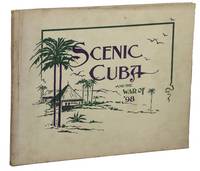
1898Best.-Nr. 00009833Chicago: Belford Middlebrook & Co 1898. First edition. Hardcover. Very Good. 4to. Unpaginated. White cloth with decorations in purple and green on the front board. Illustrated with numerous black and white photographs and maps. With introduction and descriptive text. Photographs showcase the beautiful sights of Cuba along with military points of interest and several U.S. Navy ships. A Very Good book with a touch of rubbing to the corners and a bit of soiling to the cloth. Belford, Middlebrook & Co hardcover
2020Best.-Nr. Gyan-9789357138239Facsimile Publisher 2020. Hardcover. New. 25.13 x 18.78 x 2.3 cm. English Facsimile Publisher hardcover
2020Best.-Nr. Gyan-9789357138239Facsimile Publisher 2020. Hardcover. New. 25.13 x 18.78 x 2.3 cm. English Facsimile Publisher hardcover
1970Reli?. 355 pages. Jaquette. 17,5x24xcm.
Best.-Nr. 27040Societe continentale d'editions modernes illustrees, collection "Connaissances des Iles", 1970. Format 18x24 cm, reliure editeur, toilee, motif et titres gauffres a froid sur le premier plat, sous rhodoid, 351 pages.Tres bon etat.
Album in-16° gr. oblungo, pp. 104 di cui 102 fotografie monocrome. Leg. in cartonato edit. figurato a colori. Tracce del tempo sui piatti.
Best.-Nr. 7531Lausanne, La Guilde du Livre 1961, 280x220mm, cartonnage sous jaquette de l’éditeur.
in-4° 95-XXXVII p., relie cartonnage edition, jaquette illustree. Manque a la part. super. de la jaquette sinon bel exemplaire. [PLC-5]
Best.-Nr. 601389La Guilde Du Livre Lausanne 1961 In-4 cartonnage sous jaquette illustrée en couleurs. Photographies en noir hors-texte de PIC, texte de Claude FAUX. Edition originale numérotée. Parfait état.
1961Best.-Nr. AUB-5681Lausanne, la Guilde du Livre 1961. Bel exemplaire broché, couverture rempliée d'éd., in-4 numéroté.
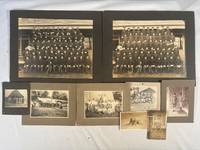
1909Best.-Nr. 224671909. Soldier Harold Howard's person documentaation of service in the 11th U.S. Cavalry during the period of American military occupation and intervention in Cuba following the Spanish American War. These photographs place an enlisted cavalryman within the broader framework of U.S. expansionist policy in the Caribbean under the Platt Amendment when American troops were repeatedly deployed to Cuba to oversee political stability infrastructure and economic interests. The archive includes identified images of Sgt. Harold Howard and captures both formal military organization and informal daily life offering a ground-level record of U.S. cavalry presence during a period of continued occupation and reintervention including the second U.S. occupation of Cuba from 1912 to 1913. Archive of nine vintage silver gelatin photographs ranging approximately from 3.5 x 5 inches to 10 x 13 inches many mounted to original photographer boards and some annotated in ink or pencil. Two large-format formal group portraits depict Troop K 11th U.S. Cavalry at Fort Oglethorpe Georgia 1913 showing soldiers in full dress uniform arranged in tiered formation with visible regimental flag marked "11" and "K" with Howard identified in one image. Smaller photographs include a group portrait of U.S. cavalrymen in Pinar del Río Cuba dated 1908 showing soldiers in campaign dress posed near a stable as well as candid camp scenes featuring cooking areas barracks life and assembled troops. Two photo postcards function as personal correspondence with handwritten messages from Howard dated April 1 and September 9 1913 addressed to Mrs. A. L. Howard in Maine referencing weather conditions and upcoming exhibition drills providing direct evidence of mobility and routine within cavalry service. Additional images include a cabinet card of two uniformed soldiers and a scene depicting Black Cuban civilians posed near a thatched structure situating U.S. military presence within local social environments. Taken together the archive documents the lived experience of a U.S. cavalryman operating within the infrastructure of American imperial policy in the Caribbean linking domestic military bases such as Fort Oglethorpe with overseas deployment in Cuba. The photographs record both the formal visual culture of the U.S. Army and the everyday conditions of enlisted service while the inclusion of Cuban subjects and locations underscores the entanglement of military occupation with local populations. General edge wear throughout with occasional pinholes adhesive remnants and minor chipping to mounts; some toning to boards. Photographs remain clear and stable with annotations legible. Overall very good condition. unknown
1909Best.-Nr. 224671909. Soldier Harold Howard's person documentaation of service in the 11th U.S. Cavalry during the period of American military occupation and intervention in Cuba following the Spanish American War. These photographs place an enlisted cavalryman within the broader framework of U.S. expansionist policy in the Caribbean under the Platt Amendment when American troops were repeatedly deployed to Cuba to oversee political stability infrastructure and economic interests. The archive includes identified images of Sgt. Harold Howard and captures both formal military organization and informal daily life offering a ground-level record of U.S. cavalry presence during a period of continued occupation and reintervention including the second U.S. occupation of Cuba from 1912 to 1913. Archive of nine vintage silver gelatin photographs ranging approximately from 3.5 x 5 inches to 10 x 13 inches many mounted to original photographer boards and some annotated in ink or pencil. Two large-format formal group portraits depict Troop K 11th U.S. Cavalry at Fort Oglethorpe Georgia 1913 showing soldiers in full dress uniform arranged in tiered formation with visible regimental flag marked "11" and "K" with Howard identified in one image. Smaller photographs include a group portrait of U.S. cavalrymen in Pinar del Río Cuba dated 1908 showing soldiers in campaign dress posed near a stable as well as candid camp scenes featuring cooking areas barracks life and assembled troops. Two photo postcards function as personal correspondence with handwritten messages from Howard dated April 1 and September 9 1913 addressed to Mrs. A. L. Howard in Maine referencing weather conditions and upcoming exhibition drills providing direct evidence of mobility and routine within cavalry service. Additional images include a cabinet card of two uniformed soldiers and a scene depicting Black Cuban civilians posed near a thatched structure situating U.S. military presence within local social environments. Taken together the archive documents the lived experience of a U.S. cavalryman operating within the infrastructure of American imperial policy in the Caribbean linking domestic military bases such as Fort Oglethorpe with overseas deployment in Cuba. The photographs record both the formal visual culture of the U.S. Army and the everyday conditions of enlisted service while the inclusion of Cuban subjects and locations underscores the entanglement of military occupation with local populations. General edge wear throughout with occasional pinholes adhesive remnants and minor chipping to mounts; some toning to boards. Photographs remain clear and stable with annotations legible. Overall very good condition. unknown books
1971357 p.; 20,5 cm. Bross. edit. Leggere tracce d'uso, buono. Tutti i discorsi di Fidel Castro dal 19 maggio al 7 dicembre 1970
1971Mm 125x205 Attualità. Brossura editoriale di pagine 357, timbro al frontespizio. Opera in buone condizioni. Spedizione in 24 ore dalla conferma dell'ordine.
1971357 pagine, 20,5 cm. Brossura editoriale. Buono
Best.-Nr. CON-FOL-Cuba dos-06-29-20Very Good. Light aged tanning to edges of pages as well as minor cover and edge wear. Inside clean text pages good with no markings or writing. Nice copy. Satisfaction guaranteed. unknown
1998Best.-Nr. 2300Abbeville 1998 In-8 relié sous jaquette, 232 pp. illustrations en couleur
1933Milano, 1933, estratto con copertina muta, pp. 686/712 con ill. - !! ATTENZIONE !!: Con il termine estratto (o stralcio) intendiamo riferirci ad un fascicolo contenente un articolo di rivista, sia che esso sia stato stampato a parte utilizzando la stessa composizione sia che provenga direttamente da una rivista. Le pagine sono indicate come "da/a", ad esempio: 229/231 significa che il testo è composto da tre pagine. Quando la rivista di provenienza non viene indicata é perchè ci è sconosciuta. - !! ATTENTION !!: : NOT A BOOK : “estratto” or “stralcio” means simply a few pages, original nonetheless, printed in a magazine. Pages are indicated as in "from” “to", for example: 229/231 means the text comprises three pages (229, 230 and 231). If the magazine that contained the pages is not mentioned, it is because it is unknown to us.
1898In 8, pp. 62 + (2b) + (4). Bruniture al p. ant. Br. ed.
1898In-8° (cm. 24,7), pp. 62. Bross. edit.Ombre in cop., strappi e mancanze al dorso e sgradevole erosione al bordo del piatto posteriore e degli ultimi fogli, senza perdita di stampato, PIERANTONI, giurista e uomo politico, docente universitario di diritto costituzionale e di diritto internazionale a Modena, Napoli e Roma, avvocato, patriota, deputato al parlamento (fino al 1882), senatore del Regno, cofondatore dell'Istituto internazionale dell'Aia. Esemplare da studio, ma raro, censito in 7 bibl. Così com'è
1895Composizione di sette vignette: Veduta della città dal mare - Cavalli carichi di foraggio - Una via della città - Il generale Martinez Campos - Il palazzo d’inverno del Governatore - Il quartiere dei lattai - Ponies da basto al mercato. Testo al retro
1976Roma, Editori Riuniti. 1976, 16mo (cm. 18,5 x 10) brossura con copertina illustrata, pp. 336.
1976335 p.; 18,5 cm. Brossura editoriale. Buono. Sigla e data manoscritti in piccoli caratteri all'occhiello
2016brossura In questo volume, a proposito della eccezionalità di Cuba, si fa menzione specifica dello sport, perché anche questa dimensione atletica, nell'isola, ha un volto a sé, esprime una diatesi particolare, detiene una funzione nobile, legata, come tutto quello che discende dalla Rivoluzione, al concetto ideale e supremo di valorizzazione della Patria.
1963In-8° gr. pp. 94 con molte foto n.t. Bross. edit.