Münster Sebastian (1488 - 1552)MareMagnum

1560Tavola tratta dalla Cosmographiae Universalis, edizione in tedesco, Basilea, seconda metà del XVI secolo.La Cosmographiae Universalis di Sebastian Münster (1488-1552), stampata per la prima volta Basilea nel 1544 dall’editore Heinrich Petri, venne più volte aggiornata e aumentata di nuove carte geografiche e rappresentazioni urbane nelle sue numerose edizioni che arrivano all’inizio del secolo successivo. Münster aveva lavorato a raccogliere informazioni al fine di ottenere un'opera che non deludesse le aspettative e, dopo un'ulteriore pubblicazione in tedesco abbellita da 910 stampe su legno, giunse nel 1550 all'edizione definitiva in latino, illustrata da 970 silografie. Vi furono poi numerose edizioni in diverse lingue, fra cui latino, francese, italiano, inglese e ceco. Dopo la sua morte di Münster (1552), Heinrich Petri prima, e il figlio Sebastian poi, continuarono la pubblicazione dell’opera. La Cosmographia universalis fu uno dei libri più popolari e di successo del XVI secolo, e vide ben 24 edizioni in 100 anni: l'ultima edizione tedesca venne pubblicata nel 1628, molto tempo dopo la morte dell'autore. La Cosmographia conteneva non solo le ultime mappe e vedute di tutte le città più famose, ma anche una serie di notizie enciclopediche di dettagli relative al mondo conosciuto, e sconosciuto. Il particolare successo anche commerciale di quest'opera fu dovuto in parte alle belle incisioni (tra i cui autori si possono citate Hans Holbein il Giovane, Urs Graf, Hans Rudolph Manuel Deutsch, David Kandel). Silografia, bella coloritura a mano, in buone condizioni. Plate taken from the Cosmographiae Universalis, German edition, Basel, second half of the 16th Century. The Cosmographiae Universalis of Sebastian Münster (1488-1552), printed for the first time in Basel in 1544 by the publisher Heinrich Petri, was updated several times and increased with new maps and urban representations in its many editions until the beginning of the next century. Münster had worked to collect information in order to obtain a work that did not disappoint expectations and, after a further publication in German embellished with 910 woodblock prints, arrived in 1550 to the final edition in Latin, illustrated by 970 woodcuts. There were then numerous editions in different languages, including Latin, French, Italian, English and Czech. After his death in Münster (1552), Heinrich Petri first, and then his son Sebastian, continued the publication of the work. The Cosmographia universalis was one of the most popular and successful books of the 16th century, and saw as many as 24 editions in 100 years: the last German edition was published in 1628, long after the author's death. The Cosmographia contained not only the latest maps and views of all the most famous cities, but also a series of encyclopedic details related to the known, and unknown, world. The particular commercial success of this work was due in part to the beautiful engravings (among whose authors can be mentioned Hans Holbein the Younger, Urs Graf, Hans Rudolph Manuel Deutsch, David Kandel). Woodcut, beautiful hand-coloring, in good condition.
1588Tavola tratta dalla Cosmographiae Universalis, edizione in tedesco, Basilea, seconda metà del XVI secolo.La Cosmographiae Universalis di Sebastian Münster (1488-1552), stampata per la prima volta Basilea nel 1544 dall’editore Heinrich Petri, venne più volte aggiornata e aumentata di nuove carte geografiche e rappresentazioni urbane nelle sue numerose edizioni che arrivano all’inizio del secolo successivo. Münster aveva lavorato a raccogliere informazioni al fine di ottenere un'opera che non deludesse le aspettative e, dopo un'ulteriore pubblicazione in tedesco abbellita da 910 stampe su legno, giunse nel 1550 all'edizione definitiva in latino, illustrata da 970 silografie. Vi furono poi numerose edizioni in diverse lingue, fra cui latino, francese, italiano, inglese e ceco. Dopo la sua morte di Münster (1552), Heinrich Petri prima, e il figlio Sebastian poi, continuarono la pubblicazione dell’opera. La Cosmographia universalis fu uno dei libri più popolari e di successo del XVI secolo, e vide ben 24 edizioni in 100 anni: l'ultima edizione tedesca venne pubblicata nel 1628, molto tempo dopo la morte dell'autore. La Cosmographia conteneva non solo le ultime mappe e vedute di tutte le città più famose, ma anche una serie di notizie enciclopediche di dettagli relative al mondo conosciuto, e sconosciuto. Il particolare successo anche commerciale di quest'opera fu dovuto in parte alle belle incisioni (tra i cui autori si possono citate Hans Holbein il Giovane, Urs Graf, Hans Rudolph Manuel Deutsch, David Kandel). Silografia, bella coloritura a mano, in buone condizioni. Plate taken from the Cosmographiae Universalis, German edition, Basel, second half of the 16th Century. The Cosmographiae Universalis of Sebastian Münster (1488-1552), printed for the first time in Basel in 1544 by the publisher Heinrich Petri, was updated several times and increased with new maps and urban representations in its many editions until the beginning of the next century. Münster had worked to collect information in order to obtain a work that did not disappoint expectations and, after a further publication in German embellished with 910 woodblock prints, arrived in 1550 to the final edition in Latin, illustrated by 970 woodcuts. There were then numerous editions in different languages, including Latin, French, Italian, English and Czech. After his death in Münster (1552), Heinrich Petri first, and then his son Sebastian, continued the publication of the work. The Cosmographia universalis was one of the most popular and successful books of the 16th century, and saw as many as 24 editions in 100 years: the last German edition was published in 1628, long after the author's death. The Cosmographia contained not only the latest maps and views of all the most famous cities, but also a series of encyclopedic details related to the known, and unknown, world. The particular commercial success of this work was due in part to the beautiful engravings (among whose authors can be mentioned Hans Holbein the Younger, Urs Graf, Hans Rudolph Manuel Deutsch, David Kandel). Woodcut, beautiful hand-coloring, in good condition.
1550Bella veduta di Roma tratta dalla Cosmographiae Universalis, edizione in tedesco, Basilea fine del XVI secolo.La veduta di Munster cattura con raffinatezza le mura fortificate e i Sette Colli della Città Eterna, con attività significative lungo il fiume Tevere. Molti dei principali monumenti di Roma sono chiaramente identificabili. In basso una legenda che individua circa 23 punti di riferimento."Seppure incisa mezzo secolo dopo le piante del Bergomense e dello Schedel, la veduta ritrae la città come si presentava alla fine del '400 attingendo al medesimo prototipo comunemente indicato nel panorama di Mantova a sua volta ripreso da un presunto ma tuttora sconosciuto panorama inciso nella bottega di Francesco Rosselli verso il 1485. L'immagine venne inserita in una delle opere più note del '500, la Cosmographiae Universalis per la prima volta edita in latino nel 1550 e poi ristampata più volte in italiano, francese e tedesco. […] è stata più volte rilevata dai critici l'assenza del Colosseo dall'autore stesso curiosamente giustificata alla lettera G della legenda "per mancanza di spazio". Oltre ai Dioscuri presso le Terme di Diocleziano, presenti anche nelle piante di Bergomense e Schedel, è qui indicata acnhe la statua equestre del Marco Aurelio nella sua originale collocazione presso San Giovanni in Laterano da cui fu spostata nel 1538 per la visista di Carlo V a Roma e collocata da Michelangelo in Campidoglio. È ancora in piedi la Meta Romuli sebbene demolita nel 1499 e le due edicole alla fine di Castel Sant'Angelo demolite dopo il Sacco di Roma del 1527. L'edificio più recente raffigurato è il Belvedere Vaticano (1485/87" (cfr. Marigliani p. 118). La Cosmographiae Universalis di Sebastian Münster (1488-1552), stampata per la prima volta Basilea nel 1544 dall’editore Heinrich Petri, venne più volte aggiornata e aumentata di nuove carte geografiche e rappresentazioni urbane nelle sue numerose edizioni che arrivano all’inizio del secolo successivo. Münster aveva lavorato a raccogliere informazioni al fine di ottenere un'opera che non deludesse le aspettative e, dopo un'ulteriore pubblicazione in tedesco abbellita da 910 stampe su legno, giunse nel 1550 all'edizione definitiva in latino, illustrata da 970 silografie. Vi furono poi numerose edizioni in diverse lingue, fra cui latino, francese, italiano, inglese e ceco. Dopo la sua morte di Münster (1552), Heinrich Petri prima, e il figlio Sebastian poi, continuarono la pubblicazione dell’opera. La Cosmographia universalis fu uno dei libri più popolari e di successo del XVI secolo, e vide ben 24 edizioni in 100 anni: l'ultima edizione tedesca venne pubblicata nel 1628, molto tempo dopo la morte dell'autore. La Cosmographia conteneva non solo le ultime mappe e vedute di tutte le città più famose, ma anche una serie di notizie enciclopediche di dettagli relative al mondo conosciuto, e sconosciuto. Il particolare successo anche commerciale di quest'opera fu dovuto in parte alle belle incisioni (tra i cui autori si possono citate Hans Holbein il Giovane, Urs Graf, Hans Rudolph Manuel Deutsch, David Kandel). Silografia, bella coloritura a mano, in buone condizioni. BibliografiaA. P. Frutaz, "Le piante di Roma", XCVIII, tav. 170; C. Marigliani, "Le Piante di Roma delle collezioni private", tav. 14; M. Gori Sassoli (a cura di), "Roma Veduta" p. 140, n. 6; Scaccia Scarafoni, n. 126. Munster's view captures a fine sense of the fortified walls and Seven Hills of the Eternal City, with significant activity along the Tiber River. Many of Rome's great landmarks are clearly identifiable in this important early view. The key at the bottom locates approximately 23 landmarks.Although engraved half a century later from the maps by Bergomensis and Schedel, the view depicts the city as it was at the end of the 15th century, drawing on the same prototype commonly indicated in the panorama of Mantua in turn taken from a still unknown panorama engraved in the workshop of Francesco Rosselli around 1485. The image was included in one of the most famous works of the '500, the Cosmographiae Universalis for the first time published in Latin in 1550 and then reprinted several times in Italian, French and German. The absence of the Colosseum - justified by the author himself by the letter G of the legend "for lack of space" - has been noted several times by critics. In addition to the Dioscuri at the Baths of Diocletian, also present in the plants of Bergomensis and Schedel, the equestrian statue of Marcus Aurelius in its original location near San Giovanni in Laterano, from which it was moved in 1538 for the visist of Charles V in Rome and placed by Michelangelo in the Capitoline Hill, is here indicated. It is still standing the Meta Romuli although demolished in 1499 and the two "edicole" at the end of Castel Sant'Angelo, demolished after the Sack of Rome of 1527. The most recent building depicted is the Vatican Belvedere, built in 1485/87. (see Marigliani p. 118). Plate taken from the Cosmographiae Universalis, German edition, Basel, second half of the 16th Century. The Cosmographiae Universalis of Sebastian Münster (1488-1552), printed for the first time in Basel in 1544 by the publisher Heinrich Petri, was updated several times and increased with new maps and urban representations in its many editions until the beginning of the next century. Münster had worked to collect information in order to obtain a work that did not disappoint expectations and, after a further publication in German embellished with 910 woodblock prints, arrived in 1550 to the final edition in Latin, illustrated by 970 woodcuts. There were then numerous editions in different languages, including Latin, French, Italian, English and Czech. After his death in Münster (1552), Heinrich Petri first, and then his son Sebastian, continued the publication of the work. The Cosmographia universalis was one of the most popular and successful books of the 16th century, and saw as many as 24 editions in 100 years: the last German edition was published in 1628, long after the author's death. The Cosmographia contained not only the latest maps and views of all the most famous cities, but also a series of encyclopedic details related to the known, and unknown, world. The particular commercial success of this work was due in part to the beautiful engravings (among whose authors can be mentioned Hans Holbein the Younger, Urs Graf, Hans Rudolph Manuel Deutsch, David Kandel). Woodcut, beautiful hand-coloring, in good condition. BibliografiaA. P. Frutaz, "Le piante di Roma", XCVIII, tav. 170; C. Marigliani, "Le Piante di Roma delle collezioni private", tavv. 11/14; M. Gori Sassoli (a cura di), "Roma Veduta" p. 140, n. 6; Scaccia Scarafoni, n. 126.
1588Tavola tratta dalla Cosmographiae Universalis, edizione in tedesco, Basilea, seconda metà del XVI secolo.La Cosmographiae Universalis di Sebastian Münster (1488-1552), stampata per la prima volta Basilea nel 1544 dall’editore Heinrich Petri, venne più volte aggiornata e aumentata di nuove carte geografiche e rappresentazioni urbane nelle sue numerose edizioni che arrivano all’inizio del secolo successivo. Münster aveva lavorato a raccogliere informazioni al fine di ottenere un'opera che non deludesse le aspettative e, dopo un'ulteriore pubblicazione in tedesco abbellita da 910 stampe su legno, giunse nel 1550 all'edizione definitiva in latino, illustrata da 970 silografie. Vi furono poi numerose edizioni in diverse lingue, fra cui latino, francese, italiano, inglese e ceco. Dopo la sua morte di Münster (1552), Heinrich Petri prima, e il figlio Sebastian poi, continuarono la pubblicazione dell’opera. La Cosmographia universalis fu uno dei libri più popolari e di successo del XVI secolo, e vide ben 24 edizioni in 100 anni: l'ultima edizione tedesca venne pubblicata nel 1628, molto tempo dopo la morte dell'autore. La Cosmographia conteneva non solo le ultime mappe e vedute di tutte le città più famose, ma anche una serie di notizie enciclopediche di dettagli relative al mondo conosciuto, e sconosciuto. Il particolare successo anche commerciale di quest'opera fu dovuto in parte alle belle incisioni (tra i cui autori si possono citate Hans Holbein il Giovane, Urs Graf, Hans Rudolph Manuel Deutsch, David Kandel). Silografia, bella coloritura a mano, in buone condizioni. Plate taken from the Cosmographiae Universalis, German edition, Basel, second half of the 16th Century. The Cosmographiae Universalis of Sebastian Münster (1488-1552), printed for the first time in Basel in 1544 by the publisher Heinrich Petri, was updated several times and increased with new maps and urban representations in its many editions until the beginning of the next century. Münster had worked to collect information in order to obtain a work that did not disappoint expectations and, after a further publication in German embellished with 910 woodblock prints, arrived in 1550 to the final edition in Latin, illustrated by 970 woodcuts. There were then numerous editions in different languages, including Latin, French, Italian, English and Czech. After his death in Münster (1552), Heinrich Petri first, and then his son Sebastian, continued the publication of the work. The Cosmographia universalis was one of the most popular and successful books of the 16th century, and saw as many as 24 editions in 100 years: the last German edition was published in 1628, long after the author's death. The Cosmographia contained not only the latest maps and views of all the most famous cities, but also a series of encyclopedic details related to the known, and unknown, world. The particular commercial success of this work was due in part to the beautiful engravings (among whose authors can be mentioned Hans Holbein the Younger, Urs Graf, Hans Rudolph Manuel Deutsch, David Kandel). Woodcut, beautiful hand-coloring, in good condition.
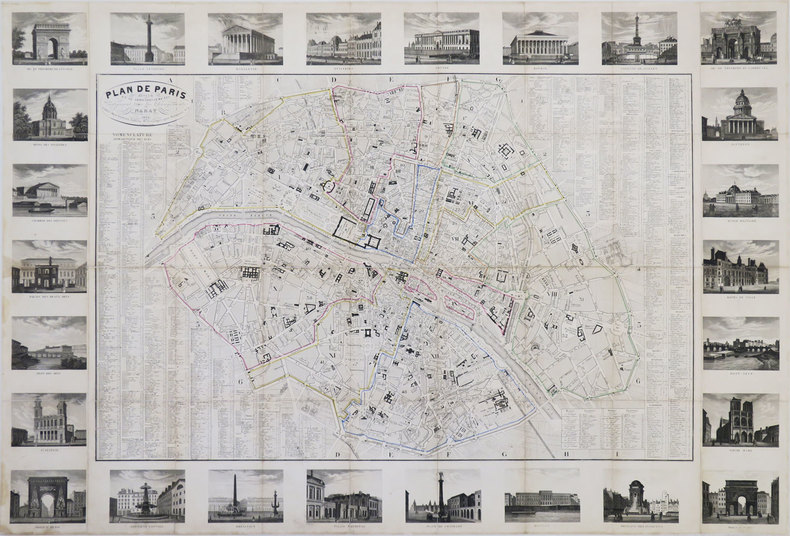
1754ref. 27639Lyon DAUDET 1754 une carte ancienne avec Limites colorée d'époque en vert , rouge et jaune, cartouche non coloré, gravée sur cuivre en noir par N. BAILLEUL, Format total : 100 centimètres de haut par 125,5 centimètres de large, 1754 Lyon DAUDET Editeur,
ref. 28741, Brepols, 2001 Hardback,approx. 160 p., 30 b/w ill. 54 colour ill., 210 x 285 mm, in Dutch. ISBN 9789056220402.
Zaragoza, 1999. Folio; 279 pp., cincuenta y dos de ellas y tres láminas, dos de ellas plegadas, con la reproducción facsímilar del Códice. Cubiertas originales.
Paris, A. V. Vallad fils et Cie., 1886. 4to.; 12-45 pp., 20 hojas sin paginar, 20 planos impresos en color y un plano plegado. Encuadernación original en tela estampada.
ref. BN209964Good Vibrations- Verlag 2005. Motorrad Powerkarten - Nord- und Ostdeutschland - 8 Karten laminiert Motorrad Powerkarten - Nord- und Ostdeutschland - 8 Karten laminiert Nabelt maps and more Good Vibrations- Verlag, 2005 unknown
ref. 46143Flamignoul, Fietsmuseum, s.d. (ca.1970) Gebonden, kunstleder met titelillustr., 209pp., 16.5x24.5cm., oblong, ills. in z/w., goede staat. Zeldzaam!!
1774Four-plate engraving by J. E. Mansfeld, mounted on cloth and framed under glass. 131 x 162 cm. Probably the most monumental layout plan of the Vienna inner city ever published, doubling the scale of Nagel's better-known (and more common) plan of Vienna and its suburbs (1781), and self-published as early as 1774. Nagel had begun his surveying task shortly after completion of the re-numbering of houses in 1770. "Probably completed in October 1774" (cf. Dörflinger). - Slight browning to margins, otherwise fine. Extremely rare. Dörflinger, Österreichische Karten des 18. Jhs. I, 71 and note 115. Not in Mayer or Eckl colls.
1974[12], 87 pages. Bilingual English/French. Printed upon glossy stock. Illustrated throughout in blue and brown. "From its very beginning to the present time, the history of the nation's capital unfolds from the cartographical material housed in the National Map Collection. The collection includes over three hundred maps directly relating to the Ottawa area; the selected maps reproduced in this book tell the highlights of the story. A list of Ottawa area maps appears in the appendix. This list should be of great value to historical researchers and all others interested in Canada's capital." - Preface. Moderate external wear. Contents clean and unmarked. A sound copy of this informative reference. Bishop p.36. Book
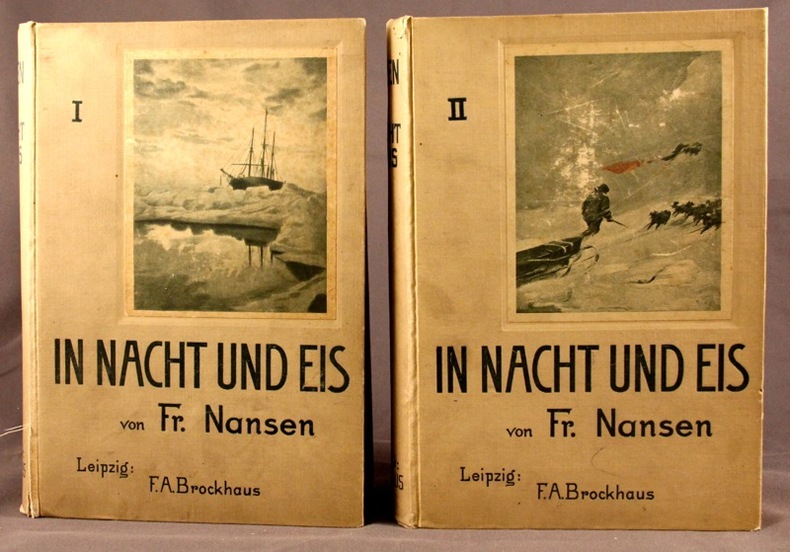
1897ref. 2105Leipzig, F.A.B. Brockhaus, 1897. 2 vol. in-8 de X-527 + VIII-507 pages, pleine percaline grise d’éditeur (sans doute blanche autrefois), dos lisses, 1ers plats illustrés. Mors fendus sur quelques centimètres au vol. 1.
18901 feuille repli?e. 32x49 cm.
1980No marks or inscriptions. No creasing to covers or to spine. A very clean very tight copy with bright unmarked boards and no bumping to corners. Dust jacket not price clipped or marked with chips and nicks to upper and lower edges. 195pp. An account of 5000 years of history of Malta, very well illustrated with the culture, architecture, industry and leisure of the island today. Text in English, French and German. Undated ca 1980.
ref. 121178Genève et Bruxelles Chez les principaux libraires, s.d. [1870 circa] 1 vol. broché Placard au format 46 x 36 cm imprimé au recto sur 4 colonnes. Compte rendu d'un procès imaginaire où Napoléon III comparaît devant l’Histoire, les témoins cités étant la Paix, la Liberté, la Dette, le Sénat, la Police... Le jugement prononcé par l’Histoire déclare que « le règne de Napoléon III commencé par un coup d’état, terminé par une invasion, prendra place au rang des règnes les plus néfastes et les plus douloureux que la France ait eu à supporter… ». Trace de pli central, excellente condition. Document rare.
ref. 121178Genève et Bruxelles Chez les principaux libraires, s.d. [1870 circa] 1 vol. broché Placard au format 46 x 36 cm imprimé au recto sur 4 colonnes. Compte rendu d'un procès imaginaire où Napoléon III comparaît devant l’Histoire, les témoins cités étant la Paix, la Liberté, la Dette, le Sénat, la Police... Le jugement prononcé par l’Histoire déclare que « le règne de Napoléon III commencé par un coup d’état, terminé par une invasion, prendra place au rang des règnes les plus néfastes et les plus douloureux que la France ait eu à supporter… ». Trace de pli central, excellente condition. Document rare.
1830ref. LBW-3442Paris, Danlos, 1830. En 36 sections jointes et montées sur toile de 590 x 877 mm.
1974ref. 4860Genève, Exclusivité Univers-Philathélie, 1974. Enveloppe au format 16,6 x 9 cm., ornée d'une belle vignette en soie encadrée d'une roulette doré. 2 timbres représentant le siège du Bureau international du travail, affranchissement philatélique, premier jour d'émission.
ref. ria9781566959230_inpSheet map folded. New. New Book; Fast Shipping from UK; Not signed; Not First Edition; Waterproof Tear-Resistant Topographic Maps. unknown
ref. 1597752258.Gmap. Good. Access codes and supplements are not guaranteed with used items. May be an ex-library book. unknown
2023ref. DADAX1597752258National Geographic 2023-01-01. 2023. map. New. 4.25x0.50x9.25. Buy with confidence. Excellent Customer Service & Return policy. National Geographic unknown
2012ref. 1-0792250222Natl Geographic Society Maps 2012. Map. New. lam map edition. 1 pages. 23.50x30.25x2.25 inches. Natl Geographic Society Maps unknown
2013ref. 1-0792250109Natl Geographic Society Maps 2013. Map. New. lam map edition. 1 pages. 23.70x1.70x1.10 inches. Natl Geographic Society Maps unknown
2013ref. 1-1597754110Natl Geographic Society Maps 2013. Paperback. New. lam map edition. 1 pages. 32.00x4.40x1.80 inches. Natl Geographic Society Maps paperback