COLLECTIFBiblio.com
40 877 résultats
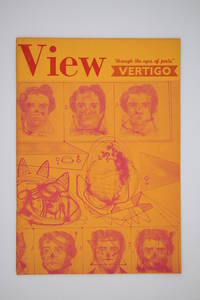
1942réf. 76460New York: View 1942. Fine. View New York October 1942 18.50 x 26.50 cm agrafé First edition. Contributions by Roger Caillois ""Vertigo"" Parker Tyler ""The endless island"" Nicolas Calas ""The new Prometheus"" Paul Eaton Reeve ""Homage to battling Siki"" Charles Henri Ford ""Epigrams"". Cover illustrated by Hanani illustrations by Kurt Seligmann André Masson Pavel Tchelitchew Gustave Doré. View unknown
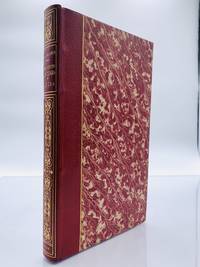
1844réf. 76401Paris: Kugelmann 1844. Fine. Kugelmann Paris 1844 14 x 22.80 cm relié First edition illustrated with vignettes by Gavarni. Half red glacé long-grained morocco binding signed on endpaper by Durvand. Yellow printed wrappers preserved. Smooth spine decorated with a tool at head and 2 mirrored tools. Gilt title. Date at tail. Uncut copy perfectly fresh very clean. Top edge gilt. Discreet restorations to front wrapper. Very handsome copy. Satirical writing on the world of the Paris Opera its singers its dancers its audience its administration its stagehands etc. Kugelmann unknown
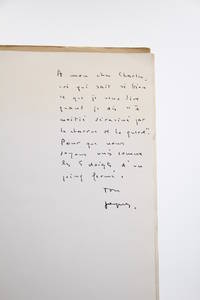
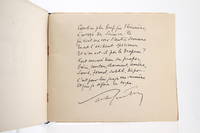
1951réf. 76495s. l.: S. n. 1951. Fine. S. n. s. l. 1951 16 x 24.50 cm en feuilles The first edition of which there were no deluxe copies. Spine and boards slightly and marginally discolored and sunned. Fine autograph inscription signed by Jacques Dubois to his friend Charles Dobzynski: ""A mon cher Charles lui qui sait si bien ce que je veux dire quand je dis ""à moitié déraciné par la charrue de la guerre"". Pour que nous soyons unis comme les 5 doigts d'un poing fermé. Ton Jacques."" ""To my dear Charles who knows so well what I mean when I say 'half uprooted by the plow of war'. So that we may be united like the 5 fingers of a closed fist. Your Jacques."" S. n. hardcover
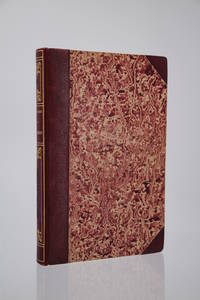
1846réf. 76421Paris: Michel Lévy frères 1846. Fine. Michel Lévy frères Paris 1846 13 x 20 cm relié First edition of this work which is one of the rarest and most sought-after Romantics cf Clouzot. Binding in half burgundy Russian morocco spine decorated with a gilt cartouche adorned with gilt and black typographic motifs marbled paper boards caillouté marbled endpapers top edge gilt romantic pastiche binding. Printed stamp of the bookbinder-seller on the title page. Half-title page mounted on guards and minor marginal tears restored on some pages. Rare. Michel Lévy frères hardcover
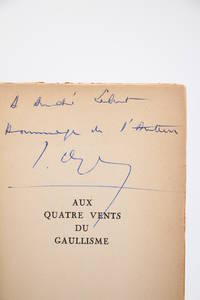
1953réf. 76499Paris: Dervy 1953. Fine. Dervy Paris 1953 12 x 19 cm broché First edition on ordinary paper. A small lack at head of first endpaper. Complete with publisher's wraparound band: ""Pourquoi De Gaulle a échoué."" Autograph inscription signed by Joseph Halléguen to André Lelort. Dervy unknown
1949réf. 76443Paris: Plon 1949. Fine. Plon Paris 1949 22 x 19 cm broché First edition one of 30 numbered copies on Japan paper deluxe copy. Some foxing on covers handsome interior condition. Rare booklet illustrated with caricatures Texts by Jean-François Deniau René Henry-Gréard Gilbert Gidel Jacques Belin. Plon unknown
1857réf. 76500Le Quesnoy & Paris: V. PréseauP. Jannet 1857. Fine. V. Préseau P. Jannet Le Quesnoy & Paris 1857 9.50 x 16 cm relié First edition. Half purple cloth binding smooth discoloured spine decorated with blind fillets two tears on spine top headcap worn away marbled paper boards marbled endpapers and pastedowns corners slightly bumped. Handsome interior condition. V. PréseauP. Jannet hardcover
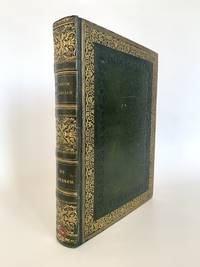
1825réf. 75900London: J. Goodwin 1825. Fine. J. Goodwin London 1825 20.50 x 28.50 cm relié New edition after the first published in 1768. Printed on strong laid paper. One frontispiece one engraved title and 76 head-piece vignettes engraved by Corbould and Dent. Contemporary English full dark green morocco binding with straight grain. Spine with false flat bands very richly decorated with 3 complex decorative compositions and various fillets roulette at tail and head. Gilt titles. Red morocco onlay at tail bearing a library number. Wide blind and gilt border frame on covers series of blind and gilt fillets. All edges gilt. Traces of rubbing. A slight tear at headcap. Several scratches on covers. Pale foxing on frontispiece and title otherwise the rest perfectly fresh and free from foxing. Very handsome copy. Commentary on Hogarth's works. The subtitle of the edition published in 1768 read: With an explanation pointing out the many beauties that may have hitherto escaped notice; and a comment on their moral tendency. Calculated to improve the minds of youth and convey instruction under the mask of entertainment. Now first published with the approbation of Jane Hogarth widow of the late Mr. Hogarth. J. Goodwin unknown
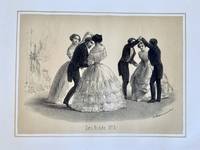
1853réf. 76387Paris: Bertaut 1853. Fine. Bertaut Paris 1853 S.d 23.50 x 30.50 cm relié First edition composed of 15 sepia lithographs illustrating the different figures of the Cotillon. Publisher's cream and gold boards covered with glazed moiré paper. Top headcap pushed in. Soiling. Corners slightly bumped. Good copy. A ballroom dance created around 1820 which became wildly popular at the end of balls the main venues for fashionable entertainment of the era the cotillon mixed parlor games and dances; composed of several figures the flowers the handkerchief chase the ribbon the cavaliers etc. and accessories it could last up to two hours and more depending on the cotillon leader. 19 pages of text in the work explain the figures of the cotillon. For example the hat: The leading cavalier gives his lady a hat and forms a circle around her with several cavaliers turning rapidly. The lady places the hat on the head of the waltzer she chooses. Most of the dances were based on the polka or the waltz. Due to the proximity of the dancers the cotillon was an excellent means of discreet flirtation. Bertaut hardcover
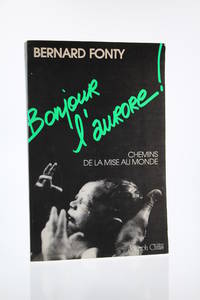
1986réf. 76437Paris: Joseph Clims 1986. Fine. Joseph Clims Paris 1986 14.50 x 22 cm broché First edition. Handsome copy. Precious signed autograph inscription from Bernard Fonty gynecologist-obstetrician surgeon to Gisèle Halimi. Joseph Clims unknown
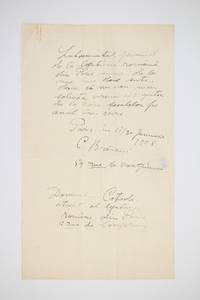
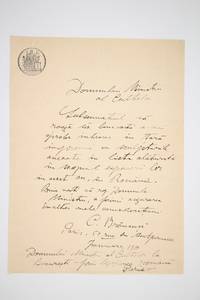
1908réf. 76381Paris 1908. Fine. Paris 17/30 janvier 1908 21 x 35 cm une page sur un feuillet Handwritten signed declaration to Mr Costadi attached to the Romanian legation in Paris Paris 17/30 January 1908 21 x 35 cm one page on a leaf Handwritten declaration dated and signed by Constantin Brâncui to Mr Costadi attached to the Romanian legation in Paris written in black ink on a leaf of white paper. Embossed stamp and a trace of a stamp. Some transverse folds. The declaration is signed with his full name that he will retain from then on: C. Brâncui and dated 17/30 January 1908 the two dates reflect the coexistence of the Gregorian and the Julian calendar in Romanian principalities in the early 20th century. In this declaration written on 30 January 1908 Brâncui addresses the Romanian legation in Paris represented by Mr Costadi. He hereby confirms receipt of the sum 1200 lei and specifies that he will no longer request assistance from the Maison des écoles section of the future Ministry of Education and Culture for the current year. This grant is the last he will be awarded by a Romanian establishment. unknown
1930réf. 74068Lausanne: Gonin & Cie 1930. Fine. Gonin & Cie Lausanne 1930 19.50 x 25.50 cm relié Le Livre des rois. L'Avènement de Salomon Gonin & Cie Lausanne 1930 19.5 x 25.5 cm Bradel binding Edition translated from Semitic texts by Joseph-Charles Mardrus and printed with 195 numbered copies on Arches ours is one of the 20 hors commerce copies comprising a double set of illustrations in black and in colour. Bradel binding in half olive green morocco spine decorated with a set of gilt squares of different sizes one of them with a piece of pink mosaic morocco in the centre gilt fillet frame on the snake skin paper boards olive green endpapers covers and spine preserved top edge gilt elegant binding signed Thomas Boichot. Illustrated with 31 original wood engravings in colour by François-Louis Schmied including the frontispiece 6 full-page 15 compositions in the text and 9 ornamental initial letters. Handwritten signature of François-Louis Schmied below the justification of the print. Gonin & Cie hardcover
1953réf. 75124Paris: Nrf 1953. Fine. Nrf Paris 1953 12 x 19 cm relié First edition of the theatrical adaptation by Albert Camus one of 65 numbered copies on pur fil paper deluxe issue. Bradel binding in half bronze box calf abstract patterned paper boards smooth spine covers and spine preserved binding signed Thomas Boichot. Nrf hardcover
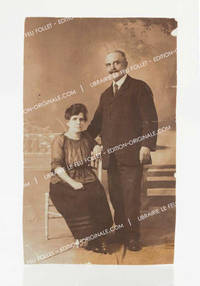
1920réf. 760211920. Fine. circa 1930 8.40 x 13.30 cm Rare photographic portrait of René Destouches uncle of Louis-Ferdinand Céline accompanied by his wife Pauline Dauteville. Vintage gelatin silver print. Inscription ""M. et Mme Destouches"" ""Mr. and Mrs. Destouches"" on verso. One small corner loss and minimal creasing. René Destouches brother of Fernand Destouches married Pauline Dauteville with whom he had two children. Céline borrowed his moonstruck character inherited from a fall from the cliffs of Sainte-Adresse ""il était tout à fait sonné. Il se marrait doucement quand on lui parlait. Il se répondait à lui-même"" ""he was completely dazed. He would laugh softly when spoken to. He would answer himself"" and the hard labor he endured throughout his life for the character of Uncle Rodolphe in Death on the Installment Plan. To darken the picture even further Céline probably lent Uncle Rodolphe elements from the life of another of his uncles Charles Destouches whose wife had disappeared tragically at the age of twenty-eight: ""Une pauvre malheureuse elle crachait déjà ses poumons. Ça a pas duré trois mois"" ""A poor unfortunate woman she was already coughing up her lungs. It didn't last three months"" Death on the Installment Plan Denoël & Steele 1936. unknown
1920réf. 76019Rennes: Menzil 1920. Fine. Menzil Rennes circa 1921 14.50 x 21.80 cm Rare and unpublished childhood portrait of Colette Destouches only daughter of Louis-Ferdinand Céline born in 1920 on albumen paper mounted on cardboard from the Menzil studio. Manuscript caption ""Colette Destouches"" inscribed on recto and verso with the mention ""1920"". The portrait was taken by the Menzil house 6 rue Beaumont Rennes the city where Céline met and spent several years in the company of Édith Follet his second wife and mother of Colette. This photograph of Colette Destouches who is only a few months old is to our knowledge unpublished. Céline retained throughout his life an affection for his daughter whom he saw regularly in Rennes Geneva and Paris and who was ""surely more possessive in his way with her than he had been with any of his wives his mistresses. He had dreamed for her a glorious future of a medical career as if to strengthen their complicity"" Frédéric Vitoux La Vie de Céline coll. Folio 2005 p. 636. Menzil unknown
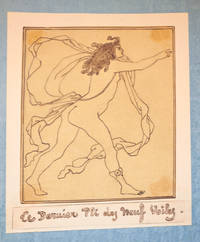
1920réf. 759331920. Fine. A priceless poetic testament from Marcel Proust's mentor hidden away and out of sight since the death of the author. s. d. ca 1920 25 x 33 cm en feuilles sous chemises The set of largely unpublished autograph poems by Robert de Montesquiou-Fezensac is brought together by the Count in a collection entitled Le Dernier Pli des neuf voiles whose composition extends from his very first collection Les Chauves-Souris 1892 to his last trilogy Offrandes 1915. Set of 620 autograph leaves. 532 unpublished first draught handwritten on the recto and numbered in pencil preserved in 3 chemises in half red contemporary morocco red morocco labels with gilt author and title; the poems are then placed in the chemises with a handwritten title and a number for publication. According to a note from the author the differences in ink have no meaning mere change of copy. Rare pages from the hand of his secretary Henri Pinard: p. 20 of Huitième voile and p. 29 of Neuvième voile. 23 pages present the printed or typewritten texts of the poems and are enriched with Montesquiou's handwritten corrections. A set of printed proofs are found at the top of the first chemise as well as a pencil tracing after Aubrey Beardsley drawn by the author and accompanied by his handwritten indications. Sublime ode to dandyism to homosexuality and beauty this worldly and poetic promenade by Montesquiou embarks the reader into the decadent fin-de-siècle Paris described in In Search of Lost Time by his friend Marcel Proust. Imbued with his legendary enthusiasm for pictorial decorative theatrical and floral art the collection also delivers hundreds of mournful verses after the disappearance of Montesquiou's lover Gabriel Yturri. Thanks to this collection of poems by Robert de Montesquiou-Fezensac all of which had been lost since 1986 it is now possible to complete the rehabilitation of the aristocratic poet who has long embodied and shaped the Parisian spirit. In May 1920 Montesquiou left handwritten instructions for the posthumous publication of the collection initially announced in two volumes and never produced. On his death a year later the poems were bequeathed to his secretary Henri Pinard who in turn sold them on an unknown date. Auctioned on 24 November 1986 they were mentioned in the LoWire-Littérature colloquium in 1989. This considerable manuscript by Montesquiou forms a veritable home of poetry like his famous aesthetic apartments described by Huysmans. The series of Voiles contain dozens of unpublished poems written in parallel with his previous collections. The author himself indicated the kinship of each voile with a published set of poems announcing here the total completion of his work by the addition of poems which still lay dormant in his papers. The three thick chemises contain rare and curious treasures sometimes drawn on colored sheets often pasted on larger sheets rigorously ordered while awaiting their publication. The poems are written without crossings-out they are fluid with rounded and precious handwriting and stand alongside other first-draught manuscripts: redactions and corrections also bear witness to the work in progress on the new poems; they were applied in the printed proofs of the work present at the top of the manuscript's first chemise. Some poems are taken as they are from collections already published but are slightly modified according to the explanations given by the author. Montesquiou also adds some handwritten notes detailing his intentions. The manuscript contains a poetic anthology of sacred art of extremely rare flowers and of antique furniture adorning his famous Parisian apartments around which so many legends were built Jacques Saint-Cère which fuelled the personalities of Des Esseintes Baron Charlus Dorian Gray and the vain peacock in Edmond Rostand's Chantecler. Moreover Montesquiou was overwhelmed by the features of these famous fictional ghosts of w unknown
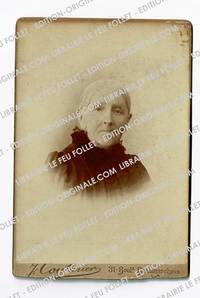
1900réf. 75325Paris: J. Couturier 1900. Fine. J. Couturier Paris s. d. ca 1900 10.30 x 15.50 cm une photographie au format carte cabinet Photographic portrait of Hermance Delhaye Destouches 1830-1869 paternal grandmother of Louis-Ferdinand Céline in cabinet card format on albumen paper mounted on cardboard from J. Couturier studio. Cardboard slightly trimmed at lower margin. Handwritten caption on verso. A bourgeoise of Flemish origin Céline's grandmother married Auguste Destouches in 1860 and had five children. Upon the premature death of her husband in 1874 at the age of thirty-nine the provincial Hermance tried her luck in Paris with Amélie Céline's aunt where she squandered her fortune and ended up being kept thanks to her daughter's demi-mondaine lifestyle. In Mort à crédit Céline borrows her second name Caroline for the character of the grandmother who runs the antique shop on rue Montorgueil. This aspect of the character however relates to the shopkeeper life of his maternal grandmother Céline Guillou whose first name served as the writer's pen name. J. Couturier unknown
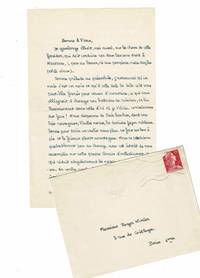
1956réf. 76357Laval 1956. Fine. Laval 23 octobre 1956 13.50 x 21 cm 2 feuillets une enveloppe Long and exceptional autograph letter signed by Antoine Blondin addressed to fellow Hussar Roger Nimier at his home on rue de Coëtlogon. Blondin plans a gargantuan feast detailing at length the wines to be served for each guest while indulging in witty reflections on mans alcoholic ontology: ""Si tu avais simplement lu 'Tiens voilà du Bouddha !' d'Hubert Robert tu saurais : . que cet homme dualiste sans unité intérieure a besoin de Bourgogne et de Bordeaux."" 56 lines on two folded leaves. Envelope enclosed. Published in À mes prochains: lettres 1943-1984 ed. Alain Cresciucci 2009 p. 84. A fine expression of the anarchic spirit that so often guided Antoine Blondins inebriated steps and of the boisterous friendship that bound him to Roger Nimier. In this remarkable letter to his dear ""Pomme à leau"" Nimier the writer prepares a memorable soirée. The inveterate drinkerwho often alarmed his guests with his bibulous anticsonce declared: ""Je ne suis pas un écrivain qui boit je suis un buveur qui écrit."" In this letter he pairs an astonishing array of wines with the dishes of the meal and ever considerate of his guests adds: ""Question des vins il faut compter avec les personnalités ne pas travailler dans l'absolu chercher des rimes. Je crains que Popaul n'ait le chanfrein un peu porté sur le bouquet cosmopolite dans le genre cocktail extra-chlorydrique à se faire éclater l'ampoule de Vater."" Ever attentive to his future guests he adjusts his oenological marathon: ""Considérons donc que le champagne de dessert . qui sent un peu la première communion sauf s'il est administré en injections risquerait d'indisposer le premier et d'achever le second. Proscrivons jusqu'aux cigares puisqu'aussi bien nos lascars ne sont pas assez adultes pour se déglacer avec les bières."" He waxes lyrical on Swiss Sylvaner and Sauternes and concludes his letter with a brilliant remark on the great Médocs: ""N'oublie pas pourtant qu'à côté de Margaux il y a Lafite et que Latour n'est jamais loin. Tu as peut-être carencé rapidement sur les Côtes de Nuits Et pourquoi pas les deux "" Speaking of the profound friendship that united Blondin and Nimier and of the myth of the Hussars Blondin told Emmanuel Legeard: « Ce sont les 'hussards' qui sont une invention. Une invention 'sartrienne'. En réalité l'histoire c'est mon ami Frémanger qui s'était lancé dans l'édition qui avait un seul auteur c'était Jacques Laurent et un seul employé c'était moi. Laurent écrivait et moi je ficelais les paquets de livres. Donc on se connaissait on était amis et d'autre part. d'autre part Roger Nimier était mon meilleur ami. Nimier je le voyais tous les jours. Je l'ai vu tous les jours pendant treize ans. Mais Laurent et Nimier ne se fréquentaient pas du tout. Ils avaient des conceptions très différentes. On n'a été réunis qu'une seule fois. On s'est retrouvés rue Marbeuf au Quirinal pour déjeuner. On a discuté de vins italiens et de la cuisson des nouilles. Pendant deux heures."" A splendid letter from Blondin the prince of the bottle turning himself into a whimsical sommelier. unknown
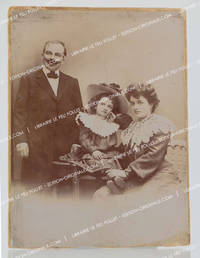
1900réf. 76037Paris: A. Lauga 1900. Fine. A. Lauga Paris s. d. ca 1900 14.20 x 10.50 cm une photographie Photographic portrait of Charles Destouches uncle of Louis-Ferdinand Céline pictured with his wife and their young daughter Charlotte DestouchesCélines cousin known as Lolotteon albumen paper mounted on a card from the Parisian studio A. Lauga. Small loss to lower right corner. Some glue residue along the edges. Handwritten caption on verso. The bohemian life of Uncle Charles Destouches inspired the character of Uncle Arthur in Death on Credit: Il a vécu en vrai bohème en marge de la société dans une soupente en cheville avec une bonniche. Elle travaillait au restaurant devant l'École Militaire. Grâce à ça il faut en convenir il arrivait à bien bouffer. Arthur c'était un luron avec barbiche velours grimpant tatanes en pointe pipe effilée. Il s'en faisait pas. Il donnait fort dans la 'conquête'. But the tragic true story of the death of his wife Joséphinealso shown in the photographclaimed by cholera despite the care of Dr. Proust Marcels brother reappears in the character of Uncle Rodolphe. By blending the lives of two of his uncles Céline gives Rodolphe the simple-mindedness of René and the grief of Charles Destouches who loses his mind after the death of his tubercular wife: Elle est morte dans sa chambre même au 'Rendez-vous'. Il voulait pas qu'on l'emmène. Il avait bouclé sa lourde. Il revenait chaque soir coucher à côté. C'est à l'infection qu'on s'est aperçu. Il est devenu alors furieux. Il comprenait pas que les choses périssent. C'est de force qu'on l'a enterrée. Il voulait la porter lui-même sur 'un crochet' jusqu'à Pantin. . 'Bonjour ! qu'il me faisait. Bonjour mon petit fi !. Tu la vois hein ma Rosine'.' Il me désignait plus loin que la Seine toute la plaine. un point dans la brume. 'Tu la vois' Je lui disait 'Oui'. Je le contrariais pas. A. Lauga unknown
1981réf. 76509Paris: Flammarion 1981. Fine. Flammarion Paris 1981 14 x 20 cm broché New edition. Library label pasted at the head of an endpaper. Handsome copy despite the spine being very lightly wrinkled. Autograph inscription signed by François Mitterrand to Monsieur Senart. Flammarion unknown
1914réf. 76382Paris 1914. Fine. Paris janvier 1914 21 x 28.50 cm une page sur un feuillet Handwritten signed letter addressed to the Romanian Ministry of Worship Paris January 1914 21 x 28.5 cm one page on a leaf Very important handwritten letter signed by Constantin Brâncui addressed to the Romanian Ministry of Worship written in black ink on a leaf of white paper. Embossed stamp and a trace of a stamp. Transverse folds from having been sent. In this letter dated January 1914 and addressed to the Ministry of Worship the sculptor requests authorisation to bring some of his sculptures to Romania for the exhibition of the ""Tinerimea Artistica"" company Artistic Youth. Brâncui was then in Paris as evidenced by his address: « 54 rue du Montparnasse ». A list of works was visibly attached to the letter but sadly has disappeared. This letter testifies to the close links maintained between Brâncui and the Romanian artists of the ""Tinerimea Artistica"" who since 1908 organized exhibitions bringing together paintings and sculptures. In March 1914 Brâncui presents six works including La Prière 1907 Le Baiser 1907-08 Mademoiselle Pogany 1913 at the fourteenth exhibition of this important artistic company. He was already a renowned sculptor at that time: the presence of five of his works at the Armory Show in New York 17 February 15 March 1913 where his sculpture Mademoiselle Pogany caused a scandal due it its modernity at the side of Marcel Duchamp's Nu descendant un escalier and allowed him to become one of the major artists of the second decade of the 20th century. unknown
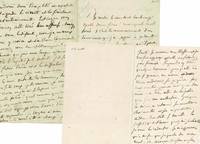
1823réf. 759401823. Fine. s. d. ca 1823 12 x 18.20 cm Six pages sur deux feuillets rempliés Almost entirely unpublished handwritten letter from the painter Eugène Delacroix to the love of his youth the mysterious Julie now identified as being Madame de Pron by her maiden name Louise du Bois des Cours de La Maisonfort wife of Louis-Jules Baron Rossignol de Pron and daughter of the Marquis de La Maisonfort Minister of France in Tuscany patron of Lamartine and friend of Chateaubriand. 90 lines 6 pages on two folded leaves. A few deletions and two bibliographical annotations in pencil on the upper part of the first page no114. This letter is one of the last to his lover in private ownership all of Delacroix's correspondence to Madame de Pron being kept at the Getty Research Institute Los Angeles. Only nine of the ninety lines of this unpublished letter were transcribed in the Burlington Magazine in September 2009 alongside the long article by Michèle Hanoosh Bertrand and Lorraine Servois whose research finally revealed the identity of the famous recipient. Sublime love letter from twenty-four-year-old Eugène Delacroix addressed to his lover Madame de Pron twelve years his senior who unleashed the liveliest passion in him. This episode of the painter's youth then considered the rising star of Romanticism for a long time remained a mystery in the biography of Delacroix who was careful to preserve the anonymity of his lover thanks to various pseudonyms: Cara the Lady of the Italians and even Julie as in this letter in reference to the famous epistolary novel Julie ou la Nouvelle Héloïse by Rousseau. For obvious reasons Delacroix did not sign his name on any of the letters in correspondence with the lady. A great figure of the legitimate aristocracy the recipient of this feverish letter is Madame de Pron daughter of the Marquis de La Maisonfort Minister of France in Tuscany patron of Lamartine friend of Chateaubriand. Her beauty was immortalized in 1818 by Élisabeth Vigée-Lebrun who painted her portrait in pastel with an oriental hairstyle. Delacroix and Madame de Pron met in April 1822 when the portrait of the latter's son Adrien was commissioned a pupil at the Lycée Impérial now Lycée Louis-le-Grand. Delacroix had been commissioned for the portrait by his close friend Charles Soulier Madame de Pron's lover who despite himself served as an intermediary for Delacroix. In the absence of Soulier who had gone to Italy the painter and the young women established an intense romantic relationship. The portrait commission became a pretext for their tender meetings in his studio on rue de Grès while no trace of the child's painting has been found to this day. Their adventure lasted a little over a year but it was one of the most intense passions of the artist's life. Our letter undoubtedly corresponds to the last throes of their relationship in the month of November 1823. After one of their visits at the end of a hiatus of several months Delacroix writes to her again under the influence of emotion: I come home with a shaken heart what a wonderful evening! . Sometimes I say to myself: why did I see her again In the calm sanctuary where I lived even in the middle of the invisible places that I had formed . I managed to silence my heart. Madame de Pron had indeed decided to bring an end to their intimate relationship see her letter from 10 November 1823: I want sweet friendship . I do not want to torment you Getty Research Institute. Losing all discernment and with blind devotion Delacroix attempts to revive their affair: Make me lie prove to me that your soul is indeed that of the Julie that I once knew since mine has regained its charming emotions and its worries. But the painter runs into Soulier and General de Coëtlosquet also lovers of Madame de Pron. Delacroix had narrowly avoided a final disagreement with Soulier who had almost seen a letter from Madame de Pron in h unknown
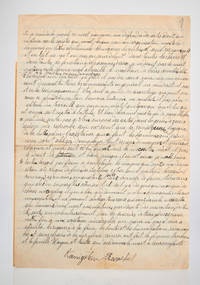
1892réf. 734381892. Fine. 1892 20 x 29.50 cm 4 pages sur un double feuillet Exceptional complete autograph manuscript of Ravachols true last testament largely unpublished unknown in this form preceding its rewriting by a third party for publication in the press. A unique testimony to the genuine thought of the anarchist icon. Four-page lined quarto manuscript entirely written in black ink and signed twice Konigstein Ravachol at the foot of each sheet. Pencil corrections within the text possibly in the hand of his lawyer. Some horizontal folds and very minor marginal tears without loss. Written in his prison cell during the second Montbrison trial that led to his death sentence this text hastily penned without punctuation or capital letters and in naïve spelling was meant to be delivered orally by Ravachol during the hearing. Ravachol was dead set on putting in his two cents for the defence not to defend himself but to explain. No luck dammit! Four words in and the judge cut him off. His statement isnt lost by Jove! Émile Pouget in Père Peinard July 310 1892. This self-styled Rocambole of anarchism was not allowed to read his statement aloud but he handed it to his lawyer Maître Lagasse and by June 23 the forbidden text appeared in the conservative newspaper Le Temps. This first publication was so faithful to the original that it preserved the author's eccentric spelling a fidelity that Émile Pouget would ironically criticise in the Père Peinard issue of July 3 1892 one week before Ravachols execution: Le Temps that opportunist bedsheet printed it as is. Like a true Jesuit it even printed it too true. Ravachol had written the thing for himself; he knew how to read it but there wasnt a word of correct spelling seeing as he knew about spelling as much as he knew about cabbage farming. Le Temps printed the thing without changing a line so its practically unreadable . Thats exactly what the bastards wanted dammit! . Im reprinting it below without changing a word just fixing the spelling. That same July 3 issue of Père Peinard included a corrected version orthographically of the statement initially published in Le Temps. This dual publication combined with Ravachols defiant bearing before the guillotine had a powerful effect on public opinion. Until then even anarchist publications had kept a certain distance from this provocative criminal suspected of using the anarchist cause for personal gain. But following his execution the testament was quickly reproduced in other newspapers and Ravachols final cry of revolt soon became a genuine anarchist anthem among libertarians worldwide. However the version circulated in the press the only known version until now the original manuscript having disappeared differs markedly from the manuscript in our possession. Indeed the style was lightly polished several turns of phrase refined and most significantly entire passages were excised including the conclusion paragraph which was fully replaced. Our manuscript with its crossings-out and revisions is likely the original version of this political testament. Written in a single burst in dense handwriting without punctuation or paragraph breaks it includes two lengthy sections expressing concerns for public health that are entirely absent from the published version. The first is a third of a page-long passage about the dangerous ingredients added to bread: no longer needing money to live thered be no fear of bakers adding dangerous ingredients to bread to make it look better or heavier since it wouldnt profit them and theyd have like everyone else and by the same means access to what they needed for their work and existence. Thered be no need to check whether the bread weighs right if the money is counterfeit or if the bill is correct. The second nearly a full page long concerns the silk-dyeing industry in which Ravachol had worked: If one reflects atten unknown
1877réf. 76022Bucarest Bucharest: Studio Louis 1877. Fine. Studio Louis Bucarest Bucharest 14 juin 1877 6.70 x 10 cm Rare photographic portrait of Amélie Destouches aunt of Louis-Ferdinand Céline in cabinet card format on albumen print mounted on cardboard from Studio Louis. Manuscript captions ""Suzannica 3 ans Bucarest ce 14 juin 1877"" ""Suzannica 3 years old Bucharest this 14th June 1877"" and ""Zenon Zawirski"" in another hand on verso. The portrait was taken by Studio Louis at 127 Calea Mosilor in Bucharest. At twenty-four Amélie married the wealthy Romanian Zenon Zawirski who poses beside her with their daughter Zenone Zawirska then three years old. Céline devoted an unflattering portrait to her in Death on the Installment Plan borrowing her features for the character of Aunt Hélène whose Slavic adventures he transposed to Russia rather than Romania. Though still alive when the novel was written Céline nonetheless had his character die in dishonor and shame: ""Elle a pris tout le vent dans les voiles. Elle a bourlingué en Russie. À Saint-Pétersbourg elle est devenue grue. À un moment elle a eu tout carrosse trois traîneaux un village rien que pour elle avec son nom dessus. Elle est venue nous voir au Passage deux fois de suite frusquée superbe comme une princesse et heureuse et tout. Elle a terminé très tragiquement sous les balles d'un officier. Y avait pas de résistance chez elle. C'était tout viande désir musique. Il rendait papa rien que d'y penser. Ma mère a conclu en apprenant son décès : 'Voilà une fin bien horrible ! Mais c'est la fin d'une égoïste !'"" ""She caught all the wind in her sails. She knocked around Russia. In St. Petersburg she became a whore. At one point she had everything carriage three sleighs a village all to herself with her name on it. She came to see us at the Passage twice in a row dressed up superb like a princess and happy and all. She ended very tragically under an officer's bullets. There was no resistance in her. She was all flesh desire music. It made papa sick just thinking about it. My mother concluded on learning of her death: 'What a horrible end! But it's the end of a selfish woman!'"" Studio Louis unknown
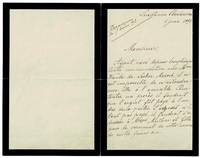
1893réf. 763781893. Fine. 1er juin 1893 11.30 x 17.70 cm un feuillet Probably unpublished autograph letter written by a secretary dated 1st June 1893 and signed by Leopold von Sacher-Masoch to an unknown recipient probably a lawyer. Handwritten note by Sacher-Masoch in the upper left margin of the letter: « Répondu le 1 mai 93 ». Two pages written in black ink on a bifolium. The writer is preparing for a possible lawsuit brought by his first wife Wanda the inspiration for his famous novel La Vénus à la fourrure who sought to reclaim what was owed to her and free herself from the fantasy she had embodied through her husbands works. Wanda whose real name was Angelika Aürora Rümelin had signed with him the notorious contract stipulating that she should cover herself in furs and whip him thus attireda veritable gospel of what would become masochism. Despite this sacred and formalised union by the late 1870s Leopold had grown weary of life with her Wanda being unable to fulfil his desires: « Courtisane malgré elle » and « infirmière » according to Jean-Paul Corsetti she was Gilles Deleuze tells us « sa compagne à la fois docile exigeante et dépassée ». Overwhelmed by financial difficulties he sold the famous furs and his wifes dresses and their divorce was pronounced in 1886. Haunted by her alter ego of La Vénus à la fourrure which had made of her an imperious and venal Delilah Wanda appears to have intended to sue her former husband: « Ayant cessé depuis longtemps toute communication avec Madame Wanda de Sacher-Masoch il m'est impossible de m'entendre avec elle à l'amiable . En cas échéant ce sera contre moi que Mme de Sacher-Masoch pourra tenter un procès». The lawsuit is without doubt connected with the premiere of Kassya an opera by Léo Delibes on a libretto by Sacher-Masoch adapted by Henri Meilhac and Philippe Gilles staged at the Opéra-Comique that same year. It is possible that Wanda who had translated Masochs works during their marriage did not receive the translation rights due to her for Kassya based on a tale published in her husbands Contes galiciens. In the same spirit as his years of absolute submission to Wanda he was determined to bear alone the burden of his wifes accusations in return for a sum of money paid by the other authors of the opera Henri Meilhac and Philippe Gilles: « Je déclarerai dans un acte notariel sic que en touchant la somme dite je me charge de toute responsabilité vis-à-vis de Mme de Sacher-Masoch». A strange and picturesque episode in the history of the founder of masochism still unknown to his biographers. unknown