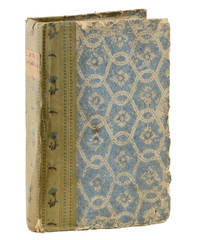
2892 risultati
First edition, [2], 80pp., folding engraved plate, closed tear in final leaf, expertly repaired and no loss of text. 2 works bound as one, 8vo (200 x 120 mm), modern vellum-backed marbled boards, spine lettered in gilt, a nice copy. Watson was the most distinguished name in this period of the history of electricity, and this was his principal work. He was the first to observe the flash of light attending the discharge of a Leyden jar, and he provided the first demonstration of the passage of electricity through a vacuum, and the plus and minus of electricity. Mottelay, pp.175-177; Baaken, p.115.
rif. 2602P., Desaint, 1787, un volume in 8 relié en demi-basane verte, dos orné de filets dorés, (reliure début XIXe), 17pp., 5pp., 238pp., 4 planches dépliantes
1962rif. 2110502150411669Iwasaki shoten 1962. Soft Cover. Fine. Number of books: 7 Iwasaki shoten paperback
1930rif. 2111902160500013Not Available 1930. Soft Cover. Fine. Number of pages: A4/B5 55-80p each with many tables attached Size: Age discoloration etc. Not Available paperback
rif. 131266aafParis, Chez H.L. Guerin & L.F. Delatour, M. DCC. LXIV. / Tome 3) M. DCC. LXVII Chez Durand, 1764- 64- 67, pt. in-8°, XII + 251 p. / 8 ff. + 278 p. / XVI + 295 p. + 1 f. blanche, illustré d'au total 12 planches gravées repliées, qqs notices ms. d’époque sur les p. de garde, reliures en veau d’époque, tome 1 & 2 dos lisse richement orné or, tome 3 dos à 4 nerfs, ornements or diff., qqs traces de vers dans les charnières, bas du dos T. III avec pt. manque, coins touchés, tranches rouges.
rif. 3573Paris, H.L. Guérin 1750, . in-12, front., XXIII, (1), 272 (3)pp., 4 pl. veau marbré, dos là cinq nerfs à caissons ornés (superbe) avec pièce de titre (rel. de l'ép.) 4 pl. dépliantes . h.t. gravés sur cuivre. Seconde édition , tres bel objet ,rare dans cet etat, coiffe impecable, coins parfaits photos sur demande
1834rif. 48203Leipzig, Johann Ambrosius Barth, 1834. 8vo. Contemp. hcalf. Spine gilt and with gilt lettering. Spine slightly rubbed. In: ""Annalen der Physik und Chemie. Hrsg.von Poggendorff"", Bd. 35. X,630,(8) pp. a. 5 folded lithographed plates. (Entire volume offered). Faraday's papers: pp. 1-45 a. 222-226, 1 plate (8. Reihe) - pp. 413-444 (9. Reihe). Stamp to verso of titlepage and verso of plates. Clean and fine, printed on good paper.
1834rif. 48203Leipzig Johann Ambrosius Barth 1834. 8vo. Contemp. hcalf. Spine gilt and with gilt lettering. Spine slightly rubbed. In: "Annalen der Physik und Chemie. Hrsg.von Poggendorff" Bd. 35. X6308 pp. a. 5 folded lithographed plates. Entire volume offered. Faraday's papers: pp. 1-45 a. 222-226 1 plate 8. Reihe - pp. 413-444 9. Reihe. Stamp to verso of titlepage and verso of plates. Clean and fine printed on good paper. First appearance in German - prepared by Faraday himself for publication in Annalen - of two groundbreakings papers in chemistry and physiscs.In the FIRST PAPER 8. Reihe Faraday brings forth the idea "that the atoms of matter are in some way endowed or associated with electrical powers to which they owe their most striking qualities and amongst them their mutual chemical affinity." He showed how natural it is to suppose that the electricity which passes through the electrolyte is exact equivaklent of that which is possessed by the atoms separated at the electrode: which implies that there is A CERTAIN ABSOLUTE QUANTITY OF THE ELECTRIC POWER ASSOCIATED WITH EACH ATOM OF MATTER.- Faraday further verifies that the electricity of the violtaic pile is proportionate in its intensity to the intensity of the affinities concerned in its production. - Dealing with the the decompositions in electrolysis he shows that THE FORCES TERMED CHEMICAL AFFINITY AND ELECTRICITY ARE THE SAME.In the SECOND PAPER 9. Reihe Faraday independent of Henry's discovery of the same phenomena in 1832 discovers SELF-INDUCTION or the "extra current" and points out the importent influence it must have in the construction of electro-magnetic machines electro-motors."Faraday showed that the powerful momentary current which was observed when the circuit was interrupted was really an induced current governed by the same laws as all other induced currents but with this peculiarity that the induced and inducing current now flowed in the same circuit. In fact the current in its steady state establishes in the surrounding region a magnetic field whose lines of force are linked with the circuit; and teh removal of these lines of forcewhen the circuit is broken originates an induced current which reatly reinforces the primary current just before its final extinction."Whittaker in "A History of the Aether and Electricity""In the series of experiments which are detailed in this paper the author inquires into the causes of some remarkable phenomena relating to the action of an electrical current upon itself under certain circumstances wherby its intensity is highly exalted and occasionally increased to ten twenty or even fifty times that which it originally possessed."Abstract. unknown
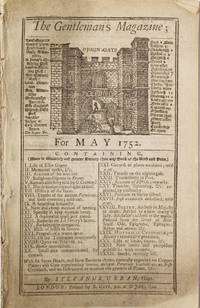
1757rif. 314545London 1757. May 1750 p 208; May 1752 pp 227-229; and January 1757 pp 22-23 respectively. 3 vols. 8vo. Disbound. Very good. May 1750 p 208; May 1752 pp 227-229; and January 1757 pp 22-23 respectively. 3 vols. 8vo. Franklin on Electrity. Three articles by Franklin relating to his experiments in electricity published in the Gentleman's Magazine. unknown books
1779rif. 19279Firenze Florence: Per Gaetano Cambiai Stamp. Granducale 1779. First edition in Italian of Cavallo's first book. Front hinge separated but cords are holding; some edge wear and rubbing to the boards; a good sound copy. 8vo contemporary decorated paper boards backed with contrasting block-printed paper and an autograph spine label xx 511 1 pages untrimmed. From this Italian-born English physicist the Italian translation of a work first published in London in 1777 as A Complete Treatise of Electricity in Theory and Practice; Cavallo includes suggestions to his translator in his prefatory note suggesting he was involved in the translation and revision of the work. This edition also includes a new dedication from the translator to the English Florentine expatriate George Clavering-Cowper dated 26 March 1779. Includes mention of Franklin and his lightning rods accounts of experiments conducted by Cavallo with Leiden jars and other apparatuses and experiments with medical treatment with electricity. With a folding table of experimental data bound after page 468 and three folding engravings of various pieces of electrical equipment bound in the rear. Per Gaetano Cambiai Stamp. Granducale, unknown books
1931rif. 2111902160304704Ministry of Railway Tokyo Electricity Office 1931. Soft Cover. Fine. Number of pages: 96 pages Size: 46 size horizontal length 80 Ministry of Railway Tokyo Electricity Office paperback
rif. 533Paris, chez P.E.G. Durand, 1770. Trois volumes petit in-8 plein veau raciné noisette, dos à nerfs, caissons ornés, pièces de titre en maroquin rouge, pièces de tomaison en maroquin brun, filet doré sur les coupes, xxiv, 509, 552 et 524, 4, 10 pp. de catalogue. Bien complet de ses 56 planches. Bel exemplaire.
1781rif. 83891781 basane mouchetée, tr. rouges. in-8, XVI-742pp., (1f.), 9 planches, Paris Rue et Hotel Serpente 1781,
1936rif. 2111902160201403Great Japan Yutenkai Kodansha 1936. Soft Cover. Fine. Volume: 1 Great Japan Yutenkai Kodansha paperback
rif. 9035P., Gauthier-Villars, 1885/1889, 2 fort volumes in 8 reliés en demi-chagrin noir (reliures de l'époque), T.1 : 20pp., 578pp., T.2 : (2), 651pp., nombreuses figures dans le texte, nombreuses planches comprises dans la pagination et 2 PLANCHES HORS TEXTE en couleurs
1739rif. 10874A Leyden [Leyde], chez Samuel Luchtmans, 1739. 2 forts vol. in-4 (244 x 198 mm) de xxv pp., 1 f. n.fol., 502 pp. et 1 f. bl. ; 1 f. bl., 2 ff. n.fol., [412 pp.], 15 ff. n.fol., 63 pp., 8 pp., 1 f. n.fol. et 1 f. bl. Reliures uniformes de l'époque de plein veau moucheté havane, double filet à froid porté sur les plats, dos à nerfs ornés de filets à froid, doubles caissons d'encadrement dorés, larges fleurons dorés, semis de fleurettes et pointillés dorés, pièce de titre de maroquin fauve, titre doré, palette dorée en tête et queue, dentelle dorée sur les coupes.
1918rif. 2091502135420007Teishin kyokai 1918. Soft Cover. Fine. Number of books: 1 Teishin kyokai paperback
1916rif. 2091502135419066Teishin kyokai 1916. Soft Cover. Fine. Number of books: 1 Teishin kyokai paperback
1926rif. 2091502135420981Electric Association 1926. Soft Cover. Fine. Number of books: 1 Electric Association paperback
1926rif. 2091502135420982Electric Association 1926. Soft Cover. Fine. Number of books: 1 Electric Association paperback
1876rif. PHO-282
rif. 8004P., Cavelier, 1754, 2 volumes in 8 reliés en plein veau moucheté, dos richement ornés de fers dorés, tranches rouges (reliures de l'époque), T.1 : 176pp., 490pp., (1), 5 PLANCHES numérotées 1 à 4, T.2 : (1), 596pp., 2 PLANCHES numérotées 5 à 6, soit 7 PLANCHES dont 6 dépliantes
1771In -8°, (2), XXX, 413 (3), 12 tavv. ripiegate; rilegato con “Lettre... Sur l’électricité médicale” (Amsterdam, “et se trouve à Paris chez des Ventes de la Doué”, 1771, pp. 70); mezza pelle con nervi, tassello e titolo al dorso, tagli in rosso, piccolissimi fori di tarlo nelle prime pagine, non incidono sul testo. L’autore, professore di chimica e fisica a Bourges, fu celebre anche e soprattutto come ostetrico: è giudicato il primo a realizzare la sinfisiotomia, cioè la separazione della sinfisi pubica. Small bookworm holes on first pages, out of text. The author, chemistry and physics teacher at Bourges, was well known as an obstetrician. He was the first one to accomplish a symphysiotomy.
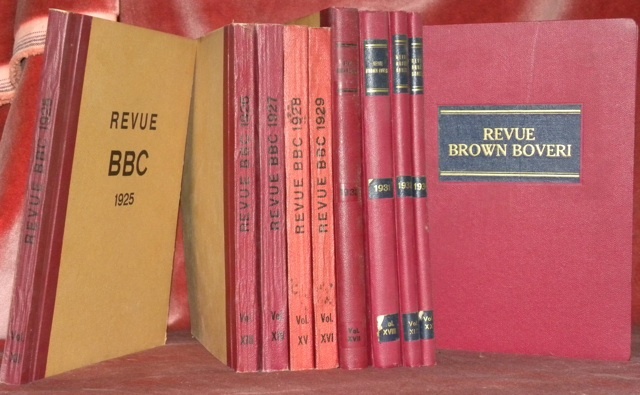
rif. 57800Baden, BBC 1925 - 1934, 280x210mm, cartonnage avec dos en percaline pour les 5 premiers volumes, et pleine percaline pour 5 autres volumes.
1803rif. 15508Paris, Imprimerie Delonce et Lesueur, an XII, 1803 ; 2 tomes in-8 ; plein veau marbré havane glacé, dos à faux-nerfs torsadés dorés, dos décorés d'un entrelacs de feuillage, fleurons au soleil, étoiles, etc., pièces de titre et de tomaison bronze, tranches mouchetées de rouge (reliure de l'époque) ; (6), XXXIV, 426 ; (4), III, (1 bl.), 447 pp., et en tout 24 planches dépliantes gravées, représentant 157 figures.