2 990 résultats
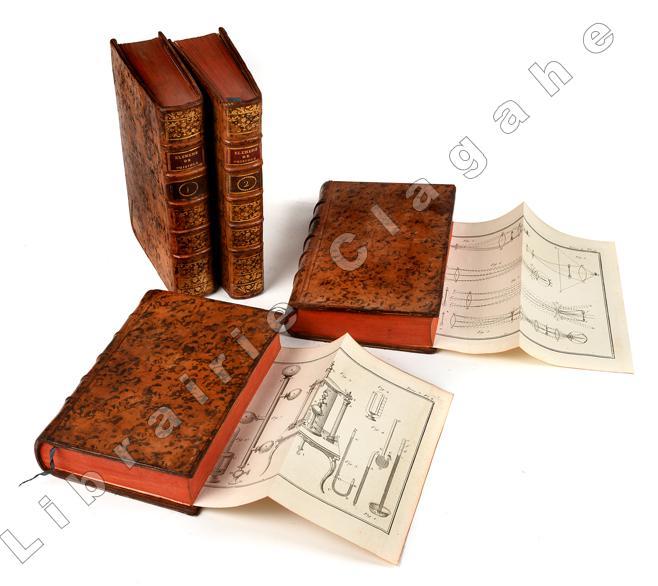
1753réf. 116395Paris, chez Jombert, Knappen, Duchesne 1753 In-12 19,5 x 12 cm. Reliure de l’époque veau havane marbré, dos à nerfs encadrés de fers dorés, 296 pp., 10 planches repliées in fine. Très bon exemplaire de l’édition originale, intérieur exempt de rousseurs.
réf. DADAX1907670718New unknown
réf. DADAX0070048592New unknown
réf. Z1-W-019-02250Macdonald. Used - Good. Ships from UK in 48 hours or less usually same day. Your purchase helps support Sri Lankan Children's Charity 'The Rainbow Centre'. Ex-library so some stamps and wear but in good overall condition. 100% money back guarantee. We are a world class secondhand bookstore based in Hertfordshire United Kingdom and specialize in high quality textbooks across an enormous variety of subjects. We aim to provide a vast range of textbooks rare and collectible books at a great price. Our donations to The Rainbow Centre have helped provide an education and a safe haven to hundreds of children who live in appalling conditions. We provide a 100% money back guarantee and are dedicated to providing our customers with the highest standards of service in the bookselling industry. Macdonald unknown
réf. DADAX0830611282New unknown
1928Fine Turkish, Ottoman (1500-1928) Original wrappers. Roy. 8vo. (23 x 16 cm). In Ottoman script (Old Turkish with Arabic letters). [iii], 182 p., richly illustrated. First and only edition of one of the earliest and extremely rare Ottoman Turkish book on electricity published after the proclamation of the Republic in Turkey. It's a complete guide to electricity including how to install power plants, generators, and their working principles, etc. One of the most important breakthroughs of the regime in the Republican period was the delivery of electricity to many cities and villages of Turkey after the proclamation of the Republic. The electricity question and energy policies were also reflected in the propaganda material of the Republican regime. After the Alphabet Revolution in 1928, after the very few electrical books written in Ottoman Turkish, many books, posters, brochures, and periodicals were published, especially in the 1930s... Hasan Enver Pasha was an Ottoman general. He was the son of Mustafa Celalettin Pasha a Polish convert to Islam and the daughter of Omer Pasha. Besides he was an avid defender of the belonging of the Turkish race to the European white races. He married Leyla Hanim, a daughter of Mehmed Ali Pasha (marshal). They had five children: Celile who became the mother of Nâzim Hikmet, Münevver who became the mother of Oktay Rifat, Mustafa Celalettin, Mehmet Ali, and Sara. In 1901, he led an expedition to deliver Islamic and pan-Islamic messages to the Muslims of China. Özege 15207.; TBTK 12692.; OCLC 850834945 (Only one copy worldwide).
réf. 8992Traduites de l'anglois par M. Barbeu Dubourg. Avec les additions nouvelles et des figures en taille douce. Paris. Quileau, Esprit et chez l'auteur.. 1773. Deux volumes in-quarto (26x20 cms). (4)-21-(2)-338 et (4)-13-(3)-318-(2) pages. Veau marbré de l'époque, dos à nerfs orné, tranches rouges.
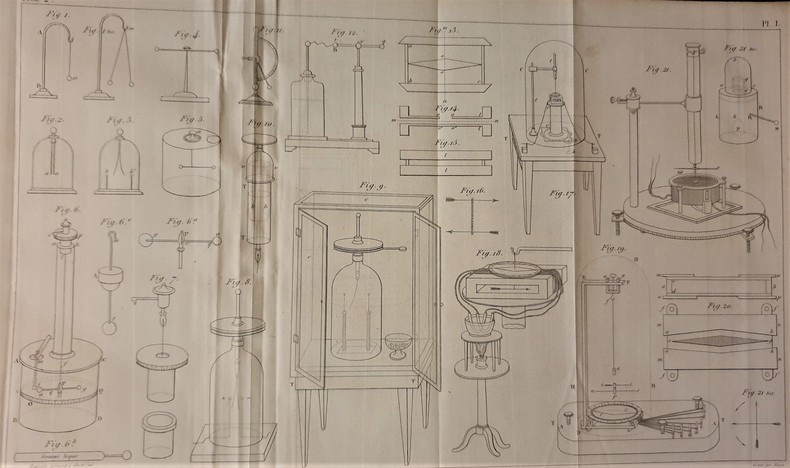
1771réf. AMO-3382Traité de l’électricité dans lequel on expose, et on démontre par expérience, toutes les découvertes électriques, faites jusqu'à ce jour, pour servir de suite aux Leçons de Physique du même auteur. Par M. Sigaud de La Fond, professeur de Mathématiques, Démonstrateur de Physique Expérimentale, de la Société Royale des Sciences de Montpellier, des Académies des Sciences et Belles-Lettres d'Angers, Electorale de Bavière, etc. A Paris, chez Des Ventes de la Doué, 1771 1 volume in-12 (18,5 x 11 cm) de (2)-XXX-413-(3) pages + 12 planches dépliantes reliées à la fin. Cartonnage d'attente plein papier brut, trace de titre à l'encre au dos, ficelles apparentes. Non rogné. Cartonnage fragile par nature resté en très bon état. Ficelles intérieures un peu lâches en tête du volume. Edition originale. On trouve dans cet ouvrage les chapitres suivants : De la manière d'électriser les corps. Des globes de verre. Des machines de rotation. De la manière d'électriser les corps an-électriques. Du feu électrique. Des aigrettes électriques. L'intensité de la vertu électrique. De l'expérience de Leyde. De l'imperméabilité du verre à la matière électrique. De l'analogie avec le tonnerre, avec la matière magnétique. Des effets de l'électricité dans le vide, sur différents substances, sur l'économie animale, etc. Les protocoles des différentes expériences sont très détaillés. Les planches hors-texte montrent les différents instruments ayant servi à réaliser les différentes expériences. Une seconde édition a paru en 1776. Joseph-Aignan Sigaud de Lafond est né le 5 janvier 1730 et mort le 26 janvier 1810 à Bourges. Il fut un physicien et enseignant français qui a été, avec son maître l'abbé Nollet, l'un des promoteurs de la physique expérimentale et de son enseignement, notamment en créant les premiers « cabinets de physique ». Son père était horloger. Son Traité de l'électricité publié en 1771 est une référence dans ce domaine de la science. A partir de 1773, Sigaud délègue ses cours du collège à son neveu, Rouland. Il a alors tout le loisir de se consacrer à son cabinet de physique sans pour autant abandonner totalement l’enseignement puisque, comme le signale plusieurs publicités. Il continue d’écrire pour présenter ses travaux. En 1775, sont publiés les deux volumes de la Description et Usage d’un cabinet de physique expérimentale. Ils seront réédités en 1784 et complétés par les Éléments de physique théorique et expérimentale en 1777. Très réalistes, les splendides gravures de Sigaud de La Fond sont déjà moins théâtralisées que celles de l'abbé Nollet et augurent ce que seront le dessin industriel et l'appareil de laboratoire du XIXème siècle. Plus encore, l'œuvre de Sigaud a profondément révolutionné les sciences physiques et leur enseignement, les faisant devenir science et discipline à part entière, en même temps que l'expérience gagnait définitivement ses lettres de noblesse. Ce sont là les prémisses de la science "moderne". Très bon exemplaire conservé à toutes marges dans son fragile cartonnage de l'époque.
1876réf. 38962Caen Le Blanc-Hardel 1876 in-8 demi-veau fauve à coins, dos à nerfs orné de filets dorés, roulette à froid sur les plats [Rel. de l'époque], coiffes et coins lég. frottés
réf. 2199P., Durand, 1756, 2 volumes in 8 reliés en veau marbré, dos ornés de fers dorés, tranches rouges (reliures de l'époque), (petit travail de vers à un mors du tome 2 et dans la marge inférieure des premiers feuillets du tome 1, quelques rousseurs), T.1 : (3), 28pp., 90pp., (6), 245pp., 1 planche dépliante, T.2 : (1), 349pp., (1pp.), 1 planche dépliante
1753réf. 12738Paris Hippolyte-Louis Guérin 1753 in-12 bas. fauve marbrée, dos à nerfs, caissons ornés de feurons, pièce de titre de maroquin havane, roul. sur les coupes, tr. marbrées [Rel. de l'époque]
1739réf. 6044Leyden, Samuel Luchtmans, 1739. 2 volumes in-4 de XXV-[3]-502-8p. ; [2]-de 503 à 914-[2]p. pour l'explication de la pl. 29 - [28]p. de table - [2]p. d'errata - 63p. pour la description des machines pneumatiques par Jan van Musschenbroek, plein vélin ivoire à (petit) recouvrement, titre doré au dos (reliure du temps).
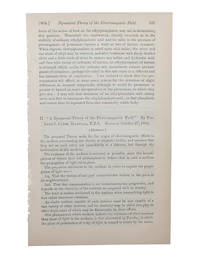
1864réf. 41709London Taylor and Francis 1864. No wrappers as extracted from"Proceedings of the Royal Society". From November 19 1863 to December 22 1864 inclusive." Vol. XIII. Pp 531-536. First printing of the first announcement of Maxwell unification of light-waves electricity and magnetism the most importent of the papers relating to his electromagnetic theory in which he brought electro-magnetical phenomena on a clear mathematical form. The present paper is an abstract of the larger paper which was read to the Royal Academy in 1864 but only issued the year later 1865 in "Philosophical Transactions of the Royal Society" where it was printed in full and as an abstract in "Philosophical Magazine" 1865."A generation later Einstein's work on relativity was founded directly oupon Maxwell's electromagnetic theory; it was this that led him to equate Faraday with Galileo and Maxwell with Newton." PMM No 355 but only the paper from 1865. - Dibner. Heralds of Science No 68 1865 paper. unknown
1864réf. 41709(London, Taylor and Francis, 1864). No wrappers, as extracted from""Proceedings of the Royal Society"". From November 19, 1863, to December 22, 1864, inclusive."", Vol. XIII. Pp 531-536.
1826Very Good Turkish, Ottoman (1500-1928) Contemporary (early 19th century) quarter brown cloth with marbled boards, "Yahudi ebrûsu" end-papers. Roy. 8vo. (23 x 16 cm). In Ottoman script (Old Turkish with Arabic letters). 90 p., numbered with Arabic numeric system in pencil, around seven illustrated schemes of magical diagrams. Written on a probably 17th-18th century European paper with "Crescent" watermark, naskh script with "harakât", black and red ink. Early and a rare posthumous manuscript copy of this 18th-century Islamic majmua, containing the treatment methods and drug compositions against physical and spiritual diseases, with material and magical suggestions, copied 32 years after the author's death by a "Hafiz" with an addendum of new drugs and treatments compiled from older annotations of this work. "In the first part of the work on spiritual medicine, verses, prayers, talismans, and magic formulas in the Islamic culture like "wafqs" that are believed to be treated; in the second part, on physical medicine, drug formulas from various material objects for physiological diseases are shown." (Çagrici). Harputî was an 18th-century poet and prose from Harput (Kharberd). In the introduction to the manuscript, he stated that he is not a doctor, but that he writes practices that can heal patients due to his experiences. Despite this, the text was widely used in Ottoman medicine in the 18th and 19th centuries.
1782réf. 2991Paris, Imprimerie Clousier, 1782 ; in-8 ; pleine percaline havane moirée, dos lisse, pièce de titre bordeaux (reliure du XIXe siècle) ; (IV) pp., 461 pp., (3) pp. (errata, approbation et privilège), 5 planches dépliantes par Sellier.
1849XXIV-420 p., 16 pl. depl Broché, couverture originale imprimée 1849, 1849, in-8, XXIV-420 p, 16 pl. depl, Broché, couverture originale imprimée, Édition originale de l'un des premiers manuels de télégraphie, comprenant une description théorique, pratique et historique. Le mémoire d'Ampère occupe les pages 221 à 238. L'abbé Moigno (1804-1884), éminent mathématicien et physicien, fut le fondateur et le rédacteur en chef de la revue Cosmos jusqu'en 1862. Il était en correspondance avec de nombreux savants de son temps. Il signe ici l'un de ses premiers livres scientifiques, qu'il dédie à Arago, son ami et disciple. L'auteur insiste sur la nécessité d'une pédagogie adaptée pour la transmission des connaissances en télégraphie et, comme tout bon prêtre enseignant de l'époque, il s'intéresse aux incidences sociales de cette nouvelle technologie. Étiquettes anciennes sur la première de couverture et en pied du dos. Couverture fanée. Quelques rousseurs. Wheeler Gift, n° 1161
1787réf. 20311Paris, Griffier, 1787 ; 4 tomes in-8 (195 mm), veau marbré, dos à nerfs décoré et doré, pièce de titre rouge, tranches rouges (reliure de l’époque) ; XXXII, 635, [1 bl.] pp, 7 pl. dépl. ; 565, [1 bl.] pp., 10 pl. dépl. ; 576 pp., 4 pl. dépl. ; 622 pp, 4 pl. dépl. soit en tout 25 planches dépliantes gravées sur cuivre et portrait gravé par Coron d’après Naudin en frontispice.
1802réf. 35107DBBreslau, bei Wilhelm Gottlieb Korn, 1802. 8°. XXIV, 540 S. Mit 2 gefalteten gestochenen Tafeln. Geflammter Halblederband der Zeit mit rotem goldgeprägtem Rückenschild und wenig Rückenvergoldung. + Wichtig: Für unsere Kunden in der EU erfolgt der Versand alle 14 Tage verzollt ab Deutschland / Postbank-Konto in Deutschland vorhanden +
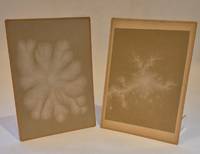
réf. 356Set of two photographs of electricity from the same unidentified photographer France circa 1890. Silver gelatin prints mounted on card print sizes: 12.7 x 17.5 cm and 12 x 15.3 cm; mount size: 18.3 x 13.3 cm. Rare set by a single anonymous photographer of two photographs of electricity or electric sparks. Prints slightly faded but a rare pair. See Canguilhem Le merveilleux scientifiques 2044 pages 102-113.
1758réf. 46557Berlin Haude et Spener 1758. 4to. No wrappers as issued in "Mémoires de l'Academie Royale des Sciences et Belles-Lettres" 1756 tome XII. Pp. 105-121. With titlepage to the volume printed in red/blac and with engraved titlevignette. Also having the parttitlepage. Titlepage with 2 small wormtracts. First appearance of a milestone paper in the history of electricity as Aepinus here found that a heated tourmaline attracted and repelled light bodies. He decided that the effect was electrical and that its ends was carrying charges of opposite sign much as soft iron is magnetized by a lodestone. This paper is a forerunner of his "Tentamen Theoriae electricitatis et magnetismi" - published 1759 and one of the most original and important books in the history of electricity. It is the first reasoned fruitful exposition of electrical phenomena based on action-at-a-distance."Aepinus’ first reseraches on the thermoelectric properties of this stone Tourmalin which was then of extreme rarity were fundamental. He recognized the electrical nature of the attractive power of a warmed tourmaline and attempted not altogether successfully to reduce its apparent capriciousness to rule. He was particularly struck by the formal similarity between the tourmaline and the magnet in regard to polarity which inspired him to reconsider the possibility then occasionally discussed that electricity and magnetism were basically analogous. This thought became the This thought became the theme for his masterwork Tentamen theoriae electricitatis et magnetismi 1759."DSB."Aepinus is known in the history of electricity for his attempt to develop the one fluid theory of Franklin. His theory was for a while generally adopted but was gradually displaced by the two fluid theory in consequence chiefly of the necessity of ascribing to uncharged matter repulsions of the same force as those which were ascribed to electrical charges. His theory exhibits interesting similarities to the present theory of the constitution of matter"Magie "A Source Book in Physics" pp.406-8.Ronalds p. 4. unknown
1758réf. 46557Berlin, Haude et Spener, 1758. 4to. No wrappers, as issued in ""Mémoires de l'Academie Royale des Sciences et Belles-Lettres"", 1756, tome XII. Pp. 105-121. With titlepage to the volume, printed in red/blac and with engraved titlevignette. Also having the parttitlepage. Titlepage with 2 small wormtracts.
1802réf. 35107DBBreslau, bei Wilhelm Gottlieb Korn, 1802. 8°. XXIV, 540 S. Mit 2 gefalteten gestochenen Tafeln. Geflammter Halblederband der Zeit mit rotem goldgeprägtem Rückenschild und wenig Rückenvergoldung.
1834réf. PHO-927 TOMES ET 1 ATLAS EDITION ORIGINALE
1747réf. 53510Verona: Giannalberto Tumermani 1747. First edition. Engraved title vignette and headpiece. 8 189 7 pp. 1 vols. 4to. Original boards uncut. Some early but faint dampstaining throughout -- otherwise a fine wide-margined copy. First edition. Engraved title vignette and headpiece. 8 189 7 pp. 1 vols. 4to. Collection of fifteen letters on the origins of lightning by the enlightened polymath Maffei 1675-1755 "said by Grimelli Storia to contain all the anterior letters on Lightning published by him i.e. all before 1746 the date of the censorship." - Ronalds The book is rare in institutions -- OCLC gives only one location. Ronalds p. 314; Gartrell p. 334; OCLC: 23628231 one location: U. of Michigan; Mottelay p. 321; Baaken Library p. 83; not in Wheeler; not in RLIN Giannalberto Tumermani unknown books