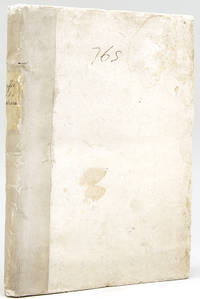
1758 — In -4°, pp. (10), 159, (1), frontespizio in rosso e nero, legatura in cartonato coevo con titolo manoscritto al dorso. Prima e unica edizione di uno dei primi saggi italiani ed europei di psichiatria moderna; include un cospicuo resoconto sulla “medicina elettrica”, ovvero l’applicazione di fenomeni elettromagnetici alla cura del paziente: anche in questo caso il saggio è da considerarsi fra i primi mai elaborati e pubblicati sulla materia. Pietro Cornacchini, filosofo e medico senese, pubblica questo suo manuale nello stesso anno del “Treatise on Madness”, dell’inglese William Battie, considerato il trattato più importante del primo Settecento sulla cura della follia. Come testimoniato nel suo libro, in quegli anni si cominciava a sviluppare in Europa un approccio non repressivo e non reclusivo al malato e alla malattia mentale. Cornacchini è senz’altro fra i pionieri di questo tipo di studi, e il suo manuale è riconosciuto come il primo approccio fisiologico complesso dell’epoca moderna, in Italia, alla malattia mentale: si veda la “Storia della medicina in Italia”, di Salvatore De Renzi (Napoli, 1848, tomo V, pp. 759 sgg.) in cui l’autore riconosce a Cornacchini un anticipo di 14 anni sull’opera giovanile di un altro medico, Antonio Sementini, e addirittura di 35 sul lavoro che giudica il più importante del secolo, cioè “Della pazzia” di Chiarugi (1793). Il libro di Cornacchini succede solo a un altro trattatello, del ’57, cioè “Della mania, della frenesia e della rabbia” di Antonio Arrigoni, scritto che, in contrasto con il presente, trascurava la fisiologia per concentrarsi sul trattamento di queste patologie. Dopo aver distinto la malattia mentale in “tre specie” (frenesia, mania, malinconia), l’autore si addentra in spiegazioni fisiologiche: “Chi potrà negare - scrive - che la cagine [sic] immediata della Pazzia risieda [negli] organi interni, e che sia tutta materiale?” A osservazioni piuttosto dettagliate sulla circolazione sanguigna e sui fluidi corporali, si accompagnano altre considerazioni sperimentali o ipotetiche fra cui quella che la follia sarebbe connessa a una maggiore “durezza” del cervello o comunque alla consistenza di quest’organo (“Tanti autori confermano che il cervello de’ maniaci è stato ritrovato per lo più arido e friabile”). Al di là di quest’approccio, il volume si configura come un vero e proprio antesignano, in Italia, di un modo di considerare il malato di mente, anche sul piano lessicale: non a caso Cornacchini termina la sua disquisizione respingendo anche in senso terminologico “l’odioso nome di Pazzi”. Non meno intrigante e innovativo è il saggio che prosegue il volume, ovvero i due saggi “sopra la medicina elettrica”. L’argomento è a sua volta recentissimo e pionieristico, come chiarisce l’autore stesso che mette all’origine di questi studi il padovano Giovanni Francesco Pivati, il quale nel ’49 aveva pubblicato il suo “Riflessioni fisiche sopra la medicina elettrica”; l’approccio di Cornacchini alla materia è radicalmente diverso da quello di Pivati, ed è basato esclusivamente sull’applicazione di elettricità: Pivati e altri suoi seguaci erano convinti che, per una cura efficace, si dovessero applicare dei farmaci ai diversi conduttori di elettricità impiegati allora, mentre il parere di Cornacchini è che si dovesse procedere “senza intonacatura di medicamento alcuno”. In questo la posizione di Cornacchini è più aderente a quello che sarebbe stato il proseguimento degli studi a riguardo, e la sua esposizione va considerata più moderna e innovativa anche rispetto all’altra monografia pubblicata precedentemente in merito, quella del bolognese Veratti (“Osservazioni fisico mediche intorno all’elettricità”, Bologna, sempre del’49). Il discorso sull’elettricità di Cornacchini è piuttosto nutrito e addirittura sovrasta per quantità la prima parte del libro, impegnandone più di cento pagine. La prosa è limpida e avvincente: al di là della ricerca strettamente medica e delle descrizioni di casi clinici, non mancano cenni di proto-elettrotecnica (l’elettricità era ancora all’epoca un fenomeno curioso ma con scarse applicazioni pratiche). An early and rare work of psychiatry, in its first and only edition, this is one of earliest Italian and European modern book in this field. It includes a huge writing on “electric medicine”, i.e. the application of electromagnetic issues to illness care. Also this part has to be considered between the first essays ever published on the matter. Pietro Cornacchini, a physician and a philosopher from Siena, publishes this handbook in the same year of William Battie’s “Treatise on Madness”, a writing considered the most important of the early Century about madness’ care. A forerunner of non-reclusive psychiatry, Cornacchini writes the first complex physiological study on madness of modern age (see “Storia della medicina in Italia” by Salvatore De Renzi, Naples, 1848, in which the author assigns to Cornacchini 35 years of advance on the most important Italian work on madness of the Century, “Della Pazzia” by Chiarugi, 1793). Cornacchini’s book is published a year later of another handbook, “Della Mania, della Frenesia e della Rabbia”, by Antonio Arrigoni, that however ruled a non physiological approach to the matter. After giving a classification of different kinds of madness (frenesia, mania, malinconia), the author gives some original physiological explications, as like the madness connected to brain consistency. Beyond this, the volume is a pionering work on the way to consider the mental illness as a pathology to be treated with respect of the patient, starting with an appropriate use of language (at the end of the work the author rejects as obnoxious the word “Pazzi”, mad, for the mentaly ill). No less important can be considered the second part of volume, about “electric medicine”, a rising field, studied in Europe before the development of more important practical implementing of electricity. Cornacchini’s approach is different by most of contemporary works about: many researches required to add a drug to electric devices to be efficient; only later was demonstrated, as like Cornacchini assumes, that the electric application could be a treatment itself, and the pharmaceutical addition as unnecessary.