8.736 resultados
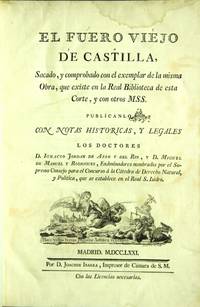
1771ref. 48726Madrid: por D. Joachin Ibarra 1771. Small folio pp. 4 lvi 143 1; engraved vignette title page; bound with: Jordán de Assó y del Río Ignacio & Miguel Manuel y Rodríguez El ordenamiento de leyes que D. Alfonso XI hizo en las Cortes de Alcalá de Henares el año de mil trescientos y quarenta y ocho. Publícanlo con notas. Madrid: Ibarra 1774 pp. 2 xxxiv 158 2; woodcut vignette on title page tail-pieces; decorative initial. Laws statutes etc. of the Kingdom of Castile in Spain. Miguel Manuel y Rodríguez of Seville was one of the great historians of Spain in the 18th century and he was also the first librarian of the Colegio Imperial de Madrid. Together with Dr. Ignacio Jordán de Asso y Rio a Spanish historian jurist and naturalist who was also known under the pseudonym Melchor de Azagra they published these two works dedicated to Spanish law: the first on the Charter Viejo de Castilla; and the second El Ordenamiento de Leyes in which they deal with the system of laws that Don Alfonso XI made in the courts of Alcala de Henares in the year 1348 here published with notes and an accounting of the Kingdom of Castile. Palau 18725 and 18726 respectively. Lasala 287 and 345 respectively. por D. Joachin Ibarra unknown
1771ref. 48726Madrid: por D. Joachin Ibarra 1771. Small folio pp. 4 lvi 143 1; engraved vignette title page; bound with: Jordán de Assó y del Río Ignacio & Miguel Manuel y Rodríguez El ordenamiento de leyes que D. Alfonso XI hizo en las Cortes de Alcalá de Henares el año de mil trescientos y quarenta y ocho. Publícanlo con notas. Madrid: Ibarra 1774 pp. 2 xxxiv 158 2; woodcut vignette on title page tail-pieces; decorative initial. Laws statutes etc. of the Kingdom of Castile in Spain. Miguel Manuel y Rodríguez of Seville was one of the great historians of Spain in the 18th century and he was also the first librarian of the Colegio Imperial de Madrid. Together with Dr. Ignacio Jordán de Asso y Rio a Spanish historian jurist and naturalist who was also known under the pseudonym Melchor de Azagra they published these two works dedicated to Spanish law: the first on the Charter Viejo de Castilla; and the second El Ordenamiento de Leyes in which they deal with the system of laws that Don Alfonso XI made in the courts of Alcala de Henares in the year 1348 here published with notes and an accounting of the Kingdom of Castile. Palau 18725 and 18726 respectively. Lasala 287 and 345 respectively. por D. Joachin Ibarra unknown books
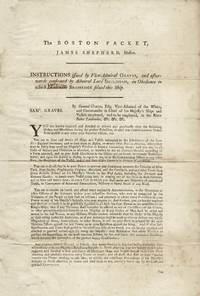
1780ref. 59007but actually London: William Strahan 1780. Folio broadsheet 17½" x 11"; 3 horizontal folds the paper a bit dusty else very good. With its original separately printed title leaf folded into a wrap-around sleeve. In January 1776 Captain Bromedge wrote to Vice Admiral Schuldham regarding his boarding of the ship Boston Packet and his suspicion that they were carrying stores to the enemy. "I am informed by the crew of the Boston Packet that the Master declared repeatedly on the Passage that could he make Cape Codd he would go in there and land his cargo or could he make Cape Ann he did not fear meeting with some of his Friends to carry him into Beverly or Salem" see Naval Documents of the American Revolution Vol III p. 1005 for the full text of his letter. Regarding this and similar allegations Vice Admiral Graves issued the orders printed here specifically pertaining to the Boston Packet: "You are to seize and detain all Ships and Vessels belonging to the Inhabitants of the four New England Provinces and to send them to Boston." On the verso is printed Rear Admiral Schuldham's confirmation of Graves' order "the probability of these stores being smuggled away to the Enemy.makes me think it highly proper that they should be detained." In effect this is a Letter of Marque issued during the Revolutionary War but pertaining only to a particular class of merchant ships and to two vessels in particular one of which was the Boston Packet. Rare. OCLC shows only the John Carter Brown holding a copy. With manuscript additions dating the document September 1775 and addressing it to Captain Bromadge. ESTC also locates a copy at the BL. unknown
1780ref. 59007but actually London: William Strahan 1780. Folio broadsheet 17½" x 11"; 3 horizontal folds the paper a bit dusty else very good. With its original separately printed title leaf folded into a wrap-around sleeve. In January 1776 Captain Bromedge wrote to Vice Admiral Schuldham regarding his boarding of the ship Boston Packet and his suspicion that they were carrying stores to the enemy. "I am informed by the crew of the Boston Packet that the Master declared repeatedly on the Passage that could he make Cape Codd he would go in there and land his cargo or could he make Cape Ann he did not fear meeting with some of his Friends to carry him into Beverly or Salem" see Naval Documents of the American Revolution Vol III p. 1005 for the full text of his letter. Regarding this and similar allegations Vice Admiral Graves issued the orders printed here specifically pertaining to the Boston Packet: "You are to seize and detain all Ships and Vessels belonging to the Inhabitants of the four New England Provinces and to send them to Boston." On the verso is printed Rear Admiral Schuldham's confirmation of Graves' order "the probability of these stores being smuggled away to the Enemy.makes me think it highly proper that they should be detained." In effect this is a Letter of Marque issued during the Revolutionary War but pertaining only to a particular class of merchant ships and to two vessels in particular one of which was the Boston Packet. Rare. OCLC shows only the John Carter Brown holding a copy. With manuscript additions dating the document September 1775 and addressing it to Captain Bromadge. ESTC also locates a copy at the BL. unknown books
1949ref. 231021949. Environmental Policy Glen Canyon Archive of federal and regional Colorado River Basin materials documenting how the river was successively treated as scenic terrain engineered water infrastructure and regulated recreation landscape across the mid twentieth century. The group centers on Glen Canyon and the broader basin as federal agencies development planners and conservation advocates advanced competing uses for the river. Engineering maps government surveys construction photographs ecological advocacy newsletters and environmental planning documents establish the process by which canyon landscapes were converted into measurable storage systems dam sites recreation zones and administratively managed federal space. Colorado River Basin with material tied to Arizona Utah and the broader American West. 1946-1979 Archive of 26 items including 3 engineering maps 4 press silver gelatin photographs 15 issues of Peak and Prairie Sierra Club Rocky Mountain Chapter newsletter 1 Colorado River Storage Project pamphlet 2 government publications and 1 National Park Service NEPA circulation letter. Visible material includes contour maps and storage-capacity graphs reducing canyon topography to projected reservoir form; black-and-white press photographs showing Glen Canyon Dam under construction diversion tunnels excavation and early recreation on Lake Powell; and printed federal planning documents focused on road systems zoning wilderness recommendations and recreational use after inundation. 1 A Survey of the Recreational Resources of the Colorado River Basin. United States Department of the Interior National Park Service 1950; compiled from 1946 fieldwork. Government publication establishing a pre-dam baseline for the basin's scenic and recreational assessment. The volume includes 13 folded maps in the rear pocket charting river corridors proposed reservoirs and basin-wide topography preserving a record of landscapes later submerged or reclassified under postwar development plans. 2 Engineering maps for Boulder Canyon and Dewey Dam sites. Circa mid twentieth century. Three technical maps converting river terrain into contour lines section views and storage curves for projected impoundment and control. Their emphasis on capacity grade and reservoir profile shows the bureaucratic and engineering language through which the basin entered federal planning systems. 3 Press silver gelatin photographs of Glen Canyon Dam construction and early Lake Powell use. Circa 1960-1966. Four press photographs showing dam works within the canyon including diversion tunnels excavation concrete placement and recreational boating on the new reservoir. Verso captions from the Bureau of Reclamation and Associated Press cite "more than one million cubic yards of concrete" and the "pouring of first concrete for the dam proper" linking the images to federal publicity and construction chronology. 4 Colorado River Storage Project. Bureau of Reclamation pamphlet. Mid twentieth century. Public-facing promotional publication presenting the storage project as a large-scale federal development program for water control and regional growth. Its language praises Glen Canyon Dam as "one of the great dams of the world" making clear the official rhetoric used to justify transformation of the river through reclamation policy. 5 Peak and Prairie. Sierra Club Rocky Mountain Chapter newsletter. Fifteen issues early 1970s. Regional environmental newsletters reporting on conservation campaigns and debates over western energy water and land use. Within this group the newsletters supply contemporaneous advocacy evidence that federal river development was being contested in organized print networks rather than treated as a settled engineering program. 6 Glen Canyon National Recreation Area: Proposed General Management Plan / Road Study Alternatives / Final Environmental Statement. National Park Service July 1979. Federal planning document setting out zoning road alternatives and wilderness recommendations for the recreation area created after completion of the dam. In contrast to the earlier survey and engineering material this document shows Glen Canyon as a managed recreational and environmental jurisdiction governed through formal planning categories. 7 National Park Service circulation letter citing Section 1022c of the National Environmental Policy Act. 1979. Official letter announcing distribution of the final environmental statement and inviting public comment. The document provides direct evidence of the procedural side of late twentieth century environmental governance in which major federal land-use decisions required circulation review and recorded administrative response. Across the group the 1950 survey preserves the basin before inundation the engineering maps and construction photographs record its conversion into infrastructure and the 1970s Sierra Club and National Park Service material shows subsequent conflict and regulation after Glen Canyon Dam's completion in 1964. The archive therefore documents a shift in federal treatment of the Colorado River Basin from scenic and recreational appraisal to industrial water control and then to environmental review under NEPA-era law. Handling wear across materials; photographs retain strong contrast with legible captions; maps with expected fold lines; bindings intact. Overall very good condition. A concentrated documentary group on the administrative visual and environmental remaking of the Colorado River Basin in the postwar American West. unknown
1949ref. 231021949. Environmental Policy Glen Canyon Archive of federal and regional Colorado River Basin materials documenting how the river was successively treated as scenic terrain engineered water infrastructure and regulated recreation landscape across the mid twentieth century. The group centers on Glen Canyon and the broader basin as federal agencies development planners and conservation advocates advanced competing uses for the river. Engineering maps government surveys construction photographs ecological advocacy newsletters and environmental planning documents establish the process by which canyon landscapes were converted into measurable storage systems dam sites recreation zones and administratively managed federal space. Colorado River Basin with material tied to Arizona Utah and the broader American West. 1946-1979 Archive of 26 items including 3 engineering maps 4 press silver gelatin photographs 15 issues of Peak and Prairie Sierra Club Rocky Mountain Chapter newsletter 1 Colorado River Storage Project pamphlet 2 government publications and 1 National Park Service NEPA circulation letter. Visible material includes contour maps and storage-capacity graphs reducing canyon topography to projected reservoir form; black-and-white press photographs showing Glen Canyon Dam under construction diversion tunnels excavation and early recreation on Lake Powell; and printed federal planning documents focused on road systems zoning wilderness recommendations and recreational use after inundation. 1 A Survey of the Recreational Resources of the Colorado River Basin. United States Department of the Interior National Park Service 1950; compiled from 1946 fieldwork. Government publication establishing a pre-dam baseline for the basin's scenic and recreational assessment. The volume includes 13 folded maps in the rear pocket charting river corridors proposed reservoirs and basin-wide topography preserving a record of landscapes later submerged or reclassified under postwar development plans. 2 Engineering maps for Boulder Canyon and Dewey Dam sites. Circa mid twentieth century. Three technical maps converting river terrain into contour lines section views and storage curves for projected impoundment and control. Their emphasis on capacity grade and reservoir profile shows the bureaucratic and engineering language through which the basin entered federal planning systems. 3 Press silver gelatin photographs of Glen Canyon Dam construction and early Lake Powell use. Circa 1960-1966. Four press photographs showing dam works within the canyon including diversion tunnels excavation concrete placement and recreational boating on the new reservoir. Verso captions from the Bureau of Reclamation and Associated Press cite "more than one million cubic yards of concrete" and the "pouring of first concrete for the dam proper" linking the images to federal publicity and construction chronology. 4 Colorado River Storage Project. Bureau of Reclamation pamphlet. Mid twentieth century. Public-facing promotional publication presenting the storage project as a large-scale federal development program for water control and regional growth. Its language praises Glen Canyon Dam as "one of the great dams of the world" making clear the official rhetoric used to justify transformation of the river through reclamation policy. 5 Peak and Prairie. Sierra Club Rocky Mountain Chapter newsletter. Fifteen issues early 1970s. Regional environmental newsletters reporting on conservation campaigns and debates over western energy water and land use. Within this group the newsletters supply contemporaneous advocacy evidence that federal river development was being contested in organized print networks rather than treated as a settled engineering program. 6 Glen Canyon National Recreation Area: Proposed General Management Plan / Road Study Alternatives / Final Environmental Statement. National Park Service July 1979. Federal planning document setting out zoning road alternatives and wilderness recommendations for the recreation area created after completion of the dam. In contrast to the earlier survey and engineering material this document shows Glen Canyon as a managed recreational and environmental jurisdiction governed through formal planning categories. 7 National Park Service circulation letter citing Section 1022c of the National Environmental Policy Act. 1979. Official letter announcing distribution of the final environmental statement and inviting public comment. The document provides direct evidence of the procedural side of late twentieth century environmental governance in which major federal land-use decisions required circulation review and recorded administrative response. Across the group the 1950 survey preserves the basin before inundation the engineering maps and construction photographs record its conversion into infrastructure and the 1970s Sierra Club and National Park Service material shows subsequent conflict and regulation after Glen Canyon Dam's completion in 1964. The archive therefore documents a shift in federal treatment of the Colorado River Basin from scenic and recreational appraisal to industrial water control and then to environmental review under NEPA-era law. Handling wear across materials; photographs retain strong contrast with legible captions; maps with expected fold lines; bindings intact. Overall very good condition. A concentrated documentary group on the administrative visual and environmental remaking of the Colorado River Basin in the postwar American West. unknown books
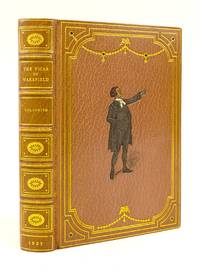
1927ref. ST16866hLondon and New York: Macmillan Co 1927. 191 x 127 mm. 7 1/2 x 5". xxxvi 306 pp.Preface by Austin Dobson. CHARMING CONTEMPORARY FAWN-COLORED PICTORIAL CRUSHED MOROCCO BY RIVIERE & SON covers with frame formed by multiple gilt rules with onlaid green dot cornerpieces and gilt festoons at head and tail of frame central PICTORIAL INLAY IN FOUR COLORS depicting a vicar pontificating and in front of him as an indication of shadow thin penwork lines inscribed into the morocco; raised bands spine gilt in French fillet compartments with central gilt patera wide gilt-framed turn-ins with ribbon cornerpieces leather hinges marbled endpapers all edges gilt. In a linen-covered slipcase. With frontispiece and 181 illustrations in the text by Hugh Thomson. ◆Spine very slightly and uniformly sunned toward a butterscotch color but A VERY FINE COPY the text clean fresh and bright and the lustrous appealing binding with only the most insignificant wear. This copy of Goldsmith's classic is delightful enhanced by the appealing illustrations of Thomson and the book's charming pictorial cover. Riviere is one of the foremost names in English binding partly because the firm did consistently fine work and partly because it was so long in business. Robert Riviere began as a bookseller and binder in Bath in 1829 then set up shop as a binder in London in 1840; in 1881 he took his grandson Percival Calkin into partnership at which time the firm became known as Riviere & Son and the bindery continued to do business until 1939. Written in 1761-62 but not published until four years later "The Vicar of Wakefield" was said to have been rescued from some of Goldsmith's unpublished manuscripts by Dr. Johnson who thus saved the penniless author from debtors' prison by selling it to a publisher for £60. Considered to be the masterpiece of the middle-class domestic novel the "Vicar" has never gone out of style because its whimsically delineated characters have a delightful simplicity that somehow insulates them against ultimate misfortune and the innocent and virtuous are rewarded as they should be in the end. Macmillan Co unknown
1927ref. ST16866hLondon and New York: Macmillan Co 1927. 191 x 127 mm. 7 1/2 x 5". xxxvi 306 pp.Preface by Austin Dobson. CHARMING CONTEMPORARY FAWN-COLORED PICTORIAL CRUSHED MOROCCO BY RIVIERE & SON covers with frame formed by multiple gilt rules with onlaid green dot cornerpieces and gilt festoons at head and tail of frame central PICTORIAL INLAY IN FOUR COLORS depicting a vicar pontificating and in front of him as an indication of shadow thin penwork lines inscribed into the morocco; raised bands spine gilt in French fillet compartments with central gilt patera wide gilt-framed turn-ins with ribbon cornerpieces leather hinges marbled endpapers all edges gilt. In a linen-covered slipcase. With frontispiece and 181 illustrations in the text by Hugh Thomson. ◆Spine very slightly and uniformly sunned toward a butterscotch color but A VERY FINE COPY the text clean fresh and bright and the lustrous appealing binding with only the most insignificant wear. This copy of Goldsmith's classic is delightful enhanced by the appealing illustrations of Thomson and the book's charming pictorial cover. Riviere is one of the foremost names in English binding partly because the firm did consistently fine work and partly because it was so long in business. Robert Riviere began as a bookseller and binder in Bath in 1829 then set up shop as a binder in London in 1840; in 1881 he took his grandson Percival Calkin into partnership at which time the firm became known as Riviere & Son and the bindery continued to do business until 1939. Written in 1761-62 but not published until four years later "The Vicar of Wakefield" was said to have been rescued from some of Goldsmith's unpublished manuscripts by Dr. Johnson who thus saved the penniless author from debtors' prison by selling it to a publisher for £60. Considered to be the masterpiece of the middle-class domestic novel the "Vicar" has never gone out of style because its whimsically delineated characters have a delightful simplicity that somehow insulates them against ultimate misfortune and the innocent and virtuous are rewarded as they should be in the end. Macmillan Co unknown books
ref. Z1-F-026-02505CreateSpace Independent Publishing Platform. Used - Very Good. Ships from UK in 48 hours or less usually same day. Your purchase helps support Sri Lankan Children's Charity 'The Rainbow Centre'. Shows some signs of wear but in good overall condition. 100% money back guarantee. We are a world class secondhand bookstore based in Hertfordshire United Kingdom and specialize in high quality textbooks across an enormous variety of subjects. We aim to provide a vast range of textbooks rare and collectible books at a great price. Our donations to The Rainbow Centre have helped provide an education and a safe haven to hundreds of children who live in appalling conditions. We provide a 100% money back guarantee and are dedicated to providing our customers with the highest standards of service in the bookselling industry. CreateSpace Independent Publishing Platform unknown
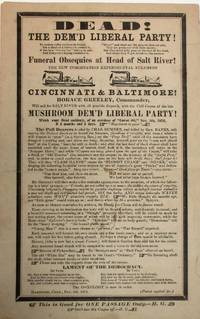
1872ref. 38915Hartford 1872. Broadside 6" x 9-1/2" text surrounded by mourning border. A few spots Very Good. Illustrations of two steamers. At the bottom: "This is Good for ONE PASSAGE Only. - H.G." Dated at Hartford November 5 1872. "Salt River" is 19th century American slang: a losing candidate for office was taking a trip "up Salt River." Tickets for passage "up Salt River" were frequently printed to mock supporters of losing candidates. This humorous scarce broadside taunts Horace Greeley and other defectors from the Republican Party for their support of Greeley in 1872. "On the overwhelming defeat of the Liberal Republican Party and its candidate Horace Greeley in the presidential election of 1872. Greeley had been nominated at a Liberal Republican convention at Cincinnati in May and at the Democratic National Convention at Baltimore in July 1872" AAS description. Pall bearers include Charles Sumner and General Banks prominent Republican supporters of Greeley. OCLC 191231113 2- AAS Middlebury 47090036 1- CT Hist. Soc. as of August 2025. unknown
1872ref. 38915Hartford 1872. Broadside 6" x 9-1/2" text surrounded by mourning border. A few spots Very Good. Illustrations of two steamers. At the bottom: "This is Good for ONE PASSAGE Only. - H.G." Dated at Hartford November 5 1872. "Salt River" is 19th century American slang: a losing candidate for office was taking a trip "up Salt River." Tickets for passage "up Salt River" were frequently printed to mock supporters of losing candidates. This humorous scarce broadside taunts Horace Greeley and other defectors from the Republican Party for their support of Greeley in 1872. "On the overwhelming defeat of the Liberal Republican Party and its candidate Horace Greeley in the presidential election of 1872. Greeley had been nominated at a Liberal Republican convention at Cincinnati in May and at the Democratic National Convention at Baltimore in July 1872" AAS description. Pall bearers include Charles Sumner and General Banks prominent Republican supporters of Greeley. OCLC 191231113 2- AAS Middlebury 47090036 1- CT Hist. Soc. as of August 2025. unknown books
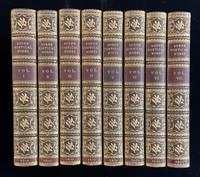
1834ref. 013113London: Cochrane & M'Crone 1834. 1st Edition Thus. Hardcover. Near Fine. A lovely 8 volume set in polished speckled full leather double- ruled covers front and back floral dentelles aeg spine with six compartments gilt raised bands. Incidental spotting to the interior here and there. Solid bindings all around. Cochrane & M'Crone hardcover
1834ref. 013113London: Cochrane & M'Crone 1834. 1st Edition Thus. Hardcover. Near Fine. A lovely 8 volume set in polished speckled full leather double- ruled covers front and back floral dentelles aeg spine with six compartments gilt raised bands. Incidental spotting to the interior here and there. Solid bindings all around. Cochrane & M'Crone hardcover books
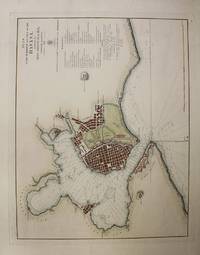
1844ref. M6443London: Chart Committee of the Admiralty c. 1844. Very Good; four small tears in the upper right right and lower right margin professionally repaired and not affecting the image. Notes: Originally printed in 1798 in Spanish later translated by Faden in 1804 and again in 1844. Hydrographic Office seal in top right. The bay is marked with depth soundings. In the upper right of the map is a legend denoting various landmarks and edifices on the map. Size : 446x551 mm 17.56x21.69 Inches Coloring: Hand Colored Reference: Cueto 189 Category: Maps City Maps;Maps West Indies Cuba & Bahamas; Chart Committee of the Admiralty unknown
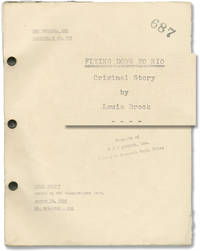
1933ref. 153095Culver City CA: RKO Studios Inc 1933. Final Draft script for the 1933 film. Carbon typescript on onionskin stock with production number "687" and "Property of RKO Studios Inc. Return to Scenario Dept. Files" stamps on front wrapper. Based on an unpublished play by Anne Caldwell and Louis Brock. One of the most famous dance debuts in film history featuring the iconic team of Fred Astaire and Ginger Rogers performing "The Carioca." The film's success set a dance and music craze across the country and made the pair bankable worldwide for a string of classic films. Nominated for an Academy Award. Set in and shot on location in Rio de Janeiro Brazil. Tan titled wrappers noted as FINAL SCRIPT on the front wrapper rubber-stamped production No. 687 dated August 25 1933 with credits for author Louis Brock. 161 leaves with last page of text numbered 159. Ribbon copy typescript rectos only. Pages Near Fine wrapper Near Fine bound with three gold brads. RKO Studios, Inc unknown
1933ref. 153095Culver City CA: RKO Studios Inc 1933. Final Draft script for the 1933 film. Carbon typescript on onionskin stock with production number "687" and "Property of RKO Studios Inc. Return to Scenario Dept. Files" stamps on front wrapper. Based on an unpublished play by Anne Caldwell and Louis Brock. One of the most famous dance debuts in film history featuring the iconic team of Fred Astaire and Ginger Rogers performing "The Carioca." The film's success set a dance and music craze across the country and made the pair bankable worldwide for a string of classic films. Nominated for an Academy Award. Set in and shot on location in Rio de Janeiro Brazil. Tan titled wrappers noted as FINAL SCRIPT on the front wrapper rubber-stamped production No. 687 dated August 25 1933 with credits for author Louis Brock. 161 leaves with last page of text numbered 159. Ribbon copy typescript rectos only. Pages Near Fine wrapper Near Fine bound with three gold brads. RKO Studios, Inc unknown books
1848ref. 29072New York: Van Norden 1848. The 1st annual report of the Hudson River Railroad not recorded on OCLC. Early reports authorizing the construction of the railroad from NY to Albany are dated 1848; the 2nd Annual Report of the Directors of the Hudson River Railroad is dated August 1849 The New York & Harlem Railroad NY&H was incorporated in 1831 to build a line in Manhattan from 23rd Street north to 129th Street between Third and Eighth Avenues the railroad chose to follow Fourth Avenue. At first the railroad was primarily a horsecar system but in 1840 the NY&H's charter was amended to allow it to build north toward Albany. In 1844 the rails reached White Plains and in January 1852 the NY&H made connection with the Western Railroad later Boston & Albany at Chatham New York creating a New York-Albany route. The Hudson was a busy river and the towns along it felt no need for a railroad - except during the winter when ice prevented navigation. Poughkeepsie interests organized the Hudson River Railroad in 1847. 8vo 24 page pamphlet. Printed paper wrappers one folding sheet of statistics tipped-in. Ex-lib with Hamilton College Library stamp and catalog numbers at front cover and slt foxing internally o/w very good. A fascinating first look at the Hudson River Rail line with the progress to date" now about 3000 men working between this city and Poughkeepsie the most of them between the city and Breakneck hill." p2. Van Norden unknown
1853ref. 78787Adelaide: W.C. Cox Printer 1853. First Edition. Hardcover. Very Good. Adelaide W.C. Cox Printer 1853. Octavo 46 pages. Antique-style quarter calf and marbled papered boards; title page slightly dusty and a trifle marked with two tiny closed tears to the top edge; a few pencilled emphases to the margins; light vertical crease down the centre of the last six leaves; an excellent copy. The author Clerk of the Executive Council of South Australia was on board the vessel; this is his account of the first successful navigation of the Murray as far as Swan Hill by Captain Francis Cadell. Fellow-passenger James Allen also published his version of events. Captain William Randell and his paddle-steamer 'Mary Ann' left Goolwa at the Murray mouth ahead of Cadell and travelled much farther up the Murray but Cadell overtook him en route and reached Swan Hill first. However both men deservedly earned the bonus of 2000 pounds offered by the South Australian Government 'for each of the first two steamers to travel up the Murray as far as the Darling junction' 'Australian Dictionary of Biography'. W.C. Cox, Printer hardcover
1935ref. 2110502150414142Heibonsha 1935. Soft Cover. Fine. Number of books: 11 Heibonsha paperback
1841ref. 117511langlois leclercq fortin masson renard martinet 1841 16 in-8 A Paris, Au Bureau Principal des Editeurs, et chez Langlois et Leclercq/ Fortin, Masson et Cie, Renard, Martinet et Cie, 1841-1849, 16 volumes in-8 de 245x155 mm environ, de 384 à 820 pages par volume, complet de 287 planches annoncées sur la table (dont de nombreuses rehaussées à l'aquarelle). Demi chagrin bleu nuit, dos à 4 nerfs plats portant titres et tomaisons dorés, gardes marbrées. Dos insolés, des frottements sur les coiffes, les coins et les coupes, des épidermures, des rousseurs, des pages brunies, état général satisfaisant.
1832ref. PHO-1689Paris, J. Tastu, 1832, In-folio, demi-chagrin noir, dos orné de filets dorés à froid Atlas de botanique seul comprenant 76/80 pl. sur chine collé, liste des planches in fine, peu de défauts.
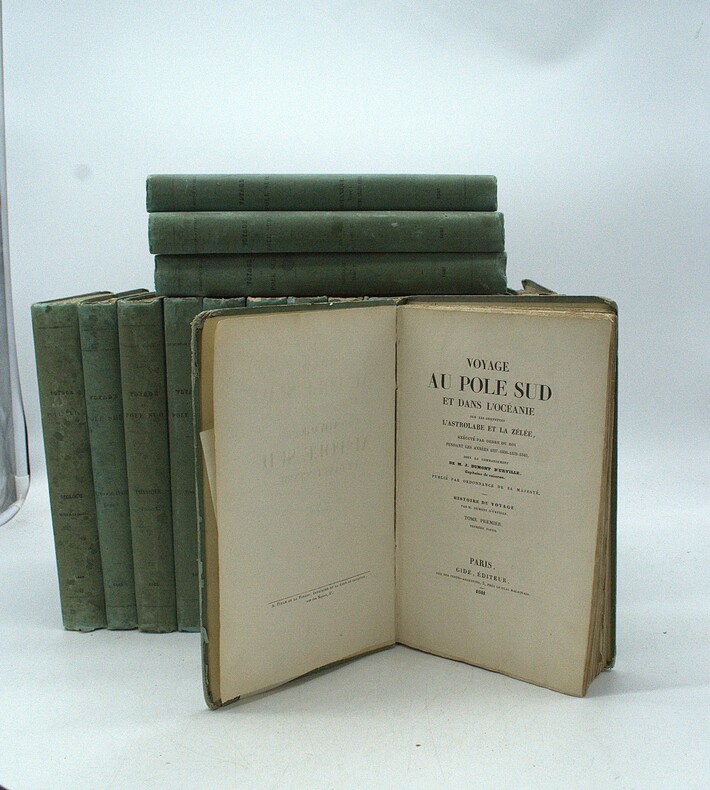
1841ref. PHO-1967Paris, Gide, 1841-1848, in-8, cartonnage éditeur, frottements, qlqs petits manques de matière, coins usés, qlqs coiffes usées, qlqs taches aux plats, T4 avec manque au dos et en haut du 1er plat 16 volumes de texte (sur 21) comprenant : Histoire du voyage, 1841-1846. 10 volumes en premier tirage, (1er tome, 1ère partie correspondant au 1er tome, 1er tome seconde partie correspondant au 2nd tome et 2nd tome, 1ère partie correspondant au tome 3), T2 mouillure en marge sur les derniers feuillets, T4 mouillure, T2 rousseurs, papier légèrement bruni aux tomes 3,4,5,6,7,8 et début tome 9. Zoologie, 1846, 2 volumes (sur 4, tome 1 et2) Botanique, 1845, 1 volume (sur 2), tome 1, plantes cellulaires, papier légèrement bruni Physique, 1842. 1 seul volume (en raison de la mort de Vincendon-Dumoulin) bien que d’autres annoncés, papier légèrement bruni Géologie, Minéralogie et Géographie physique du Voyage. 1848- 1 volume (sur 2, le second paru en 1854), 1 planche in-fine, papier légèrement bruni Hydrographie. 1843. 1 volume (sur 2), 1 planche in-fine, papier légèrement bruni.
ref. 46401979, Londres, Nourse ; Paris, Desaint, 1767 ; 2 vol. in-12, veau fauve marbré, dos ornés, tranches bleues marbr. (Reliures de l’ép.). 1 f. blanc, faux-titre, titre, puis paginé de VII à XVI, 353 pp.- 2 ff., 547 pp.EDITION ORIGINALE in-12 parue en même temps et chez les mêmes éditeurs qu’une édition in-4. Dupont de Nemours a qualifié ce livre « d’ouvrage sublime ». C’est Le Mercier de La Rivière qui réussit à enthousiasmer Diderot pendant quelques mois pour la Physiocratie : « Il est le premier qui m’ait éclairé, qui m’ait instruit…Il est le seul qui m’ait donné des idées claires, nettes et vraies du commerce tant intérieur qu’extérieur, et de la nature du commerce en général » (Lettre à Damilaville 1767). « Subjugué par la cohérence de la doctrine exposée par l’auteur, qui avait été intendant des Antilles de 1759 à 1764, Diderot le recommanda chaleureusement à Catherine II puis l’invita en Russie. L’entente ne fut guère parfaite et Le Mercier séjourna seulement à Saint-Pétersbourg d’octobre 1767 à mars 1768. Adepte du despotisme légal qui n’est autre que celui de l’ordre naturel, Le Mercier donna un fondement philosophique à la doctrine économique de Quesnay. Le monarque physiocrate dispose à la fois des pouvoirs législatifs et exécutifs ; il est absolu, mais ce despotisme n’est nullement en contradiction avec l’indispensable liberté économique car le souverain n’est pas là pour faire des lois, mais appliquer les lois naturelles ; faire respecter la propriété et la liberté, telles sont les missions de l’Etat. L’ouvrage se termine par une théorie de l’impôt : le souverain héréditaire est le co-propriétaire foncier du royaume et l’impôt constitue une co-jouissance indispensable des revenus du Domaine » Hasquin. Diderot et son temps n°178 - Lavergne p.183.- INED 2794.- Einaudi 3307.- Kress-Goldsmith 10269.- Janet II p.637.Bel exemplaire avec un ex-libris manuscrit du XVIII e S. « Préau ». Cet ex-libris est rayé et remplacé par celui d’un certain N. Boussé ( ?) qui en avril 1846 a rédigé une note critique sur la garde du tome I. Notes au crayon par le même, dans plusieurs marges de l’ouvrage.
1921ref. ABE-857353084Paris Floury 1921. Renoir et ses amis Riviere George. Paris: Floury 1921. First edition with one original drypoint by Renoir "Le chapeau epingle" Delteil 8 and one color lithograph Tete de jeune fille on front cover printed on fine wove paper in original binding in very good condition. 1st Edition. Soft cover. Very Good/No Jacket. Paris, Floury paperback
1921ref. ABE-857353084Paris Floury 1921. Renoir et ses amis Riviere George. Paris: Floury 1921. First edition with one original drypoint by Renoir "Le chapeau epingle" Delteil 8 and one color lithograph Tete de jeune fille on front cover printed on fine wove paper in original binding in very good condition. 1st Edition. Soft cover. Very Good/No Jacket. Paris, Floury paperback books