9.323 resultados
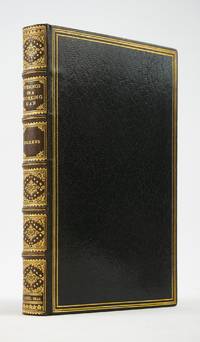
1872ref. 6400London: F. Harvey 1872. Second edition. Number 6 of 50 copies printed. Small quarto 8 1/4 x 6 inches; 210 x 152 mm. ii blank vi 160 i 3 blank. Etched half-title drawing by William M. Thackeray. Five full-page etchings on india paper by George Cruikshank. Bound ca. 1920 by Rivière & Son stamp signed on verso of front endpaper in full dark blue crushed levant morocco. Both covers richly decorated in gilt with triple borders each surrounding one hundred and seventy nine floral tools in a geometric design; spine with five raised bands richly decorated and lettered in gilt with the same floral tools; double-ruled gilt board edges decorative turn-ins all edges gilt. Front and rear outer joints repaired. "Sir William Fraser 1816-1898 was a genealogist archivist and Scottish historian. Trained as a solicitor his professional involvement with peerage cases began a lifetime of research into the genealogy of Scotland's most prominent landed families" Edinburgh University Library. His Colia's Whispers is a collection of poetry inflected by Victorian tastes for historicism and revivalist styles. The text is accompanied by five George Cruikshank etching on India paper are five out of eight compartments of a large plate etched by G.C. for Sir William Fraser in 1870 for Poems by the Knight of Morar. "Only fifty numbered copies were issued of this edition and consequently it is scarce" Cohn. George Cruikshank 1792-1878 was one of the most famous British caricaturists and illustrators during the Regency period. He would form a friendship with Charles Dickens illustrating many of his books and later in life would be active in the temperance movement. "The Riviere Bindery was one of the most notable and prolific shops in London's West End from about 1840 through 1939" Princeton. Bath-based Bayntun Bindery acquired the firm in 1939 transforming into the "Bayntun-Riviere bindery" which is still in existence and family owned. F. Harvey unknown books
1835ref. 6796London: Taylor and Hessey and Edward Moxon 1835. First edition and second edition. Fine. Lamb's Essays of Elia and Last Essays of Elia finely bound by Riviere & Son in full dark brown morocco with a dark green morocco pull-off case. Two volumes octavo. vi 341; xiii 295 pp. complete. Elaborate gilt spines in six compartments with raised bands. Gilt rule to boards and gilt turn-ins. All edges gilt. Teal coated endpapers. Small twentieth-century bookseller's ticket to lower flyleaves. A Fine fresh set in a beautiful binding. First edition second issue of Essays of Elia with both the Fleet Street and Waterloo addresses in the imprint bound without the terminal publisher's ads. Second edition of Last Essays of Elia which was first published by Edward Moxon in 1833. Lamb's accessible and conversational essays were published under the pseudonym Elia inspired by an Italian man that Lamb had known at the South Sea House and had appeared serially in The London Magazine between 1820 and 1825. Despite his struggles with mental illness Charles Lamb 1775 - 1834 would be celebrated for his literary contributions producing a range of material from essays to poems. Lamb belonged to an active literary circle which included Percy Bysshe Shelley and Lord Byron. Fine. Taylor and Hessey [and] Edward Moxon unknown books
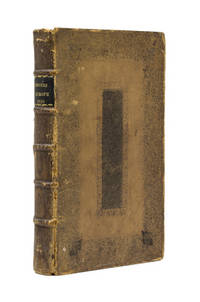
1710ref. 252472London: John Morphew 1710. Second edition of vol. I first edition of vol. II. Frontispiece in vol. I. ii vi 246; xvi 380 pp. 1 vols. 8vo. Contemporary panelled calf vol. I rebacked preserving most of original black morocco label corners repaired hinges strengthened. Bookseller's ticket on rear pastedown. Vol. II with later spine label binding rubbed. Second edition of vol. I first edition of vol. II. Frontispiece in vol. I. ii vi 246; xvi 380 pp. 1 vols. 8vo. This famous attack scandalized virtually every member of the Whig Party and led to Mrs. Manley's arrest. A friend and collaborator of Swift's she succeeded him as editor of The Examiner and exercised some influence on Defoe. ESTC N47961; ESTC T106837 John Morphew unknown
1710ref. 252472London: John Morphew 1710. Second edition of vol. I first edition of vol. II. Frontispiece in vol. I. ii vi 246; xvi 380 pp. 1 vols. 8vo. Contemporary panelled calf vol. I rebacked preserving most of original black morocco label corners repaired hinges strengthened. Bookseller's ticket on rear pastedown. Vol. II with later spine label binding rubbed. Second edition of vol. I first edition of vol. II. Frontispiece in vol. I. ii vi 246; xvi 380 pp. 1 vols. 8vo. This famous attack scandalized virtually every member of the Whig Party and led to Mrs. Manley's arrest. A friend and collaborator of Swift's she succeeded him as editor of The Examiner and exercised some influence on Defoe. ESTC N47961; ESTC T106837 John Morphew unknown books
ref. 06566London: Methuen & Co. Ltd. 1928. A Milne Classic in a Fine Rivière Binding "Christopher Robin Is Six" - A Superb Decorative Copy MILNE Alan Alexander. Now We Are Six. With decorations by Ernest H. Shepard. London: Methuen & Co. 1928. Fourth edition. Small octavo 7 5/16 x 4 3/4 inches; 189 x 121 mm. xi 1 blank 103 1 1 printer's imprint pp. With numerous black and white illustrations in the text. Elegantly bound ca. 1928 by Rivière & Son in full blue polished calf covers double-ruled in gilt the upper cover pictorially stamped in gilt with five charming figures from the text surrounding the title all within a fine gilt frame. Spine with five raised bands richly tooled in gilt in compartments with two red morocco labels lettered in gilt. Blue marbled endpapers all edges gilt. The original peach pictorial endpapers printed in black bound in at front and rear. Spine very slightly mellowed otherwise an exceptionally fine copy. Housed in a blue cloth slipcase. A most attractive and unusually well-preserved example of Now We Are Six the third volume in A. A. Milne's beloved Winnie-the-Pooh series published at the height of his literary partnership with Shepard. Issued two years after Winnie-the-Pooh 1926 the present volume continues the gentle poetic chronicles of Christopher Robin's imaginative world - poems that balance whimsy with a quiet often wistful awareness of childhood's passing. Shepard's illustrations - already inseparable from Milne's text by this date - appear here in their original black and white form capturing with remarkable economy the personalities of Pooh Piglet and their companions. The famous vignette of Christopher Robin "going on an adventure" appears on the cover in gilt lending this binding a particularly appropriate decorative coherence. The binding executed by Rivière & Son at the end of the 1920s is characteristic of their finest work of the period: crisp gilding harmonious proportions and a sensitive integration of illustrative motifs into the design. The retention of the original pictorial endpapers is an especially desirable feature preserving an important element of the book's first issue character within an elevated binding. A charming and highly desirable copy of one of the central works of 20th-century children's literature - both a cornerstone of the Milne canon and a beautifully presented example of English decorative binding at its best. London: Methuen & Co. Ltd., 1928 unknown
ref. 06566London: Methuen & Co. Ltd. 1928. A Milne Classic in a Fine Rivière Binding "Christopher Robin Is Six" - A Superb Decorative Copy MILNE Alan Alexander. Now We Are Six. With decorations by Ernest H. Shepard. London: Methuen & Co. 1928. Fourth edition. Small octavo 7 5/16 x 4 3/4 inches; 189 x 121 mm. xi 1 blank 103 1 1 printer's imprint pp. With numerous black and white illustrations in the text. Elegantly bound ca. 1928 by Rivière & Son in full blue polished calf covers double-ruled in gilt the upper cover pictorially stamped in gilt with five charming figures from the text surrounding the title all within a fine gilt frame. Spine with five raised bands richly tooled in gilt in compartments with two red morocco labels lettered in gilt. Blue marbled endpapers all edges gilt. The original peach pictorial endpapers printed in black bound in at front and rear. Spine very slightly mellowed otherwise an exceptionally fine copy. Housed in a blue cloth slipcase. A most attractive and unusually well-preserved example of Now We Are Six the third volume in A. A. Milne's beloved Winnie-the-Pooh series published at the height of his literary partnership with Shepard. Issued two years after Winnie-the-Pooh 1926 the present volume continues the gentle poetic chronicles of Christopher Robin's imaginative world - poems that balance whimsy with a quiet often wistful awareness of childhood's passing. Shepard's illustrations - already inseparable from Milne's text by this date - appear here in their original black and white form capturing with remarkable economy the personalities of Pooh Piglet and their companions. The famous vignette of Christopher Robin "going on an adventure" appears on the cover in gilt lending this binding a particularly appropriate decorative coherence. The binding executed by Rivière & Son at the end of the 1920s is characteristic of their finest work of the period: crisp gilding harmonious proportions and a sensitive integration of illustrative motifs into the design. The retention of the original pictorial endpapers is an especially desirable feature preserving an important element of the book's first issue character within an elevated binding. A charming and highly desirable copy of one of the central works of 20th-century children's literature - both a cornerstone of the Milne canon and a beautifully presented example of English decorative binding at its best. London: Methuen & Co. Ltd., 1928 unknown books
ref. 06530London: Printed for J. Johnston 1822. Johnny Newcome Returns: The Soldier's Comic Progress A Spirited Sequel to the Celebrated Naval Satire - With Fine Cruikshank Plates MITFORD John. My Cousin in the Army: or Johnny Newcome on the Peace Establishment. A Poem. By a Staff Officer. London: Printed for J. Johnston 1822. First edition. Octavo 9 x 5 5/8 inches; 228 x 143 mm. 4 316 pp. Sixteen hand-colored aquatint plates including frontispiece by Isaac Robert Cruikshank and Charles Williams. Plates watermarked 1821. A short marginal tear 3/4 inch to title slight creasing to plates opposite pp. 173 and 285 and a neatly restored outer blank margin to the plate opposite p. 313 loss minimal. Light offsetting from plates as usual and a few minor smudges. Handsomely bound in mid-twentieth-century full burgundy levant morocco by Rivière & Son stamp-signed on verso of front free endpaper covers with gilt double fillet border spine richly tooled and lettered in gilt in compartments gilt board edges and turn-ins marbled endpapers all edges gilt. Armorial bookplate of Harry Bradfer-Lawrence on front pastedown. An excellent copy. A lively and richly illustrated military satire My Cousin in the Army forms the companion volume to Mitford's earlier and highly successful Johnny Newcome in the Navy 1818 transferring the comic misadventures of the naïve recruit from sea to land. Cast in brisk octosyllabic verse the poem offers a vivid and often irreverent portrait of army life in the immediate aftermath of the Napoleonic Wars blending anecdote caricature and social observation in a manner closely aligned with the Regency taste for humorous narrative. The hand-colored aquatints by Isaac Robert Cruikshank and Charles Williams - both central figures in the golden age of British caricature - provide much of the work's enduring appeal. Their plates animated and theatrical capture the follies vanities and absurdities of military life with a sharp eye and a lively palette placing the work firmly within the tradition of illustrated comic narratives popularized by contemporaries such as the Doctor Syntax series and Life in London. Mitford himself remains one of the more colorful and tragic figures of the period: a former naval officer present at major engagements of the French Revolutionary Wars later reduced by dissipation and instability to a precarious literary existence. His writing - energetic unpolished and often drawn from lived experience - retains an immediacy that lends authenticity to the comic episodes described. A pleasing copy of a work that stands among the more engaging illustrated satires of the post-Napoleonic period enhanced by an attractive Rivière binding and distinguished provenance. Abbey Life 370; Tooley 166. London: Printed for J. Johnston, 1822 unknown
ref. 06530London: Printed for J. Johnston 1822. Johnny Newcome Returns: The Soldier's Comic Progress A Spirited Sequel to the Celebrated Naval Satire - With Fine Cruikshank Plates MITFORD John. My Cousin in the Army: or Johnny Newcome on the Peace Establishment. A Poem. By a Staff Officer. London: Printed for J. Johnston 1822. First edition. Octavo 9 x 5 5/8 inches; 228 x 143 mm. 4 316 pp. Sixteen hand-colored aquatint plates including frontispiece by Isaac Robert Cruikshank and Charles Williams. Plates watermarked 1821. A short marginal tear 3/4 inch to title slight creasing to plates opposite pp. 173 and 285 and a neatly restored outer blank margin to the plate opposite p. 313 loss minimal. Light offsetting from plates as usual and a few minor smudges. Handsomely bound in mid-twentieth-century full burgundy levant morocco by Rivière & Son stamp-signed on verso of front free endpaper covers with gilt double fillet border spine richly tooled and lettered in gilt in compartments gilt board edges and turn-ins marbled endpapers all edges gilt. Armorial bookplate of Harry Bradfer-Lawrence on front pastedown. An excellent copy. A lively and richly illustrated military satire My Cousin in the Army forms the companion volume to Mitford's earlier and highly successful Johnny Newcome in the Navy 1818 transferring the comic misadventures of the naïve recruit from sea to land. Cast in brisk octosyllabic verse the poem offers a vivid and often irreverent portrait of army life in the immediate aftermath of the Napoleonic Wars blending anecdote caricature and social observation in a manner closely aligned with the Regency taste for humorous narrative. The hand-colored aquatints by Isaac Robert Cruikshank and Charles Williams - both central figures in the golden age of British caricature - provide much of the work's enduring appeal. Their plates animated and theatrical capture the follies vanities and absurdities of military life with a sharp eye and a lively palette placing the work firmly within the tradition of illustrated comic narratives popularized by contemporaries such as the Doctor Syntax series and Life in London. Mitford himself remains one of the more colorful and tragic figures of the period: a former naval officer present at major engagements of the French Revolutionary Wars later reduced by dissipation and instability to a precarious literary existence. His writing - energetic unpolished and often drawn from lived experience - retains an immediacy that lends authenticity to the comic episodes described. A pleasing copy of a work that stands among the more engaging illustrated satires of the post-Napoleonic period enhanced by an attractive Rivière binding and distinguished provenance. Abbey Life 370; Tooley 166. London: Printed for J. Johnston, 1822 unknown books
1821ref. M793Madrid 1821. Excellent. Size : 635x935 mm Coloring: Hand Colored Category: Maps West Indies Cuba & Bahamas; unknown
1798ref. M407Paris: Misitre de la Marine et des Colonies 1798. Excellent. Size : 435x585 mm 17.125x23 Inches Coloring: Hand Colored Category: Maps City Maps; Maps West Indies Cuba & Bahamas; Misitre de la Marine et des Colonies unknown
1985ref. 2091202133210234Yahata shoten 1985. Soft Cover. Fine. Number of books: 10 books in total Yahata shoten paperback
1921ref. 21568Paris: H. Floury 1921. Stiff Wraps. Orig. pictorial wrappers. Near fine. 273 pages. 26 x 20 cm. With the original dry point etching Delteil 8 third state "Jeune Filles Fleurissant leurs Chapeaux" hors-texte drypoint etching " and with lithograph "Tête de Jeune Fille". 95 heliogravure illustrations and 56 plates 12 in color. Table Des Gravures Hors Texte and Table Des Gravures Dans Le Texte. Crisp very clean interior binding tight head and foot of spine reinforced. H. Floury unknown
1921ref. 2880Paris: Floury 1921. FIRST AND ONLY EDITION of this classic memoir and study of Renoir. Profusely illustrated in black and white and color with many full-page plates including A BEAUTIFUL ORIGINAL DRYPOINT BY RENOIR Delteil 8: "Le chapeau epinglé" printed on fine wove paper. 4to. Uncut in original lithographed wraps. Wraps a bit worn at spine internally FINE AND BRIGHT. The drypoint missing from many copies of this book is in excellent condition. Floury paperback
1921ref. 21568Paris: H. Floury 1921. Stiff Wraps. Orig. pictorial wrappers. Near fine. 273 pages. 26 x 20 cm. With the original dry point etching Delteil 8 third state "Jeune Filles Fleurissant leurs Chapeaux" hors-texte drypoint etching " and with lithograph "Tête de Jeune Fille". 95 heliogravure illustrations and 56 plates 12 in color. Table Des Gravures Hors Texte and Table Des Gravures Dans Le Texte. Crisp very clean interior binding tight head and foot of spine reinforced. H. Floury unknown books
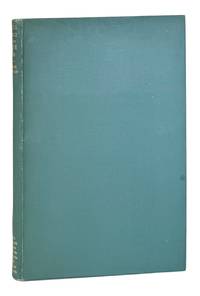
1927ref. 48940London: Published by Leonard and Virginia Woolf at the Hogarth Press 1927. Very Good. London: Published by Leonard and Virginia Woolf at the Hogarth Press 1927. First English-language Edition. Small quarto; original green cloth lettered in gilt; 88pp. 1 page advertisements. Mild shelfwear; general light spotting and scuffing; sunning to rear along spine. Binding sound; Blackwell's bookseller ticket to front pastedown; touch of off-setting to endpapers else unmarked; a Very Good and sound copy of Freud's foundational work on id ego and super-ego fundamental to the development of psychoanalysis. Originally published in German in 1923; copies of the Hogarth English-language edition uncommon in retail. Grinstein 121. Published by Leonard and Virginia Woolf at the Hogarth Press unknown
1927ref. 48940London: Published by Leonard and Virginia Woolf at the Hogarth Press 1927. Very Good. London: Published by Leonard and Virginia Woolf at the Hogarth Press 1927. First English-language Edition. Small quarto; original green cloth lettered in gilt; 88pp. 1 page advertisements. Mild shelfwear; general light spotting and scuffing; sunning to rear along spine. Binding sound; Blackwell's bookseller ticket to front pastedown; touch of off-setting to endpapers else unmarked; a Very Good and sound copy of Freud's foundational work on id ego and super-ego fundamental to the development of psychoanalysis. Originally published in German in 1923; copies of the Hogarth English-language edition uncommon in retail. Grinstein 121. Published by Leonard and Virginia Woolf at the Hogarth Press unknown books
ref. 1653801London : Printed for Henry Eversden at the Greyhound in Pauls Church-yard 1657. Hardcover. Used-Very Good. Small 4to. 20 236 257-267 278-417 6 pp. Collation: pi4 a6 B-Gg4 Hh2 Ll-Fff4 Fff3. Two folding plates. Expertly rebound preserving much of the original blind-ruled leather covers; spine and board corners are new. Spine is decorated in blind. Some general age-toning in the text but always very legible. Like the copy in the Univ. of Bristol Library the source text for online editions this copy has continuous text in spite of some oddities in pagination. Compared to that copy however it does have one additional blank leaf at the end. Two ownership inscriptions one the earlier in several places. A very good copy of an uncommon work the first English version of Riviere's treatise. London : Printed for Henry Eversden at the Greyhound in Pauls Church-yard, 1657 hardcover
1820ref. C8881xvi17-340 pages with frontispiece and diagrams. Octavo 8" x 5" bound in half leather with marbled boards and gilt lettering to spine. Translated from the Italian of Ercole dal Rio by J S Bingham. To which is prefixed an Essay on the origin of the game by Eyles Irwin. Whyld: 1820:14 Translated from Il guioco incomparablile degli schcchi 1769 by Ponziani here erroneously attributed to Ercole del Rio. J S Bingham is a pseudonym of Captain John Smith RN "Quotes and queries" British Chess Magazine November 1978 page 523. Irwin's "Essay on the origin of the game is a paper on Chinese chess cited as Whyld 1795:3. Domenico Lorenzo Ponziani was an 18th-century Italian law professor priest chess player composer and theoretician. He is best known today for his chess writing. Ponziani was friends with fellow Modenese chess players and writers Ercole del Rio and Giambattista Lolli and collectively the trio are known as the Modenese Masters. In 1769 Ponziani published the first edition of Il giuoco incomparabile degli scacchi The Incomparable Game of Chess. As Ponziani did not include his name in the work Opera d'Autore Modenese it was identified to the Anonymous Modenese. The second edition in 1782 was much improved and laid out the principles of the Italian school of chess as exemplified by 17th-century Italian masters such as Gioachino Greco. Although Ponziani identified himself in the second edition the 1820 translation by English naval officer J. B. Smith using the pen name J. S. Bingham The Incomparable Game of Chess attributed the work to del Rio. Ponziani's work is the best practical guide produced by the Modenese Masters. Like writings by del Rio and Lolli Ponziani deals only with the opening and endgame with no discussion of the middlegame. Murray H. J. R. 1913 A History of Chess Condition: End papers renewed former owners solutions to problems tipped in at gutter next to problems. Point rubbed with some rubbing to boards. A very good copy of a scarce item. J J Stockdale hardcover
1820ref. BOOKS008881xvi17-340 pages with frontispiece and diagrams. Octavo 8" x 5" bound in 3/4 leather with marbled boards and gilt lettering to spine. Translated from the Italian of Ercole dal Rio by J S Bingham. To which is prefixed an Essay on the origin of the game by Eyles Irwin. Whyld: 1820:14 First English edition.Translated from Il guioco incomparablile degli schcchi 1769 by Ponziani here erroneously attributed to Ercole del Rio. J S Bingham is a pseudonym of Captain John Smith RN "Quotes and queries" British Chess Magazine November 1978 page 523. Irwin's "Essay on the origin of the game is a paper on Chinese chess cited as Whyld 1795:3.Domenico Lorenzo Ponziani was an 18th-century Italian law professor priest chess player composer and theoretician. He is best known today for his chess writing. Ponziani was friends with fellow Modenese chess players and writers Ercole del Rio and Giambattista Lolli and collectively the trio are known as the Modenese Masters. In 1769 Ponziani published the first edition of Il giuoco incomparabile degli scacchi The Incomparable Game of Chess. As Ponziani did not include his name in the work Opera d'Autore Modenese it was identified to the Anonymous Modenese. The second edition in 1782 was much improved and laid out the principles of the Italian school of chess as exemplified by 17th-century Italian masters such as Gioachino Greco. Although Ponziani identified himself in the second edition the 1820 translation by English naval officer J. B. Smith using the pen name J. S. Bingham The Incomparable Game of Chess attributed the work to del Rio. Ponziani's work is the best practical guide produced by the Modenese Masters. Like writings by del Rio and Lolli Ponziani deals only with the opening and endgame with no discussion of the middlegame. Murray H. J. R. 1913 A History of ChessCondition:End papers stained previous owner's old signature on front end paper. Spine renewed with original spine label to spine. Points rubbed and bumped some soiling to else a very good copy of a scarce item. J J Stockdale hardcover
1844ref. ST20685-2London: T. C. Newby 1844. FIRST EDITION. 170 x 102 mm. 6 3/4 x 4". 1 p.l. xiii 3 205 1 pp. 1 leaf ads.Preface by Charles Dickens. VERY PLEASING GREEN CRUSHED MOROCCO BY RIVIERE & SONS stamp-signed on front turn-in covers framed with gilt rules densely tooled cornerpieces with floral sprigs on a stippled ground raised bands spine panels lavishly gilt with a starburst of floral tools emanating from a central medallion all on a stippled ground gilt lettering turn-ins gilt ruled with floral garlands at the corners all edges gilt original tan cloth wrappers bound in at rear. Title page printed in blue and red. Eckel pp. 146-47; Podeschi B-121. Sheila M. Smith "John Overs to Charles Dickens: A Working-Man's Letter and Its Implications" Victorian Studies 18 no. 2 1974: 195–217. Spine just slightly sunned though hard to tell because of the heavy gilt a few trivial spots internally but A VERY FINE COPY in quite a pretty binding. This attractively bound volume of a working class poet's verse and prose represents one of Dickens' charitable efforts in the spirit of social reform. A carpenter by trade John Overs 1808-44 had become acquainted with Dickens in 1839 when he submitted poetry for publication in "Bentley's Miscellany" then under Dickens' editorship. Over the next several years Dickens became a literary mentor and something of a friend to Overs providing writing advice lending books and helping Overs to secure a position at Drury Lane Theatre when his tuberculosis became too severe to continue his work as a carpenter. Literary scholar Sheila M. Smith has suggested that Overs may have served as an influence for "The Chimes" Dickens' penultimate Christmas book; she writes that Overs "was neither a political agitator nor a trade unionist. . . yet he was bitter and exulting in the idea of social revolution. A working man of this kind goaded to such feelings would have aroused Dickens's sympathy at a period when the novelist was experiencing his most violent indignation about his country's poor." To whatever degree that sympathy proved a literary inspiration for Dickens it directly led to the publication of the present work. When it was clear by the spring of 1844 that Overs would not survive his illness Dickens suggested to him that he publish a collection of his writings to help provide for his family after his passing. And so the present anthology was published only months before Overs' death on September 28 1844 with the proceeds from the book along with an additional charitable collection taken up by the publisher allowing his widow to make a living by opening a small milliner's shop. T. C. Newby unknown
1844ref. ST20685-2London: T. C. Newby 1844. FIRST EDITION. 170 x 102 mm. 6 3/4 x 4". 1 p.l. xiii 3 205 1 pp. 1 leaf ads.Preface by Charles Dickens. VERY PLEASING GREEN CRUSHED MOROCCO BY RIVIERE & SONS stamp-signed on front turn-in covers framed with gilt rules densely tooled cornerpieces with floral sprigs on a stippled ground raised bands spine panels lavishly gilt with a starburst of floral tools emanating from a central medallion all on a stippled ground gilt lettering turn-ins gilt ruled with floral garlands at the corners all edges gilt original tan cloth wrappers bound in at rear. Title page printed in blue and red. Eckel pp. 146-47; Podeschi B-121. Sheila M. Smith "John Overs to Charles Dickens: A Working-Man's Letter and Its Implications" Victorian Studies 18 no. 2 1974: 195–217. Spine just slightly sunned though hard to tell because of the heavy gilt a few trivial spots internally but A VERY FINE COPY in quite a pretty binding. This attractively bound volume of a working class poet's verse and prose represents one of Dickens' charitable efforts in the spirit of social reform. A carpenter by trade John Overs 1808-44 had become acquainted with Dickens in 1839 when he submitted poetry for publication in "Bentley's Miscellany" then under Dickens' editorship. Over the next several years Dickens became a literary mentor and something of a friend to Overs providing writing advice lending books and helping Overs to secure a position at Drury Lane Theatre when his tuberculosis became too severe to continue his work as a carpenter. Literary scholar Sheila M. Smith has suggested that Overs may have served as an influence for "The Chimes" Dickens' penultimate Christmas book; she writes that Overs "was neither a political agitator nor a trade unionist. . . yet he was bitter and exulting in the idea of social revolution. A working man of this kind goaded to such feelings would have aroused Dickens's sympathy at a period when the novelist was experiencing his most violent indignation about his country's poor." To whatever degree that sympathy proved a literary inspiration for Dickens it directly led to the publication of the present work. When it was clear by the spring of 1844 that Overs would not survive his illness Dickens suggested to him that he publish a collection of his writings to help provide for his family after his passing. And so the present anthology was published only months before Overs' death on September 28 1844 with the proceeds from the book along with an additional charitable collection taken up by the publisher allowing his widow to make a living by opening a small milliner's shop. T. C. Newby unknown books
ref. 41051501China n.d. ca 1900.A group of nineteen sepia-toned original photographs each about 15.5 x 11 cm. many with captions or titles in ink some have corner numbers in the negative all very clean bright clear strong images. VERY RARE SET ! . . . AN EARLY COLLECTION OF SEPIA-TONED ORIGINAL PHOTOGRAPHS . . . SHOWING THE CHIANG-JIANG YANGTSE RIVER & ENVIRONS . . This is a lovely early collection of genuine and original photographs of the Yangtze River and the gorges. . The English speaking foreigner who took these photographs put titles and captions on many. It begins with a voyage up the Yangtze River with the first date on December 16 1900 and continuing photographs through December 19 23-25th. . Each photo is mounted on a card likely extracted from an old photo album some cards have two images one on each side. . Captions are: 1. 2 Photos: "December 16th S.S. Kiang Ho arrived at Ichang arrived Ichang December 19th." and the verso: "H.M.S. Kinsha at Ichang." The 2nd image looks like a postcard or something other than a matching glossy photo the size is 14 x 8 cm. with hand written caption. . 2. 2 Photo views of "Shin Tan" anchorage & rapids . 3. 2 Photos: "December 24th Tung Ding Gorge" & "Christmas Day" 1900 "Shin Tan rapids." . 4. 1 Photo: "UP THE YANGTSE' . 5. 2 Photos: "THE FIRST GORGE" with '664' hand written on the negative. And verso blank no caption shows rocky mountain shore line. . 6. 2 Photos: "December 23rd the Padunzai Rapid" shows several junks & boats at anchorage with people looking on. Verso shows "December 23 rd" other small vessels and boat haulers along the shore. This second photo has a touch of fading at the center upper portion could be sunlight over exposure balance no issues. . 7. 2 Photos: "Tung Ding Rapid" shows river going large vessel with oars. Verso shows mountainous shore line with river junk. . 8. 2 Photos: No captions on either. First shows the river with three boats and steep shore line mountains. Verso shows large rock formation on diagonal entering the river. . 9. 2 Photos: First no caption but has hand written negative number '574' showing a tall pagoda on diagonal rock formation entering the river "Pa Ling" lightly written in lower right pencil. Verso shows river at low tide and a tiny river boat lower right corner pencil "Kwei Fu Gorge." . 10. 2 Photos: "Treking up Shin Tan." A dramatic view of two river vessels under sail both attached with long ropes and teams of coolies hauling the boats up against the stream. Verso pencil in lower right corner: " Isubau Gorge." H.M.S. Kinsha at Ichang a lovely steam paddle wheeler. First gorge Up the Yangtze trekking up Shin Tau Shin Tau Rapid Tung Ling Rapid & Gorge Padunzai Rapid &c. . SIZE Each photo is 15.4 x 10.8 cm. varying to about 15 x 11 cm. and slight other variant sizes similar to above. . Board sizes vary even though the photos are about standard size. Ranging from largest: 25.2 x 20.8 cm. smallest: 19.3 x 26.4 cm. . Color photos are posted to our website. . CONDITION: These are original glossy photographs each gently laid down some edges not fastened firmly a couple of loose or folds on edges. All clean vivid good focus no obvious fading a couple of the usual and typical less than perfect 'development' spots. By and large an excellent group of photographs developed most likely in China a souvenir of a foreign person's trip 1900down the river. Far and above the average photograph quality of this early period. . RARITY: Original early dated photos of the Yangtze river are RARE and seldom found during this period. Even rarer are photographs with captions and dates. Nicely done fascinating work. . . unknown
1713ref. 988F17London: John Morphew 1713 . First edition. Hardback. Good. 7.5" by 5". None. The first edition of this fascinating criticism and response to the critiques levelled against Queen Anne by Richard Steele in his periodical 'The Guardian'. The vanishingly scarce first edition of this work.Presented as "a letter from a Country Whig to Mr. Steele" this work replies to criticisms published in The Guardian of Queen Anne.The author defends the Queen"s honour and prerogative against what the author calls the "unexampled insolence" of The Guardian"s author Richard Steele.ESTC N8361Rebound with endpapers renewed.Most frequently erroneously attributed to Mary de la Riviere Manley some have claimed this may be the work of Daniel Defoe though this has been widely discredited. Rebound half morocco binding with marbled paper covered boards and endpapers renewed. Externally bright with rubbing to back strip and front board. Minor loss to back strip head with head of front joint starting and board holding firm. Internally firmly bound. Pages significantly age toned due to paper type with light spotting and handling marks throughout. Good John Morphew hardcover
ref. DADAX0670379603New unknown
1955ref. 181250Nanjing: Gangwu ju ganghang jiandu c. 1955. A revolution on the river A scarce handbook unrecorded institutionally issued by the Nanjing port authorities after the 1955 modernization of signals in the 1000-kilometre lower Yangtse. The charts and tables give information on every light as well as distances wind signals and anchorages for shelter tides and traffic control markers. Between 1953 and 1955 the government oversaw changes along the entire stretch of the river introducing Soviet-style systems and for the first time making the whole of the middle and lower stretches safely navigable at night. Octavo. Text in Chinese signals printed in colour. Original blue cloth wallet binding with popper clasp front cover lettered in silver contents unfolding concertina-style including charts of channel diagrams and tables. Light toning occasional foxing: near-fine. hardcover