9.323 resultados
1919ref. 2091502135500753Not Available 1919. Soft Cover. Fine. The book is in fine condition. Not Available paperback
1873ref. 57738Philadelphia: J.B. Lippincott & Co. 1873. Rare Early Report of a Major Western Railroad A rare and detailed report from the infancy of what would become one of the West's largest railway companies. The Denver and Rio Grande Railway D&RG headed by former Union General William Jackson Palmer was founded in 1870 and the first tracks were laid the following year. The goal of the railroad was to find an efficient path through Colorado and across the Rockies and then southwest to a terminus at Los Angeles. The company expanded with considerable aggression and speed and before long was the largest narrow-gauge railway network on the continent. This report touts the results in the year since the railroad reached Colorado Springs the rapid growth in population in towns along the line progress of their work natural resources including coal stone lime and lumber various connecting lines and the goal of taking the railroad into Mexico which greatly wanted for railroads at the time the venture into Mexico would prove to be a disastrous waste of money and manpower. The appendix discusses the virtues of narrow gauge railroads and there are also tonnage reports a list of buildings owned by the railroad in various towns brief descriptions of spur lines and more. From 1877 to 1880 the Denver and Rio Grande was engaged in a railroad war with the Atchison Topeka and Santa Fe Railway led by William Strong in which both companies used political maneuvers physical force and sometimes violent sabotage to get the upper hand. The D&RG continued operations in a variety of shapes all the way until 1996 when it merged with the Union Pacific. The folding map titled "Map showing the Property of the Central Colorado Improvement Company" depicts the assets of that company one of three D&RG subsidiaries that later merged to form the Colorado Fuel & Iron Company. It shows the boundaries of part of the Nolan and St. Vrain grants; some township range and section boundaries; locations of major natural resources; railroads constructed and proposed; and other details. Other railroads shown include the Kansas Pacific future nemesis the Atchison Topeka & Santa Fe and the Arkansas Valley Extension R.R. The lengthy folding profile shows the route of the D&RG from Denver to Pueblo noting elevations as well as a profile of the Arkansas Valley Branch line. This copy is lacking the map titled "Denver and Rio Grande Railway and Connections" which was also published separately in larger format the same year. A rare and important early document from one of the west's largest and longest-running railroads. OCLC records only five copies at the Denver Public Library California Historical Society the Autry Museum Colorado College and the American Antiquarian Society. Original printed wrappers. Wrappers somewhat chipped and stained two small holes punched in gutter throughout. Ex-Denver Public Library with bookplate on inner front wrapper and deaccession stamps on titlepage verso. Soot-stains to edges and outer margins of many pages but on the whole quite clean internally. Good plus lacking one map. OCLC 71998109 1109396713. unknown
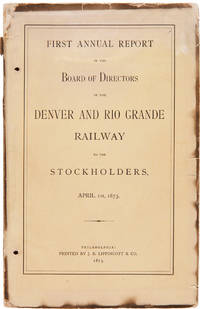
1873ref. 57738Philadelphia: J.B. Lippincott & Co. 1873. Rare Early Report of a Major Western Railroad A rare and detailed report from the infancy of what would become one of the West's largest railway companies. The Denver and Rio Grande Railway D&RG headed by former Union General William Jackson Palmer was founded in 1870 and the first tracks were laid the following year. The goal of the railroad was to find an efficient path through Colorado and across the Rockies and then southwest to a terminus at Los Angeles. The company expanded with considerable aggression and speed and before long was the largest narrow-gauge railway network on the continent. This report touts the results in the year since the railroad reached Colorado Springs the rapid growth in population in towns along the line progress of their work natural resources including coal stone lime and lumber various connecting lines and the goal of taking the railroad into Mexico which greatly wanted for railroads at the time the venture into Mexico would prove to be a disastrous waste of money and manpower. The appendix discusses the virtues of narrow gauge railroads and there are also tonnage reports a list of buildings owned by the railroad in various towns brief descriptions of spur lines and more. From 1877 to 1880 the Denver and Rio Grande was engaged in a railroad war with the Atchison Topeka and Santa Fe Railway led by William Strong in which both companies used political maneuvers physical force and sometimes violent sabotage to get the upper hand. The D&RG continued operations in a variety of shapes all the way until 1996 when it merged with the Union Pacific. The folding map titled "Map showing the Property of the Central Colorado Improvement Company" depicts the assets of that company one of three D&RG subsidiaries that later merged to form the Colorado Fuel & Iron Company. It shows the boundaries of part of the Nolan and St. Vrain grants; some township range and section boundaries; locations of major natural resources; railroads constructed and proposed; and other details. Other railroads shown include the Kansas Pacific future nemesis the Atchison Topeka & Santa Fe and the Arkansas Valley Extension R.R. The lengthy folding profile shows the route of the D&RG from Denver to Pueblo noting elevations as well as a profile of the Arkansas Valley Branch line. This copy is lacking the map titled "Denver and Rio Grande Railway and Connections" which was also published separately in larger format the same year. A rare and important early document from one of the west's largest and longest-running railroads. OCLC records only five copies at the Denver Public Library California Historical Society the Autry Museum Colorado College and the American Antiquarian Society. Original printed wrappers. Wrappers somewhat chipped and stained two small holes punched in gutter throughout. Ex-Denver Public Library with bookplate on inner front wrapper and deaccession stamps on titlepage verso. Soot-stains to edges and outer margins of many pages but on the whole quite clean internally. Good plus lacking one map. OCLC 71998109 1109396713. unknown books
1877ref. 42208St. Louis: A. Gast & Co. Lith. 1877. 1877. IOWA NEBRASKA. First edition. 8vo. 21.6 cm x 13.3 cm. Original printed yellow wrappers 31 1 pp. illustrated from two full-page pictorial plates three maps on verso of front cover and recto and verso of rear cover. Front map is of the great South Platte region. Map on inside rear cover is a map of Southern Iowa showing lands of the Chicago Burlington & Quincy Railroad Company that are available for sale Map on outside of rear cover is a map showing the leading through routes to the West and the land grants in Iowa & Nebraska of the Chicago Burlington and Quincy R. R. and Burlington & Missouri River Railroad in Nebraska. A scarce and interesting promotional for the sale of 1000000 acres of land owned along the routes of the Burlington and Missouri River Railroad. The Burlington and Missouri put out some of the most interesting and compelling railroad land promotionals in the genre nicely illustrated with maps and plates and this example is no exception. The maps show the lands for sale along the line of the railroad from Monroe Iowa to Omaha; lands in Nebraska from Omaha to Kearney along the South Platte; and a map showing railroad routes from Chicago. The plates are entitled "Looking Southwest from Lincoln Neb." and "Valley of the Big Blue South of Seward Neb." The text is devoted to detailed descriptions of the land including natural resources soil climate stock raising and homesteading opportunities and prices for land and for goods. This publication enjoyed some success; another promotional issued the next year advertised only 750000 acres of land left for sale indicating that the Burlington and Missouri had sold off a quarter million acres of land the previous year. Laid into this copy is a four-page "Circular of Rates on Tickets and Freight" for several railroads including the Burlington & Missouri. Not in Railway Economics nor in the Eberstadt or Decker catalogues. OCLC locates three copies at the American Antiquarian Society Harvard Business School Library and the DeGolyer Library. There is also a copy at Yale. This scarce promotional booklet has covers lightly soiled small chips to the covers covers holding but loose internally quite serviceable. Overall a very good copy. A. Gast & Co. Lith., [1877]. unknown
1659ref. 29260Lyons: Antoine Cellier 1659. First Description of Aortic Stenosis RIVIERE Lazare 1589-1655. Observationum medicarum & curationum insignium centurae tres. . . . Edited by Simeon Jacoz. 4to. 8 311 9pp. Lyons: Antoine Cellier 1659. 225 x 167 mm. Speckled sheep c. 1659 rubbed small wormhole in front cover. Some foxing browning & dampstaining old repair to one leaf. Very good copy. Old signature and notes on endpapers. First Edition. Riviere was the first to describe stenosis of the aortic valve from a case that he treated in 1646. GM 2727 cites Riviere's description of this condition in his Opera medica universa 1674 of which the present work is the first edition; the description appears here on p. 177 and is entitled "Cordis palpitatio & pulsus inaequalitas." Riviere also brought Paracelsian iatrochemistry into the curriculum of the University of Montpellier and it was under his auspices that Alexander Fraser introduced the Harviean theory of the circulation into the University's curriculum in 1636. An edition of the present work was published in The Hague in the same year as this Lyons edition. As Riviere was French it is reasonable to presume that the Lyons edition was first. Hirsch. Norman 1837. Willius & Dry p. 58. Thorndike VIII p. 518. . Antoine Cellier unknown
1659ref. 29260Lyons: Antoine Cellier 1659. First Description of Aortic Stenosis RIVIERE Lazare 1589-1655. Observationum medicarum & curationum insignium centurae tres. . . . Edited by Simeon Jacoz. 4to. 8 311 9pp. Lyons: Antoine Cellier 1659. 225 x 167 mm. Speckled sheep c. 1659 rubbed small wormhole in front cover. Some foxing browning & dampstaining old repair to one leaf. Very good copy. Old signature and notes on endpapers. First Edition. Riviere was the first to describe stenosis of the aortic valve from a case that he treated in 1646. GM 2727 cites Riviere's description of this condition in his Opera medica universa 1674 of which the present work is the first edition; the description appears here on p. 177 and is entitled "Cordis palpitatio & pulsus inaequalitas." Riviere also brought Paracelsian iatrochemistry into the curriculum of the University of Montpellier and it was under his auspices that Alexander Fraser introduced the Harviean theory of the circulation into the University's curriculum in 1636. An edition of the present work was published in The Hague in the same year as this Lyons edition. As Riviere was French it is reasonable to presume that the Lyons edition was first. Hirsch. Norman 1837. Willius & Dry p. 58. Thorndike VIII p. 518. . Antoine Cellier unknown books
1782ref. 8291Madrid: Imprenta Real 1782. First Edition Primera edición. Hardcover Tapa dura. Madrid Imprenta Real s.a. 1782. En folio. 31 h. 326 136 24 pp. 1 lámina. Encuadernación en pergamino a la romana de finales del siglo diecinueve planos con rueda gofrada y flor en los vértices lomera con tejuelo en marroquén y letrería también dorada. Primera edición de las Ordenanzas de Intendentes para el virreinato del Río de la Plata posiblemente las ordenanzas más importantes que se dictaron para América. Las primeras ordenanzas se dieron para los cuerpos de intendentes en España en 1718 que después sirvieron de ejemplo para las de América. Las Ordenanzas definen a los Intendentes en América como magistrados puestos para fomentar la agricultura promover el comercio estimular la industria y favorecer la minería; la legislación general para los intendentes se fue configurando a medida que se iban solventando las deficiencias que aparecían en el ejercicio diario de sus funciones. La primeras ordenanzas en América se establecieron en Cuba en 1764. Las presentes Ordenanzas para el virreinato de Buenos Aires o Río de la Plata fueron las primeras que se realizaron para el continente americano y son la base de las leyes relativas al comercio y la hacienda en América durante el reinado de Carlos III hasta el fin de la dominación española en América. La premura en este virreinato fue producto de la situación de crisis y conflicto que la sublevación indígena había conseguido establecer en gran parte de su jurisdicción especialmente en el Alto Perú. Este levantamiento indígena que se dio de manera simultánea en distintos lugares tuvo uno de sus focos en Chayanta Potosí liderado por los hermanos Kataris el cual extendiéndose por el altiplano terminó contactando con el movimiento de Tupac Amaru y alcanzando un importante impacto en ciudades como Oruro o La Paz. Una de las quejas de los indígenas sublevados fue la extorsión y abusos de los corregidores. La reforma administrativa a partir de la aplicación del régimen de intendencias contemplaba entre uno de sus objetivos acabar con la odiosa figura del corregidor de indios y sustituirla por los subdelegados. Ejemplar con extensas anotaciones contemporáneas en los márgenes y con dos folios manuscritos adicionales. La primera hoja que contiene la lámina con el escudo está restaurada en el margen interior pero sin afectar al grabado por lo demás es un magnífico ejemplar con muy amplios márgenes. Imprenta Real hardcover
1967ref. 192946Mexico D.F.: Editorial Meridiano 1967. First edition. Paperback. Very Good. 101 vols. color illustrations wrps. most are unopened with age toning around the edges. 101 issues of an important mexican satire magazine by Rius spanning 2 years. Very scarce in this condition. There is no issue 41 since it was numbered 40.5 as a joke. Editorial Meridiano paperback
1923ref. 140945682Paris: Albert Lévy 1923. First edition. First edition. Complete in two imperial folio volumes immense illustrated boards with cloth ties containing loose sheets. Copy #52 of 300 total. Text in French. Ex-art museum library copies with tiny call numbers written on spines card pocket on paste down stamps on the verso of each color plate; despite this Very Good overall a few ties have perished typical age-toning to contents but generally bright and clean. A deluxe monograph about Chinese Korean and Japanese ceramics with large color plates. Please note: these volumes are exceptionally heavy and large and will require substantial additional cost if shipping outside of the USA. Albert Lévy unknown
1923ref. 140945682Paris: Albert Lévy 1923. First edition. First edition. Complete in two imperial folio volumes immense illustrated boards with cloth ties containing loose sheets. Copy #52 of 300 total. Text in French. Ex-art museum library copies with tiny call numbers written on spines card pocket on paste down stamps on the verso of each color plate; despite this Very Good overall a few ties have perished typical age-toning to contents but generally bright and clean. A deluxe monograph about Chinese Korean and Japanese ceramics with large color plates. Please note: these volumes are exceptionally heavy and large and will require substantial additional cost if shipping outside of the USA. Albert Lévy unknown books
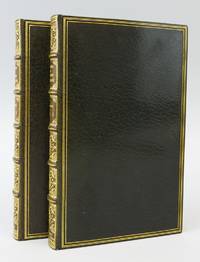
1838ref. ST13648London: Richard Bentley 1838. FIRST EDITION Second State with frame around final plate "The Last Song". 204 x 125 mm. 8 x 4 7/8". With half titles and with 36 pp. of ads at the end of Vol. II. Two volumes. HANDSOME FOREST GREEN CRUSHED MOROCCO GILT BY RIVIERE & SON stamp-signed on front turn-in covers with French fillet borders raised bands spines gilt in delicately tooled compartments with scrolling centerpiece within a lozenge of small tools volute cornerpieces gilt titling turn-ins densely gilt with floral rolls and plain and decorative rules purple endpapers top edges gilt other edges untrimmed. Original purple cloth binding bound in. With 13 plates by George Cruikshank. Eckel pp. 140-42; Kitton pp. 177-83; Gimbel Collection B-64. ◆Spines evenly sunned to tan as usual with green morocco faint offsetting from final plate otherwise A VERY FINE COPY with only the most trivial imperfections internally and in a sparkling binding. This is an extraordinarily attractive copy of the biography of Joseph Grimaldi 1779-1837 called by Britannica "the most celebrated of English clowns" and generally considered without equal as a clown of pantomime. There has been much debate about the exact nature of Dickens' role in the writing of this book. Forster said that Dickens wrote only the introductory chapter; others have said that he edited the manuscript with the help of his father; and Bentley has stated in print that Dickens wrote a significant portion of the work. Eckel says "It is plain that the last chapter is in Dickens' style and that other parts of the book are his. Grimaldi laid the foundation for his memoirs but in a rough and diffuse manner. He gave the manuscript to Thomas Egerton Wilks who after some condensing sold the manuscript to Bentley who in turn passed it to Dickens for the purpose of embroidery." According to Kitton copies with the frame around the final plate as here are more valuable than others because of their relative scarcity; the border was added without Dickens' consent and when he expressed his displeasure it was quickly removed. The especially pretty Riviere binding is typical of the firm's first-rate work and use of the best materials. Richard Bentley unknown
1838ref. ST13648London: Richard Bentley 1838. FIRST EDITION Second State with frame around final plate "The Last Song". 204 x 125 mm. 8 x 4 7/8". With half titles and with 36 pp. of ads at the end of Vol. II. Two volumes. HANDSOME FOREST GREEN CRUSHED MOROCCO GILT BY RIVIERE & SON stamp-signed on front turn-in covers with French fillet borders raised bands spines gilt in delicately tooled compartments with scrolling centerpiece within a lozenge of small tools volute cornerpieces gilt titling turn-ins densely gilt with floral rolls and plain and decorative rules purple endpapers top edges gilt other edges untrimmed. Original purple cloth binding bound in. With 13 plates by George Cruikshank. Eckel pp. 140-42; Kitton pp. 177-83; Gimbel Collection B-64. ◆Spines evenly sunned to tan as usual with green morocco faint offsetting from final plate otherwise A VERY FINE COPY with only the most trivial imperfections internally and in a sparkling binding. This is an extraordinarily attractive copy of the biography of Joseph Grimaldi 1779-1837 called by Britannica "the most celebrated of English clowns" and generally considered without equal as a clown of pantomime. There has been much debate about the exact nature of Dickens' role in the writing of this book. Forster said that Dickens wrote only the introductory chapter; others have said that he edited the manuscript with the help of his father; and Bentley has stated in print that Dickens wrote a significant portion of the work. Eckel says "It is plain that the last chapter is in Dickens' style and that other parts of the book are his. Grimaldi laid the foundation for his memoirs but in a rough and diffuse manner. He gave the manuscript to Thomas Egerton Wilks who after some condensing sold the manuscript to Bentley who in turn passed it to Dickens for the purpose of embroidery." According to Kitton copies with the frame around the final plate as here are more valuable than others because of their relative scarcity; the border was added without Dickens' consent and when he expressed his displeasure it was quickly removed. The especially pretty Riviere binding is typical of the firm's first-rate work and use of the best materials. Richard Bentley unknown books
1935ref. 161360N.p.: N.p. 1935. Final script for the 1935 film seen here under the working title "Romance in a Glass House." Specially bound copy belonging to screenwriter Jerry Wald with his name in gilt on the front board. Jerry Wald is best remembered for his long and successful association with Warner Brothers as both a screenwriter and producer of a number of notable films including "Mildred Pierce" 1945 "Humoresque" 1946 "Key Largo" 1948 and "Flamingo Road" 1949. In the 1950s he moved to Twentieth Century-Fox and was the producer there for "An Affair to Remember" 1957 "Peyton Place" 1957 and "Sons and Lovers" 1960. A famed stage diva wants her untalented lover as her leading man. To prevent this from occurring the producers select a handsome novice from the streets and declare him the new contracted lead in their production. Bound in full red leather with gilt titles on the spine and front board. Distribution page present stamped copy No. 4 noted as FINAL with receipt removed. Title page present dated 6/25/35 with credits for screenwriters Jerry Wald Julius J. Epstein and Robert Hardy Andrews. 109 leaves with last page of text numbered 105. Mimeograph duplication rectos only. Pages Fine binding about Fine. N.p. unknown
1935ref. 161360N.p.: N.p. 1935. Final script for the 1935 film seen here under the working title "Romance in a Glass House." Specially bound copy belonging to screenwriter Jerry Wald with his name in gilt on the front board. Jerry Wald is best remembered for his long and successful association with Warner Brothers as both a screenwriter and producer of a number of notable films including "Mildred Pierce" 1945 "Humoresque" 1946 "Key Largo" 1948 and "Flamingo Road" 1949. In the 1950s he moved to Twentieth Century-Fox and was the producer there for "An Affair to Remember" 1957 "Peyton Place" 1957 and "Sons and Lovers" 1960. A famed stage diva wants her untalented lover as her leading man. To prevent this from occurring the producers select a handsome novice from the streets and declare him the new contracted lead in their production. Bound in full red leather with gilt titles on the spine and front board. Distribution page present stamped copy No. 4 noted as FINAL with receipt removed. Title page present dated 6/25/35 with credits for screenwriters Jerry Wald Julius J. Epstein and Robert Hardy Andrews. 109 leaves with last page of text numbered 105. Mimeograph duplication rectos only. Pages Fine binding about Fine. N.p. unknown books
ref. 4697Offered here is a rare and unusual collection of designs and drawings the work of what appears to be a single binder for Riviere & Son from the late 1920's with a very few possibly later. There are 8 large designs for spines with some drawings tool impressions two of which are in color; 4 smaller designs for spines; 7 small "snippets" of tooling designs; 7 front cover designs some drawings some with tool impressions; 26 rubbings of bindings covers spines etc. various sizes; 4 miscellaneous: a sheet of oasis leather samples used for the Andrew Lang Fairy Books tool roll samples for a set of Shakespeare a small piece of paper with what looks to be time studies for various bindings e.g. ìΩ Plain 50 minî spine design samples from various sets of English authors sheet with various pictorial tools used and which authors titles etc. to use them e.g. a witch on a broom and ìThe Arthur Rackham Fairy Bookî. A variety of paper has been used in these examples some thicker but much of it quite fine i.e. tissue quality. Some small tears and browning from being folded for decades but overall most pieces in nice shape. A most scarce archive of original bookbinding records from one of the most famous bookbinding companies in the history of modern bookbinding. unknown
ref. 4697Offered here is a rare and unusual collection of designs and drawings the work of what appears to be a single binder for Riviere & Son from the late 1920's with a very few possibly later. There are 8 large designs for spines with some drawings tool impressions two of which are in color; 4 smaller designs for spines; 7 small "snippets" of tooling designs; 7 front cover designs some drawings some with tool impressions; 26 rubbings of bindings covers spines etc. various sizes; 4 miscellaneous: a sheet of oasis leather samples used for the Andrew Lang Fairy Books tool roll samples for a set of Shakespeare a small piece of paper with what looks to be time studies for various bindings e.g. ìΩ Plain 50 minî spine design samples from various sets of English authors sheet with various pictorial tools used and which authors titles etc. to use them e.g. a witch on a broom and ìThe Arthur Rackham Fairy Bookî. A variety of paper has been used in these examples some thicker but much of it quite fine i.e. tissue quality. Some small tears and browning from being folded for decades but overall most pieces in nice shape. A most scarce archive of original bookbinding records from one of the most famous bookbinding companies in the history of modern bookbinding. unknown books
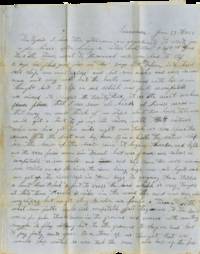
1851ref. List3716Panama City Panama 1851. Single three-page letter measuring appx. 8 x 10 inches. Stampless cover marked "STEAMSHIP" and circled rate marking "40. Folded with some small tears and fading at folds some stains with tear at seal overall bright and legible; excellent. A letter from Henry Francis Douglass 1826-1897 while on his way to the California gold mines sent to his wife Lydia Lillibridge 1828-1904 in Voluntown Connecticut. The letter is highlighted by Douglass' description of Panama City including a brutal execution that he witnessed there: "of all the wickedest places that I ever saw this is the worst there is robery evry day most and murders I keep myself clost nights last night there was a lady on the other side of the street robed of her watch worth $100 and seventy dollars I saw while seting on the piaser piazza to the house. about fifteen minets ago two black men were brout out of the prison by the soldiers dresed in white acompaned by a cathalic prest led up to the stakes the preist sat down on a stool the murders kneeled down to prests throde the cloaks over ther heads and whispered to parden there sins then they was each one tied to the stake while forteen native soldier shot them one strugld but they shot him over again such site I never saw before but it was two good for them they was two of the five that murderd the ten on shagres Chagres river men women and chrilden". The murder for which the men were executed had occurred around the end of February 1851. Eleven people Americans and Europeans transiting the Isthmus were killed: six men three women and two children. Contemporaneous newspaper reporting described the murderers as "Carthagenians negroes and half-breed Indians who hate the whites."1 The gold rush in California had caused a massive influx of people and money to Panama and with it an increase in crime and racial tension. Douglass had arrived in Chagres and traveled to Gorgona which Douglass renders "gorgoney" via the Chagres River then overland to Panama City the typical route before the construction of railroads or the canal. Chagres is "the most sunken place that I ever saw all kinds of bisness carred on that anyon could think of" and the route is "very Dangers at this time" "very wet" and plagued by lice disease and seasickness. However he reports encountering "a lot just returning from the mines with good nuse" and felt "in couraged to go on". Douglass mined in California for two years before returning to his family.2 Of interest to historians of Panama in the California Gold Rush and of social conditions there especially crime and punishment before the construction of the railroads and canal. 1 "Murders on the Isthmus" The Brandon Post April 3 1851 2. 2 Charles Henry James Douglas A collection of family records with biographical sketches and other memoranda of various families and individuals bearing the name Douglas or allied to families of that name E.L. Freeman & Co. 1879.
1851ref. List3716Panama City Panama 1851. Single three-page letter measuring appx. 8 x 10 inches. Stampless cover marked "STEAMSHIP" and circled rate marking "40. Folded with some small tears and fading at folds some stains with tear at seal overall bright and legible; excellent. A letter from Henry Francis Douglass 1826-1897 while on his way to the California gold mines sent to his wife Lydia Lillibridge 1828-1904 in Voluntown Connecticut. The letter is highlighted by Douglass' description of Panama City including a brutal execution that he witnessed there: "of all the wickedest places that I ever saw this is the worst there is robery evry day most and murders I keep myself clost nights last night there was a lady on the other side of the street robed of her watch worth $100 and seventy dollars I saw while seting on the piaser piazza to the house. about fifteen minets ago two black men were brout out of the prison by the soldiers dresed in white acompaned by a cathalic prest led up to the stakes the preist sat down on a stool the murders kneeled down to prests throde the cloaks over ther heads and whispered to parden there sins then they was each one tied to the stake while forteen native soldier shot them one strugld but they shot him over again such site I never saw before but it was two good for them they was two of the five that murderd the ten on shagres Chagres river men women and chrilden". The murder for which the men were executed had occurred around the end of February 1851. Eleven people Americans and Europeans transiting the Isthmus were killed: six men three women and two children. Contemporaneous newspaper reporting described the murderers as "Carthagenians negroes and half-breed Indians who hate the whites."1 The gold rush in California had caused a massive influx of people and money to Panama and with it an increase in crime and racial tension. Douglass had arrived in Chagres and traveled to Gorgona which Douglass renders "gorgoney" via the Chagres River then overland to Panama City the typical route before the construction of railroads or the canal. Chagres is "the most sunken place that I ever saw all kinds of bisness carred on that anyon could think of" and the route is "very Dangers at this time" "very wet" and plagued by lice disease and seasickness. However he reports encountering "a lot just returning from the mines with good nuse" and felt "in couraged to go on". Douglass mined in California for two years before returning to his family.2 Of interest to historians of Panama in the California Gold Rush and of social conditions there especially crime and punishment before the construction of the railroads and canal. 1 "Murders on the Isthmus" The Brandon Post April 3 1851 2. 2 Charles Henry James Douglas A collection of family records with biographical sketches and other memoranda of various families and individuals bearing the name Douglas or allied to families of that name E.L. Freeman & Co. 1879. books
1906ref. 6420London: Macmillan 1906. Fifth edition. Fine. Later issue. A Fine copy. Octavo 7 3/4 x 5 /14 inches; 197 x 133 mm. iv 1-112 pp. Bound ca. 1906 by Riviére for Hatchards stamp-signed in gilt on front turn-in. Full purple morocco covers paneled in gilt front cover elaborately decorated in gilt in an 'art nouveau' style with fifty-six tiny inlaid red morocco circles rear cover with four tiny inlaid red morocco circles spine with five raised bands decoratively tooled and lettered in gilt in compartments gilt board edges and turn-ins marbled endpapers all edges gilt. Fitzgerald attributed the original work to the famed astronomer and mathematician Omar Khayyum and this collection of quatrains rapidly became a favored text of the Pre-Raphaelites. "Like the Odyssey or the Vita Nuova it was once the most widely known and quoted work of Victorian poetry in the world" and its place in Western culture at the time was secured by Fitzgerald's "epigrammatic sophisticated often mordant verses that display Fitzgerald's adroitness in handling this stanza form" Warner. Yet with rise of Modernism the Rubaiyat fell out of style for a time its lush and romantic orientalism considered out of step with the concerns of those who were living through a devastating World War. But the beautiful surviving copies in exceptional vellum silk and leather alongside recently released critical editions have helped draw attention back to the Rubaiyat's beauty and its role in inspiring so many monumental pieces of Victorian art and literature. This fifth edition of Fitzgerald's text published posthumously contained some changes from the fourth and was based on his manuscript notations. Fine. Macmillan unknown
1906ref. 6420London: Macmillan 1906. Fifth edition. Fine. Later issue. A Fine copy. Octavo 7 3/4 x 5 /14 inches; 197 x 133 mm. iv 1-112 pp. Bound ca. 1906 by Riviére for Hatchards stamp-signed in gilt on front turn-in. Full purple morocco covers paneled in gilt front cover elaborately decorated in gilt in an 'art nouveau' style with fifty-six tiny inlaid red morocco circles rear cover with four tiny inlaid red morocco circles spine with five raised bands decoratively tooled and lettered in gilt in compartments gilt board edges and turn-ins marbled endpapers all edges gilt. Fitzgerald attributed the original work to the famed astronomer and mathematician Omar Khayyum and this collection of quatrains rapidly became a favored text of the Pre-Raphaelites. "Like the Odyssey or the Vita Nuova it was once the most widely known and quoted work of Victorian poetry in the world" and its place in Western culture at the time was secured by Fitzgerald's "epigrammatic sophisticated often mordant verses that display Fitzgerald's adroitness in handling this stanza form" Warner. Yet with rise of Modernism the Rubaiyat fell out of style for a time its lush and romantic orientalism considered out of step with the concerns of those who were living through a devastating World War. But the beautiful surviving copies in exceptional vellum silk and leather alongside recently released critical editions have helped draw attention back to the Rubaiyat's beauty and its role in inspiring so many monumental pieces of Victorian art and literature. This fifth edition of Fitzgerald's text published posthumously contained some changes from the fourth and was based on his manuscript notations. Fine. Macmillan unknown books
1985838 pages. "Even though the geographic limitations of this work are prescribed by the boundaries of a specific Icelandic settlement, its general scope and extensive background research defy this narrow categorization. The author not only traces the history of the settlement itself, from its beginnings to recent times, he includes a great deal of material of potential interest to those who may have only tenuous links with the Icelandic cultural heritage, at the same time establishing ties between thousands of Icelandic-North Americans and their native Iceland.... The author's disciplined approach has made the writing of this book an arduous task, but at the same time his stringent demands upon himself have enhanced the scholarly merit of his work immeasurably. Virtually unaided, the author has now completed and seen through to publication a more meticulous piece of research than any previously undertaking in the field of Icelandic ethnic history." - Haraldur Bessason, Professor and Head , Department of Icelandic Language and Literature, University of Manitoba. Average wear. Binding intact. Gift greetings atop front free endpaper. Highlighting on five pages. A sound copy of this invaluable genealogical reference. HACKETT (2) 268. Book
1921ref. 142821Winnipeg: Valentine & Sons United Publishing Co. Ltd. ca. 1921. 50 real photo postcards Complete set complete with the rare original box. The flaps are missing but the box is whole and was mailed to someone in Manitoba. The cards have a slight curve to them but are overall in fine condition. They are postally unused with the publishers imprint on the back. They are numbered 1-50 and captioned below the image. Valentine & Sons of Dundee were Scotland's most successful commercial photographers. The company set up offices in Montreal Toronto and Winnipeg in 1903 and soon went on to be a very successful post card publishing house. Although many of the cards were produced by lithography they also produced wonderful real photo cards as well. This very rare complete set of real photo cards probably dates from 1921 just after oil was discovered on the Athabaska River in the Fort McMurray/Fort Norman area of Alberta. The wonderful images mainly show life along the Mackenzie river in most of the northern settlements. The fantastic photographer covers many of the elements of the towns and people who lived and worked on the river. Most of the images show street scenes in the towns and show many of the commercial businesses. The commercial enterprises shown include the Hudson's Bay Company Northern Trading Company the religious missions native peoples boats and planes mounted police etc. Several of the images directly relate John Franklin and include an image of the Franklin Hotel in Fort McMurray the sun dial erected at Fort Simpson by Franklin and the 2 storey building Franklin built in the north. One of the historic images shows Albert LeBeaux Slave Indian brought to Fort Smith by the Mounted Police. He was the first man executed in the NWT. A wonderful set with dozens of iconic images of the north. 1921 Valentine & Sons United Publishing Co., Ltd. unknown
1999ref. 61435Foundation; Et Al. New. Paperback. FREE UPGRADE to Courier/Priority Shipping Upon Request – – IN STOCK AND IMMEDIATELY AVAILABLE FOR SHIPMENT - Flawless copy brand new pristine never opened -- Text in Spanish and English biographical notes and entries in Spanish only. 112 pp. With 91 col. Ills. 30 x 24 cm. -- with a bonus offer-- . 1999. 8476646631 . Foundation; Et Al paperback
1933ref. 91987Floury. As New. Paperback. FREE UPGRADE to Courier/Priority Shipping Upon Request - IN STOCK AND IMMEDIATELY AVAILABLE FOR SHIPMENT - AS NEW THE TEXT BLOCK IS PRISTINE CLEAN UNMARKED AND IN EXCELLENT CONDITION - - Corresponds to ASIN: B00164S7U4. Text in French. 179 pages; 60 images with 8 in color. -- with a bonus offer-- . 1933. Floury paperback
1983ref. 85377Peregrine: Gibbs Smith Publishers / G. M. Smith / Peregrine Smith Books. As New. Hardcover. FREE UPGRADE to Courier/Priority Shipping Upon Request - IN STOCK AND IMMEDIATELY AVAILABLE FOR SHIPMENT - AS NEW THE TEXT BLOCK IS PRISTINE CLEAN UNMARKED AND IN EXCELLENT CONDITION - - Corresponds to ASIN: B0006ECKF8 and ISBN: 0879051337. -- with a bonus offer-- . 1983. 0879051337 . Gibbs Smith Publishers / G. M. Smith / Peregrine Smith Books hardcover