8.576 resultados
ref. SONG3662477386Used: Good unknown
1925ref. 91204Paris : Les Cahiers de Paris 1925. demi-chagrin. DUHAMEL Georges. RIVIERE Jacques. - LAUZANNE Stéphane.10 Premiers titres de la Collection Les Cahiers de Paris reliés ensembles en 3 volumes. Volume premier. 1. Délibérations. 2. De la sincérité envers soi-même. 3. La table qui parle. Volume deuxième. 1. De l’Espagne. 2. La fin de l’art. 3. Erasme et l’Italie. Volume troisième. 1. Les plaisirs d’hier. 2. Histoires morales. 3. Deux enfants avec une essai par Gaston Chérau. 4. Polyxène. Paris Les Cahiers de Paris1925 190x120mm 114 106 89 88 125 86 112 98 87 88 pages reliure demi-chagrin. Relié en demi-chagrin brun avec titres auteurs et filets dorés au dos. Plats papier marbré. Tranche supérieure dorée. Couvertures conservées. Hormis dos insolés belle reliure signée J. Mössly. Bel exemplaire intérieur très propre. Edition originale sur papier vélin d’alfa des Papeteries Lafuma numérotée n.° 703 / 1475 et nos.° 708 / 1475. No hidden customs fees for orders shipped to the U.S.A with a value of up to 800 USD PDDP shipping we pay the VAT in advance Les Cahiers de Paris unknown
ref. 91204Paris, Les Cahiers de Paris 1925, 190x120mm, reliure demi-chagrin. Relié en demi-chagrin brun avec titres, auteurs et filets dorés au dos. Plats papier marbré. Tranche supérieure dorée. Couvertures conservées. Hormis dos insolés, belle reliure signée J. Mössly. Bel exemplaire, intérieur très propre. Edition originale sur papier vélin d’alfa des Papeteries Lafuma, numérotée n.° 703 / 1475 et nos.° 708 / 1475.
2007ref. 1-0715326724David & Charles 2007. Hardcover. New. 217 pages. 11.25x8.75x1.00 inches. David & Charles hardcover
ref. 0715326724.Ghardcover. Good. Access codes and supplements are not guaranteed with used items. May be an ex-library book. hardcover
2007ref. Q-0715326724David & Charles 2007-09-25. Hardcover. New. New. In shrink wrap. Looks like an interesting title! David & Charles hardcover
ref. 64570874F&W Media Incorporated . Hardback. New. pp. 224 F&W Media, Incorporated hardcover
1935ref. 2110502150414142Heibonsha 1935. Soft Cover. Fine. Number of books: 11 Heibonsha paperback
ref. 0265768152.Gpaperback. Good. Access codes and supplements are not guaranteed with used items. May be an ex-library book. paperback
ref. 026079709X.Ghardcover. Good. Access codes and supplements are not guaranteed with used items. May be an ex-library book. hardcover
1969ref. V1952Düsseldorf (Accidentia) 1969. Gr.-4°, Originalleinen mit Originalumschlag, Begleitheft
ref. 1391184327.Ghardcover. Good. Access codes and supplements are not guaranteed with used items. May be an ex-library book. hardcover
ref. 1390316491.Gpaperback. Good. Access codes and supplements are not guaranteed with used items. May be an ex-library book. paperback
ref. 0483541974.Gpaperback. Good. Access codes and supplements are not guaranteed with used items. May be an ex-library book. paperback
ref. 0267052405.Ghardcover. Good. Access codes and supplements are not guaranteed with used items. May be an ex-library book. hardcover
ref. 152829646X.Gpaperback. Good. Access codes and supplements are not guaranteed with used items. May be an ex-library book. paperback
ref. 0260758450.Ghardcover. Good. Access codes and supplements are not guaranteed with used items. May be an ex-library book. hardcover
1747ref. 351225Printed for T. Osborne in Gray's Inn; A. Miller in the Strand; and J. Osborn in Paternoster Row London 1747. Unframed Print. Very Good Condition. 2 folding plates. Size: 23 x 38 cms. Category: Universal History; PRINTS : Antiquarian Interest; Printed before 1800; Special Interest. This item may require more postage than the rates shown for delivery outside the UK. If extra postage is required we will contact you before processing your order and you will be given the details and option to decline the extra cost. Printed for T. Osborne, in Gray's Inn; A. Miller, in the Strand; and J. Osborn, in Paternoster Row unknown
ref. 1396073620.Ghardcover. Good. Access codes and supplements are not guaranteed with used items. May be an ex-library book. hardcover
ref. SLIVCN-9782708016811OPHRYS
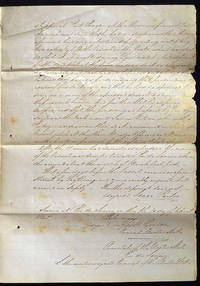
1845ref. 0002564Good. 1845. On offer is a sensational remarkable group of 1845 manuscript depositions detailing the mutinous activity and desertions during a voyage of the whaling Bark Alto between 1844 - 1845. The eyewitness testimonies are comprised of 37 pages or so of handwritten fair copies; five 5 complete and one 1 incomplete deposition all by various crew members the five complete copies each personally attested and signed at the conclusion by George William Gordon American Consul at Rio de Janeiro May 20 1845. Blunt facts display the ferocity of emotions and simmering violence provide snippets like 'Palmer said to deponent that . . . he would put one of those dirk knives into him' abound throughout the testimonies. The depositions paint a picture of unbridled upset on the ship: lawlessless violence suspicions of poisoning desertion and a final critical comment from nature itself: a calamitous lightning strike makes for a final exclamation point to the awful whaling voyage. The vessel at the center of the events described herein the Alto was built in Tiverton Rhode Island we note that research indicates the Alto was in fact the only such vessel ever built at Tiverton in 1826 and was lost near the Falkland Islands in 1870. The National Maritime Digital Library date the events related in the documents occurred during the Alto's fourth voyage under the direction of Captain Nehemiah West whose deposition is included and which lasted from September 1844 to April 1847. A successful voyage commercially as the records further note that the Alto collected 339 barrels of sperm oil 304 barrels of baleen oil and 2700 lbs. of whale bone. As a group the depositions--from the Captain First Second and Third Mates and two boat helmsmen paint a vivid often harrowing picture of a voyage fraught with tension and danger. Researchers and historians will note that at least two of the depositions document an ominous shipboard discussion of the earlier well-documented mutiny aboard the vessel Globe out of Nantucket which took place in 1827. While the general outline of the events remains consistent throughout each of the deponents provides a unique personal perspective on what transpired often with the addition of unexpected or surprising details omitted by the others. Virtually all of the crew involved are identified by name multiple times throughout the documents two however are repeatedly described only as "Portuguese". In broad overview complaints from crew members that the vessel is leaky and unseaworthy leads to refusal to perform duties; the captain administers punishment including placing crew members in irons and striking them with a piece of "rattling" ratline; a small group of crew desert with one of the boats but are caught and jailed at St. Jago Cape Verde and shipped back to the U.S. on the U.S. Sloop of War Decatur; after a few months of relative calm unrest breaks out again this time with threats of violence to fellow crew members with clubs and "dirk knives"; in the most dramatic event eleven crew members desert with the remaining two boats taking with them a large store of the whaling equipment. The Alto its crew and equipment drastically reduced suffers the final indignity of a lightning strike "breaking and splitting" the mainmast but is able to hobble into Rio de Janeiro where these eyewitness accounts were given to the American Consul and preserved in the present documents. Here is a snippet from the deposition of helmsman William Williams approx. 8 pages on two pairs of conjugate leaves: "William Williams . . . deposed as follows. . . . That he was born in the County of Essex in England is 29 years of age and a naturalized citizen of the United States was naturalized at Boston Mass. in July 1842. That he shipped on board the Barque 'Alto'--Nehemiah West Master at New Bedford in August 1844 as Boat steerer to proceed on a Whaling Voyage. That the Vessel sailed on the 3rd September following. That 14 or 15 days after the Vessel went out to sea all the foremost hands refused duty--alleging that the Vessel was leaky. On their refusing duty Captain West interrogated each of them separately and three of them returned to duty and eleven still refused and were sent below where they were kept about 48 hours. While the eleven men were below as aforesaid they experienced two very heavy squalls but none of said men offered to return to duty--but on the other hand made sport of them that were at work. After they had been below deck 24 hours the Master went forward and requested four of the men to come on deck. They refused to come unless all were allowed to some on deck at a time--and after a good many threats on the part of the men the Master told them that if the men he had called did not come on deck that he would have the forecastle smoked to force them out. Soon after four came on deck as the Master had directed and still refusing to go to duty on being called upon the deck and refusing duty were put in Irons and the others one being called upon deck and refusing duty were seized in the rigging there being no Irons to put upon them. That at New Bedford before sailing one of the men named Spencer who had shipped deserted and another man named Charles Shane came on board in his place--but Shane's name was not put on the Papers. That when the men were called up as aforesaid said Shane took the ground that his name was not upon the Shipping Paper and therefore he would not go to duty and obey the Master--upon which the Master gave him four blows with a piece of Rattling i.e. part of the ratline. George Ritter also who was supposed to be the instigator in the men's refusing duty and who was insolent to the Master also receive three strokes with the Rattling. Another man the steward named James Wilson also got three blows with the Rattling for insolence to the Captain. He said that he never was flogged on board of a Blubber Hunter although he had been on board of a Man of War. No others were flogged or punished in any way and they all returned to duty." Scattered light soiling a bit of staining and handling wear creases; some tears tiny holes and small chips mostly confined to edges; no substantial losses; otherwise very good to fine overall the writing dark and distinct. Overall G.; Manuscript; 4to - over 9¾" - 12" tall; KEYWORDS: HISTORY OF WHALING SHIP MUTINY BARK ALTO NEW BEDFORD MASSACHUSETTS WHALERS MUTINEERS DESERTERS BARQUE MARINE NAUTICAL NAVAL GEORGE WILLIAM GORDON AMERICAN CONSUL AT RIO DE JANEIRO CAPTAIN NEHEMIAH WEST TIVERTON RHODE ISLAND MUTINY ABOARD THE VESSEL GLOBE NANTUCKET AMERICANAHANDWRITTEN MANUSCRIPT DOCUMENT LETTER AUTOGRAPH WRITER HAND WRITTEN DOCUMENTS SIGNED LETTERS MANUSCRIPTS HISTORICAL HOLOGRAPH WRITERS AUTOGRAPHS PERSONAL MEMOIR MEMORIAL AMERICANA ANTIQUITÉ CONTRAT VÉLIN DOCUMENT MANUSCRIT PAPIER ANTIKE BRIEF PERGAMENT DOKUMENT MANUSKRIPT PAPIER OGGETTO D'ANTIQUARIATO ATTO VELINA DOCUMENTO MANOSCRITTO CARTA ANTIGÜEDAD HECHO VITELA DOCUMENTO MANUSCRITO PAPEL . unknown
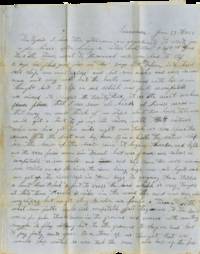
1851ref. List3716Panama City Panama 1851. Single three-page letter measuring appx. 8 x 10 inches. Stampless cover marked "STEAMSHIP" and circled rate marking "40. Folded with some small tears and fading at folds some stains with tear at seal overall bright and legible; excellent. A letter from Henry Francis Douglass 1826-1897 while on his way to the California gold mines sent to his wife Lydia Lillibridge 1828-1904 in Voluntown Connecticut. The letter is highlighted by Douglass' description of Panama City including a brutal execution that he witnessed there: "of all the wickedest places that I ever saw this is the worst there is robery evry day most and murders I keep myself clost nights last night there was a lady on the other side of the street robed of her watch worth $100 and seventy dollars I saw while seting on the piaser piazza to the house. about fifteen minets ago two black men were brout out of the prison by the soldiers dresed in white acompaned by a cathalic prest led up to the stakes the preist sat down on a stool the murders kneeled down to prests throde the cloaks over ther heads and whispered to parden there sins then they was each one tied to the stake while forteen native soldier shot them one strugld but they shot him over again such site I never saw before but it was two good for them they was two of the five that murderd the ten on shagres Chagres river men women and chrilden". The murder for which the men were executed had occurred around the end of February 1851. Eleven people Americans and Europeans transiting the Isthmus were killed: six men three women and two children. Contemporaneous newspaper reporting described the murderers as "Carthagenians negroes and half-breed Indians who hate the whites."1 The gold rush in California had caused a massive influx of people and money to Panama and with it an increase in crime and racial tension. Douglass had arrived in Chagres and traveled to Gorgona which Douglass renders "gorgoney" via the Chagres River then overland to Panama City the typical route before the construction of railroads or the canal. Chagres is "the most sunken place that I ever saw all kinds of bisness carred on that anyon could think of" and the route is "very Dangers at this time" "very wet" and plagued by lice disease and seasickness. However he reports encountering "a lot just returning from the mines with good nuse" and felt "in couraged to go on". Douglass mined in California for two years before returning to his family.2 Of interest to historians of Panama in the California Gold Rush and of social conditions there especially crime and punishment before the construction of the railroads and canal. 1 "Murders on the Isthmus" The Brandon Post April 3 1851 2. 2 Charles Henry James Douglas A collection of family records with biographical sketches and other memoranda of various families and individuals bearing the name Douglas or allied to families of that name E.L. Freeman & Co. 1879.
1851ref. List3716Panama City Panama 1851. Single three-page letter measuring appx. 8 x 10 inches. Stampless cover marked "STEAMSHIP" and circled rate marking "40. Folded with some small tears and fading at folds some stains with tear at seal overall bright and legible; excellent. A letter from Henry Francis Douglass 1826-1897 while on his way to the California gold mines sent to his wife Lydia Lillibridge 1828-1904 in Voluntown Connecticut. The letter is highlighted by Douglass' description of Panama City including a brutal execution that he witnessed there: "of all the wickedest places that I ever saw this is the worst there is robery evry day most and murders I keep myself clost nights last night there was a lady on the other side of the street robed of her watch worth $100 and seventy dollars I saw while seting on the piaser piazza to the house. about fifteen minets ago two black men were brout out of the prison by the soldiers dresed in white acompaned by a cathalic prest led up to the stakes the preist sat down on a stool the murders kneeled down to prests throde the cloaks over ther heads and whispered to parden there sins then they was each one tied to the stake while forteen native soldier shot them one strugld but they shot him over again such site I never saw before but it was two good for them they was two of the five that murderd the ten on shagres Chagres river men women and chrilden". The murder for which the men were executed had occurred around the end of February 1851. Eleven people Americans and Europeans transiting the Isthmus were killed: six men three women and two children. Contemporaneous newspaper reporting described the murderers as "Carthagenians negroes and half-breed Indians who hate the whites."1 The gold rush in California had caused a massive influx of people and money to Panama and with it an increase in crime and racial tension. Douglass had arrived in Chagres and traveled to Gorgona which Douglass renders "gorgoney" via the Chagres River then overland to Panama City the typical route before the construction of railroads or the canal. Chagres is "the most sunken place that I ever saw all kinds of bisness carred on that anyon could think of" and the route is "very Dangers at this time" "very wet" and plagued by lice disease and seasickness. However he reports encountering "a lot just returning from the mines with good nuse" and felt "in couraged to go on". Douglass mined in California for two years before returning to his family.2 Of interest to historians of Panama in the California Gold Rush and of social conditions there especially crime and punishment before the construction of the railroads and canal. 1 "Murders on the Isthmus" The Brandon Post April 3 1851 2. 2 Charles Henry James Douglas A collection of family records with biographical sketches and other memoranda of various families and individuals bearing the name Douglas or allied to families of that name E.L. Freeman & Co. 1879. books
ref. 1396086633.Ghardcover. Good. Access codes and supplements are not guaranteed with used items. May be an ex-library book. hardcover
ref. B9781014347596Hardback. New. hardcover