BORY de SAINT VINCENT, J.B.G.M.Livre Rare Book

8,991 results
1804ref. PHO-1187Paris, F. Buisson, 1804. 3 vol. in-8 de texte et 1 atlas de planches .Texte : I/ xv-[1]-408 pp. ; II/ [2] sq., 431 pp. ; III/ [2] sq., 473 pp. ; Atlas de 4 pp., 58 planches et cartes , relié demi basane époque (atlas reliure moderne) , coiffes usées, mouillure et quelques rousseurs dans l'atlas . Édition originale avec l'atlas complet des 58 cartes et planches dont 1 en couleur ,gravées en taille douce par Adam, Blondeau, Fortier, Dorgez, B. Tardieu d'après les dessins de l'auteur.
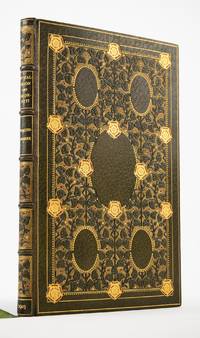
1903ref. ST20957London: John & E. Bumpus 1903. 211 x 140 mm. 8 1/2 x 5 1/2". 86 pp. LOVELY GREEN MOROCCO GILT AND INLAID FOR J. & E. BUMPUS stamped in gilt on rear turn-in LIKELY BY RIVIERE & SON upper cover with gilt fillet frame central panel with densely blind-stamped leafy vines on a gilt pointillé background accented with onlaid red morocco dots large oval at center and four smaller ovals all framed by gilt beads the central oval adorned with four gilt and onlaid red and white morocco Tudor roses 10 more such roses at corners and along the sides of outer frame lower cover with gilt fillet frame raised bands spine compartments with blind-stamped leafy sprig on pointillé ground with onlaid black ivory and red morocco dots gilt lettering turn-ins with gilt border gilt trio of leaves at corners all edges gilt. With engraved frontispiece portrait title page vignette two headpieces and two tailpieces. Upper cover and spine evenly faded to olive green likely from being displayed just a hint of bowing to boards but A VERY FINE COPY the text entirely clean fresh and bright and the binding unworn. This lovely printing of Spenserian poetry comes in an unusual and skillfully executed binding likely by Riviere & Son which was producing some of its very best work at the time of publication. The poems here were inspired by Spenser's courtship of and 1594 marriage to his second wife Elizabeth Boyle. Day calls "Amoretti" "a unique sonnet sequence in Renaissance England" and he is unreserved in his praise for "Epithalamion" calling it "the most beautiful nuptial poem in English and perhaps in any language." Spenser 1552 - 99 was the first modern English poet to achieve major stature and Day points out that those "influenced by Spenser are virtually a roster of the great English poets since his time" among them Milton Wordsworth Keats Rossetti and Tennyson. Bumpus bindings were done for the bookselling firm of John and Edward Bumpus founded in 1780. The firm long enjoyed a reputation as purveyors of fine and beautiful bindings without ever operating a bindery. Instead they outsourced the work to the best binders of the day including Riviere and Morrell the former being a likely choice here. The combination of swirling blind-stamped vines a densely stippled background and onlaid blossoms demonstrates creativity in design proficiency in a range of finishing techniques and meticulous execution. The five blank ovals on the upper cover bring to mind the layout of Cosway bindings a specialty of the Riviere firm in which those ovals would be filled with miniature paintings on ivory under glass. Cosway bindings could sometimes be ornate to the point of being overwhelming so the blank ovals here are a welcome moment of restraint amid the animation of the cover design. Apparently an earlier owner enjoyed displaying this binding--as who would not--and the leather has mellowed to an olive green--which may actually be a more pleasing foundation for the decoration than the original brighter green. Certainly the book saw no other use as the contents are as fresh as the day the volume left the printer. John & E. Bumpus unknown
1903ref. ST20957London: John & E. Bumpus 1903. 211 x 140 mm. 8 1/2 x 5 1/2". 86 pp. LOVELY GREEN MOROCCO GILT AND INLAID FOR J. & E. BUMPUS stamped in gilt on rear turn-in LIKELY BY RIVIERE & SON upper cover with gilt fillet frame central panel with densely blind-stamped leafy vines on a gilt pointillé background accented with onlaid red morocco dots large oval at center and four smaller ovals all framed by gilt beads the central oval adorned with four gilt and onlaid red and white morocco Tudor roses 10 more such roses at corners and along the sides of outer frame lower cover with gilt fillet frame raised bands spine compartments with blind-stamped leafy sprig on pointillé ground with onlaid black ivory and red morocco dots gilt lettering turn-ins with gilt border gilt trio of leaves at corners all edges gilt. With engraved frontispiece portrait title page vignette two headpieces and two tailpieces. Upper cover and spine evenly faded to olive green likely from being displayed just a hint of bowing to boards but A VERY FINE COPY the text entirely clean fresh and bright and the binding unworn. This lovely printing of Spenserian poetry comes in an unusual and skillfully executed binding likely by Riviere & Son which was producing some of its very best work at the time of publication. The poems here were inspired by Spenser's courtship of and 1594 marriage to his second wife Elizabeth Boyle. Day calls "Amoretti" "a unique sonnet sequence in Renaissance England" and he is unreserved in his praise for "Epithalamion" calling it "the most beautiful nuptial poem in English and perhaps in any language." Spenser 1552 - 99 was the first modern English poet to achieve major stature and Day points out that those "influenced by Spenser are virtually a roster of the great English poets since his time" among them Milton Wordsworth Keats Rossetti and Tennyson. Bumpus bindings were done for the bookselling firm of John and Edward Bumpus founded in 1780. The firm long enjoyed a reputation as purveyors of fine and beautiful bindings without ever operating a bindery. Instead they outsourced the work to the best binders of the day including Riviere and Morrell the former being a likely choice here. The combination of swirling blind-stamped vines a densely stippled background and onlaid blossoms demonstrates creativity in design proficiency in a range of finishing techniques and meticulous execution. The five blank ovals on the upper cover bring to mind the layout of Cosway bindings a specialty of the Riviere firm in which those ovals would be filled with miniature paintings on ivory under glass. Cosway bindings could sometimes be ornate to the point of being overwhelming so the blank ovals here are a welcome moment of restraint amid the animation of the cover design. Apparently an earlier owner enjoyed displaying this binding--as who would not--and the leather has mellowed to an olive green--which may actually be a more pleasing foundation for the decoration than the original brighter green. Certainly the book saw no other use as the contents are as fresh as the day the volume left the printer. John & E. Bumpus unknown books
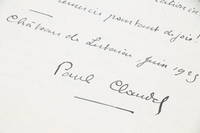
1925ref. 87317Château de Lutaines Cellettes 1925. Fine. And how much this emotion is heightened when the author of this book is our friend when we have conversed familiarly with him and when he is close to us by what has been attributed to him as transient and temporal and close to God by what in him henceforth as eternal has begun! Château de Lutaines Cellettes juin 1925 21 x 27 cm 17 pages sur 5 doubles feuillets Original autograph signed and dated manuscript by Paul Claudel for his preface to Jacques Rivière's 'A la trace de Dieu'. Seventeen and a half pages in black ink on five double leaves. A few words crossed out and rewritten. Horizontal fold some foxing to the first page pencil notes by a bibliographer on the last blank page. The preface dated June 1925 first appeared in Le Correspondant on September 25 1925 then with Rivière's Carnets published the same year by his wife under the title 'A la trace de Dieu' Gallimard pp. 9-24. Complete manuscript of Paul Claudel's moving preface to the notebooks kept by Jacques Rivière during his captivity in WW1. The writer pays homage to a book which would have become a treatise on Christian Apologetics - had its author not met an untimely death at the age of 39. As early as 1907 Claudel had played an important role in his conversion and religious journey. He kept up a correspondence with the young critic now director of Gallimard's prestigious Nrf until his sudden death in 1924. In the manuscript he introduces Rivière's writings from his three years in the Knigsbrück and Hülseberg prison camps after his capture during the Battle of Eton in August 1914. In the form of notes he intended for prisoner reunions it contains a profound reflection on the search for God and the means to encounter Him. Although fo or Jacques Rivière ""God remains a fact"": after a long theological quest and many reversals he had reached the pinnacle of his faith during the war years. The deaths of his friends and writers Alain-Fournier and Péguy piety of his wife Isabelle and feeling of being supported by God during those difficult days all contributed to giving him a living faith which the poet-playwright Claudel celebrates in these beautiful pages. Rivière recognized the presence of a personal God in his life and believed in the value of prayer and self-discipline to which Claudel had urged him from their earliest exchanges. These Carnets are the ultimate proof of Claudel's influence: ""Rivière's end was completely illuminated by the doctrine revealed to him by the great Christian poet"" Paul Beaulieu. Claudel devotes magnificent passages to Rivière's communion on Christmas Day 1913 which publicly marked his return to Catholicism: ""All I can say is that Jacques Rivière's life seems to me to be one of those that cannot be explained solely by itself but by the good or bad teaching it contains because it is the type in which a host of others are realized and informed that it has the value of a parable. It is the best illustration of that Providence whose hand he never ceased to feel upon him that humble gentle Providence always present and always unexpected infinitely patient ingenious and artistic of which he spoke so well. It was this Providence that led this good soul through the pilgrimage of Intelligence from the confusion of adolescence to that Christmas day in 1913 when in an act of deference to the most extravagant theories from Darwin to Freud which presented themselves to them with the character of the latest fashion in which the noble deliberation of judgment had more share than the exigency of feeling he came to kneel at the feet of the holy priest of Clichy"". The preface doubling as a eulogy reflects the dialogue between father and spiritual son. Despite their disagreements Claudel admired Rivière's thinking and his objective vision of the Catholic Church in relation to secular society - without seeing it as the guardian of social conservatism like far-right writers like Maurras or Barrès: ""Among J unknown
1906ref. 62652St. Louis MO: Holt St. Louis Streets Dept. 1906. Forty-four of 46 original linen-backed panoramic silver gelatin photographs comprised of 116 approx. 8 x 10 in. images divided into 2-4 panel panoramic photographs w/ captions neatly written w/in negatives at lower fore-edge annotations in red & black ink occasional pencil notes sectional numbers on versos edgewear & rubbing some lifting to fore-edges of some of the images creasing soot soiling to versos minor over-exposure to some images still a VG archive. This historic archive of panoramic photographs meticulously document the now largely disappeared and built-over River des Peres in a Ruscha-like manner and if pasted end-to-end would span nearly 100 feet. Capturing the River des Peres Valley which still meandered at the beginning of the 20th-Century along the Western boundaries of St. Louis MO and reveal a fast-growing Western city industrializing and appropriating the marshy lowlands farms and rural areas into factories breweries and railroad routes. Eleven of the images wind through Forest Park where much of the river had been channeled in 1904 through wooden sewers and culverts in order to cut down on the stench and prepare the park for the 1904 St. Louis World’s Fair. Holt 1866-1925 was renowned for his excessive photographic documentation leading groups of city engineers armed with large format cameras shooting on glass plate negatives recording the sprawling activities of the burgeoning St. Louis community in the Progressive Era. As evidenced by this meticulously shot archive of panoramic images Holt and his team document from the Mouth of River des Peres looking North with railroad bridge in right foreground and steamers in the river alongside the banks. The images continue along the River des Peres capturing the brewery next to the Railroad and between Broadway & Alabama Ave.; the sprawling unidentified factory on Webster; and also demarcating where the City Limits Stones were set and what numbers. A four-panel panoramic photo denotes the Saints Peter & Paul Cemetery on Gravois Avenue followed by others indicating different distances from Gravois Road bridges and houses along the road a road grading and roadbuilding team West of Gravois and then recording the rural lowland areas Southwest of Gravois and then towards Echelberger Street. About halfway through the series the images begin capturing more industrial and suburban development including the St. Louis & San Francisco Railroad Line Frisco RR telephone poles along Fyler Ave. Frisco RR stone station on Fyler with nearby culvert; the Hirsch Rolling Mill Co. complex with railcars labeled and carrying steel and railroad bridge in the distance. The photos show the River des Peres winding around revealing the Clifton Heights in the background; between Knox and Sulpher Ave. with Fire Engine House in the right foreground and many different railroad company cars including those for the Cotton Belt Line the Chicago Peoria & St. Louis RR the Missouri Kansas & Texas RR; and many for the Frisco RR. Several photos shot by Holt and his team May 10 1906 capture the sprawling Laclede Fire Brick Manufacturing Co. complex the Frisco RR Arch Bridge and even a Birds-Eye view. Other photos approaching Forest Park also depict the Police Headquarters Stables the Forest Park Highlands and once in the Park a group of boys playing baseball in the lower foreground. The final three-panel panoramic photo was taken looking West with Delmar Blvd. on the right and the Frisco RR trestle in the middle foreground Delmar Garden in the background and center field filled with the trestle stretching over the River des Peres. Unsurprisingly this cataloguer could find no similar partial or extant collection of images and the original negatives appear to have probably been dumped by St. Louis City Hall housecleaning around 1950 when they offloaded the thousands of photos shot by the Holt for the Street Department. The historically invaluable images were all sold at an auction comprising three 13 foot high stacks of negatives nearly all of them on glass. Purchased originally by Swekosky the collection was lent to Dick Lemen of Moline IL who cleaned printed and enlarged the photos purchased them and later donated the remnants of what he preserved to the St. Louis Mercantile Library. These photographs capture a Western waterway almost entirely displaced with nearly all of its original route completely rebuilt as it was engineered to operate as the backbone of the St. Louis sewer system and almost completely underground with just a few sections near the mouth with a channel and paved bans. In 1904 the Forest Park section was covered in a “large wooden box” to prevent visitors to the World’s Fair from breathing the unhealthy stench and after a 1915 flood backed up sewers killed 11 people in flooding and destroyed over 1000 homes chief engineer Horner was ordered to prepare a plan to completely control and build over the River des Peres. It still carries storm water and sewage in separate pipes and now that the channel has almost no direct source from the Mississippi River and all of the lowland meadows wetlands and areas that existed at the beginning of the 20th Century have been entirely paved over there largely remains no water to supply the river itself. Some of the River at the site of the former Carondelet Coke Plant has been largely remediated and a short piece connected to the Mississippi Greenway near River City Casino. See: Kelly Moffitt Salvaged Photographs from the St. Louis Street Department circa 1900-1930 Catalogued in New Book St. Louis on the Air St. Louis Public Radio Aug. 2 2017; Enter Dick Lemen Dr. William G. Swekosky The collection Grows Unwieldy Lafayette Square Archives 2020; Michael Allen The Harnessed Channel: How the River Des Peres Became a Sewer Preservation Research Office Nov. 27 2010; Chris Naffziger Reconnecting with the Roots of River des Peres in St. Louis Terrain Magazine 2022. Holt, [St. Louis Streets Dept.], unknown
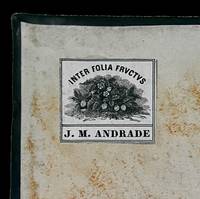
1842ref. LL 513El Museo de ambas Américas. Polished black morocco paneled in blind spine titled and decorated in gilt. Subscribers' lists in volumes 1 & 3. Provenance: Bookplate of Jose Maria Andrade 1807-1883 the famous Mexican bibliophile and publisher. FIRST EDITION AND A COMPLETE RUN of all 36 issues of this very early and important Chilean periodical. The year 1842 marked a "before" and an "after" in the intellectual development of Chile. Along with the creation of the University of Chile one of the most significant milestones of that year was the crystallization of a literary movement that would end up acquiring a foundational character not only in regard to Creole intellectual output but also to link it with political discourse. At the head of this project were José Victorino Lastarria and Francisco Bilbao among other thinkers who sought to infuse society with the revolutionary ideals of freedom equality and fraternity using above all the periodical press. The cultural activity in the crucial year 1842 was matched in by appearance of three publications that would mark the course of the intellectual movement: Revista de Valparaíso El Semanario de Santiago and El Museo de ambas Américas The Museum of both Americas. This triad reflects the fundamental role that the port of Valparaíso played as the transfer point for European ideas which then radiated to the capital. El Museo de ambas Américas shows the state of the social political and economic views of the Chilean intellectual culture of the period. Its cosmopolitan spirit is evident in the declaration of principles of the magazine and is also reflected in the themes developed there. Edited by the Colombian Juan García del Río the publication played a central role in the controversy between Chileans and Argentines and in the creation of the intellectual movement that would reach its consolidation with the Revista de Santiago. The magazine contains numerous articles on the continental spirit and on the idea of America forged since Discovery and Conquest. It also highlights the concerns about education which for those years was a central issue in the discussions of the intellectual movement as well as public hygiene policies and their link with the development of the Republic. The reflection on history and culture became more and more intense as the century progressed and El Museo de ambas Américas reflects this concern. The erudite character of the magazine is shown in its "Efemérides" and its "News and curious facts". Scarce. We could locate only one at auction in the last 50 years. Sabin 51564. Palau 186430. WorldCat US Libraries: 11 copies. Yale Stanford Harvard BL Universities of Stony Brook Michigan Iowa S. Illinois N. Carolina Houston and Texas at Austin. Imprenta de M. Rivadeneyra
ref. 132469aafLausanne, André et Pierre Gonin, 1978, in-4to, 2 ff. (p. de garde blanches) + 62 p. + 2 ff. (colophon) + 2 ff. (p. gardes blanches), ill avec 22 eaux-fortes originales de Pietro Sarto dont 1 en sépia sur la couverture (répétée en couleur au frontispice), 8 en couleur h.-t., dont une à double page, et 13 en noir dans le texte + la suite de 8 gravures en couleur dont une double tirée sur chine + 1 aquarelle originale signée + une plaque de cuivre barré originale (repres. le frontispice). L'un des 15 exemplaires de tête numérotés sur Japon nacré, nominatif, (après 1 ex. unique) lettré de A à O ‘Ex. A’, signé par l’artiste et les éditeurs, emboîtage 33 x 27 cm., étui bordé en d.-parchemin titrée au dos, chemise avec couverture illustrée d'une gravure originale.
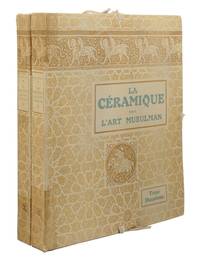
1913ref. C103411Paris: Librarie Centrale Des Beaux - Arts / Emile Levy 1913. First Edition. Hardback. Slipcase. Hardcover Hardcover. Very Good. First Edition. Hardback. Slipcase. Catalogue dimensions:490mm H x 410mm. La ceramique dans l'Art Musulman:'Recueil de 100 planches en couleurs. Reproduisant les plus belles piÂces originales choisies dans les Muses et les Collections privees franÂaises et trangÂres. Publi sous la Direction de Henri RiviÂre. Avec une prface de Gaston Migeon Conservateur du Dpartement des Objets d'Art du Moyen-Age de la Renaissance et des Temps Moderne au Muse du Louvre.' 200 copies only. Two volumes in French: a total of one hundred plates; each plate paired with a text-page giving a description and dimensions of the object. 10 plates figures in text one unnumbered. Publishers printed fliers publicity materials loosely inserted. Preface by Gaston Migeon. Introduction by Henri RiviÂre. Original publisher's linen binding printed with Islamic geometric design and figurative border in soft ochres and earth tones with turquoise blue lettering reflecting the colours of many of the ceramics. The boards contain loose pages with original plain tape ribbon ties to close the boards in the style of an artist's folio. Ties complete and in good shape. Gustave Achille Gaston Migeon 1861Ã 1930 was Curator of the Department of Middle Age Renaissance and Contemporary Decorative Arts at the Louvre Paris. The Louvre's Department of Islamic Art: ""the youngest of the museumÕs eight departments was created in 2003. Its origins can be traced back to the Islamic section created in 1890 within the Department of Decorative Arts by two curators: Gaston Migeon and Emile Molinier. The new galleries of the Department of Islamic Art opened to the public in 2012. Some 3000 objects are on display spanning 1300 years of history and three continents from Spain to Southeast Asia. Henri RiviÂre 1864Ã1951 was a French artist and designer best known for his creation of a form of shadow play at the Chat Noir cabaret and for his post-Impressionist illustrations of Breton landscapes and the Eiffel Tower. mile Lvy 1826 Ã1890 was a French genre and portrait painter. One leaf slightly wrinkled. Slight foxing at text prelims of the first volume. Spines of folders slightly faded but very clean. Bright clean very good indeed - an excellent set in original sound clean very good attractive patterned slip-cases. Librarie Centrale Des Beaux - Arts / Emile Levy hardcover
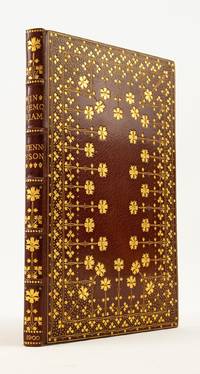
1900ref. ST20797New York; London: Printed at the Bankside Press for M. F. Mansfield 1900. No. 83 OF 100 COPIES reserved for Great Britain from a total edition of 500. 244 x 155 mm. 9 1/2 x 6 1/8". CXXXI pp. 1 leaf colophon. LOVELY HONEY BROWN MOROCCO ELABORATELY GILT BY RIVIERE & SONS stamp-signed on front turn-in covers framed by delicate gilt chains the outer edge punctuated with tiny heart and dot tools the space between the gilt rules filled with many gilt dots and with 86 trefoils the central panel with 28 irises extending from the edge of the frame on alternating two and three chain link stems corner pieces with an oblique iris stem on a background of gilt dots accented by trefoils and small leaves raised bands spine panels with an iris rising from a cluster of small leaves gilt lettering gilt-ruled turn-ins with trio of irises on a stippled ground at corners top edge gilt other edges untrimmed. In the original felt-lined leather chemise with gilt lettering on spine and in a marbled paper slipcase bottom panel carefully reinforced with cellotape. With decorative initials from designs by Blanch McManus printed in orange. A FINE COPY--internally clean fresh and bright and THE BINDING SPARKLING AND UNWORN. This is a famous poet's most famous poem offered in elegantly vigorous binding from a pre-eminent English workshop. First published in 1850 the elegy "In Memoriam" is a tribute to Tennyson's college friend Arthur Henry Hallam 1811-33 son of the famous historian Henry Hallam 1777-1859. Tennyson 1809-92 had been publishing verses for seven years before Hallam's death but after the loss of his friend nothing from his pen appeared for nearly a decade. During that period he was working on the present poem the product of protracted meditation. Written in rhyming quatrains the poem moves from grief and doubt to certainty that the universe is purposeful. It was a sensational bestseller striking a deep note of resonance with Victorian readers. The queen herself told the poet "Next to the Bible 'In Memoriam' is my comfort." The design of our binding is especially intricate and the tooling is impeccable resulting in a notable aesthetic achievement. Riviere is one of the foremost names in the field partly because the firm did consistently fine work and partly because it was so long in business. Robert Riviere began as a bookseller and binder in Bath in 1829 then set up shop as a binder in London in 1840; in 1881 he took his grandson Percival Calkin into partnership at which time the firm became known as Riviere & Son and the bindery continued to do business until 1939. The condition of our volume is impressive; the original chemise has kept the binding safe from the fading of sunlight so that it looks virtually as it did when it left the bindery. [Printed at the Bankside Press for] M. F. Mansfield unknown
1900ref. ST20797New York; London: Printed at the Bankside Press for M. F. Mansfield 1900. No. 83 OF 100 COPIES reserved for Great Britain from a total edition of 500. 244 x 155 mm. 9 1/2 x 6 1/8". CXXXI pp. 1 leaf colophon. LOVELY HONEY BROWN MOROCCO ELABORATELY GILT BY RIVIERE & SONS stamp-signed on front turn-in covers framed by delicate gilt chains the outer edge punctuated with tiny heart and dot tools the space between the gilt rules filled with many gilt dots and with 86 trefoils the central panel with 28 irises extending from the edge of the frame on alternating two and three chain link stems corner pieces with an oblique iris stem on a background of gilt dots accented by trefoils and small leaves raised bands spine panels with an iris rising from a cluster of small leaves gilt lettering gilt-ruled turn-ins with trio of irises on a stippled ground at corners top edge gilt other edges untrimmed. In the original felt-lined leather chemise with gilt lettering on spine and in a marbled paper slipcase bottom panel carefully reinforced with cellotape. With decorative initials from designs by Blanch McManus printed in orange. A FINE COPY--internally clean fresh and bright and THE BINDING SPARKLING AND UNWORN. This is a famous poet's most famous poem offered in elegantly vigorous binding from a pre-eminent English workshop. First published in 1850 the elegy "In Memoriam" is a tribute to Tennyson's college friend Arthur Henry Hallam 1811-33 son of the famous historian Henry Hallam 1777-1859. Tennyson 1809-92 had been publishing verses for seven years before Hallam's death but after the loss of his friend nothing from his pen appeared for nearly a decade. During that period he was working on the present poem the product of protracted meditation. Written in rhyming quatrains the poem moves from grief and doubt to certainty that the universe is purposeful. It was a sensational bestseller striking a deep note of resonance with Victorian readers. The queen herself told the poet "Next to the Bible 'In Memoriam' is my comfort." The design of our binding is especially intricate and the tooling is impeccable resulting in a notable aesthetic achievement. Riviere is one of the foremost names in the field partly because the firm did consistently fine work and partly because it was so long in business. Robert Riviere began as a bookseller and binder in Bath in 1829 then set up shop as a binder in London in 1840; in 1881 he took his grandson Percival Calkin into partnership at which time the firm became known as Riviere & Son and the bindery continued to do business until 1939. The condition of our volume is impressive; the original chemise has kept the binding safe from the fading of sunlight so that it looks virtually as it did when it left the bindery. [Printed at the Bankside Press for] M. F. Mansfield unknown books
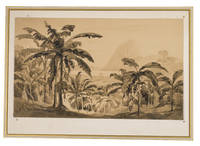
1837ref. ABC_47967Rio de Janeiro 1837. Ad 1: 19 x 32 cm. Passe-partout: 365 x 47 cm. Sepia ink on paper. Ad 2: 245 x 34 cm. Passe-partout: 37 x 44 cm. Sepia ink on paper with blue and sepia ink washes. Two ink drawings on paper depicting the same view of Guanabara bay with a banana plantation and the Pao de Açucar near Rio de Janeiro in Brazil. This scene has also been included in Flora Brasiliensis as plate LV in volume 1.1. Plate LV is lithographed after a drawing by Belgian artist and botanist Benjamin Mary 1792-1846 made in 1837. The largest drawing of the two present here ad 1 is believed to be this drawing by Mary.Flora Brasiliensis is a 15-volume work on Brazilian plants edited by botanist Carl Friedrich Philipp von Martius and others. It was published between 1840 and 1906 and systematically categorised the known plants in the region. The numerous plates were designed by many different artists including Benjamin Mary. He lived in Rio de Janeiro from 1832-1837 so his Brazilian drawings were based on his own observations. Although the present drawing is unsigned it can be attributed to Mary due to stylistic similarities with his other works its exact likeness to the litho in Flora Brasiliensis and its provenance both drawings are from the collection of the Von Martius family.The second drawing depicts the same scene but is clearly made by a different artist. It is signed "A. L." in the lower left corner. This work has been attributed to Carl August Lebschée 1800-1877 a German artist who also made drawings for the Flora Brasiliensis. However this is uncertain because he typically monogrammed his work with C. L.Both drawings in very good condition.l Cf. for the Flora Brasiliensis: Borba de Moraes 525 f; Nissen BBI 2248; Stafleu & Cowan 5538. ABE CAT Art History unknown
1928ref. 6418London: Robt. Riviere & Son 1928. Special edition. Octavo 8 x 5 3/8 inches; 204 x 137 mm. ii blank iii-viii 75 1 imprint pp. With twelve illustrations by Gilbert James hand-colored and heightened with gold and printed with blue initials for each stanza. Caslon Old Face type on Studio hand-made paper some light marginal foxing to plates otherwise fine. Bound ca. 1928 by Rivière & Son stamp-signed on front turn-in in full blue crushed levant morocco. Front cover with a central oval panel with an onlaid brown-spotted serpent twining around a large gilt chalice. This central panel is surrounded by a floral border of inlaid green flowers on orange stems with bunches of grapes in purple. Inside a double-ruled gilt border on each cover is stanza number fifty-eight "Oh Thou who Man of baser Earth didst make And who with Eden didst devise the Snake: For all the Sin wherewith the Face of Man Is blacken'd Man's Forgiveness give - and take." Rear cover with a similar oval panel also surrounded by a floral border of inlaid green flowers on orange stems with bunches of grapes in purple and with a single onlaid green flower and a central inlaid bunch of purple grapes. Spine with five raised bands decoratively bordered in gilt with inlaid purple morocco bunches of grapes in five of the panels and gilt lettered in the other double gilt ruled board edges elaborate gilt turn-ins featuring a vine motif marbled paper doublures and endleaves all edges gilt. Upper joint expertly and almost invisibly repaired otherwise a near fine example of a late twenties Rivière 'Inlaid' binding. Engraved bookplate of Willsherr Lodge the home of Samuel Clay Williams 1884-1949 lawyer and tobacco magnate on front pastedown. "The Riviere Bindery was one of the most notable and prolific shops in London's West End from about 1840 through 1939" Princeton. Bath-based Bayntun Bindery acquired the firm in 1939 transforming into the "Bayntun-Riviere bindery" which is still in existence and family owned. A similar binding but without the quotations on the borders of both covers was sold in the Chevalier sale at Christie's New York Friday November 9th 1990 lot 63; it had been previously sold to Paul Chevalier by David Brass and then later to another private collector. Loosely inserted in the Chevalier copy was a pencilled note identified by a second description as being in the hand of George Napier an Edinburgh collector who commissioned a number of bindings. Napier explains his purchase of the book from Rivière in 1932 and that he commissioned the special border now decorating the book. He adds that "George" at Rivière's explained that the chalice and serpent motif was designed by Alberto Sangorski brother of George Sangorski the binder and concludes with the mention of the "Great Omar" which sank with the Titanic. Fitzgerald attributed the original work to the famed astronomer and mathematician Omar Khayyum and this collection of quatrains rapidly became a favored text of the Pre-Raphaelites. "Like the Odyssey or the Vita Nuova it was once the most widely known and quoted work of Victorian poetry in the world" and its place in Western culture at the time was secured by Fitzgerald's "epigrammatic sophisticated often mordant verses that display Fitzgerald's adroitness in handling this stanza form" Warner. Yet with rise of Modernism the Rubaiyat fell out of style for a time its lush and romantic orientalism considered out of step with the concerns of those who were living through a devastating World War. But the beautiful surviving copies in exceptional vellum silk and leather alongside recently released critical editions have helped draw attention back to the Rubaiyat's beauty and its role in inspiring so many monumental pieces of Victorian art and literature. Here illustrations by Gilbert James 1865-1941 illustrate the dramatic and sensorial prose. Robt. Riviere & Son unknown
1928ref. 6418London: Robt. Riviere & Son 1928. Special edition. Octavo 8 x 5 3/8 inches; 204 x 137 mm. ii blank iii-viii 75 1 imprint pp. With twelve illustrations by Gilbert James hand-colored and heightened with gold and printed with blue initials for each stanza. Caslon Old Face type on Studio hand-made paper some light marginal foxing to plates otherwise fine. Bound ca. 1928 by Rivière & Son stamp-signed on front turn-in in full blue crushed levant morocco. Front cover with a central oval panel with an onlaid brown-spotted serpent twining around a large gilt chalice. This central panel is surrounded by a floral border of inlaid green flowers on orange stems with bunches of grapes in purple. Inside a double-ruled gilt border on each cover is stanza number fifty-eight "Oh Thou who Man of baser Earth didst make And who with Eden didst devise the Snake: For all the Sin wherewith the Face of Man Is blacken'd Man's Forgiveness give - and take." Rear cover with a similar oval panel also surrounded by a floral border of inlaid green flowers on orange stems with bunches of grapes in purple and with a single onlaid green flower and a central inlaid bunch of purple grapes. Spine with five raised bands decoratively bordered in gilt with inlaid purple morocco bunches of grapes in five of the panels and gilt lettered in the other double gilt ruled board edges elaborate gilt turn-ins featuring a vine motif marbled paper doublures and endleaves all edges gilt. Upper joint expertly and almost invisibly repaired otherwise a near fine example of a late twenties Rivière 'Inlaid' binding. Engraved bookplate of Willsherr Lodge the home of Samuel Clay Williams 1884-1949 lawyer and tobacco magnate on front pastedown. "The Riviere Bindery was one of the most notable and prolific shops in London's West End from about 1840 through 1939" Princeton. Bath-based Bayntun Bindery acquired the firm in 1939 transforming into the "Bayntun-Riviere bindery" which is still in existence and family owned. A similar binding but without the quotations on the borders of both covers was sold in the Chevalier sale at Christie's New York Friday November 9th 1990 lot 63; it had been previously sold to Paul Chevalier by David Brass and then later to another private collector. Loosely inserted in the Chevalier copy was a pencilled note identified by a second description as being in the hand of George Napier an Edinburgh collector who commissioned a number of bindings. Napier explains his purchase of the book from Rivière in 1932 and that he commissioned the special border now decorating the book. He adds that "George" at Rivière's explained that the chalice and serpent motif was designed by Alberto Sangorski brother of George Sangorski the binder and concludes with the mention of the "Great Omar" which sank with the Titanic. Fitzgerald attributed the original work to the famed astronomer and mathematician Omar Khayyum and this collection of quatrains rapidly became a favored text of the Pre-Raphaelites. "Like the Odyssey or the Vita Nuova it was once the most widely known and quoted work of Victorian poetry in the world" and its place in Western culture at the time was secured by Fitzgerald's "epigrammatic sophisticated often mordant verses that display Fitzgerald's adroitness in handling this stanza form" Warner. Yet with rise of Modernism the Rubaiyat fell out of style for a time its lush and romantic orientalism considered out of step with the concerns of those who were living through a devastating World War. But the beautiful surviving copies in exceptional vellum silk and leather alongside recently released critical editions have helped draw attention back to the Rubaiyat's beauty and its role in inspiring so many monumental pieces of Victorian art and literature. Here illustrations by Gilbert James 1865-1941 illustrate the dramatic and sensorial prose. Robt. Riviere & Son unknown books
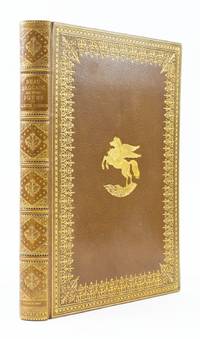
1892ref. ST17864eLondon: Kegan Paul Trench Trübner & Co 1892. No. 10 OF 450 LARGE PAPER COPIES 250 for England and 200 for America SIGNED by the author on the limitations page. 253 x 178 mm. 10 x 7". xiii 3 83 9 pp. ELEGANT CONTEMPORARY TAN MOROCCO GILT BY RIVIERE & SON stamp-signed on front pastedown "Bound by Riviere & Son for L. Samuel Montagu 1893" covers with gilt rule and bead-and-star roll border intricate dentelle frame Pegasus ornament at center raised bands spine compartments with central fleuron enclosed by a lozenge of star tools curling cornerpieces gilt lettering densely gilt turn-ins marbled endpapers top edge gilt other edges untrimmed. Original ivory cloth binding bound in. With 50 illustrations by Hugh Thomson 25 of these plates printed on Japanese vellum. Signed on title page by the artist. AN IMMACULATE COPY. This collection of 18th century-style ballads by a poet of the Aesthete School comes in a refined binding that captures the elegance of that time. Described by Day as a "genteel bureaucrat" who specialized in "the graceful insouciance of 'vers de société' rather than the 'flowers of evil'" favored by others of his cohort Henry Austin Dobson 1840-1921 wrote light witty verse that reflected his fascination with the 18th century. Day notes that "he could write heroic couplets with much of Pope's conversational ability" and "could reproduce the elaborate French stanzas" of triolet ballade and rondeau with a finesse matched by few Englishmen. Dobson's extensive knowledge of the 18th century was so respected that DNB says "any publisher intending to reissue an eighteenth-century work went to Dobson for an introduction." Our binder Riviere is one of the foremost names in English binding partly because the firm did consistently fine work and partly because it was so long in business. Robert Riviere began as a bookseller and binder in Bath in 1829 then set up shop as a binder in London in 1840; in 1881 he took his grandson Percival Calkin into partnership at which time the firm became known as Riviere & Son and the bindery continued to do business until 1939. This binding was done for L. Samuel Montagu perhaps Louis Samuel Montagu 1869-1927 son of financier Liberal MP and philanthropist Samuel Montagu 1st Baron Swaythling. While the delicate filigree tooling is very characteristic of Riviere's finishing the Pegasus centerpiece is not a regular Riviere tool and was perhaps particular to this client. In any case the brilliant gilt and intricate finishing make for a memorable piece of work. Kegan, Paul, Trench, Trübner, & Co unknown
1892ref. ST17864eLondon: Kegan Paul Trench Trübner & Co 1892. No. 10 OF 450 LARGE PAPER COPIES 250 for England and 200 for America SIGNED by the author on the limitations page. 253 x 178 mm. 10 x 7". xiii 3 83 9 pp. ELEGANT CONTEMPORARY TAN MOROCCO GILT BY RIVIERE & SON stamp-signed on front pastedown "Bound by Riviere & Son for L. Samuel Montagu 1893" covers with gilt rule and bead-and-star roll border intricate dentelle frame Pegasus ornament at center raised bands spine compartments with central fleuron enclosed by a lozenge of star tools curling cornerpieces gilt lettering densely gilt turn-ins marbled endpapers top edge gilt other edges untrimmed. Original ivory cloth binding bound in. With 50 illustrations by Hugh Thomson 25 of these plates printed on Japanese vellum. Signed on title page by the artist. AN IMMACULATE COPY. This collection of 18th century-style ballads by a poet of the Aesthete School comes in a refined binding that captures the elegance of that time. Described by Day as a "genteel bureaucrat" who specialized in "the graceful insouciance of 'vers de société' rather than the 'flowers of evil'" favored by others of his cohort Henry Austin Dobson 1840-1921 wrote light witty verse that reflected his fascination with the 18th century. Day notes that "he could write heroic couplets with much of Pope's conversational ability" and "could reproduce the elaborate French stanzas" of triolet ballade and rondeau with a finesse matched by few Englishmen. Dobson's extensive knowledge of the 18th century was so respected that DNB says "any publisher intending to reissue an eighteenth-century work went to Dobson for an introduction." Our binder Riviere is one of the foremost names in English binding partly because the firm did consistently fine work and partly because it was so long in business. Robert Riviere began as a bookseller and binder in Bath in 1829 then set up shop as a binder in London in 1840; in 1881 he took his grandson Percival Calkin into partnership at which time the firm became known as Riviere & Son and the bindery continued to do business until 1939. This binding was done for L. Samuel Montagu perhaps Louis Samuel Montagu 1869-1927 son of financier Liberal MP and philanthropist Samuel Montagu 1st Baron Swaythling. While the delicate filigree tooling is very characteristic of Riviere's finishing the Pegasus centerpiece is not a regular Riviere tool and was perhaps particular to this client. In any case the brilliant gilt and intricate finishing make for a memorable piece of work. Kegan, Paul, Trench, Trübner, & Co unknown books
1964ref. 2091202133213239Ganku Shoten Hosekisha Kobunsha 1964. Soft Cover. Fine. Number of books: 203 Ganku Shoten, Hosekisha, Kobunsha paperback
1923ref. 140945683Paris: Emile Lévy 1923. First edition. First edition. Complete in two imperial folio volumes immense illustrated boards with cloth ties containing loose sheets. Copy #49 of 200 total. Text in French. Ex-art museum library copies with tiny call numbers written on spines card pocket on paste down tape stains to cloth and tape on inside of boards; despite this Very Good overall a few ties have perished typical age-toning to contents but generally bright.All 100 plates and their textual pages present. Numbers written on plates in light pencil. A deluxe monograph about Muslim ceramics with large color plates. Please note: these volumes are exceptionally heavy and large and will require substantial additional cost if shipping outside of the USA. Emile Lévy unknown
1923ref. 140945683Paris: Emile Lévy 1923. First edition. First edition. Complete in two imperial folio volumes immense illustrated boards with cloth ties containing loose sheets. Copy #49 of 200 total. Text in French. Ex-art museum library copies with tiny call numbers written on spines card pocket on paste down tape stains to cloth and tape on inside of boards; despite this Very Good overall a few ties have perished typical age-toning to contents but generally bright.All 100 plates and their textual pages present. Numbers written on plates in light pencil. A deluxe monograph about Muslim ceramics with large color plates. Please note: these volumes are exceptionally heavy and large and will require substantial additional cost if shipping outside of the USA. Emile Lévy unknown books
1872ref. 6405London: John Camden Hotten and George Routledge and Sons 1872. First editions. Two octavo volumes 7 1/4 x 5 1/4 inches; 184 x 133 mm. & 7 x 5 3/8 inches; 179 x 137 mm. ix 2 14-222 4 adv.; viii 1 14-224 4. adv. pp. Black and white frontispieces with original tissue guards black and white text illustrations throughout. Bound c. 1920 by Rivière & Son for the Gardenside Bookshop Boston in full emerald crushed levant morocco with a gilt decorated broad inlaid border of maroon morocco enclosing an elaborate gilt frame surrounding a maroon morocco border and decorated sunken central panel within which are figures from the text pictorially depicted with multi-colored padded morocco onlays. The Bab Ballads with the onlaid figures of Babette and Jacot page 67 and More Bab Ballads with the onlaid figures of Sir Berkely and William Lee page 122. Lower boards with gilt ruled maroon morocco border surrounding an elaborate gilt border with decorative gilt corner pieces. Spines with five raised bands decoratively tooled and lettered in gilt in compartments gilt ruled board edges elaborate gilt turn-ins cream watered silk liners and end-leaves all edges gilt. Original gilt decorated green cloth covers bound in at end of each volume. Outer front joint of volume 2 with subtle repairs. Housed together in the original felt-lined green cloth slipcase. A fine set. This publication evidences how a writer's work is never done. First published as a humorous column in Fun magazine in 1876 Gilbert collected fifty of his favorite poems for the book Fifty "Bab" Ballads:Much Sound and Little Sense it contained one poem collected for the first time titled "Etiquette" and excluded 25 previously published poems. As Gilbert explained: "The period during which they were written extended over some three or four years; many however were composed hastily and under the discomforting necessity of having to turn out a quantity of lively verse by a certain day in every week. As it seemed to me and to others that the volumes were disfigured by the presence of these hastily written impostors I thought it better to withdraw from both volumes such Ballads as seemed to show evidence of carelessness or undue haste and to publish the remainder in the compact form under which they are now presented to the reader" Gilbert. However "Gilbert's readers were not happy with the loss and in 1882 Gilbert published all of the poems that had appeared in either The "Bab" Ballads or More "Bab" Ballads once again excluding "Etiquette." Some twentieth-century editions of More "Bab" Ballads include "Etiquette" Ellis. The poems range from satire to absurdist texts and will surely entertain all who read them. "The Riviere Bindery was one of the most notable and prolific shops in London's West End from about 1840 through 1939" Princeton. Bath-based Bayntun Bindery acquired the firm in 1939 transforming into the "Bayntun-Riviere bindery" which is still in existence and family owned. John Camden Hotten [and] George Routledge and Sons unknown
1926ref. 6406London: John Lane The Bodley Head Ltd 1926. Fine. A very fine and unique copy. Specially bound with two superb original watercolor paintings on both of the calf doublures by Helen R. Haywood. Octavo 7 1/8 x 4 1/2 in; 181 x 113 mm. lxxxix 4 454 14 as Anglers' Calendar pp. Black and white illustrations throughout some full-page. Initials and vignettes. Inserted limitation leaf "With Water/Colour Drawings/on/Calf Doublures/by/signed Helen R. Haywood." Bound by Rivière & Son c. 1926 stamp-signed in gilt on front turn-in. Full forest green crushed morocco covers with gilt double-rule border spine with five raised bands decoratively tooled and lettered in gilt in compartments. Double gilt-ruled board edges decorative gilt ruled turn-ins enclosing calf doublures with full angling-themed original watercolor paintings. Green moire silk free endpapers all edges gilt. Housed in a felt-lined green cloth clamshell case spine with leather label lettered in gilt. Izaak Walton's The Compleate Angeler 1653 is perhaps the quintessential pastoral work on fishing. Structured as a dialogue between a fisherman huntsman and fowler the book is a celebration of the natural world and the thrills of fishing as a pastime. The two exquisite original watercolors on calf elegantly reproduce at the front "Come now bait your hook again and lay it into the water for it rains again" Compleat Angler Fourth Day and at the rear "Marry God requite you sir and we'll eat it cheerfully" Compleat Angler Third Day. Helen Riviere Haywood 1908-1995 was an English painter children's book illustrator and writer best known for her foredge paintings. She came from a book-binding family: Haywood was the granddaughter Robert Riviere founder of the great bindery which executed this lovely binding and her uncle who also worked for the firm introduced her to foredge and double foredge painting. Between the 1930s-1970s she completed multiple commissions for Inman's Books a New York City based antiquarian book dealer. From her intertest in science anthropology and naturalism Haywood developed a keen attention to the world's natural elements; this talent for observation and specificity found its way into her artwork. Provenance: Purchased by David Brass Rare Books from John & Judith Head May 2012; sold to Randal Moscovitz December 2012. Fine. John Lane The Bodley Head Ltd unknown
1926ref. 6406London: John Lane The Bodley Head Ltd 1926. Fine. A very fine and unique copy. Specially bound with two superb original watercolor paintings on both of the calf doublures by Helen R. Haywood. Octavo 7 1/8 x 4 1/2 in; 181 x 113 mm. lxxxix 4 454 14 as Anglers' Calendar pp. Black and white illustrations throughout some full-page. Initials and vignettes. Inserted limitation leaf "With Water/Colour Drawings/on/Calf Doublures/by/signed Helen R. Haywood." Bound by Rivière & Son c. 1926 stamp-signed in gilt on front turn-in. Full forest green crushed morocco covers with gilt double-rule border spine with five raised bands decoratively tooled and lettered in gilt in compartments. Double gilt-ruled board edges decorative gilt ruled turn-ins enclosing calf doublures with full angling-themed original watercolor paintings. Green moire silk free endpapers all edges gilt. Housed in a felt-lined green cloth clamshell case spine with leather label lettered in gilt. Izaak Walton's The Compleate Angeler 1653 is perhaps the quintessential pastoral work on fishing. Structured as a dialogue between a fisherman huntsman and fowler the book is a celebration of the natural world and the thrills of fishing as a pastime. The two exquisite original watercolors on calf elegantly reproduce at the front "Come now bait your hook again and lay it into the water for it rains again" Compleat Angler Fourth Day and at the rear "Marry God requite you sir and we'll eat it cheerfully" Compleat Angler Third Day. Helen Riviere Haywood 1908-1995 was an English painter children's book illustrator and writer best known for her foredge paintings. She came from a book-binding family: Haywood was the granddaughter Robert Riviere founder of the great bindery which executed this lovely binding and her uncle who also worked for the firm introduced her to foredge and double foredge painting. Between the 1930s-1970s she completed multiple commissions for Inman's Books a New York City based antiquarian book dealer. From her intertest in science anthropology and naturalism Haywood developed a keen attention to the world's natural elements; this talent for observation and specificity found its way into her artwork. Provenance: Purchased by David Brass Rare Books from John & Judith Head May 2012; sold to Randal Moscovitz December 2012. Fine. John Lane The Bodley Head Ltd unknown books
1872ref. 6405London: John Camden Hotten and George Routledge and Sons 1872. First editions. Two octavo volumes 7 1/4 x 5 1/4 inches; 184 x 133 mm. & 7 x 5 3/8 inches; 179 x 137 mm. ix 2 14-222 4 adv.; viii 1 14-224 4. adv. pp. Black and white frontispieces with original tissue guards black and white text illustrations throughout. Bound c. 1920 by Rivière & Son for the Gardenside Bookshop Boston in full emerald crushed levant morocco with a gilt decorated broad inlaid border of maroon morocco enclosing an elaborate gilt frame surrounding a maroon morocco border and decorated sunken central panel within which are figures from the text pictorially depicted with multi-colored padded morocco onlays. The Bab Ballads with the onlaid figures of Babette and Jacot page 67 and More Bab Ballads with the onlaid figures of Sir Berkely and William Lee page 122. Lower boards with gilt ruled maroon morocco border surrounding an elaborate gilt border with decorative gilt corner pieces. Spines with five raised bands decoratively tooled and lettered in gilt in compartments gilt ruled board edges elaborate gilt turn-ins cream watered silk liners and end-leaves all edges gilt. Original gilt decorated green cloth covers bound in at end of each volume. Outer front joint of volume 2 with subtle repairs. Housed together in the original felt-lined green cloth slipcase. A fine set. This publication evidences how a writer's work is never done. First published as a humorous column in Fun magazine in 1876 Gilbert collected fifty of his favorite poems for the book Fifty "Bab" Ballads:Much Sound and Little Sense it contained one poem collected for the first time titled "Etiquette" and excluded 25 previously published poems. As Gilbert explained: "The period during which they were written extended over some three or four years; many however were composed hastily and under the discomforting necessity of having to turn out a quantity of lively verse by a certain day in every week. As it seemed to me and to others that the volumes were disfigured by the presence of these hastily written impostors I thought it better to withdraw from both volumes such Ballads as seemed to show evidence of carelessness or undue haste and to publish the remainder in the compact form under which they are now presented to the reader" Gilbert. However "Gilbert's readers were not happy with the loss and in 1882 Gilbert published all of the poems that had appeared in either The "Bab" Ballads or More "Bab" Ballads once again excluding "Etiquette." Some twentieth-century editions of More "Bab" Ballads include "Etiquette" Ellis. The poems range from satire to absurdist texts and will surely entertain all who read them. "The Riviere Bindery was one of the most notable and prolific shops in London's West End from about 1840 through 1939" Princeton. Bath-based Bayntun Bindery acquired the firm in 1939 transforming into the "Bayntun-Riviere bindery" which is still in existence and family owned. John Camden Hotten [and] George Routledge and Sons unknown books
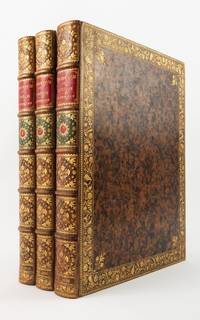
1806ref. ST20974London: R. Ackermann 1808-10 paper watermarked 1806 and 1807. FIRST EDITION. 340 x 280 mm. 13 1/2 x 11". Three volumes. VERY HANDSOME MOTTLED CALF HEAVILY AND ELEGANTLY GILT BY RIVIERE & SON stamp-signed on verso of front free endpaper covers with lovely floral roll frame oblique floral sprays at corners raised bands spines richly gilt in compartments with central floral spray within a lozenge of small tools flower duo at corners one red morocco label one green morocco label with volume number on onlaid red morocco medallion enclosed by a gilt sunburst turn-ins with gilt floral roll marbled endpapers all edges gilt rear joint of volume III neatly repaired small recent repairs to joints elsewhere. Woodcut title pages 104 COLORED AQUATINT PLATES after Rowlandson and Pugin. Faintly embossed library stamp of "H_____ Library Collection" presumably private to title pages. A Large Paper Copy. Abbey Scenery 212; Tooley 7. Joints and extremities slightly rubbed but the bindings still splendid despite their signs of use and looking magnificent on the shelf. Offsetting from plates onto facing page as usual with this book about a fourth of the plates with significant transfer another fourth with none or almost none the remaining half with something in between but the plates with lovely rich coloring and with no offsetting of the text onto plate images and the text printed within spacious margins very fresh and unsoiled. Deemed by Abbey "a colour-plate book of great importance" Ackermann's pictorial tour of London is offered here in elegant bindings by an important English workshop. According to Tooley this is "one of the great colour-plate books" that "should form the corner stone of any collection of books on this subject. The plates by Rowlandson and Pugin present an unrivalled picture of London in early 19th century" and are consequently "of historic value as many of the buildings no longer exist." DNB calls "Microcosm" "an acknowledged masterpiece" the success of which led to Ackermann's volumes on Westminster Abbey and the colleges at Oxford Cambridge and Winchester a series considered "among the most beautiful illustrated books of the first half of the nineteenth century." Artist Thomas Rowlandson 1756-1827 is remembered for his caricatures and humorous illustrations but he made his name illustrating the travel books with views he would later satirize in his "Doctor Syntax" volumes. According to DNB publisher Rudolph Ackermann "kept Rowlandson in almost continuous employment producing drawings for the fine colour-plate books for which his firm the Repository of Arts at 101 Strand became famous. . . . Augustus Pugin was brought in to draw the architecture" for the present work while Rowlandson supplied the figures. Our binder Riviere is one of the foremost names in the field partly because the firm did consistently fine work and partly because it was so long in business. Robert Riviere began as a bookseller and binder in Bath in 1829 then set up shop as a binder in London in 1840; in 1881 he took his grandson Percival Calkin into partnership at which time the firm became known as Riviere & Son and the bindery continued to do business until 1939. The present set is an excellent example of the firm's work and the bindings along with the richness of the plates and the capacious margins here make this an especially appealing copy. The early watermark dates of 1806 and 1807 are a further attractive feature as they suggest strong coloring on plate surfaces that have not suffered significant degradation. R. Ackermann unknown
1806ref. ST20974London: R. Ackermann 1808-10 paper watermarked 1806 and 1807. FIRST EDITION. 340 x 280 mm. 13 1/2 x 11". Three volumes. VERY HANDSOME MOTTLED CALF HEAVILY AND ELEGANTLY GILT BY RIVIERE & SON stamp-signed on verso of front free endpaper covers with lovely floral roll frame oblique floral sprays at corners raised bands spines richly gilt in compartments with central floral spray within a lozenge of small tools flower duo at corners one red morocco label one green morocco label with volume number on onlaid red morocco medallion enclosed by a gilt sunburst turn-ins with gilt floral roll marbled endpapers all edges gilt rear joint of volume III neatly repaired small recent repairs to joints elsewhere. Woodcut title pages 104 COLORED AQUATINT PLATES after Rowlandson and Pugin. Faintly embossed library stamp of "H_____ Library Collection" presumably private to title pages. A Large Paper Copy. Abbey Scenery 212; Tooley 7. Joints and extremities slightly rubbed but the bindings still splendid despite their signs of use and looking magnificent on the shelf. Offsetting from plates onto facing page as usual with this book about a fourth of the plates with significant transfer another fourth with none or almost none the remaining half with something in between but the plates with lovely rich coloring and with no offsetting of the text onto plate images and the text printed within spacious margins very fresh and unsoiled. Deemed by Abbey "a colour-plate book of great importance" Ackermann's pictorial tour of London is offered here in elegant bindings by an important English workshop. According to Tooley this is "one of the great colour-plate books" that "should form the corner stone of any collection of books on this subject. The plates by Rowlandson and Pugin present an unrivalled picture of London in early 19th century" and are consequently "of historic value as many of the buildings no longer exist." DNB calls "Microcosm" "an acknowledged masterpiece" the success of which led to Ackermann's volumes on Westminster Abbey and the colleges at Oxford Cambridge and Winchester a series considered "among the most beautiful illustrated books of the first half of the nineteenth century." Artist Thomas Rowlandson 1756-1827 is remembered for his caricatures and humorous illustrations but he made his name illustrating the travel books with views he would later satirize in his "Doctor Syntax" volumes. According to DNB publisher Rudolph Ackermann "kept Rowlandson in almost continuous employment producing drawings for the fine colour-plate books for which his firm the Repository of Arts at 101 Strand became famous. . . . Augustus Pugin was brought in to draw the architecture" for the present work while Rowlandson supplied the figures. Our binder Riviere is one of the foremost names in the field partly because the firm did consistently fine work and partly because it was so long in business. Robert Riviere began as a bookseller and binder in Bath in 1829 then set up shop as a binder in London in 1840; in 1881 he took his grandson Percival Calkin into partnership at which time the firm became known as Riviere & Son and the bindery continued to do business until 1939. The present set is an excellent example of the firm's work and the bindings along with the richness of the plates and the capacious margins here make this an especially appealing copy. The early watermark dates of 1806 and 1807 are a further attractive feature as they suggest strong coloring on plate surfaces that have not suffered significant degradation. R. Ackermann unknown books