RIO, Jose DelBiblio.com
8991 risultati
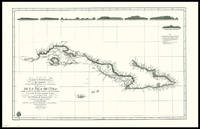
1821rif. 11711Madrid 1821. 600 by 910mm 23.5 by 35.75 inches. Engraved chart soundings latitude and longitude signs of the sea and six coastal profiles. Rare Spanish Admiralty chart of part of the south-east coast of Cuba. The charts produced by the 'Direccion de Hydrografica' were detailed surveys not unlike the charts of the British Hydrographic Office however official Spanish charts of this sort appear on the market much less frequently than their French and English counterparts and even fewer have appeared to survive than contemporary American publications. unknown
1771rif. 30904MADRID: En la Imprenta de Francisco Xavier García 1771. Primera edición.- 4º Mayor.- 6 hojas de Portada Prólogo Tabla e Introducción.- LXX 70 páginas de Introducción.- CCCXLIV 344 páginas de Texto.- 1 Hoja de Erratas.- Encuadernado a plena pasta española de época y del taller de Sancha. Lomera con nervios tejuelo y entre nervios florones filetes y hierros dorados. Muy buen ejemplar limpio y muy marginoso con una encuadernción de época. Preocedencia: Al pie de la portada consta manuscrito: Hilario Cisnero y Saco. Primera edición de este texto jurídico publicado conjuntamente con Miguel de Manuel y Rodríguez. Juan Sempere y Guarinos en ""Ensayo de una Biblioteca Española de los Mejores Escritores del Reinado de Carlos III"" hace un extenso elogio de la obra y en particular de la Introducción: ""Las esquisitas noticias que se dan en esta introducción sacadas de los instrumentos antiguos M. S. y de libros impresos los más raros y preciosos la hacen por si misma una obra muy apreciable que manisfiesta al mismo tiempo lo que hay que adelantar todavía en el estudio de nuestra legislación y Jurisprudencia"". Palau 18717 - Sempere y Guarinos I- página 147 - Aguilar Piñal IV - 4932 En la Imprenta de Francisco Xavier García hardcover
rif. 78130Paris Gallimard 1926-1928 4 vol. reliés 4 vol. in-4 tellière, demi-maroquin bordeaux à gros grain à coins, dos à fins nerfs, plats de papier marbré, têtes dorées, non rognés, couvertures et dos conservés (J.-P. Miguet), 351, 396, 380 et 388 pp., fac-similés en frontispice. Édition originale de cette célèbre correspondance qui se lit comme un roman d'apprentissage. Jacques Rivière et Henri Fournier se rencontrent en octobre 1903 au lycée Lakanal de Sceaux, où ils préparent le concours d’entrée à l’École Normale Supérieure. De tempéraments différents, rien ne les prédestine à nouer un lien d'amitié si ce n'est leur goût commun de la lecture. C'est en découvrant "Tel qu'en songe" de Henri de Régnier que les deux jeunes gens accèdent aux sortilèges de la littérature, une illumination qui décide de leur vocation d'écrivain, mais chacun selon sa manière : d'un côté l'homme appliqué qui prendra les commandes de la Nouvelle Revue française ; de l'autre, l'auteur fougueux du Grand Meaulnes, qui tombera au front en 1914. Chaque volume est l'un des 109 exemplaires de tête réimposés et numérotés sur vergé Lafuma-Navarre. En parfaite condition.
rif. 78130Paris Gallimard 1926-1928 4 vol. reliés 4 vol. in-4 tellière, demi-maroquin bordeaux à gros grain à coins, dos à fins nerfs, plats de papier marbré, têtes dorées, non rognés, couvertures et dos conservés (J.-P. Miguet), 351, 396, 380 et 388 pp., fac-similés en frontispice. Édition originale de cette célèbre correspondance qui se lit comme un roman d'apprentissage. Jacques Rivière et Henri Fournier se rencontrent en octobre 1903 au lycée Lakanal de Sceaux, où ils préparent le concours d’entrée à l’École Normale Supérieure. De tempéraments différents, rien ne les prédestine à nouer un lien d'amitié si ce n'est leur goût commun de la lecture. C'est en découvrant "Tel qu'en songe" de Henri de Régnier que les deux jeunes gens accèdent aux sortilèges de la littérature, une illumination qui décide de leur vocation d'écrivain, mais chacun selon sa manière : d'un côté l'homme appliqué qui prendra les commandes de la Nouvelle Revue française ; de l'autre, l'auteur fougueux du Grand Meaulnes, qui tombera au front en 1914. Chaque volume est l'un des 109 exemplaires de tête réimposés et numérotés sur vergé Lafuma-Navarre. En parfaite condition.
rif. 8549Paris, l'Edition d'Art H. Piazza, imprimé le 14 septembre 1913 par G. Kadar. 1 volume in-8, 174 pp., reliure plein maroquin tête de nègre, plat mosaïqué, dos à 4 nerfs orné de caissons mosaïqués, gardes moirées, toutes tranches dorées, couvertures illustrées conservées, doublures et gardes de soie mauve, encadrement des doublures de maroquin, très bel exemplaire en parfait état sous étui cartonné. Richement illustré par de La Nézière. 50 illustrations en couleurs dont 10 hors texte, bandeaux, culs-de-lampe, encadrements décoratifs. Ex-libris de Et. Beauvillain.
rif. 13737Paris, l'Edition d'Art H. Piazza, imprimé le 14 septembre 1913 par G. Kadar. 1 volume in-8, 174 pp., reliure plein maroquin tête de nègre, plat mosaïqué, dos à 4 nerfs orné de caissons mosaïqués, gardes moirées, toutes tranches dorées, couvertures illustrées conservées, doublures et gardes de soie mauve, encadrement des doublures de maroquin, très bel exemplaire en parfait état sous étui cartonné. Richement illustré par de La Nézière. 50 illustrations en couleurs dont 10 hors texte, bandeaux, culs-de-lampe, encadrements décoratifs. Ex-libris de Et. Beauvillain.
1913rif. 12381Paris, H. Piazza, 1913. 1 vol. in-8. Plein maroquin havane, plats estampés à froid de motifs orientalistes avec une figue de bouddha rehaussée à l'or, large listel doré à motifs d'arabesques en encadrement, dos orné des même motifs dorés avec un bouddha doré en tête et queue de dos, filets dorés aux contreplats, titre doré, tête dorée, couvertures et dos conservés, sous étui bordé. [DURVAND].
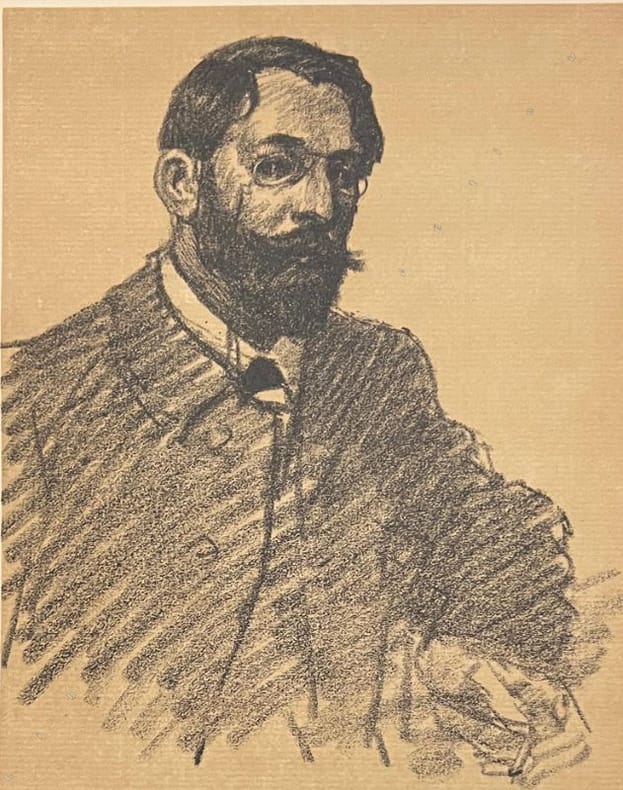
1907rif. 8535Édition originale de ce très beau livre. Il comporte outre un portrait de Rivière par Steinlen (lithographie originale), une eau-forte originale de Rivière : Coup de vent. Titage total à 1100 exemplaires, celui-ci 1 des 100 du tirage de tête sur grand vélin de Rives. Seul les exemplaires de tête comportent l'eau-forte originale. 1/2 maroquin tabac à coins, dos long orné, filets dorés sur mors et coins. Couvertures et dos conservés. Reliure signé Canape. Quelques taches éparses sur le cuir. Très bon Paris Floury 1907 1 volume grand in-8°
1792rif. 67002Ouvrage contenant des détails intéressans sur leurs principales Institutions Civiles, Religieuses et Politiques ; sur leurs divers Systèmes et leurs Moeurs, tant publiques que privées ; détail auxquels a été ajouté un Manuel Politique de cette Nation, 2 vol. in-8 reliure de l'époque demi-basane marron, Chez Buisson, A Paris, Chez Bruysset, frères, A Lyon, 1792, 2 ff., frontispice, lxxj-334 pp. et 1 f. n. ch. (avis de l'imprimeur avec errata) ; 2 ff., 496 pp. et 1 f. n. ch. (errata)
1923rif. 14.241Santander: s.i 1923. 1ª ed. Tela de época; falta la cubierta original. 16.5x23. 21 xilografías a toda plana y viñetas de Pancho Cossío. s.i hardcover
2012rif. BRG-41_4_1019Berkley Trade 2012-03-07. paperback. Good. 5x0x7. Good condition.No marking/highlighting.Cover and pages may show some wear.Not Satisfied Contact us to get a refund. Berkley Trade paperback
rif. 10833Collection complète, du n° 1 (été 1924) au n° 29 (printemps 1932). Nous joignons l'Index des années 1924-1928, paru sous forme de tiré-à-part joint au n° 22 (Hiver 1929). TOUS LES NUMEROS FONT PARTIE DU TIRAGE SUR VELIN PUR FIL LAFUMA (2e papier dont le nombre d'exemplaires est compris entre 150 et 300) et sont tous en bon ou très bon état. // Le n° 1 porte la mention manuscrite " Exemplaire sur Lafuma ", apposée par Auguste Morel qui a également signé cet exemplaire de ses initiales ; ce détail fait de cet exemplaire une belle pièce joycienne puisque dans ce premier numéro de " Commerce " paraît la première traduction en français d'un extrait d'ULYSSE de Joyce - traduction justement due au même Auguste Morel et à Valery Larbaud. // Rare et belle collection sur grand papier.
1740rif. 0056271740 S. l. n. e. [Amsterdam, Pierre Mortier], 1740. In-quarto (257 X 205 mm) veau fauve marbré, supra-libris (lettre « V ») doré au centre des plats, dos à nerfs orné, pièce de titre maroquin grenat, tranches rouges (Reliure de l'époque) ; portrait-frontispice, (2) ff. de faux-titre et titre, XL-284 pages, 6 planches hors-texte. Quelques feuillets uniformément brunis.
rif. 20495A Londres, chez Jean Nourse, Libraire ; et se trouve à Paris, chez Desaint, 1767, in-4 de (2)-VII-(1)errata-511 pp., reliure de l'époque, de plein veau fauve, dos lisse orné d'un décor "à la grotesque" doré, pièce de titre de maroquin brun, usure et manque à la coiffe supérieure, charnière supérieure fragile, coins inférieurs émoussés, sinon bon exemplaire.
1713rif. 3648A La Haye, chez Henry Scheurleer, 1713. In-12 de 508-(8) pp., maroquin bleu, dos orné à nerfs, triple filet doré d'encadrement sur les plats, dentelle intérieure, tranches dorées sur marbrure (David).
rif. 116316Paris Gallimard 1926-1928 4 vol. reliés 4 vol. in-4 tellière, demi-maroquin lavallière à coins bordé de filets dorés, dos à nerfs soulignés de pointillés dorés, triple filet et guirlande dorés en encadrement des caissons, têtes dorées, non rognés, couvertures et dos conservés (P.L. Martin), 351, 396, 380 et 388 pp., fac-similés en frontispice. Édition originale de cette célèbre correspondance qui se lit comme un roman d'apprentissage. Jacques Rivière et Henri Fournier se rencontrent en octobre 1903 au lycée Lakanal de Sceaux, où ils préparent le concours d’entrée à l’École Normale Supérieure. De tempéraments différents, rien ne les prédestine à nouer un lien d'amitié si ce n'est leur goût commun de la lecture. C'est en découvrant "Tel qu'en songe" de Henri de Régnier que les deux jeunes gens accèdent aux sortilèges de la littérature, une illumination qui décide de leur vocation d'écrivain, mais chacun selon sa manière : d'un côté l'homme appliqué qui prendra les commandes de la Nouvelle Revue française ; de l'autre, l'auteur fougueux du Grand Meaulnes, qui tombera au front en 1914. Chaque volume est l'un des 109 exemplaires de tête réimposés et numérotés sur vergé Lafuma-Navarre (n°26). Superbe ensemble, dans d'élégantes reliures signées de Martin.
rif. 116316Paris Gallimard 1926-1928 4 vol. reliés 4 vol. in-4 tellière, demi-maroquin lavallière à coins bordé de filets dorés, dos à nerfs soulignés de pointillés dorés, triple filet et guirlande dorés en encadrement des caissons, têtes dorées, non rognés, couvertures et dos conservés (P.L. Martin), 351, 396, 380 et 388 pp., fac-similés en frontispice. Édition originale de cette célèbre correspondance qui se lit comme un roman d'apprentissage. Jacques Rivière et Henri Fournier se rencontrent en octobre 1903 au lycée Lakanal de Sceaux, où ils préparent le concours d’entrée à l’École Normale Supérieure. De tempéraments différents, rien ne les prédestine à nouer un lien d'amitié si ce n'est leur goût commun de la lecture. C'est en découvrant "Tel qu'en songe" de Henri de Régnier que les deux jeunes gens accèdent aux sortilèges de la littérature, une illumination qui décide de leur vocation d'écrivain, mais chacun selon sa manière : d'un côté l'homme appliqué qui prendra les commandes de la Nouvelle Revue française ; de l'autre, l'auteur fougueux du Grand Meaulnes, qui tombera au front en 1914. Chaque volume est l'un des 109 exemplaires de tête réimposés et numérotés sur vergé Lafuma-Navarre (n°26). Superbe ensemble, dans d'élégantes reliures signées de Martin.
1907rif. 25338Paris Henri Floury, imprimerie Geneviève Lahure et Maison Verneau 1907 Paris, Henri Floury, imprimerie Geneviève Lahure (typographie) et Maison Verneau (lithographies), 1907, fort volume in-4, reliure en buffle lie de vin, couverture illustrée par Georges Auriol et dos conservés, reliure postérieure.
1927rif. 3138Paris, François Bernouard, 1927. un volume in-4 (272 x 220 mm) broché de 36 ff. les 2 premiers et dernier blancs, 5 planches, couverture imprimée en deux couleurs. Édition originale, illustrée de 5 EAUX-FORTES ORIGINALES DE LÉONARD FOUJITA. Tirage limité à 301 exemplaires, celui-ci l' un des 275 numéroté sur vergé de Rives (n°158), en parfait état d'origine. - ENGLISH DESCRIPTION: Paris, François Bernouard, 1927. one volume in-4 (272 x 220 mm) paperback of 36 ff. the first 2 and last blank, 5 plates, cover printed in two colors. First edition, illustrated with 5 ORIGINAL ETCHINGS BY LÉONARD FOUJITA. Limited edition of 301 copies, this one of 275 numbered on Rives paper (n°158), in perfect original condition.
1910rif. 6404London: Robt. Riviere & Son 1910. A fine example. Square sixteenmo 5 1/16 x 3 15/16 inches; 129 x 100 mm. 46 2 blank pp. Title-page and initial letters printed in red and black. Handsomely bound ca. 1910 by Rivière & Son stamp-signed in gilt on lower turn-in. Full dark blue crushed levant morocco covers bordered in gilt surrounding an ornate floral design stamped in gilt each with twelve inlaid red morocco flowers spine with five raised bands decoratively tooled and lettered in gilt in compartments gilt board edges and turn-ins cream paper liners and end-leaves top edge gilt. Neat ink inscription on front free end-paper and a small gold bookplate. Shelley's poem The Sensitive Plant is a beautiful and tragic poem commemorating the brevity of life and immortality of cyclical nature. Written after death of his son while Percy and Mary Shelley struggled with their grief in Pisa the poem consists of four stanzas with three sections charting the change of seasons. It is set in a garden bursting with blooms but highlights the sensitive plant-a mimosa-with its humble leafy foliage. Human will is nothing in the face of the impartial power of nature and time. First published in Prometheus Unbound and Other Poems 1820 here it has been reproduced with a delicate binding to match its subject. "For the Sensitive Plant has no bright flower; Radiance and odour are not its dower; It loves even like Love its deep heart is full It desires what it has not the Beautiful!" "The Riviere Bindery was one of the most notable and prolific shops in London's West End from about 1840 through 1939" Princeton. Bath-based Bayntun Bindery acquired the firm in 1939 transforming into the "Bayntun-Riviere bindery" which is still in existence and family owned. Robt. Riviere & Son unknown
1910rif. 6404London: Robt. Riviere & Son 1910. A fine example. Square sixteenmo 5 1/16 x 3 15/16 inches; 129 x 100 mm. 46 2 blank pp. Title-page and initial letters printed in red and black. Handsomely bound ca. 1910 by Rivière & Son stamp-signed in gilt on lower turn-in. Full dark blue crushed levant morocco covers bordered in gilt surrounding an ornate floral design stamped in gilt each with twelve inlaid red morocco flowers spine with five raised bands decoratively tooled and lettered in gilt in compartments gilt board edges and turn-ins cream paper liners and end-leaves top edge gilt. Neat ink inscription on front free end-paper and a small gold bookplate. Shelley's poem The Sensitive Plant is a beautiful and tragic poem commemorating the brevity of life and immortality of cyclical nature. Written after death of his son while Percy and Mary Shelley struggled with their grief in Pisa the poem consists of four stanzas with three sections charting the change of seasons. It is set in a garden bursting with blooms but highlights the sensitive plant-a mimosa-with its humble leafy foliage. Human will is nothing in the face of the impartial power of nature and time. First published in Prometheus Unbound and Other Poems 1820 here it has been reproduced with a delicate binding to match its subject. "For the Sensitive Plant has no bright flower; Radiance and odour are not its dower; It loves even like Love its deep heart is full It desires what it has not the Beautiful!" "The Riviere Bindery was one of the most notable and prolific shops in London's West End from about 1840 through 1939" Princeton. Bath-based Bayntun Bindery acquired the firm in 1939 transforming into the "Bayntun-Riviere bindery" which is still in existence and family owned. Robt. Riviere & Son unknown books
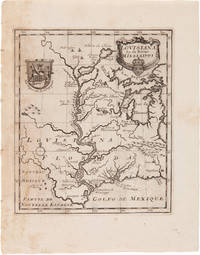
1720rif. 48868Amsterdam. 1720. Mapping Early Louisiana A scarce early map of the Mississippi River Valley depicting the American region between the Gulf of Mexico and the Great Lakes taken from Het Groot Tafereel der Dwaasheid. The Great Mirror of Folly a scathing account of the speculative crashes that led to European financial disaster in 1720. The work was a chronicle of the failed attempts by John Law controller general of finances for the French government to open Louisiana to trade in order to help alleviate France's financial problems. This led to the creation of the Mississippi Company which created the "Mississippi Bubble" incident that destroyed the Banque Générale Privée the General Private Bank which Law founded. The map depicts the Mississippi River parts of Louisiana and Florida Lake Michigan referred to here as "Lac de Illionis" and Lake Superior the extent of French colonial explorations in the region and names of Indian tribes. It is decorated with a title cartouche incorporating the arms of John Law and depicting two Native Americans holding a cornucopia through which flows the mighty Mississippi River. Minor foxing. Near fine. unknown
1720rif. 48868Amsterdam. 1720. Mapping Early Louisiana A scarce early map of the Mississippi River Valley depicting the American region between the Gulf of Mexico and the Great Lakes taken from Het Groot Tafereel der Dwaasheid. The Great Mirror of Folly a scathing account of the speculative crashes that led to European financial disaster in 1720. The work was a chronicle of the failed attempts by John Law controller general of finances for the French government to open Louisiana to trade in order to help alleviate France's financial problems. This led to the creation of the Mississippi Company which created the "Mississippi Bubble" incident that destroyed the Banque Générale Privée the General Private Bank which Law founded. The map depicts the Mississippi River parts of Louisiana and Florida Lake Michigan referred to here as "Lac de Illionis" and Lake Superior the extent of French colonial explorations in the region and names of Indian tribes. It is decorated with a title cartouche incorporating the arms of John Law and depicting two Native Americans holding a cornucopia through which flows the mighty Mississippi River. Minor foxing. Near fine. unknown books
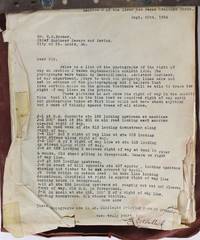
1931rif. 3720St. Louis 1931. Good. Cover letter plus 109 photographs all 8 x 10 inches including about thirty duplicate prints. Contemporary brad-bound wrappers typed title label on front cover. Moderate soiling and significant edge wear and tearing to wrappers. Varying levels of marginal chipping to cover letter first two photographs and top right edge of several later photographs with some mostly marginal staining. An informative collection of photographs featuring the right of way on Section J of the River des Peres Drainage Works project in St. Louis from the Fall of 1926 to August 1933. According to the cover letter to the earliest group of photographs from the District Engineer E.E. Ashlock the first group of photographs were taken between September 14th and 16th 1926 by the assistant engineer of his department Harrold I. Smutz. Ashlock also includes a detailed listing with descriptions of the contents of some of the photographs keyed from "J-1" to "J-11." Following Ashlock's cover letter are over a hundred photographs detailing the River des Peres project with additional typed annotations for the later group of photographs. The project pictured here was undertaken after a series of significant floods in St. Louis. The River des Peres at the confluence of the Mississippi River was effectively channelized and its contents redirected underground through a series of large pipes. The river functions today as a critical part of the city's sanitary and storm water system a role it took on after the project pictured here. The photographs depict a wide range of perspectives of the River des Peres showing views of upstream equipment pictures taken from an "old road looking east across the cleared right of way" from a "road west.looking downstream along right of way" "on crest of hill.looking upstream showing cut timber to be covered by spoil" and so forth. The photographs are often annotated on the verso sometimes in pen and sometimes on small sheets with typed captions. A typical caption reads: "300 feet west of Sta. 201 on old road looking east. Men are standing on West R. of W. line. The line shown is the west of R. of W. line. East R. of W. line is approximately along line of Telegraph poles." The first twenty-two photographs were taken in September 1926. The next thirteen images were produced in 1927-28. The remainder of the images were produced from 1931 to 1933. About thirty of the images are present in duplicate but one or both of the images are usually produced at different exposures or sometimes one of the images is annotated or has additional information captioned on the front or back. In several cases on both the unique images and some of the duplicates an engineer has drawn the right of way lines on the surface of the images and added additional explanatory text especially in the earlier images. An important group of photographs showing the state of a major St. Louis public works project in the midst of the Roaring Twenties and one of the largest and most significant public works projects of its time. unknown
1931rif. 3720St. Louis 1931. Good. Cover letter plus 109 photographs all 8 x 10 inches including about thirty duplicate prints. Contemporary brad-bound wrappers typed title label on front cover. Moderate soiling and significant edge wear and tearing to wrappers. Varying levels of marginal chipping to cover letter first two photographs and top right edge of several later photographs with some mostly marginal staining. An informative collection of photographs featuring the right of way on Section J of the River des Peres Drainage Works project in St. Louis from the Fall of 1926 to August 1933. According to the cover letter to the earliest group of photographs from the District Engineer E.E. Ashlock the first group of photographs were taken between September 14th and 16th 1926 by the assistant engineer of his department Harrold I. Smutz. Ashlock also includes a detailed listing with descriptions of the contents of some of the photographs keyed from "J-1" to "J-11." Following Ashlock's cover letter are over a hundred photographs detailing the River des Peres project with additional typed annotations for the later group of photographs. The project pictured here was undertaken after a series of significant floods in St. Louis. The River des Peres at the confluence of the Mississippi River was effectively channelized and its contents redirected underground through a series of large pipes. The river functions today as a critical part of the city's sanitary and storm water system a role it took on after the project pictured here. The photographs depict a wide range of perspectives of the River des Peres showing views of upstream equipment pictures taken from an "old road looking east across the cleared right of way" from a "road west.looking downstream along right of way" "on crest of hill.looking upstream showing cut timber to be covered by spoil" and so forth. The photographs are often annotated on the verso sometimes in pen and sometimes on small sheets with typed captions. A typical caption reads: "300 feet west of Sta. 201 on old road looking east. Men are standing on West R. of W. line. The line shown is the west of R. of W. line. East R. of W. line is approximately along line of Telegraph poles." The first twenty-two photographs were taken in September 1926. The next thirteen images were produced in 1927-28. The remainder of the images were produced from 1931 to 1933. About thirty of the images are present in duplicate but one or both of the images are usually produced at different exposures or sometimes one of the images is annotated or has additional information captioned on the front or back. In several cases on both the unique images and some of the duplicates an engineer has drawn the right of way lines on the surface of the images and added additional explanatory text especially in the earlier images. An important group of photographs showing the state of a major St. Louis public works project in the midst of the Roaring Twenties and one of the largest and most significant public works projects of its time. unknown books