Fortis (Abbé Alberto ; 1741-1803) :Livre Rare Book

9 323 résultats
1778réf. 17642Berne, Société Typographique, 1778 ; 2 tomes in-8, brochés ; [2]-248 (i.e. 250)_p._; (1) f. blanc, [2], 276 pp. , et en tout 18 planches h-t dont 2 cartes dépliantes, 6 planches de costumes et 10 planches dépliantes de vues ou d'hist.nat.; les pp. 245-246 du tome I sont répétées ; couverture vieux rose à l'éponge, doublée de feuillets de passe.
1902réf. 11033Nuits-Saint-Georges, circa 1902 ; in-8 ; demi-chagrin maroquiné grenat, dos lisse orné de filets, palette et fleurons dorés, titre doré au centre, tranches rouges (reliure de l'époque) ; (1) f., 397 pp., quelques pages blanches, papier quadrillé à petits carreaux.
réf. 30428Paris, Gallimard, (1926-1927). 4 volumes in-4 tellière, demi-maroquin aubergine à coins, dos à cinq nerfs, tête dorée, couverture et dos conservés Avec 2 fac-similés.(Reliure signée Devauchelle). Mors un peu fendu : tome 1 sur 2 cm.
réf. 4491Paris, Albert Lévy Editeur, 1923. 2 très grands volumes in folio / imperial folio, (VIII)+15+(6) pp., 50 planches libres avec description et provenance pour le premier volume, 50 planches avec description et provenance pour le second volume, sous portefeuilles de toile, très bon état. Un des 300 exemplaires de cette première et unique édition. Published in a limited edition of 300 copies. Very scarce. Very heavy, extra-postage required.
1837réf. 18480nantes Forest 1837 1 -in-4 demi chagrin 5 tomes reliés en 1 volume, reliure demi-chagrin havane in-quarto (half binding leather in-quarto (27,4 x 22 cm), Reliure d'Epoque , dos à nerfs (spine with raised bands), décoré "or" et à froid (gilt and blind-stamping decoration), titre et auteur frappés or (gilt title), filet à froid en place des nerfs avec un filet à froid de part et d'autre des nerfs, filet à froid en tête et en pied, plats décorés à froid d'un double filet à froid aux mors, papier peigné marron clair, marron foncé et rouge aux plats (cover with painting paper), toutes tranches lisses (edges smooth) jaunes, abondamment illustré (plentifully illustrated) de 31 lithographies hors-texte (full page engraving) en noir par E. de La Michellerie, Messager, Louis Petit, Hersart du Buron, Jules Noël et Rivière Fils + 2 importantes vignettes in-texte en noir (7 au Tome 1, 6 au Tome 2, 9 au Tome 3 + 2 vignette in-texte , 5 au Tome 4, 1 au Tome 5), texte 2 colonnes (text - 2 coloumns), quelques Rousseurs Habituelles, pagination normale jusqu'à la page 32 du 1er volume, ensuite pagination à la colonne, Tome 1 : 417 pages + 6 de tables, Tome 2 : 398 pages + 6 de tables, Tome 3 : 429 pages (tables comprises), Tome 4 : 398 pages (tables comprises), Tome 5 : 494 pages (tables comprises), 1837-1841 Nantes Forest Imprimeur Editeur,
1837réf. 24629nantes Forest 1837 1 -in-4 demi chagrin 5 tomes, reliure demi-toile violine in-quarto (half cloth-bound in-quarto) (26,2 x 20,5 cm), RELIURE D'ÉPOQUE, dos long (spine without raised bands), décoré "or"(gilt decoration), Titre et Tomaison frappés "or" (gilt title and volume numbering), pièce de titre et de Tomaison sur fond bleu-marine avec un filet "or" de part et d'autre, papier peigné bleu, vert, rouge et crème aux plats, toutes tranches lisses, couvertures marron clair imprimées en noir et ornées d'un encadrement orné en noir conservées, abondamment illustré (plentifully illustrated) de 31 lithographies hors-texte (full page engraving) en noir par E. de La Michellerie, Messager, Louis Petit, Hersart du Buron, Jules Noël et Rivière Fils + 2 importantes vignettes in-texte en noir (7 au Tome 1, 6 au Tome 2, 9 au Tome 3 + 2 vignette in-texte , 5 au Tome 4, 1 au Tome 5), texte 2 colonnes (text - 2 coloumns), quelques Rousseurs Habituelles, pagination normale jusqu'à la page 32 du 1er volume, ensuite pagination à la colonne, Tome 1 : 417 pages + 6 de tables, Tome 2 : 398 pages + 6 de tables, Tome 3 : 429 pages (tables comprises), Tome 4 : 398 pages (tables comprises), Tome 5 : 494 pages (tables comprises), 1837-1841 Nantes Forest Imprimeur Editeur,
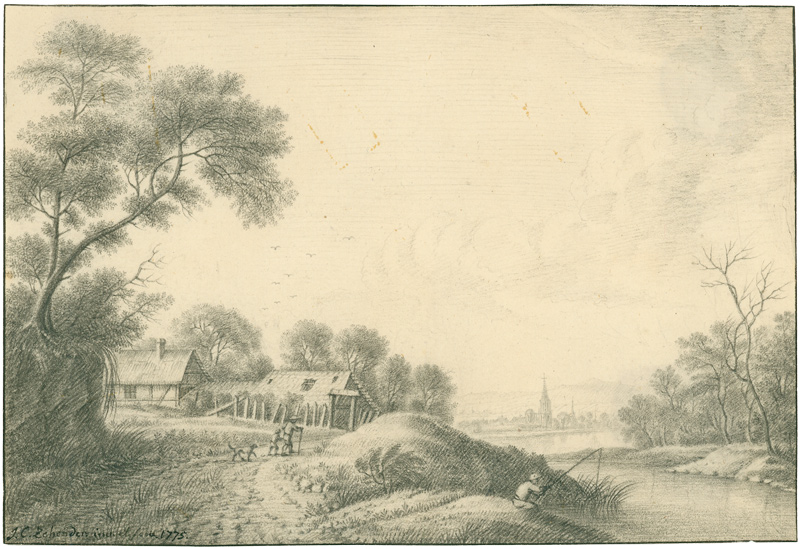
réf. 108-Do.J. Bleistift, mit schwarzer Tuschlinie umrandet, auf Bütten, links unten signiert und datiert ?J.C. Zehender inv. et fecit 1775.? 13,3:19,4 cm. Verso mit Resten einer alten Verklebung.
1987réf. SONG0915557614Brand: New Museum of Contemporary Art 1987-11-02. First Edition. paperback. Used: Good. 9.50x0.50x10.00. Buy with confidence. Excellent Customer Service & Return policy. Brand: New Museum of Contemporary Art paperback
2008réf. ART-1-13067Hudson River Museum 2008-09-27. perfect. Acceptable. 9x7x0. Has some creasing on the spine and some light bends. Customer service is our goal! Hudson River Museum unknown
1949réf. 20.809Santander: Imp. de la Librería Moderna 1949 -1962. 1ª ed. Tela verde con títulos dorados en los lomos. 12.5x17.5. Firma de y ex-libris de anterior propietario. Alguna huella de óxido en algunos tomos pero buenos ejemplares Imp. de la Librería Moderna hardcover
1853réf. 100379Adelaide: W.C. Cox Printer 1853. First Edition. Hardcover. Very Good. Adelaide W.C. Cox Printer 1853. Octavo 46 pages. Relatively recent quarter morocco and buckram by the Law Bindery Melbourne; title leaf a little foxed with minimal light scattered foxing to a few other leaves; an excellent copy with most interesting provenance see below. The author Clerk of the Executive Council of South Australia was on board the vessel; this is his account of the first successful navigation of the Murray as far as Swan Hill by Captain Francis Cadell. Fellow-passenger James Allen also published his version of events. Captain William Randell and his paddle-steamer 'Mary Ann' left Goolwa at the Murray mouth ahead of Cadell and travelled much farther up the Murray but Cadell overtook him en route and reached Swan Hill first. However both men deservedly earned the bonus of 2000 pounds offered by the South Australian Government 'for each of the first two steamers to travel up the Murray as far as the Darling junction' 'Australian Dictionary of Biography'. We have noted previously the manuscript correction page 5 line 4 'largest' to 'longest' river and presume it is in Kinloch's hand. At the head of the title page of this copy is the pencilled ownership name possibly his signature of Robert Wadsworth over-written in red ink by the subsequent owner 'John Shillinglaw from Robert Wadsworth 1854'. Shillingworth has annotated the text in both pencil and red ink three and seven pages respectively. The pencilling identifies the 'gentleman's son' working as a shepherd as 'old "Bigodd Macdonald"' and asks elsewhere of a sentence nine lines long 'what does this wretched twaddler mean' he's got a point too!. Robert Wadsworth was eventually Clerk of the Victorian Executive Council from 1875 to 1889; of passing interest to bibliophiles his son Arthur 1864-1931 was the first Commonwealth Parliamentary Librarian having 'charge of the Commonwealth library for over twenty-six years while also being titular head of the Victorian State parliamentary library' ADB. John Joseph Shillinglaw 1831-1905 public servant and historian was the eldest son of the librarian of the Royal Geographical Society. 'He was to study under Captain John Washington eminent maritime surveyor and in 1852 he migrated with his father and brothers to Victoria arriving in October. From November he was chief clerk of petty sessions at Williamstown and in 1854 was appointed inspector and sometime acting superintendent of the Water Police. He was also secretary to the Steam Navigation Board until December 1857. In 1856-69 he was shipping-master for the Port of Melbourne and registrar of seamen; he helped to found the first Sailors' Home and did much to improve the working conditions of seamen'. It is hardly surprising that he should be given a copy of this book soon after its publication. He held various public service positions over the years; from 1885-94 he 'was secretary to the royal commission on vegetable products. He was also secretary to the Board of Viticulture. Shillinglaw was an enthusiast in whatever department he worked; however he is remembered for his association with colonial literature and history'. He was the author of numerous books and on his death his estate 'included a vast collection of papers and rare books' presumably including this item ADB. Ferguson 11196. W.C. Cox, Printer hardcover
1975réf. SBBIH-FQVTOR2TMYPJHarperCollins Distribution Servi 1975. hardcover. Good. Our good condition books are generally good for reading but not for gifting or collecting. They could have imperfections such as creasing fanning inscriptions margin notes yellowing staining on edge or cover or pages bumps scuffs etc etc sometimes multiple of these. It's a wide category that encompasses anything that isn't almost-new down to anything that is slightly better than poor. We would NOT recommend gifting Good books - these should be considered reading copies. Our books are dispatched from a Yorkshire former cotton mill. We list via barcode/ISBN so please note that the images are stock images and may not be the exact copy you receive furthermore the details about edition and year might not be accurate as many publishers reuse the same ISBN for multiple editions and as we simply scan a barcode or enter an ISBN we do not check the validity of the edition data when listing. If you're looking for an exact edition please don't order at least not without checking with us first although we don't always have time to check. We aim to dispatch prompty the service used will depend on order value and book size. We can ship to most countries see our shipping policies. Payment is via Abe only. HarperCollins Distribution Servi hardcover
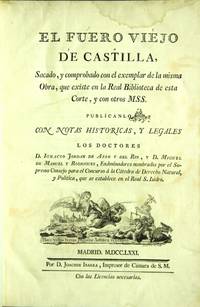
1771réf. 48726Madrid: por D. Joachin Ibarra 1771. Small folio pp. 4 lvi 143 1; engraved vignette title page; bound with: Jordán de Assó y del Río Ignacio & Miguel Manuel y Rodríguez El ordenamiento de leyes que D. Alfonso XI hizo en las Cortes de Alcalá de Henares el año de mil trescientos y quarenta y ocho. Publícanlo con notas. Madrid: Ibarra 1774 pp. 2 xxxiv 158 2; woodcut vignette on title page tail-pieces; decorative initial. Laws statutes etc. of the Kingdom of Castile in Spain. Miguel Manuel y Rodríguez of Seville was one of the great historians of Spain in the 18th century and he was also the first librarian of the Colegio Imperial de Madrid. Together with Dr. Ignacio Jordán de Asso y Rio a Spanish historian jurist and naturalist who was also known under the pseudonym Melchor de Azagra they published these two works dedicated to Spanish law: the first on the Charter Viejo de Castilla; and the second El Ordenamiento de Leyes in which they deal with the system of laws that Don Alfonso XI made in the courts of Alcala de Henares in the year 1348 here published with notes and an accounting of the Kingdom of Castile. Palau 18725 and 18726 respectively. Lasala 287 and 345 respectively. por D. Joachin Ibarra unknown
1771réf. 48726Madrid: por D. Joachin Ibarra 1771. Small folio pp. 4 lvi 143 1; engraved vignette title page; bound with: Jordán de Assó y del Río Ignacio & Miguel Manuel y Rodríguez El ordenamiento de leyes que D. Alfonso XI hizo en las Cortes de Alcalá de Henares el año de mil trescientos y quarenta y ocho. Publícanlo con notas. Madrid: Ibarra 1774 pp. 2 xxxiv 158 2; woodcut vignette on title page tail-pieces; decorative initial. Laws statutes etc. of the Kingdom of Castile in Spain. Miguel Manuel y Rodríguez of Seville was one of the great historians of Spain in the 18th century and he was also the first librarian of the Colegio Imperial de Madrid. Together with Dr. Ignacio Jordán de Asso y Rio a Spanish historian jurist and naturalist who was also known under the pseudonym Melchor de Azagra they published these two works dedicated to Spanish law: the first on the Charter Viejo de Castilla; and the second El Ordenamiento de Leyes in which they deal with the system of laws that Don Alfonso XI made in the courts of Alcala de Henares in the year 1348 here published with notes and an accounting of the Kingdom of Castile. Palau 18725 and 18726 respectively. Lasala 287 and 345 respectively. por D. Joachin Ibarra unknown books
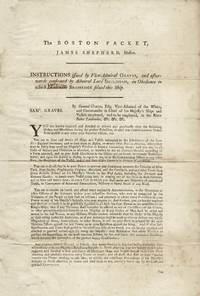
1780réf. 59007but actually London: William Strahan 1780. Folio broadsheet 17½" x 11"; 3 horizontal folds the paper a bit dusty else very good. With its original separately printed title leaf folded into a wrap-around sleeve. In January 1776 Captain Bromedge wrote to Vice Admiral Schuldham regarding his boarding of the ship Boston Packet and his suspicion that they were carrying stores to the enemy. "I am informed by the crew of the Boston Packet that the Master declared repeatedly on the Passage that could he make Cape Codd he would go in there and land his cargo or could he make Cape Ann he did not fear meeting with some of his Friends to carry him into Beverly or Salem" see Naval Documents of the American Revolution Vol III p. 1005 for the full text of his letter. Regarding this and similar allegations Vice Admiral Graves issued the orders printed here specifically pertaining to the Boston Packet: "You are to seize and detain all Ships and Vessels belonging to the Inhabitants of the four New England Provinces and to send them to Boston." On the verso is printed Rear Admiral Schuldham's confirmation of Graves' order "the probability of these stores being smuggled away to the Enemy.makes me think it highly proper that they should be detained." In effect this is a Letter of Marque issued during the Revolutionary War but pertaining only to a particular class of merchant ships and to two vessels in particular one of which was the Boston Packet. Rare. OCLC shows only the John Carter Brown holding a copy. With manuscript additions dating the document September 1775 and addressing it to Captain Bromadge. ESTC also locates a copy at the BL. unknown
1780réf. 59007but actually London: William Strahan 1780. Folio broadsheet 17½" x 11"; 3 horizontal folds the paper a bit dusty else very good. With its original separately printed title leaf folded into a wrap-around sleeve. In January 1776 Captain Bromedge wrote to Vice Admiral Schuldham regarding his boarding of the ship Boston Packet and his suspicion that they were carrying stores to the enemy. "I am informed by the crew of the Boston Packet that the Master declared repeatedly on the Passage that could he make Cape Codd he would go in there and land his cargo or could he make Cape Ann he did not fear meeting with some of his Friends to carry him into Beverly or Salem" see Naval Documents of the American Revolution Vol III p. 1005 for the full text of his letter. Regarding this and similar allegations Vice Admiral Graves issued the orders printed here specifically pertaining to the Boston Packet: "You are to seize and detain all Ships and Vessels belonging to the Inhabitants of the four New England Provinces and to send them to Boston." On the verso is printed Rear Admiral Schuldham's confirmation of Graves' order "the probability of these stores being smuggled away to the Enemy.makes me think it highly proper that they should be detained." In effect this is a Letter of Marque issued during the Revolutionary War but pertaining only to a particular class of merchant ships and to two vessels in particular one of which was the Boston Packet. Rare. OCLC shows only the John Carter Brown holding a copy. With manuscript additions dating the document September 1775 and addressing it to Captain Bromadge. ESTC also locates a copy at the BL. unknown books
réf. DADAX0006232655New unknown
1949réf. 231021949. Environmental Policy Glen Canyon Archive of federal and regional Colorado River Basin materials documenting how the river was successively treated as scenic terrain engineered water infrastructure and regulated recreation landscape across the mid twentieth century. The group centers on Glen Canyon and the broader basin as federal agencies development planners and conservation advocates advanced competing uses for the river. Engineering maps government surveys construction photographs ecological advocacy newsletters and environmental planning documents establish the process by which canyon landscapes were converted into measurable storage systems dam sites recreation zones and administratively managed federal space. Colorado River Basin with material tied to Arizona Utah and the broader American West. 1946-1979 Archive of 26 items including 3 engineering maps 4 press silver gelatin photographs 15 issues of Peak and Prairie Sierra Club Rocky Mountain Chapter newsletter 1 Colorado River Storage Project pamphlet 2 government publications and 1 National Park Service NEPA circulation letter. Visible material includes contour maps and storage-capacity graphs reducing canyon topography to projected reservoir form; black-and-white press photographs showing Glen Canyon Dam under construction diversion tunnels excavation and early recreation on Lake Powell; and printed federal planning documents focused on road systems zoning wilderness recommendations and recreational use after inundation. 1 A Survey of the Recreational Resources of the Colorado River Basin. United States Department of the Interior National Park Service 1950; compiled from 1946 fieldwork. Government publication establishing a pre-dam baseline for the basin's scenic and recreational assessment. The volume includes 13 folded maps in the rear pocket charting river corridors proposed reservoirs and basin-wide topography preserving a record of landscapes later submerged or reclassified under postwar development plans. 2 Engineering maps for Boulder Canyon and Dewey Dam sites. Circa mid twentieth century. Three technical maps converting river terrain into contour lines section views and storage curves for projected impoundment and control. Their emphasis on capacity grade and reservoir profile shows the bureaucratic and engineering language through which the basin entered federal planning systems. 3 Press silver gelatin photographs of Glen Canyon Dam construction and early Lake Powell use. Circa 1960-1966. Four press photographs showing dam works within the canyon including diversion tunnels excavation concrete placement and recreational boating on the new reservoir. Verso captions from the Bureau of Reclamation and Associated Press cite "more than one million cubic yards of concrete" and the "pouring of first concrete for the dam proper" linking the images to federal publicity and construction chronology. 4 Colorado River Storage Project. Bureau of Reclamation pamphlet. Mid twentieth century. Public-facing promotional publication presenting the storage project as a large-scale federal development program for water control and regional growth. Its language praises Glen Canyon Dam as "one of the great dams of the world" making clear the official rhetoric used to justify transformation of the river through reclamation policy. 5 Peak and Prairie. Sierra Club Rocky Mountain Chapter newsletter. Fifteen issues early 1970s. Regional environmental newsletters reporting on conservation campaigns and debates over western energy water and land use. Within this group the newsletters supply contemporaneous advocacy evidence that federal river development was being contested in organized print networks rather than treated as a settled engineering program. 6 Glen Canyon National Recreation Area: Proposed General Management Plan / Road Study Alternatives / Final Environmental Statement. National Park Service July 1979. Federal planning document setting out zoning road alternatives and wilderness recommendations for the recreation area created after completion of the dam. In contrast to the earlier survey and engineering material this document shows Glen Canyon as a managed recreational and environmental jurisdiction governed through formal planning categories. 7 National Park Service circulation letter citing Section 1022c of the National Environmental Policy Act. 1979. Official letter announcing distribution of the final environmental statement and inviting public comment. The document provides direct evidence of the procedural side of late twentieth century environmental governance in which major federal land-use decisions required circulation review and recorded administrative response. Across the group the 1950 survey preserves the basin before inundation the engineering maps and construction photographs record its conversion into infrastructure and the 1970s Sierra Club and National Park Service material shows subsequent conflict and regulation after Glen Canyon Dam's completion in 1964. The archive therefore documents a shift in federal treatment of the Colorado River Basin from scenic and recreational appraisal to industrial water control and then to environmental review under NEPA-era law. Handling wear across materials; photographs retain strong contrast with legible captions; maps with expected fold lines; bindings intact. Overall very good condition. A concentrated documentary group on the administrative visual and environmental remaking of the Colorado River Basin in the postwar American West. unknown
1949réf. 231021949. Environmental Policy Glen Canyon Archive of federal and regional Colorado River Basin materials documenting how the river was successively treated as scenic terrain engineered water infrastructure and regulated recreation landscape across the mid twentieth century. The group centers on Glen Canyon and the broader basin as federal agencies development planners and conservation advocates advanced competing uses for the river. Engineering maps government surveys construction photographs ecological advocacy newsletters and environmental planning documents establish the process by which canyon landscapes were converted into measurable storage systems dam sites recreation zones and administratively managed federal space. Colorado River Basin with material tied to Arizona Utah and the broader American West. 1946-1979 Archive of 26 items including 3 engineering maps 4 press silver gelatin photographs 15 issues of Peak and Prairie Sierra Club Rocky Mountain Chapter newsletter 1 Colorado River Storage Project pamphlet 2 government publications and 1 National Park Service NEPA circulation letter. Visible material includes contour maps and storage-capacity graphs reducing canyon topography to projected reservoir form; black-and-white press photographs showing Glen Canyon Dam under construction diversion tunnels excavation and early recreation on Lake Powell; and printed federal planning documents focused on road systems zoning wilderness recommendations and recreational use after inundation. 1 A Survey of the Recreational Resources of the Colorado River Basin. United States Department of the Interior National Park Service 1950; compiled from 1946 fieldwork. Government publication establishing a pre-dam baseline for the basin's scenic and recreational assessment. The volume includes 13 folded maps in the rear pocket charting river corridors proposed reservoirs and basin-wide topography preserving a record of landscapes later submerged or reclassified under postwar development plans. 2 Engineering maps for Boulder Canyon and Dewey Dam sites. Circa mid twentieth century. Three technical maps converting river terrain into contour lines section views and storage curves for projected impoundment and control. Their emphasis on capacity grade and reservoir profile shows the bureaucratic and engineering language through which the basin entered federal planning systems. 3 Press silver gelatin photographs of Glen Canyon Dam construction and early Lake Powell use. Circa 1960-1966. Four press photographs showing dam works within the canyon including diversion tunnels excavation concrete placement and recreational boating on the new reservoir. Verso captions from the Bureau of Reclamation and Associated Press cite "more than one million cubic yards of concrete" and the "pouring of first concrete for the dam proper" linking the images to federal publicity and construction chronology. 4 Colorado River Storage Project. Bureau of Reclamation pamphlet. Mid twentieth century. Public-facing promotional publication presenting the storage project as a large-scale federal development program for water control and regional growth. Its language praises Glen Canyon Dam as "one of the great dams of the world" making clear the official rhetoric used to justify transformation of the river through reclamation policy. 5 Peak and Prairie. Sierra Club Rocky Mountain Chapter newsletter. Fifteen issues early 1970s. Regional environmental newsletters reporting on conservation campaigns and debates over western energy water and land use. Within this group the newsletters supply contemporaneous advocacy evidence that federal river development was being contested in organized print networks rather than treated as a settled engineering program. 6 Glen Canyon National Recreation Area: Proposed General Management Plan / Road Study Alternatives / Final Environmental Statement. National Park Service July 1979. Federal planning document setting out zoning road alternatives and wilderness recommendations for the recreation area created after completion of the dam. In contrast to the earlier survey and engineering material this document shows Glen Canyon as a managed recreational and environmental jurisdiction governed through formal planning categories. 7 National Park Service circulation letter citing Section 1022c of the National Environmental Policy Act. 1979. Official letter announcing distribution of the final environmental statement and inviting public comment. The document provides direct evidence of the procedural side of late twentieth century environmental governance in which major federal land-use decisions required circulation review and recorded administrative response. Across the group the 1950 survey preserves the basin before inundation the engineering maps and construction photographs record its conversion into infrastructure and the 1970s Sierra Club and National Park Service material shows subsequent conflict and regulation after Glen Canyon Dam's completion in 1964. The archive therefore documents a shift in federal treatment of the Colorado River Basin from scenic and recreational appraisal to industrial water control and then to environmental review under NEPA-era law. Handling wear across materials; photographs retain strong contrast with legible captions; maps with expected fold lines; bindings intact. Overall very good condition. A concentrated documentary group on the administrative visual and environmental remaking of the Colorado River Basin in the postwar American West. unknown books
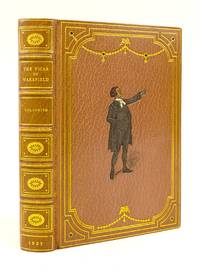
1927réf. ST16866hLondon and New York: Macmillan Co 1927. 191 x 127 mm. 7 1/2 x 5". xxxvi 306 pp.Preface by Austin Dobson. CHARMING CONTEMPORARY FAWN-COLORED PICTORIAL CRUSHED MOROCCO BY RIVIERE & SON covers with frame formed by multiple gilt rules with onlaid green dot cornerpieces and gilt festoons at head and tail of frame central PICTORIAL INLAY IN FOUR COLORS depicting a vicar pontificating and in front of him as an indication of shadow thin penwork lines inscribed into the morocco; raised bands spine gilt in French fillet compartments with central gilt patera wide gilt-framed turn-ins with ribbon cornerpieces leather hinges marbled endpapers all edges gilt. In a linen-covered slipcase. With frontispiece and 181 illustrations in the text by Hugh Thomson. ◆Spine very slightly and uniformly sunned toward a butterscotch color but A VERY FINE COPY the text clean fresh and bright and the lustrous appealing binding with only the most insignificant wear. This copy of Goldsmith's classic is delightful enhanced by the appealing illustrations of Thomson and the book's charming pictorial cover. Riviere is one of the foremost names in English binding partly because the firm did consistently fine work and partly because it was so long in business. Robert Riviere began as a bookseller and binder in Bath in 1829 then set up shop as a binder in London in 1840; in 1881 he took his grandson Percival Calkin into partnership at which time the firm became known as Riviere & Son and the bindery continued to do business until 1939. Written in 1761-62 but not published until four years later "The Vicar of Wakefield" was said to have been rescued from some of Goldsmith's unpublished manuscripts by Dr. Johnson who thus saved the penniless author from debtors' prison by selling it to a publisher for £60. Considered to be the masterpiece of the middle-class domestic novel the "Vicar" has never gone out of style because its whimsically delineated characters have a delightful simplicity that somehow insulates them against ultimate misfortune and the innocent and virtuous are rewarded as they should be in the end. Macmillan Co unknown
1927réf. ST16866hLondon and New York: Macmillan Co 1927. 191 x 127 mm. 7 1/2 x 5". xxxvi 306 pp.Preface by Austin Dobson. CHARMING CONTEMPORARY FAWN-COLORED PICTORIAL CRUSHED MOROCCO BY RIVIERE & SON covers with frame formed by multiple gilt rules with onlaid green dot cornerpieces and gilt festoons at head and tail of frame central PICTORIAL INLAY IN FOUR COLORS depicting a vicar pontificating and in front of him as an indication of shadow thin penwork lines inscribed into the morocco; raised bands spine gilt in French fillet compartments with central gilt patera wide gilt-framed turn-ins with ribbon cornerpieces leather hinges marbled endpapers all edges gilt. In a linen-covered slipcase. With frontispiece and 181 illustrations in the text by Hugh Thomson. ◆Spine very slightly and uniformly sunned toward a butterscotch color but A VERY FINE COPY the text clean fresh and bright and the lustrous appealing binding with only the most insignificant wear. This copy of Goldsmith's classic is delightful enhanced by the appealing illustrations of Thomson and the book's charming pictorial cover. Riviere is one of the foremost names in English binding partly because the firm did consistently fine work and partly because it was so long in business. Robert Riviere began as a bookseller and binder in Bath in 1829 then set up shop as a binder in London in 1840; in 1881 he took his grandson Percival Calkin into partnership at which time the firm became known as Riviere & Son and the bindery continued to do business until 1939. Written in 1761-62 but not published until four years later "The Vicar of Wakefield" was said to have been rescued from some of Goldsmith's unpublished manuscripts by Dr. Johnson who thus saved the penniless author from debtors' prison by selling it to a publisher for £60. Considered to be the masterpiece of the middle-class domestic novel the "Vicar" has never gone out of style because its whimsically delineated characters have a delightful simplicity that somehow insulates them against ultimate misfortune and the innocent and virtuous are rewarded as they should be in the end. Macmillan Co unknown books
réf. Z1-F-026-02505CreateSpace Independent Publishing Platform. Used - Very Good. Ships from UK in 48 hours or less usually same day. Your purchase helps support Sri Lankan Children's Charity 'The Rainbow Centre'. Shows some signs of wear but in good overall condition. 100% money back guarantee. We are a world class secondhand bookstore based in Hertfordshire United Kingdom and specialize in high quality textbooks across an enormous variety of subjects. We aim to provide a vast range of textbooks rare and collectible books at a great price. Our donations to The Rainbow Centre have helped provide an education and a safe haven to hundreds of children who live in appalling conditions. We provide a 100% money back guarantee and are dedicated to providing our customers with the highest standards of service in the bookselling industry. CreateSpace Independent Publishing Platform unknown
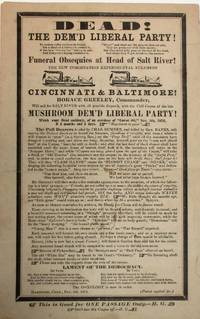
1872réf. 38915Hartford 1872. Broadside 6" x 9-1/2" text surrounded by mourning border. A few spots Very Good. Illustrations of two steamers. At the bottom: "This is Good for ONE PASSAGE Only. - H.G." Dated at Hartford November 5 1872. "Salt River" is 19th century American slang: a losing candidate for office was taking a trip "up Salt River." Tickets for passage "up Salt River" were frequently printed to mock supporters of losing candidates. This humorous scarce broadside taunts Horace Greeley and other defectors from the Republican Party for their support of Greeley in 1872. "On the overwhelming defeat of the Liberal Republican Party and its candidate Horace Greeley in the presidential election of 1872. Greeley had been nominated at a Liberal Republican convention at Cincinnati in May and at the Democratic National Convention at Baltimore in July 1872" AAS description. Pall bearers include Charles Sumner and General Banks prominent Republican supporters of Greeley. OCLC 191231113 2- AAS Middlebury 47090036 1- CT Hist. Soc. as of August 2025. unknown
1872réf. 38915Hartford 1872. Broadside 6" x 9-1/2" text surrounded by mourning border. A few spots Very Good. Illustrations of two steamers. At the bottom: "This is Good for ONE PASSAGE Only. - H.G." Dated at Hartford November 5 1872. "Salt River" is 19th century American slang: a losing candidate for office was taking a trip "up Salt River." Tickets for passage "up Salt River" were frequently printed to mock supporters of losing candidates. This humorous scarce broadside taunts Horace Greeley and other defectors from the Republican Party for their support of Greeley in 1872. "On the overwhelming defeat of the Liberal Republican Party and its candidate Horace Greeley in the presidential election of 1872. Greeley had been nominated at a Liberal Republican convention at Cincinnati in May and at the Democratic National Convention at Baltimore in July 1872" AAS description. Pall bearers include Charles Sumner and General Banks prominent Republican supporters of Greeley. OCLC 191231113 2- AAS Middlebury 47090036 1- CT Hist. Soc. as of August 2025. unknown books
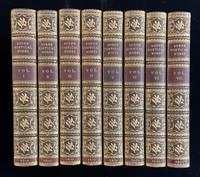
1834réf. 013113London: Cochrane & M'Crone 1834. 1st Edition Thus. Hardcover. Near Fine. A lovely 8 volume set in polished speckled full leather double- ruled covers front and back floral dentelles aeg spine with six compartments gilt raised bands. Incidental spotting to the interior here and there. Solid bindings all around. Cochrane & M'Crone hardcover