KING ABDULLAH PETROLEUM STUDIES, ; AL-FATTAH, SAUD M; BARGHOUTY, MURAD F; DABBOUSI, BASHIR OBiblio.com

812 résultats
réf. 35118570-nnew. unknown
2011réf. Atlantic-9780415620840CRC Press 2011. 1. Hardcover. New. CRC Press hardcover
2011réf. Atlantic-9780415620840CRC Press 2011. 1. Hardcover. New. CRC Press hardcover
réf. A9781138073296Paperback / softback. New. paperback
réf. 0331325942.Ghardcover. Good. Access codes and supplements are not guaranteed with used items. May be an ex-library book. hardcover
1998Quarto in color illus glossy wraps; 297 p. : ill. ; 27 cm Petroleum industry and trade -- Caspian Sea Region. Petroleum industry and trade -- Caspian Sea Region -- Statistics. Gas industry -- Caspian Sea Region. Gas industry -- Caspian Sea Region -- Statistics. Oliewinning. Voorraden. Oil; Economics
1956réf. VBA-273Édité par Sodico, Paris, 1956. Imprimé par Braun. Mise en page et illustrations en couleurs par Jacques Nathan. Couverture souple avec jaquette sous rhodoïd. 29 x 24,5 x 2 cm. 152 pages. Poids 1 kg. Table des matières : voir photo.
réf. 73284Paris, Technip, 1972, grand in 8° relié pleine toile de l'éditeur, XV-147 pages ; figures dans le texte.
1961réf. RO80150511LALLEMAND Jacqueline. 2e édition. 1961. In-12. Broché. Bon état, Couv. convenable, Agraffes rouillées, Intérieur acceptable. 63 pages. Nombreuses illustrations en couleurs et en noir et blanc, dans le texte et hors-texte, de Pierre BELVES. . . . Classification Dewey : 553-Géologie économique
réf. 18-1441South Dakota: Dubuque Petroleum Company 1922. Single page. 11 x 8.5 inches. Printed both sides. Good. Folded twice. Minor tears and loss on edges. Issued to Geo B. Tucker. Dated May 25 1922. Signed by company president and secretary. South Dakota: Dubuque Petroleum Company, 1922. unknown
2004réf. GITd261L'Auteur 2004. 2 volumes in-8 broché couverture illustrée 320 352pp. Abondante illustration à pleine page. Bel exemplaire.
1935réf. DZN-2256Paris Félix Alcan 1935, in-8, 316 pages, 20 planches et 4 cartes HT. Broché,manques de papier à la couverture. (CVII)-(560 gr.).
réf. 0979970075.Gpaperback. Good. Access codes and supplements are not guaranteed with used items. May be an ex-library book. paperback
1932Very Good French Paperback. Roy. 8vo. (23 x 17 cm). In French and Turkish. 24 p. Chemins de fer de Bozanti - Alep - Nissibine et prolongements. Livret de la Marche des trains a dater du 26 Mai 1932. Ligne: Haalep - Nissibine - Telziouane & Embranchement Derbesiye - Mardine. Ligne: Halep - Adana & Embranchement Toprak Kale - Alexandrette.= Bozanti - Halep - Nasibin ve temdidatidemiryollari katarlarin hareket cuzdani. 26 Mayis 1932 tarihinden müteberdir. Halep -Nasibin - Telzivan hati ve Derbesiye - Mardin sube hati. Halep - Adana hati ve Toprakkale - Iskenderun sube hati. First and Only Edition. Scarce.
1923réf. RES19L51société De Chimie Industrielle 1923 In4 846 pages - contient de tres nombreux articles repartis en 5 sections : pétrole /schistes / lignite et tourbe / goudrons et benzols / alcool / huiles vegetales - plusieurs centaines de photographies d'epoque concernant ces industries en france , colonies et autres pays - documentation unique ! Cartonnage solide - une etiquette au dos - bon etat
1923réf. RES19L51société De Chimie Industrielle 1923 In4 846 pages - contient de tres nombreux articles repartis en 5 sections : pétrole /schistes / lignite et tourbe / goudrons et benzols / alcool / huiles vegetales - plusieurs centaines de photographies d'epoque concernant ces industries en france , colonies et autres pays - documentation unique ! Cartonnage solide - une etiquette au dos - bon etat
2021réf. 2081502111904012chemical industry 2021. Soft Cover. Fine. The book is in fine condition. chemical industry paperback
1961réf. 016282köln Galerie Haro Lauhus 1961 Dépliant in-8 En feuilles
1991253 pages. Index. Footnotes. "Sheds fresh light on this secretive 92-year-old, known simply as K.C., who has emerged victorious over small competitors, faced down multinational oil companies, and battled provincial and federal governments in his drive for weath and power." - from dust jacket. Light wear. Prior owners's details upon front free endpaper, otherwise unmarked. A quality copy. Book
1991Signed, without inscription, by author upon title page. ix, [2], 2-253, [1] pages. Index. Footnotes. "Sheds fresh light on this secretive 92-year-old, known simply as K.C., who has emerged victorious over small competitors, faced down multinational oil companies, and battled provincial and federal governments in his drive for weath and power." - dust jacket. Clean, bright and unmarked with very light wear. A high-quality copy Book
réf. 0891811869.Gpaperback. Good. Access codes and supplements are not guaranteed with used items. May be an ex-library book. paperback
réf. 0471957097.Gpaperback. Good. Access codes and supplements are not guaranteed with used items. May be an ex-library book. paperback
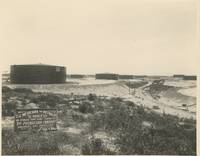
1922réf. List01111Mexico 1922. Various sizes and formats generally preserved in excellent condition. Near Fine. Founded in 1902 the Foundation Company was a subaqueous concrete construction firm based in New York City. According to the Smithsonian the company was “a leader in the development of the pneumatic caisson method for the construction of foundations” — this method was used to build the skyscrapers of New York City and applied to many other types of construction projects as well. The Foundation Company archive consists of photographs blueprints correspondences and business documents relating to construction work that the company undertook in Tampico Mexico between 1915-1922. Tampico was the center of the Mexican oil boom that began at the beginning of the century. The foreign oil industry’s role in this boom was a key issue in the Mexican revolution that spanned roughly 1910-1920. After an American drilled the first oil well in Tampico in 1901 foreign companies descended into the town and took full advantage of the oil boom. The large amounts of oil in the region paired with the demand created by the allies in World War I — the United States and British Navies had converted from coal to oil — contributed to the rapid growth of the industry. According to historian Jonathan Brown “A booming foreign market and anemic domestic consumption of Mexican oil production gave many advantages to the foreign oilmen. They proceeded to create an Anglo-American capitalist haven out of the Huasteca.” The Foundation Company contracted with some of the most prominent oil companies in Tampico: El Aguila La Corona and the Transcontinental Petroleum Company. These companies were British Dutch and American. Foreign companies were attracted to Mexico because of the abundance of oil as well as the loose regulations: “At a time when the federal and state authorities in the United States were tightening the regulation of business and busting the trusts the expatriot American oilmen viewed Mexico as the new frontier of deregulation.” One reason that the Mexican government did not tighten regulations was because of the politics of the revolution. The competing factions of the revolution took advantage of the success of the oil industry — the only sector of the economy that continued to grow during that time — through taxes and forced loans. “Those who fought for political power and there were many sought to deny the federal authorities control of the oil fields. The result was a buildup of government resentment toward the freewheeling powerful foreign interests threats of drastic action against the oil companies but little governmental influence on how the nation's oil business was being conducted.” In this way the oil industry financed the revolution and also catalyzed increased economic nationalism. “Economic nationalism in Mexico had a social base and that is why the social revolution of 1910 to 1920 also produced an economic nationalism bent on reducing the power of the foreign oil companies.” The Mexican revolution produced the 1917 constitution still in place today which changed the rules for foreign businesses operating in Mexico. After years of companies resisting these regulations in 1938 President Lazaro Cardenas expropriated the foreign owned oil industry. The bulk of the documents in this archive are from 1921 and 1922 towards the end of the revolution. The documents are all written in English demonstrating the extent to which foreign companies were able to operate on their own terms despite their projects being in Mexico. The photographs and documents show the flurry of projects that the company quickly acquired in Tampico. In 1921 the Industrial Development and Manufacturers Record reported that “more big construction contracts are being carried out in the Tampico region at this time than ever before in the history of the oil industry in Mexico.” Indeed only a few months after beginning work in Mexico in 1921 the Foundation Company had 4000 men on payroll and 12 projects. These projects included a 30000-barrel refinery and 120 kilometer pipeline for the Corona Petroleum Co. and a 5 story office building for the Transcontinental Petroleum Co. The documents in this archive do not reference the revolution but they do demonstrate the rapid growth and resulting power that foreign businesses in Tampico enjoyed. Inventory 25 photographs 8x10 inches April 19- Sept 30 1921. 12 undated. One cardboard pouch containing 5 photo negatives; pouch is 5 x 7 inches negatives are 3.5 x 5.5 inches. Most of the photographs are of construction sites and the company has used a placard to write the name of the contracting company the project type their own company name and the date. These signs show that the Foundation Company was working on an Oil Storage Tank Farm and a Bulkhead for El Aguila; and a pipeline super pumps “boilers valley” and pump house for La Corona. Two letters 8.5 x 11 inches 1921-1922. Dec 3 1921 letter is addressed to Grant Huntly and contains a list of materials required for the wall size used in the Transcontinental Building. July 12 1922 letter is from Edward Swann DA of County New York saying that Grant Huntley does not have a criminal record in the last 5 years. Addressed to Hon. Ernesto C. Perez Argentine Consul-General at a New York City address. Grant Huntley was an engineer at the Foundation Company. 5 documents relating to business operations 1915-1921. Ranging in size from 6.5x 8.5- 11x17 inches. These inventories spreadsheets and progress reports reference a bag loading plan in Richmond VA; a La Corona Warehouse at Panuco Valley Terminal; and the cost data of the Transcontinental Petroleum Company’s Office Building. 5 blueprints March - August 1921. One undated. Blueprints are all different sizes ranging from 16.5x27 - 30.5x41 inches. Blueprints depict plans for: an Oil Barge; a Pile Driver to be used at Aguila’s Bulkhead; a 64000 bbl tank; the Richmond VA Bag Loading Plant. unknown
1922réf. List01111Mexico 1922. Various sizes and formats generally preserved in excellent condition. Near Fine. Founded in 1902 the Foundation Company was a subaqueous concrete construction firm based in New York City. According to the Smithsonian the company was “a leader in the development of the pneumatic caisson method for the construction of foundations” — this method was used to build the skyscrapers of New York City and applied to many other types of construction projects as well. The Foundation Company archive consists of photographs blueprints correspondences and business documents relating to construction work that the company undertook in Tampico Mexico between 1915-1922. Tampico was the center of the Mexican oil boom that began at the beginning of the century. The foreign oil industry’s role in this boom was a key issue in the Mexican revolution that spanned roughly 1910-1920. After an American drilled the first oil well in Tampico in 1901 foreign companies descended into the town and took full advantage of the oil boom. The large amounts of oil in the region paired with the demand created by the allies in World War I — the United States and British Navies had converted from coal to oil — contributed to the rapid growth of the industry. According to historian Jonathan Brown “A booming foreign market and anemic domestic consumption of Mexican oil production gave many advantages to the foreign oilmen. They proceeded to create an Anglo-American capitalist haven out of the Huasteca.” The Foundation Company contracted with some of the most prominent oil companies in Tampico: El Aguila La Corona and the Transcontinental Petroleum Company. These companies were British Dutch and American. Foreign companies were attracted to Mexico because of the abundance of oil as well as the loose regulations: “At a time when the federal and state authorities in the United States were tightening the regulation of business and busting the trusts the expatriot American oilmen viewed Mexico as the new frontier of deregulation.” One reason that the Mexican government did not tighten regulations was because of the politics of the revolution. The competing factions of the revolution took advantage of the success of the oil industry — the only sector of the economy that continued to grow during that time — through taxes and forced loans. “Those who fought for political power and there were many sought to deny the federal authorities control of the oil fields. The result was a buildup of government resentment toward the freewheeling powerful foreign interests threats of drastic action against the oil companies but little governmental influence on how the nation's oil business was being conducted.” In this way the oil industry financed the revolution and also catalyzed increased economic nationalism. “Economic nationalism in Mexico had a social base and that is why the social revolution of 1910 to 1920 also produced an economic nationalism bent on reducing the power of the foreign oil companies.” The Mexican revolution produced the 1917 constitution still in place today which changed the rules for foreign businesses operating in Mexico. After years of companies resisting these regulations in 1938 President Lazaro Cardenas expropriated the foreign owned oil industry. The bulk of the documents in this archive are from 1921 and 1922 towards the end of the revolution. The documents are all written in English demonstrating the extent to which foreign companies were able to operate on their own terms despite their projects being in Mexico. The photographs and documents show the flurry of projects that the company quickly acquired in Tampico. In 1921 the Industrial Development and Manufacturers Record reported that “more big construction contracts are being carried out in the Tampico region at this time than ever before in the history of the oil industry in Mexico.” Indeed only a few months after beginning work in Mexico in 1921 the Foundation Company had 4000 men on payroll and 12 projects. These projects included a 30000-barrel refinery and 120 kilometer pipeline for the Corona Petroleum Co. and a 5 story office building for the Transcontinental Petroleum Co. The documents in this archive do not reference the revolution but they do demonstrate the rapid growth and resulting power that foreign businesses in Tampico enjoyed. Inventory 25 photographs 8x10 inches April 19- Sept 30 1921. 12 undated. One cardboard pouch containing 5 photo negatives; pouch is 5 x 7 inches negatives are 3.5 x 5.5 inches. Most of the photographs are of construction sites and the company has used a placard to write the name of the contracting company the project type their own company name and the date. These signs show that the Foundation Company was working on an Oil Storage Tank Farm and a Bulkhead for El Aguila; and a pipeline super pumps “boilers valley” and pump house for La Corona. Two letters 8.5 x 11 inches 1921-1922. Dec 3 1921 letter is addressed to Grant Huntly and contains a list of materials required for the wall size used in the Transcontinental Building. July 12 1922 letter is from Edward Swann DA of County New York saying that Grant Huntley does not have a criminal record in the last 5 years. Addressed to Hon. Ernesto C. Perez Argentine Consul-General at a New York City address. Grant Huntley was an engineer at the Foundation Company. 5 documents relating to business operations 1915-1921. Ranging in size from 6.5x 8.5- 11x17 inches. These inventories spreadsheets and progress reports reference a bag loading plan in Richmond VA; a La Corona Warehouse at Panuco Valley Terminal; and the cost data of the Transcontinental Petroleum Company’s Office Building. 5 blueprints March - August 1921. One undated. Blueprints are all different sizes ranging from 16.5x27 - 30.5x41 inches. Blueprints depict plans for: an Oil Barge; a Pile Driver to be used at Aguila’s Bulkhead; a 64000 bbl tank; the Richmond VA Bag Loading Plant. unknown books
1956réf. LFA-126741287Tome XVI-1956-IX - Séance des 5 et 19 octobre, 9 et 23 novembre, 7 décembre 1956 : 66 pages, format 165 x 250 mm, broché, bon état