985 résultats
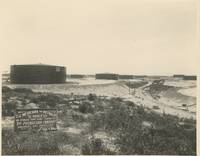
1922réf. List01111Mexico 1922. Various sizes and formats generally preserved in excellent condition. Near Fine. Founded in 1902 the Foundation Company was a subaqueous concrete construction firm based in New York City. According to the Smithsonian the company was “a leader in the development of the pneumatic caisson method for the construction of foundations” — this method was used to build the skyscrapers of New York City and applied to many other types of construction projects as well. The Foundation Company archive consists of photographs blueprints correspondences and business documents relating to construction work that the company undertook in Tampico Mexico between 1915-1922. Tampico was the center of the Mexican oil boom that began at the beginning of the century. The foreign oil industry’s role in this boom was a key issue in the Mexican revolution that spanned roughly 1910-1920. After an American drilled the first oil well in Tampico in 1901 foreign companies descended into the town and took full advantage of the oil boom. The large amounts of oil in the region paired with the demand created by the allies in World War I — the United States and British Navies had converted from coal to oil — contributed to the rapid growth of the industry. According to historian Jonathan Brown “A booming foreign market and anemic domestic consumption of Mexican oil production gave many advantages to the foreign oilmen. They proceeded to create an Anglo-American capitalist haven out of the Huasteca.” The Foundation Company contracted with some of the most prominent oil companies in Tampico: El Aguila La Corona and the Transcontinental Petroleum Company. These companies were British Dutch and American. Foreign companies were attracted to Mexico because of the abundance of oil as well as the loose regulations: “At a time when the federal and state authorities in the United States were tightening the regulation of business and busting the trusts the expatriot American oilmen viewed Mexico as the new frontier of deregulation.” One reason that the Mexican government did not tighten regulations was because of the politics of the revolution. The competing factions of the revolution took advantage of the success of the oil industry — the only sector of the economy that continued to grow during that time — through taxes and forced loans. “Those who fought for political power and there were many sought to deny the federal authorities control of the oil fields. The result was a buildup of government resentment toward the freewheeling powerful foreign interests threats of drastic action against the oil companies but little governmental influence on how the nation's oil business was being conducted.” In this way the oil industry financed the revolution and also catalyzed increased economic nationalism. “Economic nationalism in Mexico had a social base and that is why the social revolution of 1910 to 1920 also produced an economic nationalism bent on reducing the power of the foreign oil companies.” The Mexican revolution produced the 1917 constitution still in place today which changed the rules for foreign businesses operating in Mexico. After years of companies resisting these regulations in 1938 President Lazaro Cardenas expropriated the foreign owned oil industry. The bulk of the documents in this archive are from 1921 and 1922 towards the end of the revolution. The documents are all written in English demonstrating the extent to which foreign companies were able to operate on their own terms despite their projects being in Mexico. The photographs and documents show the flurry of projects that the company quickly acquired in Tampico. In 1921 the Industrial Development and Manufacturers Record reported that “more big construction contracts are being carried out in the Tampico region at this time than ever before in the history of the oil industry in Mexico.” Indeed only a few months after beginning work in Mexico in 1921 the Foundation Company had 4000 men on payroll and 12 projects. These projects included a 30000-barrel refinery and 120 kilometer pipeline for the Corona Petroleum Co. and a 5 story office building for the Transcontinental Petroleum Co. The documents in this archive do not reference the revolution but they do demonstrate the rapid growth and resulting power that foreign businesses in Tampico enjoyed. Inventory 25 photographs 8x10 inches April 19- Sept 30 1921. 12 undated. One cardboard pouch containing 5 photo negatives; pouch is 5 x 7 inches negatives are 3.5 x 5.5 inches. Most of the photographs are of construction sites and the company has used a placard to write the name of the contracting company the project type their own company name and the date. These signs show that the Foundation Company was working on an Oil Storage Tank Farm and a Bulkhead for El Aguila; and a pipeline super pumps “boilers valley” and pump house for La Corona. Two letters 8.5 x 11 inches 1921-1922. Dec 3 1921 letter is addressed to Grant Huntly and contains a list of materials required for the wall size used in the Transcontinental Building. July 12 1922 letter is from Edward Swann DA of County New York saying that Grant Huntley does not have a criminal record in the last 5 years. Addressed to Hon. Ernesto C. Perez Argentine Consul-General at a New York City address. Grant Huntley was an engineer at the Foundation Company. 5 documents relating to business operations 1915-1921. Ranging in size from 6.5x 8.5- 11x17 inches. These inventories spreadsheets and progress reports reference a bag loading plan in Richmond VA; a La Corona Warehouse at Panuco Valley Terminal; and the cost data of the Transcontinental Petroleum Company’s Office Building. 5 blueprints March - August 1921. One undated. Blueprints are all different sizes ranging from 16.5x27 - 30.5x41 inches. Blueprints depict plans for: an Oil Barge; a Pile Driver to be used at Aguila’s Bulkhead; a 64000 bbl tank; the Richmond VA Bag Loading Plant. unknown
1922réf. List01111Mexico 1922. Various sizes and formats generally preserved in excellent condition. Near Fine. Founded in 1902 the Foundation Company was a subaqueous concrete construction firm based in New York City. According to the Smithsonian the company was “a leader in the development of the pneumatic caisson method for the construction of foundations” — this method was used to build the skyscrapers of New York City and applied to many other types of construction projects as well. The Foundation Company archive consists of photographs blueprints correspondences and business documents relating to construction work that the company undertook in Tampico Mexico between 1915-1922. Tampico was the center of the Mexican oil boom that began at the beginning of the century. The foreign oil industry’s role in this boom was a key issue in the Mexican revolution that spanned roughly 1910-1920. After an American drilled the first oil well in Tampico in 1901 foreign companies descended into the town and took full advantage of the oil boom. The large amounts of oil in the region paired with the demand created by the allies in World War I — the United States and British Navies had converted from coal to oil — contributed to the rapid growth of the industry. According to historian Jonathan Brown “A booming foreign market and anemic domestic consumption of Mexican oil production gave many advantages to the foreign oilmen. They proceeded to create an Anglo-American capitalist haven out of the Huasteca.” The Foundation Company contracted with some of the most prominent oil companies in Tampico: El Aguila La Corona and the Transcontinental Petroleum Company. These companies were British Dutch and American. Foreign companies were attracted to Mexico because of the abundance of oil as well as the loose regulations: “At a time when the federal and state authorities in the United States were tightening the regulation of business and busting the trusts the expatriot American oilmen viewed Mexico as the new frontier of deregulation.” One reason that the Mexican government did not tighten regulations was because of the politics of the revolution. The competing factions of the revolution took advantage of the success of the oil industry — the only sector of the economy that continued to grow during that time — through taxes and forced loans. “Those who fought for political power and there were many sought to deny the federal authorities control of the oil fields. The result was a buildup of government resentment toward the freewheeling powerful foreign interests threats of drastic action against the oil companies but little governmental influence on how the nation's oil business was being conducted.” In this way the oil industry financed the revolution and also catalyzed increased economic nationalism. “Economic nationalism in Mexico had a social base and that is why the social revolution of 1910 to 1920 also produced an economic nationalism bent on reducing the power of the foreign oil companies.” The Mexican revolution produced the 1917 constitution still in place today which changed the rules for foreign businesses operating in Mexico. After years of companies resisting these regulations in 1938 President Lazaro Cardenas expropriated the foreign owned oil industry. The bulk of the documents in this archive are from 1921 and 1922 towards the end of the revolution. The documents are all written in English demonstrating the extent to which foreign companies were able to operate on their own terms despite their projects being in Mexico. The photographs and documents show the flurry of projects that the company quickly acquired in Tampico. In 1921 the Industrial Development and Manufacturers Record reported that “more big construction contracts are being carried out in the Tampico region at this time than ever before in the history of the oil industry in Mexico.” Indeed only a few months after beginning work in Mexico in 1921 the Foundation Company had 4000 men on payroll and 12 projects. These projects included a 30000-barrel refinery and 120 kilometer pipeline for the Corona Petroleum Co. and a 5 story office building for the Transcontinental Petroleum Co. The documents in this archive do not reference the revolution but they do demonstrate the rapid growth and resulting power that foreign businesses in Tampico enjoyed. Inventory 25 photographs 8x10 inches April 19- Sept 30 1921. 12 undated. One cardboard pouch containing 5 photo negatives; pouch is 5 x 7 inches negatives are 3.5 x 5.5 inches. Most of the photographs are of construction sites and the company has used a placard to write the name of the contracting company the project type their own company name and the date. These signs show that the Foundation Company was working on an Oil Storage Tank Farm and a Bulkhead for El Aguila; and a pipeline super pumps “boilers valley” and pump house for La Corona. Two letters 8.5 x 11 inches 1921-1922. Dec 3 1921 letter is addressed to Grant Huntly and contains a list of materials required for the wall size used in the Transcontinental Building. July 12 1922 letter is from Edward Swann DA of County New York saying that Grant Huntley does not have a criminal record in the last 5 years. Addressed to Hon. Ernesto C. Perez Argentine Consul-General at a New York City address. Grant Huntley was an engineer at the Foundation Company. 5 documents relating to business operations 1915-1921. Ranging in size from 6.5x 8.5- 11x17 inches. These inventories spreadsheets and progress reports reference a bag loading plan in Richmond VA; a La Corona Warehouse at Panuco Valley Terminal; and the cost data of the Transcontinental Petroleum Company’s Office Building. 5 blueprints March - August 1921. One undated. Blueprints are all different sizes ranging from 16.5x27 - 30.5x41 inches. Blueprints depict plans for: an Oil Barge; a Pile Driver to be used at Aguila’s Bulkhead; a 64000 bbl tank; the Richmond VA Bag Loading Plant. unknown books
1956réf. LFA-126741287Tome XVI-1956-IX - Séance des 5 et 19 octobre, 9 et 23 novembre, 7 décembre 1956 : 66 pages, format 165 x 250 mm, broché, bon état
1959réf. LFA-126741315Tome XIX-Janvier 1959-I - Séances des 9 et 23 janvier 1959 : 73 pages, format 165 x 250 mm, broché, bon état
2004réf. LFA-126719570Revue trimestrielle fondée par Raymond Aron : 288 pages, format 185 x 255 mm, brochée, bon état
1937réf. 23593Paris GILE-NICAUD 1937 -in-4 demi-toile une plaquette publicitaire, reliure demi-percale marron grand in-quarto Editeur (paperback in-4 Editor)(31 x 24,2 cm), dos marron muet (spine - no title) , 1ère de couverture illustrée en marron sur fond gris, titre gauffré, toutes tranches lisses, tirage limité à 527 exemplaires (N°253), orné de trés nombreuses photographies in et hors-texte en bleuté, 64 pages, 1937 Paris GILE-NICAUD Editeur,
1921réf. 5126Paris Dunod 1921 in-8 broché Paris, Dunod, 1921. 25 x 16,5 cm, (6) 704 pp., broché sous couverture imprimée.
2003réf. G7502142312I3N10Petroleum Industry Press; 1st edition 2003 Januar 2003. Paperback. Good. Former library book; Pages can have notes/highlighting. Spine may show signs of wear. ~ ThriftBooks: Read More Spend Less.Dust jacket quality is not guaranteed. Petroleum Industry Press; 1st edition (2003 Januar paperback
1934réf. 50958Houston TX: Refiner and Natural Gasoline Manufacturer A Gulf Publishing Co. Publication 1934. Two parts in one. 4to. 4 194; 162 pp. 100s of photo illustrations diagrams blueprints. Embossed & ribbed dark blue cloth raised gilt & blue decoration & lettering on front cover & spine minor soiling lower fore-edge minor wear to corners minor fraying & slight chipping foot of spine still G copy. Fourth edition of this substantially revised and lavishly illustrated work detailing all of the supply companies manufacturers and equipment available for oil producers refiners ice makers workers as well as food canning and packing. There are reference to asbestos products as well as the extensive process handbook containing blueprints and specialized equipment for distillation cracking lube plants treating gasoline plants and synthesis in refineries. Refiner and Natural Gasoline Manufacturer, A Gulf Publishing Co., Publication, hardcover
réf. 0886982146.Gpaperback. Good. Access codes and supplements are not guaranteed with used items. May be an ex-library book. paperback
1916réf. ZB1321595Shell 1916. Price HAS BEEN REDUCED by 10% until Monday Oct. 26 weekend SALE item 226 pp. paperback ex library else text and binding clean and tight. - If you are reading this this item is actually physically in our stock and ready for shipment once ordered. We are not bookjackers. Buyer is responsible for any additional duties taxes or fees required by recipient's country. Shell paperback
réf. 3513Paris 18, 19 et 20 Mai 1933 - ensemble de 31 plaquettes du comité national des conseillers du commerce extérieur de la France
1952réf. 102983P., Blondel la Rougery, 1952, gr. in-8°, 269 pp, préface de M. l'Ingénieur Mécanicien Général L. Jauch, cart. illustré de l'éditeur, un mors fendu sur 6 cm, bon état
réf. 17158reliure éditeur - 18x24 -332 pp - 1960 - Société continentale d'éditions modernes illustrées, Paris -64 planches hors -texte en héliogravure - 8 planches hors -texte en couleur - 17 cartes et croquis dans le texte -
1936réf. RO80076344CHEZ L'AUTEUR. 8 décembre 1936. In-16. Broché. Bon état, Couv. convenable, Dos satisfaisant, Intérieur frais. 60 pages.. . . . Classification Dewey : 331-Métiers
1936réf. RO80076300IMP. LEPERCHE. 8 décembre 1936. In-16. Broché. Très bon état, Couv. convenable, Dos satisfaisant, Intérieur frais. 60 pages.. . . . Classification Dewey : 331-Métiers
1982réf. ZB1272944The University of Texas at Austin - Petroleum Extension Service 1982. Price HAS BEEN REDUCED by 10% until Monday Oct. 26 weekend SALE item 76 pp. Paperback minor library markings else text clean and binding tight. - If you are reading this this item is actually physically in our stock and ready for shipment once ordered. We are not bookjackers. Buyer is responsible for any additional duties taxes or fees required by recipient's country. Photos available upon request. The University of Texas at Austin - Petroleum Extension Service paperback
1952180 pages. Features: What new soil conditioners mean to you; Should the government pay farmers to spread limestone?; What's the ceiling for butterfat in your herd?; New pasture profits in the west; Finding new profits with a pencil; Get a free start on egg quality from your hens; Watch that grain spoilage; These fencing ideas will save you time; Good news about legume seed supplies; Treated seed can boost your grass-legume yields; New implements for faster farmwork; Brooding without a hover; A Vocal Exercise (fiction); Gangway for tomorrow (part 2 of 5). Ads: New Ideas mowers (color photo inside front cover; Texaco ad features Mr. Kermit Noble of Noble Brothers and Sam E. Bray of the Rosegill Plantation; Vintage Rototiller brand tiller photo ad; General Motors cars; John Deere No. 5 power mower; Sheppard diesel tractors; Surge milkers; International Harvester McCormick Farmall Super C tractor (color photos); Simplicity utility tractor (nice color one-page); Allis-Chalmers forage harvester; V-C fertilizer; New Holland baler ad with Fred S. Larsen of Centuria, WI; Oliver QD (quick-detachable) cultivator; '52 Buick; Lee work wear; Champion spark plug ad featuresMr. Ernest Munter of the William Gehring Farm, Rensselaer, IN; Bolens garden tractors; De Laval milkers; Milwaukee rotary tillers; Massey-Harris tractors; Homelite chainsaws; Wisconsin motors; Springfield garden tractors; Minneapolis-Moline Model R tractor; Ford tractors (2 pages); Tide detergent; Gillette razor ad features baseballer Ned Garver; Kitchen Aid mixers; The Stow, MA garden club beautifies the village; 7up ad shows young boy downing a bottle; Noxzema ad with Paulette Hendrix of Savannah, GA; Chevrolet cars; Aunt Jemima pancake mix (color); American Petroleum Inst. ad shows oil pumping in Benton, IL; Pontiac car; Jergens ad features Mrs. Wilmer Mallard of Trenton, NC; Hudson cars (nice color); Nescafe instant coffee; Nice color Greyhound bus ad shows family boarding; Nice color photo Studebaker ad inside back cover includes father and son craftsman team; Fantastic color back cover Camel cigarette ad features Eva Gabor. Average wear. A sound vintage copy. Magazine
réf. 98082Verden, Verlag Haus der Werbung, [ 2016]. 138 S. Mit sehr zahlr. s/w Fotos. 30 cm. OPp.
réf. 3950Vesoul, Imprimerie vélusienne, 1983, broché , couverture illustrée, 21x30 cm, 239 pages, 385 photographies et cartes.
réf. ria9781118769843_inpHardback. New. New Book; Fast Shipping from UK; Not signed; Not First Edition; Written by a scientist and researcher with more than 25 years of experience in the field this serves as a complete guide to catalyst activity loss during the hydroprocessing of heavy oils. hardcover
1927réf. 69341927 Clermont-Ferrand, Montlouis, 1927. Dimensions (62 cm X 42 cm). traces de pliures.
1975réf. LFA-126743813Revue "Défense Nationale", 192 pages, format 155 x 240 mm, brochée couverture couleurs, bon état
réf. 0891819002.Ghardcover. Good. Access codes and supplements are not guaranteed with used items. May be an ex-library book. hardcover
1899réf. 42159ABBerlin Siemenroth & Troschel 1899. 4° VIII/158 S., m. Tab. O.-Leinen. Minim. berieb., Schnitt leicht gebräunt, Tit.-Bl. minim. fl., wenige Anstreich., ansonsten sauber u. gut erhalten. Seltenes Exempl.