Darwin, CharlesBiblio.com

7 640 résultats
réf. 63363Leipzig Weger after a photograph of ca. 1880. Print size 20.0 x 15.0 cm paper size 30.1 x 39.6 cm. = Engraved portrait by August Weger 1823-1892. The portrait "nach ein Photographie" show Charles Darwin in old age with his iconic beard. His autograph is printed below. The photo may be one made in 1877 by Lock and Whitfield. Weger was a German engraver and printer. Weger is known for his portraits of famous people such as the writer Friedrich Gerstäcker the composer Robert Schumann and apparently Charles Darwin. A very wide-margined and spotless print. Rare. unknown
1877réf. 94480Paris, C. Reinwald et cie, 1877, in-8, [4]-VI-[2]-404-[1] pp, 7 pl, 20 pp. de cat. éd, Percaline verte de l'éditeur [A. Lenègre], Seconde édition française, revue et corrigée, de la traduction de cet ouvrage, paru en anglais en 1872. La traduction est due à Samuel Pozzi et René Benoit. Intéressante rencontre de deux enfants du XIXe siècle : l'anthropologie et la physiologie. Ce texte, qui forme le pendant de la Descendance de l'homme, est une réponse à l'ouvrage créationniste de Charles Bell (Anatomy and Philosophy of Expressions, 1806), qui déclarait que les muscles faciaux ont été créés à des fins expressives. À l'inverse, Darwin distingue les règles qui les structurent ? association des habitudes utiles, principe de l'antithèse et action directe du système nerveux ? et il déroule une série d'arguments nouveaux en faveur de l'évolution. Il parvient à la conclusion que l'expression des émotions n'est pas innée : elle s'apprend. Il pose, par ailleurs, les fondations de la psychologie animale. L'ouvrage est orné de sept planches de photographies reproduites par héliotypie, dont les fameuses expériences de Duchenne de Boulogne sur le "mécanisme de la physionomie humaine ou analyse électrophysiologique de l'expression des passions", et d'une vingtaine de figures sur bois dans le texte, montrant les expressions prises par le visage humain et les animaux. Exemplaire non coupé. Rousseurs claires. Légers frottements, petit accroc sur le plat inférieur. Couverture rigide
1877réf. 96940Paris, C. Reinwald et Cie, libraire-éditeur, 1877 [1885], in-8, [4]-VI-[2]-404-[1] pp, 7 pl, 20 pp. de cat. éd, Percaline verte de l'éditeur [A. Lenègre], Remise en vente de la seconde édition française. Le catalogue Reinwald relié in fine présente le fonds de l'éditeur pour décembre 1885. La traduction est due à Samuel Pozzi et René Benoit. Il a paru à l'origine en anglais en 1872. Intéressante rencontre de deux enfants du XIXe siècle : l'anthropologie et la physiologie. Ce texte, qui forme le pendant de la Descendance de l'homme, est une réponse à l'ouvrage créationniste de Charles Bell (Anatomy and Philosophy of Expressions, 1806), qui déclarait que les muscles faciaux ont été créés à des fins expressives. À l'inverse, Darwin distingue les règles qui les structurent ? association des habitudes utiles, principe de l'antithèse et action directe du système nerveux ? et il déroule une série d'arguments nouveaux en faveur de l'évolution. Il parvient à la conclusion que l'expression des émotions n'est pas innée : elle s'apprend. Il pose, par ailleurs, les fondations de la psychologie animale. L'ouvrage est orné de sept planches de photographies reproduites par héliotypie, dont les fameuses expériences de Duchenne de Boulogne sur le "mécanisme de la physionomie humaine ou analyse électrophysiologique de l'expression des passions", et d'une vingtaine de figures sur bois dans le texte, montrant les expressions prises par le visage humain et les animaux. Légers frottements. Petite réparation à l'adhésif sur une garde. Rares rousseurs. Couverture rigide
1875réf. 94478Paris, C. Reinwald, 1875, in-8, [4]-VIII-552 pp, Percaline verte de l'éditeur [Lenègre], Quelques figures dans le texte. Édition originale de la traduction française du Journal of Researches into the Geology and Natural History of the Various Countries paru en 1839. Il s'agit du premier ouvrage de Darwin et le plus lu, après l'Origine des espèces. Il forme une relation de voyage importante en soi et par son rapport avec les idées de l'auteur sur l'évolution. La seconde édition anglaise, parue en 1845, a servi de base pour les diverses traductions. Cette version française, par Edmond Barbier (le troisième traducteur de l'Origine des espèces) est tardive : elle paraît plus de 30 ans après l'originale anglaise. Darwin voyage à bord du Beagle de 1831 à 1836, emportant avec lui les Principes de géologie de Charles Lyell, contradicteur de Lamarck. Le navire, commandé par le très conservateur Robert FitzRoy, quitte l'Angleterre en décembre 1831, vogue vers le Cap-Vert, puis vers le Brésil et l'Amérique du Sud; il reste plusieurs mois à Valparaiso; en septembre - octobre 1835, il est aux Galapagos, puis il reprend la navigation vers Tahiti, la Nouvelle-Zélande et l'Australie, les îles Cocos et le Cap de Bonne Espérance; il fait la route de retour en passant de nouveau par Bahia et le Cap-Vert; le voyage s'achève le 2 octobre 1836. Il "a été de loin l'événement le plus important de ma vie et a déterminé toute ma carrière" (Charles Darwin, Autobiographie). Le futur auteur de l'Origine des espèces y fait un grand nombre d'observations géologiques, récolte des organismes vivants ou fossiles et conserve une riche collection de spécimens, dont il envoie certains à Cambridge, accompagnés de lettres sur ses découvertes. Il s'insurge contre le douloureux spectacle de l'esclavage, qu'il observe au Brésil, et demeurera en raison de ce souvenir réticent à admettre l'homme comme une espèce vivante "domestiquée". Ex-libris gravé aux armes des ducs de Rivoli sur le contreplat, avec la devise "Victor et fidelis". Rousseurs, dos usé. O'Reilly, Tahiti, 916. Couverture rigide
réf. 50096Reinwald.1880.In-8 percaline verte éditeurs.604 p.Arsène Henry, préfet du Lot et Garonne ,appartenance à la plume.Etat satisfaisant.
1876réf. 42751Leipzig: Engelmann. 1876-1879. XVI, 486 S HLdr. mit reicher floraler Rückengoldprägung und Goldschnitt.
2025réf. x-3031946073Springer Nature 2025. Hardcover. New. 424 pages. 9.25x6.10x9.21 inches. Springer Nature hardcover
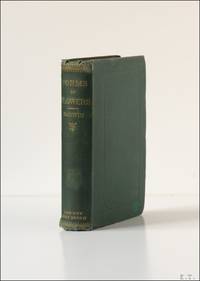
réf. 70203London John Murray 1880. Green cloth guilt xvi35232 pages 19.5 x 13 cm English. Second edition of 1250 copies only. fair condition spine slighly damaged on top and bottom and tape residue on page three otherwise good. Much of the content of this had previously been published in the Journal of the Linnean Society of London and elsewhere. Had Darwin not chosen such genetically complex examples he might have approached more nearly to an understanding of the laws of particulate inheritance. Like Cross and self fertilisation it was too technical a work to command a large sale and only about 2000 copies were sold in Darwin's lifetime and perhaps 4000 before the end of the century. The first edition of 1250 copies was issued on July 9 1877 in a standard case at a cost of 10s. 6d. It has thirty-two pages of inserted advertisements which are dated January or March. The second again of 1250 copies appeared in July 1880 with a new preface which surveys the recent literature and in which Darwin states that 'the text has been left as it originally appeared excepting that a few errors have been corrected'. This is then the definitive text but in the third thousand of 1884 Francis Darwin added another preface which again brings the literature up to date. London John Murray 1880 hardcover
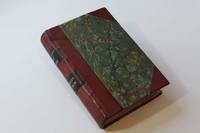
18758vo., Second Edition, with 13 woodcuts in the text, neat contemporary signature on front free endpaper verso; handsomely bound in early twentieth century half calf BY MUDIE, marbled boards, back with five raised bands ruled in gilt, second compartment with leather label lettered and ruled in gilt, third compartment with author's name in gilt, all other compartments tooled in gilt with a floral spray, all edges marbled, marbled endpapers, backstrip faded (but all gilt just legible) else a most attractive copy of a scarce work. The binding is signed on front free endpaper verso. The publisher's catalogue sometimes found at end has not been bound with this copy. The first printing of the first edition was in Vol. IX of the Journal of the Linnean Society of London (dated 1867 but issued in 1865). The present edition, the first in book form, is greatly revised and enlarged; Freeman notes that 1500 copies were printed. The woodcut illustrations are by George Darwin, the author's son. SCARCE. Freeman (Darwin), 220; Freeman (BNHB), 909.
réf. 41597Stockholm : Albert Bonnier 1872. Two volumes octavo contemporary gilt-lettered half-morocco over pebbled cloth edges scuffed particularly at head and foot of spine marbled edges pink endpapers pp. iv; 314; 2; iv; xv; blank; 294; 6 portrait frontispiece of Darwin to volume two text illustrations internally fine a fine set. The first Swedish edition of Darwin's 'The Descent of Man and Selection in Relation to Sex' translated by Rudolf Sunderström originally published in London in 1871. Freeman 1136 hardcover
réf. 41941London : John Murray 1882. Second edition revised and augmented. Fifteenth thousand. Octavo gilt-lettered green cloth edges slightly rubbed upper hinge tender pale foxing to endpapers slight marginal stain to lower portion of text block pp. xvi; 693; blank 78 text illustrations ownership inscription of C. J. Martin 1883 to preliminary blank annotated below 'fr. H. J. R.' a good copy. The second edition of Darwin's important work on natural selection. As Freeman notes: the word 'evolution' occurs for the first time in any of Darwin's works on Page 2 of the first volume of the first edition before its appearance in the sixth edition of the 'Origin' in the following year. This edition includes the Supplemental Note on Sexual Selection in Relation to Monkeys Reprinted from Nature November 2 1876 p. 18. This first appeared in the 12th Thousand of 1877. Freeman 955. Provenance : Sir Charles James Martin CMG FRS FRCS 9 January 1866 – 15 February 1955 eminent British/Australian scientist who lectured at Australian universities for twelve years. 'During World War I he served with the Australian Army Medical Corps in Gallipoli Egypt and France as a pathologist with the rank of Lieutenant-colonel. He found some cases of enteric fever at Gallipoli were not typhoid but paratyphoids A and B and made a vaccine for all three. A memo to his colleagues on the different treatments for amoebic and bacillary dysentery was widely circulated by the army under Martin’s name . His contributions to the foundation of biological science in Australia were commemorated by the National Health and Medical Research Council which created the Sir Charles James Martin Overseas Biomedical Fellowships in 1951' - Wikipedia Loosely enclosed on the back of a letter to Martin from Australia House London is a manuscript note signed by Martin and dated Cambridge 1946 indicating this copy of Darwin's Descent of Man is 'probably the first scientific book I purchased. H. J. R. was my brother'. hardcover
réf. 47639/ by Charles Darwin ; with photographic and other illustrations. London : John Murray 1872. First edition second impression. Octavo half crushed morocco over marbled papered boards edges rubbed spine in compartments with raised bands lettered in gilt marbled endpapers and edges pp. vi 374 bound without the advertisements with photographic heliotype plates and wood-engraved illustrations in the text; the contents are clean a very good copy of the first edition. Freeman 1142. hardcover
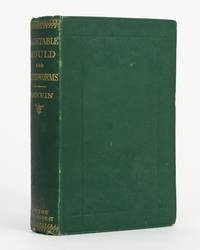
1881réf. 144232London: John Murray 1881. Hardcover. Very Good. London John Murray 1881 fourth thousand/ 1881. Octavo viii 326 2 list of Darwin's works colophon pages with 15 illustrations. Green cloth lettered and decorated in gilt on the spine and decorated in blind on the sides; all edges uncut; slight wear to the extremities; leaves adjacent to the endpapers foxed with scattered light foxing elsewhere; front hinge lightly stabilised; one preliminary leaf creased with a few short marginal tears expertly sealed; a few minor signs of age and use; a very good copy. 'This last book is outside the main stream of Darwin's work and reverts to his earlier geological interests. He had indeed published a paper on mould in 1838 in the "Proceedings of the Geological Society of London" Vol. ii pp. 5-74-76 which he had read to the Society in the previous year. The book was remarkably successful selling 6000 copies within a year and 13000 before the end of the century . Darwin comments that he corrected the sixth thousand of 1882' Freeman R.B.: 'The Works of Charles Darwin: An Annotated Bibliographical Handlist' page 33. Freeman 322. Darwin died on 19 April 1882 soon after the publication of this edition. Provenance: Dr Kenneth Ernest Lee 1927-2007 distinguished NZ-born Australian soil scientist with his signature and 1982 book purchase details at the head of the title page. Loosely inserted in the book is his obituary: not least it records that Lee's influential 1985 publication 'Earthworms: their Ecology and Relationships with Soils and Land Use' was the direct descendant of Darwin's pioneering work. Mounted on the front pastedown is the earlier armorial bookplate of James Rankin 'Prudentia et Virtute'. John Murray hardcover
réf. 40525by means of natural selection or the preservation of favoured races in the struggle for life. London : John Murray 1890. Sixth edition with additions and corrections to 1872 thirty-ninth thousand. Octavo gilt-lettered green cloth lightly flecked pp xxi blank 458 folding lithographed plate light foxing to preliminaries. A very good clean copy. A fine copy of the sixth edition of one of the most important texts in the history of science. The first edition of 1859 a great rarity is described in Freeman as "". the most important biological work ever written.""; Dibner "". the most important single work in science.""; Printing & the Mind of Man "". revolutionized our methods of thinking and our outlook on the natural order of things. The recognition that constant change is the order of the universe had been finally established and a vast step forward in the uniformity of nature had been taken."" The sixth edition extensively rewritten by Darwin and published in 1872 removed the word 'On' from the title 'On the origin of species' and includes rebuttal of Roman Catholic biologist St. George Mivart's theological arguments in his 1871 text On the Genesis of Species. The sixth edition is significant for including the use of the word 'evolution' for the first time in furtherance of Darwin's argument for natural selection. It is the last edition published in Darwin's lifetime and includes extensive revisions and rewriting by the author. The sixth edition went through numerous printings and includes all Darwin's revisions since On the origin of species was first released in 1859. It is considered the definitive text for what many consider to be the most significant scientific book ever published. Freeman 436 hardcover
réf. 40453by means of natural selection or the preservation of favoured races in the struggle for life. London : John Murray 1889. Sixth edition with additions and corrections to 1872 thirty-seventh thousand. Octavo original publisher's gilt-lettered green cloth edges and corners rubbed slightly bruised with short tear at head and foot of spine original endpapers lightly foxed with a label dated January 15th 189 on front pastedown presenting the book to Henry J. Taperell Chief Reporter of the New Zealand Times on the occasion of his leaving for Sydney from members of the New Zealand Parliamentary Press Gallery and the Wellington Press pp. ii xxi blank 468 folding lithographed plate slightly miscreased light foxing to preliminaries. A very good copy. A fine copy of the sixth edition of one of the most important texts in the history of science. The first edition of 1859 a great rarity is described in Freeman as "". the most important biological work ever written.""; Dibner "". the most important single work in science.""; Printing & the Mind of Man "". revolutionized our methods of thinking and our outlook on the natural order of things. The recognition that constant change is the order of the universe had been finally established and a vast step forward in the uniformity of nature had been taken."" The sixth edition extensively rewritten by Darwin and published in 1872 removed the word 'On' from the title 'On the origin of species' and includes rebuttal of Roman Catholic biologist St. George Mivart's theological arguments in his 1871 text On the Genesis of Species. The sixth edition is significant for including the use of the word 'evolution' for the first time in furtherance of Darwin's argument for natural selection. It is the last edition published in Darwin's lifetime and includes extensive revisions and rewriting by the author. The sixth edition went through numerous printings and includes all Darwin's revisions since On the origin of species was first released in 1859. It is considered the definitive text for what many consider to be the most significant scientific book ever published. Freeman 426. hardcover
2015réf. Adhya-9781107134362CAMBRIDGE UNIVERSITY PRESS 2015. HB. New. CAMBRIDGE UNIVERSITY PRESS hardcover
2015réf. Adhya-9781107134362CAMBRIDGE UNIVERSITY PRESS 2015. HB. New. CAMBRIDGE UNIVERSITY PRESS hardcover
1878réf. 53228Torino, Unione Tipografico-Editrice, 1878. Large8vo. In recent cardboard wrappers. Occassional light brownspotting, especially to the first and last few leaves. Otherwise fine. 127 pp.
1878réf. 53228Torino Unione Tipografico-Editrice 1878. Large8vo. In recent cardboard wrappers. Occassional light brownspotting especially to the first and last few leaves. Otherwise fine. 127 pp. First Italian translation of Darwin's "On the movement and habits of climbing plants". The paper was first published in 1865 in the Journal of the Proceedings of the Linnean Society of London Freeman 833 later same year it was corrected and published in book form from which the present translation is made Freeman 1834 Darwin described the origins and writing of this book in his autobiography: "In the autumn of 1864 I finished a long paper on Climbing Plants and sent it to the Linnean Society. The writing of this paper cost me four months: but I was so unwell when I received the proof-sheets that I was forced to leave them very badly and often obscurely expressed. The paper was little noticed but when in 1875 it was corrected and published as aseparate book it sold well. I was led to take up this subject by reading a short paper by Asa Gray published in 1858 on the movements of the tendrils of a Cucurbitacean plant. He sent me seeds and on raising some plants I was so much fascinated and perplexed by the revolving movements of the tendrils and stems which movements are really very simple though appearing at first very complex that I procured various other kinds of Climbing Plants and studied the whole subject. I was all the more attracted to it from not being at all satisfied with the explanation which Henslow gave us in his Lectures about Twining plants namely that they had a natural tendency to grow up in a spire. This explanation proved quite erroneous. Some of the adaptations displayed by climbing plants are as beautiful as those by Orchids for ensuring cross-fertilisation."The first edition did not appear in America nor was it translated in Darwin's lifetime but has a recent facsimile. The second appeared in French German and Italian and in America from English stereos.Freeman 863. unknown
1875réf. 000934John Murray 1875. Hardcover. Fair. Second edition revised. John Murray 1875. First John Murray edition. This was originally published ten years earlier in the Journal of the Proceedings of the Linnean Society of London. Original green cloth covers are marked with rubbing to the edges rubbed through in places to the joints and spine ends. The binding is starting to come a little loose. Brown coated endpapers half title spotted ads at the back spotted pages a little dust worn and age toned. Fair condition. viii 208 pp 32 pages of publishers works at the back dated January 1875. John Murray hardcover
1882réf. 24216John Murray 1882. 8vo. Second Edition Third Thousand with 13 woodcuts in the text small inoffensive label scars to front free endpaper; original green arches-style cloth gilt back chocolate endpapers uncut small skilful repair to bottom of backstrip a remarkably well-preserved bright crisp copy. With 32pp publisher's catalogue dated January 1882 bound in at end. The woodcut illustrations are by George Darwin the author's son. The first printing of the first edition was in Vol. IX of the Journal of the Linnean Society of London dated 1867 but issued in 1865. The second edition the first in book form greatly revised and enlarged was published in 1875 with a second 'Thousand' actually only 500 copies in the following year. The present edition is the first to carry the author's appendix to the Preface and a five-line list of errata on last leaf of Contents. Since these refer to author's errors rather than to literals and remain uncorrected through subsequent reprintings from stereos this represents the final text of the work. SCARCE ESPECIALLY IN THIS CONDITION. Freeman Darwin 222; Freeman BNHB 909. John Murray, hardcover
réf. 64856John Murray. London. 1891. Third edition. . pp. viii 487 i Advertisement 32 Catalogue January 1895. Original cloth uncut joints intact a bit of rubbing at the edges of the spine and the ends a little bruised overall it is a clean tight copy. FREEMAN #1256 John Murray. London. 1891. Third edition. hardcover
1891réf. 221786London; Scott Publishing 1891. 1st Edition in this form. Hardback. Previous owner's inscription. Eastbourne gilt-crest to the front panel. Finely bound in full contemporary aniline calf. Spine compartments and panels elaborately tooled in gilt. Gilt-cross bands with a contrasting red Morocco gilt-blocked label. Bands and panel edges somewhat rubbed and toned as with age. An uncommopnly good example. ; 8vo 8"" - 9"" tall; 278 pages; Physical description; xxiv 278 10 p. : ill. front. folded map ; 18 cm. Notes; Date of publication from KVK. Spine title: Darwin's Coral Reefs. Subjects; Biology. Evolution Biology. Other titles; Coral reefs. On Certain Areas of Elevation and Subsidence in the Pacific and Indian Oceans as deduced from the study of coral formations. Contents; Contains ""On Certain Areas of Elevation and Subsidence in the Pacific and Indian Oceans as deduced from the study of coral formations"" a reprint of Freeman no. 1647 DC BD 1536 not called for in list of contents but usually found. Referenced by: Freeman no. 280. Referenced by: Freeman no. 1647. Series; The Scott Library. London; Scott Publishing hardcover
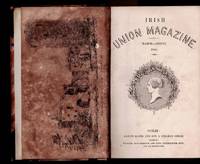
1845réf. 32226AB1845. First Edition. Two Volumes bound in one. Dublin Martin Keene and Son 1845. Octavo. Frontispiece-Engraving "The ruins of Leix Castle Queens Co. - From a Sketch by Chidley Coote Esq." engraved titlepage 468 pages including Index / Followed by Volume II now titled "The Irish Monthly Magazine" - September - February Dublin 1846: 494 pages. Hardcover / Original half-leather with gilt lettering and original spinelabel. Very good condition with only minor signs of wear. An extraordinay Volume very rare with the Literary Notices on Charles Darwin's "Journal of Researches into the Natural History and Geology of the Countries visited during the Voyages of H.M.S.Beagle round the world second edition. With several interesting articles political poetic and literary. Among which is also "Mary Mansfield Or Ireland Ten Years Since". The Volume published at the outbreak of the Famine is the last reflection of an already shaken country which is entering a fate-altering few years. The Union Magazine - Volume I All published under this title Following articles are included in this very rare 1845-Volume: 1. The Position and Prospects of Ireland in 1845 2. Mesmerism - Miss Martineau's Letters 3. Memoir if Leix Castle Queens Country related to the Frontispiece 4. An Irish Queer Fellow - Peregrin Glass 5. Mary Mansfield Or Ireland Ten Years Since a continuation story through several issues of this Volume including chapters titled "The Ghost" "The Trial" etc. 6. Narrative of some Military Events in Scinde Beeloochistan and Afghanistan during the Years 1839 1840 1841 1842 and 1843 by John H.Hall Esq. H.M.'s 40th Regiment Nephew of the Late Captain Basil Hall continued through several issues 7. A Free and Easy Translation of the First Scene of the Andrian of P.Terentius 8. To L.E.L. in 1828 A fancy Sketch 9. The Irish Poor Law / Poor Laws Limerick Union 10. "Sketches of Character" - by the "Elderly Gentleman" 11. "The Country and the Town" 12. "A Pinch of Snuff from Dean Swift's Box" with a page of Illustration of Jonathan Swift's Snuff Box 13. 'Tis a Hundred Years Since" 14. "The Difficulties of a Young Clergyman in Times of Division" - London 1844 15. "A Report to the Lord Bishop of Meath on the State of Elementary Schools in the Diocese and the Opinions of the Clergy respecting the question of National Education" By the Rev. Edward A. Stopford Archdeacon of Meath; with a Correspondence between the Lord Bishop of Meath and the Home Secretary on the Subject of the Report Grant and Bolton Dublin 1845 16. "On National Schools - A Tract for the Times in Ireland - By an Ulster Clergyman" - W.Curry Jun. and Co. Dublin 1845" 17. "The Irish Art Union" 18. "Luna by Day" by Jean Paul Fr.Richter 19. An Anglo-Latin Account of a Steam Journey from Dublin to London in 1845 A short Poem in Latin 20. Foreign Travellers and many more articles hardcover
1871réf. mon0001648351John Murray 1871. Half Leather. Good. . The Descent of Man and Selection in Relation to Sex is one of Charles Darwin's most influential and controversial works first published in 1871. Expanding upon the revolutionary ideas introduced in On the Origin of Species Darwin applies the theory of evolution to humankind arguing that humans share common ancestry with other animals while introducing his groundbreaking concept of sexual selection. The work remains a cornerstone of evolutionary biology and one of the most significant scientific publications of the nineteenth century.rnrnThis is Volume I of the first edition first issue published by John Murray London 1871 with the correct first-issue reading ""transmitted"" as the first word on page 297. The volume has been attractively rebound in half leather with marbled boards with the original spine title and author panels preserved and laid down on the new spine creating a handsome and sympathetic binding while retaining elements of the original publication. John Murray hardcover