Charles DarwinBiblio.com

7 486 résultats
réf. 6934Descent Of Man by Charles Darwin in 2 volumes first US edition hardcover Publisher: D. Appleton And Company 1871 Condition: Very Good - some writing on the front end papers otherwise no other writings tight binding D. Appleton And Company hardcover
2005réf. 140401Philadelphia: Running Press 2005. First edition of this compilation of Charles Darwin's most influential works in their entirety contained for the first time in one volume. Thick Octavo original boards. Presentation copy warmly inscribed by James Watson to his friends on the half-title page "For Peter and Dori from Jim." Fine in a fine dust jacket. Text includes commentary by Nobel laureate James Watson. Included in this volume are four of the most influential works of Charles Darwin reprinted in their entirety each with commentary from Nobel Prize-winning scientist James D. Watson. Included are On the Origin of Species arguably the most important scientific work of the nineteenth century; Voyage of the Beagle a captivating travelogue richly stocked with observations that helped guide the young Darwin through his evolutionary world view; The Descent of Man which explored the origins of humans and their history; and The Expressions of Emotions in Man and Animals which explored the origin and nature of the mind. With his separate introductions for each of Darwin's books he goes further to explain how the modern considerations underlying genome research would have been impossible without Darwin bringing a contemporary relevance to these nineteenth century masterworks. Running Press hardcover
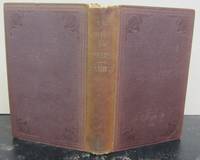
1871réf. 72218New York: D. Appleton and Company 1871. Fifth Edition. Hardcover. Very Good. 20 x 13 cm. Octavo. 447pp 8pp ads. Half-title. Fold-out lithographic diagram opposite page 114 in nice condition. Bound into brown pebbled cloth. Stated fifth American edition. Spine is sun toned and the head and tail are chipped. There is some discoloration to the title page from what looks like a newspaper clipping lay for many years. Binding is tight. Freeman F390b. D. Appleton and Company hardcover
1871réf. 59596D. Appleton 1871-01-01. Hardcover. Very Good. 1871 Appleton 2 volume set first American Edition later issue no errata. Light loss of cloth to corners tiny amount of bookseller marks endpapers text unmarked lightly toned. In original brown cloth decorated bindings. Please email for photos. D. Appleton hardcover
réf. thl19New York: D.Appleton and Company 1873. First American Edition of the foundation work for the sciences of animal behaviour and communication theory. ".The Expression Of The Emotions In Man And Animals.contains studies of facial muscles and means of expression in man and mammals emission of sounds erection of hair and so forth and their correlation with suffering sobbing anxiety grief despair joy love devotion reflection meditation sulking hatred anger pride disdain shame surprise fear horror acceptance affirmation and rejection negation. With this book Darwin founded the study of ethology animal behaviour and conveyance of information communication theory and made a major contribution to psychology." DSB Freeman 1143. cfGarrison & Morton 4975. 12mo. pp. vi 374 14ads. 7 heliotype plates 3 folding. 21 wood-engraved text illus. 6 full-page. original cloth spine ends starting to fray a few minor stains on covers. thl19 New York: D.Appleton and Company, 1873 hardcover
1872réf. 015074John Murray London 1872. First Edition Second Issue. Hardcover. Fair Condition/No Dust Jacket. Size: 7 1/2" x 5 1/2". Text body is clean and free from previous owner annotation underlining and highlighting. Full gilt-stamped calf over boards black and red spine labels top edge gilt gilt inner dentelles marbled end papers 374 pages seven heliotype plates three of which are foldout illustrated with in-text images as well. First edition second issue with "that" misspelled on page 208 plates with Arabic numbers lacks the publisher's ads at the rear. Front board is detached wear at extremities some foxing on versos of plates staining on page that faces one of the folding plates minor staining on plate itself. Previous owner's name label Erastus Corning 2nd 1909-1983 Mayor of Albany NY on front paste-down. Quantity Available: 1. Shipped Weight: 4 lbs 0 oz. Category: Science & Technology; Pictures of this item not already displayed here available upon request. Inventory No: 015074. . John Murray hardcover
1873réf. 2206004D. Appleton and Co 1873. first. hardcover. very good. First US edition 1873 stated on title page. Book very good former owner's bookplate attached to front paste-down gutters have been repaired but still cracked. D. Appleton and Co unknown
1868réf. 1224New York: Orange Judd 1868. 1st American Edition. Two volume FIRST AMERICAN EDITION of "ONE OF DARWIN'S MOST INFLUENTIAL AND WIDE-RANGING BOOKS. IT IS ALSO HIS LONGEST AND MOST DETAILED WORK" Freeman The Works of Charles Darwin 879. It is also "the only section of Darwin's big book on the origin of species which was printed in his lifetime and corresponding to its first two intended chapters" ibid. Darwin's intent was "to provide overwhelming evidence for the ubiquity of variation" Oxford Dictionary of National Biography. "This work is notable not only for Darwin's prodigious amassing of facts concerning artificial selection of traits to demonstrate an analogy for natural selection. It also advances his hypothesis of pangenesis and gemmules as the agents of the inheritance of characteristics" DSB. Darwin's hypothesis of pangenesis "here expounded for the first time" Freeman. Was the by "means of which he tried to frame an explanation of hereditary resemblance inheritance of acquired characters atavism and regeneration. It was a brave attempt to account for a number of phenomena which were beyond the bounds of scientific knowledge in his day such as fertilization by the union of sperm with egg the mechanism of chromosomal inheritance and the development of the embryo by successive cell division. His hypothesis of pangenesis could not therefore give a permanently acceptable account of the multitude of phenomena it was designed to explain. It was however a point of departure for particulate theories of inheritance in the latter nineteenth century' DSB Freeman. "Other chapters consider "the amount and nature of the changes which animals or plants have undergone whilst under man's dominion" employing observations of inheritance within a species in an effort to understand the causes of variability" ibid. While as said Darwin's two volumes "were intended to provide overwhelming evidence for the ubiquity of variation" they also "incidentally answered Lyell and Gray who maintained that variations had not occurred purely by chance but were providentially directed. Darwin showed that breeders indeed selected from a vast array of minute random variations. He gave numerous instances of the causes of variability including the direct effect of the conditions of life reversion the effects of use and disuse saltation prepotency and correlated growth" Oxford Dictionary of National Biography. CONDITION & DETAILS: Two volumes. Complete. 8vo 18.7 x 12.2 cm. Vol. I: 6 x 494 14 Vol. II: 4viii 568 12. Solidly bound in original publisher's green cloth; gilt-lettered at the spine. Scuffing at the edges with minor chipping at the head and foot of the spine. Clean and bright throughout both volumes. Very good. Orange Judd hardcover
1873réf. 2206004D. Appleton and Co 1873. first. hardcover. very good. First US edition 1873 stated on title page. Book very good former owner's bookplate attached to front paste-down gutters have been repaired but still cracked. D. Appleton and Co unknown books
1873réf. 63397The Hague, Joh. Ykema, 1873. 8vo. In the original publisher's embossed full red cloth with gilt lettering to front board and spine. Previous owner's name to front end-paper. Small stain to front board and back board miscoloured, internally fine and clean copy. IX, (1), 435 pp. + 7 plates.-
1873réf. 63397The Hague Joh. Ykema 1873. 8vo. In the original publisher's embossed full red cloth with gilt lettering to front board and spine. Previous owner's name to front end-paper. Small stain to front board and back board miscoloured internally fine and clean copy. IX 1 435 pp. 7 plates.- The rare first Dutch translation of Darwin's The Expression of the Emotions in Man published the year after the original. The Expression of the Emotions "is an important member of the evolutionary set and it was written in part at least as a confutation of the idea that the facial muscles of expression in man were a special endowment." Freeman p. 142. Darwin concluded that "the chief expressive actions exhibited by man and by the lower animals are now innate or inherited."Freeman 1182. hardcover
1873réf. elala120New York: D.Appleton And Company 1873. 1873. 12mo. pp. vi 1 leaf 374 14ads. 7 heliotype plates 3 foldinng. 21 wood-engraved text illus. 6 full-page. A nice tight copy in original cloth. First American Edition of the foundation work for the sciences of animal behaviour and communication theory. " The Expression Of The Emotions In Man And Animals contains studies of facial muscles and means of expression in man and mammals emission of sounds erection of hair and so forth and their correlation with suffering sobbing anxiety grief despair joy love devotion reflection meditation sulking hatred anger pride disdain shame surprise fear horror acceptance affirmation and rejection negation. With this book Darwin founded the study of ethology animal behaviour and conveyance of information communication theory and made a major contribution to psychology." DSB Freeman 1143. cfGarrison & Morton 4975. 1st Edition. New York: D.Appleton And Company, 1873. hardcover
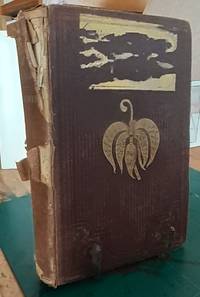
1862réf. 020463London: John Murray 1862. 1st Edition . Hardcover. Fair. 8vo - over 7¾ - 9¾" tall. vi 365 pages indexed illustrated plus 32 pages of other John Murray publications. Brown cloth with gilt flower on front panel. The boards: The spine strip is badly damaged with loss along the edge and tail; the front board wears the remnants of a label and the edges are chipped. Internally: there are two handwritten numbers on the head of the spine strip the top one crossed out the second repeated on the verso of the front end paper; the front end paper and the following blank page are partially detached; there are a series of ownership inscriptions - a stamp on the front end paper; three on the title page as well as two more interspersed along the page's blank edge and o plus a handwritten one again on the title page. One of the ownership stamps is superimposed on an association one ECLECTIC ASSOCIATION of VICTORIA the latter with its stamp also on the blank edge of the fold out diagram. Over the date of the handwritten one is a perfect small round ink blob which has seeped onto its verso and beyond that onto the blank head of the Contents page. And finally two tiny l closed closed tear at the head of pp 181 and 183 and well as minute loss on page 183 all of which could be a printer's fault. It is not a pretty copy but beyond the preliminaries it is solidly bound and the print unmarked. First edition of this important work. "Fertilisation of Orchids is a book by English naturalist Charles Darwin published on 15 May 1862 under the full explanatory title On the Various Contrivances by Which British and Foreign Orchids Are Fertilised by Insects and On the Good Effects of Intercrossing.1 Darwin's previous book On the Origin of Species had briefly mentioned evolutionary interactions between insects and the plants they fertilised and this new idea was explored in detail.The book was his first detailed demonstration of the power of natural selection and explained how complex ecological relationships resulted in the coevolution of orchids and insects. The view has been expressed that the book led directly or indirectly to all modern work on coevolution and the evolution of extreme specialisation." Wikipedia John Murray hardcover
1873réf. 2230038New York: D. Appleton and Company 1873. First US Edition . Hardcover. Good. 8vo - over 7¾ - 9¾" tall. See photos for condition details. Hardcover brown cloth boards with paper label on spine. Exterior is scuffed and soiled with a some small bubbles in the cloth. Paper label is quite darkened as is spine and spine edges show chipping. Edges and corners show bumps/wear. The internal front hinge is a thin crack to the paper on the frontispiece rear hinge appears good. Presumed first US edition with date of 1873 appearing on the title page. Several sections of the pages are still uncut though page 294/295 and 326/327 show tearing at the bottom where the original owner attempted to separate the pages by hand. This is a uncommon US printing as there are no publishers advertising pages nothing printed on what would normally be the copyright page and line 1 of page 208 contains the correct spelling of "that". The seven plates are numbered with Roman numeral and are all attached and in good condition. All illustrations including the plates have been verified as being present and good. No signatures or bookplates present no library markings no handwriting found. D. Appleton and Company hardcover
réf. Bloomsbury-9780333292563Red Globe Press. Hardback. New. 400 pages Red Globe Press hardcover
réf. Bloomsbury-9780333292563Red Globe Press. Hardback. New. 400 pages Red Globe Press hardcover
1875réf. 664Two volumes. Black half-leather hardcover. Second edition / Deuxieme edition. Black half-leather hardcover. Very well maintained. C. Reinwald et Cie hardcover
réf. 74323Genesis Publications Limited. London. 1979. Edition limited to 500 numbered copies No. 409/500 signed by George Penber Darwin great grandson of Charles Darwin. Foreword by Prince Charles. Introduction by Richard Darwin Keynes. 2 blank 843 8 blank PP with 4 b/w plates Journal in Facsimile between pages 31 and 834 Crew List between pages 835 and 840. Fp in colour: painting by Roy Williams. Marbled endpapers. Half bound green buckram spine with 5 raised bands gilt title and 4 gilt decorations gilt decoration on front board gilt signature of Darwin on the back cover all outside edges gilt. Contained in a green cloth slipcase with title on a white vignette. Bookplate of previous owner on verso of the front endpaper. Head of spine worn on 6 cms. Slipcase with minor rubbing on the label and a 5 cm worn patch close to the bottom. An excellent copy. Format: 28.5 x 20.5 and slipcase: 29.5 x 23.5. Genesis Publications Limited. London. 1979. hardcover
réf. 99676John Murray 1899 6th.ed.with add.& corrections 56th thousand. Hardback 7.75 x 5 inches. In green full calf leather fine prize binding by “Relfe Brothers.” Raised banding and gilt decorations to spine with maroon leather spine label gilt decorations to boards with crest to front King Edward VI’s Grammar School Morpeth. In very good condition. Leather faded on spine and front board. Some minor handling marks to front board and rubbing to front spine edge. Prize label to front endpaper “C.J.M. Saint Science July 1903.” Binders stamp to verso corner of endpaper. Some occasional minor light foxing spots to outer page edges else inside pages all very clean and bright. Else a very good clean and tight copy. xxi 432pp. With Fold-out diagram. Darwin’s seminal work on the theory of evolution. John Murray 1899 (6th.ed.,with add.& corrections, 56th thousand) hardcover
2022réf. SBS-9781637853931Excelic 2022. Hardcover. New. Excelic hardcover
2022réf. SBS-9781637853931Excelic 2022. Hardcover. New. Excelic hardcover
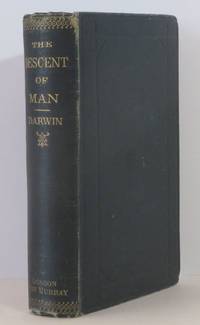
1896réf. B6799London: John Murray William Clowes and Sons. 1896. Interior with slight toning otherwise clean and crisp. Edition: Second edition Binding: Full original green cloth boards. Double blind framing on boards. Spine with gilt lettering decorative gilt fillet and stamp. Patterned paste-in and free endpapers. Front edges uncut. Notes: A fine example of Darwin’s key work which applies evolutionary theory to human evolution and details his theory of sexual selection a form of biological adaptation distinct from yet interconnected with natural selection. Charles Robert Darwin 1809 – 1882 was an English naturalist geologist and biologist renown for his contributions to the understanding of evolutionary biology and he has been described as one of the most influential figures in human history. His proposition that all species of life have descended from a common ancestor is now generally accepted and considered a fundamental concept in science. In a joint publication with Alfred Russel Wallace he introduced his scientific theory that this branching pattern of evolution resulted from a process that he called natural selection in which the struggle for existence has a similar effect to the artificial selection involved in selective breeding. The Descent of Man discusses many related issues as perceived by Darwin including evolutionary psychology evolutionary ethics evolutionary musicology differences between human races differences between sexes the dominant role of women in mate choice and the relevance of the evolutionary theory to society. The first edition was published by John Murray in 1871. Size: 8vo.190x125 mm Illustration: With a profusion of in-text illustrations and plates. Many signatures still uncut. Second edition revised and augmented. Thirty-third thousand. Pages: Blank 2. Half title. Blank. Title. Advertisement. Preface v-vi. Table vii-ix. Blank. Contents xi-xvi. P. 1 – 693. Blank. Category: Book Science & Technology; John Murray, William Clowes and Sons. hardcover
1882réf. B6801London: John Murray William Clowes. 1882. Slight browning to early and last leaves. Interior otherwise clean and crisp. Pp. 65/66 bound between 48/49. Edition: First edition Binding: Full original green cloth boards. Blind framing on boards. Spine with gilt lettering decorative gilt fillet and stamp. Brown paste-in and free endpapers. Notes: A near fine example of this last scientific book by Darwin on earthworm behaviour and ecology. Charles Robert Darwin 1809 – 1882 was an English naturalist geologist and biologist renown for his contributions to the understanding of evolutionary biology and he has been described as one of the most influential figures in human history. His proposition that all species of life have descended from a common ancestor is now generally accepted and considered a fundamental concept in science. In a joint publication with Alfred Russel Wallace he introduced his scientific theory that this branching pattern of evolution resulted from a process that he called natural selection in which the struggle for existence has a similar effect to the artificial selection involved in selective breeding. The Formation of Vegetable Mould though the Action of Worms sometimes known simply as Worms continued the theme common throughout Darwin’s work which is that gradual changes over long periods of time can lead to large and sometimes surprising consequences. It was the first significant work on soil bioturbation although that term was not used by Darwin it first appeared in the soil and geomorphic literature one hundred years later. The inspiration for Worms likely stemmed from a visit to his uncle’s home where Darwin’s uncle pointed out an area of ground where lime and cinders spread years previously had vanished into the soil forming layers under a top layer of loam. His uncle suggested that this might have been the work of earthworms but apparently thought that this would be of little interest to his nephew who was working on continental scale geological problems. The subject was in fact of interest to Darwin; when he returned to London later that year he prepared a paper on worms forming mould. The paper on the role of earthworms in soil formation was read out by Darwin at the Geological Society of London on 1 November 1837. This was an uncommonly mundane subject for the society and his peers may have hoped to hear of something more grandiose even seeing this paper as highlighting Darwin's growing idiosyncrasies. The leading geologist William Buckland subsequently recommended Darwin's paper for publication. This later led to Darwin’s renewed work on earthworms that led to the publication of the present volume. When asked why he had turned to such an ‘insignificant’ subject such as worms Darwin answered "I have been studying their habits for forty years." In Darwin's view the "insignificant" was the foundation of much greater phenomena. Size: 8vo.188x125 mm Illustration: With many in-text illustrations. First edition seventh thousand corrected. Pages: Blank 2. Title. Printer’s signature. Contents iii-vii. Blank. P. 1 – 328. Advertisement. Printer’s signature. Category: Book Science & Technology; John Murray, William Clowes. hardcover
1896réf. B4118New York: D. Appleton & Company 1896. A fine copy in contemporary half red morocco. . Edition: Third Edition Binding: Original half crimson morocco with matching marbled boards blind tooled rules tooled gilt lettering on spine. Size: 8vo: 125mm x 195mm Illustration: Illustrated with 3 foldout maps and a few scientific diagrams Pages: P. Half title Full title edition Preface v-xv Description of plates xvii-xx 1-344. Category: Book Natural History;Book Geological Minerals & Mining; D. Appleton & Company hardcover
1889réf. 15210London: John Murray 1889. Second Edition Revised and Augmented Seventeenth Thousand. Hardcover. Very Good bound in full green cloth with gilt titles on spine. Edge wear and minor wear to exterior toning to decorated end papers. No markings to text binding intact. Illustrated throughout. 693 printed pages. 8vo. John Murray hardcover