7 647 résultats
1972réf. 2353649Norwalk Connecticut: The Heritage Press 1972. Reissue. Large Hardcover. Very Good/Very Good. 8x6x1. Kredel Fritz. Includes publisher's slipcase and Sandglass insert. Slipcase edges faded tiny white flecks on front panel of slipcase. Binding tight and square pages clean bright and unmarked. 1972 Large Hardcover. xvii 362 pp. Black leather spine red cloth boards gilt titles and decorations preface by Ashley Montagu woodcut illustrations by Fritz Kredel. Darwin's classic work on natural selection genes and species. The work was first published in the UK in 1871 and subsequently in two volumes in the US in 1872. The second edition was revised and converted to a single-volume edition. The Descent of Man Darwin's second landmark work on evolutionary theory following The Origin of the Species marked a turning point in the history of science with its modern vision of human nature as the product of evolution. Darwin argued that the noblest features of humans such as language and morality were the result of the same natural processes that produced iris petals and scorpion tails. The Heritage Press hardcover books
1971réf. 19420Adelaide South Australia: Limited Editions Club 1971. Limited Edition. Boards. Fine. The Descent of Man and Selection in Relation to Sex by Charles Darwin from the Limited Editions Club. Quarto xx 362pp 3. Quarter green Oasis morocco over natural wood-veneer paper-covered boards. Gilt titles and decorations on the spine. Illustrated throughout with black-and-white drawings by Fritz Kredel. Housed in the publisher's matching slipcase. One of 1500 numbered copies signed by Kredel on the limitation page this being number 85. Newman & Wiche 435 LEC 442 Freeman 1043. This edition follows Darwin's revised and supplemented 1877 text but omits Chapters IX-XVI on sexual selection in lower animals. Limited Editions Club unknown books
1872réf. 55430New York: D. Appleton and Company 1872. Early American Edition. Hardcover. Good condition. Octavo. vi 409 2 v 3 436 12pp. Original brown cloth with black decorative border on covers gilt lettering and ruling on spines. Yellow endpapers. With printed postscript in volume two correcting error relating to the sexual differences of animals on pp. 287-289 of the first volume. With two pages of advertisements for Herbert Spencer publications in volume one extensive index plus twelve pages of advertisements for Appleton publications at rear of volume two including title by Spencer Darwin and others. Binding with some light wear along edges and lightly rubbed. Spines sunned. Light smudging of front free endpaer of volume one. Inscriptions of R. D. Maxwell inked to free endpaper of both volumes. Block lightly age-toned. D. Appleton and Company hardcover books
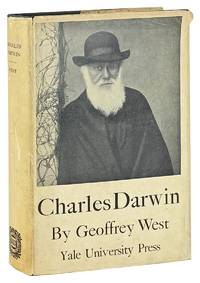
1938réf. 47253New Haven CT: Yale University Press 1938. Very Good/Very Good. New Haven CT: Yale University Press 1938. First Edition. Octavo 24cm; publisher's cloth in white pictorial price-clipped dust jacket; xiv2359pp.; portrait frontispiece seven leaves of plates. Moderate wear and rather heavy dust-soil to jacket two longish closed tears at top edge of upper panel not quite touching image spotting to cloth else Very Good and sound in the rare jacket. Ownership ex libris of the late chemist and bibliophile Sydney Ross to front pastedown. Yale University Press unknown books
1962réf. 598095Boston: Beacon Press 1962. Hardcover. Fine/Very Good. First edition. Edited translated and with an introduction by Edwin J. Flakoll and Claribel Alegría. Octavo. 226pp. Fiction is in English poems are printed in English and Spanish. Topedge very lightly foxed else fine in a soiled very good dust jacket. Includes work by Ernesto Cardenal Juan Rulfo Augusto Roa Bastos Julio Cortázar Octavio Paz José Donoso Enrique Lihm and many others. Beacon Press hardcover books
1896réf. 87310NY:: D. Appleton and Company. Very Good. 1896. Hardcover. B00CIZQL7Q . With illustrations. Authorized edition. Octavo half bound in burgundy leather with gilt lettering on the spine marbled boards top edge gilt. Age darkened along the spine moderate edge wear else very good. Some unopened pages. Binding is solid.; 592 pages . D. Appleton and Company, hardcover books
1985réf. 42569Cambridge:: Cambridge University Press. Very Good in Very Good dust jacket. 1985. Hardcover. 0521255872 . First edition. Decorative stamp on front free endpaper upper corner of front free endpaper is clipped else very good in a very good age toning along the spine dust jacket. . Cambridge University Press, hardcover books
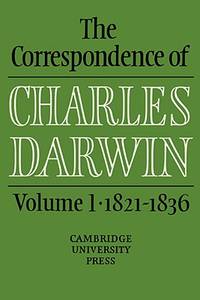
1985réf. 2331317Cambridge: Cambridge University Press 1985. First Edition. Hard Cover. Near Fine/Near Fine. 6x1x9. First edition. Jacket edges lightly rubbed. Page ridge soiled. 1985 Hard Cover. xxix 702 pp. Family tree on endpapers. This volume inaugurates a complete edition of The Correspondence of Charles Darwin. For the first time full authoritative texts of Darwin's letters are available edited according to modern textual editorial principles and practice. The first volume of the edition contains the letters of the years 1821 - 1836. They begin with one written to Darwin at the age of twelve and continue through his school days at Shrewsbury his two years as a medical student at Edinburgh the undergraduate years at Cambridge and his five years of exploration and learning during the voyage of the Beagle. These were Darwin's years of initiation and preparation for a life of science. In the earliest letters Darwin appears already keenly interested in natural history and an avid collector of minerals plants marine invertebrates and insects - especially beetles. The letters of the succeeding years tell the story of the young Darwin's development up to his return to England when at the age of twenty-seven he was received as a colleague by Charles Lyell Adam Sedgwick and other leading scientists who had already heard of his discoveries and observations during the Beagle voyage. Cambridge University Press hardcover books
1910réf. 53443St. Paul: McGill-Warner Co 1910. 8vo pp. 405 1 xxiii 1; portrait frontispiece and text illustrations throughout; burgundy cloth gilt; covers soiled closed tear on last page textblock cocked but sound ex-Minnesota State library with their stamps on endpapers and title page. A history of the early years of the second largest state fair in the US with a number of pictures of old fairgrounds and buildings. McGill-Warner Co unknown books
1872réf. 54913London: John Murray 1872. First edition second impression. Hardcover. Good to very good condition. Small Octavo. vi 374pp. 7 photographic plates. Bound in three-quarter leather over marbled boards with gilt lettering and ruling on spine; raised bands. Marbled edges and endpapers. Second impression of first edition with that misspelled "htat" in first line of page 208. Contains 7 heliotype plates three of them folding. Darwin's third work on evolutionary theory a biological approach in contrast to Charles Bell's argument for a spiritual dimension Darwin's biological approach traces emotions to their origins in animal behavior deeming cultural factors only to play an auxiliary role. The volume is illustrated with twenty-two engravings by T. W. Wood Briton Rivière A. May and Josef Wolf the seven heliotype plates with portraits are by Oscar Rejlander the anatomical diagrams by Charles Bell and Friedrich Henle. The first edition published in November 1872 quickly sold and a second impression followed. Index at rear. Some wear along edges scuffing at corners and edges of spine. Light foxing on endpapers. Minimal sporadic pencil notations and markings on first 42 pages. Second heliotype on folding plate facing page 264 with a vertical crease through photo near right edge. John Murray hardcover books
1876réf. 12090London: Smith Elder & Co 1876. Second Edition. Hardcover. Good. Second Edition. Hardcover. Previously owned by Oliver Sacks. This second edition combines Geological Observations on the Volcanic Islands with Geological Observations on South America. Notes from Eric Korn Oliver's friend and bookseller. From the library of Dr. Oliver Sacks the renowned neurologist author and educator. He was in his life celebrated for his contributions to the understanding of the human brain and his ability to communicate complex scientific concepts to a broader audience. In doing so he highlighted the profound impact of neurological disorders on human identity and experience. His library is a reflection of this remarkable polymath's questing mind. Moderate shelf/edge wear discoloration/soiling to upper spine toning else tight and unmarred. Red cloth boards. 8vo. xiii 647pp. Illus. b/w color 3 maps 2 plates one coloured at the back 40 text illus. Notes from bookseller. Smith, Elder, & Co hardcover books
1968réf. 12583Oxford: Institute of Psychophysical Research 1968. First Edition. Hardcover. Very Good. First Edition. Hardcover. From the library of Dr. Oliver Sacks the renowned neurologist author and educator. He was in his life celebrated for his contributions to the understanding of the human brain and his ability to communicate complex scientific concepts to a broader audience. In doing so he highlighted the profound impact of neurological disorders on human identity and experience. His library is a reflection of this remarkable polymath's questing mind. Light shelf/edge wear evidence of adhesive on boards former library marks else tight bright and unmarred. 8vo 144pp. Red cloth boards ex-library pastedowns withdrawl stamps. Institute of Psychophysical Research hardcover books
1902réf. 12581London: John Murray 1902. Second Edition Sixth Thousand in this Form. Hardcover. Very Good. Second Edition Sixth Thousand in this Form. Hardcover. The portrait frontispiece is engraved from the study by Mrs. Cameron. The abridged version of Francis Darwin's life of his father the fourth edition of the 'Life and Letters' overall first app.eared in 1892. From the library of Dr. Oliver Sacks the renowned neurologist author and educator. He was in his life celebrated for his contributions to the understanding of the human brain and his ability to communicate complex scientific concepts to a broader audience. In doing so he highlighted the profound impact of neurological disorders on human identity and experience. His library is a reflection of this remarkable polymath's questing mind. Light shelf/edge wear focused at tips and hinges head/tail front joint cracked but tight light even toning to text block else tight bright and unmarred. 8vo 348pp. illus b/w plates with a tissue-guarded photogravure toned in sepia portrait frontispiece index. Green cloth boards with stamped designs gilt titling. John Murray hardcover books
2004réf. 12159New York/Chicago 2004. Hardcover/Original Wrapp.ers. Very Good. Hardcover/Original Wrapp.ers. From the library of Oliver Sacks. Includes: The Voyage of the Beagle.Doubleday Anchor paperback 1962. Darwin on Earthworms Bookworm Publishing paperback 1976. The Power of Movement in Plants Da Capo HC 1966 Reprint editions. Life Magazine June 30 1958. Article on The Wonders of Life on Earth Scenes of Darwin Findings Revisited and an article on child blindness. From the library of Dr. Oliver Sacks the renowned neurologist author and educator. He was in his life celebrated for his contributions to the understanding of the human brain and his ability to communicate complex scientific concepts to a broader audience. In doing so he highlighted the profound impact of neurological disorders on human identity and experience. His library is a reflection of this remarkable polymath's questing mind. Light shelfwear/toning dj and original wrappers else tight bright and unmarred. 8vo. Cloth/wrappers. hardcover books
1890réf. 12138London: Ward Lock and Co 1890. Later Edition. Hardcover. Good. Later Edition. Hardcover. Previously owned by Oliver Sacks. The original editions app.eared in 1842 1844 and 1846 respectively. Minerva Library No. 18. Presents all three parts of the first edition of Darwin's geological results of the Beagle voyage with a critical introduction to each work by Prof. John W. Judd. The voyage of the Beagle lasted from December 1831 to October 1836 and carreid Darwin around the wotld but especially to South America. Former owner name on ffep: Trevor H. Evans St. Johns Hospital. From the library of Dr. Oliver Sacks the renowned neurologist author and educator. He was in his life celebrated for his contributions to the understanding of the human brain and his ability to communicate complex scientific concepts to a broader audience. In doing so he highlighted the profound impact of neurological disorders on human identity and experience. His library is a reflection of this remarkable polymath's questing mind. Moderate shelf/edge wear discoloration to boards toning else tight and unmarred. Original textured green cloth boards with black and gilt borders and lettering patterned endpapers. 8vo.xx 549pp. illus. b/w illus. including 3 fold-out plates plus 6 page publisher's catalogue 40 text figures. Ward, Lock, and Co hardcover books
1872réf. 12139London: John Murray 1872. First Edition later state. Hardcover. Good. First Edition later state. Hardcover. Previously owned by Oliver Sacks. This is the first edition of Darwin's well-known work on animal behavior and communication theory. Darwin studied the movement of facial muscles and how they express emotion in man and animals. The heliotype photo plates are works of art and demonstrate a new breakthrough in Victorian photography. From the library of Dr. Oliver Sacks the renowned neurologist author and educator. He was in his life celebrated for his contributions to the understanding of the human brain and his ability to communicate complex scientific concepts to a broader audience. In doing so he highlighted the profound impact of neurological disorders on human identity and experience. His library is a reflection of this remarkable polymath's questing mind. Craking and splitting hinge mostly intact moderate shelf/edge wear rubbing to boards toning else tight bright and unmarred. Bound in quarter calf with marbled boards gilt titles marbled edges and endpapers. 8vo.vi 374 4 pp. illus. b/w with 7 heliotype plates 3 folding and 19 text-figures Lacking publisher's advertisements dated November 1872. John Murray hardcover books
1897réf. 12095New York: D. Appleton and Company 1897. Second Edition revised. Hardcover. Very Good. Second Edition revised. Hardcover. Previously owned by Oliver Sacks. On the Movements and Habits of Climbing Plants is a book by Charles Darwin first printed in book form in 1875 by John Murray. Originally the text app.eared as an essay in the 9th volume of the Journal of the Linnean Society therefore the first edition in book form is actually called the 'second edition revised.' Illustrations were drawn by Charles Darwin's son George Darwin. From the library of Dr. Oliver Sacks the renowned neurologist author and educator. He was in his life celebrated for his contributions to the understanding of the human brain and his ability to communicate complex scientific concepts to a broader audience. In doing so he highlighted the profound impact of neurological disorders on human identity and experience. His library is a reflection of this remarkable polymath's questing mind. Lightly shelf worn toned bumped corners and light discoloration to edges else tight bright and unmarred. Bound original rust cloth boards blind-stamped gilt lettered black decorative elements. 8vo. viii 208 8pp. illus b/w indexadverts. D. Appleton and Company hardcover books
2005réf. 11902London/New York: John Murray/Macmillian/Norton 2005. Hardcover/Wraps. Very Good. Hardcover/Wraps. Books include: Signed by Oliver Sacks: Variation of Animal & Plants John Murray 1905 Popular Edition Volume 1 and Volume 2 The Movement and Habits of Climbing Plants John Murray 1905 Popular Edition Insectivorous Plants John Murray 1908 Second Edition. The Descent of Man and Selection in Relation to Sex John Murray 1882 Second Edition revised and augmented Fifteenth thousand. Darwinism: A Exposition of the Theory of Natural Selections with Some of its Applications by Alfred Russel Wallace with portrait of author map and illus. 1897 The Autobiography of Charles Darwin 1809-1882 with original omissions restored edited with appendix and notes by his grand-daughter Nora Barlow 2005. From the library of Dr. Oliver Sacks the renowned neurologist author and educator. He was in his life celebrated for his contributions to the understanding of the human brain and his ability to communicate complex scientific concepts to a broader audience. In doing so he highlighted the profound impact of neurological disorders on human identity and experience. His library is a reflection of this remarkable polymath's questing mind. "Due to volume and weight of these collections a shipping surcharge may be calculated upon packing. Any shipping cost increase will be submitted for approval before the order is processed.". Various states of wear mostly bumped corners scuffing to edges toning. Many moderately shelfworn chipped and toned with elements of dampstaining. Bound in green cloth lacking dustjackets. 8vo. illus b/w. All signed or stamped by former owner. Paperback in glossy pictorial wrappers. John Murray/Macmillian/Norton hardcover books
1897réf. 12094London: John Murray 1897. Later Edition. Hardcover. Very Good. Later Edition. Hardcover. Previously owned by Oliver Sacks. This volume contains "in the form of a Journal a history of our voyage and a sketch of those observations in Natural History and Geology.I have in this edition largely condensed and corrected some parts and have added a little to others in order to render the volume more fitted for popular reading; but I trust that naturalists will remember that they must refer for details to the larger publications which comprise the scientific results of the Expedition. The Zoology of the Voyage of the Beagle."--Darwin. From the library of Dr. Oliver Sacks the renowned neurologist author and educator. He was in his life celebrated for his contributions to the understanding of the human brain and his ability to communicate complex scientific concepts to a broader audience. In doing so he highlighted the profound impact of neurological disorders on human identity and experience. His library is a reflection of this remarkable polymath's questing mind. Shaken and loose but intact. Moderately shelf worn toned bumped corners foxing throughout and light discoloration to edges else tight bright and unmarred. Bound original green cloth boards blind-stamped gilt lettered/decorative. 8vo. xi 500pp. illus. frontis portrait with overlay. indexadverts. John Murray hardcover books
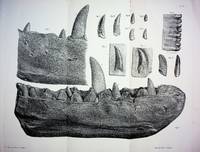
1847réf. 1641FIRST EDITION MAGNIFICENT SET OF THE INAUGURAL 24 VOLUMES PUBLISHED BY THE NEW PALAEONTOGRAPICAL SOCIETY OF LONDON—100 MONOGRAPHS 1000 PLATES 7000 PAGES INCLUDING SEMINAL WORKS OF CHARLES DARWIN AND RICHARD OWEN. 24 quarto volumes 8 x 11 inches later half leather gilt-lettered on spine with gilt panel lines over green textured cloth with gilt-rules green patterned endpapers each containing up to 7 monographs with lithographic or engraved plates many folding and some wood engravings in the text. The volumes appear to be unread with tight bindings that are as new and bright plates. Preliminary pages of each volume contain a perforated stamp of the Carnegie Library of Pittsburgh—there are no other ownership marks only rare light foxing. Very good. The Palaeontographical Society was established in 1847 and is the oldest society devoted to the study of paleontology worldwide. Its primary role is to promote the description and illustration of the British fossil flora and fauna via publication of an authoritative monograph series. The monographs were issued annually to members of the society. They cover a wide range of taxonomic groups from microfossils trilobites and ammonites through to Coal Measure plants mammals and reptiles and from all ages from Cambrian to Pleistocene. They form a benchmark for understanding the past life of the British Isles and many include the original descriptions of numerous key species. The first monograph Vol. 1 on the Crag Mollusca was published in March 1848 and the Society continues this work today. Notable authors in the series include Charles Darwin and Richard Owen both members of the Society. Darwin's interest in barnacles had first arisen in his student days in Edinburgh under the guidance of Robert Grant and increased during his detailed work in dissecting and classifying the specimens he had collected on the Beagle voyage. Darwin published his papers on fossil barnacles included in volumes 5 1851 and 8 1854 reflecting the 8 years that he devoted to the study of extinct and living barnacles establishing his credentials for formulating his theory of natural selection in The Origin of Species in 1859. In his analysis of reptilian British fossils Darwin's leading opponent Richard Owen identified unique characteristics of Megalosaurus vol. 9 Iguanodon and Hylaeosaurus vol. 10 that distinguished them from extant lizards and coined the term dinosaur "terrible lizard" in 1841. There are 22 monographs by Owen in the first 24 volumes including 16 on dinosaurs 4 on other reptiles and turtles and 2 on mammals including whales. British fossil hunter William Buckland found some fossils in 1819 and he eventually described them and named them in 1824. Like scientists before him Buckland thought the fossils belonged to an ancient larger version of a modern reptile. The first edition of a work which laid the foundation to vertebrate paleontology was Georges Cuvier's Recherches sur les ossements fossiles de quadrupèdes Researches on quadruped fossil bones published in France in 1812. In 1822 Cuvier's disciple and editor of the scientific publication Journal de physique Henri de Blainville introduced the term palaeontologie as the study of fossilized organisms—translated to the English paleontology. The word palaeontographical was coined by members of the Clay Club that established the new society whose goal was to describe and illustrate newly discovered fossils. The rapid progress in geology and paleontology during the 1830s and 1840s was aided by a growing international network of geologists and fossil specialists whose work was organized and reviewed by an increasing number of geological societies. Many of these geologists and paleontologists were now paid professionals working for universities museums and government geological surveys. The relatively high level of public support for the earth sciences was due to their cultural impact and their proven economic value in helping to exploit mineral resources such as coal. Another important factor was the development in the late 18th and early 19th centuries of museums with large natural history collections. The first 24 years of the Palaeontographical Society Monographs spans the middle of the 19th century and brackets publication of The Origin of Species in 1859. The intense activity in British paleontology at this time is reflected in the 110 monographs contained in these 24 volumes and provides a visual as well as a narrative context for the contributions of Darwin and Owen. The 27 contributing authors reveal the strong attraction of paleontology for physicians and the wide variety of species whose ancestors were pursued. These ranged from minute foraminifera to larger marine invertebrates including corals tunicates brachiopods mollusks echinoderms ammonites belemnites trilobites and eurypterids and vertebrates fish reptiles and mammals. Because photography did not become widely available until the end of the 19th century illustrations in the monographs were executed as lithographs or engravings. The most prominent London lithographers of the day were recruited to produce the dramatic plates. Many of these artists were themselves accomplished naturalists. These included Day & Son Lithographers to Queen Victoria; George Henry Ford a member of the British Museum; Michael & Nicholas Hanhart who developed a complex layering of tint stones; Charles Joseph Hullmandel author of The Art of Drawing on Stone; and the Sowerby family a British family of several generations of naturalists illustrators botanists and zoologists active from the late 18th century to the mid twentieth century. The three George Sowerbys produced major works on mollusks and their systematics including the many monographs by the Society as well as Darwin's barnacles. Notably the Sowerbys were responsible for also producing the copper plate engravings for these monographs including James De Carle Sowerby who founded the Royal Botanic Society and Gardens and was its secretary for 30 years. The Paleontographical Society Monographs are cited by Darwin in his reading notebooks. NOTE: Available upon request info@BiomedRarebooks.com A 22-page detailed description of the set containing large magnification images of selected plates list of individual monographs in each volume and list of authors subjects plates sorted by subject. Palaeontographical Society hardcover books
1868réf. 010633New York: Orange Judd and Company 1868. Book. Very Good. Cloth. First American Edition. 12mo - over 6¾ - 7¾" tall. First American Edition. Authorized Edition with a preface by Asa Gray. Illustrated. 494 pages plus 6 pages ads in rear in Volume I and 568 pages plus 8 pages ads in rear in Volume II. Dark brown end papers. Green cloth covered blind stamped boards with gilt lettering to the spines.About Very Good. Volume I has modest wear to tips and spine ends slight sun darkened spine minimal rubbing. Both hinges opened. Front paste down with two different prior owner book plates. Front free end paper prior owner name in ink. Pages 191 to 210 loose from binding. Volume II has small ink stain to front board wear to tips and spine ends front hinge open showing webbing but holding nicely prior owner book plate glue shadow at paste down the plate laid in. Internally clean and unmarked. The later owner of this book was the noted University of Cincinnati chemist and educator William B. Jensen. Priced to allow for hinge repair. . Orange Judd and Company Hardcover books
1912réf. 1691Adelphi W.C.: The Eugenics Education Society 1912. First edition. SCARCE PROCEEDINGS OF FIRST INTERNATIONAL EUGENICS CONGRESS PRESIDED BY LEONARD DARWIN. 15.5x24 cm hardcover publisher's green cloth binding gilt title to spine institutional library bookplate to front paste-down "withdrawn" handstamp to front free endpaper i-xix 490 pp. Rebacked preserving original spine cover corners worn front hinge cracked light foxing to first and last pages browning to page edges binding tight and pages clean and unmarked. Good in custom archival mylar cover. Papers in English French and Italian. CONTENTS: Variazione E Erededita Nell'uomo Variation and Heredity in Man G. SERGI; On the Increase of Stature in certain European Populations SOREN HANSEN; Le Cosidette Leggi Dell'Ereditarieta Nell'Uomo The So-called Laws of Heredity in Man V. GUIFFRIDA-RUGGERI; The Inheritance of Fecundity . RAYMOND PEARL; La PsicoLOGiA Ethnica e La Scienza Eugenistica Ethnic Psychology and the Science of Eugenics ENRICO MORSELLI; The Inheritance of Epilepsy DAVID F. WEEKS; L'influence de l'age des Parents sur les Caracteres Psycho-Physique DES ENFANTS The Influence of Parental Age on the Psycho-Physiological Characters of Children ANTONIO MARRO; Genetics and Eugenics R. C. PUNNETT; Rapport sur l'organisation Pratique de l'Action Eugenique Report on the Practical Organisation of Eugenic Action LOUIS QUERTON; Marriage Laws and Customs C. B. DAVENPORT; Eugenique Selection et Determinisme Des Tares Eugenics Selection and the Origin of Defects FREDERIC HOUSSAY; La Puericulture avant la Procreation General Considerations upon " Education before Procreation " ADOLPHE PINARD; Preliminary Report to the First International Eugenics Congress of the Committee of the Eugenics Section American Breeders' Association to Study and Report as to the Best Practical Means for Cutting off the Defective Germ-Plasm in the Human Population BLEEKER VAN WAGENEN; Eugenics and the New Social Consciousness SAMUEL G. SMITH; Practicable Eugenics in Education F. C. S. SCHILLER; Elite Fisio-Psichica e Elite Economica The Psycho-Physical Elite and the Economic Elite ACHILLE LORIA; La Cause de l'Inferiorite des Characteres Psycho-Physiologiques des Classes Inferieurs . The Cause of the Inferiority of Physical and Mental Characters in the Lower Social Classes ALFREDO NICEFORO; La Fertilite des Mariages suivant la Profession et la Situation Sociale The Fertility of Marriages according to Profession and Social Position LUCIEN MARCH; Eugenics and Militarism VERNON L. KELLOGG; Eugenics in Party Organization ROBERTO MICHELS; The Influence of Race on History W. C. D. and C. D. WHETHAM; Some Interrelations between Eugenics and Historical Research ADAMS WOODS; II Contributi Demografici ai Problemi dell' Eugenica The Contributions of Demography to Eugenics CORRADO GINI; Maternity Statistics of the State of Rhode Island State Census of 1905 FREDERICK L. HOFFMAN; Sur la Prophylaxie de la Syphilis Hereditaire et Son Action Eugenique On the Prophylaxis of Hereditary Syphilis and its Eugenic Effect Dr. HALLOPEAU; Alkohol und Eugenik The Effect of Alcohol on the Germ-Plasm Dr. ALFRED MOEN; Alcoolisme et Degenerescence. Statistiques du Bureau central d'Administration des Alienes de Paris et du Departement de la Seine de 1867 a I912 Alcoholism and Degeneracy. Statistics from the central office for the management of the insane of Paris and the Department of the Seine from 1867 to 1912 Drs. MAGNAN and FILLASSIER; Rassenhygiene und Arztliche Geburtshilfe Eugenics and Obstetrics AGNES BLUHM; The Place of Eugenics in the Medical Curriculum L E. JORDAN; The History of a Healthy Sane Family showing Longevity in Catalonia VALENTI Y VIVO; Heredity and Eugenics in Relation to Insanity F. W. MOTT; Quelques Considerations sur les Enfants Arrieres Some Remarks on Backward Children RAOUL DUPUY. LEONARD DARWIN 1850 – 1943 son of Charles Darwin and president of the Congress was an English politician economist and eugenicist. He was president of the Royal Geographical Society from 1908 to 1911 and chairman of the British Eugenics Society from 1911 to 1928 – succeeding his half-cousin once removed Francis Galton. Darwin played an important part in the life of the geneticist and statistician Ronald Fisher supporting him intellectually morally and sometimes financially. Cited by RC Engs in The Eugenics Movement 2005: "As the early-twentieth-century eugenics movement spread on both sides of the Atlantic the First International Eugenics Congress brought together eugenics leaders from the United States Britain Germany and other countries. The congress held at the University of London Jiily 24-30 1912 was hosted by the British Eugenics Education Society. Attendance included 324 individuals from around the world. The conference name tags bore the likeness of Francis Galton the father of eugenics. This major race improvement or eugenics conference was aimed at all organizations and individuals studying eugenics race hygiene and heredity. Britain's pivotal eugenics leader Leonard Darwin son of naturalist Charles Darwin served as chairman. Other British delegates included eugenics author C. W. Saleeby geneticist William Bateson 1861-1926 and Winston Churchill 1874-1965 then secretary of state for home affairs and later prime minister. Eugenics supporter and Statistician R. A. Fisher as a student served as a steward; statistician Karl Pearson did not attend. From the United States 'vice presidents' or those who helped organize the conferences included inventor Alexander Graham Bell eugenics leader Charles Davenport university presidents Charles Eliot and David Starr Jordan. Other notable American delegates were anthropologist Henry Fairfield Osbom; eugenics supporter Madison Grant; and geneticists William E. Castle Frederick A. Woods and Raymond Pearl. The conference sessions were divided into four categories the relationship of eugenics to 1 biological research 2 sociological and historical research 3 legislation and social customs and 4 the practical applications of eugenic principles. The papers and proceedings from the conference program were published by the Eugenics Society in two volumes. Vol. I. Problems in Eugenics: Papers Communicated to the First International Eugenics Congress 1912 contained 490 pages. Most of the papers presented at the conference were found in this volume offered here. Specific titles included "Eugenics and Militarism" "The Influence of Race on History" and "Backward Children." Vol. 2 Problems in Eugenics: Report of Proceedings contained 189 pages. Although it ineluded a few papers its primary focus was discussion following presentations. A planning committee was formed to plan the next congress in 1913. However due to World War I the committee did not meet until October 1919 in London where it agreed to hold a Second Intemational Congress of Eugenics in New York in 1921." The Eugenics Education Society hardcover books
1860réf. 1296Boston: Ticknor and Fields 1860. First edition. 1860 THE ATLANTIC MONTHLY JULY-DECEMBER 1860--CONTAINS 3 REVIEWS OF DARWIN'S ORIGIN OF SPECIES AND AN EDITORIAL PROMOTING LINCOLN'S CANDIDACY FOR PRESIDENT BOTH MEN WERE BORN FEBRUARY 12 1809. 9 1/2 inches tall hardcover 3/4 black leather binding spine with raised bands gilt ruled compartments and gilt title and initials of previous owner Fr. A. Bryan. Edges marbled marbled endpapers with armorial bookplate of Fr. A. Bryan to front paste-down iv 764 pp; joints starting binding tight light foxing to endpapers pages crisp and unmarked very good. Darwin first wrote to Asa Gray in 1855. A correspondence and intellectual comradeship quickly developed to the point where in July 1857 Darwin informed Gray of his as yet unpublished theory of natural selection thereby making Gray the third person after Joseph Hooker and Charles Lyell to know his secret. Part of this letter to Gray was later included in the presentation to the Linnean Society in July 1858 when Darwin first made his theory and Wallace's public. After the publication of The Origin of Species Gray became Darwin's foremost American defender against his Harvard colleague Louis Agassiz and other critics. Gray arranged for the publication of an American edition of the Origin of Species and wrote a positive review for the American Journal of Science. Then in the three issues-July pp 109-116 August pp 229-239 October pp 406-425 1860--of The Atlantic Monthly contained in this volume he wrote again anonymously in defense of Darwin the first two parts "Darwin on the Origin of Species" the third "Darwin and His Reviewers". Darwin was extremely pleased with Gray's Atlantic Monthly piece and eventually funded its publication-retitled and under Gray's name-by Ticknor and Fields the publisher of The Atlantic Monthly and had 250 copies sent to him for distribution by Trubner and Co. Because James Fields was a close friend of Louis Agassiz the pamphlet was never sold by Ticknor and Fields in the United States. "Thus although actually printed in America the pamphlet was in effect a British publication and received the impetus of Darwin's promotional efforts there" Dupree Asa Gray p. 299. Notably also contained in this volume is a report in the October issue pp 492-502 titled The Election in November: ""We believe that this election is a turning-point in our history . . . It is in a moral aversion to slavery as a great wrong that the chief strength of the Republican party lies. . . . We are persuaded that the election of Mr. Lincoln will do more than anything else to appease the excitement of the country. He has proved both his ability and his integrity; he has head experience enough in public affairs to make him a statesman and not enough to make him a politician. The encroachments of Slavery upon our national policy have been like those of a glacier in a Swiss valley. Inch by inch the huge dragon with his glittering scales and crests of ice coils itself onward an anachronism of summer the relic of a bygone world where such monsters swarmed. But it has its limit the kindlier forces of Nature work against it and the silent arrows of the sun are still as of old fatal to the frosty Python. Geology tells us that such enormous devastators once covered the face of the earth but the benignant sunlight of heaven touched them and they faded silently leaving no trace but here and there the scratches of their talons and the gnawed boulders scattered where they made their lair. We have entire faith in the benignant influence of Truth the sunlight of the moral world and believe that slavery like other worn-out systems will melt gradually before it. 'All the earth cries out upon Truth and the heaven blesseth it; ill works shake and tremble at it and with it is no unrighteous thing.'" Psalm 66 Isaiah 13 Hebrews 6. Abraham Lincoln and Charles Darwin were born on the same day February 12 1809. Both lost their mother at a young age and despite their differences in upbringing both men saw themselves as autodidacts. In his book Lincoln and Darwin 2010 James Lander argues that they also shared an interest in science and a skeptical approach to religion. Darwin closely followed the events of the American Civil War and wanted Lincoln and the Union to prevail. Lander explores similarities in the intellectual development concerns and impacts of Abraham Lincoln and Charles Darwin focusing in particular on the issue of slavery in the United States which both men influentially opposed. Lander's broader argument is that Lincoln and Darwin shared the same outlook on the central issues of race science and religion. He also looks at the relationship between science and race in the 19th century United States and the emergence and influence of scientific racism. Of particular interest in this volume of The Atlantic the article on the coming presidential election refers to geologic time and extinction of the dinosaurs as a metaphor for the hoped-for extinction of slavery. Also in this volume a review of Home Ballads and Poems by John Greenleaf Whittier concluding "We have had no more purely American poet thn Mr. Whittier none in whom the popular thought found such ready and vigorous expression." THE ATLANTIC was founded in 1857 in Boston as The Atlantic Monthly a literary and cultural magazine that published leading writers' commentary on education the abolition of slavery and other major political issues of that time. In 1860 three years into publication The Atlantic's then-editor James Russell Lowell endorsed Republican Abraham Lincoln for his first run for president and also endorsed the abolition of slavery. Ticknor and Fields hardcover books
réf. 1418345FLF Press. Softcover. Octavo. In Very Good condition. Spine indigo with orange and white lettering. Sealed in lightly torn plastic shrink wrap with orange sticker on front. Mild general shelf wear. Shelved in LGBT. 1418345. Shelved Dupont Bookstore. FLF Press unknown books
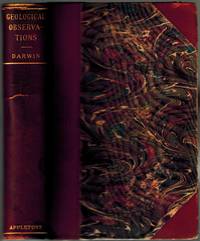
1896réf. 010618New York : D.Appleton and Company 1896. Book. Very Good. Half-Leather. 3rd Edition. 8vo - over 7¾ - 9¾" tall. Third Edition with Maps and Illustrations. xiii 648 pp. Contemporary half red leather over marbled boards gilt lettering and rules to the spine. Top edge gilt. Very Good. Spine has small chip to top of spine; closed tear to mid spine; and rubbing at the corners and edges. Intermittent toning around paste downs and end pages. First published in 1846 Darwin's Geological Observations made up the third part of his memoir of his voyage on the Beagle during the years 1832-1836. Contains two Parts; "Part One: Volcanic Islands and Part Two: South America". Maps and fold outs present and undamaged small stains to the final two fold-outs. Uncommon in collectible condition. . D.Appleton and Company Hardcover books