2002ref. b29515Washington: Library of Congress 2002. First Edition . Soft cover. Fine. Fine in original wrappers. One of 1000 letterpress copies. Library of Congress paperback
1898In due parti: Cenni storici ed esposizione della dottrina Darwiniana; Critica del darwinismo (di parte cattolica). L'autore, sacerdote, dedica il libro all'arcivescovo di Udine Pietro Zamburlini. In buono stato
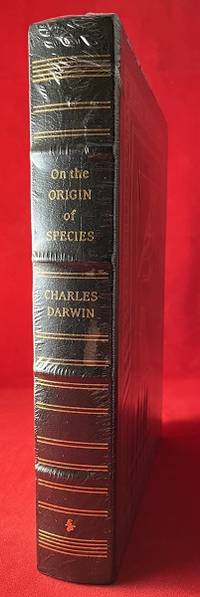
1991ref. 5962Norwalk CT: The Easton Press 1991. Limited Edition. Leather bound. Near Fine. 7 1/2 X 10 1/2 Inches. Original black leather with 22 KT gold trim and decoration to covers and spine. Four raised hubs to spine. AEG. Sealed in original publisher wrap never opened. The Easton Press unknown
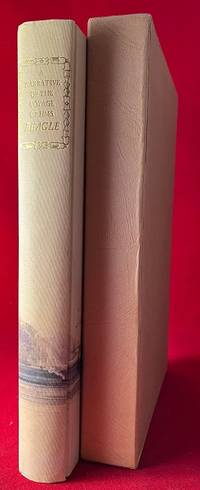
1979ref. 5430London: The Folio Society 1979. Limited Edition. Hardcover. Near Fine. 6 1/4 X 10 Inches. 359 PP. Illustrated deluxe edition of the exploratory journey of Charles Darwin along the South American coastline. Deluxe edition housed in original issue slipcase. Early Folio Society edition. A sharp copy. The Folio Society hardcover
1964Milano, Mondadori, 1964, 4to (cm. 28 x 21,5) cartonato con copertina illustrata a colori, pp. 192 completamente illustrato in nero e a colori (I Regni della Vita) .
1983Venezia, Tipografia commerciale, 1983, 8vo punto metallico, pp. 15
ref. 0343074052.Ghardcover. Good. Access codes and supplements are not guaranteed with used items. May be an ex-library book. hardcover
ref. 1355612543.Ghardcover. Good. Access codes and supplements are not guaranteed with used items. May be an ex-library book. hardcover
ref. 1313479918.Gpaperback. Good. Access codes and supplements are not guaranteed with used items. May be an ex-library book. paperback
1748ref. 17931748 Chez L'Honoré et Fils, Amsterdam, 1748. 2 volumes in-8, plein veau, dos orné, filets dorés sur les plats, doré sur les trois tranches. (6 ff), (cxix), (4 ff), 208 pages; 231 pages, 1ff d'errata.
2009ref. 854292009 Paris, City, 2009, in 8° broché, 233 pages ; figures dans le texte ; couverture illustrée.
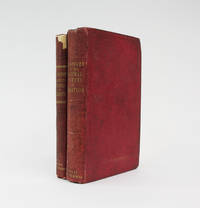
ref. 18098London: John Churchill. 1844 and 1845. First edition first printing. First edition first printing. Two volumes. 8vo. Publisher's original red cloth with gilt titles to the spines. A very good set the bindings square and firm with minor nicks to the head of the spine of 'Vestiges' minor cracking to the inner hinges and chipping with loss to the spine ends of 'Explanations' the corners of both volumes a little bumped. The contents of 'Vestiges' with minor toning to page edges and the occasional minor mark to a couple of page margins are otherwise in excellent order clean throughout and without previous owners' inscriptions or stamps. The contents of 'Explanations' with a small contemporary bookseller's ticket to the front pastedown minor toning to the page edges the odd marginal mark a few faint pencil underlings a very minor water mark to the rear pastedown and free endpaper and a paper flaw to p.59 are otherwise in very good condition. All in all an attractive and appealing set in entirely original unsophisticated condition. Housed in a bespoke quarter morocco solander case. The first edition of the first full-length exposition of an evolutionary theory in English and the most important precursor to Darwin's 'On the Origin of Species'. "This outspoken statement of a belief in evolution published anonymously to protect Chambers' reputation as a publisher anticipated Darwin's Origin by 16 years Garrison and Morton p.218. Bringing "together a large variety of data from both geology and the life sciences to support the idea of the origin of species through a process of transmutation. It played a significant role in the history of mid-nineteenth century biology by making evolutionism a commonplace topic of discussion" becoming a sensational best-seller read widely by the intellectual and cultural elite thus easing the way for Darwin's own writings Norman. Notably the work also contains what is probably the first discussion of computing within the context of biology with Chambers demonstrating "that evolutionary change occurring over long periods of time could be seen as similar to the workings of Babbage's Difference Engine programmed from the beginning of its operation to produce in sequence several different series of numbers according to a succession of mathematical rules". Vestiges in fact served to significantly aid public understanding of Babbage's work with his ideas receiving "a much wider circulation through Chamber's text than through the two editions of the "Ninth Bridgewater Treatise" Hook et al. Origins of Cyberspace p.147. The October 1844 first edition of Vestiges consisted of 750 copies with a second edition of 1000 copies quickly following in December. The book was constantly revised with Chambers refining arguments addressing criticism and reacting to new scientific publications. Late in 1845 largely in response to Adam Sedgwick's review of the work in the Edinburgh Review Chamber's wrote "Explanations: A Sequel to Vestiges of the Natural History of Creation" consisting of 1500 copies and which was subsequently appended to later editions DSB III:192. The 11th edition of 1860 included a three page discussion of Darwin's recently published Origin a book which according to historian James A. Secord Vestiges outsold up until the early twentieth century. It was not until the 12th edition of 1884 in the preface written by his friend Alexander Ireland that Robert Chambers was revealed to have written Vestiges ending several decades of public speculation that had named everyone from Prince Albert to Darwin himself as the potential author. Secord James: Victorian Sensation The Extraordinary Publication Reception and Secret Authorship of Vestiges of the Natural History of Creation 2001. Further details and images for any of the items listed are available on request. All items are catalogued by humans. Lucius Books welcomes direct contact with our customers. London: John Churchill. 1844 and 1845 hardcover
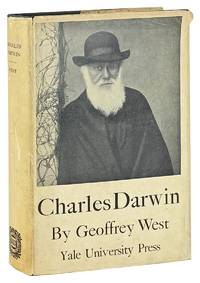
1938ref. 47253New Haven CT: Yale University Press 1938. Very Good/Very Good. New Haven CT: Yale University Press 1938. First Edition. Octavo 24cm; publisher's cloth in white pictorial price-clipped dust jacket; xiv2359pp.; portrait frontispiece seven leaves of plates. Moderate wear and rather heavy dust-soil to jacket two longish closed tears at top edge of upper panel not quite touching image spotting to cloth else Very Good and sound in the rare jacket. Ownership ex libris of the late chemist and bibliophile Sydney Ross to front pastedown. Yale University Press unknown
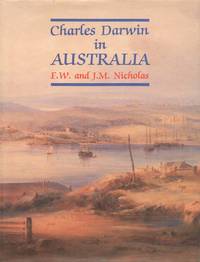
ref. 42482Cambridge University Press Sydney NSW 1989. Quarto; hardcover with gilt spine-titling and endpaper maps; 175pp. with a colour portrait frontispiece and many full-colour and monochrome illustrations. Minor wear; text block top edge dusted; signed by the authors in ink to the title page. Dustwrapper lightly spotted on the verso; now professionally protected by superior non-adhesive polypropylene film. Very good. Postage quoted is for a standard format octavo book. Final charges may vary depending on size and weight. Based on a new transcription of the entire Australian section of Darwin's diary supplemented by extracts from the notebook he carried on a trip to Bathurst. The trip is covered thus in detail. His observations concern not only the flora and fauna but also the society of the day. Cambridge University Press, Sydney NSW, 1989. hardcover
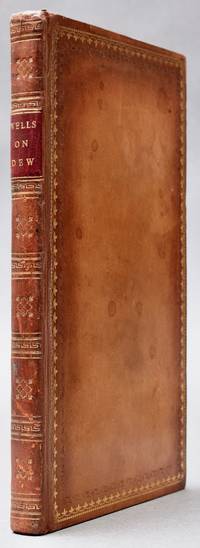
1815ref. BB2499London: printed for Taylor and Hessey No. 93 Fleet Street 1815. Full Calf. Fine. Second Edition of this classic of meteorology first published in 1814 which revolutionized the understanding of ventilation in public places and for which Wells was awarded the Rumford Medal of the Royal Society. Demy 8vo 212 x 127mm: 4150pp. Beautifully bound in contemporary calf spine richly gilt in six compartments covers framed in blind and gilt red leather lettering piece gilt Prussian blue end papers. Manuscript presentation to title page: "To Dr. James Jackson from the Author" with Jackson's engraved armorial book plate to front paste-down. A gorgeous example tightly bound and generally clean throughout. Lowndes 2871 "A valuable little work". Garrison-Morton 1604. Norman 2199 and Christies 848. Blocker p. 416. Waller 12191. Knight p. 191 "Perhaps more important than any writings on induction by philosophers was the splendid example of inductive reasoning by William Charles Wells. . . . his Essay on Dew was rapidly recognized as a classic.". Wells was born in Charleston South Carolina but left America at the start of the Revolution for London where he became physician to St. Thomas's Hospital. In the autumn of 1811 he began a series of researches in the Surrey garden of his friend James Dunsmore comparing the formation of dew under varying conditions of temperature humidity weather cloud cover season and time of day. He concluded that dew results from the condensation of air in contact with objects cooled by radiating their heat into the cloudless night sky. "His researches . . . were of major importance in the development of the science of ventilation particularly in its relation to relative humidity and the influence of the latter on the comfort of the occupants of factories ships theatres etc." Garrison-Morton Wells's inquiry into the nature of dew was widely cited in the 1830s as an outstanding example of inductive scientific inquiry. Sir John Herschel used it as the primary illustration in his Discourse on the study of Natural Philosophy calling the theory "one of the most beautiful specimens we can call to mind of inductive experimental enquiry lying within a moderate compass." In 1836 the Encyclopedia Metropolitana reported "We know of no work in our day which has been more universally admired than the Treatise of Dr. Wells certainly none that practically exemplifies in a purer and better form the admirable inductive system which it was the object of Bacon to teach." John Tyndall and William Whewell also praised it. N. B. With few exceptions always identified we only stock books in exceptional condition carefully preserved in archival removable mylar sleeves. All orders are packaged with care and posted promptly. Satisfaction guaranteed. Fine Editions Ltd is a member of the Independent Online Booksellers Association and we subscribe to its codes of ethics. printed for Taylor and Hessey, No. 93, Fleet Street unknown
1938ref. 47253New Haven CT: Yale University Press 1938. Very Good/Very Good. New Haven CT: Yale University Press 1938. First Edition. Octavo 24cm; publisher's cloth in white pictorial price-clipped dust jacket; xiv2359pp.; portrait frontispiece seven leaves of plates. Moderate wear and rather heavy dust-soil to jacket two longish closed tears at top edge of upper panel not quite touching image spotting to cloth else Very Good and sound in the rare jacket. Ownership ex libris of the late chemist and bibliophile Sydney Ross to front pastedown. Yale University Press unknown books
1985ref. ND202651985 [6], 690 p., portrait, 4to, cloth. Added is: Supplement to the Calendar, 1994 (iii, 46 p.).
1946ref. 43971946 P., Hier et Aujoud'hui (Collection "Grandes Figures"), 1946, in 12 broché, non coupé, 221 pages ; index et bibliographie in-fine ; couverture illustrée.
ref. 48258P., Editions Sociales Internationales (Collection "Socialisme et Culture"), 1938, in 12 broché, 322 pages
ref. 10320Lyon, Louis Perrin et Marinet, 1877. In-8, broché.
ref. 44628P., Corréa, 1941, in 12 broché, 232 pages ; portrait en frontispice.
1983ref. ND218891983 135 p., num. figs, paperbound. Published in: Biological Journal of the Linnean Society. Volume 20, no. 1.
ref. 23899Grenoble, Editions Françaises Nouvelles, 1944, in 8° broché, 96 pages ; couverture illustrée en couleurs ; manque en tête du dos.
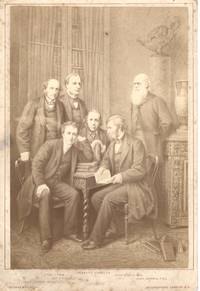
ref. 39536showing this group of eminent Victorians gathered around a table in deep discussion 10" x 7" no place no date but unknown
ref. 54343showing him head and shoulders three quarter face with his full beard oval 4½" x 3½" on mount 10¾" x 8" no place no date circa The term Woodburytype refers to both a photomechanical process and the print produced by this process. The process produces continuous tone images in slight relief. A chromated gelatin film is exposed under a photographic negative which hardens in proportion to the amount of light. Then it is developed in hot water to remove all the unexposed gelatin and dried. This relief is pressed into a sheet of lead in a press with 5000 psi. This is an intaglio plate. It is used as a mold and is filled with pigmented gelatin. The gelatin layer is then pressed onto a paper support. It is thought to produce the finest photographic images. The Woodburytype was developed by Walter B. Woodbury in 1864 first used in a publication in 1866 and widely used for fine book illustration from about 1870 to 1900. unknown