7 640 résultats
1960réf. 198154NJ: Prentice 1960. Good. Fifth edition. Good plus Foxing fine edges. Cover rubbed with fraying and spine torn and taped. Prentice unknown books
1956réf. 202005Englewood Cliffs NJ: Prentice Hall 1956. First edition. Very good with a tear at the crown and moderate wear. Prentice Hall unknown books
1958réf. 178571Nj: Prentice 1958. Very Good. Third edition. Very good. Corners rubbed and slightly bent. Edges of spine slightly rubbed. Shelf rubbing. Prentice unknown books
2021réf. x-1639871209Ingram Pub Services 2021. Hardcover. New. 330 pages. 9.00x6.00x0.94 inches. Ingram Pub Services hardcover
réf. ria9798895884461_inpHardcover. New. New Book; Fast Shipping from UK; Not signed; Not First Edition; COMPREHENSIVE GUIDE TO CLINICAL RESEARCH REGULATIONS:THEORY AND PRACTICE This 25-chapter exhaustive resource dives deep into the essential topics of clinical research and regulatory compliance.Comprehensive Guide to Clinical R hardcover
réf. 49338153like new. unknown
réf. 0809319047.Ghardcover. Good. Access codes and supplements are not guaranteed with used items. May be an ex-library book. hardcover
2002réf. SBBI-mon0000148837Pearson 2002. paperback. Good. Our good condition books are generally good for reading but not for gifting or collecting. They could have imperfections such as creasing fanning inscriptions margin notes yellowing staining on edge or cover or pages bumps scuffs etc etc sometimes multiple of these. It's a wide category that encompasses anything that isn't almost-new down to anything that is slightly better than poor. We would NOT recommend gifting Good books - these should be considered reading copies. Our books are dispatched from a Yorkshire former cotton mill. We list via barcode/ISBN so please note that the images are stock images and may not be the exact copy you receive furthermore the details about edition and year might not be accurate as many publishers reuse the same ISBN for multiple editions and as we simply scan a barcode or enter an ISBN we do not check the validity of the edition data when listing. If you're looking for an exact edition please don't order at least not without checking with us first although we don't always have time to check. We aim to dispatch prompty the service used will depend on order value and book size. We can ship to most countries see our shipping policies. Payment is via Abe only. Pearson paperback
1869Un volume in 8vo (22 cm) di XVI-281-(2) pagine. Qualche fioritura. traduit de l'allemand d'après la seconde édition par Auguste Jacquot. Mezza pelle coeva. Dorso liscio ornato con titolo dorato (qualche usura alle cerniere). Importante contributo alla diffusione delle teorie di Darwin contemporanea alla pubblicazione dei suoi scritti.
1869xvi + 281pp., 22cm., reliure cart. (plats marbrés, dos en cuir avec titre doré), 2 cachets sur page de titre, feuilles de agrde marbrées, qqs.rousseurs, bon état
1869réf. W60778Leipzig/ Paris, Théodore Thomas/ Reinwald 1869 xvi + 281pp., 22cm., reliure cart. (plats marbrés, dos en cuir avec titre doré), 2 cachets sur page de titre, feuilles de agrde marbrées, qqs.rousseurs, bon état
1869réf. 1703Couverture rigide Théodore Thomas - C. Reinwald 1869 Leipzig-Paris 21,5x13,5 cm
1982réf. G0914766821I5N00IWP Publishers 1982. Paperback. Acceptable. Disclaimer:A readable copy. All pages are intact and the cover is intact. Pages can include considerable notes-in pen or highlighter-but the notes cannot obscure the text. At ThriftBooks our motto is: Read More Spend Less.Dust jacket quality is not guaranteed. IWP Publishers paperback
1982réf. G0914766821I3N00IWP Publishers 1982. Paperback. Good. Pages can have notes/highlighting. Spine may show signs of wear. ~ ThriftBooks: Read More Spend Less.Dust jacket quality is not guaranteed. IWP Publishers paperback
réf. 093168904X.Gpaperback. Good. Access codes and supplements are not guaranteed with used items. May be an ex-library book. paperback
réf. 0914766821.Gpaperback. Good. Access codes and supplements are not guaranteed with used items. May be an ex-library book. paperback
1860réf. 1296Boston: Ticknor and Fields 1860. First edition. 1860 THE ATLANTIC MONTHLY JULY-DECEMBER 1860--CONTAINS 3 REVIEWS OF DARWIN'S ORIGIN OF SPECIES AND AN EDITORIAL PROMOTING LINCOLN'S CANDIDACY FOR PRESIDENT BOTH MEN WERE BORN FEBRUARY 12 1809. 9 1/2 inches tall hardcover 3/4 black leather binding spine with raised bands gilt ruled compartments and gilt title and initials of previous owner Fr. A. Bryan. Edges marbled marbled endpapers with armorial bookplate of Fr. A. Bryan to front paste-down iv 764 pp; joints starting binding tight light foxing to endpapers pages crisp and unmarked very good. Darwin first wrote to Asa Gray in 1855. A correspondence and intellectual comradeship quickly developed to the point where in July 1857 Darwin informed Gray of his as yet unpublished theory of natural selection thereby making Gray the third person after Joseph Hooker and Charles Lyell to know his secret. Part of this letter to Gray was later included in the presentation to the Linnean Society in July 1858 when Darwin first made his theory and Wallace's public. After the publication of The Origin of Species Gray became Darwin's foremost American defender against his Harvard colleague Louis Agassiz and other critics. Gray arranged for the publication of an American edition of the Origin of Species and wrote a positive review for the American Journal of Science. Then in the three issues-July pp 109-116 August pp 229-239 October pp 406-425 1860--of The Atlantic Monthly contained in this volume he wrote again anonymously in defense of Darwin the first two parts "Darwin on the Origin of Species" the third "Darwin and His Reviewers". Darwin was extremely pleased with Gray's Atlantic Monthly piece and eventually funded its publication-retitled and under Gray's name-by Ticknor and Fields the publisher of The Atlantic Monthly and had 250 copies sent to him for distribution by Trubner and Co. Because James Fields was a close friend of Louis Agassiz the pamphlet was never sold by Ticknor and Fields in the United States. "Thus although actually printed in America the pamphlet was in effect a British publication and received the impetus of Darwin's promotional efforts there" Dupree Asa Gray p. 299. Notably also contained in this volume is a report in the October issue pp 492-502 titled The Election in November: ""We believe that this election is a turning-point in our history . . . It is in a moral aversion to slavery as a great wrong that the chief strength of the Republican party lies. . . . We are persuaded that the election of Mr. Lincoln will do more than anything else to appease the excitement of the country. He has proved both his ability and his integrity; he has head experience enough in public affairs to make him a statesman and not enough to make him a politician. The encroachments of Slavery upon our national policy have been like those of a glacier in a Swiss valley. Inch by inch the huge dragon with his glittering scales and crests of ice coils itself onward an anachronism of summer the relic of a bygone world where such monsters swarmed. But it has its limit the kindlier forces of Nature work against it and the silent arrows of the sun are still as of old fatal to the frosty Python. Geology tells us that such enormous devastators once covered the face of the earth but the benignant sunlight of heaven touched them and they faded silently leaving no trace but here and there the scratches of their talons and the gnawed boulders scattered where they made their lair. We have entire faith in the benignant influence of Truth the sunlight of the moral world and believe that slavery like other worn-out systems will melt gradually before it. 'All the earth cries out upon Truth and the heaven blesseth it; ill works shake and tremble at it and with it is no unrighteous thing.'" Psalm 66 Isaiah 13 Hebrews 6. Abraham Lincoln and Charles Darwin were born on the same day February 12 1809. Both lost their mother at a young age and despite their differences in upbringing both men saw themselves as autodidacts. In his book Lincoln and Darwin 2010 James Lander argues that they also shared an interest in science and a skeptical approach to religion. Darwin closely followed the events of the American Civil War and wanted Lincoln and the Union to prevail. Lander explores similarities in the intellectual development concerns and impacts of Abraham Lincoln and Charles Darwin focusing in particular on the issue of slavery in the United States which both men influentially opposed. Lander's broader argument is that Lincoln and Darwin shared the same outlook on the central issues of race science and religion. He also looks at the relationship between science and race in the 19th century United States and the emergence and influence of scientific racism. Of particular interest in this volume of The Atlantic the article on the coming presidential election refers to geologic time and extinction of the dinosaurs as a metaphor for the hoped-for extinction of slavery. Also in this volume a review of Home Ballads and Poems by John Greenleaf Whittier concluding "We have had no more purely American poet thn Mr. Whittier none in whom the popular thought found such ready and vigorous expression." THE ATLANTIC was founded in 1857 in Boston as The Atlantic Monthly a literary and cultural magazine that published leading writers' commentary on education the abolition of slavery and other major political issues of that time. In 1860 three years into publication The Atlantic's then-editor James Russell Lowell endorsed Republican Abraham Lincoln for his first run for president and also endorsed the abolition of slavery. Ticknor and Fields hardcover
1860réf. 1296Boston: Ticknor and Fields 1860. First edition. 1860 THE ATLANTIC MONTHLY JULY-DECEMBER 1860--CONTAINS 3 REVIEWS OF DARWIN'S ORIGIN OF SPECIES AND AN EDITORIAL PROMOTING LINCOLN'S CANDIDACY FOR PRESIDENT BOTH MEN WERE BORN FEBRUARY 12 1809. 9 1/2 inches tall hardcover 3/4 black leather binding spine with raised bands gilt ruled compartments and gilt title and initials of previous owner Fr. A. Bryan. Edges marbled marbled endpapers with armorial bookplate of Fr. A. Bryan to front paste-down iv 764 pp; joints starting binding tight light foxing to endpapers pages crisp and unmarked very good. Darwin first wrote to Asa Gray in 1855. A correspondence and intellectual comradeship quickly developed to the point where in July 1857 Darwin informed Gray of his as yet unpublished theory of natural selection thereby making Gray the third person after Joseph Hooker and Charles Lyell to know his secret. Part of this letter to Gray was later included in the presentation to the Linnean Society in July 1858 when Darwin first made his theory and Wallace's public. After the publication of The Origin of Species Gray became Darwin's foremost American defender against his Harvard colleague Louis Agassiz and other critics. Gray arranged for the publication of an American edition of the Origin of Species and wrote a positive review for the American Journal of Science. Then in the three issues-July pp 109-116 August pp 229-239 October pp 406-425 1860--of The Atlantic Monthly contained in this volume he wrote again anonymously in defense of Darwin the first two parts "Darwin on the Origin of Species" the third "Darwin and His Reviewers". Darwin was extremely pleased with Gray's Atlantic Monthly piece and eventually funded its publication-retitled and under Gray's name-by Ticknor and Fields the publisher of The Atlantic Monthly and had 250 copies sent to him for distribution by Trubner and Co. Because James Fields was a close friend of Louis Agassiz the pamphlet was never sold by Ticknor and Fields in the United States. "Thus although actually printed in America the pamphlet was in effect a British publication and received the impetus of Darwin's promotional efforts there" Dupree Asa Gray p. 299. Notably also contained in this volume is a report in the October issue pp 492-502 titled The Election in November: ""We believe that this election is a turning-point in our history . . . It is in a moral aversion to slavery as a great wrong that the chief strength of the Republican party lies. . . . We are persuaded that the election of Mr. Lincoln will do more than anything else to appease the excitement of the country. He has proved both his ability and his integrity; he has head experience enough in public affairs to make him a statesman and not enough to make him a politician. The encroachments of Slavery upon our national policy have been like those of a glacier in a Swiss valley. Inch by inch the huge dragon with his glittering scales and crests of ice coils itself onward an anachronism of summer the relic of a bygone world where such monsters swarmed. But it has its limit the kindlier forces of Nature work against it and the silent arrows of the sun are still as of old fatal to the frosty Python. Geology tells us that such enormous devastators once covered the face of the earth but the benignant sunlight of heaven touched them and they faded silently leaving no trace but here and there the scratches of their talons and the gnawed boulders scattered where they made their lair. We have entire faith in the benignant influence of Truth the sunlight of the moral world and believe that slavery like other worn-out systems will melt gradually before it. 'All the earth cries out upon Truth and the heaven blesseth it; ill works shake and tremble at it and with it is no unrighteous thing.'" Psalm 66 Isaiah 13 Hebrews 6. Abraham Lincoln and Charles Darwin were born on the same day February 12 1809. Both lost their mother at a young age and despite their differences in upbringing both men saw themselves as autodidacts. In his book Lincoln and Darwin 2010 James Lander argues that they also shared an interest in science and a skeptical approach to religion. Darwin closely followed the events of the American Civil War and wanted Lincoln and the Union to prevail. Lander explores similarities in the intellectual development concerns and impacts of Abraham Lincoln and Charles Darwin focusing in particular on the issue of slavery in the United States which both men influentially opposed. Lander's broader argument is that Lincoln and Darwin shared the same outlook on the central issues of race science and religion. He also looks at the relationship between science and race in the 19th century United States and the emergence and influence of scientific racism. Of particular interest in this volume of The Atlantic the article on the coming presidential election refers to geologic time and extinction of the dinosaurs as a metaphor for the hoped-for extinction of slavery. Also in this volume a review of Home Ballads and Poems by John Greenleaf Whittier concluding "We have had no more purely American poet thn Mr. Whittier none in whom the popular thought found such ready and vigorous expression." THE ATLANTIC was founded in 1857 in Boston as The Atlantic Monthly a literary and cultural magazine that published leading writers' commentary on education the abolition of slavery and other major political issues of that time. In 1860 three years into publication The Atlantic's then-editor James Russell Lowell endorsed Republican Abraham Lincoln for his first run for president and also endorsed the abolition of slavery. Ticknor and Fields hardcover books
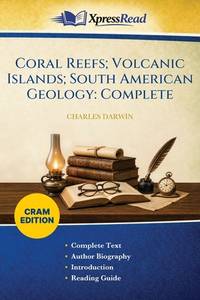
réf. ria9781026155363_inpPaperback. New. New Book; Fast Shipping from UK; Not signed; Not First Edition; This XpressRead Cram Edition of Coral Reefs; Volcanic Islands; South American Geology pairs the complete original text with carefully prepared study materials designed for deeper engagement with this classic.Charles Darwin's "Coral Ree paperback
réf. ria9781022918597_inpHardcover. New. New Book; Fast Shipping from UK; Not signed; Not First Edition; Charles Darwin's "Coral Reefs" remains a cornerstone of marine biology and geological study offering a detailed exploration into the formation and natural history of these vital ecosystems. This seminal work penned by one of history's hardcover
réf. 6128809941Standard Publications Incorporated . Papeback. New. pp. 212 Standard Publications, Incorporated unknown
réf. 1026155363.Gpaperback. Good. Access codes and supplements are not guaranteed with used items. May be an ex-library book. paperback
réf. 1023084260.Ghardcover. Good. Access codes and supplements are not guaranteed with used items. May be an ex-library book. hardcover
réf. 1022918532.Gpaperback. Good. Access codes and supplements are not guaranteed with used items. May be an ex-library book. paperback
réf. 1022918591.Ghardcover. Good. Access codes and supplements are not guaranteed with used items. May be an ex-library book. hardcover