Darwin, CharlesBiblio.com

5930 resultados
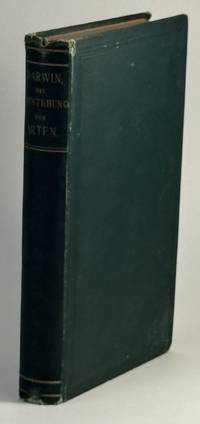
1899ref. 436968Stuttgart : E. Schweizerbart'sche Verlagshandlung 1899. First Edition. Hardcover. Very good copy in the original gilt-blocked cloth. Spine bands and panel edges somewhat dust-toned and rubbed as with age. Remains quite well-preserved overall. Physical description; vi 578 p. : ill. ; 23 cm. Notes; Index : p. 566-578. Subjects; Evolution. Natural selection. Stuttgart : E. Schweizerbart'sche Verlagshandlung hardcover
1884ref. 900Stuttgart Germany: E. Schweizerbart'sche Verlagshandlung E. Koch 1884. 6" x 9" pp. vi 578; text in the German language. Hardcover bound in green cloth boards with gold stamping on spine. Boards are scuffed at corners with a few minor tears without loss. Minor break at front free end paper but attached. Text is lightly toned at edges but otherwise sound. Good. A German language 7th edition of Charles Darwin's famous "On the Origin of Species" work outlining the modern premises of evolutionary science. E. Schweizerbart'sche Verlagshandlung (E. Koch) unknown
ref. 3847830899.Gpaperback. Good. Access codes and supplements are not guaranteed with used items. May be an ex-library book. paperback
ref. 3563259968.Gpaperback. Good. Access codes and supplements are not guaranteed with used items. May be an ex-library book. paperback
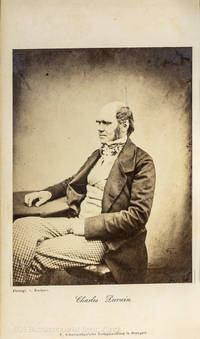
1862ref. 7863CB1862. Zweite verbesserte und sehr vermehrte Auflage. Stuttgart Schweizerbart 18621863. 8°. VIII 551 S. Mit einem fotografischen Portrait und einer Tafel. Halblederband der Zeit. Freeman 673. Zweite deutsche Ausgabe. Nur dieser Ausgabe hinzugefügt die Porträt-Fotografie von Carl Johann Sigmund Bucher. Das Papier durchgehend gebräunt und stockfleckig. Der Einband berieben. unknown
ref. 3847830902.Ghardcover. Good. Access codes and supplements are not guaranteed with used items. May be an ex-library book. hardcover
ref. H131Stuttgart Schweizerbart 1870. 8vo. VIII 530 S.mit 1 Portrait-Tafel. Leinenband der Zeit Datumsst.am Titelbl. gutes Ex. unknown
1860ref. 50927Stuttgart E. Schweizerbart'sche Verlagshandlung und Druckerei 1860. 8vo. Bound in contemporary half calf with gilt lettering and ornamentation to spine. Small stamp and previous owner signature to title page. Leather on lower part of spine with a tear and part detached. Hinges weak but book-block firmly attached. VIII including half 520 6 pp 1 plate. The very scarce first edition of the highly important first German translation which appeared just months after the original.This translation came to play a tremendous role in the spreading of Darwinism in Germany and Northern Europe in general. It was through this translation that Darwinian thought reached most of the German scientists and thinkers of the period and it was this translation that challenged German scholars to think in new ways about morphology systematics paleontology and other biological disciplines. It was from this translation that Ernst Haeckel Darwin's most famous nineteenth-century proponent and popularizer in Germany got his Darwinism and was able to further spread the new ideas in his own country. The German translation of Darwin's "The Origin of Species" appeared in 1860 just months after the original thanks to Heinrich Georg Bronn a distinguished German paleontologist whose work in some ways paralleled Darwin's. Bronn's version of the book with his own notes and commentary appended did much to determine how Darwin's theory was understood and applied by German biologists for the translation process involved more than the mere substitution of German words for English."Its Origin of Species greatest impact on German biological practice lay in the introduction of historical modes of explanation for the observable phenomena of living nature. The historical approach to nature was rejected not only by the opponents of evolution but also by the idealist evolutionist. Whether they favored a teleological or a reductionist biology the idealists could not see the point of a theory that emphasized the irregularities and exceptions in the organic world. In the timeless real of idealist thinking unchanging laws worked out an inevitable destiny. But Darwin taught his followers to look at living beings one by one. Thus prompted they recognized as if for the first time the surprising fact of anomaly and the wisdom of an open-ended theory." Glick The Comparative Reception of Darwinism. "Darwin was not happy about the first German translation. It was done from the second English edition by H.G. Bronn who had at Darwin's suggestion added an appendix of the difficulties which occurred to him; but he had also excised bits of which he did not approve. This edition also contains the historical sketch in its shorter and earlier form." Freeman.Freeman No 672 - Freeman does not mention the lithographed plate. hardcover
2010ref. BN456978Wissenschaftliche Buchgesellschaft wbg 2010. 2010. Über die Entstehung der Arten im Thier- und-Pflanzenreich durch natürliche Züchtung oder Erhaltung der vervollkomneten Rassen im Kampfe ums Daseyn Über die Entstehung der Arten im Thier- und-Pflanzenreich durch natürliche Züchtung oder Erhaltung der vervollkomneten Rassen im Kampfe ums Daseyn Junker Thomas Charles Darwin und Thomas Junker Wissenschaftliche Buchgesellschaft (wbg) unknown
ref. IC117691876 (1st German ed.) xiv, 231, [1] p., 6 figs, 3 folded pls (maps), boards with original front cover laid on. Ex library Dr. J.S. Zaneveld (with his small ex libris pasted on front cover). German translation by J.V. Carus of the second English edition (1874).
1985ref. 12977Suhrkamp Verlag, Frankfurt, 1985. 675 Seiten, OTaschenbuch (stw 571), erste Taschenbuchausgabe. Die Seiten im Schnitt nachgedunkelt. Gutes Exemplar. Good copy.
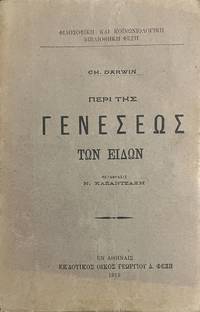
1915ref. 3159Fexis: Athen 1915. First greek edition. In original paper. Small tear on the top of the cover. Uncut. First greek edition. In original paper. 585 p. First greek edition. Athen unknown
1877ref. 14434London and New York: Macmillan and Co. 1877. FIRST EDITION. Half-calf and marbled boards; an excellent copy with the bookplate of Charles Edward Fewster of Hull. First printing of Darwin’s original paper discussing sexual selection in his 1871 work Descent of man stating that the case of the “brightly-coloured hinder ends and adjoining parts of certain monkeys” was the most interesting and perplexing to him. He quotes a work by Johan von Fischer partly published in Der zool. Garten. April 1876 dealing with the expression of monkeys under various emotions “which is well worthy of study by any one interested in the subject.” An interesting article on an interesting subject. Also included in this volume are two reviews of Darwin books as follows: 1 Review of the second edition of Geological observations on the volcanic islands and parts of South America London Smith Elder and Co. 1876 by John W. Judd. pp. 289-290; and 2 Review of The effects of cross- and self-fertilisation in the vegetable kingdom London Murray 1876 by W. T. Thiselton Dyer pp. 329-332. In addition there are two testimonials to Darwin. The first p. 356 is a testimonial on Darwin’s sixty-ninth birthday a mistake in that he was sixty-eight in February 1877 from a group of 154 men of science of Germany presenting to him an album of their photographs. Darwin also received an album with the photographs of 217 distinguished professors and lovers of science from Holland. The second testimonial pp. 410-412 comes from Prof. P. Harting of Utrecht University also on the occasion of Darwin’s birthday who has sent a letter along with the photograph album referred to above from the Directors of the Netherlands Zoological Society and includes Darwin’s reply. The volume includes articles by many of the most important scientists of the day. Freeman 1773; Freeman 1776. Macmillan and Co. unknown books
1877ref. 14434London and New York: Macmillan and Co. 1877. FIRST EDITION. Half-calf and marbled boards; an excellent copy with the bookplate of Charles Edward Fewster of Hull. First printing of Darwin’s original paper discussing sexual selection in his 1871 work Descent of man stating that the case of the “brightly-coloured hinder ends and adjoining parts of certain monkeys” was the most interesting and perplexing to him. He quotes a work by Johan von Fischer partly published in Der zool. Garten. April 1876 dealing with the expression of monkeys under various emotions “which is well worthy of study by any one interested in the subject.” An interesting article on an interesting subject. Also included in this volume are two reviews of Darwin books as follows: 1 Review of the second edition of Geological observations on the volcanic islands and parts of South America London Smith Elder and Co. 1876 by John W. Judd. pp. 289-290; and 2 Review of The effects of cross- and self-fertilisation in the vegetable kingdom London Murray 1876 by W. T. Thiselton Dyer pp. 329-332. In addition there are two testimonials to Darwin. The first p. 356 is a testimonial on Darwin’s sixty-ninth birthday a mistake in that he was sixty-eight in February 1877 from a group of 154 men of science of Germany presenting to him an album of their photographs. Darwin also received an album with the photographs of 217 distinguished professors and lovers of science from Holland. The second testimonial pp. 410-412 comes from Prof. P. Harting of Utrecht University also on the occasion of Darwin’s birthday who has sent a letter along with the photograph album referred to above from the Directors of the Netherlands Zoological Society and includes Darwin’s reply. The volume includes articles by many of the most important scientists of the day. Freeman 1773; Freeman 1776. Macmillan and Co. unknown
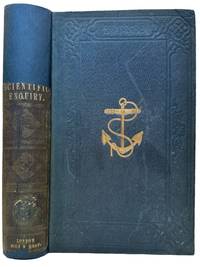
1849ref. SRW1705London:: John Murray . . . publisher to the admiralty 1849. 1849. 8vo. xi 1 488 pp. Large folding oceanographic map showing the Approximate Limits of the Great Currents and Drifts of the Ocean scattered figures 1 engraved plate Hydrographic delineation appendices; final leaf reinforced at gutter. Original full dark green embossed cloth with gilt anchor device on upper cover in blind on the back cover Freeman notes that “in some copies but not all the anchor on the top board is gilt” as is with this copy no pocket in rear bottom board as per this issue; spine replaced preserving a remnant of the original spine corners and joints reinforced. Bookplate of Charles F. Cox New York; embossed stamp of the Carnegie Institution Solar Observatory under George Ellery Hale being from his library donated to the Mount Wilson Observatory. Very good. Rare. FIRST EDITION second issue with pp.171-90 cancelled containing the corrected sheets including part of Darwin’s article. Freeman notes that most copies of the first issue including Darwin’s own were published with a separate 20-page cancellans inserted into a pocket inside the back cover. Freeman further states that some copies may have been issued without the cancellans as here. This collection of scientific articles on subjects relating to naval training was used as a textbook for cadets at the Royal Naval College. Darwin contributed the section on “Geology” which contained serious transpositions of the text which were cancelled and replaced with corrected sheets. / “Sir John Frederick William Herschel 1792-1871 – astronomer mathematician chemist - was one of the most important British scientists of the nineteenth century. Son of the famous astronomer William Herschel he was persuaded by his father to pursue the astronomical investigations William could no longer undertake; John’s subsequent career resulted in a knighthood and a lifetime of accolades. This 1849 publication was commissioned by the Admiralty to encourage and assist naval officers to undertake scientific research while abroad. The work provides instructions in making and recording observations in a wide range of disciplines - astronomy; magnetism; hydrography; tides; geography; geology; earthquakes; mineralogy; meteorology; atmospheric waves; zoology; botany; ethnology; medicine; statistics - written by experts in these fields including G.B. Airy Capt. Beechey Leut. Col. Sabine R. Mallet Sir H.T. de la Beche W. R. Birt Richard Owen W.J. Hamilton Rev. Dr. Whewell Charles Darwin Dr. Pritchard G.R. Porter Dr. Bryson Sir William Jackson Hooker and Herschel himself. It was hoped that the instructions could also be used by other travellers to advance scientific knowledge and the work remained in print for over fifty years.” PROVENANCE 3: 1 Charles Finney Cox 1846-1912 New York. He worked as an American railroad manager holding roles including Assistant Treasurer of the Canada Southern Railway Company Vice-President of the Richmond & Alleghany Railroad Company and President of the Carthage & Adirondack Railway Company. He became Treasurer and President of the New York Academy of Sciences. In 1896 Cox was appealing for financial assistance to fund a suitable building for the Scientific Alliance of New York including creating a 100000 volume library etc. Cox was an active member of scientific groups like the New York Microscopical Society and the Royal Microscopical Society. He assembled a notable collection of Darwiniana which was later acquired by the New York Botanical Garden in 1912 as a permanent memorial; 2 embossed stamp of the Carnegie Institution Solar Observatory under 3 George Ellery Hale 1868-1938 being from his library donated to the Mount Wilson Observatory. REFERENCES: Freeman 1977 326; Norman 1057. John Murray . . . publisher to the admiralty, 1849. hardcover books
1849ref. SRW1705London:: John Murray . . . publisher to the admiralty 1849. 1849. 8vo. xi 1 488 pp. Large folding oceanographic map showing the Approximate Limits of the Great Currents and Drifts of the Ocean scattered figures 1 engraved plate Hydrographic delineation appendices; final leaf reinforced at gutter. Original full dark green embossed cloth with gilt anchor device on upper cover in blind on the back cover Freeman notes that “in some copies but not all the anchor on the top board is gilt” as is with this copy no pocket in rear bottom board as per this issue; spine replaced preserving a remnant of the original spine corners and joints reinforced. Bookplate of Charles F. Cox New York; embossed stamp of the Carnegie Institution Solar Observatory under George Ellery Hale being from his library donated to the Mount Wilson Observatory. Very good. Rare. FIRST EDITION second issue with pp.171-90 cancelled containing the corrected sheets including part of Darwin’s article. Freeman notes that most copies of the first issue including Darwin’s own were published with a separate 20-page cancellans inserted into a pocket inside the back cover. Freeman further states that some copies may have been issued without the cancellans as here. This collection of scientific articles on subjects relating to naval training was used as a textbook for cadets at the Royal Naval College. Darwin contributed the section on “Geology” which contained serious transpositions of the text which were cancelled and replaced with corrected sheets. / “Sir John Frederick William Herschel 1792-1871 – astronomer mathematician chemist - was one of the most important British scientists of the nineteenth century. Son of the famous astronomer William Herschel he was persuaded by his father to pursue the astronomical investigations William could no longer undertake; John’s subsequent career resulted in a knighthood and a lifetime of accolades. This 1849 publication was commissioned by the Admiralty to encourage and assist naval officers to undertake scientific research while abroad. The work provides instructions in making and recording observations in a wide range of disciplines - astronomy; magnetism; hydrography; tides; geography; geology; earthquakes; mineralogy; meteorology; atmospheric waves; zoology; botany; ethnology; medicine; statistics - written by experts in these fields including G.B. Airy Capt. Beechey Leut. Col. Sabine R. Mallet Sir H.T. de la Beche W. R. Birt Richard Owen W.J. Hamilton Rev. Dr. Whewell Charles Darwin Dr. Pritchard G.R. Porter Dr. Bryson Sir William Jackson Hooker and Herschel himself. It was hoped that the instructions could also be used by other travellers to advance scientific knowledge and the work remained in print for over fifty years.” PROVENANCE 3: 1 Charles Finney Cox 1846-1912 New York. He worked as an American railroad manager holding roles including Assistant Treasurer of the Canada Southern Railway Company Vice-President of the Richmond & Alleghany Railroad Company and President of the Carthage & Adirondack Railway Company. He became Treasurer and President of the New York Academy of Sciences. In 1896 Cox was appealing for financial assistance to fund a suitable building for the Scientific Alliance of New York including creating a 100000 volume library etc. Cox was an active member of scientific groups like the New York Microscopical Society and the Royal Microscopical Society. He assembled a notable collection of Darwiniana which was later acquired by the New York Botanical Garden in 1912 as a permanent memorial; 2 embossed stamp of the Carnegie Institution Solar Observatory under 3 George Ellery Hale 1868-1938 being from his library donated to the Mount Wilson Observatory. REFERENCES: Freeman 1977 326; Norman 1057. John Murray . . . publisher to the admiralty, 1849. hardcover
1980ref. 38839Wellington NZ: Nova Pacifica 1980. Darwin Charles 1809-82 ed. The zoology of the voyage of H. M. S. Beagle during the years 1832-1836. Facsimile reprint. 3 vols. 4to. Variously paginated. 111 plates incl. color. Wellington New Zealand: Nova Pacifica 1980. 319 x 250 mm. Original quarter morocco cloth boards. Fine. No. 147 of 750 copies. Excellent facsimile reproduction of one of the rarest Darwin titles "a superb example of nineteenth-century scientific book publishing" "Publisher's Note". Originally published in parts and in book form between 1838 and 1843 The Zoology of the Voyage of H. M. S. Beagle had never been reprinted prior to this facsimile edition. Nova Pacifica unknown books
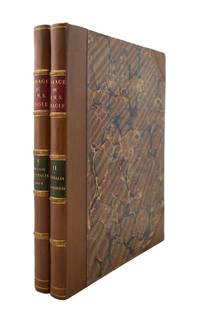
1838ref. 69522London: Smith Elder and Co 1838. OWEN Richard. WATERHOUSE George R. The Zoology of the Voyage of the H.M.S. Beagle. Under the Command of Captain Fitzroy R.N. During the Years 1832 to 1836. Part I II. Mammalia. London: Smith Elder and Co. 1838. Full Description: DARWIN Charles. OWEN Richard. WATERHOUSE George R. The Zoology of the Voyage of the H.M.S. Beagle. Under the Command of Captain Fitzroy R.N. During the Years 1832 to 1836. Part I II. Mammalia. London: Smith Elder and Co. 1838-1840. First editions of Part I and Part II of Mammalia in two quarto volumes 12 1/8 x 9 1/2 inches; 307 x 241 mm. Part I. Owen Richard. Fossil Mammalia. 1838-1840. 2 iv iv 111 1 colophon pp. Complete with thirty-two lithographic plates by G. Scharf one of which is folding and two which are double paged. With the preface to the whole work and a geological introduction by Charles Darwin. Bound without the half-title but with the additional fly-title. Part II. Waterhouse George Robert. Mammailia. 1839. 4 xii 97 3 blank pp. Complete with thirty-two hand-colored lithographic plates and three numbered engraved plates. With the errata slip bound in before B1. Bound without the half-title but with the additional fly-title. This volume with a geographical introduction and notes by Darwin. Two volumes uniformly bound in half tan calf over contemporary marble boards. Spines each with red and green morocco spine labels lettered in gilt. Contemporary endpapers. All edges speckled red. Some repairs to inner hinges. Text is very clean. The final three plates in volume II with some foxing otherwise all plates are very clean. Overall a very good copy of these two volumes. These first two volumes out of the complete work in 5 volumes are the only two volumes to be published with introductions by Charles Darwin. In the first volume he writes a Geological Introduction and in the second volume he writes a Geographical Introduction. "Darwin contributed a geological introduction to Part I the Fossil Mammalia pp. 3-12 and a geographical introduction to Part II the Mammalia pp. i-iv." Freeman p 26. In 1832 Captain Robert Fitzroy of the Royal British Navy undertook a five-year circumnavigation of the earth. Fitzroy who was only twenty-seven at the time asked a young Charles Darwin to be the naturalist for the voyage. The five-year journey included passing the coastlines of South America and particularly the Galapagos Islands near Ecuador. Darwin collected numerous specimens and data from this now famous area and these became the basis for his theory of natural selection which was a key component in his masterful theory of evolution. "The lavish scientific record of Darwin's collecting endeavours during the five-year voyage of the Beagle originally issued in 19 numbers. The 166 plates 82 finely hand-colouredof the complete works were due to the tireless energy and flair which the relatively untrained ship's scientist put first into the collection of specimens and then into ensuring that the zoological specialists duly reported on them after his return. The cost of the plates was covered by a treasury grant of one thousand pounds but to complete the work for Smith and Elder who were publishers of large illustrated books and government publications Darwin had to persevere as steadily with his pen as with his gun and geological hammer turning himself into a considerable authority during the course of five years spent editing the work of others." Christies "He superintended the Zoology's text wrote introductions for the different parts and added notes from his various Beagle records about animal behaviour and habitats wherever appropriate while also supervising the printers proofreading the sheets arranging artists for the plates chivying the experts and keeping them all moving forward within a tight self-imposed budget" Janet Browne Charles Darwin: Voyaging 2003 p. 370. Freeman Darwin 9.1 & 9.2. Nissen IVB 384. Nissen ZBI 1391. Sabin 18649. HBS 69522. $25000. Smith, Elder and Co unknown books
1838ref. 69522London: Smith Elder and Co 1838. OWEN Richard. WATERHOUSE George R. The Zoology of the Voyage of the H.M.S. Beagle. Under the Command of Captain Fitzroy R.N. During the Years 1832 to 1836. Part I II. Mammalia. London: Smith Elder and Co. 1838. Full Description: DARWIN Charles. OWEN Richard. WATERHOUSE George R. The Zoology of the Voyage of the H.M.S. Beagle. Under the Command of Captain Fitzroy R.N. During the Years 1832 to 1836. Part I II. Mammalia. London: Smith Elder and Co. 1838-1840. First editions of Part I and Part II of Mammalia in two quarto volumes 12 1/8 x 9 1/2 inches; 307 x 241 mm. Part I. Owen Richard. Fossil Mammalia. 1838-1840. 2 iv iv 111 1 colophon pp. Complete with thirty-two lithographic plates by G. Scharf one of which is folding and two which are double paged. With the preface to the whole work and a geological introduction by Charles Darwin. Bound without the half-title but with the additional fly-title. Part II. Waterhouse George Robert. Mammailia. 1839. 4 xii 97 3 blank pp. Complete with thirty-two hand-colored lithographic plates and three numbered engraved plates. With the errata slip bound in before B1. Bound without the half-title but with the additional fly-title. This volume with a geographical introduction and notes by Darwin. Two volumes uniformly bound in half tan calf over contemporary marble boards. Spines each with red and green morocco spine labels lettered in gilt. Contemporary endpapers. All edges speckled red. Some repairs to inner hinges. Text is very clean. The final three plates in volume II with some foxing otherwise all plates are very clean. Overall a very good copy of these two volumes. These first two volumes out of the complete work in 5 volumes are the only two volumes to be published with introductions by Charles Darwin. In the first volume he writes a Geological Introduction and in the second volume he writes a Geographical Introduction. "Darwin contributed a geological introduction to Part I the Fossil Mammalia pp. 3-12 and a geographical introduction to Part II the Mammalia pp. i-iv." Freeman p 26. In 1832 Captain Robert Fitzroy of the Royal British Navy undertook a five-year circumnavigation of the earth. Fitzroy who was only twenty-seven at the time asked a young Charles Darwin to be the naturalist for the voyage. The five-year journey included passing the coastlines of South America and particularly the Galapagos Islands near Ecuador. Darwin collected numerous specimens and data from this now famous area and these became the basis for his theory of natural selection which was a key component in his masterful theory of evolution. "The lavish scientific record of Darwin's collecting endeavours during the five-year voyage of the Beagle originally issued in 19 numbers. The 166 plates 82 finely hand-colouredof the complete works were due to the tireless energy and flair which the relatively untrained ship's scientist put first into the collection of specimens and then into ensuring that the zoological specialists duly reported on them after his return. The cost of the plates was covered by a treasury grant of one thousand pounds but to complete the work for Smith and Elder who were publishers of large illustrated books and government publications Darwin had to persevere as steadily with his pen as with his gun and geological hammer turning himself into a considerable authority during the course of five years spent editing the work of others." Christies "He superintended the Zoology's text wrote introductions for the different parts and added notes from his various Beagle records about animal behaviour and habitats wherever appropriate while also supervising the printers proofreading the sheets arranging artists for the plates chivying the experts and keeping them all moving forward within a tight self-imposed budget" Janet Browne Charles Darwin: Voyaging 2003 p. 370. Freeman Darwin 9.1 & 9.2. Nissen IVB 384. Nissen ZBI 1391. Sabin 18649. HBS 69522. $25000. Smith, Elder and Co unknown
1987ref. W2.168New York: New York University Press 1987. Book. Very Good. Hardcover. 8vo - over 7¾" - 9¾" tall. green cloth hardcover with gilt spine titles. light cover rubs some spotting to topedges. V. 4. - Fossil Mammalia Mammalia; V. 5. - Birds; V. 6. - Fish Reptiles ISBNs: 0814717896 081471790x 0814717918. New York University Press Hardcover
1980ref. 38839Wellington NZ: Nova Pacifica 1980. Darwin Charles 1809-82 ed. The zoology of the voyage of H. M. S. Beagle during the years 1832-1836. Facsimile reprint. 3 vols. 4to. Variously paginated. 111 plates incl. color. Wellington New Zealand: Nova Pacifica 1980. 319 x 250 mm. Original quarter morocco cloth boards. Fine. No. 147 of 750 copies. Excellent facsimile reproduction of one of the rarest Darwin titles "a superb example of nineteenth-century scientific book publishing" "Publisher's Note". Originally published in parts and in book form between 1838 and 1843 The Zoology of the Voyage of H. M. S. Beagle had never been reprinted prior to this facsimile edition. Nova Pacifica unknown
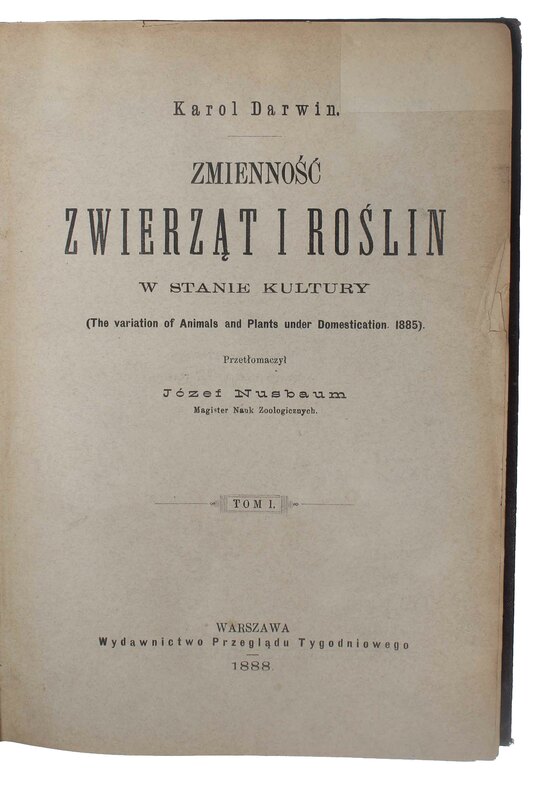
1888ref. 53153Warszawa, Wydawnictwo Przegladu Tygodnio, 1888-1889. Large8vo. In two uniform contemporary half calf bindings with four raised bands and gilt lettering to spine. Top right corner (app. 3 x 5 cm) of both title pages cut off" volume 1 not affecting text, volume 2 missing the n in 'Darwin'. Light wear to extremities, otherwise a fine set. (2), X, 11-357, III" (2), 379, IV, VIII, V pp.
1888ref. 53153Warszawa Wydawnictwo Przegladu Tygodnio 1888-1889. Large8vo. In two uniform contemporary half calf bindings with four raised bands and gilt lettering to spine. Top right corner app. 3 x 5 cm of both title pages cut off; volume 1 not affecting text volume 2 missing the n in 'Darwin'. Light wear to extremities otherwise a fine set. 2 X 11-357 III; 2 379 IV VIII V pp. Rare first Polish translation of Darwin's extensive work 'The Variation of Animals and Plants under Domestication'. It is the longest work and being so detailed was never a very successful one selling only about five thousand copies in his life time and eight before the end of the century" R.B. Freeman. Freeman 922. hardcover
1980ref. x01b133s4IWP 1980 softcover Some tanning to cover and pages.Fine IWP paperback
1985ref. G0931689023I4N00Be Good To Your Self 1985. Paperback. Very Good. Disclaimer:May have limited writing in cover pages. Pages are unmarked. ~ ThriftBooks: Read More Spend Less.Dust jacket quality is not guaranteed. Be Good To Your Self paperback