74.433 risultati
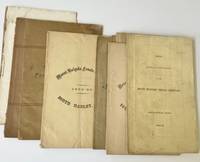
1844rif. 180201844. Mount Holyoke College annual catalogues 1844 to 1889 documenting the institutional structure and development of one of the earliest and most influential women's colleges in the United States. The material documents women's higher education systems through administrative and academic records revealing how faculty organization student enrollment and curricular frameworks operated within a pioneering female educational institution and providing primary-source evidence for the study of nineteenth-century women's education institutional growth and academic standardization. Archive of 12 printed catalogues issued over a forty-five-year period each listing faculty members enrolled students and institutional information for the respective academic year. Earlier catalogues present primarily textual listings while later issues incorporate illustrated views of campus buildings offering visual representations of the college environment. The catalogues reflect continuity and expansion in faculty composition and student attendance indicating the sustained operation and growth of the institution. Entries provide names of students and instructors enabling identification of individuals within the academic community while the progression toward illustrated content suggests increasing institutional self-presentation and public visibility. Twelve pamphlets measuring approximately 9 x 6 inches ranging from 16 to 40 pages each. Founded in 1837 by Mary Lyon Mount Holyoke College became a model for women's higher education and a foundational member of the Seven Sisters colleges which collectively advanced academic opportunities for women in the northeastern United States. These catalogues document the operational continuity of the institution across the mid to late nineteenth century a period marked by expanding access to formal education for women and the professionalization of teaching and scholarship. Two catalogues lacking original soft covers and with partial loss to text block remaining issues complete with light handling wear; overall good to very good condition. A substantial institutional record illustrating the early formation and sustained administration of women's collegiate education. unknown books
1920rif. 179821920. Archive of eight silver gelatin photographs and one albumen portrait documenting the social life theatrical productions and group identity of a women's sorority at MacMurray College in Jacksonville Illinois circa 1920. Photographs range from 7" x 5" to 3.5" x 3.5" and bear the imprint of local photographers Vail & Vail along with negative numbers in the lower margins. The collection offers an unusually intimate view of collegiate women's culture during the early twentieth century. The centerpiece is a large formal group portrait showing dozens of sorority members assembled on the front steps of their residence behind a banner marked "1920." The women wear matching white dresses white stockings and shoes black neck bows and close-fitting caps presenting a carefully organized display of unity and institutional pride. In contrast several other photographs reveal a far more playful side of campus life. A series of images document what appears to be a student theatrical production or costume party with approximately twenty-seven participants dressed in an eclectic assortment of historical literary and gender-bending costumes. Some women appear in male attire while others wear period dress character outfits and theatrical makeup. One participant holds a sign reading "The Cat That Walked Alone" likely referencing Rudyard Kipling's well-known story. Additional photographs show staged scenes rehearsals and informal gatherings capturing moments of humor friendship and performance. Three photographs bear handwritten identifications on the verso. One small portrait depicting a young woman standing alone outdoors is captioned "Pieface" beneath the image suggesting a nickname used within the sorority circle. One photograph has a clipped corner; otherwise the archive remains in very good condition. Throughout the archive the subjects display a striking range of expressions and poses. While some photographs maintain the expected formality of the era others capture candid interactions as women laugh whisper mug for the camera and engage with one another in ways seldom preserved in official college photography. Together the images document both the public and private dimensions of sorority life during a period when women's colleges and campus organizations played a central role in social and intellectual development. MacMurray College founded in 1846 and operating until 2020 was one of the Midwest's longstanding women's educational institutions. These photographs provide a vivid record of the camaraderie ritual and theatrical creativity that characterized student life there in the years immediately following World War I. unknown books
1871rif. 180111871. On the Education of Women. A Paper Read by Mrs. William Grey at the Meeting of the Society of Arts." William Ridgeway: London 1871. Pamphlet. 64 pages. 5.5" x 8" inches. Maria Georgina Grey was a British writer and women's education advocate. In this paper she writes "The subject I have specially to call your attention to this evening is the low condition of female education the inadequate provision made for it out of the endowments of the country and the difficulty of obtaining support from the general public for any scheme having for its object the higher education of women." Much of the paper concerns education for girls as a path to long-term freedom "It is easy to laugh at old maids it is easy to praise them as the sisters of mercy of life it is not easy to measure the amount of silence suffering of slow wasting away of hope of energy of faculty as the woman sees her youth passing away the boundless horizon of earlier years narrowing more and more middle age finding her as helplessly dependent in her father's house as unable to gratify a single taste to follow a single pursuit which does not chime in with his fancies as she was at 18 or left along to struggle untrained and unarmed in the fierce battle of life for the very means of living." In the paper she proposes the formation of a national movement for promoting women's education "Such an Association might be represented in London by a central committee connected with local committees formed in every considerable country town. By common action from all these different centres a body of evidence might be collected on every point connected with the better education of girls of all classes." Grey went on to form just such an organization the National Union of the Improving the Education of Women of All Classes later renamed the Women's Education Union. The union of which Grey was an active member established the Girls' Public Day School Company in 1872 to provide new schools for girls across social classes. Front and back soft covers missing. Inscription in pencil reads "From the Author 25" on title page. Textblock clean. Overall good condition. unknown books
1900rif. 179971900. Archive of five annual reports issued by Homerton College Cambridge covering the academic years 1900-1905. Octavo pamphlets measuring approximately 7" x 5" ranging from 11 to 24 pages each. Illustrated with seven black-and-white photographs depicting campus buildings classrooms and college administrators along with an engraved view of the college. The 1902 and 1903 reports feature photographic views of Homerton College on their front wrappers. Original printed paper covers titled "Report of the Congregational Board of Education for the Year Ending Year." Founded in 1695 Homerton College occupies a significant place in the history of British education and was among the institutions that expanded educational opportunities for women during the nineteenth century. By the mid-1800s women were being admitted to study at Homerton making the college an important center for female teacher training and higher education at a time when academic opportunities for women remained limited. These reports document the institution during a period of growth and modernization at the turn of the twentieth century. The pamphlets provide a detailed record of academic instruction enrollment finances faculty activities campus improvements and student life. The 1901 report opens with a confident assessment of the college's progress noting that "All the students passed the usual tests very satisfactorily" and concluding that "Everything in this College shows marks of progress and bears testimony to the vigour of its administration." Beyond academic matters the reports offer valuable glimpses into everyday student culture. Accounts of clubs and extracurricular activities reveal an active collegiate community including the popular Cycling Club which reported in 1905 that members "visited many of the villages near Cambridge and held its annual picnic at Clayhithe" while noting that a newly constructed bicycle shed had become "a great convenience by all who have brought their machines up with them." Taken together the reports provide an unusually rich portrait of institutional development and student experience at one of Britain's pioneering centers for women's education. They illuminate not only the administrative concerns of the college but also the social networks recreational activities and evolving culture of female higher education during the Edwardian era. Several covers bear institutional Board of Education Library stamps with three retaining library labels on the rear wrappers. Minor contemporary manuscript notations appear on some covers. Light wear and handling consistent with use; overall very good condition. unknown books
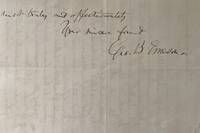
1865rif. 174181865. Women's Education Women's History. This handwritten letter from George B. Emerson educator and women's rights advocate is dated from 1865 and speaks of a bright female student. Signed. Octavo. 3 pages. Comes with CDV albumen print of Emerson circa 1870s. Emerson praises the student Chasy as follows: "She is one good bright creature who would be most likely to find the right path by herself. and take it of her own full choice and yet of whom we teachers are proud as though we had had a hand in guiding that beautiful spontaneous choice." Emerson was a pioneer who dedicated his efforts as an educator to his female students. Mounting remnants on one page as well as tape repair - not affecting text or signature. Overall in very good condition. unknown books
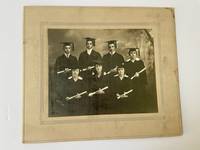
1930rif. 181161930. African American Education - Silver gelatin photograph of integrated high school students in graduation caps and gowns holding their diplomas. 13.5 x 11.5 inches. Circa 1930s. Mounted on photographer's board with small white signature reading "Bussa" across the bottom of the photograph. 3 young men one of them African American and four young women pose almost identically every one looking directly into the camera cradling their rolled diplomas the papers tied with satin ribbon. Behind them is a painted forest backdrop. Though the Civil Rights Act of 1876 prohibited discrimination against African Americans in public spaces Plessy V Ferguson in 1896 made "separate but equal" legal and was applied broadly to school segregation. School segregation was not mandated by the law in Northern cities but most still conformed to discriminatory practices. An integrated graduating class during this period would have been exceptional made more so by the number of women pictured. A testament to the outliers no matter how rare. Some staining to the board does not affect the image. Very good condition. unknown books
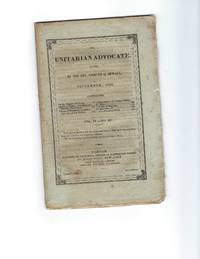
1829rif. 174341829. The Importance of Female Education" in The Unitarian Advocate Vol. IV- No. III. Boston: Leonard C. Bowles 1829. Original pamphlet in original printed wrappers. 5" x 8" inches. 6 pages 144 total. "It is conceded by all parties that women have an extensive influence in the affairs of the world. It is not alone those who are willing to admit that women enjoy an equal proportion of the gifts of God in their intellectual and physical nature who admit it . Those who deny equality in every sense and even those who disbelieve that women have souls if there are any such will yet admit their power over mankind to be great and important." An early argument for the importance of educating women. Only three years earlier the very first American public high schools for girls were opened in New York and Boston; and the year this was published the first public examination of an American girl in geometry was held. An interesting argument on the necessity of educating women from a Unitarian perspective. Pages toned some staining to margins not affecting text. Wrappers soiled. In good condition. unknown books
1908rif. 174501908. Mills Susan. Typed letter signed 1908 documents the academic administration of Mills College under one of the central figures in women's higher education in the American West. Addressed to Dr. Clifton Price a Latin professor at the University of California Berkeley the letter shows Mills coordinating intellectual life at the school and seeking outside scholarly support for classical study. The material documents women's college administration through presidential correspondence revealing how Mills cultivated curriculum faculty networks and academic seriousness for women students in California. Mills Susan. Typed letter signed to Dr. Clifton Price. Oakland California October 28 1908. One page. 11 x 8.5 inches. Mills writes "It is a comfort that you are with us. Some time in the near future I would like to have you speak to the entire school for a half hour about the importance of studying Latin." The letter records a specific curricular concern: persuading students of the value of Latin within a women's college setting. Mills College began in 1852 moved to Oakland in 1871 became Mills College in 1885 and is widely identified as the first women's college west of the Rocky Mountains. Mills served as president from 1890 until her retirement in 1909 and her final presidential year gives this letter added significance as a late document of her educational leadership. The correspondence offers a concise record of how women's institutions built academic legitimacy through classical education public lectures and connections with major universities. Very good. A direct letter from Susan Mills preserving the daily administrative work behind women's higher education in early twentieth-century California. unknown books
rif. 17456Women in Science Medicine. Circa 1900. Original Dry plate negative black and white. 7" x 5" inches. The image is showing a group of 8 nurses working in a medical laboratory circa 1890s. Comes with modern reprint photograph. The women wear nurses' caps aprons and gowns. Their caps have slightly different shapes .The laboratory is equipped with Bunsen burners and cabinetry with mortars beakers and various other containers. There is also a large device which resembles a furnace. This is a silver gelatin-coated dry plate negative. Invented by Dr. Richard L. Maddox and first made available in 1873 dry plate negatives were the first economically successful durable photographic medium. Dry plate negatives are typically on thinner glass plates with a more evenly coated emulsion. Dry plate glass negatives were in common use between the 1880s and 1920s. Gelatin dry plates were commercially produced and came ready to use. The photographer just had to expose them to light and develop them. The negative has some imperfections along left side though they do not seem to have affected the reprinted image. Overall this negative is in very good condition. unknown books
1905rif. 175131905. Original photo mounted on board of the coeducational Pomona College class of 1909 taken as freshmen in 1905. Photo measures 6.75" x 5" inches on a 8.5" x 6.75" inches board A class of around 70 students with almost half being young women. Handwritten inscription on verso states: "Dec. 21st 1905.- 09's class on top of Holmes' Hall Pomona College Claremont." Pomona College is one of the oldest colleges in Southern California and was established as a coeducational and nonsectarian Christian institution on October 14 1887 amidst a real estate boom and anticipated population influx precipitated by the arrival of a transcontinental railroad to Southern California. In very good condition. unknown books
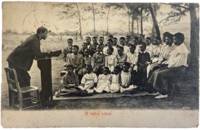
1903rif. 174951903. A Native School 1903 is a real photo postcard documenting Black education in Durban during the colonial period showing approximately thirty students ranging from young children to adults receiving instruction outdoors from a Black teacher. The image predates the creation of the Union of South Africa and was made during a period when educational provision for Black South Africans varied substantially by colony mission and institution. Contemporary educational policy increasingly connected African schooling with labor and industrial training; in the neighboring Transvaal Inspector of Native Education Rev. W. E. C. Clarke stated in 1903 that an object of Black schooling was to "Teach the Native to work" and separate primary curricula for African students followed there in 1904. Black and white real photo postcard captioned "A Native School." Durban 1903. 3.5 x 5.5 inches. The class meets beneath a copse of trees with tall grasses visible beyond the students. A Black teacher stands at a lectern holding an open book with a single chair immediately behind him. Approximately thirty Black students sit before him on chairs and on a rug spread across the ground; the group includes children adolescents and adults making the mixed ages of the class one of the image's most distinctive features. The verso is addressed in ink to Mademoiselle Mercedes de Guerrico in Buenos Aires and bears an August 3 1903 Durban postmark. The postcard records an actual instructional setting rather than a formal school building: teacher book lectern portable seating and ground covering constitute the visible classroom. Its 1903 date places it within an unsettled period in South African education when schooling for Black students remained sharply unequal and colonial authorities were developing racially differentiated educational policies. The international address to Buenos Aires additionally documents the circulation of this image of Black South African schooling through the early twentieth century postcard trade. Corners slightly worn with some foxing. Overall good condition. A detailed visual record of Black students and a Black teacher conducting an outdoor class in Durban in 1903. unknown books
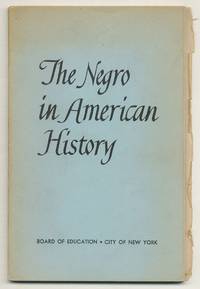
1964rif. 509352New York City: Board of Education 1964. Softcover. Near Fine. First edition. Octavo. 158pp. Blue printed wrappers. The spine and extremities of the wrappers are slightly tanned else a nice near fine copy. Laid in is a mimeographed typed letter from Alexander Hamilton Vocational High School laid into book. The letter addressed "To All Teachers:" briefly praises the book and reprints the foreword. Board of Education unknown books
1922rif. 168451922. Unidentified compiler. Photograph album 1922-1929 documents rural one-room school education in the American Midwest with particular emphasis on student life teaching practices and community interaction in small farming regions including Michigan. The album provides primary visual and textual evidence of how rural schools operated as social and educational centers capturing the daily realities of multi-age instruction seasonal labor patterns and community involvement. The material supports research into rural education women's teaching labor and the lived experience of children in agricultural communities during the early twentieth century. Unidentified compiler. Photograph album. 1922-1929. Album containing 124 silver gelatin photographs and 32 pieces of related ephemera compiled by a teacher who worked at Pearsall School 1922-23 Eddy School 1923-24 Baker School 1924-25 Country Farm School 1925-26 Dye School 1927-28 and Dorr School 1927-29. The photographs depict small groups of students often fewer than twenty posed outside one-room schoolhouses or engaged in activities reflecting both education and daily life. Clothing and physical presentation indicate economic conditions and seasonal variation with children shown barefoot in some images and bundled in jackets and work boots in others. Group portraits are supplemented by 47 individually identified student photographs from Dorr and Loomis Schools each labeled by name including one of Ronald Bishop annotated "Killed by car" providing rare longitudinal insight into individual fates. Additional images capture classroom performances such as children dressed in capes for a musical presentation and informal scenes including bicycle riding suggesting the integration of recreation into school life. Photographs also document community members including figures identified as "Nora and Hazel" and "Mr. Barnes" a delivery worker pictured with a horse-drawn buggy. The accompanying ephemera including newspaper clippings invitations valentines and student work provide written documentation of school activities and educational practices. Reports describe enrollment numbers attendance rates seasonal nature study and classroom projects including agricultural scrapbooks and holiday crafts. References to teacher attendance at institutes indicate formalized training and professional development underscoring the increasing institutionalization of teaching as a profession for women. Original paper boards; 58 pages; photographs range from approximately 2.5 x 1.5 inches to 4.5 x 6.5 inches; album measures 7 x 12 inches. Light wear consistent with use; overall very good condition. A detailed and cohesive record of rural education and community life in the Midwestern United States during the 1920s. unknown books
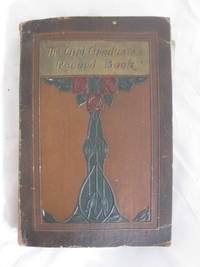
1930rif. 168501930. Germaine Smith high school scrapbook 1929-1930 documenting female student life Catholic education and youth social networks in interwar Detroit. Created by a graduating student of St. Anthony High School the album preserves written exchanges photographs and ephemera that record peer relationships institutional culture and expectations for young women at the end of secondary education. The volume supports research on women's education adolescent identity formation and the role of religious schooling in shaping social and moral frameworks during the late 1920s. Scrapbook album titled "The Girl Graduate: Her Own Book" compiled by Germaine Smith of St. Anthony High School in Detroit containing 107 pieces of ephemera including tickets invitations table cards programs letters newspaper clippings and pressed flowers along with 13 photographs depicting female students posing at school and walking with nuns. The album includes 36 handwritten inscriptions from classmates and teachers featuring poems and personal messages such as "In your chain of friendship Consider me a link" and "When you are old and sipping tea Remember your classmate of 1930" alongside reflections on future marriage and adulthood. Additional contents include references to girls' athletics such as speed skating and gymnastics programs honor roll listings theater tickets from Detroit venues and a Japanese language newspaper clipping. A pair of "Shadowgraph Glasses" with colored lenses is also present illustrating contemporary novelty entertainment. Produced at the close of the 1920s this scrapbook captures the intersection of education religion and social life for young women during a period of shifting expectations around gender roles and modern leisure. The presence of Catholic instructional figures athletic participation and popular entertainment materials situates the compiler within both institutional and urban cultural environments. The handwritten entries emphasize friendship morality and anticipated life transitions providing insight into how young women articulated identity and community at graduation. Light toning at page edges with general handling wear; overall very good. A cohesive and content rich example of female student life and social documentation in early twentieth century America. unknown books
rif. 16829Handwritten Memory Album from a girl junior high student in mid-1920s Arkansas. Handwritten inscriptions from 45 classmates and friends. Entries from 1925 to 1927. 16 pages. My Memories of School Days. New York City: C. R. Gibson & Company 1924. "Roses are red Violets are blue Think of me and I'll think of you!" Hand-writtten recordings of the school song for West Side Junior High in Little Rock AK. "Here's to West Side Dear of West Side Your the school we love the best Wit your colors gaily flying You have always stood the test When we leave you We believe you will always be our greatest pride And we will show you how much we owe you Will always boost for you our Dear West Side." Comes with October 1934 issue of "West Side Junior Life" student newspaper. Pages are filled with poems and lines from classmates over the years. Many of the inscriptions are pithy short poems or lines. "Dear Charlene I wish you health I wish you wealth I wish you gold in store I wish you heaven after death What could I wish you more" "In your mud puddles of affection Let one tad pole swim for me." "When you're in the kitchen frying meat think of me and my big feet." "If you're within and I'm without I'll think of you without a doubt." Some broke with this convention. "I do not know any poem but I pity the person that worries their head off to get one." Other include more personal notes on their memories together. "Remember our Spanish Class and the study hall before it." Two newspaper clipping portraits of school friends pasted into book. Two large pencil drawings-one of an infant child playing with a toy and one of a fashionable young lady going for a walk. Junior Membership card for the The American National Red Cross in Little Rock AK issued 9/4/25. Handwritten list of 52 girl classmates. Partial image of school from newspaper clipping pasted to inside back cover. West Side Junior High School was founded in 1917 as an educational establishment and a community center. The West Side building is now listed on the National Register of Historic Places. Very good condition. unknown books
1930rif. 168251930. Bowling Green HS Memory album with photographs newspaper clippings and rare mementos from a high school girl in 1930 in Ohio. 23 original gelatin print photos approximately 4.5 x 2.75 in. Signatures and handwritten inscriptions from over 100 classmates teachers and friends. "The Girl Graduate Her Own Book" Designed and Illustrated by Louise Perrett and Sarah K. Smith. Chicago: The Reilly and Lee Co. n.d. 9 x 6 in. Original boards. "The Girl Graduate Her Own Book" in gilt and illustrations of flowers and a young lady on the front cover. 190 pages. Original owner's name and high school written on label printed inside front cover: Gertrude M. Avery Graduated from Bowling Green Senior High "1930". Table of contents include space for handwritten entries on: Class Yell or Motto Photographs Autographs Class Officers Teachers Class Prophecy Invitations Programmes Social Events Press Notices Gowns Presents Jokes and Frolics and the Baccalaureate Sermon. One newspaper clipping lists all of the graduates who were bound for college; notably 18 of the names listed are women. 75 signatures and handwritten inscriptions from classmates. Many include short lines about friendship and school memories. "School days are your happiest days Enjoy them while you're young And become old another day". "Count me as a brick in your chimney of friendship." Some write a shorter but more personal line: "A fellow sufferer in English". Many look towards their futures as wives: "May your life be bright and sunny and your hubby fat and funny." "Come and see me hubby April 28 1935". "When you are married and living at your ease Remember you have a friend who is single and does as pleases. -"Al" Aline Allison". Several sign off with colorful nicknames such as Zoot Midge and Bud. 18 photos of classmates. People are identified by given names although one is simply labeled "pals" though not the context. Many photos appear to be outside of a large school building and two images show "our bus" including the driver and all 28 students who rode it. Two show young ladies labeled "me" Elthel & Maria standing in slacks. Two others shows the subjects in costumes "Lyle & Sally" are dressed in vintage costumes and "Paul Smith" appears to wear a dress and pearl necklace on the following page. 15 additional signatures from classmates p. 120. 22 signatures from teachers and 3 photos. Also portrait of the album owner and photo of her and friend in their Graduation Dresses. 50 pieces of ephemera including programs for musical performances and school plays. Napkins paper flowers press clippings about school dances. Ticket to the Senior Day Steak Roast at City Park. 3 invitations including enveloped pasted in with commencement invitation inside. Includes a handwritten list of gifts received such as: Three Dollars Modernistic Vanity Looking Glass Fancy Hanger and Perfume Atomizer. 4 cards and letter that accompanied gifts pasted in. Scarlet and gray ribbons in school colors. Check receipts for items related to academic fees and class finances. Newspaper clippings list school events and graduation announcements. "Seniors Look Like Gay Nineties Making Whoopee Whoopee Whoopee!" Also a notice about a girls basketball tournament: ".the last game of the girls interscholastic basketball to be played in Bowling Green." Final pages include newspaper clippings of school friends marriage announcements from the years following their graduation. Light scuffs to cover. Some wear to interior front hinge. Very good condition. unknown books
1945rif. 168591945. Photographs Teacher's scrapbook from academic year 1945-1946 at primary school in Detroit MI with 38 handwritten notes from students photos and ephemera from school dances. Typed label on first page: "School Functions of the Marion Law School / September 1945 - June 1946". Original green boards. 11.5 x 8.25 inches. 34 pages. 38 handwritten inscriptions and notes from students to their teacher. 8 silver gelatin print photographs 5 x 3.5 in. 10 dance programs and student reports. The programs list dances such as the Fox Trot Waltz Rumba Schottische "Paul Jones" Ko-Ke-Ko Balloon Dance Singing Quadrille and Samba among others. 8 original photos show children dancing in pair or posing at school dances in suits and nice dresses. Thirty-eight warm notes to a beloved gym teacher from graduating students. "To a dear teacher I will always remember and love." Several mention how they love the material that she teaches. "I enjoy gym very much especially dancing." "I wish I could tell how how much I'll miss gym." "When ever I go dancing I think of you." "I will always think of you when ever I go to a dance." Many express simple gratitude for her work in their education and kindness towards students. "I can't think of anything to say so I thank you for every thing you have done for us." "P.S. I think you're the best teacher". Colorful handmade programs for the Christmas cutout in the shape of a Christmas Tree and Santa Clause Valentine's Day heart and St. Patrick's Day Dance 4 Leaf Clover. One-page typed student report on the St. Patrick's Day Dance: ".The St. Patrick's Day Dance was anything but dismal.And say did you notice Audrey Bendena's nylons Gee I think I'll get better acquainted with her. And another thing did you see Tony Lewis'es new shoes Sharp!.We began our dancing with a lovely surprise.May I thank you Mrs. Belf for all your work in making our dance possible" Similar write-ups about the May Barn Dance and the May Party. 1 page detached. Very good condition. unknown books
1921rif. 168601921. Raborn Winola. Scrapbook 1921-1923 documents high school student life in Waco Texas immediately following World War I preserving evidence of educational experience peer relationships and extracurricular culture within a Southern public school system. The volume provides primary documentation of student networks school athletics and institutional activities at Waco High School supporting research into youth culture gendered education and the social environment of American secondary schools in the early twentieth century. Raborn Winola. Scrapbook. 1921-1940 bulk 1921-1923. "The Girl Graduates Record Book." Manuscript and printed scrapbook containing 176 pages with 27 handwritten inscriptions 11 silver gelatin photographs and approximately 255 pieces of ephemera. Entries from classmates and teachers reflect shared academic experiences and social bonds including informal notes such as one addressed to "Dearest Fellow Sufferer" from the Chemistry room and others referencing nicknames and classroom interactions. Sentiments emphasize friendship and transition with messages noting the imminent end of school life and hopes for future success alongside teacher remarks encouraging further education: "You have given evidence of real ability as a student and I trust you may go to college." The scrapbook includes extensive material related to Waco High School athletics particularly football with tickets ribbons reading "Take 'Em Tigers" and "Waco HS Tigers" newspaper clippings and typed game reports against regional schools including Mexia Oak Cliff Beaumont Austin Marshall and Marlin. Additional contents include report cards documenting coursework in History Chemistry English Domestic Science and Civics; programs from school plays such as "The Daisy Chain" and "Ruth in a Rush"; commencement programs; and personal materials including a Western Union telegram a metal nail file and a Thanksgiving card. Clippings record Raborn's marriage in 1923 while a handwritten list of graduation gifts-such as silk hose candy and handkerchiefs-documents material exchanges marking educational milestones. Photographs include school portraits later images labeled "School Days 1939-'40 Hubbard School" and a snapshot of a man in a U.S. Navy uniform indicating the scrapbook's continued use beyond graduation. This scrapbook emerges from a period of expanding secondary education and increased participation in organized school activities particularly athletics and performance which structured student identity and community engagement. The prominence of football-related materials reflects the growing cultural importance of high school sports in the American South while the inclusion of academic records and teacher commentary highlights expectations placed on young women balancing intellectual achievement and social roles. The continuation of entries beyond graduation including marriage documentation demonstrates how such scrapbooks functioned as evolving personal archives bridging school life and adulthood. Original cloth boards with embossed floral motif; measures 10.25 x 7 inches; 176 pages. Back hinge loose and beginning to separate; light toning to pages especially around pasted clippings; good to very good condition. A detailed record of student experience institutional culture and social transition in early twentieth-century Texas. unknown books
1923rif. 168781923. Chamberlain Ola. The Girl Graduates Record Book 1923 to 1925 documents rural Texas girls' education adolescent friendship school ritual athletics domestic expectations and female self-expression at Goree High School. Kept by Ola Chamberlain of Goree Texas the album captures a young woman's final high school years through photographs teacher and classmate inscriptions certificates invitations press clippings and an original "Class Prophecy" providing direct evidence of how one Texas student recorded academic achievement peer culture humor courtship-inflected friendship extracurricular life and the movement "Out of school life into life's school." Kubinyi Victor de designer. The Girl Graduates Record Book. New York: Barse & Hopkins copyright 1920. Manuscript memory book and scrapbook kept by Ola Chamberlain Goree Texas 1923 to 1925. 190 pages. Original cloth boards with embossed floral motif 10.25 x 7 inches. Contains 85 silver gelatin photographs most approximately 4.5 x 2.75 inches more than 25 handwritten inscriptions from friends and teachers an original handwritten class prophecy and approximately 85 pieces of ephemera including ribbons party invitations commencement materials press clippings seven perfect-attendance certificates a Texas public school report card and a pressed sweet pea dated May 15 1925. Photographs and captions identify Goree High School called by Chamberlain "The Prison" classmates with nicknames including "Pie Face" "Preacher" "Shot Gun" "Lilliums" and "Hankie" class officers the Spanish Class Pep Club "Senior Girls" basketball players and eight images of students in colonial costume for "The Virginia Reel." The inscriptions preserve affectionate student memory and gendered academic praise including one classmate's statement that in mathematics Ola was "a wizard-ess" while teacher entries address her transition from school into adult life: "Life's School is open to you." The album's strongest research value lies in its unusually full record of a girl's educational world in small-town Texas during the 1920s including formal coursework in Geometry English Physics Civics Economics and Arithmetic alongside a parent-signed "Home Report" grading Cooking Care of Stock General Farm Work Providing Fuel Washing Dishes and Obedience. Chamberlain's manuscript "And How It All Came Out" imagines the futures of her graduating class through a supernatural vision prompted by the class flower placing classmates in roles from department-store worker to sheriff mayor and secretary and giving the album a rare sustained example of student-authored narrative. First two pages detached front hinge detached edges toned some pages brittle with small edge chips good. A substantial documentary record of women's education rural Texas youth culture school sociability athletics and the gendered expectations surrounding a young woman's graduation in the mid-1920s. unknown books
1866rif. 167271866. Cleveland Female Seminary Catalog: 1866-1867. Cleveland OH founded by Rev. Eli N. Sawtell the seminary opened on 3 May 1854 an earlier enterprise by the same name had been established in Apr.1837. Located in a new $50000 building the school commanded a hefty $300 annual tuition. The seminary had 2 major departments Preparatory which admitted girls under 12 years of age and Academic for those over 12 . Emphasis was placed on teaching both languages and science so that students could acquire a wholesome mental discipline. In a Telegraph Dept was established to provide instruction in the principles of telegraphy for students in natural philosophy and chemistry. It was reincorporated in 1871 as the Cleveland Seminary for Girls at which time it acquired the rights and privileges of a college. including the authority to grant degrees but closed in 1883. At the time that this description is being written no copies are recorded in American institutions. OCLC search results are at best an estimate and can vary over time. Women's Academy and Seminary Archive recording the first important movement of women into higher education in the United States seminary was synonymous with "academy" and did not have the religious connotation of today. In the 1800's the Female Academy and Seminary Movement transformed American educational norms allowing women the opportunity to receive secular non-religious college-level education. Women's colleges proliferated in the mid- to late- 19th century to fill the void created by their exclusion from most institutions of higher education. The prevailing notion that women were too delicate for a rigorous academic education was openly challenged when Elizabeth Cady Stanton spoke at the Seneca Falls Convention of 1848 "Man's intellectual superiority cannot be a question until woman has had a fair trial.When we shall have had our colleges our professions our trades for a century a comparison then may be justly instituted." Young women were quick to step up to the challenge; as quickly as female colleges opened they filled up. unknown books
1913rif. 169621913. Willamette University Oregon student photo album 1913-1915 documenting coeducational student life and women's education in early twentieth century Oregon through a sustained visual record of academic social and recreational activity. Many of the photos include brief captions identifying the location or event. Compiled by a woman student the album captures daily life within one of the earliest coeducational institutions in the United States where women and men studied in shared academic environments while navigating institutional rules governing gender interaction. The photographs provide direct evidence of women's participation in higher education campus organizations and social life during a period when access to collegiate training for women was expanding but still structured by formal and informal constraints. Photo album containing 53 original silver gelatin photographs of various sizes most with handwritten captions identifying locations events and individuals. The images include campus scenes student performances and outdoor excursions around the university and nearby areas such as Silver Creek. Several photographs document academic life including mixed groups of students studying outdoors one captioned "They said they were studying Zoology" and another showing students writing together with "Corvallis" visible in the background. Women students appear prominently in both academic and social contexts including images labeled "Ornithologists" depicting women with books observing birds and portraits such as "Gertrude Alice / Inseparable friends." Social events are extensively documented including the "Soph Frosh Formal Reception 1913" with large groups of men and women in formal dress and gatherings such as the "Junior Feed in Gym" and its aftermath. Additional images depict theatrical performances with labeled scenes including "Queen Mary Enthroned" and "In Battle Array" as well as student organizations and leisure activities. Outdoor life is represented through camping and picnic scenes including "A full table under the Lausanne Maples" and activities at Silver Creek where students are shown cooking washing dishes and reading. Created during a period when coeducation was established but still regulated the album documents how students formed academic and social relationships within institutional boundaries that restricted interaction outside formal settings. Willamette University founded in 1842 with women among its earliest graduates provides a significant context for studying the normalization of coeducation in the American West. The presence of women in academic study performance athletics and social gatherings demonstrates the breadth of their participation in campus life. The captions often informal or humorous offer insight into student culture and interpersonal dynamics while the photographs collectively document the integration of education leisure and community in collegiate environments. Light wear to album with well preserved photographs and legible captions; overall very good. A detailed visual record of women's collegiate experience and coeducational life in early twentieth century America. unknown books
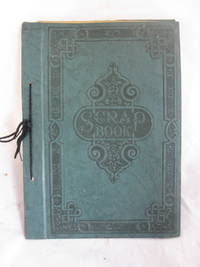
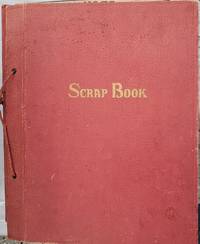
1936rif. 169681936. Kistler Alyson scrapbook album 1936-1937 documents women's higher education teacher training student sociability and regional travel during the Depression era through the experiences of a first-year student at East Stroudsburg State Teachers College in Pennsylvania. Created by Alyson Kistler during the 1936-1937 academic year the album preserves an unusually detailed record of academic life extracurricular activities employment friendships courtship entertainment and travel illustrating the central role teaching colleges played in expanding professional opportunities for women in the early twentieth century. Kistler Alyson. Scrapbook album. East Stroudsburg Pennsylvania 1936-1937. Manuscript and printed scrapbook containing 107 pieces of ephemera with extensive handwritten captions and commentary. Original red textured boards lettered "Scrap Book" in gilt 12.5 x 10 inches. 60 pages. Hand-lettered on the first page: "E.S.S.T.C. 1936-7." Contents include a certificate of admission report cards dance programs athletic schedules theater programs restaurant menus advertisements newspaper clippings pressed flower corsages novelty party favors local newspapers and travel-related souvenirs from Pennsylvania New Jersey New York and the Pocono region. Academic subjects documented include Introduction to Teaching English I Science II Hygiene History of Civilization Physical Education and Social Guidance. The album records Kistler's participation in the Art Club where contemporary newspaper coverage identifies her as "Head of Art Club" and preserves evidence of her weekend employment at local clubs and restaurants. Handwritten annotations throughout transform routine ephemera into a personal narrative including candid assessments such as "A big disappointment. The play was rotten" alongside detailed accounts of train travel social outings holiday celebrations movie-going and visits with friends and admirers. Particularly revealing are mementos associated with courtship including a necktie received from a young man who "gave me his tie because I liked it" and a Japanese postage stamp accompanied by a multi-part explanation tracing its movement among friends and collectors. The scrapbook provides a rich record of female student life at a teachers college during a period when teaching remained one of the most important professional careers available to American women. Beyond documenting formal education it captures the broader social world surrounding collegiate life through theater programs from Stroudsburg's Sherman Theatre menus from regional hotels including Buck Hill Falls and the Indian Queen Hotel newspaper coverage of athletics Washington's Birthday celebrations New Year's festivities and weekend excursions throughout the region. The result is a highly personal account of how a young woman balanced academic responsibilities wage work friendships recreation and aspirations for the future during the late Depression era. First seven pages detached; pages brittle with occasional small edge chips good to very good. A substantial documentary record of women's higher education teacher training student culture and everyday life in the northeastern United States during the 1930s. unknown books
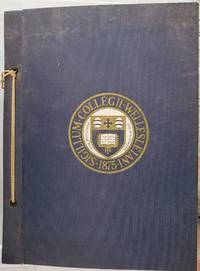
1939rif. 169671939. Wellesley College student scrapbook 1939-1943 documenting women's higher education campus traditions and social life during the early years of the Second World War. Compiled by a student at one of the leading women's colleges in the United States the album records academic study institutional culture and peer networks at a moment when global conflict began to shape collegiate experience and future expectations. The contents provide direct evidence of women's participation in higher education alongside emerging wartime realities including military service among family members and shifting social priorities. Scrapbook and photo album containing 160 original silver gelatin photographs and approximately 205 pieces of ephemera including invitations dance cards Western Union telegrams newspaper clippings travel souvenirs and correspondence. The album documents academic life through materials such as a report card listing courses in English composition mathematics music theory hygiene biblical history philosophy physics economics and sociology annotated by the student with the remark "saved by the gong." Campus traditions are extensively represented including Float Night and Tree Day as well as participation in student organizations such as Tau Zeta Epsilon Zeta Alpha and Phi Sigma. Newspaper clippings describe events such as the disruption of Float Night by Harvard students noting that "the Wellesley girls just booed right back and cheered for Yale." The album also includes materials relating to Wellesley alumna Soong Mei ling with a clipping reporting: "Madame Chiang Makes History at Alma Mater.The eyes and ears of the nation were on Wellesley" accompanied by a ticket to her campus appearance. Photographs depict friends on campus commencement exercises in June 1943 including the tradition of hoop rolling and numerous social events such as dances beach outings and travel. Created during the opening years of World War II the scrapbook situates collegiate life within broader national and international developments. Wedding announcements referencing military ranks a photograph of the compiler's brother captioned "in the marines" and travel materials such as an American Airlines ticket for a Boston to Newark flight reflect the intersection of education mobility and wartime service. The album also documents leisure and social networks across regions including visits to Chicago Cleveland Minneapolis Cape Cod and Maine as well as correspondence with students at other institutions. Final pages extend into post graduation life with employment identification for Irving Trust and family photographs marking transition from student to professional life. First page detached with some heavier ephemera items loosened; otherwise sound with light wear; overall very good. A comprehensive record of women's collegiate experience and social networks during the early World War II period. unknown books
1911rif. 169931911. Photo album compiled by a female student at Wellesley College between 1911 and 1919 documents women's higher education collegiate ritual and professional transition into teaching during the Progressive Era. The album traces the compiler's path from secondary schooling through her collegiate years and into her early career as an educator offering sustained visual evidence of female academic community at a time when women's access to advanced scientific and liberal education was expanding but remained institutionally distinct. Founded in 1870 Wellesley College had by the early twentieth century established itself as a leading center for women's study particularly in the sciences employing more female scientists than any other American institution of higher education. The photographs record campus architecture traditions intellectual life and female peer networks situating the album within the broader history of women's collegiate culture and professionalization in the years immediately preceding and during the First World War. Album contains 143 original silver gelatin print photographs dating from 1911 to 1919 mounted on approximately 100 pages within original black cloth boards measuring 9 x 12 inches; photographs range in size from approximately 2 x 3 inches to 4 x 9.5 inches. Numerous images depict Wellesley College campus scenes including Lake Waban and the chapel student residences labeled "Wellesley 1911-1912" and groups of students identified as "Students." Candid captions document daily academic life: six women bundled in hats and coats captioned "Off for math exam" students reading outdoors communal meals and informal portraits labeled with nicknames such as "Chub" "Selina" "Honey" and "Marion." Five photographs record the May Day 1912 "Senior Hoop Rolling" tradition. Additional academic images include interiors labeled "Drawing Room" "Mr. Wilson's Room" "Assembly Room" "Physics Lab" and "Library" at "M.H.S." as well as a group of sixteen boys wearing "M" shirts with three coaches and a trophy banner reading "OCIAA Relay Race 1912." Other collegiate references include "Harmony Hall" with caption "Inmates of H.H. 1913" and two large group photographs of women in white dresses before a banner reading "ETA Clionian" one dated 1914 associated with the teachers' college at New Paltz. Geographic excursions are documented through images labeled Frontenac Point Minnewaska Mohonk Yankee Lake in upstate New York and Digby Nova Scotia. Later photographs depict the compiler's transition into teaching with groups of children labeled "Primary" and "Intermediates" a staged school production featuring children in Pilgrim costumes and a building identified as "Quassaick Hall." Spanning the years 1911 to 1919 the album bridges the final prewar era of Progressive reform and the wartime transformation of American educational institutions. The visual record emphasizes female intellectual labor in mathematics and science campus ritual sororal association and the socially sanctioned pathway from collegiate training to professional teaching. Wellesley's prominence in scientific instruction for women situates the album within broader developments in women's access to laboratory education and academic employment. The inclusion of regional travel and teacher-training imagery further contextualizes the educational mobility of middle-class women in the northeastern United States. One page detached but present; minor handling wear to boards; photographs generally clear with strong contrast; overall very good condition. A cohesive and expansive visual archive documenting women's higher education peer culture and professional formation in the early twentieth century. unknown books
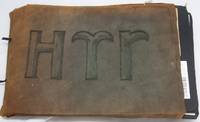
1911rif. 169921911. Jessie Gutshall Colorado Women's College photo album circa 1911-1912 documenting women's higher education and sorority life at a newly established institution in Denver. Created within the first years of the college's operation the album records student participation in academic social and organizational life with particular emphasis on the Greek society Eta Upsilon Gamma. The material supports research on women's education in the American West the formation of collegiate identity and the role of sororities in structuring social and intellectual communities among women students in the early twentieth century. Photo album containing 56 original silver gelatin photographs and 41 pieces of ephemera including invitations newspaper clippings table and dance cards menus drawings and organizational materials associated with Eta Upsilon Gamma. The album includes a certificate of induction a 1911 songbook the sorority constitution and an annual report with updates from local chapters including the Lambda chapter at Colorado Women's College noting student involvement with the YWCA and campus activities. Ephemera includes invitations to events at Denver's Brown Palace Hotel illustrated table cards and a "Summons to Initiation" designed with burnt edges and decorative imagery. Photographs depict sorority members in a range of settings including group portraits at a train station outdoor excursions on farms students climbing a windmill and scenes of leisure such as tennis played in full length dresses. Additional handwritten notes and inscriptions reflect social bonds and student culture including verses such as "Here's to those who'd love us if we only cared. Here's to those we'd love if we only dared." Created shortly after the founding of Colorado Women's College in 1909 this album documents the early development of institutional traditions and student organizations within a women's college environment. Sororities such as Eta Upsilon Gamma played a central role in organizing social life leadership opportunities and connections beyond campus through regional chapters and affiliated institutions. The inclusion of printed materials creative drawings and formal invitations illustrates the integration of artistic expression and structured social ritual in collegiate culture. Minor wear to suede covers with toning and fading at edges and small tears at spine and front cover; contents well preserved; overall very good. A detailed record of early women's collegiate life and sorority organization in the American West. unknown books