78.738 risultati
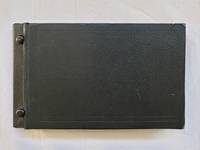
1935rif. 169941935. Skidmore College student photo album New York 1935-1943 documenting women's higher education campus traditions and the transition from collegiate life to professional and wartime roles in the United States. Compiled by a student in Saratoga Springs New York the album records academic social and political activity at a women's college during the late interwar period and extends into the early years of World War II. The photographs provide direct evidence of student participation in institutional traditions leisure culture and civic engagement including political rallies and later wartime developments that shaped opportunities for women. Photo album containing 215 original silver gelatin photographs of various sizes along with six postcards of Skidmore College and two Christmas greeting cards. Images document campus locations including the Chapel Hathorn House and Studio Peabody Hall Scribner Library and Salisbury Dormitory many with handwritten captions. Interior views of dormitory rooms at Skidmore Hall Peabody Hall and North Hall show personal arrangements with furnishings flowers and decorations including one captioned "Ready for Spring!" The album records student life through events such as Class Day Senior Assembly May Day Pageant Drill Team Horse Show the 1936 Junior Prom and the 1937 Tennis Finals. A November 7 1936 political rally is documented with students holding signs supporting Franklin D. Roosevelt or Alf Landon. Additional photographs depict recreational activities including skiing skating and candid campus scenes. Travel images extend the geographic scope to Lake George Niagara Falls and the western United States including views labeled "Flooded Orange Grove" "Long Beach Foot Bridge" and "Santa Ana trees overflow" from California flooding as well as construction views of Hoover Dam identified as "Boulder Dam." Spanning the late 1930s through 1943 the album situates women's collegiate experience within broader national developments including the New Deal political climate and the onset of World War II. Later photographs document the compiler's transition into teaching with images from schools in Connecticut and conclude with a 1943 portrait of a woman in military uniform indicating expanding roles for women during wartime. The combination of campus life travel and professional transition provides a longitudinal record of education and early career pathways for women in this period. Minor chipping to edges of first pages with light overall wear; contents well preserved; overall very good. A comprehensive visual record of women's college life and its connection to wider social and historical change. unknown books
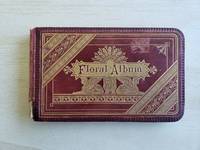
1879rif. 170111879. Farbush May. Handwritten memory album 1879-1885 documenting women's higher education and student networks at Iowa College during the late nineteenth century a formative period in the expansion of collegiate opportunities for women in the United States. The album preserves written exchanges among classmates and acquaintances recording intellectual training language study and social relationships within an academic environment that encouraged women's participation in formal education. The entries provide direct evidence of women's engagement with subjects such as French and Latin as well as the social structures that supported early cohorts of women students. Farbush May. Floral Album. 1879-1885. Manuscript album containing approximately 30 filled pages with 28 handwritten entries signed by friends and classmates from Iowa and New Jersey. The volume includes printed floral illustrations and gilt page edges with entries primarily in English alongside verses in Latin and French demonstrating multilingual education. The content reflects common nineteenth century memory album practices with poetic inscriptions and personalized sentiments including a notable entry by Mary Bye Everett: "Ever remember the happy hours we have spent together at the Iowa College. How well the Conversational Hour was improved in studying French. Happy time never to be again but always to be remembered." Additional entries reference Grinnell Iowa further situating the album within regional academic networks. Created during a period when institutions such as Iowa College played a significant role in advancing coeducational and women's higher education in the American Midwest the album contributes to the study of student life intellectual training and the cultural practices of remembrance among women students. Memory albums functioned as precursors to modern yearbooks preserving both standardized and personal expressions of friendship and identity. The presence of multilingual entries underscores the academic rigor and cultural aspirations associated with women's education during this era. Loss to lower spine with one illustration detached light foxing and toning; overall very good. A cohesive manuscript record of women's collegiate experience and social networks in the late nineteenth century. unknown books
1888rif. 170161888. LaRue Edith memory album 1888 to 1892 documents girls' education school friendship and adolescent memory culture in Bear Lake Michigan during the late nineteenth century. Kept by a female student and filled by classmates and friends the album records how young women used autograph books to preserve school relationships moral sentiment poetry and parting messages in a period when female education was becoming a more visible part of American social life. LaRue Edith. Memory album. Bear Lake Michigan 1888 to 1892. Handwritten autograph album with 18 manuscript entries from friends and classmates. Decorative cover with color portrait of a girl holding a letter and gilt title "Autographs." 80 pages. 5 x 8 inches. Original 6 x 4 inch black-and-white portrait photograph of the album owner pasted inside front cover with "Edith LaRue" written in blue ink along the lower edge. Includes color illustrations and decorative cutouts pasted throughout including hands books letters birds bouquets and an American flag as well as a loose portrait photograph of a young man. Entries include schoolmate inscriptions and conventional friendship verse including: "Your album is a garden spot Where all your friends may sow. So I will plant forget me not And see if it will grow." The album offers a localized record of schoolgirl sociability and the sentimental forms through which young women marked educational transitions before modern yearbooks became standard. Only the last few pages remain attached to the binding; dampstaining appears at the upper right corner of pages from the middle toward the rear good to very good. A useful documentary artifact of girls' education friendship inscription and female student identity in late nineteenth-century Michigan. unknown books
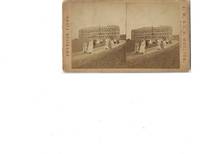
1880rif. 170131880. Women Education Photography Bradford Female Seminary. First all-female academy in MA. From a collection of stereoview photographs of Haverhill Massachusetts. c. 1880s. A memorabilia recording many aspects of the first major movement of women's education in the United States brings depth to a movement that was groundbreaking in its time but today is largely at risk of disappearing from the historical record. Dimensions 4 x 7 inches. J.W. & J.S. Moulton Landscape Photographers. #30 "Bradford Female Seminary." Double stereoscopic image of the seminary building with approximately 16 female students standing out front. Bradford opened in 1804 as the first coeducational institution in Massachusetts but due to overwhelming interest from parents of girls with no other option for education Bradford soon transitioned to become the first all-female academy in Massachusetts and among the first in the United States in 1836. Stereoscopic photographs are viewed through special lenses to create the illusion of depth. Light toning. In very good condition. unknown books
1873rif. 170201873. Sargeson L. manuscript composition book 1873 to 1874 documents a young woman's literary scientific historical and moral education through the nineteenth-century classroom practice of copying and composing texts by hand. Signed "Miss L. Sargeson" the notebook records how female students were trained in handwriting spelling grammar literary memory elocution and general knowledge through selected passages from canonical writers as well as original or assigned compositions on natural science and history. Sargeson L. Composition book. 1873 to 1874. Manuscript student notebook with 119 handwritten pages including a two-page index at the conclusion. Original boards with floral decorative pattern in white blue and gold on both covers gilt page edges 9 x 7.5 inches. Contents include copied poems and prose associated with Edgar Allan Poe James Montgomery William Wordsworth Charles Dickens Elizabeth Barrett Browning Shakespeare Washington Irving and Oliver Goldsmith as well as "The Monk" from Laurence Sterne's A Sentimental Journey Through France and Italy a text often used in nineteenth-century elocution instruction. Scientific and historical entries include a composition on "The Eye" discussing human and animal vision starfish and eyeless creatures material on Thermopylae and a letter from Martin Luther to his son. The volume provides a substantial example of young women's schoolwork in the 1870s showing an education that combined literary refinement moral instruction scientific observation history religious biography and performance-oriented reading. Thirteen pages have stray marks or scribbles from a later hand in purple blue and orange ink mostly in margins and not affecting legibility; first page has a vertical tear at the upper left edge along the binding; spine has losses and damage good to very good. A strong manuscript record of female education and classroom literary practice in the post-Civil War period. unknown books
1875rif. 170211875. Sargeson L. manuscript composition book 1875 documents a young woman's literary and moral education through the nineteenth-century classroom practice of copying poetry essays and prose by hand. Signed "Miss L. Sargeson" and dated "9-6-75" the notebook records how female students were trained in handwriting spelling grammar literary memory elocution and general knowledge through selections from Shakespeare Milton Harriet Martineau Samuel Taylor Coleridge Sir Walter Scott and John Wilson. Sargeson L. Composition book. 1875. Manuscript student notebook with 111 handwritten pages. Original boards with decorative green and purple floral design gilt page edges 9 x 7.5 inches. Contents include verses from Shakespeare including lines from A Midsummer Night's Dream beginning "Night's swift dragons cut the clouds full fast" and an excerpt on "The Moon" from Milton's Paradise Lost: "Rising in clouded majesty at length Apparent queen unveiled her peerless light." Women's intellectual writing is represented through Harriet Martineau's "Continuance of Moral Education" placing Sargeson's schoolwork within a curriculum that included both canonical male authors and a major woman social theorist. The volume offers a focused example of female student literary formation in the 1870s with copied texts used to cultivate penmanship memorization moral reflection literary taste and spoken performance. Spine damaged with losses; four pages have stray blue-ink marks or scribbles in the margins from a later hand not affecting text good to very good. A strong manuscript record of women's education and classroom literary practice in the post-Civil War period. unknown books
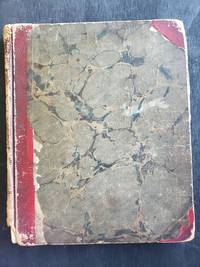
1842rif. 170431842. Key C. F. schoolgirl memory album 1842 to 1877 documents women's education friendship inscription domestic expectation and sentimental literary culture across the mid-nineteenth century. Signed "C.F. Key / January 19th 1842" the album records how young women and their schoolmates used memory books to preserve verse moral reflection courtship humor wax seals printed images and hand-drawn embellishment as part of the social and literary world surrounding female education. Key C. F. Memory album. 1842 to 1877. Manuscript and ephemera album with 20 handwritten entries and 39 pieces of ephemera including 24 printed paper items and 15 color wax seals from friends and schoolmates most of them women. Green marbleized boards with red leather binding 64 pages 9 x 7.5 inches. Printed material includes engravings and newspaper images such as "Her majesty leaving Buckingham Palace June 28 1838" and "Marriage of Henry the 6th." The wax seals include music ledgers initials trees dogs and lions. The album also contains a large pencil drawing of a small thatched-roof building in a forest. Manuscript entries address subjects including happiness marriage domestic life and courtship with poems such as "A Lady's Choice of Husband" and "Making Love" the latter using comic dialogue between Jane and Charles to explore youthful uncertainty about love. The album provides evidence of the literary visual and social forms through which schoolgirls and young women recorded friendship gender expectations and domestic ideals before standardized yearbooks. Binding loose with loss to foot of spine; first two pages and last three pages detached good. A rich manuscript and ephemera record of women's education schoolgirl friendship and nineteenth-century courtship culture. unknown books
1853rif. 170391853. Hettie memory album 1853 to 1862 documents girls' education friendship and schoolgirl remembrance in Hillsboro Illinois during the decade before and at the opening of the Civil War. Filled by friends and classmates the album records how young women used autograph books to preserve school relationships moral sentiment poetry and parting messages offering a localized record of female student identity and social connection in the mid-nineteenth century. Hettie. Memory album. Hillsboro Illinois and other locations 1853 to 1862. Manuscript autograph album with 24 handwritten entries in various hands. Red cloth boards with gilt central motif of a girl scattering flowers gilt edges 130 pages 7.75 x 6 inches. Includes one frontispiece engraving five color illustrations of flowering plants and birds two hand-drawn floral pictures and a hand-drawn pencil figure of a young woman cut into a paper-doll form. Most entries are from Hillsboro Illinois with others from locations including St. Louis. One inscription reads: "Oh! do not say Farewell We are going to sever" continuing with verse that imagines friendship surviving separation. The album provides evidence of the sentimental and literary forms through which young women marked educational transitions departures and enduring friendship before standardized school yearbooks. Boards faded good to very good. A meaningful manuscript record of girls' education female friendship and adolescent memory culture in antebellum and Civil War-era Illinois. unknown books
1876rif. 170421876. Vail Amy memory album 1876 to 1882 documents women's education female seminary culture and school friendship networks linking New York and Massachusetts in the late nineteenth century. Kept by Amy Vail while she attended Newburgh Female Seminary in Orange County New York and later Miss Burnham's School in Northampton Massachusetts the album records how young women used manuscript memory books to preserve poems affectionate inscriptions school identity and parting sentiments across changing educational settings. Vail Amy. Memory album. New York Massachusetts and other locations 1876 to 1882. Manuscript autograph album with 36 handwritten entries. Original black leather boards with gilt decoration to spine and front cover 8.5 x 7.25 inches. Entries come chiefly from young women identified as friends and schoolmates with locations including Newburgh Holyoke Northampton Philadelphia Chicago Colorado and elsewhere. Earlier entries from 1876 to 1879 center on Newburgh Female Seminary including one signed by Kittie Kennedy as "Your Loving Schoolmate" and located at "Newburgh GFS." Later entries from around 1881 identify Miss Burnham's School in Northampton indicating Vail's movement between female educational institutions. One playful inscription turns her name into a sentimental school pun: "For having a lovable girl in the present they Christened her 'Amy' for ever" while another asks remembrance through seasonal and domestic imagery: "When around thee dying Autumn leaves are lying.Oh! still remember me." The album provides evidence of the literary and emotional forms through which female students sustained friendship marked school affiliation and recorded educational transitions in the decades after the Civil War. Spine worn original boards intact manuscript entries legible very good. A strong manuscript record of women's education female seminary life and geographically dispersed schoolgirl networks in nineteenth-century America. unknown books
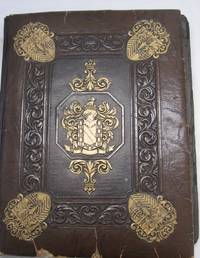
1835rif. 170401835. Marshall Caroline memory album 1835 to 1897 documents women's education friendship inscription and literary memory culture in nineteenth-century Massachusetts. Kept by Caroline Marshall and filled with signatures sentiments verse and decorative additions from friends and classmates the album records how young women used autograph books to preserve school relationships moral sentiment poetry and parting messages before modern yearbooks became standard. Marshall Caroline. Memory album. Massachusetts and other locations 1835 to 1897. Manuscript autograph album with 45 written pages additional handwritten verse and a laid-in article cutout concerning an event involving Henry Ward Beecher. Original green leather boards gilt edges gilt spine and cover decoration front cover personally stamped "Caroline Marshall" in gilt with harp illustration 8 x 6.25 inches. Includes frontispiece engraving of girls gathering flowers one page with three miniature watercolors surrounding an entry and one page with hand-colored floral illustration. Entries are chiefly from Deerfield Exeter Brentwood and Lowell with contributions including a Harvard University student and a student at Phillips Exeter Academy. The opening gift inscription addresses "Miss Marshall" and describes the album as "a beautiful emblem of your own character." Another entry composed for her begins "Go forth thou little book! Go forth-and gather thy store" imagining the album as a lasting repository of friendship. The album provides evidence of the sentimental and literary forms through which young women marked educational transitions departures and enduring friendship across much of the nineteenth century. Original gilt-decorated leather boards bright manuscript entries legible inserted decorative material present very good. A substantial and visually appealing record of women's education student sociability and friendship networks in nineteenth-century Massachusetts. unknown books
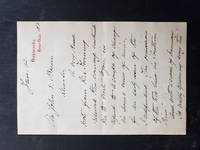
1900rif. 170551900. Hazard Caroline autograph letter signed circa 1900 documents women's higher education and literary publication through correspondence between Wellesley College's fifth president and John E. Bowen editor of The Independent. Written during Hazard's presidency the letter shows the editorial process by which a woman educator and published poet negotiated textual revision theological language and periodical authorship providing primary-source evidence for the study of women college presidents women's literary labor and print culture at the turn of the twentieth century. Hazard became Wellesley president in 1899; during her eleven-year tenure enrollment doubled new departments and buildings were added and faculty salaries improved. Hazard Caroline. Autograph letter signed. Peace Dale Rhode Island: Oakwoods letterhead January 12 circa 1900. 3 pages. 4.5 x 6.75 inches. Addressed to John E. Bowen editor of The Independent and signed "I remain very truly yours Caroline Hazard." Hazard writes "in regard to a couple of changes in some verses of mine for an early issue of The Independent" accepting "The omission of two lines in 'Southern Pines'" but objecting to changing "Mother" to "Father" in "Renewal" explaining that "It changes the idea entirely" and adding "Nature I perceive cannot be a father; but it surely can bask in the smile of the All Father." The letter's attention to wording gendered metaphor and religious meaning makes it a useful document of Hazard's literary judgment as well as her public intellectual identity. Written from Peace Dale Rhode Island Hazard's birthplace and home community the letter connects her presidency at one of the leading women's colleges with her continuing work as a poet and author. Remains of prior mounting on blank verso light toning mailing folds very good. A concise manuscript record of a prominent woman educator's participation in periodical publication and literary revision during the expansion of women's higher education. unknown books
1853rif. 170771853. 19th c. Women Education Autograph Letter Signed from Student at Augusta Female Seminary in Staunton VA 1853. Letter from a female student to her father. 2 pages 8 x 6.5 in. Dated "Mar 2nd 1852". Comes with original mailing envelope. Envelope has blue seal from "Augusta Female Seminary" on rear flap. She writes on health updates and asks for her Mother to sew her some items. "Dr. Laud came up to see me yesterday and examined my foot. He said he would send me some bismuth and he wanted me to have my foot rubbed every night." The Augusta Female Seminary was founded in 1842; in 1923 it became Mary Baldwin College. The school maintained its original mission to serve women and in 2017 the institution welcomed its first residential men to campus joining day students and graduate students which had been co-educational since the mid-1970s. Today Mary Baldwin University is the oldest institution of higher education for women in the nation affiliated with the Presbyterian Church and it is home to the only all-female corps of cadets in the world. Writing on envelope and page 2 is very faded. In good condition. A unique and personal piece of early Female Education history. unknown books
1866rif. 170761866. 19th c. Women's Education Autograph Letter Signed by a mother to a her daughter at Ipswich Female Seminary MA.1866: 4 pages folded from a single sheet. 8 x 5 in. Original mailing envelope with stamp and address. She writes on the girl's academic studies as well as the regulations with living in student life. ": "I am glad to hear from you so often & that you are getting along so well.I am satisfied that you try to have good lessons.I think it would be a good plan for you to go with a Latin class - if you will not have to work too hard." She also writes: "I do not expect you can always be perfect. I know that you will not break any of the rules of the school knowingly.I don't know as I understand what you wrote about Mrs Coats not allowing you to buy things to eat if it was that you should not go to the stores & buy treat I think she is perfectly right but I suppose she would have no objection to your having something from home." Ipswich Female Seminary was founded in Massachusetts in 1828 and the school's focus was on preparing girls for careers as teachers and missionaries. It offered a "rigorous curriculum" including study of English arithmetic geography chemistry human physiology history the natural sciences religion vocal music and calisthenics and placed an emphasis on "standards of personal conduct and discipline." As part of their preparation students practiced teaching with guidance from school instructors. Ink is slightly faded. A unique and personal piece of early Female Education history. unknown books
1872rif. 170801872. Rickster Elizabeth "Lizzie." Small archive of four autograph letters written between 1872 and 1874 while attending Moravian Seminary in Bethlehem Pennsylvania documenting women's education student social life and intellectual training at one of the earliest female educational institutions in the United States. The correspondence provides firsthand evidence of post-Civil War female academic culture through discussions of language study music instruction photography exchange courtship expectations and anxieties surrounding adulthood and domestic responsibility. Written to friend Dora Campbell of York Pennsylvania the letters reveal how young women at advanced seminaries navigated education alongside expectations of marriage and family life. Particularly notable is Lizzie's reflection on the transition from school into adulthood: "your school days were your best days for when you leave school then trouble commences. and then we get married and have little ones to take care of." The archive offers insight into the emotional and intellectual world of educated middle-class women during Reconstruction-era America and documents the continued prominence of Moravian educational traditions in women's schooling. Four autograph letters signed totaling approximately sixteen pages each measuring roughly 7 ¼ x 4 ¾ inches accompanied by their original mailing envelopes. Letters dated September 30 1872; February 25 1873; February 7 1874; and April 6 1874. The correspondence contains detailed references to coursework German translation exercises singing lessons winter sleigh rides school vacations and social exchange between female students and friends. In the February 25 1873 letter Lizzie writes "Dora your 'Brief' translated from German means letter" while later correspondence challenges Dora to decipher additional German phrases reflecting the seminary's emphasis on language instruction and cultivated accomplishment. Other passages describe music study and anticipation surrounding portrait photography exchanges: "I'm am going to have some pictures taken this term and if you give me some of yours I will give you one of mine." The letters preserve evidence of both structured academic training and the sentimental friendship culture central to nineteenth-century women's education. Variations in handwriting across the letters particularly the looser script of the final 1874 letter suggest increasing familiarity and intimacy between the correspondents. The Moravian Seminary traced its origins to the Bethlehem Female Seminary established in 1742 under Countess Benigna Zinzendorf among the earliest institutions dedicated to female education in North America. By the nineteenth century the institution had developed into a prominent seminary offering advanced education to women including instruction in languages music and literature. These letters document that educational environment during the Reconstruction era when expanding opportunities for women's formal education remained closely tied to prevailing expectations surrounding refinement domesticity and social accomplishment. All letters tender along original mailing folds with minor wear from handling. Very good condition overall. Compact but substantial archive documenting the daily intellectual and social experiences of women enrolled at one of America's foundational female educational institutions. unknown books
1863rif. 170711863. Emily Hodgson. Women's education and suffrage activist. Autograph Letter Signed by Hodgson on December 31 1863. Massachusetts. 14-page letter on from the seminary days of author Emily Hodgson profiled by close friends and suffragists Frances Willard and Mary Livermore in A Woman of the Century 1893. 8 x 5 inches. 14 pages of lined white stationary. At this time Hodgson was a student at the prestigious Ipswich Female Seminary an early school for girl students where she wrote in lively prose about the New Year's party she prepares to surprise her classmates and hints at her early literary ambitions. About living in a dormitory and celebrating New Year's Eve with other students: "Such a gay time as the six damsels that board in this house are having tonight! As we are all ''young ladies" Mrs. Cowles has given us permission to sit up till quarter past twelve. I was commissioned to provide refreshments arrange the table etc. and really I feel quite proud. None of the girls except my assistant have as yet seen it and I know they do not expect to see quite such a grand affair grand for Boarding school . " New Years Eve don't come but once a year" I hear one of the girls exclaiming. I know they are coming to see why I am so long- Sure enough- and now they are gone." About her early writing attempts: "I have had a letter come from an old teacher of mine. And I know you won't think me vain if I send it to you for as you fly so hard to have me do well and are the means of my enjoying myself so much and giving what enjoyment I am able to others around me I know it will please you to see that I sometimes succeed . she like Mrs. B is not ordinary woman . she is a very finely educated lady. and I feel pleased that she should like my feeble endeavors. The lady Miss Briggs who writes the note enclosed has been composition teacher here for a long time. You would hardly judge from this not which is far from a good letter from her that was very easy and elegant with her pen. She has written three or four prize essays and won the prizes." Ipswich Female Seminary was founded in Massachusetts in 1828 and the school's focus was on preparing girls for careers as teachers and missionaries. It offered a "rigorous curriculum" including study of English arithmetic geography chemistry human physiology history the natural sciences religion vocal music and calisthenics and placed an emphasis on "standards of personal conduct and discipline." As part of their preparation students practiced teaching with guidance from school instructors. Mild toning and a few light stains. All sheets except 1 have minor tape repairs at folds. In very good condition. A unique and personal piece of early Female Education history. unknown books
1893rif. 170891893. 19th c. Women Education Handwritten letter to 2 women teachers from former instructor. December 22 1893. 2 pages with original mailing envelope. 9.5 x 5.75 inches. On Western Theological Seminary letterhead with fine engraving of the school building on both sheets. To "Miss Ellsworth and Miss Gore" from L.M. Jones who appears to be a teacher or Director of the Seminary writing to former pupils who are now teachers themselves at an institution in New Hampshire. In part: "I often hear good reports about both of you by Mrs. Chamberlain. School has come to close once more and we are commencing to disperse some leaving for good others for two weeks. Dear Mrs. Chamberlain will have about ten of the unfortunate ones here for X Mas also Dr. Gold and family which will help to make it merry for her. Mr. Davies wishes to be kindly remembered to both of you. I intend spending my X Mas with him and I am sure that we will have a lovely time as we always do when we get together. We were all vaccinated here last week to protect ourselves from the small pox which is raging in the city at the present time. Miss Jarvis wishes to be kindly remembered to you. I presume that you're aware of her undertaking since you left. She is as you know a very brave young lady to undertake such responsibility as she has and I am a little afraid that her health will brake down under the strain. Hoping to be able to write a longer letter next time." In very good condition. A unique and personal piece of early Female Education history. unknown books
1925rif. 171081925. Women's Education Scrapbook from woman studying Teaching at Nebraska Wesleyan University NWU 1925-1931. Filled with 352 pieces of ephemera for school societies dances and socials sporting events Christmas cards stage plays and commencement activities. Dozens of colorful and creative invitations and dance cards. 33 handwritten notes and signatures from friends. 100 pages. Original textured cloth cover. 11 ½ x 14 inches. Large golden color seal in center of front cover "Universitas Wesleyana Nebraskae 1887". Originally belonged to Melba Johnson. 33 handwritten notes and signatures from friends recalling fond memories together at university. "Remember our many good times together. Our trip to Palmyra etc." "Lots of love to a dear Delta Phi sister." "Remember the first time I met you Hope to be your 'sister' someday." Filled with letters party invitations dance cards and other ephemera from a popular college student. Vibrant yellow felt cutout of school mascot Prairie Wolves on first page. Letters noted as "Rush Week Invitations" to Alpha Epsilon honor society for agricultural biological and food engineers Delta Phi Alpha Delta Omega and Sigma Alpha Iota National Music Sorority Kappa Delta and Gamma Mu Upsilon. Other included organizations with ephemera are Beta Kappa Theta Alpha Phi National Theatre Honor Society Kappa Sigma Pi Phi Kappa Tau and Gamma Beta Kappa. Also ephemera for social events from the YWCA Young Women's Christian Association. Also includes ticket stubs to various shows and performances and some ephemera from The University of Nebraska's football program. Clipping from Nebraska v. Pittsburgh game in 1928 and 1929. Program for 1926 "Nebraska Wesleyan Home Coming Day" Football game against Peru State College and clipping from a NWU game against Hastings College. Program for 1927 Commencement and ticket to 1928 Commencement; Invitations to subsequent commencement ceremonies included in scrapbook. Membership card and pin for Nebraska State Teachers' Association which she joined after graduation; Johnson went on to work at Norfolk High School in Norfolk Nebraska after earning her teaching degree. Nebraska Wesleyan University was founded in 1887 and the first graduating class was four women in 1890. The school is located in the former town of University Place Nebraska. Today it is part of Lincoln Nebraska. In the late 1920s when Johnson was attending school Nebraska Wesleyan was a college of liberal arts with schools of art business and education and a music conservatory. In very good condition. unknown books
1916rif. 171101916. Women Education Europe Identification Card for Sophia State Girls' High School СофийÑка държавна ДъвиуеÑка Ð³Ð¸Ð¼Ð½Ð°Ð·Ð¸Ñ 1916. Sophia is the largest and Capital city of Bulgaria. 4.5 x 3.25 in. Original blue cloth folder. Identification photo of teenge girl pasted inside dated 19.III.1916. Original silver gelatin print 2.75 x 2 in. This young student wears a dark pinafore uniform and a fashionable hat and looks confidently out at the viewer. This was mere months after Bulgaria declared entered World War I in October 1915. Normal education was disrupted for most Bulgarian students during the Balkan Wars 1912-1913 and WWI 1915-1918 so this girl was likely very grateful for the opportunity to study. Original education department stamps in blue ink. In very good condition. unknown books
1850rif. 170931850. Archive of 7 letters totaling 18 pages spanning the years 1845-1900. The letters detail the administration of women's seminaries during a time when these institutes were being created to offer educational opportunities for female students as they prepared to become teachers. One admissions letter addressed to the father of two students reads "Dear Sir I am happy to inform you that your daughters can be admitted to the Seminary agreeably to your request. And that rooms will be selected and and reserved for them. The next term will commence on Thursday the 15th." In a series of letters written between teachers cheerful complaints are detailed " I like teaching very well though I think I have found more pleasure in studying. I like it so long as I can keep my class interested. Sometime I can easily do this at other times I find it more difficult then it is that I get discouraged and think that it would be easier for me to learn a lesson and recite it myself than to see that a half dozen mischievous girls get theirs." During the mid-nineteenth century female seminaries were a cultural phenomenon succeeded the family-like environment of boarding schools to be structured more like men's colleges. The development of the female intellect was seen as a responsibility one educators took seriously. In one somewhat humorous letter on the rigor of examinations a professor writes "I have been more busily engaged than even you can imagine. I took it into my head to get up a semi-annual Examination which draws heavily upon my time and energies and to cap the whole I narrowly escaped the loss of one of my eyes. A piece of red hot burning coal few into it." A letter written from a professor to student reveals the mentorship fostered in these institutions "Dear Madam I am entering your name as a candidate for the Classical Scholarship. The examination will take place on Wednesday Thursday & Friday the 14th 15th & 16th of March at Newnham College. You will have to come to Cambridge on Tuesday probably in time to read for the examination on Wednesday morning but most likely you will & leave on Friday afternoon. If you would like us to arrange for board and lodging for you please let us know. It will cost you 3 / b per night." The seminaries were private institutions without public funding so finding donors was imperative. In one letter a John P.LeRoy writes to a friend asking for such an investment "Mr. Boyd of the Monroe Female Seminary said that if you could furnish capital enough he did not know but he would like to take you as a partner in his school but as I supposed from what he intended that he would want a partner with some three thousand dollars at least to invest." In a letter written by one headmaster after being let go from his position the administrative structure of the seminary is alluded to "I regard the action of the Committee as neither just kind nor courteous.Up to the meeting of the Comm. In May I had never received any intimation that the Comm. or the patrons of the school were dissatisfied with my administration." And in one snapshot of student life during a measles outbreak in Ohio dated 1873 a student writes to her mother "I thought I would write and ask you if I have ever had the Measles as we have them in school now. If I have not I don't want to have them here. One of the girls is going home Saturday. She is exposed and has never had them & she is going home to have them. This is a mighty poor place to get sick. I never thought the Measles ended in such serious things as they do sometimes that is if you get cold. The girls were talking about the different way in which they effect persons. The mumps are raging too." These letters give a unique portrait of the administrative obstacles and successes across a small set of female seminaries during these institutions burgeoning years. unknown books
1921rif. 171091921. Hinshaw Mary Jane scrapbook 1921 to 1943 documents women's education teacher training library studies sorority life and student identity through the life of a Missouri and Kansas student from childhood through college. The album follows Hinshaw from baptism and early school photographs to Stephens College and Kansas State Teachers College of Emporia preserving evidence of how a young woman's education moved from family and local schooling into collegiate social life professional preparation and library-centered coursework during the 1930s and early 1940s. Hinshaw Mary Jane. Scrapbook album. Missouri Kansas and western United States 1921 to 1943. Scrapbook with 78 original silver gelatin photographs and 43 pieces of ephemera. Original cream boards with embossed front cover 39 pages 10.5 x 13.5 inches. Photographs range from 2.5 x 2 inches to 8 x 10 inches and include family images childhood portraits elementary and high school class photographs school groups and western United States travel views with expansive landscapes and rock formations. Ephemera includes baptism and birth announcements Stephens College commencement invitation from 1941 report cards certificates two cloth varsity letters a felt bulldog debate letter Delta Sigma Epsilon membership card party invitations and dance cards from Sigma Tau Gamma Delta Sigma Epsilon and Alpha Delta. Academic records document coursework at Stephens College in English literature French English history psychology sociology music appreciation physical education and educational psychology followed by Kansas State Teachers College coursework in teaching history of education American history library administration cataloguing and classification reference book selection library work with children and literature of high school subjects. A handwritten postcard from a Stephens classmate at the University of Wisconsin states "I am having a glorious time-It certainly isn't like Stephens much much better." The scrapbook's research value lies in its unusually broad view of female education from childhood through professional training including Hinshaw's connection to Marysville High School where her father served on the Board of Education and her later preparation for teaching and library work. Tear with loss above right portrait adhered to first page; one page detached; front hinge loose good to very good. A substantial documentary record of women's higher education teacher preparation sorority culture school achievement and library training in the Midwest from the interwar period into World War II. unknown books
1879rif. 170951879. 19th c. Women Education Handwritten letter from the superintendent of the Young Ladies' Athenaeum in Jacksonville IL. June 24 1879. On official letterhead for the school with a large engraving of campus buildings. 2 pages. 10 x 8 inches. Superintendent of the school William Sander writes to recommend a graduate Nellie Stevenson for employment as a music teacher. Stating in part: "She was graduated from the Atheneum in the Class of 1873 with much credit.and since her graduation has taught in Peoria Co. and this County; and I am informed she gives excellent satisfaction to her Pupils and their Parents. All that I have heard of her since her graduation has been most honorable to her both as a lady and a musician." The Young Ladies' Athenaeum was founded in 1864 and was later incorporated into Illinois College in Jacksonville. Light handling wear. "Please return to Nellie Stevenson" written in pencil on verso. A unique and personal piece of early Female Education history. unknown books
1891rif. 170881891. 19th c. Women Education Handwritten letter from Principal at Washington Female Seminary in Washington PA. February 15 1891. On personalized stationary for Principal of Washington Female Seminary Miss N. Sherrard. Addressed to "My Dear Sister" and signed "June." With original mailing envelope. 2 pages 9 x 5.5 inches. She writes on personal matters with her sister and gives an update on the school and teachers: "Bessie Ewing is now well.she is the most popular teacher in Seminary. The girls are all quite well at present & I hope they may keep well all spring." The Washington Female Seminary was a Presbyterian seminary for women operating from 1836 to 1948 in Washington Pennsylvania. During the 19th century it was well-regarded as one of the top institutions for women in the area. It was founded abolitionist Francis Julius LeMoyne and Alexander Reed and its formal charter came in 1839. By 1886 there were over 100 students enrolled; and the curriculum included both a preparatory course which generally gained admission to the finest women's colleges and a regular course with studies in music art and elocution. In very good condition. A unique and personal piece of early Female Education history. unknown books
1942rif. 171381942. Walker Marjorie O. scrapbook 1939 to 1942 documents women's teacher training coeducational campus life and institutional transition at Oswego State Normal School as it became Oswego State Teachers College. Kept by Marjorie O. Walker of Woodridge New York the scrapbook records the system of teacher preparation through admissions materials course records student regulations directories newspapers and campus communications revealing how Oswego organized academic instruction boarding life extracurricular culture and crisis response during the years immediately before and after its 1942 elevation to a four-year bachelor's degree-granting teachers college. Walker Marjorie O. Scrapbook album. Oswego New York 1939 to 1942. Scrapbook with 142 pieces of ephemera including report cards correspondence newspaper clippings student publications event programs postcards athletic songs sorority material and notices concerning campus operations. Original paper wraps with large color fall foliage image on front cover 76 pages 15 x 11 inches. Contents include a 1940 admission letter noting a waiting list for applicants course schedule report card 1939 student handbook 1940-1941 student directory boarding regulations for landladies and roommates programs for plays and musical performances full issues of The Oswegonian postcards of Oswego and nearby sites Alpha Delta Sorority material and printed fight songs. Academic records document coursework in Child Development History of Civilization Written Composition General Math Essentials of Music Essentials of Art and Recreational Activities. Newspaper material includes coverage of a Korean national student at Syracuse University speaking at Oswego about the Japanese occupation of Korea. The final pages are especially significant for documenting the January 1941 campus fire that caused an estimated $100000 in damage including student newspaper coverage describing students "carrying coupling and manning hoses" alongside firemen and later notices emphasizing "Business As Usual" through revised examination schedules and relocated classes. This crisis documentation combined with admissions housing academic and social material makes the scrapbook a strong record of how a teachers college functioned in practice during wartime-era institutional change. Ephemera and scrapbook pages intact as described with general handling consistent with use very good. A substantial documentary record of women's education teacher preparation student life campus administration and emergency response at Oswego during its transition from normal school to state teachers college. unknown books
1911rif. 171211911. Early Co-educational College Photo Album Wisconsin Original owner's name "UW" and "1911" handwritten on inside front cover. 115 photographs of various sizes from 1.5 x 3 in. to 5 x 7 in. Includes many images of outdoor recreation such as hiking and boating perhaps on Lake Mendota campus life and agricultural scenes. Most photos lack captions but some locations are labeled such as outings to the Flambeau River Park Falls WI; Ellsworth WI; and the Boise River. Images of Bascom Hill and North Hall on the historic University of Wisconsin campus. One real photograph postcard shows women students seated outside and is captioned "'The Sun Bath' Co-eds at UW". Some photographs show the inside of male dormitories on campus decorated with pennants for Wisconsin and Rose Polytechnic Institute Terre Haute IN. Includes several photos of manual and agricultural labor such as baling hay. Founded when Wisconsin achieved statehood in 1848 University of Wisconsin-Madison was the first public university established in Wisconsin and remains the oldest and largest public university in the state. At the time this album was compiled research teaching and service at the UW was influenced by a tradition known as "the Wisconsin Idea" which holds that the boundaries of the university should be the boundaries of the state and that the research conducted at UW-Madison should be applied to solve problems and improve health quality of life the environment and agriculture for all citizens of the state. This Progressive-era policy applied the expertise of the state's university to social legislation that benefited all the state's citizens; it led to classic programs such as regulation of utilities workers' compensation tax reform and university extension services; sometimes expressed in the maxim that "the boundaries of the university are the boundaries of the state". Glue reside from some removed photographs. 1 page detached. 5 photos loose. In good to very good condition. unknown books
rif. 17142Girls' Education Science Laboratory with 6 figures around a table filled with special equipment. c. 1920s. Real photo postcard. 3.5 x 5.5 in. From unknown European country. 4 girls in matching uniforms stand around a table engage in experiments and write observations in their notebooks. 1 uniformed young man stands nearby while an older student or teacher supervises. This dates from the 1920s after WWI had ended but a period in which militarization in Europe was considered of upmost national importance. The early 20th century was also a period of great development for women's education as more schools and programs opened to girls. Real photo postcard was never mailed and has no message written on verso. Creases in lower and upper right corners. In good condition. unknown books