509 risultati
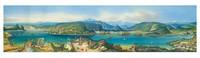
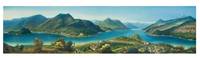
1850rif. 42495Italy 1850. Gouache over faint etched line black gouache border. Period gilt and faux bois frame. A splendid panoramic view of Lake Como. Catering to the foreigners flocking to the region on The Grand Tour this hand-painted print beautifully depicts the famed picturesque lake with rich bands of blue highlighting the water and sky with the surrounding hills and mountains dotted with luxurious villas. The view looks north up the lake towards Switzerland from above Bellagio which occupies the point at which the lake divides in two. unknown books
1850rif. 42496Italy 1850. Watercolour over faint etched line black gouache border. Period gilt and faux bois frames. A splendid panoramic view of Lake Maggiore. Catering to the foreigners flocking to the region on The Grand Tour this hand-painted print beautifully depicts the famed picturesque lake with rich bands of blue highlighting the water and sky with the surrounding hills and mountains dotted with luxurious villas. In this view of Lake Maggiore we see from a very high vantage point the Borromean Islands: Isola Bella Isola Madre and Isola dei Pescatori with their extraordinary gardens. unknown books
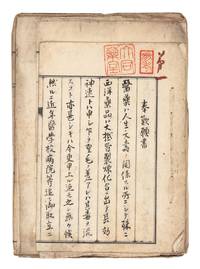
rif. 8335Ca. 52 leaves. 8vo leaves of various sizes but averaging 285 x 203 mm. written on paper with pre-printed columns stitched together. Osaka: 1872-75. The Osaka Medical School today part of Osaka University and one of the finest medical schools in Japan traces its origins and traditions to the Tekijuku an academy founded by Koan Ogata 1810-63 which based its teaching on Western learning mostly from the Dutch. The newly created Meiji government established the Osaka Medical School in 1869 with the help of Ogata’s son Koreyoshi and the Dutch doctor Antonius Franciscus Bauduin 1822-85. This was part of the massive effort in Japan to modernize. The “Fundamental Code of Education” promulgated in 1872 established a centralized national educational system which concentrated on Western science and technology. These manuscripts document the transformation of the medical school into a national institution. Details regarding rules for employees contracts for foreign employees including salaries housing matters of finance terms of severance standards regarding the making of pharmaceutical products lists of foreign employees correspondence with government officials etc. In fine condition. With the seal of the Shinto priest and physician Yasuaki or Kosho Nakano 1874-1947 and his private library Daido Yakushitsu. He was a major collector of kanpo the Japanese study of traditional Chinese medicine calligraphy maps illustrated scrolls waka poetry and paintings. unknown books
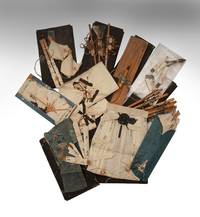
rif. 7079Various formats and sizes. Japan: ca. 1787-96. The Ogasawara School å°ç¬ åŽŸæµ founded in the 12th century laid the foundations of etiquette for the aristocratic and samurai classes throughout Japan for many centuries. The school specialized in teaching horsemanship archery mounted archery and samurai etiquette on and off the battlefield. Over the centuries the school transitioned itself to focus on a system of courtly manners along with skills in archery for ceremonial rituals. The school continues today supervised by the 31st generation leader Kiyotada Ogasawara. The Imperial House of Japan uses Ogasawara etiquette. This fascinating collection is made up of miniature models or samples of materials and objects required and used at formal Ogasawara events in the late 18th century as well as a number of manuscript documents. We begin with ten black paper four-sided folding envelopes each labeled and containing the items below. These envelopes are constructed of thick but flexible paper with string ties. The labels describe the contents of each envelope and have seals and signatures of either “Hisanobu” or “Nobumichi”: 1. a miniature paper model of a horo which is worn on the back of a samurai’s armor. Our horo is made of folded paper with a silk brocade adornment. Measurements are given in manuscript. With this is a model of the bag to carry the horo; 2. miniature fabric samples of pleated trousers a man’s formal kimono and vest along with samples of neatly wrapped objects elaborately tied which were to be carried. They include a sword a fan and a bolt of precious brocade; 3. three miniature tachi swords each for a specific occasion. Our sample tachi are made of wood and have thick thread attachments; 4. two kinds of miniature torches taimatsu along with their holders; 5. a most remarkable miniature wooden bow mounted on a wooden board. A quiver utsubo again made of wood and decorated in gold brocade is also mounted; 6. Six miniature examples of maku gushi poles to hold banners. They are joined by ropes here represented by fine decorative cord; 7. four samples of real hair cut off and tied during genpuku the Japanese coming-of-age ceremony; 8. a miniature target — an opened fan — mounted on a board for the hikime-no-gi the archery ritual; 9. two elaborate folded paper model sacks to protect the bow when it rains kasa yumi bukuro; and 10. seven strands of hay and 12 braided strips of paper kamioki which were used in ceremonies for two- and three-year-old aristocratic and samurai male children. These are accompanied by 69 examples of very complex ceremonial origami or origata. Origata as compared to recreational origami was developed amongst the higher class of samurai who stressed formal manners and a sense of decorum. It is a method of how to wrap gifts with very precious handmade papers used for gift-giving and ceremonies in order to maintain sound human relations. Each is folded in it own way and labeled with its intended contents for example an obi belt confectioneries a brush for calligraphy shark skin for sword handles incense wood a tooth-cleaning stick a fan Chinese silk thread hair ornaments gold dust sumi ink cake perfume belts for inner garments face powder tabi socks various sizes of fine writing paper feathers from hawks and cranes for arrows etc. Some examples of highly complex ornamental ties are also present. Finally there are about 20 contemporary letters all concerned with various aspects of Ogasawara etiquette including gastronomic matters. There is a stiff thick-paper folded cover for a gift signed “Ogasawara Taizen taifu Nagamasa.” There is also a packet of miscellaneous related papers. In fine condition and a remarkable survival. unknown books
1617rif. 25561possibly German 16th-17th century. 1 vols. 19 x 13-1/2 inches. Some flaking mostly away from central image. 1 vols. 19 x 13-1/2 inches. unknown books
rif. 10734Many fine extended images of musketeers in various positions firearms targets etc. Paper shiny with infused mica. Eleven vols. Narrow 8vo 234 x 105 mm. orig. semi-stiff blue boards some rubbing & wear silver endpapers with floral patterns orig. gilt paper labels on upper covers with manuscript titles several are missing. Japan: dated “August 1660” at end of each volume. An unusually large group of manuscripts collectively known as the “Inatomi ryū hÅjutsu hidensho” 稲富æµç ²è¡“秘ä¼æ›¸ “Secret Information Passed Down of the Inatomi School of Gunnery & Marksmanship.” At the end of all the volumes the “lineage” of this secret information is provided starting with Ichimu Inatomi 稲富一夢 1551-1611 who founded the Inatomi school of gunnery. We have never had such a large group of related manuscripts concerning the Inatomi school. European matchlock muskets hinawaju ç«ç¸„銃” were introduced to the island of Tanegashima Japan in 1543 by Portuguese traders. The Inatomi school of gun manufacturing and gunnery founded in the latter part of that century was also one of the leading marksmanship schools in early Japan employing hinawaju. This collection consists of 11 volumes the first six finely illustrated: 1. “Gokui ezu hoshi ita no sho” 極æ„絵図星æ¿ä¹‹æ›¸. “Innermost Secret of the Bull’s-Eye Illustrated.” 17 folding leaves. 2. “Sanju ni sÅ no tsutsukatame sho” 三拾二相之筒固書. “32 Ways to Hold the Musket.” 69 folding leaves. 3. “Hoshizumi no sho” 星ç©ä¹‹æ›¸. “Ways to Judge Target Accuracy.” 5 folding leaves. 4. “Mezumi tezumi no sho” ç›®ç©æ‰‹ç©ä¹‹æ›¸. “Method of Judging the Target by One’s Eye and Hands.” 15 folding leaves. 5. “Setsugyoku no ezu” 切玉之絵図. “Sizes of the Bullets Illustrated.” 11 folding leaves. 6. “Nichigetsu ametsuyu aiai” 日月雨露相åˆ. “Methods of Shooting Through the Year.” 51 folding leaves. 7. “TeppÅ yakuson hiden no sho” 鉄炮薬拵秘ä¼ä¹‹æ›¸. “Recipes for Making Gunpowder of Various Kinds.” 21 folding leaves. 8. “Tama hoshiai no koto” 玉星åˆä¹‹äº‹. “How to Choose the Bullet for the Target.” 12 folding leaves. 9. “TeppÅ kokoromochi no sho” 鉄炮心æŒä¹‹æ›¸. “Correct State of Mind When Shooting the Musket.” 19 folding leaves. 10. “Gokui aka zumi no sho” 極æ„朱ç©ã®æ›¸. “Innermost Secrets for Successful Shooting.” 26 folding leaves. 11. “Hyaku jŭsan kajÅ mokuroku” 百å三箇æ¡ç›®éŒ². “113 Situations of Shooting.” 15 folding leaves. As mentioned above the first six manuscripts are beautifully illustrated in rich colors depicting Inatomi muskets methods of handling and aiming the musket and techniques of marksmanship. The first volume provides close-up illustrations of the muskets and methods of hitting bull’s-eyes. The next volume depicts 32 positions of musketeers in a series of 16 scenes; the classic considerations of marksmanship are shown: stance grip aim breath control trigger control and follow-through. The musketeers are finely rendered in black ink and heightened with flesh-colored wash. The muskets are painted in brown gold and silver pigments and rest on richly colored cushion mounts. The musketeers are all depicted nearly naked but wearing the most gorgeous loincloths made of richly colored fabrics including gold and silver in order to reveal correct body positioning. Each scene is well-annotated discussing the six fundamentals of accurate shooting. Included are measurements comments regarding whether the musketeer is short or tall how to hold the gun and squeeze the trigger which part of the body should be tense or relaxed how to place the barrel on a rest or foot to increase accuracy etc. Matters of shooting uphill or downhill are considered. The third volume is concerned with methods of judging accuracy a large target is shown and the fourth with coordinating eyesight trigger-finger control and accuracy. Eyes and fingers are depicted and well-annotated. The fifth volume depicts bullets of various calibers and weights. Vol. Six discusses problems of accuracy related to weather conditions throughout the year. Accuracy charts are given. The remaining five volumes are unillustrated. The seventh gives secret and precious family recipes for various kinds of gunpowder. The remaining volumes discuss technical and psychological matters to increase accuracy. In fine condition. ⧠Noel Perrin Giving Up the Gun. Japan’s Reversion to the Sword 1543-1879. unknown books
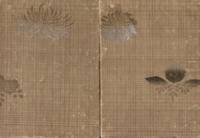
rif. 86003001Edo c.1700-50 n.p. Brown & silver covered boards very clean 7 double-page b.w. erotic woodblock illustrations mounted on mica flecked paper 18 x 25 cm. accordion folded illustration size: 31 x 12 cm. FIRST & ONLY UNRECORDED COPY! . . . . A VERY RARE UNRECORDED EARLY BOOK . . . A BIZARRE & UNIQUE EROTIC BOOK . . . UNSIGNED BUT CLEARLY THE WORK OF A MASTER ARTIST . BY SUKENOBU OR HIS :SCHOOL: . A unique and hitherto unfound odd and most unusual erotic book of the early-mid-18th century. One of the most bizarre erotic books ever done in Japan. . The graphically explicit work portrays men and women with genitals on their foreheads engaged in heterosexual and homosexual intercourse. There is no other book with such unusual and strange illustrations. . . THE TITLE: THE LEGEND OF AMANJAKU or AMAN NO JAKU: Chinese Title: TIAN XIE GUI YUN . THE MEANING OF AMANJAKU: Japanese Buddhist literature is abundant with variations on the theme of "Aman-No-Jaku" aka. "Amanjaku" "Manojaku" commonly understood to be a "Heavenly Evil Spirit." . This spirit or demon-like creature in Japanese folklore is usually depicted as being a male during the day and female at night. The demon is usually depicted as a kind of small Oni devil and is thought to be able to provoke a person's darkest desires and instigate him into perpetrating wicked deeds. . Amanjaku is also depicted in Chinese and Japanese mythology the AMANOJAKU is a changeling a water spirit that infiltrates the human world to play cruel tricks on people by reading their minds and twisting their requests or desires to be used against them. . The "AMANOJAKU" is also known the "Lord of the River" and in Japan serves Bishamonten one of the four Deva kings of Buddhism as a minor demon. See Wikipedia below. . In Japanese the term "Amanojaku" also refers to a person who is deliberately contradictory someone who argues for the sake of arguing or can be used in common Japanese conversation to refer to someone who is a "Perverted Demon." . THE ILLUSTRATIONS: THE BUDDHIST THEME:. This work is unusual in that the genitals of common people are located on their foreheads. A symbolist meaning can be in Buddhist concept that sex and sexual hedonism is openly on the minds of 'lay' people. The Buddha and his disciples on the other hand do not have sex organs on their foreheads meaning their organs are covered and in a different usual location. This can symbolize 'self control' over such biological energies. Devout Buddhist disregard sex as a pleasurable pastime and devote themselves to monastic focus. By contrast "lay" people are distracted with hedonistic pleasure a path away from rather than towards the Dharma or teachings of Buddhism. . In a sense this work illustrates the overwhelming force of evil or the "Amanojaku" and how it distracts people from the "Righteous Path" towards the Dharma and the ultimate goal of attaining Nirvana. It can be posited that this work is designed to give understanding to "lay" people by way of visual example of what forces direct their energies away from the Buddhist teachings in an effort to redirect them towards the "Righteous Path" and life style. . EXCEPTIONALLY RARE UNIQUE WORK: . The work is exceptionally RARE unusual and erotic there are no other example showing genitals on the foreheads of any other Japanese book cited anywhere in the bibliographic literature or record. . This work is certainly RARE in subject content and quantity. Though it was woodblock printed and unsigned which was usual for Japanese erotic works which were banned by the Shogun we have not found anything similar or recorded anywhere in the bibliography. Being woodblock printed one assumes there are other copies in existence. The average printing from woodblocks were somewhere between 100-200 copies. However in this instance no others exist. We have the strong feeling the book could have been the production of a famous Japanese illustrator and perhaps financed by a Buddhist temple again there are no known facts about this rarity. . THE EROTIC ILLUSTRATIONS: . Number 1: This work begins showing the Buddha flanked by two of his disciple monks. The title is written in four Japanese Kanji in Kambun & Chinese characters. The Buddha and his two disciples listen to two elderly Buddhist believers: one is a male he has and erect penis on his forehead. The other is a woman she has a vagina on her forehead. Neither the Buddha nor his two disciples monks show genitals on their foreheads. The couple have come to consult with the Buddha about their grievances. . Number 2: Shows a man and a woman in a Tatami matted room both wear lovely 18th century decorated Kimono. They embrace each other and are engaged in making love from their foreheads which show an erect penis and testicles inserted into the woman's forehead where her vagina is located. Adjacent to the young couple is an older woman who has become aroused by the adjacent couple's making love. The old woman uses a dildo tied to a post which she hugs while inserting the dildo into the vagina on her forehead. . Number 3: Shows a couple laying on a blanket their Kimono pulled down and opened and used as a top cover. They engage in love-making and kiss. The man has an erect penis on his forehead the woman a vagina on hers. There is some used Chirishi toilet paper just above her head on the floor used to wipe the love fluids. There is a folded package of yet unused Chirishi in readiness. Chishiri shown in Japanese Shunga erotic prints prints & paintings is an 'erotic symbol' indicative of sexual excitement with lots of love fluids flowing. Ergo the need for paper to clean up the results of erotic love-making. . Number 4 shows an adult man with an erect penis on his forehead penetrating the anus of a younger man who's smaller but erect penis is seen on his forehead as he faces his lover. The younger man has no pubic hair yet indicating his youth. . Adjacent to these two men is a woman in the next room. The door is open she is a secret voyeur of the two men. Her vagina is also on her forehead. A Shogi board and two bowls for stones is located in the front left of the illustration. Gay activities in Japanese society were accepted as a norm and were not especially unusual. However to find graphic examples in Japanese erotic books are exceptionally rare and seldom found. . Number 5: Depicts a fully clothed man on his knees he bends over a sleeping woman. He has a very large erect penis and begins to penetrate a woman with her vagina on her forehead. She is fully clothed and sleeping on a wooden "pillow" which supports her elaborate hair coiffeur. . Number 6: Depicts a lively scene of two men and a woman. One man with a very large and erect penis pulls the woman's arm toward him while she fends him off with a straight arm to his head. A second excited man also with a large and erect penis on his forehead masturbates and ejaculates in ecstasy. The woman has a vagina on her forehead. The scene is likely an intended rape of a young girl. She looks away in an effort not to allow him to pull her close enough to insert his penis into her exposed vagina. . Number 7: Illustrating a lonely old man in bed. He has an erect penis on his forehead and holds a kind of pot with a large opening. He faces down and inserts his penis into the pot for gratification. . THE TEXT: The text in Shunga erotic Japanese books & prints is often an erotic dialogue describing the erotic action. Often these words are onomatopoetic mimicking the sounds of people in orgasm or making comments about making love or the pleasure and good feelings. The size and hardness of the penis or the flavor and the juices of the vagina and its supple feelings of euphoria when engaged in love-making. All wear 18thcentury period Kimono. . MODE AND FASHION OF THE MID-18TH CENTURY: The room furnishing and Kimono of the participants in this work all wear 18th century period Kimono with period decorations. The style of Kimono and room screens reflect this period. . BINDING AND MOUNTING: Binding: The book has probably been rebound sometime after the 1750's with a more recent thin brown decorated paper with a silver chrysanthemum and a Mon family crest with gold and black on both front and rear covers. Each cover has a distinctly different kind of illustration but of the same theme. The corners and edges are a bit worn some loss to the paper as usual for a work from this period. . Mounting: At an earlier time each page was expertly mounted on a stiff Washi hand-made Japanese paper into an accordion folded book. Each illustration is bordered with a rare and stunning crushed oyster-shell powder mixed with rice-glue and overlaid on the border paper. The stunning effect is a rare shimmering pearl-like color and hue with a remarkable effect. This rare and largely unknown effect has been used for print backgrounds by some of the later masters. . This was no ordinary mounting and appropriate for an exceptionally and most unusual RARE book ! . Contents: By and large the contents are clean solid with a two old worm holes for the first 6 of 7 pages. These are small and towards the edge and does not detract from the overall quality of the illustration. On page 7 there are a few center margin old minor worm holes. All of these have been restored when the prints were laid down on the thick Washi paper creating book format. The work is otherwise solid and firm. There are a few 'rubs' on the old Washi paper which was made from very soft Kozo fibers common to any item of this period on this on handmade papers of the period. . CONDITION OF THE WOODBLOCK PRINTS: . These are very early black and white woodcut prints. Each print has an excellent and vivid impression key blocks are black and superbly printed with strong images. The paper is old and has the patina of paper from that age the usual minor mild surface rubbing or thumbing in the lower corners which is common. . We tend to be overly critical of any flaws found on our books and believe it is better to overly describe rather than avoid such discussion any imperfections. Suffice to say by and large this is an excellent item in very nice condition something that any collector or museum would be proud to own. Please review photos posted to our website. . R A R I T Y OF SUBJECT: The placement of the genitals on the forehead gives one a lot of room to theorize on the meaning of such artistic expression. In our 50 years of experience in dealing Japanese woodblock printed books and painted original art this is the first and only example with such imaginative and symbolist expression. With the beginning of the work showing the Buddha and his two disciples lacking any genitals on their foreheads one can simply assume that in a Buddhist way they have given up carnal desire as represented by common people who's foreheads display genitals perhaps meaning that sex is on their minds or they simply view others as sexual objects eager to make love and engage in carnal thoughts and activities. Obviously seeing an erect penis on some man whiles others see what he thinks and feels is an insight to his innermost thoughts and desires. In all cases in this book the men all show an erect penis. The women are a bit more difficult to fathom. Their vaginas are simply visible on their foreheads and no fluids are visible or other evidence of their carnal desire or sexually excited stated. All of the men have public hair adjacent to their sex organs while all women are lacking any pubic hair completely. This is an erotic symbolism giving full view to women's genitals. . "BANNED" or "PROHIBITED" BOOKS: Shun Pon Haru Bon: In the case of this item it is very likely that it was printed in a much smaller discreet quantity than the 200 copies possible off the blocks. Due to the "banned" nature of such books there is no date publisher nor place cited. One is simply left to determine the date and artist by stylistic analysis. It is well-known that during the Tokugawa period 1603-1868 erotic prints and books were "BANNED" or "PROHIBITED" by decree of the Shogun. One of the influencing factors was that during this period some Shoguns were changing their views and being influenced by Christians who entered Japan during this period. The Shogun did not want foreigners and Jesuit missionaries to think that Japan was a crass and base nation. Naturally foreigners soon learned that prostitution was rampant and so this strange logic from the Shogun never had much affect on the Christians and surely not on the Japanese. . The Shogun enforced severe punishments for persons involved in drawing printing carving blocks and publishing erotic books and prints. With out the "Kiwame" or censor's approval seal all such items were "Banned" outright by the Shogun decree. . While these "Prohibited" books and prints were widely circulated in an "underground" society there are ample examples of famous artists taking on commissions to produce erotic books and prints fun or profit. The record and bibliography is loaded with these examples. "Banning" such erotic works simply meant that the number printed were limited to smaller numbers and distribution was done under the table discretely circulating such books privately among collectors. During these times it was not necessary for artists to sign their such artistic creations by-and-large the population had a very good idea who the artist was by being familiar with their style and other works it was simply a "public secret" who the artist was. Often the artist poked fun at the Shogun with political jokes and assumed names to confound any chance of being discovered by the authorities. . Over the centuries this knowledge decreased and is now the domain of the art historian or scholar to identify and determine the actual artist. Stylistic analysis remains the standard method for unsigned works. . THE ARTIST/SCHOOLS: While there are no signatures or seals indicating the artist's name or even his alternate Go studio name we believe this work is part of the "Primitives and First Century of Ukiyo-e School 1660-1765" period. See Lane below. The women's coiffeur is very similar to those found in this period as well as the drawing style technique and genre. It is this cataloger's opinion that this work was likely the creation of one of the Moronobu School masters. Perhaps done by Sukenobu Yoshikiyo Morishige Sugimura Moronobu Kiyonobu Masanobu or others from this period. We believe this work was likely done from around 1710-1750. It was also likely that it was done by one of the artists listed below. . LIKELY ARTIST ATTRIBUTION: . MORONOBU SUKENOBU SCHOOL: Nishikawa Sukenobu 1671 -August 20 1750 often called simply "Sukenobu" was a Japanese printmaker from Kyoto. He was unusual for a Ukiyo-e in being based in the imperial capital of Kyoto. He did prints of actors but gained note for his works concerning women. His Hyakunin Joro Shinasadame: Appreciating 100 Women in two volumes published in 1723 depicted women of all classes from the empress to prostitutes and received favorable results His Hyakunin Joro Shinasadame: Appreciating 100 women in two volumes published in 1723 depicted women of all classes from the empress to prostitutes and received favorable results Leading members of this school were: Nishikawa Sukenobu the founder; Nishikawa Suketada; Kawashima Nobukiyo; Nishikawa Terunobu; and Takagi Sadatake. . NISHIKAWA MORONOBU SCHOOL: Nishikawa Moronobu 1618-July 25 1694 was a Japanese painter and printmaker known for his advancement of the Ukiyo-e woodcut style starting in the 1670s. Leading members of the MORONOBU school were: Nishikawa Moronobu the founder; Hishikawa Morofusa; Hishikawa Moroyoshi; Hishikawa Moronaga; Hishikawa Moroshige; Hishikawa Morohira; and Tamazaki Ryujo. . BIBLIOGRAPHY: . This title is NOT listed in any of the below resources: SHIBUI Kiyoshi. UKIYO-E NAISHI. BIBLIOGRAPHY OF JAPANESE EROTIC ILLUSTRATED WOODBLOCK PRINTED BOOKS. H. KERLEN. CATALOGUE OF PRE-MEIJI JAPANESE BOOKS & MAPS IN PUBLIC COLLECTIONS IN THE NETHERLANDS. Richard Lane: IMAGES FROM THE FLOATING WORLD THE JAPANESE PRINT; pages 28 40-60 show examples of the Ukiyo-e primitives 1660-1765 especially the Moronobu school pp.60-88 et al. . NOT LISTED IN: . KSM SHIBUI Kiyoshi: UKIYO-E NAISI. BIBLIOGRAPHY OF JAPANESE EROTIC ILLUSTRATED WOODBLOCK PRINTED BOOKS. Modern Reading: UKIYO-E NAISHI KERLEN H.: CATALOGUE OF PRE-MEIJI JAPANESE BOOKS & MAPS IN PUBLIC COLLECTIONS IN THE NETHERLANDS. Not in any other usual bibliographies on Japanese E-hon woodblock printed books. . See: WIKIPEDIA:. unknown books
rif. 20786Pen and grey and brown ink grey wash on laid paper on an archival mount. Fine condition. Sheet size: 18 x 23 7/8 inches. Provenance: Dr. C.A. Pompe; G. Meijer; L. Houthakker with his collector's mark at lower right corner not in Lugt. A beautiful and very rare drawing of one of the most beautiful "Wunderkammern" of the day which later became the property of the Empress of Russia. This drawing shows the interior of the cabinet of curiosities of Catharina van Grovestins-von Schutz in the family house in The Hague. There is another earlier drawing of the same cabinet by the artist Daniel Marot the Younger 1695-1769 dated 1756 and currently in the collection of the Gemeentearchief in The Hague. This earlier drawing shows the interior just after it was completed but before the expanding collection necessitated certain improvements that are shown in the present drawing: additions include a shaped central cabinet bearing what may be a portrait bust of Catharina van Grovestins-von Schutz. Other improvements include the display shelves for taxidermy specimens that have been added between the built-in display cases and the architrave above; and the central bracketed display of coral and shells that was added above the fireplace. Catharina lady-in-waiting to Princess Anna of Orange employed the talents of the well-known naturalist and collector Arnout Vosmaer to help assemble the Cabinet. Vosmaer later commented in his memoirs that the cabinet was 'one of the most beautiful collections . covering every domain of nature" and noted that it was eventually sold to the Empress of Russia. The present drawing may perhaps have been intended as part of the successful attempt to sell the collection to the Empress The earliest cabinets were gathered together in the 16th century. They initially represented a genuine attempt to begin to understand the natural world but also came to be seen as an expression of the power and influence of the owner: the larger the 'wunderkammer' the more important the owner. They were the precursor to today's museums the most famous in England being the collection of Elias Ashmole 1617-1692. His private collection founded by the naturalist John Tradescant circa 1570-1638 was presented to Oxford University and opened to the public on 24 May 1683 as the Ashmolean Museum. One of the best known American examples was the Peale Museum founded in Philadelphia in 1784 for Charles Wilson Peale a painter and a scientist. His son Rembrandt Peale more famous today as a portrait painter subsequently established a 'branch' of the Peale Museum in Baltimore Maryland and this is now the oldest museum building in the Western hemisphere. The museum differed from the earlier more private collections in that it was always the Peales' intention to open the museum to the public. In its heyday the show included 90 specimens of mammals more than 700 bird specimens mounted in 'naturalistic' mini-dioramas a whole room of marine specimens about 4000 insects numerous minerals as well as their famous mammoth skeleton the first such display as well as scores of Peale's portraits. Cf. H. Engel Alphabetical list of Dutch Zoological Cabinets and Menageries Amsterdam: 1986; P. Fuhring Design into Art: drawings for architecture and ornament the Lodewijk Houthakker Collection London 1989 vol. II p. 761 #1102. unknown books
1800rif. 26715Canton 1800. Large 4to. 15 x 12 1/2 inches. 141 watercolours on thin paper nearly all captioned in ink in Chinese in the lower right corner each tipped to a sheet of wove paper. Mid-nineteenth century citron half morocco over marbled paper covered boards spine with raised bands in six compartments lettered in gilt in the second compartment the others with a repeat decoration in gilt marbled edges Provenance: Annie Pearson Viscountess Cowdray née Cass 1860-1932 Dunecht House Aberdeenshire. An extraordinary album of early Chinese export watercolours of the highest quality. Beginning in the late 18th century centred on the treaty port of Canton there existed a thriving trade in ethnographical watercolours executed by local Chinese artists and sold to the western merchants and travellers. The best known result of this trade is William Mason's Costume of China first published in London in 1800 which is illustrated with 60 hand-coloured aquatints adapted from a series of original watercolours by Pu-Qua of Canton. It was common for the local artists including Pu-Qua to work from a set series of models. The present album includes a number of compositions that are from the same set of models as those used by Pu-Qua but they include more detail and more of the trade-associated paraphernalia than are shown in the images as published in Mason's work. This suggests that they were not copied from Mason but were after another more detailed source or were unique compositions by the artist based on a similar series of models. Importantly these watercolours are of a uniformly higher quality than usually encountered and represent not only a wide array of occupations but also members of the highest echelon of Chinese society. The detailing on the costumes worn by these members of the royal court is breathtaking with copious use of gilt. Later collections of Chinese export watercolours were routinely executed on less expensive pith paper whereas the present watercolours are on high quality tissue and are larger in size than those typically encountered. The album represents an earlier more prestigious style of export watercolour paintings specifically meant for wealthy Europeans. These are Chinese watercolours of the highest quality designed and executed to the highest standards. The album was once owned by Annie Pearson Viscountess Cowdray Steward of Colchester and wife of Lord Weetman Dickinson Pearson 1st Viscount Cowdray. Cf. Crossman The China Trade Princeton: 1972; cf. Clunas Chinese Export Watercolours London: 1984. unknown books