ECOLE FRANCAISE DU XIXEME SIECLE.Livre Rare Book

29 593 résultats
réf. 2312111829 à vue : 8.5 x 12.5 cm - cadre : 29.5 x 35 cm , cadre moderne en bois et stuc peint Petits manques au cadre
1925Acquaforte su lastra di zinco, misure: mm 103 x 190; foglio mm 375x 505. In basso a destra timbro a secco «Centenario Gio. Fattori 1925». Lastra conservata presso il Gabinetto Disegni e Stampe degli Uffizi. Esemplare appartenente alla tiratura Benaglia, eseguita in occasione del centenario dalla nascita di Giovanni Fattori nel 1925, quando Giovanni Malesci (nominato dal Maestro suo erede universale) decise di dare alle stampe 164 lastre (per un totale di 166 fogli, perchè due incise anche sul verso) tra le 178 ritrovate nello studio di Fattori stesso. Così furono eseguite 2 tirature da 50 esemplari presso l’editore Benaglia di Firenze, a seguito delle quali le matrici furono donate al Gabinetto dei Disegni e delle Stampe degli Uffizi. Bellissima impressione stampata su carta con filigrana "Corona merlata sulla scritta UMBRIA / ITALIA" e filigrana "Ovale con lettere CPO". Ampi margini intonsi, ottima conservazione. Pittore e incisore. Viene soprattutto ricordato come uno dei principali esponenti del movimento dei Macchiaioli e come artista di spicco nel panorama ottocentesco, nonché come prolifico incisore dal segno vivace e del tutto personale. Fattori era solito stampare da sé i suoi lavori utilizzando un piccolo torchio, esegue tirature irregolari spesso contraddistinte da una ricerca per gli effetti di chiaroscuro e da un uso sapiente delle velature. Gli esemplari di una stessa lastra sono perciò spesso differenti, più carichi e attenti agli effetti di luce nelle tirature curate dall’autore, meno caldi e più nitidi quelli fatti stampare presso la Calcografia. Il ritratto, i soggetti militari, testimonianza dell’interesse verso i fatti risorgimentali, gli animali della campagna e gli scorci di vita comune sono i soggetti che più lo impegnano. Bibliografia L. Servolini, 177 Acqueforti di Giovanni Fattori, Milano 1982, n. 87; 1983. Etching on zinc plate, size mm 103 x 190; sheet mm 375x 505. Bottom right stamp "Centenario Gio. Fattori 1925". The plate is kept at the Cabinet Drawings and Prints of the Uffizi. Example belonging to the Benaglia issue, made on the occasion of the centenary of the birth of Giovanni Fattori in 1925, when Giovanni Malesci (appointed by the Master as his universal heir) decided to print 164 plates (for a total of 166 sheets, because two of them were also engraved on the reverse) from among the 178 found in Fattori's studio. Thus, two issues of 50 copies were printed by the publisher Benaglia of Florence, and afterwards the plates were donated to the Gabinetto dei Disegni e delle Stampe of the Uffizi. Beautiful impression printed on paper with watermark "Crown embattled on the writing UMBRIA / ITALY" and watermark "Oval with letters CPO", wide margins uncut, mint. Literature L. Servolini, 177 Acqueforti di Giovanni Fattori, Milano 1982, n. 87; 1983.
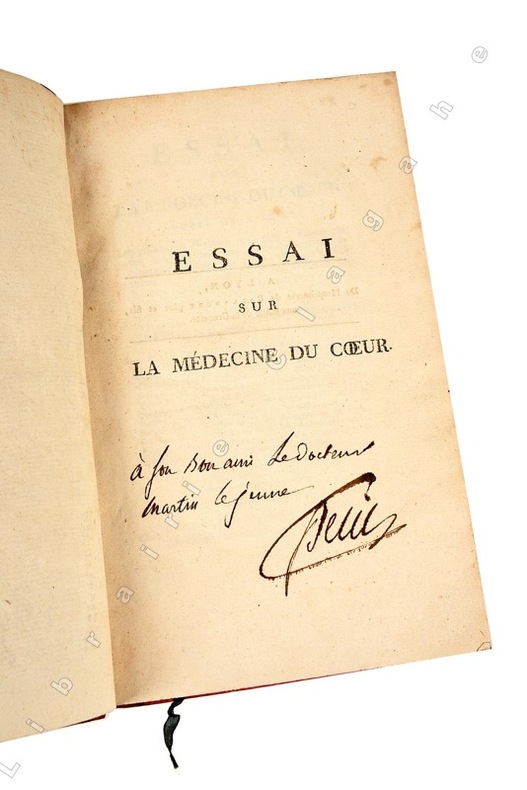
1806réf. 21439Lyon, Garnier, Reymann (Imprimerie de Ballanche père et fils), 1806 ; in-8, demi-veau et petits coins de parchemin, dos à nerfs décoré de filets dorés, pièce de titre rouge, tranches jaspées (reliure de l’époque) ; XVI, 341, [3] pp.
réf. wc980Saumur, S. Milon fils, libraire-éditeur Relié 2 forts volumes in-8, (19.5x28 cm), relié demi-chagrin bleu d'époque,dos à 4 nerfs titrés, XIII-593 [1]pp et 774-[1] pp, couverture illustrée conservée pour chaque volume, 52 gravures hors-texte, épidermures au tome 2, reliures frottées. Livraison a domicile (La Poste) ou en Mondial Relay sur simple demande.
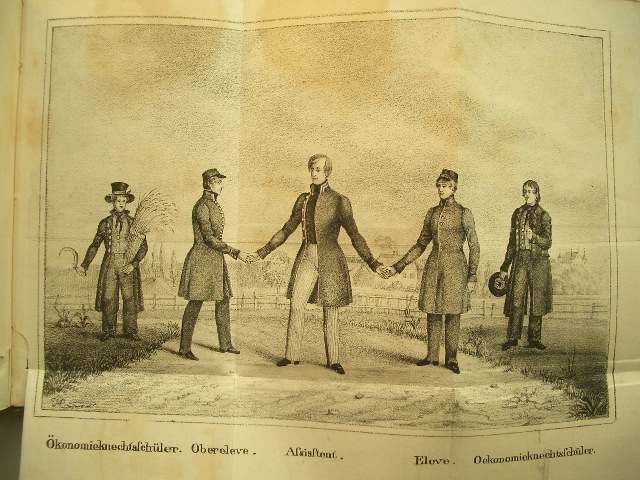
1839réf. 4350Nebst einem Bericht über das von Sr. Majestät dem Könige Ludwig von Bayern allergnädigts in der Art gegründete Institut zu Nürnberg... Zum besten der Anstalt herausgegeben. Mit 7 gefalt. lithogr. Tafeln. Nürnberg, im Verlag beim Verfasser, 1839. 8vo. (17,0 x 10,0 cm). X, 256 S. Bayrisch-blauer Pappband d. Zt. mit silbergeprägtem Rücken u. Deckeln sowie dreiseitigem Silberschnitt.
1923Telephone Talk was the glossy bimonthly publication of the British Columbia Telephone Company. It was written by employees for employees to present information of interest to those engaged in the plant, traffic, commercial, operating, accounting and other departments of the service. Each issue is replete with black and white photos and information on topics such as: company, industry and technological news, traffic levels, expansion plans, personnel announcements, publicity and social events, deaths, weddings, lists of exchanges, and more. As such, these issues serve as a vital preserve of rare and fascinating British Columbia history. This volume covers topics including: Photo of downton Nelson; Bird's-eye photo of Nelson from atop a mountain on north shore of west arm; Kootenay Feature 'The Romance of the 1890s - 8 pages of text and archival photos, including electric street cars in Nelson!; Table showing 'Exchanges in order of percent good toll calls; Cover advert. for Northern Electric Vacuum Cleaner!; Review of growth show steady expansion - 3 pages; Telephoning across Atlantic by AT&T Wireless continued for hours; When the Victoria and Esquimalt Telephone Company issued its own (one call) nickels; B.C. Industrial Review - statistics; Bar graph of # of phones operated from 1906 through 1923; the company's operator school; Issuing of monthly phone bills a work of magnitude - 4 page article with photos; photos of the halibut industry before 'the fish were scarcer in quantities and their habitats more scattered'; William Farrell- an appreciation of the former company president; 7 page article on B.C.'s deep sea fishing industry - great photos - halibut, herring, flounder; multiple photos from the Kootenays of snakes which have climbed up phone poles onto the wires!; photo of 25 year-old phone; Great full-page photo of the CIBC building at Hastings and Granville; 8 page article on the banks of vancouver with excellent photos; First interdepartmental football game; new power plant at Seymour office; A phone in B.C. for every 6 persons; Feature on Dams and the water-powers that turn the wheels of industry - photos of dams and various industries which use electricity, including the American Can factory and grain elevators; new power plant at Seymour office - illustrated; photos of productive farms and ideal homesites with super centerfold luxury Saanich home; Cover photo of U.S. President Harding in Stanley Park; Full-page photos of the U.S.S. Henderson entering the narrows and at dock with President Harding aboard; 13 page illustrated feature on the visit of President Harding - the first visit to Canada made by a President of the United States (President Harding died mere days later on August 2nd in San Francisco and this is reported as well); Photo of Crosland Bros. Farm in Duncan; 9 page illustrated feature on the seed growers of B.C.; photo of Duncan office under construction; Nice 8-page illustrated feature on Haney and area; photographing sound; Exploring Kootenay - Bill Skilling; 9 page illustrated feature on the Delta and Ladner district; Many miles of new long distance circuits; Improved inter-office trunk lines in Vancouver; and more. Half-leather binding. Average wear overall with the exception of the backstrip which is missing small chips and loose at back edge. Ink stamp of company executive E.P. LaBelle upon top edge else unmarked. Binding intact. Spine leaning moderately. Book
1935162 pages plus advertisements. Includes the following four lectures: Theories of the Influence of Money on Prices; The Conditions of Equilibrium Between the Production of Consumers' Goods and the Production of Producers' Goods; The Working of the Price Mechanism in the Course of the Credit Cycle; The Case for and Against an 'Elastic' Currency. Appendix: Capital and Industrial fluctuations - a reply to criticism. No. 107 in the series of Monographs by writers connected with the London School of Economics and Political Science. Average wear. Prior owner's address and his Yale University address upon front endpaper else unmarked. Cohen 183, Cody & Ostrem B-2, Hutchinson 912. Book
1933réf. 175261933. Archive of Walter Johnson's 1933 Atlantic City High School yearbook and related reunion materials documents African American student life within a formally integrated but socially segregated New Jersey public school during the Great Depression. Johnson a graduating senior in 1933 appears in a yearbook extensively inscribed by classmates whose messages span both commencement year and later reunions preserving contemporaneous peer networks across four decades. Created in a city where redlining confined most Black residents to Atlantic City's Northside neighborhood the volume and accompanying ephemera situate one student's educational experience within broader histories of African American urban life public schooling in the Jim Crow North Depression-era youth culture and Black alumni civic organization. Archive dates primarily from 1933 with later additions from 1978 and subsequent reunion years; ten items total. Central volume is Atlantic City High School yearbook published by Westbrook Publishing Company Philadelphia 1933 183 pages hardcover 10.5 x 7.75 inches extensively inscribed throughout by classmates in 1933 and again at the 45th reunion in 1978. The school's divisions are organized by Technical Classical and Commercial tracks with individual portrait sections and personal profile prompts listing favorite activities characteristic phrases and anticipated futures including one sardonic entry predicting a destination "In the ranks of the unemployed." Accompanying materials include a June 16 1933 telegram in original envelope from the Negro Alumni Associates of Atlantic City High School congratulating Johnson on his graduation; two reunion pamphlets from the 45th and 50th reunions; several envelopes including one bearing a lengthy handwritten note from reunion organizer Ben Ginsburg; and two printed advertisements for Atlantic Coast Amusement Enterprises promoting comedians and song-and-dance acts associated with Atlantic City's boardwalk entertainment industry. Produced in the depths of the Great Depression the yearbook captures a graduating class confronting economic uncertainty while articulating ambition humor and collective identity. Its Art Deco stylistic elements and commercial advertising reflect Atlantic City's resort economy during its interwar peak while the presence of a formal Negro Alumni organization in 1933 demonstrates structured African American institutional engagement within a multiracial public school setting. Later reunion annotations underscore continuity of alumni networks across five decades. Light general wear consistent with age; inscriptions legible and internally clean; associated ephemera well preserved with minor handling wear. Overall very good condition. Cohesive documentation of African American secondary education alumni organization and urban community formation in Depression-era New Jersey extending into the late twentieth century. unknown
1933réf. 175261933. Archive of Walter Johnson's 1933 Atlantic City High School yearbook and related reunion materials documents African American student life within a formally integrated but socially segregated New Jersey public school during the Great Depression. Johnson a graduating senior in 1933 appears in a yearbook extensively inscribed by classmates whose messages span both commencement year and later reunions preserving contemporaneous peer networks across four decades. Created in a city where redlining confined most Black residents to Atlantic City's Northside neighborhood the volume and accompanying ephemera situate one student's educational experience within broader histories of African American urban life public schooling in the Jim Crow North Depression-era youth culture and Black alumni civic organization. Archive dates primarily from 1933 with later additions from 1978 and subsequent reunion years; ten items total. Central volume is Atlantic City High School yearbook published by Westbrook Publishing Company Philadelphia 1933 183 pages hardcover 10.5 x 7.75 inches extensively inscribed throughout by classmates in 1933 and again at the 45th reunion in 1978. The school's divisions are organized by Technical Classical and Commercial tracks with individual portrait sections and personal profile prompts listing favorite activities characteristic phrases and anticipated futures including one sardonic entry predicting a destination "In the ranks of the unemployed." Accompanying materials include a June 16 1933 telegram in original envelope from the Negro Alumni Associates of Atlantic City High School congratulating Johnson on his graduation; two reunion pamphlets from the 45th and 50th reunions; several envelopes including one bearing a lengthy handwritten note from reunion organizer Ben Ginsburg; and two printed advertisements for Atlantic Coast Amusement Enterprises promoting comedians and song-and-dance acts associated with Atlantic City's boardwalk entertainment industry. Produced in the depths of the Great Depression the yearbook captures a graduating class confronting economic uncertainty while articulating ambition humor and collective identity. Its Art Deco stylistic elements and commercial advertising reflect Atlantic City's resort economy during its interwar peak while the presence of a formal Negro Alumni organization in 1933 demonstrates structured African American institutional engagement within a multiracial public school setting. Later reunion annotations underscore continuity of alumni networks across five decades. Light general wear consistent with age; inscriptions legible and internally clean; associated ephemera well preserved with minor handling wear. Overall very good condition. Cohesive documentation of African American secondary education alumni organization and urban community formation in Depression-era New Jersey extending into the late twentieth century. unknown books
1650Acquaforte e bulino, 1650 circa, numerata 11 nell’angolo superiore sinistro. Questa tavola appartiene alla suite di Baccanalia descritte da Robert- Dusmenil (IV, 12-17) il cui frontespizio, inciso da Nicolas Cochin il Vecchio recita “Recueil de diverses Baccanales de Poussin, Chapperon, D’origny et autres”. Tutte le stampe della serie contengono gli indirizzi dei rispettivi editori ma non i nomi dei disegnatori e degli incisori, il che rende difficile attribuire definitivamente le opere ad artisti specifici. Le stampe furono probabilmente pubblicate per la prima volta dagli editori François Langlois, noto come 'il Ciartres' (1589 Chartres - 1647 Parigi), e Philippe Huart (attivo intorno al 1639-1648) e furono seguite da una seconda edizione pubblicata da Pierre Mariette. I disegni per le incisioni potrebbero provenire da Nicolas Chaperon o dallo stesso Dorigny. Sei tavole della suite, benchè prive della firma dell’autore, per ragioni stilistiche, sono riconducibili a Dorigny, autore di un’altra suite di Baccanalia, composta anch’essa da sei lastre, tutte recanti la sua firma (Robert-Dusmenil, IV, 6-11). Incentrate sulle attività di Bacco, Sileno e la loro allegra compagnia, queste due serie di affascinanti composizioni all'acquaforte dimostrano la ricchezza e la destrezza dei poteri di invenzione di Dorigny. In contrasto con la maggior parte delle sue prime interpretazioni delle opere di Vouet e altri, dove spesso usava il bulino per aumentare leggermente la sua vigorosa acquaforte (vedi cat. 102), alcune delle stampe successive di Dorigny, in particolare queste due suite di baccanali, si affidano ancora di più al bulino. Questa tendenza è parallela a un graduale cambiamento nel suo disegno, che rivela una crescente tendenza verso contorni pronunciati e figure più scultoree. Dopo essersi formato per cinque anni sotto Georges Lallemand a Parigi, Michel Dorigny si unisce presto alla cerchia del pittore Simon Vouet, con il quale stringe un'amicizia stretta e duratura. Dorigny divenne in seguito uno dei principali interpreti in campo tipografico dell'opera pittorica di Vouet e fu anche coinvolto come pittore in diversi progetti artistici del maestro. Le sue stampe comprendono opere su temi religiosi e mitologici così come stampe singole e serie su temi dionisiaci. Le suite probabilmente risalgono agli anni ’50 del XVII secolo quando, dopo la morte di Vouet. Bellissima prova, ricca di toni, impressa su carta vergata coeva, con margini, in ottimo stato di conservazione. Bibliografia Robert-Dusmenil, IV, p. 254, 14: Reed, French Prints from the Age of the Musketeers, p. 233. Etching and engraving, 1650 circa, numbered 11 at lower left. After training for five years under Georges Lallemand in Paris, Michel Dorigny soon joined the circle around the painter, Simon Vouet, with whom he struck up a close and lasting friendship. Dorigny subsequently became one of the main printmaking interpreters of Vouet’s painted oeuvre and was also involved as a painter in several of the master’s artistic projects. His prints include works on religious and mythological themes as well as individual prints and series on Dionysian topics. It is to this latter category that six etchings belong which Dorigny produced together with Nicolas Chaperon and other artists for the series entitled Recueil de diverses Bacchanales (Robert-Dumesnil, vol. IV, p. 254, nos. 12–17). All the prints in the series contain the addresses of the respective publishers but not the names of the designers and engravers, which makes it difficult to definitively ascribe the works to specific artists. The prints were probably first issued by the publishers François Langlois, known as ‘il Ciartres’ (1589 Chartres – 1647 Paris), and Philippe Huart (active around 1639–1648) and were followed by a second edition published by Pierre Mariette. The designs for the etchings may well stem from Nicolas Chaperon or from Dorigny himself. Another suite of six bacchanals (Robert – Dusmenil 6-11) bears on each plate the name of D’Origny as engraver. Both suites probably date to the 1650 when, after Vouet’s death, Dorigny became one of the most important decorative painters in Paris. Focused on the activities of Bacchus, Silenus, and their merry band of associates, these two etched sets of charming compositions demonstrate the wealth and dexterity of Dorigny's powers of invention. In contrast to most of his earlier interpretations of the works of Vouet and others, where he often used engraving to lightly augment his vigorous etching (see cat. 102), some of Dorigny's later prints, espe- cially these two suites of bacchanals, rely even more on engraving. This trend parallels a gradual shift in his draftsmanship, which reveals an increasing tendency towards pronounced contours and more sculptural figures. A fine impression, printed with tone on contemporary laid paper, with margins, very good condition. Bibliografia Robert-Dusmenil, IV, p. 254, 14: Reed, French Prints from the Age of the Musketeers, p. 233.
réf. 63502Wittenberg - Witteberg , Johannes CRATO, 1572 Reliure de l' poque, infolio, (30) 746 pages, index (56). Portrait (1pp) + planche depliantes. Latin Text.
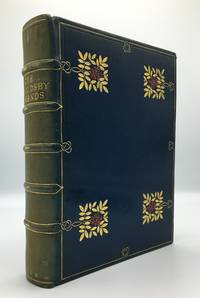
1929réf. 1302London: William Heinemann. 1929. Reprint. Quarto 20 x 26cm. Handsomely bound in contemporary full blue morocco with sinuous gilt borders and gilt foliate decoration incorporating red morocco onlays representing berries to the boards the spine with five raised bands ruled in gilt and with titles in gilt. Gilt dentelles incorporating red morocco onlays. Binder's signature in gilt to the bottom turn-in of the lower board: "ML 1930". All edges gilt. Attractive colour woodblock-printed floral endpapers. Binder's inscription in pencil to the front endpaper: "Bournville School of Art 1930 M. Laud Oct / '30". Illustrated with 24 tipped-in colour plates with captioned tissue-guards 12 full-page tinted illustrations and numerous black and white in-text illustrations by Arthur Rackham. 549pp. A very good copy the binding square and tight with fading to the spine and some minor scuffs to the raised bands. The contents remain clean and crisp throughout. An appealing copy of Arthur Rackham's edition of 'The Ingoldsby Legends' splendidly bound in the Arts and Crafts Movement style by a student or teacher at the Bournville School of Art Birmingham. The grand hall which housed the Bournville School of Art was the first public building in Bournville the model village founded by the Cadbury family. In line with typical Arts and Crafts Movement ideals and with a specific aim to further the ideas and principles of John Ruskin the school was originally conceived as a social centre for the village offering a practical and artistic education for the community. It became more formalised as a 'School of Arts and Crafts' in 1911 later becoming an art college in the 1920s. As a city Birmingham served as an important centre of the Arts and Crafts movement with the 'Birmingham Group' of artist-craftsmen cultivating their own distinct style. Predominantly based around the Birmingham School of Art and the Birmingham Guild of Handicraft the leading figures of the group included Joseph Southall Arthur and Georgie Gaskin Bernard Sleigh Maxwell Armfield and Charles Gere. An uncommon example of a bookbinding emanating from the dynamic atmosphere of Birmingham's Arts and Crafts Movement. London: William Heinemann. hardcover
réf. 2022125 Mount Vernon Street Boston Massachusetts. 29 September 1884. 4pp. 12mo. Bifolium. In good condition lightly aged. The letter would appear to relate to the formation of the American Society for Psychical Research. Six days before the writing of the present letter on 23 September 1884 Minot had been a member of a committee of nine scientists who met at Boston to consider the advisability of the formation of a society for psychical research in America William James being another member. Minot begins the letter by informing Ramsay that 'in regard to the International Congress' 'The matter has progressed thus far favourably and the extent of the interest in the project surpasses our expectations'. He continues with reference to 'The American Committee' which has been given 'full powers to act' by 'the Amer. Asstn. We have already received a gift of £1000 with promise of more as a fund the income to be expended by the Congress for the prosecution of research.' He continues: 'No definite public announcements can be made until the Council B.A.A.S. i.e. the British Association for the Advancement of Science has taken action in regard to the enterprise. As soon as it is in my power I shall take the liberty of communicating with you again concerning our plans.' Ramsay 'will readily understand that so vast an undertaking necessarily matures slowly; at present we are still in the stage of tentative suggestion and no services can be more valuable than those which contribute to spreading interest in the movement.' He hopes that Ramsay 'will assist in this way. There can be no question as to the readiness of the Americans to join in the proposed Congress – The next step must be to ensure the participation of the British scientists.' 25 Mount Vernon Street, Boston, Massachusetts. 29 September 1884. unknown
1948réf. 29372Hanoi: Vien Dong-Phuong Bac-co Xuat Ban 1948. 3 volumes 4to text alternately in Vietnamese and French; table of alphabets 3 maps 2 folding 2 plates with 15 photographic illustrations on rectos and versos 7 folding plans including one of the Imperial Palace large folding table tables and illustrations in the text text occasionally in double column; original printed wrappers; some toning of the text as well as some browning and wear but generally a good sound set. An early Vietnamese scientific periodical emphasizing archaeology ethnography philology and history. It began publication with no. 1 in May 1948 and ceased with no. 3 in Aug. 1949. Issued under the auspices of École francais d'Extreme-Orient. Vien Dong-Phuong Bac-co Xuat Ban unknown
1948réf. 29372Hanoi: Vien Dong-Phuong Bac-co Xuat Ban 1948. 3 volumes 4to text alternately in Vietnamese and French; table of alphabets 3 maps 2 folding 2 plates with 15 photographic illustrations on rectos and versos 7 folding plans including one of the Imperial Palace large folding table tables and illustrations in the text text occasionally in double column; original printed wrappers; some toning of the text as well as some browning and wear but generally a good sound set. An early Vietnamese scientific periodical emphasizing archaeology ethnography philology and history. It began publication with no. 1 in May 1948 and ceased with no. 3 in Aug. 1949. Issued under the auspices of École francais d'Extreme-Orient. Vien Dong-Phuong Bac-co Xuat Ban unknown books
2011réf. 2081502111901472Chinese book office 2011. Soft Cover. Fine. Size: A5 Soft Cover Book Chinese book office paperback
2012réf. 2081502111906695Chinese book office 2012. Soft Cover. Fine. The book is in fine condition. Chinese book office paperback
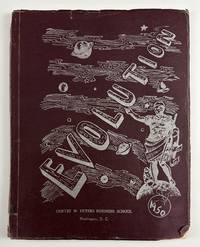
1950réf. 5036Washington DC: Cortez W. Peters Business School 1950. About very good. 60pp. Original purple wrappers printed in silver. Some soiling and staining to covers minor chipping and rubbing. Small unobtrusive stain to fore-edge of text overall even toning. A seemingly-unrecorded yearbook from the Washington D.C. branch of the Cortez W. Peters Business School the first African-American-owned business school in the United States. The co-educational school was founded in 1834 in the Nation's Capital followed in the next few years by branches in Chicago and Baltimore. The founder Cortez W. Peters taught himself to type as a child and went on to become the first African-American champion of the World's Amateur Typing Contest. Peters' school was one of the first to teach typing to Black students while also offering instruction in shorthand and other clerical skills. The present yearbook begins with a message from Peters which strikes a conciliatory tone in the wake of racial tensions that followed the conclusion of the Second World War: "We naturally resent discrimination lack of opportunities oppression.But on the other hand there are many other values to be considered which should make us tolerant and willing to work out these traditional handicaps generally." This is followed by messages from the dean and class president Eva Itene Brown then portraits of students and faculty a class history a class prophecy class will class poem and twelve pages of group photographs including shots of the men's and women's basketball teams the coronation ball and images featuring students in the classroom. Many of the students both men and women have included words of advice or stated their personal goals which are printed beside their portraits "To be a good typist" "To be a stenographer" and so forth. OCLC lists a single copy of three similar yearbooks all under different titles from other years and branches of the school Washington D.C. and Chicago in 1948 and an undated yearbook from Baltimore but not this particular year at the school's home base. Cortez W. Peters Business School unknown
1950réf. 5036Washington DC: Cortez W. Peters Business School 1950. About very good. 60pp. Original purple wrappers printed in silver. Some soiling and staining to covers minor chipping and rubbing. Small unobtrusive stain to fore-edge of text overall even toning. A seemingly-unrecorded yearbook from the Washington D.C. branch of the Cortez W. Peters Business School the first African-American-owned business school in the United States. The co-educational school was founded in 1834 in the Nation's Capital followed in the next few years by branches in Chicago and Baltimore. The founder Cortez W. Peters taught himself to type as a child and went on to become the first African-American champion of the World's Amateur Typing Contest. Peters' school was one of the first to teach typing to Black students while also offering instruction in shorthand and other clerical skills. The present yearbook begins with a message from Peters which strikes a conciliatory tone in the wake of racial tensions that followed the conclusion of the Second World War: "We naturally resent discrimination lack of opportunities oppression.But on the other hand there are many other values to be considered which should make us tolerant and willing to work out these traditional handicaps generally." This is followed by messages from the dean and class president Eva Itene Brown then portraits of students and faculty a class history a class prophecy class will class poem and twelve pages of group photographs including shots of the men's and women's basketball teams the coronation ball and images featuring students in the classroom. Many of the students both men and women have included words of advice or stated their personal goals which are printed beside their portraits "To be a good typist" "To be a stenographer" and so forth. OCLC lists a single copy of three similar yearbooks all under different titles from other years and branches of the school Washington D.C. and Chicago in 1948 and an undated yearbook from Baltimore but not this particular year at the school's home base. Cortez W. Peters Business School unknown books
réf. 21824NP: NP ND. Fine. 21 x 16 inches gouache on paper of Art Deco jewelry shop designed by R. Tailliard. NP unknown
réf. 21824NP: NP ND. Fine. 21 x 16 inches gouache on paper of Art Deco jewelry shop designed by R. Tailliard. NP unknown books
réf. 51-049319th Century. Oil on linen backed on canvas in contemporary frame. 23 x 18 inches. Skillfully repaired tears. 19th Century. unknown
1890réf. 210011890s. Commercial album. Good but essentially disbound; mounts are pulp paper on deteriorating linen tabs. A good portion of the photos improperly chemically fixed but still "present". Small folio commercial album of appx. 75 identified albumen prints of various sizes Although haphazardly mounted and identified the photographs offer a group of early views of the Cape Colony South Africa and its surroundings. The front endpaper is signed: Winifred C Karfe Milburn House Claremount C. C. S. Africa Dec. 1897. Milburn House was a school for "young ladies" located in Claremount six miles outside of Cape Town. There are a number pictures of the building staff children who for the most part are quite young. These are accompanied by a variety of interesting photographs - some apparently commercial - of Madeira Dakar and towns and villages apart from Cape Town. unknown books
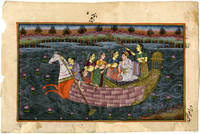
réf. 9251750. Good. Gouache and ink with gold heightening on lightweight cream laid paper 6 x 86 inches 137 x 274 mm the full sheet. Some scattered light surface soiling along with age related toning and some handling creases minor edge tears and losses repairs verso and scattered inscriptions in ink and graphite. Extensive inscriptions in red and black ink on the verso and in the margins on the recto. The color is exceptionally fresh rich and saturated. Mirza Nur-ud-Din Muhammad Salim 30 August 1569 - 28 October 1627 known by his imperial name Jahangir "Conqueror of the World' was the fourth Mughal Emperor who ruled from 1605 until his death in 1627. He was the third and only surviving son of Akbar and his chief empress Mariam-uz-Zamani born to them in the year 1569. He was named after the Indian Sufi saint Salim Chishti. -Singh Pashaura; Fenech Louis E. eds. 2014. The Oxford handbook of Sikh studies. Oxford University Press. p. 647. ISBN 978-0-19-969930-8. unknown
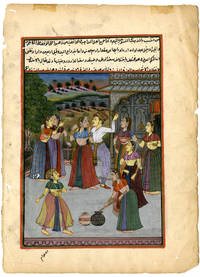
réf. 9231750. Good. Gouache and ink with gold heightening on lightweight cream laid paper 8 1/4 x 6 inches 210x 153 mm the full sheet. Some scattered light surface soiling along with age related toning and some handling creases minor edge tears and losses and scattered inscriptions. Extensive inscriptions in red and black ink on the verso and in the margins on the recto. The color is exceptionally fresh rich and saturated. Mirza Nur-ud-Din Muhammad Salim 30 August 1569 - 28 October 1627 known by his imperial name Jahangir "Conqueror of the World' was the fourth Mughal Emperor who ruled from 1605 until his death in 1627. He was the third and only surviving son of Akbar and his chief empress Mariam-uz-Zamani born to them in the year 1569. He was named after the Indian Sufi saint Salim Chishti. -Singh Pashaura; Fenech Louis E. eds. 2014. The Oxford handbook of Sikh studies. Oxford University Press. p. 647. ISBN 978-0-19-969930-8. unknown