35.730 Ergebnisse
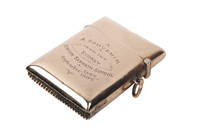
1905Best.-Nr. 5000696Sydney 1905. In exemplary original condition. 9 carat gold matchbox 15 gr; 45 x 30 mm; monogrammed on the back with interwoven letters "M.A.C." A remarkable memento of the pioneer Jewish educator Maurice Moses Abraham Cohen 1851-1923. Objects from the Australian Jewish community at the start of the 20th century prior to the great waves of Jewish immigration are very scarce. The monogrammed initials on this attractive presentation piece identify it as a gift from the Sydney Jewish Sabbath School to M.A. Cohen the School's first principal. Born in Ukraine to a Sephardic family Cohen was a talented linguist. Educated in England after spells in India and Afghanistan he travelled to Australia in 1887 where he took up a role as the first headmaster of the Jewish Sunday School just then established in Sydney within the Great Synagogue Australia's finest synagogue. He went on to become head of the NSW Jewish Board of Education. At one time he was editor of Sydney's first Jewish weekly newspaper the Australian Jewish Weekly as well as a lecturer on Hebrew at a number of theological colleges in Australia. Cohen was one of the first European Australians to call attention to the plight of the Australian Aboriginal peoples and to argue for compensation and land rights even risking his position as editor of the Australian Hebrew Newspaper with his fiery opinion pieces on the subject. He also argued for increased non-discriminatory immigration drawing from all cultures and vehemently opposed the White Australia Policy. The Australian Jewish Historical Society "The First Jewish Educator for Sydney": online resource. So-called "Vesta" cases named for the Roman goddess of fire and the hearth are small portable boxes made to contain matches and keep them dry. More commonly made of tin or sometimes enamel or silver with later examples sometimes carrying advertising or being highly decorated gold examples from this period represent a high standard and were very suitable for presentation pieces; this fine example was perhaps made to join a pocket watch on its gold chain. . unknown
Best.-Nr. 21570Paris, chez l'auteur, 1950. In-folio, 209 pp. en feuilles, couverture originale, étui cartonné, emboîtage de toile écrue (quelques petits frottements et taches à l'emboîtage et à l'étui).
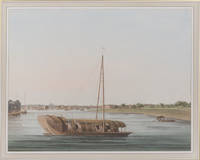
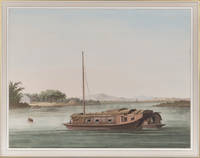
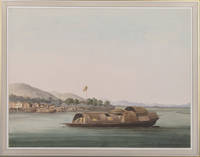
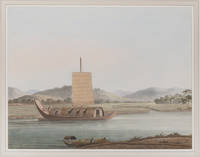
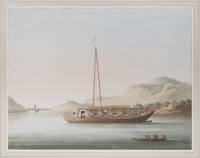
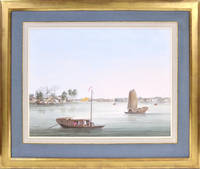
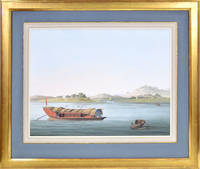
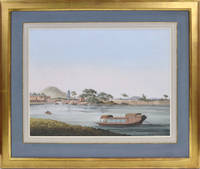
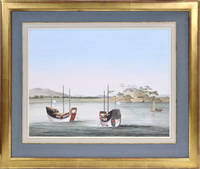
Best.-Nr. 111580Canton circa 1810. . Pencil water colour and body colour drawing of craft heightened with white on paper watermarked 'J Whatman 1804' and '1805'. Framed and glazed overall size: 68.5cm x 58.5cm. Well executed and highly atmospheric watercolours capturing the importance of the river for trade in early nineteenth century China. A fine group of unusual and very attractive depictions of river life. Typically with the river in the foreground with a finely executed drawing of a native boat the backgrounds showing landscape scenes interspersed with occasional architectural details. The Pearl River is so named because of the pearl-colored shells that lie at the bottom of the river in the section that flows through the city of Guangzhou. Formerly often known as the Canton River it is an extensive river system in southern China. The name 'Pearl River' is also often used as a catch-all for the watersheds of the Xi 'West' Bei 'North' and Dong 'East' rivers of Guangdong. These rivers are all considered tributaries of the Pearl River because they share a common delta the Pearl River Delta. Measured from the farthest reaches of the Xi River the Pearl River system is China's third-longest river 2400 kilometres after the Yangtze River and the Yellow River and second largest by volume after the Yangtze. Canton, circa 1810]. unknown
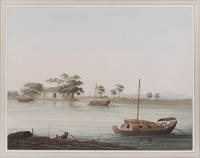
Best.-Nr. 111581Canton circa 1810. . Pencil water colour and body colour drawing of craft heightened with white on paper watermarked 'J Whatman 1804' and '1805'. Framed and glazed overall size: 68.5cm x 58.5cm. Well executed and highly atmospheric watercolours capturing the importance of the river for trade in early nineteenth century China. A fine group of unusual and very attractive depictions of river life. Typically with the river in the foreground with a finely executed drawing of a native boat the backgrounds showing landscape scenes interspersed with occasional architectural details. The Pearl River is so named because of the pearl-colored shells that lie at the bottom of the river in the section that flows through the city of Guangzhou. Formerly often known as the Canton River it is an extensive river system in southern China. The name 'Pearl River' is also often used as a catch-all for the watersheds of the Xi 'West' Bei 'North' and Dong 'East' rivers of Guangdong. These rivers are all considered tributaries of the Pearl River because they share a common delta the Pearl River Delta. Measured from the farthest reaches of the Xi River the Pearl River system is China's third-longest river 2400 kilometres after the Yangtze River and the Yellow River and second largest by volume after the Yangtze. Canton, circa 1810]. unknown
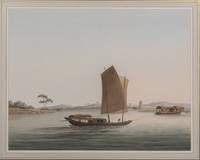
Best.-Nr. 111583Canton circa 1810. . Pencil water colour and body colour drawing of craft heightened with white on paper watermarked 'J Whatman 1804' and '1805'. Framed and glazed overall size: 68.5cm x 58.5cm. Well executed and highly atmospheric watercolours capturing the importance of the river for trade in early nineteenth century China. An unusual and very attractive depictions of river life. Typically with the river in the foreground with a finely executed drawing of a native boat the backgrounds showing landscape scenes interspersed with occasional architectural details. The Pearl River is so named because of the pearl-colored shells that lie at the bottom of the river in the section that flows through the city of Guangzhou. Formerly often known as the Canton River it is an extensive river system in southern China. The name 'Pearl River' is also often used as a catch-all for the watersheds of the Xi 'West' Bei 'North' and Dong 'East' rivers of Guangdong. These rivers are all considered tributaries of the Pearl River because they share a common delta the Pearl River Delta. Measured from the farthest reaches of the Xi River the Pearl River system is China's third-longest river 2400 kilometres after the Yangtze River and the Yellow River and second largest by volume after the Yangtze. Canton, circa 1810]. unknown
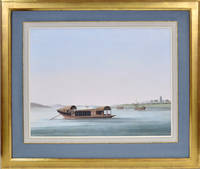
Best.-Nr. 111577Canton circa 1810. . Pencil water colour and body colour drawing of craft heightened with white on paper watermarked 'J Whatman 1804' and '1805'. Framed and glazed overall size: 68.5cm x 58.5cm. Well executed and highly atmospheric watercolours capturing the importance of the river for trade in early nineteenth century China. A fine group of unusual and very attractive depictions of river life. Typically with the river in the foreground with a finely executed drawing of a native boat the backgrounds showing landscape scenes interspersed with occasional architectural details. The Pearl River is so named because of the pearl-colored shells that lie at the bottom of the river in the section that flows through the city of Guangzhou. Formerly often known as the Canton River it is an extensive river system in southern China. The name 'Pearl River' is also often used as a catch-all for the watersheds of the Xi 'West' Bei 'North' and Dong 'East' rivers of Guangdong. These rivers are all considered tributaries of the Pearl River because they share a common delta the Pearl River Delta. Measured from the farthest reaches of the Xi River the Pearl River system is China's third-longest river 2400 kilometres after the Yangtze River and the Yellow River and second largest by volume after the Yangtze. Canton, circa 1810]. unknown
Best.-Nr. 111579Canton circa 1810. . Pencil water colour and body colour drawing of craft heightened with white on paper watermarked 'J Whatman 1804' and '1805'. Framed and glazed overall size: 68.5cm x 58.5cm. Well executed and highly atmospheric watercolours capturing the importance of the river for trade in early nineteenth century China. A fine group of unusual and very attractive depictions of river life. Typically with the river in the foreground with a finely executed drawing of a native boat the backgrounds showing landscape scenes interspersed with occasional architectural details. The Pearl River is so named because of the pearl-colored shells that lie at the bottom of the river in the section that flows through the city of Guangzhou. Formerly often known as the Canton River it is an extensive river system in southern China. The name 'Pearl River' is also often used as a catch-all for the watersheds of the Xi 'West' Bei 'North' and Dong 'East' rivers of Guangdong. These rivers are all considered tributaries of the Pearl River because they share a common delta the Pearl River Delta. Measured from the farthest reaches of the Xi River the Pearl River system is China's third-longest river 2400 kilometres after the Yangtze River and the Yellow River and second largest by volume after the Yangtze. Canton, circa 1810]. unknown
Best.-Nr. 111578Canton circa 1810. . Pencil water colour and body colour drawing of craft heightened with white on paper watermarked 'J Whatman 1804' and '1805'. Framed and glazed overall size: 68.5cm x 58.5cm. Well executed and highly atmospheric watercolours capturing the importance of the river for trade in early nineteenth century China. A fine group of unusual and very attractive depictions of river life. Typically with the river in the foreground with a finely executed drawing of a native boat the backgrounds showing landscape scenes interspersed with occasional architectural details. The Pearl River is so named because of the pearl-colored shells that lie at the bottom of the river in the section that flows through the city of Guangzhou. Formerly often known as the Canton River it is an extensive river system in southern China. The name 'Pearl River' is also often used as a catch-all for the watersheds of the Xi 'West' Bei 'North' and Dong 'East' rivers of Guangdong. These rivers are all considered tributaries of the Pearl River because they share a common delta the Pearl River Delta. Measured from the farthest reaches of the Xi River the Pearl River system is China's third-longest river 2400 kilometres after the Yangtze River and the Yellow River and second largest by volume after the Yangtze. Canton, circa 1810]. unknown
Best.-Nr. 111582Canton circa 1810. . Pencil water colour and body colour drawing of craft heightened with white on paper watermarked 'J Whatman 1804' and '1805'. Framed and glazed overall size: 68.5cm x 58.5cm. Well executed and highly atmospheric watercolours capturing the importance of the river for trade in early nineteenth century China. A fine group of unusual and very attractive depictions of river life. Typically with the river in the foreground with a finely executed drawing of a native boat the backgrounds showing landscape scenes interspersed with occasional architectural details. The Pearl River is so named because of the pearl-colored shells that lie at the bottom of the river in the section that flows through the city of Guangzhou. Formerly often known as the Canton River it is an extensive river system in southern China. The name 'Pearl River' is also often used as a catch-all for the watersheds of the Xi 'West' Bei 'North' and Dong 'East' rivers of Guangdong. These rivers are all considered tributaries of the Pearl River because they share a common delta the Pearl River Delta. Measured from the farthest reaches of the Xi River the Pearl River system is China's third-longest river 2400 kilometres after the Yangtze River and the Yellow River and second largest by volume after the Yangtze. Canton, circa 1810]. unknown
Best.-Nr. 101456Canton circa 1810. . Pencil water colour and body colour drawing of craft heightened with white on paper watermarked 'J Whatman 1804' and '1805'. Framed and glazed overall size: 67.8cm x 57.3cm. Well executed and highly atmospheric watercolours capturing the importance of the river for trade in early nineteenth century China. Typically with the river in the foreground with a finely executed drawing of a native boat the backgrounds showing landscape scenes interspersed with occasional architectural details. The Pearl River is so named because of the pearl-colored shells that lie at the bottom of the river in the section that flows through the city of Guangzhou. Formerly often known as the Canton River it is an extensive river system in southern China. The name 'Pearl River' is also often used as a catch-all for the watersheds of the Xi 'West' Bei 'North' and Dong 'East' rivers of Guangdong. These rivers are all considered tributaries of the Pearl River because they share a common delta the Pearl River Delta. Measured from the farthest reaches of the Xi River the Pearl River system is China's third-longest river 2400 kilometres after the Yangtze River and the Yellow River and second largest by volume after the Yangtze. Canton, circa 1810. unknown
Best.-Nr. 101464Canton circa 1810. . Pencil water colour and body colour drawing of craft heightened with white on paper watermarked 'J Whatman 1804' and '1805'. Framed and glazed overall size: 67.8cm x 57.3cm. 91 Well executed and highly atmospheric watercolours capturing the importance of the river for trade in early nineteenth century China Typically with the river in the foreground with a finely executed drawing of a native boat the backgrounds showing landscape scenes interspersed with occasional architectural details. The Pearl River is so named because of the pearl-colored shells that lie at the bottom of the river in the section that flows through the city of Guangzhou. Formerly often known as the Canton River it is an extensive river system in southern China. The name 'Pearl River' is also often used as a catch-all for the watersheds of the Xi 'West' Bei 'North' and Dong 'East' rivers of Guangdong. These rivers are all considered tributaries of the Pearl River because they share a common delta the Pearl River Delta. Measured from the farthest reaches of the Xi River the Pearl River system is China's third-longest river 2400 kilometres after the Yangtze River and the Yellow River and second largest by volume after the Yangtze. Canton, circa 1810]. unknown
Best.-Nr. 101452Canton circa 1810. . Pencil water colour and body colour drawing of craft heightened with white on paper watermarked 'J Whatman 1804' and '1805'. Framed and glazed overall size: 67.8cm x 57.3cm x 2cm. 87 Well executed and highly atmospheric watercolours capturing the importance of the river for trade in early nineteenth-century ChinA An unusual and very attractive depiction of river life. Typically with the river in the foreground with a finely executed drawing of a native boat the backgrounds showing landscape scenes interspersed with occasional architectural details. The Pearl River is so named because of the pearl-colored shells that lie at the bottom of the river in the section that flows through the city of Guangzhou. Formerly often known as the Canton River it is an extensive river system in southern China. The name 'Pearl River' is also often used as a catch-all for the watersheds of the Xi 'West' Bei 'North' and Dong 'East' rivers of Guangdong. These rivers are all considered tributaries of the Pearl River because they share a common delta the Pearl River Delta. Measured from the farthest reaches of the Xi River the Pearl River system is China's third-longest river 2400 kilometres after the Yangtze River and the Yellow River and second largest by volume after the Yangtze.A Canton, circa 1810]. unknown
Best.-Nr. 101453Canton circa 1810. . Pencil water colour and body colour drawing of craft heightened with white on paper watermarked 'J Whatman 1804' and '1805'. Framed and glazed overall size: 67.8cm x 57.3cm. 88 Well executed and highly atmospheric watercolours capturing the importance of the river for trade in early nineteenth century China. The Pearl River is so named because of the pearl-colored shells that lie at the bottom of the river in the section that flows through the city of Guangzhou. Formerly often known as the Canton River it is an extensive river system in southern China. The name 'Pearl River' is also often used as a catch-all for the watersheds of the Xi 'West' Bei 'North' and Dong 'East' rivers of Guangdong. These rivers are all considered tributaries of the Pearl River because they share a common delta the Pearl River Delta. Measured from the farthest reaches of the Xi River the Pearl River system is China's third-longest river 2400 kilometres after the Yangtze River and the Yellow River and second largest by volume after the Yangtze. Canton, circa 1810]. unknown
Best.-Nr. 101462Canton circa 1810. . Pencil water colour and body colour drawing of craft heightened with white on paper watermarked 'J Whatman 1804' and '1805'. Framed and glazed overall size: 67.8cm x 57.3cm x 2cm. 89 Well executed and highly atmospheric watercolours capturing the importance of the river for trade in early nineteenth century China. Typically with the river in the foreground with a finely executed drawing of a native boat the backgrounds showing landscape scenes interspersed with occasional architectural details. The Pearl River is so named because of the pearl-colored shells that lie at the bottom of the river in the section that flows through the city of Guangzhou. Formerly often known as the Canton River it is an extensive river system in southern China. The name 'Pearl River' is also often used as a catch-all for the watersheds of the Xi 'West' Bei 'North' and Dong 'East' rivers of Guangdong. These rivers are all considered tributaries of the Pearl River because they share a common delta the Pearl River Delta. Measured from the farthest reaches of the Xi River the Pearl River system is China's third-longest river 2400 kilometres after the Yangtze River and the Yellow River and second largest by volume after the Yangtze. Canton, circa 1810]. unknown
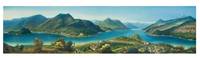
1850Best.-Nr. 42495Italy 1850. Gouache over faint etched line black gouache border. Period gilt and faux bois frame. A splendid panoramic view of Lake Como. Catering to the foreigners flocking to the region on The Grand Tour this hand-painted print beautifully depicts the famed picturesque lake with rich bands of blue highlighting the water and sky with the surrounding hills and mountains dotted with luxurious villas. The view looks north up the lake towards Switzerland from above Bellagio which occupies the point at which the lake divides in two. unknown
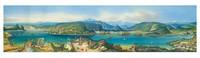
1850Best.-Nr. 42496Italy 1850. Watercolour over faint etched line black gouache border. Period gilt and faux bois frames. A splendid panoramic view of Lake Maggiore. Catering to the foreigners flocking to the region on The Grand Tour this hand-painted print beautifully depicts the famed picturesque lake with rich bands of blue highlighting the water and sky with the surrounding hills and mountains dotted with luxurious villas. In this view of Lake Maggiore we see from a very high vantage point the Borromean Islands: Isola Bella Isola Madre and Isola dei Pescatori with their extraordinary gardens. unknown
1850Best.-Nr. 42495Italy 1850. Gouache over faint etched line black gouache border. Period gilt and faux bois frame. A splendid panoramic view of Lake Como. Catering to the foreigners flocking to the region on The Grand Tour this hand-painted print beautifully depicts the famed picturesque lake with rich bands of blue highlighting the water and sky with the surrounding hills and mountains dotted with luxurious villas. The view looks north up the lake towards Switzerland from above Bellagio which occupies the point at which the lake divides in two. unknown books
1850Best.-Nr. 42496Italy 1850. Watercolour over faint etched line black gouache border. Period gilt and faux bois frames. A splendid panoramic view of Lake Maggiore. Catering to the foreigners flocking to the region on The Grand Tour this hand-painted print beautifully depicts the famed picturesque lake with rich bands of blue highlighting the water and sky with the surrounding hills and mountains dotted with luxurious villas. In this view of Lake Maggiore we see from a very high vantage point the Borromean Islands: Isola Bella Isola Madre and Isola dei Pescatori with their extraordinary gardens. unknown books
1940Best.-Nr. 0009110BRIDPORT DORSET SOUTHWEST ENGLAND UK. Good. 1940. On offer is an exceptional document of World War 2 history. This is a diary and log book of a teacher at a school in Dorset in Southwest England. Beginning in July 1940 the book details what the author endures while the terror and destruction of the German Blitzkrieg and attempts to continue on with life and with the teaching of the children at the St. Marys Primary School in the town of Bridport. The diary recounts the letters sent and received the concerned parents who visited their children the outings to doctor dentists and more for the students all alongside entries that speak of emergency preparations Air Raids and people killed and wounded in the Blitzkrieg. The war keeps the authors life in significant disarray and the entries reflect the many ways in which the children and their parents coped with War. The book is also filled with reports of the actions of the children eg. lying hitting each other the meting out of punishments etc. The Blitz ends on May 11 1941. The author writes the next day of the the Return of Evacuees along with a count of the official and unofficial evacuees from towns such as Portsmouth Westham Bristol Sussex Cornwall and Essex. The following days consist of efforts and logistics to get the returning evacuees back into school. As the school year ends and the summer begins the diary focuses on the authors normal logistics letters sent and received people visited children coming and going meetings of teachers etc. The diary is in good condition. The cover reads London County Council Name and School but none are filled out with any information. Cover is in good condition showing a bit of creasing in the front and back and a small bit of tearing on the spine. The pages are in good condition showing little discoloration or wear. About 20 pages in the middle are slightly or fully detached and show evidence of burn holes in a few spots in the middle of the page possibly from a cigarette or fire ember. The handwriting is clear and legible throughout in a combination of blue and black ink. The ink is faded at points but this does not affect the legibility of the words. Overall: G. Sample Text: July 19th. Air Raid warmup 2:45 - 3:30pm. Sheltered in ground floor corridor - Nursery class in corner of nursery. Worked on emergency time-table.; Aug 13th: Air Raid 12.0 - 12.50pm; 1.45 - 2.25; 3.30 - 5.30pm ; Aug 23rd. Visit from Mr. Kay to discuss return of teachers to London. It was decided that Miss Darnell should report in London on September 30th and that Miss Burditt and Miss Sentles should report in London on Sept. 9th 1940. W. Watson to be assistant in charge at the Wesleyan after Sept 30th.; October 24th. Mr. and Mrs. Osmond on day trip to see children- chdrn. allowed to leave school for short time. Phone to Dorchester re: Half Term.; Mr. Evans visited. re Fred Dobson - who has been dishonest. is accused of begging in streets - and confesses to stealing. Has been suspected before - but this is second time proven. Has been punished in school.; January 28 1941. Mrs. Berry called - wishes for two girl evacuees. Officer is willing to make arrangements re: evacuations lists completed.; Mon. March 3rd. One day closure also local schools. No communal Dinners.; May 23rd. Commonwealth Day celebrations open day. Collection for War Weapons Week. Visit of His Worship the Mayor of Bridport accompanied by Mr. Andrew Spiller. Distribution of National Savings Stamps 1/- each to children. Letter to The Mayor acknowledging gift and sending process 12/6 for War Weapons Week. Miss Haustrom visited with news of Ron. Kent who is expected to entered Bridport on Saturday.; Manuscript; 8vo - over 7¾" - 9¾" tall; KEYWORDS: HISTORY OF DORSET ENGLAND ENGLISH CHANNEL COAST UNITED KINGDOM THE BLITZ SOUTHWEST ENGLAND DURING WORLD WAR 2 BRIDPORT GERMAN BLITZKRIEG ST. MARY'S CE PRIMARY SCHOOL EFFECT OF WWII ON CHILDREN LONDON COUNTY COUNCIL DIARY AIR RAIDS IN BRITAIN EVACUEES DURING THE BLITZ BRITANNICA HANDWRITTEN MANUSCRIPT DOCUMENT LETTER AUTOGRAPH WRITER HAND WRITTEN DOCUMENTS SIGNED LETTERS MANUSCRIPTS HISTORICAL HOLOGRAPH WRITERS AUTOGRAPHS DIARY JOURNAL DIARIES PERSONAL MEMOIR MEMORIAL ANTIQUITÉ CONTRAT VÉLIN DOCUMENT MANUSCRIT PAPIER ANTIKE BRIEF PERGAMENT DOKUMENT MANUSKRIPT PAPIER OGGETTO D'ANTIQUARIATO ATTO VELINA DOCUMENTO MANUSCRITTO CARTA ANTIGÜEDAD HECHO VITELA DOCUMENTO MANUSCRITO PAPEL . unknown
Best.-Nr. 76547aafin-4to. Vor 1700 begonnen, reichen die Einträge in seltenen Fällen bis 1818. Titel + 513 S. + (1) + 3 Bl. (Register), im oberen Seitendrittel durchgehender Wasserschaden mit Textverlust auf mehreren Seiten, die ersten und letzten Seiten oben eingerissen und mit kleinen Fehlstellen, Schweinslederbd. d. Z. mit reicher Blindprägung u. Rücken auf 6 Bünden, im oberen Drittel starker Wasserschaden, Rücken leicht gespalten.
2019Best.-Nr. 2081502111905767Xizang People's Publishing House 2019. Soft Cover. Fine. The book is in fine condition. Xizang People's Publishing House paperback
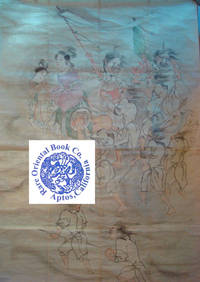
Best.-Nr. 36023801Japan 1860 n.p. Large sheet 96 x 1m 44 cm. gouachevery clean work no worming or other condition issues painted on 16 joined sheets of Washi paper to make one large sheetfine water-color painting. THIS IS AN ORIGINAL PAINTED ART WORK . . . AM ORIGINAL COLOR PAINTING IN GRAND SIZE . . . FROM JAPAN'S OLDEST MYTHOLOGY: . . . THE KOJIKI & NIHON SHOKI PANTHEON . . . THE ORIGINS OF THE EMPEROR . . . OTOHIME GYO RETSU ZU: . . . THE PROCESSION OF OTOHIME DAUGHTER OF THE SEA GOD . . A stunning color painting by Kyosai. Probably done for a temple donation or as an expression of his faith to Japan's historic heroine. . OTOHIME is a goddess in Japanese mythology and is featured in the Kojiki as well as Nihon Shoki. Also known as "Luminous Jewel". A Japanese goddess the beautiful daughter of the sea-king Ryujin. She married Hoori and gave birth to a son after which she turned into a dragon. . Per the Japanese text brushed on the verso upper left corner: "239 ban dated Ansei 7th Kanoe-Saru-doshi 2 gatsu jojun end of February OTOHIME GYO RETSU ZU" . English: "#239 dated Ansei 7th monkey zodiac year end of Feb.: 1860 . PAINTING TITLE PER VERSO: "THE FIGURE OF PRINCESS OTOHIME'S PROCESSION THE DAUGHTER OF THE SEA GOD" . "Toyotama-hime" Japanese for "Lady Bountiful Soul" better known as Otohime is a goddess in Japanese mythology and is featured in the Kojiki as well as Nihon Shoki. She is the beautiful daughter of Ryujin the "God of the Sea." . A STUNNING ORIGINAL POLYCHROME GOUACHE PAINTING: . This original color watercolor painting shows the lively procession of OTOHIME and her hand maid. She is followed by a flag and umbrella bearer. Also following is a man with a pair of deer antlers good omen a man with a small red offering table with peaches the Wind God and his thunder-drum. Another flag bearer his helper followed by two others one holds a staff the other an offering of golden egg. . The items carries are symbolic good fortune and wealth in terms of deer antlers peaches and the golden egg represent ancient Chinese also used by the Japanese of omens of good fortune and good luck. . THE PAINTING: . Per the Japanese brushed text on the verso there is a number found meaning this panel of several was part of a larger work per the chronology found in Clark see below. . This panel of several paintings was part of a restoration of Zojo-ji temple in Shiba. In 1859 KANO Toei & Kyosai "participates in a repair project at the Zojo-ji temple." See Clark. . Although Kyosai had officially left the Kano school in 1854 by participating in the restoration of Tokugawa's family temple in Shiba he was showing loyalty to the Tokugawa family a good reason to volunteer his skills to the temple. It is also noteworthy that his mentor Kano Toei also participated in the restoration and in all likelihood Kyosai joined his master in a sign of respect and loyalty to him. . Based on this chronology it is clear Kyosai was one of the painters who worked at Zojo-ji temple along with his mentor and master teacher Kano Toei. It was not uncommon at this time for schools to volunteer teachers and students to do temple restoration and art work painting replacing or enhancing paintings and large murals. . This item's date matches the restoration dates for the Zojo-ji temple which began in 1859 and continued into 1860. . This panel was unused in the restoration it may have been a precursor to the final painting which was actually used in the restoration project. It matches the scenes found in Zojo-ji temple restoration. The work is the exact style of others painted by Kyosai and his genre. The caricatures of the people in this painting reflect Kyosai's style exactly the theme of his eccentric humor expressing his love for creativity and the joy of painting. . It is entirely within Kyosai's bizarre character to undertake and devote himself to such a project as illustrating the famous myth of OTOHIME in more than 200 deluxe extra-large-size format paintings. . This restoration project could also have been a 'paying job' for Kyosai as at that time he did not seem to be employed but in 1858 he began to design "Kyoga crazy pictures. It was in 1857 he married Okyo the daughter of a Rimpa painter Suzuki Kiitsu but Okyo died in 1859 and he remarried Tose who died in 1860. . It is more than likely Kyosai being a Buddhist he felt it was his religious obligation to do pennants by contributing to and drawing Buddhist or such traditional images as a way to placate the loss of his wife. . THE STORY OF OTOHIME DAUGHTER OF THE SEA GOD: . Because this work was part of the Zojo-ji temple restoration it cannot be considered a commercial painting one that was casually drawn and put on the market for sale. This was part of a commissioned restoration financed by some benefactor to the temple and most likely supported by the Tokugawa family. . ONE OF JAPAN'S EARLIEST AND MOST FAMOUS MYTHS: . The story of OTOHIME DAUGHTER OF THE SEA GOD is one of Japan's oldest and most famous myths known to all Japanese. Treasured as one of the most important in the ancient pantheon it is found in the earliest writing about the origin of Japan and the Emperor in the KOJIKI and the NIHON SHOKI. . This kind of larger paper illustrated story would take months to complete by It would also take devotion to the subject and focus with responsibility to produce a good number of paints daily. This was something Kyosai could and would do ! . THE ARTIST/PAINTER: This work is unsigned which is expected as part of a larger series of paintings. If this was the work of Kyosai it falls entirely within the dates during his period of work produced when he was 29 years old. . The caricature in the faces and fluid bodies in motion the "flowing" style are his. Although there is no signature and it is a true reflection of Kawanabe's work we are attributing it to him. . Another convincing point is that this kind of painting and meticulous style is also found in his famous instructional showing various 'schools' of painting in his KYOSAI GADEN. See below. . WHO WAS KAWANABE GYOSAI/KYOSAI: 1831-1889: Kawanabe Kyosai was a superb artist in the words of a critic "an individualist and an independent perhaps the last virtuoso in traditional Japanese painting". . Living through the Edo period to the Meiji period Kyosai witnessed Japan transform itself from a feudal country into a modern state. Born at Koga he was the son of a Samurai. His first aesthetic shock was at the age of nine when he picked up a human head apart from a corpse in the Kanda river. . After working for a short time as a boy with Utagawa Kuniyoshi he received his artistic training in the Kano school but soon abandoned the formal traditions for the greater freedom of the popular school. During the political ferment which produced and followed the revolution of 1867 Kyosai attained a reputation as a caricaturist. His very long painting on Makimono" scroll The battle of the farts" may be seen as a caricature of this ferment. . He was arrested three times and imprisoned by the authorities of the Shogunate. Soon after the assumption of effective power by the Emperor a great congress of painters and men of letters was held at which Kyosai was present. . He again expressed his opinion of the new movement in a caricature which had a great popular success but also brought him into the hands of the police this time of the opposite party. After this time he changed his name from Kyo crazy or wild to any one of 19 other "Go" studio names he used. However after the police jailed him he avoided use of "Kyo" but returned back to it with three other "GO" that used the same character "Kyo" crazy & wild such as #7 "Baiga Kyosha" #10 "Kyosai #12 Kyosha Gaishi #16 "Shosho Kyosai" Quoted from Roberts below see that reference for more details. . Kyosai is considered by many to be the greatest successor of Hokusai as well as the first political caricaturist of Japan. His work mirrored his life in its wild and undisciplined nature and occasionally reflected his love of drink. . Color photos are posted to our website. . REFERENCE: . More on OTO HIME: heon-org/articles/o/otohime-html KAWANABE Gyosai later known as Kyosai: Is well collected by world museums I GADAN: 1887 4 vol. set: In this work he outlines and exhibits a wide variety of "styles" of painting. In this work there are several examples of this kind or school of painting. Wikipedia stated about this book: "The most important work about Kyosai's art and life was written by himself: Kyosai Gadan or "Kyosai's Treatise on Painting" half autobiography and half painting manual. WESTERN APPRECIATORS: Many westerners came to visit Kyosai and their memoirs about the artist are valuable. The two important ones both rare were: Emile Etienne Guimet Promenades Japonaises Paris 1880. Josiah Conder: "Paintings and Studies by Kawanabe Kyosai" Tokyo 1911. Conder was a serious student of Japanese art; after some initial rejections he was accepted as Kyosai's pupil and accompanied him for ten years until the master's death. Timothy Clark Demon of painting: the art of Kawanabe Kyosai p.186 chronology and the drawing #21 p.58 is very similar to the pose found in our painting of OTOHIME Toyotama-hime both in pose facial quality hair style and the general perspective. ROBERTS Laurance P.: A DICTIONARY OF JAPANESE ARTISTS: PAINTING SCULPTURE CERAMICS PRINTS LACQUER p.100 stated of him: Kyosai ".was marked by a wild eccentric humor.caricatures of full of fantasy and invention." KAWANABE KYOSAI MEMORIAL MUSEUM. KAWANABE KYOSAI DOKU HON. OTOHIME: Nihon Jinmei Daijiten Toyotama-hime. Tokyo: Shogakukan. 2012. . . unknown
1912Best.-Nr. 2111902154801240Not Available 1912. Soft Cover. Fine. Number of books: 1 Not Available paperback
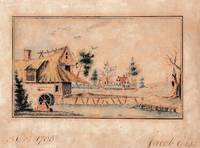
1795Best.-Nr. 24030Nazareth PA October 1795. Neatly hinged and matted. Very good; some toning to the paper. Watercolors meas. appx. 110 x 190 mm. one somewhat smaller; on laid paper with no watermark; sheet size appx. 210 x 265 mm. Three are in color one in black and white. Each is identified and dated in the same hand. The smaller black and white drawing has the following legend: View of Nazareth Hall from the school garden / Prospect von Nazareth Hall gegen Westen. Nazareth Hall 17521929 was the Moravian school in Nazareth Pennsylvania. It was established by master mason Melchior Rasp in 1754. In 1759 it became the central boarding school for sons of Moravian parents. Later it attained wide fame as a "classical academy." This eventually led to the founding in 1807 of Moravian College and Theological Seminary at Bethlehem PA. The original school was divided into "rooms"; each contained only fifteen or eighteen pupils; these pupils were under the constant supervision of a master; and this master who was generally a theological scholar was the companion and spiritual adviser of his charges. Jacob Cist graduated at the school and worked with the post office department Washington D. C. 1800-08 when he removed to Wilkes Barre PA. There he was appointed postmaster and retained the position until his death 1825. He devoted much of his time to painting and literature contributing for years to The Literary Magazine The Portfolio and to the local papers of Pennsylvania. He invented and patented a mill to grind colors for paints and in 1808 secured a patent for manufacturing a mineral black for printer's ink from Lehigh anthracite coal as a substitute for India ink. For many years he was interested in the mining and the uses of anthracite coal. In 1815 published a pamphlet on the subject. Ludwig Schweinir has evaded the historical record. unknown books
Best.-Nr. 231101(XVIIIème siècle) à vue : 55 x 67,5 cm chaque , Techniques mixtes d'aquarelle, crayon et rehauts de gouache, cadre en bois et stuc doré à décor de frises et de rangs de perles. Agrandies en partie inférieure.