508 résultats
1901réf. 72292Canton Ohio: Roller Printing Co. Very Good. 1901. Pamphlet. 1901 SKETCHBOOK. Canton Ohio. 46 pages illustrated Very Good condition. . Roller Printing Co. unknown books
1899réf. 6407Helena MT 1899. Broadside 25 cm x 15 cm / 10" x 6" printed in black ink on pink paper. Near fine. 'The Rivals A Popular Comedy by Sheridan. Presented by the Senior Class of Helena High School. Monday Ev'ng May 1. Electric Hall. Admission 50 and 25 cts.' Broadside for a high school production of Sheridan's 'The Rivals.'. unknown books
1970réf. 279488Berkeley: Starr King School for The Ministry 1970. Spiral_bound. 31p. 1p. 5.75x8.5 inches; b&w illustrations throughout several bottom spirals broken off somewhat loosening the wraps minor edge-wear else in very good condition. [Starr King School for The Ministry] unknown books
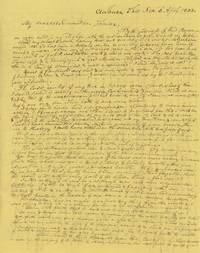
1832réf. List3436Auburn New York 1832. Single four-page letter measuring 7 ¾ x 9 ¾ inches. Folded with very small tears at folds. Excellent to Near Fine. A letter written from the Auburn Theological Seminary in 1832 from the soon-to-be Reverend Thomas Reed Rawson 1803-1877 to his soon-to-be wife Louisa W. Dawes 1810–1849. Dawes who lived in Cummington Massachusetts was the older sister of Senator Henry Laurens Dawes best known for the 1887 Dawes Act. Rawson opens by commenting on the death of one of his students and his time spent in Oswego “visiting in the most fashionable families”; he felt this taught him a great deal about “human nature” which in Oswego is “peculiar”. He seems to have been particularly perplexed by the spiritual character he encountered in upstate New York a locus of the Christian revival movement now called the Second Great Awakening: “You know I expected that the spirit of the west was a more active . spirit than what was seen in the N.E. states & hoped by breathing this pure atmosphere to enjoy great spiritual health. How erroneous was the impression! How greatly have I been deceived! . I acted as though it was so – as though man was man only in certain latitudes. I acted as though face answered to face only when seen in the waters of N.E. & consequently that the heart of a N.E. man had no analogy to what beats in the bosom of one born in a more western longitude.” Not only is Rawson nonplussed by New Yorkers’ religious qualities he is vehemently opposed to some of the new practices that arose from the religious revival there: “The state of things here I mean in all this country at the west is very peculiar. You have heard of ‘Old & New Measures’ I suppose. For myself I cannot approve of the latter. I find not a spirit in me to Fellowship them. Have been exceedingly tried by them as I have been in the midst of ‘new measures’ all winter. You can form but a faint idea of the excitement which is in this country in the religious community. In Oswego Co. the lay-men are going through the Co. holding meetings once a month in praying exhorting dispensing the duties of Clergymen &c. &c.; & it seems that the present state of things must result in a wide division in the churches. ‘A house divided against itself cannot stand.’ . As near as I can find out very sinister is the spirit that knows the new measures to that wild-pine which ran so extensively in the time of Edwards. The effects of it are seen in your town to this day.” The “New Measures” were novel practices for American Christianity that came about during the Second Great Awakening mainly due to Presbyterian minister Charles Finney. These include very lengthy meetings public naming of sinners and public confessions of sin and were controversial with those who preferred a more orthodox and restrained service. Rawson accurately predicts that the new practices would lead to a schism; starting in 1837 the Old School-New School Controversy split the Presbyterian church along these lines. He later worries that such a division in the church would allow “Catholicism to take the advantage” and that “Satan is bringing this about as rapidly as possible”. The appeal of a strong hierarchical Catholic church as opposed to a weak and divided Protestant one was a common worry among Protestants at the time. Rawson traces the “sinister spirit” of the new measures back to “the time of Edwards”: Jonathan Edwards a key figure in the First Great Awakening of the 1730s and 40s. Given his reference to “your town”—Cummington Massachusetts—Rawson is probably referring to the so-called “New England theology” that arose from the First Great Awakening. Among other things New England theology proposed new views on man’s free will and responsibility; similar views would create controversy in Rawson’s time as he explains: “I see my own heart to be depraved & wicked beyond all observation but the fruits of the spirit I think I do love & hope they are sweeter & more sweet to my taste. I say taste the New measure-men are not taste-men but believe in the ‘motive scheme’ — By taste is meant the implantation of a new principle – love to God & is affected by the Holy Spirit. The ‘motive scheme’ implies that the sinner turns himself about in by motive merely.” He is objecting to the idea that a sinner could redeem himself through an act of his own will—by his own ‘motives.’ Old School Presbyterianism holds a more orthodox Calvinist view wherein the redemption of the sinner is not up to the sinner’s will at all. Rawson makes an interesting comparison between New School views on the matter and states’ rights in the context of the then-ongoing nullification crisis: “The signs of the times declare most plainly to him who has wiped up his eyes that ‘the end has come upon the four corners of this earth’ i.e. the end of peaceful days for the present. Never was our Republic brought to a crisis like this. Nullification in the Political world is the same with Denunciation in the Religious world. This is my opinion; don’t know as have heard others say so.” The nullification crisis arose when South Carolina declared that several import tariffs were unconstitutional and thus nullified them under the states’ rights doctrine of state nullification. Rawson seems to be drawing a parallel between the revivalists’ idea of the role of one’s motives in salvation and states’ rights advocates’ idea of the relationship between the states’ wills and the federal government’s. Of course the states’ rights issue would soon reach an apotheosis. Rawson closes with some affectionate lines for Dawes and advice about her own teaching job; the crossed text updates her on the Christian conversions within his family. Overall the letter provides detailed insights into the views of a more conservative theology student on the Presbyterian controversy that was soon to come to a head. unknown books
réf. B239350-2Providence 1988. 131 1pp. Prof. illus. 4to. Wraps. Providence, 1988. paperback books
1957réf. 5265St. Louis: The School Press 1957. Very good. 180pp. Profusely illustrated with photographs. Original orange printed self wrappers staple. Minor rubbing soiling and some edge wear to wrappers. Internally clean. A seemingly unrecorded photographic annual for a prominent African-American dance school in Jim Crow Missouri. The Les Pierrettes Dance School was a well-respected institution for the training of young dancers in St. Louis. The school's director identified in the present work as "Maitre d'Ecole" was Anita W. Roland a prominent dancer with experience on the stage in North America Latin America and Europe. The work opens with a couple of introductory poems and a table of contents; thereafter the work features almost sixty dance students both male and female in two-page spreads with a poem on the verso and a photographic portrait of the students in their dance uniforms on the rectos. This section is described on the table of contents as "A group of mirth-laden girls and boys make truth-laden statements about themselves" indicating the biographical poems were written by each of the students. The middle of the work features the dancing school staff and "Studio Demonstrators" i.e. dance instructors with some biographical details about each person. This is followed by a long section of well wishes and congratulatory messages from the dance students' family friends and the larger community. The rear of the work also includes a section of advertisements from local businesses. The present work was edited by Anita Roland's husband Philip Roland here listed as the Director of Program Activities for the dance school and editor of Foto-Feature. The work itself is identified on the table of contents as "Vol. 2 No. 1" indicating it is likely the second in a series. We could locate no exact matches of the present work in OCLC or auction records though there might be one other example at the Missouri History Museum the OCLC record does not specify volume number. The School Press unknown books
1950réf. bas87St. Petersburg: St. Petersburg High School Class of 1950 1990. Quarto paperbound stapled white illus. wrappers 32 pp. Very Good with light rubbing to covers interior clean & tight. St. Petersburg High School Class of 1950, 1990. unknown books
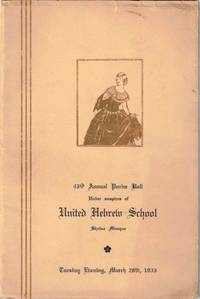
1933réf. 73008Atlanta: Uniited Hebrew School 1933. Paperback. Good. Paperback. 40pp. Marriage invitation laid inside. Edge wear to the covers else a good complete example. Uniited Hebrew School paperback books
1950réf. bas86St. Petersburg: St. Petersburg High School Class of 1950 2000. Quarto paperbound stapled white illus. wrappers 72 pp. Good with fading to upper cover interior clean & tight. Photographs of entire class included along with class directory. St. Petersburg High School Class of 1950, 2000. unknown books
1946réf. 206095Saratoga Springs N. Y.: Saratoga Spring High School 1946. Softcover. VG: An old book that has seen some wear. Previous owner name on front cover and inside front cover. The spine is cracked and torn at the top. A yellow softcover book. 88 pages; black-and-white images. Saratoga Spring High School paperback books
1946réf. 206096Saratoga Springs N. Y.: Saratoga Spring High School 1946. Hardcover. VG: An old book that has seen some wear. Previous owner name on front cover and inside front cover. Classmate well-wishes and inscriptions throughout the book. A textured hardcover book with blue and white coloring. 88 pages; illustrated with black-and-white images. Saratoga Spring High School hardcover books
1987réf. 112125Leawood Kansas; Pennington New Jersey: Circulation Service 1987. Softcover. Near Fine. Comb-bound wrappers. Near fine with slight edgewear. A book of recipes compiled by the Parents' Association of students at the prestigious Pennington School in New Jersey as a fundraising event. Circulation Service unknown books
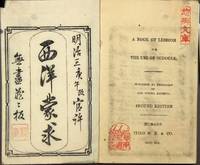
1872réf. 21891Numadz i.e. Numazu Japan: Itiro W. N. & Co. Meiji 4th published by permission of the school Kaiseijo 1872. Second and last edition small 8vo approx. 7" x 4¾" pp. 2 42 plus printed pastedowns the first the title page in Japanese 3 red chopmarks on title pages one of them Shogo who amassed I am told a famous collection of language books in Tokyo text in Roman letter throughout and printed from metal type; original blue wrappers sewn in Japanese manner printed paper label on upper cover; externally worn and with some limpness to the wrappers all else very good and sound. A Critical Bibliography of Materials for English Studies in Japan. Collected by Osaka Women's University 1962 no. 97. The text contains 7 brief histories including Columbus Discovers America History of Isaac Newton Washington's Regard for his Mother and Alfred and his Mother. Harvard only in OCLC. Itiro W. N. & Co., Meiji 4th [published by permission of the school Kaiseijo] unknown books
1912réf. 86703Oxford: At the Clarendon Press 1912. 1st ed. Hardcover. Very Good. This volume only. 94 black & white plates printed on one side and numbered 1-34 34A and 35-93. Original cloth-backed boards. 34 cm. Splitting along sides of backstrip. Other modest cover wear including some uneven cover fading and some small holes and other wear along rear joint. At the Clarendon Press hardcover books
1851réf. 801031851. Harvard Law School Directory for the 1850-51 Academic Year Harvard Law School. A Catalogue of the Law School of the University at Cambridge For the Academical Year 1850-51. Second Term. Cambridge MA: Metcalf and Company Printers to the University 1851. 28 pp. Octavo 7-1/2" x 4-1/2". Stab-stitched pamphlet in printed wrappers. Faint vertical crease though center light soiling and a few smudges to exterior spine ends abraded small ink annotation shelf number to head of front wrapper faint dampstaining to endleaves moderate toning to text internally clean. $100. This catalogue was published for prospective and incoming students in the year when the faculty consisted of Joel Parker Theophilus Parsons and Luther S. Cushing. It contains general information about the school regulations course outlines and lists of required and recommended texts. Lists of students are included as well. unknown books
1851réf. 587711851. Cambridge 1851. Cambridge 1851. "Cumulative" 1851 Harvard Law School Catalogue Harvard Law School. A Catalogue of the Students of Law in Harvard University From the Establishment of the Law School To the End of the Second Term in the Year 1851. Cambridge: Metcalf and Company Printers to the University 1851. 96 pp. Octavo 7-1/4" x 4-3/4". Stab-stitched pamphlet in printed wrappers. A few minor stains chipping to foot of spine. Light toning to text internally clean. $150. This catalogue was published for prospective and incoming students in the year when the faculty consisted of Jared Sparks Theophilus Parsons Joel Parker and Luther Stearns Cushing. It contains general information about the school regulations course outlines and lists of required and recommended texts. This catalogue is especially interesting because of its complete lists of alumni and former faculty members a distinguished group that includes Joseph Story Simon Greenleaf and Henry Wheaton. unknown books
1980réf. 352411980. Softcover. VG lightly sunned at spine edge. Grey stapled wraps. Approx. 100 pp. Numerous bw plates. Extensive introduction and annotated entries. paperback books
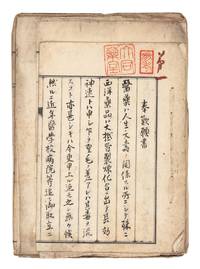
réf. 8335Ca. 52 leaves. 8vo leaves of various sizes but averaging 285 x 203 mm. written on paper with pre-printed columns stitched together. Osaka: 1872-75. The Osaka Medical School today part of Osaka University and one of the finest medical schools in Japan traces its origins and traditions to the Tekijuku an academy founded by Koan Ogata 1810-63 which based its teaching on Western learning mostly from the Dutch. The newly created Meiji government established the Osaka Medical School in 1869 with the help of Ogata’s son Koreyoshi and the Dutch doctor Antonius Franciscus Bauduin 1822-85. This was part of the massive effort in Japan to modernize. The “Fundamental Code of Education” promulgated in 1872 established a centralized national educational system which concentrated on Western science and technology. These manuscripts document the transformation of the medical school into a national institution. Details regarding rules for employees contracts for foreign employees including salaries housing matters of finance terms of severance standards regarding the making of pharmaceutical products lists of foreign employees correspondence with government officials etc. In fine condition. With the seal of the Shinto priest and physician Yasuaki or Kosho Nakano 1874-1947 and his private library Daido Yakushitsu. He was a major collector of kanpo the Japanese study of traditional Chinese medicine calligraphy maps illustrated scrolls waka poetry and paintings. unknown books
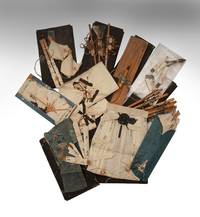
réf. 7079Various formats and sizes. Japan: ca. 1787-96. The Ogasawara School å°ç¬ åŽŸæµ founded in the 12th century laid the foundations of etiquette for the aristocratic and samurai classes throughout Japan for many centuries. The school specialized in teaching horsemanship archery mounted archery and samurai etiquette on and off the battlefield. Over the centuries the school transitioned itself to focus on a system of courtly manners along with skills in archery for ceremonial rituals. The school continues today supervised by the 31st generation leader Kiyotada Ogasawara. The Imperial House of Japan uses Ogasawara etiquette. This fascinating collection is made up of miniature models or samples of materials and objects required and used at formal Ogasawara events in the late 18th century as well as a number of manuscript documents. We begin with ten black paper four-sided folding envelopes each labeled and containing the items below. These envelopes are constructed of thick but flexible paper with string ties. The labels describe the contents of each envelope and have seals and signatures of either “Hisanobu” or “Nobumichi”: 1. a miniature paper model of a horo which is worn on the back of a samurai’s armor. Our horo is made of folded paper with a silk brocade adornment. Measurements are given in manuscript. With this is a model of the bag to carry the horo; 2. miniature fabric samples of pleated trousers a man’s formal kimono and vest along with samples of neatly wrapped objects elaborately tied which were to be carried. They include a sword a fan and a bolt of precious brocade; 3. three miniature tachi swords each for a specific occasion. Our sample tachi are made of wood and have thick thread attachments; 4. two kinds of miniature torches taimatsu along with their holders; 5. a most remarkable miniature wooden bow mounted on a wooden board. A quiver utsubo again made of wood and decorated in gold brocade is also mounted; 6. Six miniature examples of maku gushi poles to hold banners. They are joined by ropes here represented by fine decorative cord; 7. four samples of real hair cut off and tied during genpuku the Japanese coming-of-age ceremony; 8. a miniature target — an opened fan — mounted on a board for the hikime-no-gi the archery ritual; 9. two elaborate folded paper model sacks to protect the bow when it rains kasa yumi bukuro; and 10. seven strands of hay and 12 braided strips of paper kamioki which were used in ceremonies for two- and three-year-old aristocratic and samurai male children. These are accompanied by 69 examples of very complex ceremonial origami or origata. Origata as compared to recreational origami was developed amongst the higher class of samurai who stressed formal manners and a sense of decorum. It is a method of how to wrap gifts with very precious handmade papers used for gift-giving and ceremonies in order to maintain sound human relations. Each is folded in it own way and labeled with its intended contents for example an obi belt confectioneries a brush for calligraphy shark skin for sword handles incense wood a tooth-cleaning stick a fan Chinese silk thread hair ornaments gold dust sumi ink cake perfume belts for inner garments face powder tabi socks various sizes of fine writing paper feathers from hawks and cranes for arrows etc. Some examples of highly complex ornamental ties are also present. Finally there are about 20 contemporary letters all concerned with various aspects of Ogasawara etiquette including gastronomic matters. There is a stiff thick-paper folded cover for a gift signed “Ogasawara Taizen taifu Nagamasa.” There is also a packet of miscellaneous related papers. In fine condition and a remarkable survival. unknown books
1985réf. 26931985. Softcover. VG. Color wraps. 336 pp. 50 color 100s bw plates. A very comprehensive guide both to American art and other areas of specialty furniture Asian art European art antiquities textiles etc. paperback books
réf. B153546-3Providence 1985. 336pp. Prof. illus. partly color. Lrg. 4to. Wraps. Providence, 1985. paperback books
réf. B153546-2Providence 1985. 336pp. Prof. illus. partly color. Lrg. 4to. Wraps. Providence, 1985. paperback books
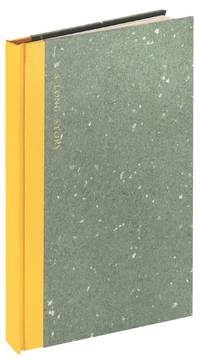
2001réf. 36752Bath: Old School Press 2001. Hardcover. Fine. Hardcover. Number 131 of 230 copies signed by the poet and illustrator. From the press: "For the fifth title in our series of the work of contemporary British poets we were fortunate to have the opportunity of printing an extended four-part poem by Poet Laureate emeritus Andrew Motion. He was England's Poet Laureate from 1999-2009. Writing of his work Motion says 'A Long Story assembled itself over several years into a loose sequence of four sections none of them rhymed and all are written in a very loose rambling rhythm. I began with the wish to identify certain memories in my childhood which I've always considered to be 'spots of time' - ie moments which have a self-contained interest and drama - and ended up with scenes which anticipate even predict certain moods and attitudes I have as an adult. 'To complement Motion's narrative style we turned once more to leading wood-engraver Simon Brett whose ability to tell a story in a single sinewy image we greatly admire and who cut four wood-engravings for the book.'' For this elegant book the text was hand-set in 14pt Fournier italic and printed on 170gsm Magnani mould-made paper. Brett's engravings were printed from the wood onto dampened paper. The book was bound by Rachel and Richard James. It is quarter-bound with yellow cloth on the spine with a rich dark green hand-made paper from the Larroque mill covering the boards black Canson end-papers and the title embossed in gold on the front cover. In fine condition. Measures 8 x 11 inches. Unpaginated 44 pages PRI/082823. Old School Press hardcover books
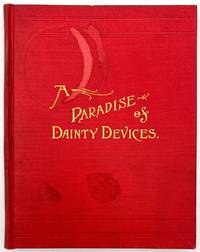
1894réf. 22001239New York New York: G.H. Dickson's Sons & Co 1894. Very good. Boards rubbed with water staining. Some dust soiling upper hinge cracked end papers toned. Rare with only a single other recorded copy Brown "A Paradise of Dainty Devices" is comprised of over 100 pages of original poetry and prose by students at Mademoiselle Ruel's School in Manhattan in 1894. It was compiled by and privately printed for L.C. Baker Professor of Rhetoric and attributes each piece to the students via an index with their pseudonyms in the index: Boston Dido Vernon Van Flic Donovan Meredith Hooker and Pshaw. Subjects of the student's pieces include nature friendship school death dreaming Venice Santa Claus and more. There is also a poem about each student titled with their pseudonyms pp. 46-53 and revealing a little about each of their personalities. Overall a charming window into the lives of a small group of school girls their passions and interests. Square 8vo 7.5" by 6" pp. 105 5 in original red cloth binding stamped in gold and blind on upper cover all edges gilt patterned end papers. 1 copy on OCLC only Jan 2023. G.H. Dickson's Sons & Co unknown books
1933réf. 20969Minneapolis Minnesota: Federal Schools Inc 1933. Wraps. Stapled. Very Good. Various. Selling a pipe dream Or a plausible career path for more than just a few back when a far greater portion of advertising relied on drawn and/or painted illustration as opposed to photography The promotion whatever the merits of its pitch is abundantly illustrated with a good amount of color showing examples of artwork from leading illustrators of the day -- generally names unfamiliar to us but more than competent professional work whether commercial art in a wide variety of areas including fashion decor services etc. -- cartoon journalistic etc. Also many photos of the artists the school artists at work. 4to. 25.5 by 18.5 cm. 66 2 pp. Moderate wear with flattened creases minor surface loss on cover some light scattered soiling a loose gathering. Still easily Very Good. Federal Schools, Inc unknown books