|
Louis ALTHUSSER - Jacques RANCIERE - Pierre MACHEREY
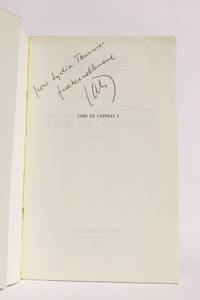
Lire Le Capital - Tome 1 Reading Capital - Volume 1
Paris: François Maspero 1965. Fine. François Maspero Paris 1965 13.50 x 21.50 cm broché First edition of which there were no large paper copies. Autograph inscription from Louis Althusser to Lydia Tournier. Spine very lightly sunned not serious. François Maspero unknown
Référence libraire : 56320
|
|
|
Louis ALTHUSSER
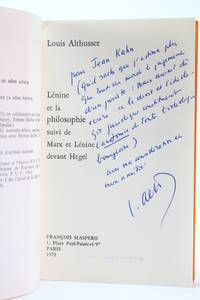
Lénine & la philosophie suivi de Marx & Lénine devant Hegel
Paris: Petite collection François Maspero 1972. Fine. Petite collection François Maspero Paris 1972 11 x 17.50 cm broché First edition of which there were no deluxe copies. Handsome copy. Fine signed autograph inscription from Louis Althusser: ""Pour Jean Kahn qu'il sache que j'estime plus que tout au monde le jugement d'un juriste : Marx aurait dû écrire : ""le droit et l'idéologie juridique continuent l'anatomie mot souligné de toute l'idéologie bourgeoise . Avec ma considération et mon amitié"" ""For Jean Kahn let him know that I value a jurist's judgment above all else in the world: Marx should have written: 'law and legal ideology continue the anatomy word underlined of all bourgeois ideology' . With my consideration and my friendship"". Petite collection François Maspero unknown
Référence libraire : 74242
|
|
|
Louis ALTHUSSER
Lénine & la philosophie suivi de Marx & Lénine devant Hegel
Paris: Petite collection François Maspero 1972. Fine. Petite collection François Maspero Paris 1972 11 x 17.50 cm broché First edition for which it was not drawn large papers. Small traces of friction without gravity on a bit otherwise nice copy. Signed autograph of Louis Althusser to the theater man J acques Lasalle. Petite collection François Maspero unknown
Référence libraire : 65516

|
|
|
Louis ALTHUSSER
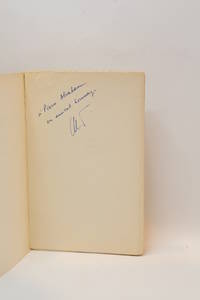
Montesquieu. La politique et l'histoire
Paris: P.U.F. 1959. Fine. P.U.F. Paris 1959 12 x 18.50 cm broché The first edition of which there were no deluxe copies a Service de Presse advance copy. Spine very lightly sunned without significance and with two small tears at head and foot otherwise handsome copy. Signed and inscribed copy from Louis Althusser to Pierre Abraham. P.U.F. unknown
Référence libraire : 72067
|
|
|
Louis ALTHUSSER
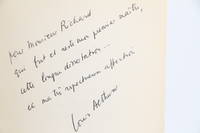
Montesquieu. La Politique et l'Histoire
Paris: P.U.F. 1959. Fine. P.U.F. Paris 1959 12 x 18.50 cm broché First edition of which there were no deluxe copies. Spine slightly sunned otherwise handsome copy. Precious signed autograph inscription from Louis Althusser to Jean-Pierre Richard: ""Pour Monsieur Richard qui fut et reste mon premier maître cette longue dissertation. et ma très respectueuse affection."" ""For Monsieur Richard who was and remains my first master this long dissertation. and my most respectful affection."" P.U.F. unknown
Référence libraire : 80276
|
|
|
Louis ALTHUSSER
Réponse à John Lewis
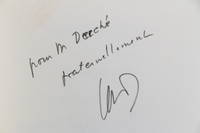
Paris: François Maspero 1973. Fine. François Maspero Paris 1973 11.50 x 20 cm broché The first edition of which there were no deluxe copies. Handsome copy. Signed autograph inscription from Louis Althusser to Monsieur Derché. François Maspero unknown
Référence libraire : 81658
|
|
|
Louis ALTHUSSER
Réponse à John Lewis
Paris: François Maspero 1973. Fine. François Maspero Paris 1973 11.50 x 20 cm broché Edition of wich no leading copies exists. Signed autograph of Louis Althusser to the art editor Alex Grall: "". the answer is - like any answer- a result of"" issues ""impertinent in both senses of the word with my deepest sympathy. "" François Maspero unknown
Référence libraire : 58310

|
|
|
Louis ANDRE
Camille Desmoulins
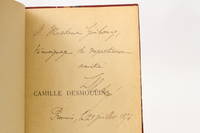
Paris: Charles Bayle 1890. Fine. Charles Bayle Paris 1890 10.50 x 16 cm relié First edition on current paper. Nice copy. Binding half shagreen red corners back with five nerves double gilded nets on the plates of marbled paper guards and contreplats of handmade paper gilded head Contemporary binding signed A. Lambert. Autograph dedication of Louis André to Madame Guibourg. Charles Bayle unknown
Référence libraire : 63552
|
|
|
Louis ANQUETIN - Theodore de WYZEWA
"Edouard Dujardin"" - In Les Hommes d'aujourd'hui n°388
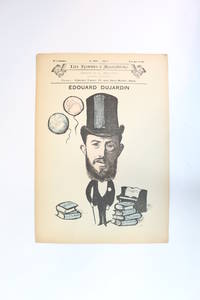
Paris: Léon Vanier 1888. Fine. Léon Vanier Paris s. d. circa 1888 20 x 29.50 cm en feuilles First edition of this issue of the review consisting of two folded sheets. Minor marginal tears of no consequence to the sheets. On the first a color woodcut depicting Edouard Dujardin by Louis Anquetin. On the following text by Théodore de Wyzewa in first edition titled ""Edouard Dujardin"". Léon Vanier unknown
Référence libraire : 73938
|
|
|
Louis ANQUETIN
Académie d'homme 9. - Crayon sur papier
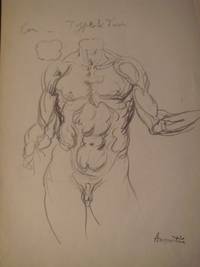
1900. Fine. Début XXème 23 x 36 cm Original pencil drawing. Signature stamp of the artist's signature in the lower right corner of the work and signature stamp of the studio on the verso. This drawing forms part of a series of ten studies created for Bertin around 1920-1925. It bears the artist's annotations ""Cou - Type & divers."" The verso is also annotated by the artist: he explains here in the form of quick notes the difference between Modern Painting and Ancient Painting. Two tiny marginal lacks a small tear at head 1 cm otherwise very fine condition. Provenance: from the artist's studio referenced in the catalogue Atelier Louis Anquetin Thierry de Maigret 28/11/08. Louis Anquetin born in Étrépagny in 1861 and died in Paris in 1932 is an important French painter. He began his career alongside avant-garde painters such as Vincent Van Gogh and Henri de Toulouse-Lautrec. With Émile Bernard he was the inventor of Cloisonnism. From 1884 to 1893 Louis Anquetin continuously explored the new possibilities offered by the liberation introduced by Impressionism in French painting. From 1893 onwards following a lengthy confrontation with the ""old masters"" he adopted a pictorial stance that would put him on the margins of the general art movement and distance him from his friends. Dazzled by baroque art and its creative vigor he then believed that his youthful friends had embarked on a path that would lead to the death of painting. He believed in a ""perfect painting"" that was embodied in the memory of the lessons of Michelangelo and Rubens in particular. His work therefore became more classical; he advocated a return to craftsmanship proposing to reflect on the a priori conditions of any possible form of art while respecting the rules of perspective and anatomy as practiced by the masters of the 16th and 17th centuries. Leaving only a few works that can be described as monumental Anquetin proved prolific through his numerous studies and sketches he who considered drawing to be ""an all-powerful means of expression"" the obligatory foundation of all plastic arts. By deliberately working against the grain of his era Louis Anquetin made possible the existence of an original modern figuration. Through his obstinacy and his passion for painting he indeed prevented the path of the great Western tradition from being totally blocked. His works can be admired in numerous prestigious museums such as the Musée d'Orsay and the Louvre in Paris in San Francisco and Detroit at the Hermitage Museum in St. Petersburg at the National Gallery and the Tate in London etc. unknown
Référence libraire : 25710
|
|
|
Louis ANQUETIN
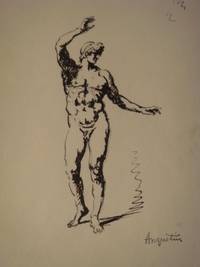
Académie d'homme 6 - Encre sur papier
1900. Fine. Début XXème 20 x 31 cm Original ink drawing with pencil sketch on verso. Artist's signature stamp in the lower right corner of the work and workshop stamp signature on verso. This drawing forms part of a series of ten studies created for Bertin around 1920-1925. A small asymmetrical lack of origin otherwise very fine condition. Provenance: artist's workshop referenced in the catalogue Atelier Louis Anquetin Thierry de Maigret 28/11/08. Louis Anquetin born in Étrépagny in 1861 and died in Paris in 1932 is an important French painter. He began his career alongside avant-garde painters such as Vincent Van Gogh and Henri de Toulouse-Lautrec. With Émile Bernard he invented Cloisonnism. From 1884 to 1893 Louis Anquetin constantly explored the new possibilities offered by the liberation introduced by Impressionism in French painting. From 1893 onwards following a long confrontation with the ""masters of yesteryear"" he adopted a pictorial stance that would place him on the margins of the general art movement and distance him from his friends. Dazzled by baroque art and its creative vigor he then believed that his youthful friends had embarked on a path that would lead to the death of painting. He believed in a ""perfect painting"" embodied in the remembrance of lessons from Michelangelo and Rubens in particular. His work therefore became more classical; he advocated a return to craftsmanship proposing to reflect on the a priori conditions of any possible form of art while respecting the rules of perspective and anatomy as practiced by the masters of the 16th and 17th centuries. Leaving only a few works that can be described as monumental Anquetin proved prolific through his numerous studies and sketches he who considered drawing to be ""an all-powerful means of expression"" the mandatory foundation of all plastic arts. By deliberately working against his era Louis Anquetin made possible the existence of an original modern figuration. Through his obstinacy and passion for painting he indeed prevented the path of the great Western tradition from being completely blocked. His works can be admired in numerous prestigious museums such as the Musée d'Orsay and the Louvre in Paris in San Francisco and Detroit at the Hermitage Museum in Saint Petersburg at the National Gallery and the Tate in London etc. unknown
Référence libraire : 25707
|
|
|
Louis ANQUETIN
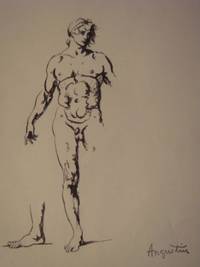
Académie d'homme 4 - Encre sur papier
1900. Fine. Début XXème 20 x 31 cm ANQUETIN Louis Académie d'homme 4 Ink on paper Early 20th century 20 x 31 cm. Original ink drawing. Signed with the artist's signature stamp in the lower right corner of the work and signed with the workshop's stamp on the back. This drawing is part of a series of ten studies completed for Bertin around 1920-1925. Very good condition. Provenance: artist's workshop referenced in the Atelier Louis Anquetin catalogue Thierry de Maigret 28/11/08. Louis Anquetin born in Étrépagny in 1861 and died in Paris in 1932 is an important French painter. He began his career alongside avant-garde painters such as Vincent Van Gogh and Henri de Toulouse-Lautrec. He is the inventor with Émile Bernard of Cloisonnism. From 1884 to 1893 Louis Anquetin never stopped exploring the new possibilities that the freedom of Impressionism brought to French painting. From 1893 following a long confrontation with the maîtres d'autrefois masters of the past he adopted a pictorial bias which would put him on the fringes of the general art movement and distance him from his friends. Dazzled by Baroque art and its creative vigour he then thought that his childhood friends were taking a path that would lead to the death of painting. He believes in a peinture parfaite perfect painting which is embodied in the re-remembering of Michelangelo and Rubens' lessons in particular. His work therefore becomes more classic; he advocates the return to the profession by proposing to reflect on the a priori conditions of any possible form of art in accordance with the rules of perspective and anatomy as practised by the masters of the 16th and 17th century. Leaving only a few works that can be described as monumental Anquetin proves to be prolific as a result of his many studies and sketches; he who considered that drawing was un moyen d'expression tout puissant an all powerful means of expression the obligatory foundation of all fine art. By working voluntarily in reverse of his time Louis Anquetin made the existance of an original modern portrayal possible. Through his persistance and his passion for painting he indeed prevented the path of the great western tradition from being completely sealed. His works can be admired in many prestigious museums such as the Musée d'Orsay or the Louvre in Paris in San Francisco or in Detroit in the State Hermitage Museum in St Petersburg in the National Gallery and the Tate in London etc. unknown
Référence libraire : 25705
|
|
|
Louis ANQUETIN
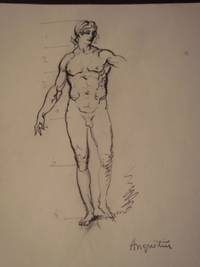
Académie d'homme 8 - Encre sur papier
1900. Fine. Début XXème 20 x 31 cm Original ink drawing. Artist's signature stamp in the lower right corner of the work and atelier stamp signature on verso. This drawing forms part of a series of ten studies created for Bertin circa 1920-1925. It bears ink annotations by the artist explaining his work on anatomical proportions. Excellent condition. Provenance: from the artist's atelier referenced in the catalogue Atelier Louis Anquetin Thierry de Maigret 28/11/08. Louis Anquetin born in Étrépagny in 1861 and died in Paris in 1932 was an important French painter. He began his career alongside avant-garde painters such as Vincent Van Gogh and Henri de Toulouse-Lautrec. With Émile Bernard he invented Cloisonnism. From 1884 to 1893 Louis Anquetin continuously explored the new possibilities offered by the liberation introduced by Impressionism in French painting. From 1893 onwards following a lengthy confrontation with the ""masters of old"" he adopted a pictorial stance that would place him on the margins of the general art movement and distance him from his friends. Dazzled by Baroque art and its creative vigor he believed that his youthful friends had embarked on a path that would lead to the death of painting. He believed in a ""perfect painting"" embodied in remembering the lessons of Michelangelo and Rubens in particular. His work therefore became more classical; he advocated a return to craft proposing to reflect on the a priori conditions of any possible form of art while respecting the rules of perspective and anatomy as practiced by the masters of the 16th and 17th centuries. While leaving only a few works that can be qualified as monumental Anquetin proved prolific through his numerous studies and sketches he who considered drawing to be ""an all-powerful means of expression"" the obligatory foundation of all plastic arts. By deliberately working against his era Louis Anquetin made possible the existence of an original modern figuration. Through his obstinacy and passion for painting he indeed prevented the path of the great Western tradition from being totally blocked. His works can be admired in numerous prestigious museums such as the Musée d'Orsay and the Louvre in Paris in San Francisco and Detroit at the Hermitage Museum in Saint Petersburg at the National Gallery and the Tate in London etc. unknown
Référence libraire : 25709
|
|
|
Louis ANQUETIN
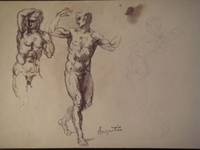
Académie d'homme 2.
1900. Fine. Début XXème 31 x 20 cm Original pencil drawing heightened with ink mixed technique. Artist's signature stamp in the lower right corner of the work and studio stamp signature on verso. This drawing is part of a series of ten studies created for Bertin around 1920-1925. Very fine condition. Provenance: from the artist's studio referenced in the Louis Anquetin Studio catalogue Thierry de Maigret 28/11/08. Louis Anquetin born in Étrépagny in 1861 and died in Paris in 1932 was an important French painter. He began his career alongside avant-garde painters such as Vincent Van Gogh and Henri de Toulouse-Lautrec. With Émile Bernard he was the inventor of Cloisonnism. From 1884 to 1893 Louis Anquetin continuously explored the new possibilities offered by the liberation introduced by Impressionism in French painting. From 1893 onwards following a long confrontation with the ""masters of the past"" he adopted a pictorial stance that would put him on the margins of the general art movement and distance him from his friends. Dazzled by Baroque art and its creative vigor he then believed that his youthful friends had engaged in a path that would lead to the death of painting. He believed in a ""perfect painting"" that was embodied in the remembrance of the lessons of Michelangelo and Rubens in particular. His work therefore became more classical; he advocated a return to craftsmanship proposing to reflect on the a priori conditions of any possible form of art while respecting the rules of perspective and anatomy as practiced by the masters of the 16th and 17th centuries. Leaving only a few works that can be qualified as monumental Anquetin proved prolific through his numerous studies and sketches he who considered drawing to be ""an all-powerful means of expression"" the obligatory foundation of all plastic arts. By deliberately working against the grain of his era Louis Anquetin made possible the existence of an original modern figuration. Through his obstinacy and passion for painting he indeed prevented the path of the great Western tradition from being totally blocked. His works can be admired in numerous prestigious museums such as the Musée d'Orsay and the Louvre in Paris in San Francisco and Detroit at the Hermitage Museum in Saint Petersburg at the National Gallery and Tate in London etc. unknown
Référence libraire : 25702
|
|
|
Louis ANQUETIN
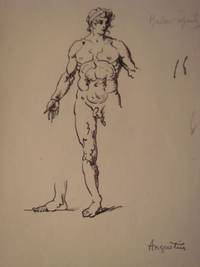
Académie d'homme 5
1900. Fine. Début XXème 20 x 31 cm Original ink and wash drawing. Artist's signature stamp in the lower right corner of the work and workshop stamp signature on verso. This drawing forms part of a series of ten studies created for Bertin around 1920-1925. It includes a manuscript annotation by the artist commenting on his work: ""baisser les épaules"" ""lower the shoulders"". Very fine condition. Provenance: artist's workshop referenced in the catalogue Atelier Louis Anquetin Thierry de Maigret 28/11/08. Louis Anquetin born in Étrépagny in 1861 and died in Paris in 1932 is an important French painter. He began his career alongside avant-garde painters such as Vincent Van Gogh and Henri de Toulouse-Lautrec. With Émile Bernard he invented Cloisonnism. From 1884 to 1893 Louis Anquetin constantly explored the new possibilities offered by the liberation introduced by Impressionism in French painting. From 1893 onwards following a long confrontation with the ""masters of yesteryear"" he adopted a pictorial stance that would place him on the margins of the general art movement and distance him from his friends. Dazzled by baroque art and its creative vigor he then believed that his youthful friends had embarked on a path that would lead to the death of painting. He believed in a ""perfect painting"" embodied in the remembrance of lessons from Michelangelo and Rubens in particular. His work therefore became more classical; he advocated a return to craftsmanship proposing to reflect on the a priori conditions of any possible form of art while respecting the rules of perspective and anatomy as practiced by the masters of the 16th and 17th centuries. Leaving only a few works that can be described as monumental Anquetin proved prolific through his numerous studies and sketches he who considered drawing to be ""an all-powerful means of expression"" the mandatory foundation of all plastic arts. By deliberately working against his era Louis Anquetin made possible the existence of an original modern figuration. Through his obstinacy and passion for painting he indeed prevented the path of the great Western tradition from being completely blocked. His works can be admired in numerous prestigious museums such as the Musée d'Orsay and the Louvre in Paris in San Francisco and Detroit at the Hermitage Museum in Saint Petersburg at the National Gallery and the Tate in London etc. unknown
Référence libraire : 25706
|
|
|
Louis ANQUETIN
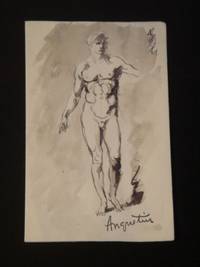
Académie d'homme 10.
1900. Fine. Début XXème 10 x 16 cm Original drawing in ink and wash. Signature stamp of the artist's signature in the lower right corner of the work and signature stamp of the studio on the verso. This drawing forms part of a series of ten studies created for Bertin around 1920-1925. Very fine condition. Provenance: from the artist's studio referenced in the catalogue Atelier Louis Anquetin Thierry de Maigret 28/11/08. Louis Anquetin born in Étrépagny in 1861 and died in Paris in 1932 is an important French painter. He began his career alongside avant-garde painters such as Vincent Van Gogh and Henri de Toulouse-Lautrec. With Émile Bernard he was the inventor of Cloisonnism. From 1884 to 1893 Louis Anquetin continuously explored the new possibilities offered by the liberation introduced by Impressionism in French painting. From 1893 onwards following a lengthy confrontation with the ""old masters"" he adopted a pictorial stance that would put him on the margins of the general art movement and distance him from his friends. Dazzled by baroque art and its creative vigor he then believed that his youthful friends had embarked on a path that would lead to the death of painting. He believed in a ""perfect painting"" that was embodied in the memory of the lessons of Michelangelo and Rubens in particular. His work therefore became more classical; he advocated a return to craftsmanship proposing to reflect on the a priori conditions of any possible form of art while respecting the rules of perspective and anatomy as practiced by the masters of the 16th and 17th centuries. Leaving only a few works that can be described as monumental Anquetin proved prolific through his numerous studies and sketches he who considered drawing to be ""an all-powerful means of expression"" the obligatory foundation of all plastic arts. By deliberately working against the grain of his era Louis Anquetin made possible the existence of an original modern figuration. Through his obstinacy and his passion for painting he indeed prevented the path of the great Western tradition from being totally blocked. His works can be admired in numerous prestigious museums such as the Musée d'Orsay and the Louvre in Paris in San Francisco and Detroit at the Hermitage Museum in St. Petersburg at the National Gallery and the Tate in London etc. unknown
Référence libraire : 25711
|
|
|
Louis ANQUETIN
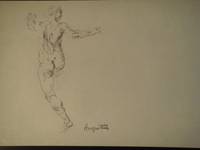
Académie d'homme 1
1900. Fine. Début XXème 31 x 20 cm Original drawing in ink and wash. Artist's signature stamp in the lower right corner of the work and studio stamp signature on the verso. This drawing forms part of a series of ten studies created for Bertin around 1920-1925. Very fine condition. Provenance: from the artist's studio referenced in the catalogue Atelier Louis Anquetin Thierry de Maigret 28/11/08. Louis Anquetin born in Étrépagny in 1861 and died in Paris in 1932 was an important French painter. He began his career alongside avant-garde painters such as Vincent Van Gogh and Henri de Toulouse-Lautrec. With Émile Bernard he invented Cloisonnism. From 1884 to 1893 Louis Anquetin continuously explored the new possibilities offered by the liberation introduced by Impressionism in French painting. From 1893 onwards following a lengthy confrontation with the ""masters of old"" he adopted a pictorial stance that would place him on the margins of the general art movement and distance him from his friends. Dazzled by Baroque art and its creative vigor he then believed that his youthful friends had embarked on a path that would lead to the death of painting. He believed in a ""perfect painting"" that was embodied in the remembrance of the lessons of Michelangelo and Rubens in particular. His work therefore became more classical; he advocated a return to craftsmanship proposing to reflect on the a priori conditions of any possible form of art while respecting the rules of perspective and anatomy as practiced by the masters of the 16th and 17th centuries. Leaving only a few works that can be qualified as monumental Anquetin proved prolific through his numerous studies and sketches he who considered that drawing was ""an all-powerful means of expression"" the obligatory foundation of all plastic arts. By deliberately working against the grain of his era Louis Anquetin made possible the existence of an original modern figuration. Through his obstinacy and passion for painting he indeed prevented the path of the great Western tradition from being totally obscured. His works can be admired in numerous and prestigious museums such as the Musée d'Orsay and the Louvre in Paris in San Francisco and Detroit at the Hermitage Museum in Saint Petersburg at the National Gallery and the Tate in London etc. unknown
Référence libraire : 25701
|
|
|
Louis ANQUETIN
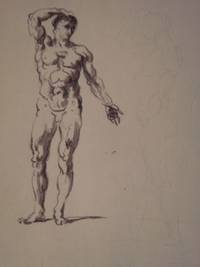
Académie d'homme 7
1900. Fine. Début XXème 20 x 31 cm Original drawing in pencil ink and wash. Artist's signature stamp in the lower right corner of the work and atelier stamp signature on verso. This drawing forms part of a series of ten studies created for Bertin circa 1920-1925. Excellent condition. Provenance: from the artist's atelier referenced in the catalogue Atelier Louis Anquetin Thierry de Maigret 28/11/08. Louis Anquetin born in Étrépagny in 1861 and died in Paris in 1932 was an important French painter. He began his career alongside avant-garde painters such as Vincent Van Gogh and Henri de Toulouse-Lautrec. With Émile Bernard he invented Cloisonnism. From 1884 to 1893 Louis Anquetin continuously explored the new possibilities offered by the liberation introduced by Impressionism in French painting. From 1893 onwards following a lengthy confrontation with the ""masters of old"" he adopted a pictorial stance that would place him on the margins of the general art movement and distance him from his friends. Dazzled by Baroque art and its creative vigor he believed that his youthful friends had embarked on a path that would lead to the death of painting. He believed in a ""perfect painting"" embodied in remembering the lessons of Michelangelo and Rubens in particular. His work therefore became more classical; he advocated a return to craft proposing to reflect on the a priori conditions of any possible form of art while respecting the rules of perspective and anatomy as practiced by the masters of the 16th and 17th centuries. While leaving only a few works that can be qualified as monumental Anquetin proved prolific through his numerous studies and sketches he who considered drawing to be ""an all-powerful means of expression"" the obligatory foundation of all plastic arts. By deliberately working against his era Louis Anquetin made possible the existence of an original modern figuration. Through his obstinacy and passion for painting he indeed prevented the path of the great Western tradition from being totally blocked. His works can be admired in numerous prestigious museums such as the Musée d'Orsay and the Louvre in Paris in San Francisco and Detroit at the Hermitage Museum in Saint Petersburg at the National Gallery and the Tate in London etc. unknown
Référence libraire : 25708
|
|
|
Louis ANQUETIN
Cochon : Étude 3 - Crayon sur papier
1899. Fine. Fin XIXème - Début XXème 20 x 31 cm Original pencil drawing. Artist's signature stamp in the lower right corner of the work and studio stamp signature on verso. A small stain at the head not affecting the drawing otherwise very fine condition. Provenance: from the artist's studio referenced in the catalogue Atelier Louis Anquetin Thierry de Maigret 28/11/08. Louis Anquetin born in Étrépagny in 1861 and died in Paris in 1932 was an important French painter. He began his career alongside avant-garde painters such as Vincent Van Gogh and Henri de Toulouse-Lautrec. Together with Émile Bernard he invented Cloisonnism. From 1884 to 1893 Louis Anquetin continuously explored the new possibilities offered by the liberation introduced by Impressionism in French painting. From 1893 following a lengthy confrontation with the ""old masters"" he adopted a pictorial approach that would place him on the margins of the general art movement and distance him from his friends. Dazzled by Baroque art and its creative vigor he then believed that his youthful friends had embarked on a path that would lead to the death of painting. He believed in a ""perfect painting"" that embodied the remembered lessons of Michelangelo and Rubens among others. His work thus became more classical; he advocated a return to craftsmanship proposing to reflect on the a priori conditions of any possible form of art while respecting the rules of perspective and anatomy as practiced by the masters of the 16th and 17th centuries. Leaving only a few works that can be qualified as monumental Anquetin proved prolific through his numerous studies and sketches he who considered drawing to be ""an all-powerful means of expression"" the obligatory foundation of all plastic arts. By deliberately working against his era Louis Anquetin made possible the existence of an original modern figuration. Through his obstinacy and passion for painting he indeed prevented the path of the great Western tradition from being completely blocked. His works can be admired in numerous prestigious museums such as the Musée d'Orsay and the Louvre in Paris in San Francisco and Detroit at the Hermitage Museum in Saint Petersburg at the National Gallery and the Tate in London etc. unknown
Référence libraire : 25692

|
|
|
Louis ANQUETIN
Cochon : Étude 5 - Crayon sur papier
1899. Fine. Fin XIXème - Début XXème 20 x 31 cm Original pencil drawing. Artist's signature stamp in the lower right corner of the work and studio stamp signature on the verso. Manuscript notes by the artist commenting on the drawing. Very fine condition. Provenance: from the artist's studio referenced in the catalogue Atelier Louis Anquetin Thierry de Maigret 28/11/08. Louis Anquetin born in Étrépagny in 1861 and died in Paris in 1932 was an important French painter. He began his career alongside avant-garde painters such as Vincent Van Gogh and Henri de Toulouse-Lautrec. With Émile Bernard he invented Cloisonnism. From 1884 to 1893 Louis Anquetin continuously explored the new possibilities offered by the liberation introduced by Impressionism in French painting. From 1893 onwards following a lengthy confrontation with the ""masters of old"" he adopted a pictorial stance that would place him on the margins of the general art movement and distance him from his friends. Dazzled by Baroque art and its creative vigor he then believed that his youthful friends had embarked on a path that would lead to the death of painting. He believed in a ""perfect painting"" that was embodied in the remembrance of the lessons of Michelangelo and Rubens in particular. His work therefore became more classical; he advocated a return to craftsmanship proposing to reflect on the a priori conditions of any possible form of art while respecting the rules of perspective and anatomy as practiced by the masters of the 16th and 17th centuries. Leaving only a few works that can be qualified as monumental Anquetin proved prolific through his numerous studies and sketches he who considered that drawing was ""an all-powerful means of expression"" the obligatory foundation of all plastic arts. By deliberately working against the grain of his era Louis Anquetin made possible the existence of an original modern figuration. Through his obstinacy and passion for painting he indeed prevented the path of the great Western tradition from being totally obscured. His works can be admired in numerous and prestigious museums such as the Musée d'Orsay and the Louvre in Paris in San Francisco and Detroit at the Hermitage Museum in Saint Petersburg at the National Gallery and the Tate in London etc. unknown
Référence libraire : 25694

|
|
|
Louis ANQUETIN
Cochon : Étude 4 - Crayon sur papier
1899. Fine. Fin XIXème - Début XXème 20 x 31 cm Original pencil drawing. Artist's signature stamp in the lower right corner of the work and studio stamp signature on verso. Very fine condition. Provenance: from the artist's studio referenced in the catalogue Atelier Louis Anquetin Thierry de Maigret 28/11/08. Louis Anquetin born in Étrépagny in 1861 and died in Paris in 1932 was an important French painter. He began his career alongside avant-garde painters such as Vincent Van Gogh and Henri de Toulouse-Lautrec. Together with Émile Bernard he invented Cloisonnism. From 1884 to 1893 Louis Anquetin continuously explored the new possibilities offered by the liberation introduced by Impressionism in French painting. From 1893 following a lengthy confrontation with the ""old masters"" he adopted a pictorial approach that would place him on the margins of the general art movement and distance him from his friends. Dazzled by Baroque art and its creative vigor he then believed that his youthful friends had embarked on a path that would lead to the death of painting. He believed in a ""perfect painting"" that embodied the remembered lessons of Michelangelo and Rubens among others. His work thus became more classical; he advocated a return to craftsmanship proposing to reflect on the a priori conditions of any possible form of art while respecting the rules of perspective and anatomy as practiced by the masters of the 16th and 17th centuries. Leaving only a few works that can be qualified as monumental Anquetin proved prolific through his numerous studies and sketches he who considered drawing to be ""an all-powerful means of expression"" the obligatory foundation of all plastic arts. By deliberately working against his era Louis Anquetin made possible the existence of an original modern figuration. Through his obstinacy and passion for painting he indeed prevented the path of the great Western tradition from being completely blocked. His works can be admired in numerous prestigious museums such as the Musée d'Orsay and the Louvre in Paris in San Francisco and Detroit at the Hermitage Museum in Saint Petersburg at the National Gallery and the Tate in London etc. unknown
Référence libraire : 25693

|
|
|
Louis ANQUETIN
Cochon suspendu par les pieds - Encre sur papier
1899. Fine. Fin XIXème - Début XXème 11 x 17 cm Original ink. Artist's signature stamp in the upper right corner of the work and studio stamp signature on verso. Light shadow affecting the upper part of the paper otherwise very fine condition. Provenance: from the artist's studio referenced in the catalogue Atelier Louis Anquetin Thierry de Maigret 28/11/08. Louis Anquetin born in Étrépagny in 1861 and died in Paris in 1932 was an important French painter. He began his career alongside avant-garde painters such as Vincent Van Gogh and Henri de Toulouse-Lautrec. With Émile Bernard he invented Cloisonnism. From 1884 to 1893 Louis Anquetin continuously explored the new possibilities offered by the liberation introduced by Impressionism in French painting. From 1893 onwards following a long confrontation with the ""old masters"" he adopted a pictorial stance that would place him on the margins of the general art movement and distance him from his friends. Dazzled by Baroque art and its creative vigor he then believed that his childhood friends had embarked on a path that would lead to the death of painting. He believed in ""perfect painting"" embodied in the remembrance of the lessons of Michelangelo and Rubens among others. His work therefore became more classical; he advocated a return to craft proposing to reflect on the a priori conditions of any possible form of art while respecting the rules of perspective and anatomy as practiced by the masters of the 16th and 17th centuries. Leaving only a few works that can be qualified as monumental Anquetin proved prolific through his numerous studies and sketches he who considered drawing to be ""an all-powerful means of expression"" the obligatory foundation of all plastic arts. By working deliberately against his era Louis Anquetin made possible the existence of an original modern figuration. Through his obstinacy and passion for painting he indeed prevented the path of the great Western tradition from being completely blocked. His works can be admired in numerous prestigious museums such as the Musée d'Orsay and the Louvre in Paris in San Francisco and Detroit at the Hermitage Museum in Saint Petersburg at the National Gallery and the Tate in London etc. unknown
Référence libraire : 25689

|
|
|
Louis ANQUETIN
Combat : Étude 1 - Crayon sur papier
1899. Fine. Fin XIXème - Début XXème 44 x 27 cm Original pencil drawing. Stamp-signature of the artist in the lower right corner of the work. Small marginal tears not affecting the drawing a small stain otherwise very fine condition. Provenance: from the artist's studio referenced in the catalogue Atelier Louis Anquetin Thierry de Maigret 28/11/08. Louis Anquetin born in Étrépagny in 1861 and died in Paris in 1932 is an important French painter. He began his career alongside avant-garde painters such as Vincent Van Gogh and Henri de Toulouse-Lautrec. With Émile Bernard he invented Cloisonnism. From 1884 to 1893 Louis Anquetin continuously explored the new possibilities offered by the liberation introduced by Impressionism in French painting. From 1893 onwards following a long confrontation with the ""old masters"" he adopted a pictorial stance that would place him on the margins of the general art movement and distance him from his friends. Dazzled by baroque art and its creative vigor he then believed that his youthful friends had embarked on a path that would lead to the death of painting. He believed in a ""perfect painting"" embodied in the remembrance of the lessons of Michelangelo and Rubens in particular. His work thus became more classical; he advocated a return to craftsmanship proposing to reflect on the a priori conditions of any possible form of art in respect of the rules of perspective and anatomy as practiced by the masters of the 16th and 17th centuries. Leaving only a few works that can be qualified as monumental Anquetin proved prolific through his numerous studies and sketches he who considered that drawing was ""an all-powerful means of expression"" the obligatory foundation of all plastic arts. By deliberately working against his era Louis Anquetin made possible the existence of an original modern figuration. Through his obstinacy and passion for painting he indeed prevented the complete obstruction of the path of the great Western tradition. His works can be admired in numerous prestigious museums such as the Musée d'Orsay and the Louvre in Paris in San Francisco and Detroit at the Hermitage Museum in Saint Petersburg at the National Gallery and the Tate in London etc. unknown
Référence libraire : 25667

|
|
|
Louis ANQUETIN
Coqs : Étude 8. - Crayon sur papier
1913. Fine. Début XXème 18.50 x 20 cm Original pencil drawing mounted on card. Artist's stamp signature in the lower right corner of the work and workshop stamp signature on verso. Very fine condition. Provenance: from the artist's workshop referenced in the Louis Anquetin Workshop catalogue Thierry de Maigret 28/11/08. Louis Anquetin born in Étrépagny in 1861 and died in Paris in 1932 was an important French painter. He began his career alongside avant-garde painters such as Vincent Van Gogh and Henri de Toulouse-Lautrec. With Émile Bernard he was the inventor of Cloisonnism. From 1884 to 1893 Louis Anquetin constantly explored the new possibilities offered by the liberation introduced by Impressionism in French painting. From 1893 onwards following a long confrontation with the ""old masters"" he adopted a pictorial approach that would put him on the margins of the general movement in art and distance him from his friends. Dazzled by Baroque art and its creative vigour he believed that his youthful friends had embarked on a path that would lead to the death of painting. He believed in a ""perfect painting"" that was embodied in the memory of the lessons of Michelangelo and Rubens in particular. His work thus became more classical advocating a return to craftsmanship proposing to reflect on the a priori conditions of any possible form of art while respecting the rules of perspective and anatomy as practiced by the masters of the 16th and 17th centuries. Leaving only a few works that can be described as monumental Anquetin proved prolific through his numerous studies and sketches he who considered that drawing was ""an all-powerful means of expression"" the obligatory foundation of all plastic arts. By deliberately working against his time Louis Anquetin made possible the existence of an original modern figuration. Through his obstinacy and his passion for painting he indeed prevented the path of the great Western tradition from being totally obscured. His works can be admired in numerous and prestigious museums such as the Musée d'Orsay and the Louvre in Paris in San Francisco and Detroit at the Hermitage Museum in Saint Petersburg at the National Gallery and the Tate in London etc. unknown
Référence libraire : 25793

|
|
|
Louis ANQUETIN
Coqs et poules : Étude 9
1913. Fine. Début XXème 18.50 x 27 cm Original pencil drawing heightened with watercolor mounted on cardboard. Stamp signature of the artist in the lower right corner of the work and stamp signature of the studio on verso. A light central fold mark otherwise very fine condition. Provenance: artist's studio referenced in the catalogue Atelier Louis Anquetin Thierry de Maigret 28/11/08. Louis Anquetin born in Étrépagny in 1861 and died in Paris in 1932 is an important French painter. He began his career alongside avant-garde painters such as Vincent Van Gogh or Henri de Toulouse-Lautrec. With Émile Bernard he invented Cloisonnism. From 1884 to 1893 Louis Anquetin continuously explored the new possibilities offered by the liberation introduced by Impressionism in French painting. From 1893 onwards following a long confrontation with the ""old masters"" he adopted a pictorial stance that would place him on the margins of the general art movement and distance him from his friends. Dazzled by baroque art and its creative vigor he then thought that his youthful friends had embarked on a path that would lead to the death of painting. He believed in a ""perfect painting"" embodied in the remembrance of the lessons of Michelangelo and Rubens in particular. His work thus became more classical; he advocated a return to craftsmanship proposing to reflect on the a priori conditions of any possible form of art while respecting the rules of perspective and anatomy as practiced by the masters of the 16th and 17th centuries. Leaving only a few works that could be qualified as monumental Anquetin proved prolific through his numerous studies and sketches he who considered drawing to be ""an all-powerful means of expression"" the obligatory foundation of all plastic arts. By deliberately working against his era Louis Anquetin made possible the existence of an original modern figuration. Through his obstinacy and passion for painting he indeed prevented the complete obstruction of the path of the great Western tradition. His works can be admired in numerous and prestigious museums such as the Musée d'Orsay or the Louvre in Paris in San Francisco or Detroit at the Hermitage Museum in Saint Petersburg at the National Gallery and the Tate in London etc. unknown
Référence libraire : 25794

|
|
|
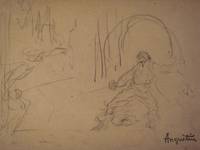
Louis ANQUETIN
Duel : Étude 3 - Crayon sur papier
1899. Fine. Fin XIXème - Début XXème 25 x 16.25 cm Original pencil drawing. Signed with the artist's signature stamp in the lower right corner of the work. Very fine condition. Provenance: from the artist's studio referenced in the catalogue Atelier Louis Anquetin Thierry de Maigret 28/11/08. Louis Anquetin born in Étrépagny in 1861 and died in Paris in 1932 was an important French painter. He began his career alongside avant-garde painters such as Vincent Van Gogh and Henri de Toulouse-Lautrec. With Émile Bernard he was the inventor of Cloisonnism. From 1884 to 1893 Louis Anquetin continuously explored the new possibilities offered by the liberation introduced by Impressionism in French painting. From 1893 onwards following a long confrontation with the ""old masters"" he adopted a pictorial stance that would place him on the margins of the general art movement and distance him from his friends. Dazzled by Baroque art and its creative vigor he believed that his youthful friends had embarked on a path that would lead to the death of painting. He believed in a ""perfect painting"" embodied in the memory of the lessons of Michelangelo and Rubens in particular. His work therefore became more classical; he advocated a return to craftsmanship proposing to reflect on the a priori conditions of any possible form of art while respecting the rules of perspective and anatomy as practiced by the masters of the 16th and 17th centuries. Leaving only a few works that can be described as monumental Anquetin proved prolific through his numerous studies and sketches he who considered that drawing was ""an all-powerful means of expression"" the obligatory foundation of all plastic arts. By deliberately working against his time Louis Anquetin made possible the existence of an original modern figuration. Through his obstinacy and passion for painting he indeed prevented the path of the great Western tradition from being totally blocked. His works can be admired in numerous and prestigious museums such as the Musée d'Orsay and the Louvre in Paris in San Francisco and Detroit at the Hermitage Museum in Saint Petersburg at the National Gallery and the Tate in London etc. unknown
Référence libraire : 25662
|
|
|
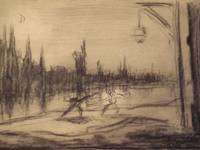
Louis ANQUETIN
Duel : Étude 2
1899. Fine. Fin XIXème - Début XXème 25 x 16.25 cm ANQUETIN Louis Duel : Étude 2 Charcoal on paper Late 19th - Early 20th century 25 x 16.25 cm. Original charcoal drawing Signed with the artist's signature stamp in the lower right corner of the work and signed with the workshop's stamp on the back. Very good condition. Provenance: artist's workshop referenced in the Atelier Louis Anquetin catalogue Thierry de Maigret 28/11/08. Louis Anquetin born in Étrépagny in 1861 and died in Paris in 1932 is an important French painter. He began his career alongside avant-garde painters such as Vincent Van Gogh and Henri de Toulouse-Lautrec. He is the inventor with Émile Bernard of Cloisonnism. From 1884 to 1893 Louis Anquetin never stopped exploring the new possibilities that the freedom of Impressionism brought to French painting. From 1893 following a long confrontation with the maîtres d'autrefois masters of the past he adopted a pictorial bias which would put him on the fringes of the general art movement and distance him from his friends. Dazzled by Baroque art and its creative vigour he then thought that his childhood friends were taking a path that would lead to the death of painting. He believes in a peinture parfaite perfect painting which is embodied in the re-remembering of Michelangelo and Rubens' lessons in particular. His work therefore becomes more classic; he advocates the return to the profession by proposing to reflect on the a priori conditions of any possible form of art in accordance with the rules of perspective and anatomy as practised by the masters of the 16th and 17th century. Leaving only a few works that can be described as monumental Anquetin proves to be prolific as a result of his many studies and sketches; he who considered that drawing was un moyen d'expression tout puissant an all powerful means of expression the obligatory foundation of all fine art. By working voluntarily in reverse of his time Louis Anquetin made the existance of an original modern portrayal possible. Through his persistance and his passion for painting he indeed prevented the path of the great western tradition from being completely sealed. His works can be admired in many prestigious museums such as the Musée d'Orsay or the Louvre in Paris in San Francisco or in Detroit in the State Hermitage Museum in St Petersburg in the National Gallery and the Tate in London etc. unknown
Référence libraire : 25660
|
|
|
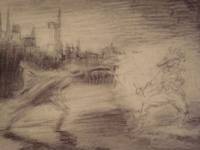
Louis ANQUETIN
Duel : Étude 1
1899. Fine. Fin XIXème - Début XXème 25 x 16.25 cm Original charcoal drawing. Artist's signature stamp in the lower right corner of the work and studio stamp signature on verso. Excellent condition. Provenance: from the artist's studio referenced in the catalogue Atelier Louis Anquetin Thierry de Maigret 28/11/08. Louis Anquetin born in Étrépagny in 1861 and died in Paris in 1932 was an important French painter. He began his career alongside avant-garde painters such as Vincent Van Gogh and Henri de Toulouse-Lautrec. With Émile Bernard he was the inventor of Cloisonnism. From 1884 to 1893 Louis Anquetin continuously explored the new possibilities offered by the liberation introduced by Impressionism in French painting. From 1893 onwards following a long confrontation with the ""old masters"" he adopted a pictorial stance that would place him on the margins of the general art movement and distance him from his friends. Dazzled by Baroque art and its creative vigor he then believed that his childhood friends had embarked on a path that would lead to the death of painting. He believed in a ""perfect painting"" embodied in the remembrance of lessons from Michelangelo and Rubens in particular. His work therefore became more classical; he advocated a return to craftsmanship proposing to reflect on the a priori conditions of any possible form of art while respecting the rules of perspective and anatomy as practiced by the masters of the 16th and 17th centuries. Leaving only a few works that can be described as monumental Anquetin proved prolific through his numerous studies and sketches he who considered drawing to be ""an all-powerful means of expression"" the mandatory foundation of all plastic arts. By deliberately working against his era Louis Anquetin made possible the existence of an original modern figuration. Through his obstinacy and passion for painting he indeed prevented the path of the great Western tradition from being completely blocked. His works can be admired in numerous and prestigious museums such as the Musée d'Orsay and the Louvre in Paris in San Francisco and Detroit at the Hermitage Museum in St. Petersburg at the National Gallery and the Tate in London etc. unknown
Référence libraire : 25659
|
|
|
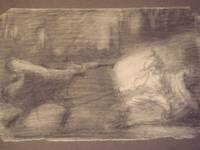
Louis ANQUETIN
Duel à l'épée : Étude 4 ""Sword Duel : Study no. 4"" - Original charcoal drawing
1899. Fine. Fin XIXème - Début XXème 25 x 16.25 cm Original charcoal drawing presented under a two-colour mat frame. With the workshop's stamp on the back. Very good condition. Provenance: artist's workshop referenced in the Atelier Louis Anquetin catalogue Thierry de Maigret 28/11/08. Louis Anquetin born in Étrépagny in 1861 and died in Paris in 1932 is an important French painter. He began his career alongside avant-garde painters such as Vincent Van Gogh and Henri de Toulouse-Lautrec. He is the inventor with Émile Bernard of Cloisonnism. From 1884 to 1893 Louis Anquetin never stopped exploring the new possibilities that the freedom of Impressionism brought to French painting. From 1893 following a long confrontation with the maîtres d'autrefois masters of the past he adopted a pictorial bias which would put him on the fringes of the general art movement and distance him from his friends. Dazzled by Baroque art and its creative vigour he then thought that his childhood friends were taking a path that would lead to the death of painting. He believes in a peinture parfaite perfect painting which is embodied in the re-remembering of Michelangelo and Rubens' lessons in particular. His work therefore becomes more classic; he advocates the return to the profession by proposing to reflect on the a priori conditions of any possible form of art in accordance with the rules of perspective and anatomy as practised by the masters of the 16th and 17th century. Leaving only a few works that can be described as monumental Anquetin proves to be prolific as a result of his many studies and sketches; he who considered that drawing was un moyen d'expression tout puissant an all powerful means of expression the obligatory foundation of all fine art. By working voluntarily in reverse of his time Louis Anquetin made the existance of an original modern portrayal possible. Through his persistance and his passion for painting he indeed prevented the path of the great western tradition from being completely sealed. His works can be admired in many prestigious museums such as the Musée d'Orsay or the Louvre in Paris in San Francisco or in Detroit in the State Hermitage Museum in St Petersburg in the National Gallery and the Tate in London etc. unknown
Référence libraire : 25674
|
|
|
Louis ANQUETIN
Etude de chiens - Crayon sur papier
1899. Fine. Fin XIXème - Début XXème 26.50 x 20.50 cm Original pencil drawing. Artist's signature stamp in the lower right corner of the work and studio stamp signature on verso. Central fold mark small central tear very slightly affecting the drawing 3 cm otherwise very fine condition. Provenance: from the artist's studio referenced in the catalogue Atelier Louis Anquetin Thierry de Maigret 28/11/08. Louis Anquetin born in Étrépagny in 1861 and died in Paris in 1932 was an important French painter. He began his career alongside avant-garde painters such as Vincent Van Gogh and Henri de Toulouse-Lautrec. With Émile Bernard he invented Cloisonnism. From 1884 to 1893 Louis Anquetin continuously explored the new possibilities offered by the liberation introduced by Impressionism in French painting. From 1893 onwards following a long confrontation with the ""old masters"" he adopted a pictorial stance that would place him on the margins of the general art movement and distance him from his friends. Dazzled by Baroque art and its creative vigor he then believed that his childhood friends had embarked on a path that would lead to the death of painting. He believed in ""perfect painting"" embodied in the remembrance of the lessons of Michelangelo and Rubens among others. His work therefore became more classical; he advocated a return to craft proposing to reflect on the a priori conditions of any possible form of art while respecting the rules of perspective and anatomy as practiced by the masters of the 16th and 17th centuries. Leaving only a few works that can be qualified as monumental Anquetin proved prolific through his numerous studies and sketches he who considered drawing to be ""an all-powerful means of expression"" the obligatory foundation of all plastic arts. By working deliberately against his era Louis Anquetin made possible the existence of an original modern figuration. Through his obstinacy and passion for painting he indeed prevented the path of the great Western tradition from being completely blocked. His works can be admired in numerous prestigious museums such as the Musée d'Orsay and the Louvre in Paris in San Francisco and Detroit at the Hermitage Museum in Saint Petersburg at the National Gallery and the Tate in London etc. unknown
Référence libraire : 25687

|
|
|
Louis ANQUETIN
Etude de têtes de chiens. - Crayon sur papier
1899. Fine. Fin XIXème - Début XXème 26.50 x 20.50 cm Original pencil drawing recto-verso. On the verso various studies of dogs. Stamp-signature of the artist in the lower right corner of the work and workshop stamp-signature on the verso. Central fold mark a small central tear affecting the drawing very slightly 4 cm otherwise very fine condition. Provenance: from the artist's studio referenced in the catalogue Atelier Louis Anquetin Thierry de Maigret 28/11/08. Louis Anquetin born in Étrépagny in 1861 and died in Paris in 1932 is an important French painter. He began his career alongside avant-garde painters such as Vincent Van Gogh and Henri de Toulouse-Lautrec. With Émile Bernard he invented Cloisonnism. From 1884 to 1893 Louis Anquetin continuously explored the new possibilities offered by the liberation introduced by Impressionism in French painting. From 1893 onwards following a long confrontation with the ""old masters"" he adopted a pictorial stance that would place him on the margins of the general art movement and distance him from his friends. Dazzled by baroque art and its creative vigor he then believed that his youthful friends had embarked on a path that would lead to the death of painting. He believed in a ""perfect painting"" embodied in the remembrance of the lessons of Michelangelo and Rubens in particular. His work thus became more classical; he advocated a return to craftsmanship proposing to reflect on the a priori conditions of any possible form of art in respect of the rules of perspective and anatomy as practiced by the masters of the 16th and 17th centuries. Leaving only a few works that can be qualified as monumental Anquetin proved prolific through his numerous studies and sketches he who considered that drawing was ""an all-powerful means of expression"" the obligatory foundation of all plastic arts. By deliberately working against his era Louis Anquetin made possible the existence of an original modern figuration. Through his obstinacy and passion for painting he indeed prevented the complete obstruction of the path of the great Western tradition. His works can be admired in numerous prestigious museums such as the Musée d'Orsay and the Louvre in Paris in San Francisco and Detroit at the Hermitage Museum in Saint Petersburg at the National Gallery and the Tate in London etc. unknown
Référence libraire : 25683

|
|
|
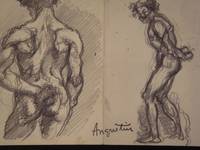
Louis ANQUETIN
Faune 1 - Crayon sur papier
1896. Fine. Circa 1896 17.50 x 12.50 cm Original pencil drawing. Artist's signature stamp in the lower right corner of the work and studio stamp signature on verso. A central fold mark otherwise very fine condition. Provenance: from the artist's studio referenced in the catalogue Atelier Louis Anquetin Thierry de Maigret 28/11/08. Louis Anquetin born in Étrépagny in 1861 and died in Paris in 1932 was an important French painter. He began his career alongside avant-garde painters such as Vincent Van Gogh and Henri de Toulouse-Lautrec. With Émile Bernard he invented Cloisonnism. From 1884 to 1893 Louis Anquetin continuously explored the new possibilities offered by the liberation introduced by Impressionism in French painting. From 1893 onwards following a lengthy confrontation with the ""masters of old"" he adopted a pictorial stance that would place him on the margins of the general art movement and distance him from his friends. Dazzled by Baroque art and its creative vigor he then believed that his youthful friends had embarked on a path that would lead to the death of painting. He believed in a ""perfect painting"" embodied in the remembrance of the lessons of Michelangelo and Rubens in particular. His work therefore became more classical; he advocated a return to craftsmanship proposing to reflect on the a priori conditions of any possible form of art while respecting the rules of perspective and anatomy as practiced by the masters of the 16th and 17th centuries. Leaving only a few works that can be qualified as monumental Anquetin proved prolific through his numerous studies and sketches he who considered that drawing was ""an all-powerful means of expression"" the obligatory foundation of all plastic arts. By deliberately working against his era Louis Anquetin made possible the existence of an original modern figuration. Through his obstinacy and passion for painting he indeed prevented the path of the great Western tradition from being completely blocked. His works can be admired in numerous prestigious museums such as the Musée d'Orsay and the Louvre in Paris in San Francisco and Detroit at the Hermitage Museum in Saint Petersburg at the National Gallery and the Tate in London etc. unknown
Référence libraire : 25715
|
|
|
Louis ANQUETIN
Faune 2 : projet de statue - Crayon sur papier
1896. Fine. Circa 1896 13.50 x 21 cm Original pencil drawing. Artist's signature stamp in the lower right corner of the work and studio stamp signature on verso. A central fold mark otherwise very fine condition. Provenance: from the artist's studio referenced in the catalogue Atelier Louis Anquetin Thierry de Maigret 28/11/08. Louis Anquetin born in Étrépagny in 1861 and died in Paris in 1932 was an important French painter. He began his career alongside avant-garde painters such as Vincent Van Gogh and Henri de Toulouse-Lautrec. With Émile Bernard he invented Cloisonnism. From 1884 to 1893 Louis Anquetin continuously explored the new possibilities offered by the liberation introduced by Impressionism in French painting. From 1893 onwards following a lengthy confrontation with the ""masters of old"" he adopted a pictorial stance that would place him on the margins of the general art movement and distance him from his friends. Dazzled by Baroque art and its creative vigor he then believed that his youthful friends had embarked on a path that would lead to the death of painting. He believed in a ""perfect painting"" embodied in the remembrance of the lessons of Michelangelo and Rubens in particular. His work therefore became more classical; he advocated a return to craftsmanship proposing to reflect on the a priori conditions of any possible form of art while respecting the rules of perspective and anatomy as practiced by the masters of the 16th and 17th centuries. Leaving only a few works that can be qualified as monumental Anquetin proved prolific through his numerous studies and sketches he who considered that drawing was ""an all-powerful means of expression"" the obligatory foundation of all plastic arts. By deliberately working against his era Louis Anquetin made possible the existence of an original modern figuration. Through his obstinacy and passion for painting he indeed prevented the path of the great Western tradition from being completely blocked. His works can be admired in numerous prestigious museums such as the Musée d'Orsay and the Louvre in Paris in San Francisco and Detroit at the Hermitage Museum in Saint Petersburg at the National Gallery and the Tate in London etc. unknown
Référence libraire : 25716

|
|
|
Louis ANQUETIN
Faune 4 étude de tête de femme - Crayon sur papier
1896. Fine. Circa 1896 21 x 32 cm Original pencil drawing. Signed with the artist's signature stamp in the lower right corner of the work and signed with the studio stamp on the verso. Very fine condition. Provenance: from the artist's studio referenced in the Louis Anquetin Studio catalogue Thierry de Maigret 28/11/08. Louis Anquetin born in Étrépagny in 1861 and died in Paris in 1932 is an important French painter. He began his career alongside avant-garde painters such as Vincent Van Gogh or Henri de Toulouse-Lautrec. With Émile Bernard he invented Cloisonnism. From 1884 to 1893 Louis Anquetin continuously explored the new possibilities offered by the liberation introduced by Impressionism in French painting. From 1893 onwards following a long confrontation with the ""old masters"" he adopted a pictorial stance that would place him on the margins of the general art movement and distance him from his friends. Dazzled by baroque art and its creative vigour he then believed that his youthful friends had embarked on a path that would lead to the death of painting. He believed in a ""perfect painting"" that was embodied in the remembrance of the lessons of Michelangelo and Rubens in particular. His work therefore became more classical he advocated a return to craftsmanship proposing to reflect on the a priori conditions of any possible form of art while respecting the rules of perspective and anatomy as practiced by the masters of the 16th and 17th centuries. Leaving only a few works that can be described as monumental Anquetin proved prolific through his numerous studies and sketches he who considered that drawing was ""an all-powerful means of expression"" the obligatory foundation of all plastic arts. By deliberately working against his time Louis Anquetin made possible the existence of an original modern figuration. Through his obstinacy and passion for painting he indeed prevented the path of the great Western tradition from being totally blocked. His works can be admired in numerous prestigious museums such as the Musée d'Orsay or the Louvre in Paris in San Francisco or Detroit at the Hermitage Museum in Saint Petersburg at the National Gallery and the Tate in London etc. unknown
Référence libraire : 25719

|
|
|
Louis ANQUETIN
Faune 5 - Crayon sur papier
1896. Fine. Circa 1896 23 x 35 cm Original pencil drawing. Artist's signature stamp in the lower right corner of the work and workshop stamp signature on the verso. Very fine condition. Provenance: from the artist's workshop referenced in the catalogue Atelier Louis Anquetin Thierry de Maigret 28/11/08. Louis Anquetin born in Étrépagny in 1861 and died in Paris in 1932 is an important French painter. He began his career alongside avant-garde painters such as Vincent Van Gogh or Henri de Toulouse-Lautrec. With Émile Bernard he invented Cloisonnism. From 1884 to 1893 Louis Anquetin continuously explored the new possibilities offered by the liberation introduced by Impressionism in French painting. From 1893 onwards following a long confrontation with the ""masters of the past"" he adopted a pictorial stance that would place him on the margins of the general art movement and distance him from his friends. Dazzled by Baroque art and its creative vigor he then thought that his youthful friends had embarked on a path that would lead to the death of painting. He believed in a ""perfect painting"" embodied in the remembrance of the lessons of Michelangelo and Rubens in particular. His work therefore became more classical he advocated a return to craftsmanship proposing to reflect on the a priori conditions of any possible form of art possible while respecting the rules of perspective and anatomy as practiced by the masters of the 16th and 17th centuries. Leaving only a few works that can be described as monumental Anquetin proved prolific through his numerous studies and sketches he who considered drawing to be ""an all-powerful means of expression"" the mandatory foundation of all plastic arts. By deliberately working against his era Louis Anquetin made possible the existence of an original modern figuration. Through his obstinacy and passion for painting he indeed prevented the path of the great Western tradition from being totally obstructed. His works can be admired in numerous prestigious museums such as the Musée d'Orsay or the Louvre in Paris in San Francisco or Detroit at the Hermitage Museum in Saint Petersburg at the National Gallery and the Tate in London etc. unknown
Référence libraire : 25720

|
|
|
Louis ANQUETIN
Fête villageoise - étude pour le bal champêtre
1899. Fine. Fin XIXème - Début XXème 22 x 15.50 cm ANQUETIN Louis Fête villageoise - étude pour le bal champêtre Pencil on paper Late 19th - Early 20th century 22 x 15.5 cm. Original pencil drawing presented under a two-colour marie-louise frame. Signed with the artist's signature stamp in the lower right corner of the work and signed with the workshop's stamp on the back. A minor tear in the left margin. Very good condition. Provenance: artist's workshop referenced in the Atelier Louis Anquetin catalogue Thierry de Maigret 28/11/08. Louis Anquetin born in Étrépagny in 1861 and died in Paris in 1932 is an important French painter. He began his career alongside avant-garde painters such as Vincent Van Gogh and Henri de Toulouse-Lautrec. He is the inventor with Émile Bernard of Cloisonnism. From 1884 to 1893 Louis Anquetin never stopped exploring the new possibilities that the freedom of Impressionism brought to French painting. From 1893 following a long confrontation with the maîtres d'autrefois masters of the past he adopted a pictorial bias which would put him on the fringes of the general art movement and distance him from his friends. Dazzled by Baroque art and its creative vigour he then thought that his childhood friends were taking a path that would lead to the death of painting. He believes in a peinture parfaite perfect painting which is embodied in the re-remembering of Michelangelo and Rubens' lessons in particular. His work therefore becomes more classic; he advocates the return to the profession by proposing to reflect on the a priori conditions of any possible form of art in accordance with the rules of perspective and anatomy as practised by the masters of the 16th and 17th century. Leaving only a few works that can be described as monumental Anquetin proves to be prolific as a result of his many studies and sketches; he who considered that drawing was un moyen d'expression tout puissant an all powerful means of expression the obligatory foundation of all fine art. By working voluntarily in reverse of his time Louis Anquetin made the existance of an original modern portrayal possible. Through his persistance and his passion for painting he indeed prevented the path of the great western tradition from being completely sealed. His works can be admired in many prestigious museums such as the Musée d'Orsay or the Louvre in Paris in San Francisco or in Detroit in the State Hermitage Museum in St Petersburg in the National Gallery and the Tate in London etc. unknown
Référence libraire : 25805

|
|
|
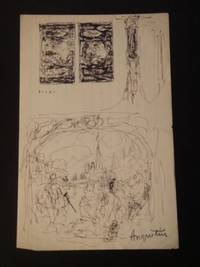
Louis ANQUETIN
La Normandie : projet de carton pour la tapisserie de la manufacture des Gobelins. Étude 4 - Encre sur papier
1912. Fine. 1912-1913 14 x 21.50 cm ANQUETIN Louis La Normandie : projet de carton pour la tapisserie de la manufacture des Gobelins. Étude 4 Ink on paper 1912-1913 14 x 21.5 cm. Original ink drawing. Several sketches on one letter folded in two. Signed with the artist's signature stamp in the lower right corner of the work and signed with the workshop's stamp on the back. Thanks to his friendship with art critic Gustave Geoffroy who was appointed manager of the Manufactures Nationales Louis Anquetin obtained three orders for the Gobelins the Bourgogne in 1911 Les cygnes tapestry and in 1912 La Normandie tapestry. One sign of a central fold otherwise good condition. Provenance: artist's workshop referenced in the Atelier Louis Anquetin catalogue Thierry de Maigret 28/11/08. Louis Anquetin born in Étrépagny in 1861 and died in Paris in 1932 is an important French painter. He began his career alongside avant-garde painters such as Vincent Van Gogh and Henri de Toulouse-Lautrec. He is the inventor with Émile Bernard of Cloisonnism. From 1884 to 1893 Louis Anquetin never stopped exploring the new possibilities that the freedom of Impressionism brought to French painting. From 1893 following a long confrontation with the maîtres d'autrefois masters of the past he adopted a pictorial bias which would put him on the fringes of the general art movement and distance him from his friends. Dazzled by Baroque art and its creative vigour he then thought that his childhood friends were taking a path that would lead to the death of painting. He believes in a peinture parfaite perfect painting which is embodied in the re-remembering of Michelangelo and Rubens' lessons in particular. His work therefore becomes more classic; he advocates the return to the profession by proposing to reflect on the a priori conditions of any possible form of art in accordance with the rules of perspective and anatomy as practised by the masters of the 16th and 17th century. Leaving only a few works that can be described as monumental Anquetin proves to be prolific as a result of his many studies and sketches; he who considered that drawing was un moyen d'expression tout puissant an all powerful means of expression the obligatory foundation of all fine art. By working voluntarily in reverse of his time Louis Anquetin made the existance of an original modern portrayal possible. Through his persistance and his passion for painting he indeed prevented the path of the great western tradition from being completely sealed. His works can be admired in many prestigious museums such as the Musée d'Orsay or the Louvre in Paris in San Francisco or in Detroit in the State Hermitage Museum in St Petersburg in the National Gallery and the Tate in London etc. unknown
Référence libraire : 25724
|
|
|
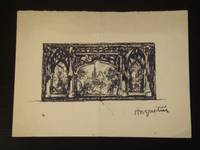
Louis ANQUETIN
La Normandie : projet de carton pour la tapisserie de la manufacture des Gobelins. Étude 1 - Encre sur papier
1912. Fine. 1912-1913 17 x 12.50 cm Original ink drawing. Artist's signature stamp in the lower right corner of the work and workshop stamp signature on the verso. Louis Anquetin through his friendship with art critic Gustave Geoffroy who was appointed administrator of the Manufactures Nationales obtained three commissions for cartoons for the Gobelins ""Bourgogne"" in 1911 a carpet ""Les cygnes"" and in 1912 ""La Normandie"" tapestry. A central fold mark with a tiny tear at foot otherwise very fine condition. Provenance: from the artist's workshop referenced in the catalogue Atelier Louis Anquetin Thierry de Maigret 28/11/08. Louis Anquetin born in Étrépagny in 1861 and died in Paris in 1932 is an important French painter. He began his career alongside avant-garde painters such as Vincent Van Gogh or Henri de Toulouse-Lautrec. With Émile Bernard he invented Cloisonnism. From 1884 to 1893 Louis Anquetin continuously explored the new possibilities offered by the liberation introduced by Impressionism in French painting. From 1893 onwards following a long confrontation with the ""masters of the past"" he adopted a pictorial stance that would place him on the margins of the general art movement and distance him from his friends. Dazzled by Baroque art and its creative vigor he then thought that his youthful friends had embarked on a path that would lead to the death of painting. He believed in a ""perfect painting"" embodied in the remembrance of the lessons of Michelangelo and Rubens in particular. His work therefore became more classical he advocated a return to craftsmanship proposing to reflect on the a priori conditions of any possible form of art while respecting the rules of perspective and anatomy as practiced by the masters of the 16th and 17th centuries. Leaving only a few works that can be described as monumental Anquetin proved prolific through his numerous studies and sketches he who considered drawing to be ""an all-powerful means of expression"" the mandatory foundation of all plastic arts. By deliberately working against his era Louis Anquetin made possible the existence of an original modern figuration. Through his obstinacy and passion for painting he indeed prevented the path of the great Western tradition from being totally obstructed. His works can be admired in numerous prestigious museums such as the Musée d'Orsay or the Louvre in Paris in San Francisco or Detroit at the Hermitage Museum in Saint Petersburg at the National Gallery and the Tate in London etc. unknown
Référence libraire : 25721
|
|
|
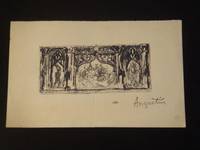
Louis ANQUETIN
La Normandie : projet de carton pour la tapisserie de la manufacture des Gobelins. Étude 3 - Encre sur papier
1912. Fine. 1912-1913 17.50 x 11 cm Original ink drawing. Artist's signature stamp in the lower right corner of the work and workshop signature stamp on verso. Louis Anquetin through his friendship with art critic Gustave Geoffroy who was appointed administrator of the Manufactures Nationales obtained three commissions for cartoons for the Gobelins ""Bourgogne"" in 1911 a carpet ""Les cygnes"" and in 1912 ""La Normandie"" tapestry. This tapestry was composed of three panels as can be seen in this study. A tiny marginal tear not affecting the drawing trace of central fold otherwise very fine condition. Provenance: from the artist's workshop referenced in the catalogue Atelier Louis Anquetin Thierry de Maigret 28/11/08. Louis Anquetin born in Étrépagny in 1861 and died in Paris in 1932 was an important French painter. He began his career alongside avant-garde painters such as Vincent Van Gogh and Henri de Toulouse-Lautrec. With Émile Bernard he invented Cloisonnism. From 1884 to 1893 Louis Anquetin continuously explored the new possibilities offered by the liberation introduced by Impressionism in French painting. From 1893 onwards following a long confrontation with the ""old masters"" he adopted a pictorial stance that would place him on the margins of the general art movement and distance him from his friends. Dazzled by baroque art and its creative vigor he then believed that his youthful friends had embarked on a path that would lead to the death of painting. He believed in a ""perfect painting"" that was embodied in the remembrance of the lessons of Michelangelo and Rubens in particular. His work therefore became more classical he advocated a return to craft proposing to reflect on the a priori conditions of any possible form of art while respecting the rules of perspective and anatomy as practiced by the masters of the 16th and 17th centuries. Leaving only a few works that can be described as monumental Anquetin proved prolific through his numerous studies and sketches he who considered that drawing was ""an all-powerful means of expression"" the obligatory foundation of all plastic arts. By working deliberately against his time Louis Anquetin made possible the existence of an original modern figuration. Through his obstinacy and his passion for painting he indeed prevented the path of the great Western tradition from being completely blocked. His works can be admired in numerous and prestigious museums such as the Musée d'Orsay and the Louvre in Paris in San Francisco and Detroit at the Hermitage Museum in Saint Petersburg at the National Gallery and the Tate in London etc. unknown
Référence libraire : 25723
|
|
|
Louis ANQUETIN
La Normandie : projet de carton pour la tapisserie de la manufacture des Gobelins. Étude 8 - Encre sur papier
1912. Fine. 1912-1913 13.50 x 9.50 cm Original ink drawing with several ink sketches on the verso on a sheet folded in half. Stamp signature of the artist in the lower right corner of the work and workshop stamp signature on the verso. Louis Anquetin thanks to his friendship with art critic Gustave Geoffroy who was appointed administrator of the National Manufactories obtained three commissions for cartoons for the Gobelins ""Bourgogne"" in 1911 a carpet ""Les cygnes"" and in 1912 ""La Normandie"" tapestry. Very fine condition. Provenance: artist's studio referenced in the catalogue Atelier Louis Anquetin Thierry de Maigret 28/11/08. Louis Anquetin born in Étrépagny in 1861 and died in Paris in 1932 is an important French painter. He began his career alongside avant-garde painters such as Vincent Van Gogh and Henri de Toulouse-Lautrec. With Émile Bernard he was the inventor of Cloisonnism. From 1884 to 1893 Louis Anquetin continuously explored the new possibilities offered by the liberation introduced by Impressionism in French painting. From 1893 following a long confrontation with the ""masters of the past"" he adopted a pictorial stance that would put him on the margins of the general art movement and distance him from his friends. Dazzled by Baroque art and its creative vigor he then thought that his youthful friends had embarked on a path that would lead to the death of painting. He believed in a ""perfect painting"" embodied in the remembrance of the lessons of Michelangelo and Rubens in particular. His work therefore became more classical; he advocated a return to craftsmanship proposing to reflect on the a priori conditions of any possible form of art in respect of the rules of perspective and anatomy as practiced by the masters of the 16th and 17th centuries. Leaving only a few works that can be qualified as monumental Anquetin proved prolific through his numerous studies and sketches he who considered that drawing was ""an all-powerful means of expression"" the obligatory foundation of all plastic arts. By deliberately working against his time Louis Anquetin made possible the existence of an original modern figuration. Through his obstinacy and passion for painting he indeed prevented the path of the great Western tradition from being totally blocked. His works can be admired in numerous and prestigious museums such as the Musée d'Orsay or the Louvre in Paris in San Francisco or Detroit at the Hermitage Museum in Saint Petersburg at the National Gallery and Tate in London etc. unknown
Référence libraire : 25728
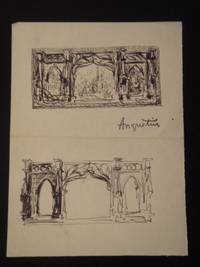
|
|
|
Louis ANQUETIN
La Normandie : projet de carton pour la tapisserie de la manufacture des Gobelins. Étude 2 - Encre sur papier
1912. Fine. 1912-1913 10.50 x 13.50 cm Three original ink drawings on a sheet folded in half and a manuscript note by the artist on verso ""Plus penser que dire"". Artist's signature stamp in the lower right corner of the work and workshop signature stamp on verso. Louis Anquetin through his friendship with art critic Gustave Geoffroy who was appointed administrator of the Manufactures Nationales obtained three commissions for cartoons for the Gobelins ""Bourgogne"" in 1911 a carpet ""Les cygnes"" and in 1912 ""La Normandie"" tapestry. This tapestry was composed of three panels as can be seen in this study. Very fine condition. Provenance: from the artist's workshop referenced in the catalogue Atelier Louis Anquetin Thierry de Maigret 28/11/08. Louis Anquetin born in Étrépagny in 1861 and died in Paris in 1932 was an important French painter. He began his career alongside avant-garde painters such as Vincent Van Gogh and Henri de Toulouse-Lautrec. With Émile Bernard he invented Cloisonnism. From 1884 to 1893 Louis Anquetin continuously explored the new possibilities offered by the liberation introduced by Impressionism in French painting. From 1893 onwards following a long confrontation with the ""old masters"" he adopted a pictorial stance that would place him on the margins of the general art movement and distance him from his friends. Dazzled by baroque art and its creative vigor he then believed that his youthful friends had embarked on a path that would lead to the death of painting. He believed in a ""perfect painting"" that was embodied in the remembrance of the lessons of Michelangelo and Rubens in particular. His work therefore became more classical he advocated a return to craft proposing to reflect on the a priori conditions of any possible form of art while respecting the rules of perspective and anatomy as practiced by the masters of the 16th and 17th centuries. Leaving only a few works that can be described as monumental Anquetin proved prolific through his numerous studies and sketches he who considered that drawing was ""an all-powerful means of expression"" the obligatory foundation of all plastic arts. By working deliberately against his time Louis Anquetin made possible the existence of an original modern figuration. Through his obstinacy and his passion for painting he indeed prevented the path of the great Western tradition from being completely blocked. His works can be admired in numerous and prestigious museums such as the Musée d'Orsay and the Louvre in Paris in San Francisco and Detroit at the Hermitage Museum in Saint Petersburg at the National Gallery and the Tate in London etc. unknown
Référence libraire : 25722
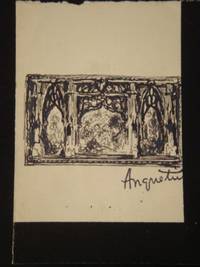
|
|
|
Louis ANQUETIN
La Victoire : étude pour la tapisserie de Beauvais. Étude 2 - Crayon sur papier
1918. Fine. Début XXème 18 x 23 cm Original pencil drawing. Series of eight sketches. Artist's signature stamp in the lower right corner of the work and studio stamp signature on verso. Manuscript notes by the artist ""Donnez à la semeuse l'éternelle. Semez semez"" ""Give to the sower the eternal one. Sow sow"". Very fine condition. Provenance: from the artist's studio referenced in the catalogue Atelier Louis Anquetin Thierry de Maigret 28/11/08. Louis Anquetin born in Étrépagny in 1861 and died in Paris in 1932 was an important French painter. He began his career alongside avant-garde painters such as Vincent Van Gogh and Henri de Toulouse-Lautrec. With Émile Bernard he invented Cloisonnism. From 1884 to 1893 Louis Anquetin continuously explored the new possibilities offered by the liberation introduced by Impressionism in French painting. From 1893 following a long confrontation with the ""masters of the past"" he adopted a pictorial stance that would place him on the margins of the general movement in art and distance him from his friends. Dazzled by Baroque art and its creative vigor he believed that his childhood friends had embarked on a path that would lead to the death of painting. He believed in a ""perfect painting"" embodied in the remembrance of the lessons of Michelangelo and Rubens in particular. His work therefore became more classical; he advocated a return to craftsmanship proposing to reflect on the a priori conditions of any possible form of art while respecting the rules of perspective and anatomy as practiced by the masters of the 16th and 17th centuries. Leaving only a few works that could be described as monumental Anquetin proved prolific through his numerous studies and sketches he who considered drawing to be ""an all-powerful means of expression"" the necessary foundation of all plastic arts. By deliberately working against the grain of his era Louis Anquetin made possible the existence of an original modern figuration. Through his obstinacy and passion for painting he indeed prevented the path of the great Western tradition from being completely blocked. His works can be admired in numerous prestigious museums such as the Musée d'Orsay and the Louvre in Paris in San Francisco and Detroit at the Hermitage Museum in Saint Petersburg at the National Gallery and the Tate in London etc. unknown
Référence libraire : 25747
|
|
|
Louis ANQUETIN
La Victoire : étude pour la tapisserie de Beauvais. Étude 1. - Crayon sur calque
1918. Fine. Début XXème 12 x 17 cm Original pencil drawing on tracing paper. Stamped signature of the artist in the lower right corner of the work and stamped signature of the studio on verso. Very fine condition. Provenance: from the artist's studio referenced in the Louis Anquetin Studio catalogue Thierry de Maigret 28/11/08. Louis Anquetin born in Étrépagny in 1861 and died in Paris in 1932 was an important French painter. He began his career alongside avant-garde painters such as Vincent Van Gogh and Henri de Toulouse-Lautrec. With Émile Bernard he was the inventor of Cloisonnism. From 1884 to 1893 Louis Anquetin continually explored the new possibilities offered by the liberation introduced by Impressionism into French painting. From 1893 onwards following a long confrontation with the ""old masters"" he adopted a pictorial approach that would place him on the margins of the general movement in art and distance him from his friends. Dazzled by Baroque art and its creative vigor he then believed that his youthful friends had embarked on a path that would lead to the death of painting. He believed in a ""perfect painting"" embodied in the remembrance of the lessons of Michelangelo and Rubens in particular. His work therefore became more classical advocating a return to craftsmanship proposing to reflect on the a priori conditions of any possible form of art while respecting the rules of perspective and anatomy as practiced by the masters of the 16th and 17th centuries. Leaving only a few works that can be described as monumental Anquetin proved prolific through his numerous studies and sketches he who considered that drawing was ""an all-powerful means of expression"" the obligatory foundation of all plastic arts. By deliberately working against the grain of his time Louis Anquetin made possible the existence of an original modern figuration. Through his obstinacy and passion for painting he indeed prevented the path of the great Western tradition from being totally blocked. His works can be admired in numerous and prestigious museums such as the Musée d'Orsay and the Louvre in Paris in San Francisco and Detroit at the Hermitage Museum in Saint Petersburg at the National Gallery and the Tate in London etc. unknown
Référence libraire : 25744
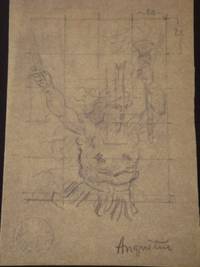
|
|
|
Louis ANQUETIN
La Victoire : étude pour la tapisserie de Beauvais. Étude 3 - Crayon sur papier
1918. Fine. Début XXème 23 x 36 cm Original pencil drawing. On the verso two sketches of dresses accompanied by handwritten explanatory notes by the artist and a sketch of a church. Stamped signature of the artist in the lower right corner of the work and studio stamp signature on the verso. Very fine condition. Provenance: from the artist's studio referenced in the catalogue Atelier Louis Anquetin Thierry de Maigret 28/11/08. Louis Anquetin born in Étrépagny in 1861 and died in Paris in 1932 was an important French painter. He began his career alongside avant-garde painters such as Vincent Van Gogh and Henri de Toulouse-Lautrec. With Émile Bernard he was the inventor of Cloisonnism. From 1884 to 1893 Louis Anquetin continuously explored the new possibilities offered by the liberation introduced by Impressionism in French painting. From 1893 onwards following a long confrontation with the ""old masters"" he adopted a pictorial approach that would place him on the margins of the general art movement and distance him from his friends. Dazzled by baroque art and its creative vigor he then believed that his youthful friends had embarked on a path that would lead to the death of painting. He believed in a ""perfect painting"" that was embodied in the remembrance of the lessons of Michelangelo and Rubens in particular. His work thus became more classical; he advocated a return to craftsmanship proposing to reflect on the a priori conditions of any possible form of art while respecting the rules of perspective and anatomy as practiced by the masters of the 16th and 17th centuries. Leaving only a few works that can be qualified as monumental Anquetin proved prolific through his numerous studies and sketches he who considered that drawing was ""an all-powerful means of expression"" the obligatory foundation of all plastic arts. By deliberately working against his era Louis Anquetin made possible the existence of an original modern figuration. Through his obstinacy and passion for painting he indeed prevented the path of the great Western tradition from being totally obstructed. His works can be admired in numerous prestigious museums such as the Musée d'Orsay and the Louvre in Paris in San Francisco and Detroit at the Hermitage Museum in Saint Petersburg at the National Gallery and the Tate in London etc. unknown
Référence libraire : 25749
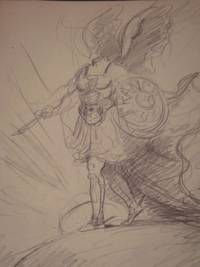
|
|
|
Louis ANQUETIN
Nu au sabre
1899. Fine. Fin XIXème - Début XXème 16 x 25 cm Original pencil drawing mounted on tab on cardboard. Signature stamp of the artist's signature in the lower right corner of the work and signature stamp of the studio on the verso. Very handsome condition. Provenance: artist's studio referenced in the catalogue Atelier Louis Anquetin Thierry de Maigret 28/11/08. Louis Anquetin born in Étrépagny in 1861 and died in Paris in 1932 is an important French painter. He began his career alongside avant-garde painters such as Vincent Van Gogh or Henri de Toulouse-Lautrec. With Émile Bernard he is the inventor of Cloisonnism. From 1884 to 1893 Louis Anquetin never ceased exploring the new possibilities offered by the liberation introduced by Impressionism in French painting. From 1893 following a long confrontation with the ""masters of yesteryear"" he adopted a pictorial stance that would put him on the margins of the general movement of art and distance him from his friends. Dazzled by baroque art and its creative vigor he then thought that his childhood friends had embarked on a path that would lead to the death of painting. He believed in a ""perfect painting"" that was embodied in the remembrance of the lessons of Michelangelo and Rubens in particular. His work therefore became more classical he advocated a return to craftsmanship by proposing to reflect on the a priori conditions of any possible form of art in respect of the rules of perspective and anatomy as practiced by the masters of the 16th and 17th centuries. Leaving only a few works that can be qualified as monumental Anquetin proved prolific through his numerous studies and sketches he who considered that drawing was ""an all-powerful means of expression"" the obligatory foundation of all plastic arts. By working deliberately against his time Louis Anquetin made possible the existence of an original modern figuration. Through his obstination and his passion for painting he indeed avoided the total obstruction of the path of the great Western tradition. His works can be admired in numerous and prestigious museums such as the Musée d'Orsay or the Louvre in Paris in San Francisco or Detroit at the Hermitage Museum in Saint Petersburg at the National Gallery and the Tate in London etc. unknown
Référence libraire : 25818
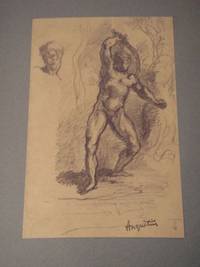
|
|
|
Louis ANQUETIN
Nu masculin de dos A male nude from the back
1899. Fine. Fin XIXème - Début XXème 21 x 27 cm A male nude from the back Pencil on paper Late 19th Early 20th century 21 x 27 cm 31 x 47 cm with mount one drawing Original pencil drawing mounted on guards. Artist's signature stamp and monogram stamp in the lower right corner of the work; artist studio's stamp on the back. Handwritten note on the back in pencil of the paper the title and the date: 1895. Light signs of foxing on the left border without affecting the drawing otherwise in very good condition. Provenance: artist's workshop referenced in the Atelier Louis Anquetin catalogue Thierry de Maigret 28/11/08. Louis Anquetin born in Étrépagny in 1861 and died in Paris in 1932 is an important French painter. He began his career alongside avant-garde painters such as Vincent Van Gogh and Henri de Toulouse-Lautrec. He is the inventor with Émile Bernard of Cloisonnism. From 1884 to 1893 Louis Anquetin never stopped exploring the new possibilities that the freedom of Impressionism brought to French painting. From 1893 following a long confrontation with the maîtres d'autrefois masters of the past he adopted a pictorial bias which would put him on the fringes of the general art movement and distance him from his friends. Dazzled by Baroque art and its creative vigour he then thought that his childhood friends were taking a path that would lead to the death of painting. He believes in a peinture parfaite perfect painting which is embodied in the re-remembering of Michelangelo and Rubens' lessons in particular. His work therefore becomes more classic; he advocates the return to the profession by proposing to reflect on the a priori conditions of any possible form of art in accordance with the rules of perspective and anatomy as practised by the masters of the 16th and 17th century. Leaving only a few works that can be described as monumental Anquetin proves to be prolific as a result of his many studies and sketches; he who considered that drawing was un moyen d'expression tout puissant an all powerful means of expression the obligatory foundation of all fine art. By working voluntarily in reverse of his time Louis Anquetin made the existance of an original modern portrayal possible. Through his persistance and his passion for painting he indeed prevented the path of the great western tradition from being completely sealed. His works can be admired in many prestigious museums such as the Musée d'Orsay or the Louvre in Paris in San Francisco or in Detroit in the State Hermitage Museum in St Petersburg in the National Gallery and the Tate in London etc. unknown
Référence libraire : 25816
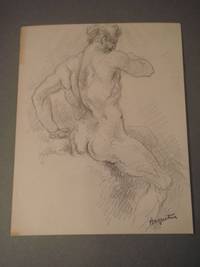
|
|
|
Louis ANQUETIN
Portrait de femme
1899. Fine. Fin XIXème - Début XXème 20 x 24 cm Original ink and wash drawing mounted on tab on cardboard. Artist's stamp signature in the lower right corner of the work and studio stamp signature on verso. Light angular fold marks otherwise very fine condition. Provenance: from the artist's studio catalogued in the Louis Anquetin Studio catalogue Thierry de Maigret 28/11/08. Louis Anquetin born in Étrépagny in 1861 and died in Paris in 1932 was an important French painter. He began his career alongside avant-garde painters such as Vincent Van Gogh and Henri de Toulouse-Lautrec. With Émile Bernard he invented Cloisonnism. From 1884 to 1893 Louis Anquetin continuously explored the new possibilities offered by the liberation that Impressionism introduced to French painting. From 1893 onwards following a long confrontation with the ""masters of the past"" he adopted a pictorial approach that would place him on the margins of the general art movement and distance him from his friends. Dazzled by Baroque art and its creative vigor he believed that his youthful friends had embarked on a path that would lead to the death of painting. He believed in ""perfect painting"" embodied in remembering the lessons of Michelangelo and Rubens in particular. His work therefore became more classical; he advocated a return to craftsmanship proposing to reflect on the a priori conditions of all possible forms of art while respecting the rules of perspective and anatomy as practiced by the masters of the 16th and 17th centuries. Leaving only a few works that can be described as monumental Anquetin proved prolific through his numerous studies and sketches he who considered drawing to be ""an all-powerful means of expression"" the essential foundation of all plastic arts. By deliberately working against the grain of his era Louis Anquetin made possible the existence of an original modern figuration. Through his obstinacy and passion for painting he indeed prevented the path of the great Western tradition from being completely blocked. His works can be admired in numerous prestigious museums such as the Musée d'Orsay and the Louvre in Paris in San Francisco and Detroit at the Hermitage Museum in Saint Petersburg at the National Gallery and the Tate in London etc. unknown
Référence libraire : 26286
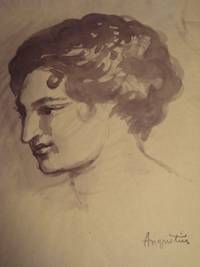
|
|
|
Louis ANQUETIN
Portraits 3 - Crayon sur papier
1899. Fine. Fin XIXème - Début XXème 22 x 14 cm Original pencil drawing. Artist's signature stamp in the lower right corner of the work and workshop stamp signature on verso. Minor dampstain in the lower left corner otherwise very fine condition. Provenance: from the artist's studio referenced in the catalogue Atelier Louis Anquetin Thierry de Maigret 28/11/08. Louis Anquetin born in Étrépagny in 1861 and died in Paris in 1932 was an important French painter. He began his career alongside avant-garde painters such as Vincent Van Gogh and Henri de Toulouse-Lautrec. With Émile Bernard he invented Cloisonnism. From 1884 to 1893 Louis Anquetin continuously explored the new possibilities offered by the liberation introduced by Impressionism in French painting. From 1893 onwards following a lengthy confrontation with the ""masters of the past"" he adopted a pictorial stance that would place him on the margins of the general art movement and distance him from his friends. Dazzled by Baroque art and its creative vigor he then believed that his youthful friends had embarked on a path that would lead to the death of painting. He believed in a ""perfect painting"" that was embodied in the remembrance of the lessons of Michelangelo and Rubens in particular. His work therefore became more classical; he advocated a return to craftsmanship proposing to reflect on the a priori conditions of any possible form of art while respecting the rules of perspective and anatomy as practiced by the masters of the 16th and 17th centuries. Leaving only a few works that can be described as monumental Anquetin proved prolific through his numerous studies and sketches he who considered drawing to be ""an all-powerful means of expression"" the obligatory foundation of all plastic arts. By deliberately working against the grain of his era Louis Anquetin made possible the existence of an original modern figuration. Through his obstinacy and passion for painting he indeed prevented the complete obstruction of the path of the great Western tradition. His works can be admired in numerous prestigious museums such as the Musée d'Orsay and the Louvre in Paris in San Francisco and Detroit at the Hermitage Museum in Saint Petersburg at the National Gallery and the Tate in London etc. unknown
Référence libraire : 25800
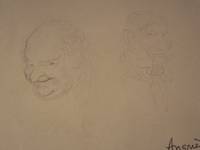
|
|
|
Louis ANQUETIN
Portraits 2 - Crayon sur papier
1899. Fine. Fin XIXème - Début XXème 11 x 21.50 cm Original pencil drawing. Artist's signature stamp in the lower right corner of the work and workshop stamp signature on verso. Two minor tears in right margin otherwise very fine condition. Provenance: from the artist's studio referenced in the catalogue Atelier Louis Anquetin Thierry de Maigret 28/11/08. Louis Anquetin born in Étrépagny in 1861 and died in Paris in 1932 was an important French painter. He began his career alongside avant-garde painters such as Vincent Van Gogh and Henri de Toulouse-Lautrec. With Émile Bernard he invented Cloisonnism. From 1884 to 1893 Louis Anquetin continuously explored the new possibilities offered by the liberation introduced by Impressionism in French painting. From 1893 onwards following a lengthy confrontation with the ""masters of the past"" he adopted a pictorial stance that would place him on the margins of the general art movement and distance him from his friends. Dazzled by Baroque art and its creative vigor he then believed that his youthful friends had embarked on a path that would lead to the death of painting. He believed in a ""perfect painting"" that was embodied in the remembrance of the lessons of Michelangelo and Rubens in particular. His work therefore became more classical; he advocated a return to craftsmanship proposing to reflect on the a priori conditions of any possible form of art while respecting the rules of perspective and anatomy as practiced by the masters of the 16th and 17th centuries. Leaving only a few works that can be described as monumental Anquetin proved prolific through his numerous studies and sketches he who considered drawing to be ""an all-powerful means of expression"" the obligatory foundation of all plastic arts. By deliberately working against the grain of his era Louis Anquetin made possible the existence of an original modern figuration. Through his obstinacy and passion for painting he indeed prevented the complete obstruction of the path of the great Western tradition. His works can be admired in numerous prestigious museums such as the Musée d'Orsay and the Louvre in Paris in San Francisco and Detroit at the Hermitage Museum in Saint Petersburg at the National Gallery and the Tate in London etc. unknown
Référence libraire : 25798
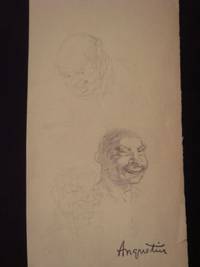
|
|
|
Louis ANQUETIN
Poules : Étude 1
1899. Fine. Fin XIXème - Début XXème 20 x 31 cm Original pencil drawing heightened with watercolour. Artist's signature stamp in the lower right corner of the work and studio stamp signature on verso. Very fine condition. Provenance: from the artist's studio referenced in the catalogue Atelier Louis Anquetin Thierry de Maigret 28/11/08. Louis Anquetin born in Étrépagny in 1861 and died in Paris in 1932 was an important French painter. He began his career alongside avant-garde painters such as Vincent Van Gogh and Henri de Toulouse-Lautrec. With Émile Bernard he invented Cloisonnism. From 1884 to 1893 Louis Anquetin continuously explored the new possibilities offered by the liberation introduced by Impressionism in French painting. From 1893 onwards following a lengthy confrontation with the ""masters of former times"" he adopted a pictorial approach that would place him on the margins of the general art movement and distance him from his friends. Dazzled by Baroque art and its creative vigour he then believed that his youthful friends had embarked on a path that would lead to the death of painting. He believed in a ""perfect painting"" embodied in the remembered lessons of Michelangelo and Rubens in particular. His work therefore became more classical; he advocated a return to craftsmanship proposing to reflect on the a priori conditions of any possible form of art while respecting the rules of perspective and anatomy as practised by the masters of the 16th and 17th centuries. Leaving only a few works that can be described as monumental Anquetin proved prolific through his numerous studies and sketches he who considered drawing to be ""an all-powerful means of expression"" the necessary foundation of all plastic arts. By deliberately working against his era Louis Anquetin made possible the existence of an original modern figuration. Through his obstinacy and passion for painting he prevented the path of the great Western tradition from being completely blocked. His works can be admired in numerous prestigious museums such as the Musée d'Orsay and the Louvre in Paris in San Francisco and Detroit at the Hermitage Museum in Saint Petersburg at the National Gallery and the Tate in London etc. unknown
Référence libraire : 25777
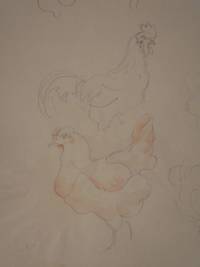
|
|

 Recevoir par e-mail
 Télécharger en PDF
 Flux RSS
 Lien permanent


